

Peptide research · 7 min · 1,446 words
GIP: the incretin people forgot, then remembered
GIP is the gut hormone that tells the pancreas to release insulin when sugar is high. GLP-1 does that and also slows the stomach and quiets appetite. Mounjaro is tirzepatide: one chain on both. Semaglutide is only the second. The 72-week trial mean at 15 mg was about 21 percent.
What this essay actually tells you
- GIP is released by K cells when you eat. It tells the beta cell to release insulin only when glucose is high. GLP-1 does that and also slows the stomach and reduces appetite.
- Tirzepatide, LY3298176, is one chain biased to the GIP receptor and still active at GLP-1, with a C20 fatty acid so it rides on albumin for about a week. Native GLP-1 lasts about two minutes.
- SURMOUNT-1: about 15.0, 19.5 and 20.9 percent mean weight loss at 5, 10 and 15 mg over 72 weeks, against about 3.1 percent on placebo. SURPASS-2 beat semaglutide 1 mg on HbA1c. The pen is the medicine. The 30 mg listing is the research vial.
What this actually means
When you eat, the gut releases two hormones, GIP and GLP-1. Both tell the pancreas to release insulin if blood sugar is up. GLP-1 also slows the stomach and turns hunger down. Natural GLP-1 is destroyed in about two minutes. Tirzepatide, which is Mounjaro, is one chain that copies both hormones and lasts about a week because a fatty tail sticks it to a protein in the blood. Semaglutide only copies GLP-1. In the main weight trial, people on 15 mg for 72 weeks lost about 21 percent of their body weight on average. The pen in that trial is a medicine. The vial here is the research form of the same chain.
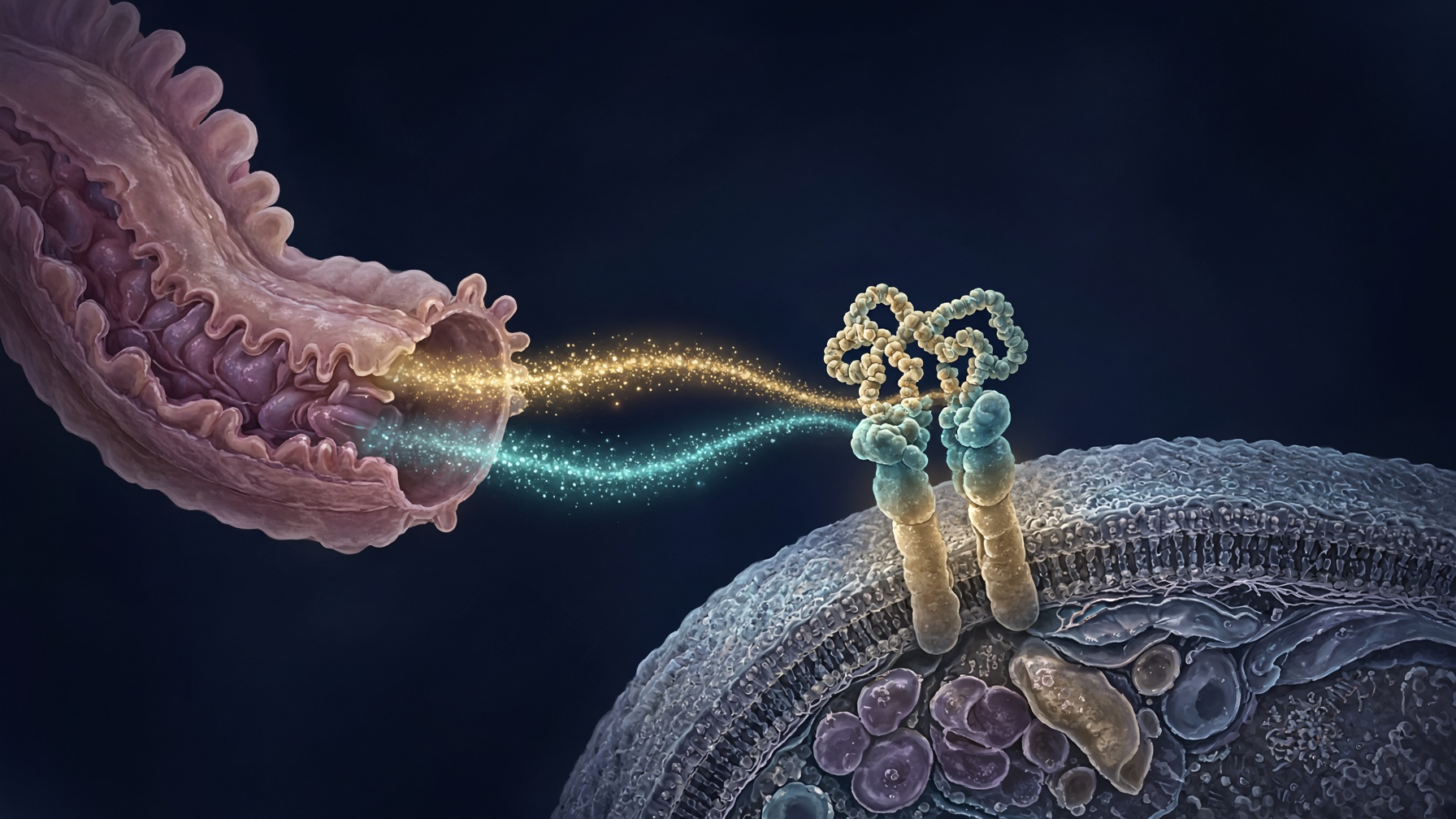
GIP is glucose-dependent insulinotropic polypeptide, the hormone K cells in the upper small intestine release when a meal brings fat and carbohydrate. Its job at the pancreas is simple to say and easy to underestimate. If blood glucose is high, GIP tells the beta cell to release more insulin. If glucose is not high, it does not. GLP-1, from L cells a little further down the gut, does that same glucose-dependent job and adds two more: it slows the stomach, and it turns appetite down in the brainstem. Mounjaro is tirzepatide, one chain built to press both receptors. That second receptor is the whole argument.
In short. After you eat, the gut releases GIP and GLP-1. Both tell the pancreas to release insulin when sugar is high. GLP-1 also slows the stomach and quiets appetite. Mounjaro copies both.
Why the field forgot GIP, then picked it up again
The older name is gastric inhibitory polypeptide. John Brown's group isolated it as something that could quiet stomach acid. Dupré and colleagues then showed, in people, that it amplified insulin when glucose was given. For a while GIP looked like the incretin, the gut hormone that explains why oral glucose pulls more insulin than the same glucose in a vein. Then GLP-1 was identified, it was more obviously druggable, and the first medicines — exenatide, liraglutide, later semaglutide — were GLP-1 receptor agonists and nothing else. GIP looked weak in type 2 diabetes. Infusing it did not restore insulin the way GLP-1 did. The tidy conclusion was that the GIP receptor had gone deaf, so there was no point building a drug for it.
In short. GIP was noticed first, then sidelined, because in type 2 diabetes an infusion of GIP did not work as clearly as GLP-1. The medicines that followed only copied GLP-1.
The revival is a chemistry result, not a slogan. Unimolecular dual agonists — one chain that occupies GIPR and GLP-1R — did things in animals, and then in people, that GLP-1 alone had not done at the same tolerability. Coskun, Sloop and colleagues published tirzepatide, LY3298176, in Cell Metabolism in 2018. It is a 39-residue chain, biased toward the GIP receptor, still active at GLP-1, with a C20 fatty diacid so a fraction rides on albumin in the blood. Native GLP-1 lasts about two minutes, because DPP-4 clips it at the second residue. The engineered chain is built so that clip misses. Albumin binding is why a dose is discussed in weeks, not in minutes.
In short. Tirzepatide is one 39-letter chain that prefers the GIP receptor and still presses GLP-1. A fatty tail lets it stick to a blood protein, so it lasts about a week. Your own GLP-1 lasts about two minutes.
What the two receptors do, in ordinary language
Both receptors are class B G-protein-coupled receptors. On the beta cell they work mainly through Gs and cyclic AMP, and the insulin they release is tied to glucose being high. That is the incretin effect, and it is why these molecules are not insulin. Insulin lowers glucose whether the meal was there or not. GIP and GLP-1 ask for insulin when the sugar is already up. GLP-1's extra jobs sit elsewhere. On the stomach it slows emptying, so the same meal arrives in the blood more slowly and you stay full longer. In the brainstem it reduces appetite, so the next meal is smaller. Nausea, when it happens, is that same slowing and that same fullness signal turned up. It is not a separate mysterious side effect.
In short. They ask the pancreas for insulin only when sugar is high. GLP-1 also slows the stomach and reduces hunger. Feeling sick is usually that same fullness, not a different drug effect.
GIP is not a copy of GLP-1 with a different badge. It is the receptor tirzepatide was biased toward. Adipose tissue also carries GIP receptors, and the papers argue about lipid handling there, not only about insulin. You do not need that argument to understand the trial results. You need it to understand why a dual agonist is not 'GLP-1, but more'. Semaglutide occupies GLP-1 only. Tirzepatide occupies both. Retatrutide, LY3437943, occupies both and adds the glucagon receptor, which is a liver-and-energy-expenditure question rather than a third copy of fullness.
In short. Semaglutide is the fullness hormone only. Mounjaro is fullness plus GIP. Retatrutide adds a third, the one that tells the liver to spend fuel.
The numbers, and what they are numbers of
SURPASS-2, Frias and colleagues, New England Journal of Medicine, 2021, put tirzepatide 5, 10 and 15 mg against semaglutide 1 mg in people with type 2 diabetes. The dual agonist lowered HbA1c further at the higher doses. That is a blood-sugar trial, in people who already had diabetes. SURMOUNT-1, Jastreboff, Aronne, Ahmad and colleagues, New England Journal of Medicine, 2022, is the weight trial in people with obesity and without diabetes. At 72 weeks the mean weight change was about 15.0, 19.5 and 20.9 percent at 5, 10 and 15 mg, against about 3.1 percent on placebo. STEP-1, the semaglutide 2.4 mg weight trial, had landed near 15 percent. Different trials, different people, not a head-to-head at the weight doses. The honest sentence is that adding the GIP receptor, in the trial that was actually run, moved the average further than GLP-1 alone had in its own trial, and that gastrointestinal events remained the class effect.
In short. In the diabetes trial, tirzepatide beat semaglutide 1 mg on blood sugar. In the weight trial, 15 mg for 72 weeks meant about 21 percent average loss, against about 3 percent on placebo. Those are trial averages, not a promise to one person.
- GIP
- K cells
- GLP-1
- L cells
- Tirzepatide
- both receptors
- 72 weeks
- about 21%
Released with a meal. Tells the beta cell to release insulin when glucose is high.
Insulin when sugar is up, a slower stomach, a smaller appetite. Native hormone lasts minutes.
LY3298176. GIP-biased, still GLP-1. Fatty tail. About a week on albumin.
SURMOUNT-1 mean loss at 15 mg, against about 3% on placebo. A trial mean.
Stopping the drug hands the appetite signal back. The trials that followed people off treatment watched weight return toward where it started, which is what you would expect if the effect was occupancy of receptors rather than a rewritten set-point. That is physiology, and it is also why a vial is not a plan. The pen in those papers is a medicine with a dose, a titration and a licence. This page is the mechanism. The Mounjaro listing on this site is 30 mg of that chain, lyophilised, made in America, HPLC-MS on identity, for research use only and not for human consumption.
In short. When the drug stops, appetite comes back, because the effect was the receptors being occupied. The papers used a licensed pen. The listing here is the research vial of the same chain.
Questions the essay actually answers
- What is GIP, in plain English?
- GIP is a hormone the upper gut releases when you eat. It tells the pancreas to release more insulin, but only when blood sugar is already high. The older name was gastric inhibitory polypeptide. The modern name is glucose-dependent insulinotropic polypeptide. Same molecule.
- How does Mounjaro work?
- Mounjaro is tirzepatide, one chain that presses the GIP receptor and the GLP-1 receptor. Appetite falls, the stomach empties more slowly, and insulin after a meal is stronger when sugar is high. A fatty tail lets it ride on albumin, so it lasts about a week. Your own GLP-1 lasts about two minutes.
- How is tirzepatide different from semaglutide?
- Semaglutide only presses GLP-1. Tirzepatide presses GLP-1 and GIP, and the design leans toward GIP. In SURPASS-2 it beat semaglutide 1 mg on blood sugar in type 2 diabetes. In SURMOUNT-1, 15 mg for 72 weeks meant about 21 percent mean weight loss.
- Where does retatrutide fit?
- Retatrutide, LY3437943, presses the same two receptors and adds the glucagon receptor, which pushes the liver to spend fuel rather than store it. It is the triple. Tirzepatide is the double.
- Is the 30 mg vial the same thing as the pen in the trial?
- It is the same chain, tirzepatide, LY3298176. The pen in SURMOUNT and SURPASS is a licensed medicine with a dose schedule. This listing is a 30 mg lyophilised research vial, HPLC-MS, made in America, for laboratory research only. Not for human consumption.
Hypothetical research reconstitution
How these vials are typically mixed
Hypothetical research reconstitution for the named catalogue vial. Not a protocol, not medical advice, not a use instruction. These amounts sit in published and commonly cited laboratory ranges. The vial is labelled for research use only — not for human or veterinary administration.
Mounjaro
30mg
Mix with 3 ml bacteriostatic water → 10 mg/ml
- Hypothetical aliquot
- The SURMOUNT arms used 5, 10 and 15 mg
- At 10 mg/ml those amounts are 0.50, 1.00 and 1.50 ml
- How often
- Once weekly in the published trials
- SURMOUNT-1 ran 72 weeks.
Bench steps
- Let the vial sit until it is no longer cold to the touch.
- Wipe the stopper with 70% isopropyl alcohol. Let it dry.
- Draw 3 ml bacteriostatic water (0.9% benzyl alcohol).
- Run the water slowly down the inside glass — do not blast the cake.
- Roll between finger and thumb until the cake is gone. Do not shake.
- Label the date. Store the solution at 2–8 °C. Do not freeze. Use within 30 days unless the note below says otherwise.
Mounjaro 30mg. Tirzepatide, LY3298176. The milligram figures are what the papers used. They are not a use instruction for this vial.
Retatrutide
30mg
Mix with 3 ml bacteriostatic water → 10 mg/ml
- Hypothetical aliquot
- 1–2 mg to start; published trial arms ran higher by week
- 0.10–0.20 ml · 10–20 units on a U-100 syringe (at 1–2 mg)
- How often
- Once weekly
- The Jastreboff NEJM 2023 arms ran 48 weeks. That is a trial, not a shop protocol.
Bench steps
- Let the vial sit until it is no longer cold to the touch.
- Wipe the stopper with 70% isopropyl alcohol. Let it dry.
- Draw 3 ml bacteriostatic water (0.9% benzyl alcohol).
- Run the water slowly down the inside glass — do not blast the cake.
- Roll between finger and thumb until the cake is gone. Do not shake.
- Label the date. Store the solution at 2–8 °C. Do not freeze. Use within 30 days unless the note below says otherwise.
LY3437943 architecture. Weekly, not daily. Those milligram figures are what the papers used on the investigational medicine — they are not a use instruction for this reagent.
Bacteriostatic water and sterile syringes ship with peptide orders over £75. Kit details · 10 ml bacteriostatic water
The vials this essay sits on
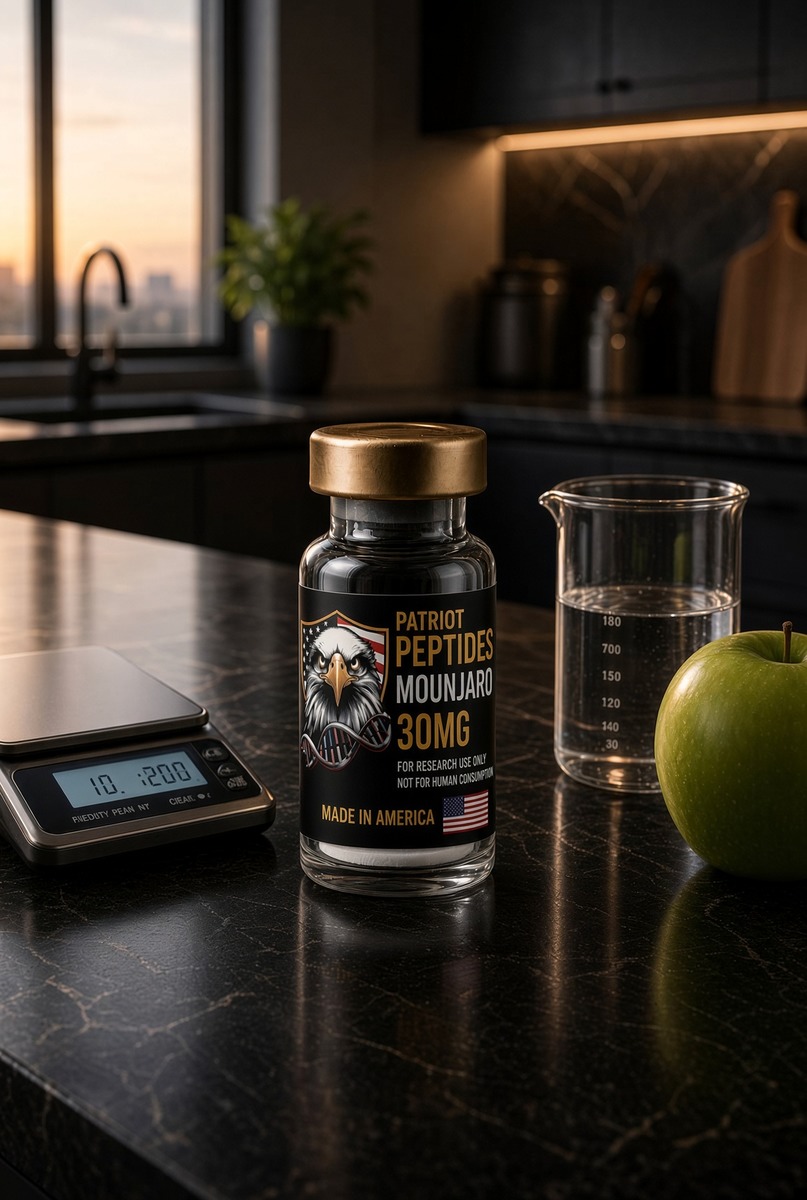
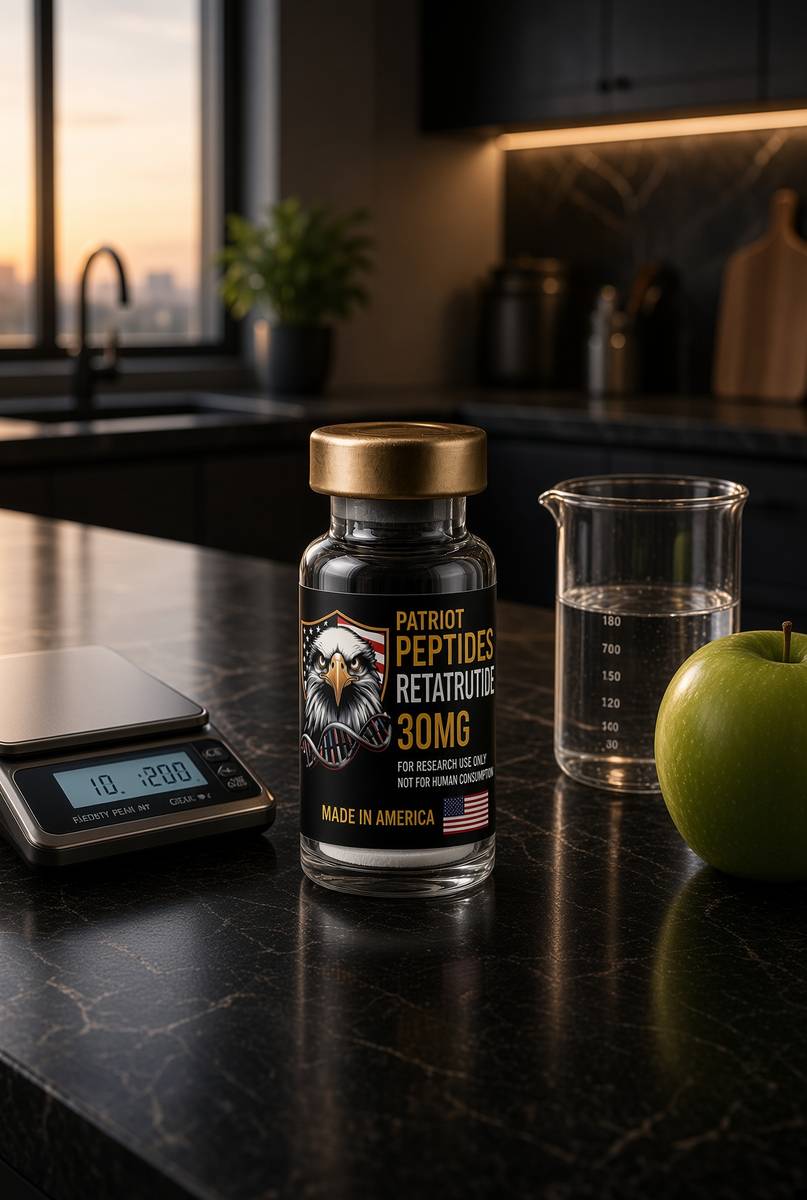
Named sequences the essay maps — Mounjaro, Retatrutide. Hypothetical research neighbourhood, not a protocol, not a medicine. One press puts every in-stock vial in the bag.
 Research only
 Made in USA
Incretin
Retatrutide
One chain that copies three hormones you release after a meal: fullness, insulin, and how the liver spends fuel.
4.6(609)
6 browsing this now · 3 purchased in the last 24 hours
30mg · In stock
£120.00
Research use only. Not a combined-use instruction.
Read next
5 min · Peptide research
Semaglutide and tirzepatide: one receptor, then two
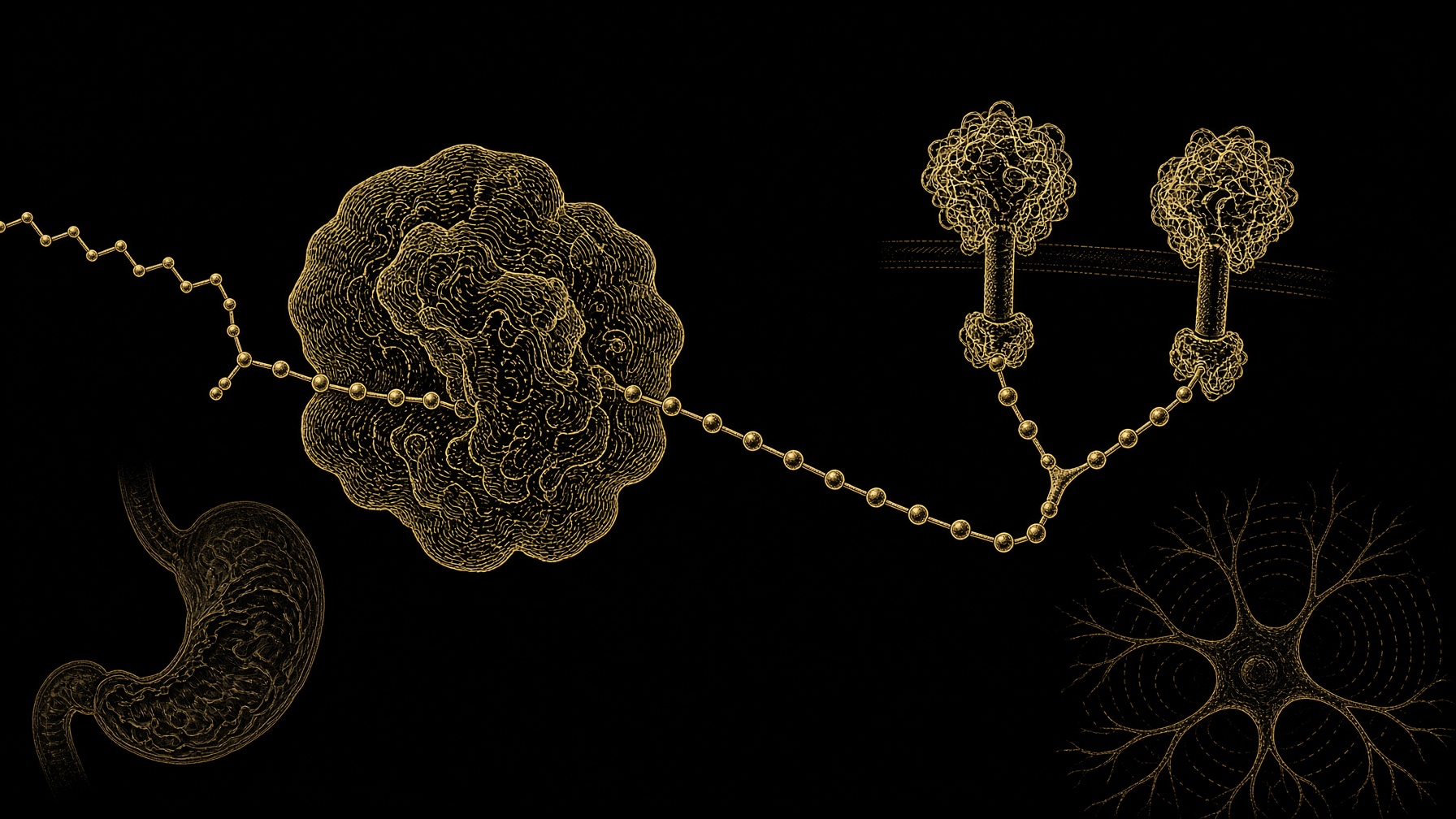
Semaglutide is GLP-1. Tirzepatide is GLP-1 plus GIP. The obesity trials printed about 15 percent and about 21 percent mean weight loss. Retatrutide adds glucagon. Stopping the drug hands appetite back.
48 min · long read · Peptide research
From secretin to retatrutide: a century of gut hormones
Bayliss and Starling named the first hormone in 1902. A hundred and twenty years later a single American-made chain occupies GIP, GLP-1 and glucagon at once. The through-line is the gut talking to the pancreas.
44 min · long read · Peptide research
Retatrutide (LY3437943): the published triple-agonist structure
A fatty-acylated unimolecular agonist at GIPR, GLP-1R and GCGR.
43 min · long read · Peptide research
How to read a Phase 2 paper without lying to yourself
Jastreboff et al., NEJM 2023, is a public Phase 2 trial of retatrutide: 338 adults, placebo, 48 weeks, 24.2% mean weight loss at 12 mg. n, randomisation, adverse events, and why a research vial of the published structure is not the investigational medicine.
More in this desk
53 min · long read · Peptide research
How research peptides are made — and why HPLC actually matters
Solid-phase peptide synthesis builds a chain one residue at a time. HPLC then asks whether the main peak is what you think it is. ≥98% is not a slogan. It is a chromatogram.

52 min · long read · Peptide research
Recovery, GH pulses and the CJC / ipamorelin pair
Somatotrophs have two 'go' receptors. CJC without DAC is a slightly longer GHRH pulse. Ipamorelin is a selective ghrelin-receptor key that does not yank ACTH. Together they are the pair Bowers already showed is more than additive — not a gym protocol.
51 min · long read · Peptide research
Fatigue, cellular energy and the NAD+ / MOTS-c neighbourhood
NAD+ is the rechargeable chip every cell spends on fuel and DNA repair — and the pool shrinks with age. MOTS-c is a mitochondrial 16-mer sent out under metabolic stress. Two answers to 'I have no energy' that are not coffee.
50 min · long read · Peptide research
Melanocortin circuits: pigment, appetite and PT-141
Melanotan II lights MC1, MC3, MC4 and MC5 — pigment plus the rest of the sheet. PT-141 is the free-acid cousin pointed at MC3 and MC4, the circuitry papers use for desire and energy, not skin colour. Same Arizona family. Different question.
The page is the mechanism: the protein, what it does in the cell, and the drug or peptide that talks to it.