


Peptide research · 5 min · 1,108 words
MK-677: the ghrelin mimetic you can swallow
Ibutamoren is not a peptide and not a SARM. It sits on the ghrelin receptor for hours, raises growth hormone and IGF-1, and brings hunger, water and a higher fasting glucose with it.
What this essay actually tells you
- Ibutamoren (MK-677) is an oral non-peptide agonist of the ghrelin receptor. It is not a peptide and not a SARM. Hunger is the receptor, not an optional side effect.
- It lasts for hours, so once a day covers the clock. Ipamorelin is the same receptor and gone in minutes. Chapman 1996 and Nass 2008: GH and IGF-1 rise in older adults.
- Insulin sensitivity often falls and fasting glucose can rise. Fat-free mass on a scan includes the water growth hormone retains.
What this actually means
MK-677, ibutamoren, is a small drug you swallow. It presses the same receptor as the hunger hormone ghrelin, so growth hormone and IGF-1 rise and so does appetite. It lasts for hours, unlike ipamorelin, which is a short peptide. It is not a steroid and not a SARM. Blood sugar often creeps up.
Ibutamoren is the name. MK-677 is the lab code Merck used, and it is the name that stuck. It is not a peptide. A peptide is a chain of amino acids a gut protease can cut, which is why ipamorelin and CJC are injected if you want them to arrive. Ibutamoren is a small spiropiperidine, built to survive the stomach and the liver and still fit the ghrelin receptor, GHS-R1a. You swallow it. That single fact is most of its reputation. The receptor it occupies is the same one ghrelin uses and the same one ipamorelin uses. The clock is the difference. A peptide secretagogue is gone in well under an hour. Ibutamoren hangs around for hours, so one dose a day keeps tickling the receptor across meals, sleep and the next morning.
In short. MK-677 is a pill-shaped chemical, not a peptide. It presses the same receptor as ghrelin and ipamorelin, and it lasts for hours instead of minutes.
What the receptor does has not changed because the ligand is oral. On the somatotroph, GHS-R1a raises calcium and, together with the GHRH signal, empties growth-hormone granules. In the arcuate nucleus the same receptor sits on NPY and AgRP neurons, which is why ghrelin makes you hungry and why ibutamoren makes you hungry. Hunger is not a side effect that a clever dose avoids. It is the receptor, doing the other job it evolved to do. Chapman, in the Journal of Clinical Endocrinology and Metabolism in 1996, gave it daily to older adults and watched growth hormone and IGF-1 rise. Nass, Annals of Internal Medicine, 2008, ran a longer trial in healthy older people: IGF-1 moved back toward a younger range, appetite went up, and fat-free mass ticked up. Fat-free mass on a scan includes water. Growth hormone retains water. Read the scan with that in mind.
In short. It raises growth hormone and IGF-1, and it makes you hungry, because both of those are what the ghrelin receptor is for. Some of the weight is water.
A pulse, or a day-long nudge
The pituitary likes growth hormone in pulses. A trough is not wasted time. It is how the liver's STAT5 programme stays a programme rather than a continuous shout, and it is one reason acromegaly looks the way it looks when a tumour never lets the signal fall. Ipamorelin, and CJC without DAC, are short on purpose. They amplify a pulse and then get out of the way. Ibutamoren's hours-long life means the ghrelin side of that conversation stays partly on between meals. The papers still show pulsatile growth hormone, not a flat line, but the baseline of the conversation is higher for more of the clock. That is useful if your question is an older adult with a sleepy axis and a low IGF-1. It is a different object from a short peptide you wanted for a single large pulse. IGF-1, being the integral, rises either way. The shape of the day underneath it does not.
In short. Short peptides make a pulse and leave. MK-677 stays for hours, so the axis is nudged all day. IGF-1 still rises. The shape of the day is not the same.
Insulin hears this. Growth hormone makes fat cells release fatty acids and makes the liver and muscle a little deaf to insulin. In the Nass trial and in the studies around it, fasting glucose drifted up and insulin sensitivity drifted down. For an older person who was already sliding toward diabetes, that drift is the bill that matters more than the IGF-1. For a lean lifter eating a surplus, it is water, hunger, and a glucose number worth watching rather than a free recomposition. Cortisol and prolactin move less than they do with GHRP-6, which is why people file MK-677 as clean. Less is not none, and hunger is not optional. Calling it a SARM is a category error. SARMs bind the androgen receptor. Ibutamoren never goes near it. You will not get androgenic hair loss from the ghrelin receptor. You might get hungry enough to undo the cut you thought you were on.
In short. Blood sugar often creeps up, because growth hormone fights insulin. It is not a SARM and it will not touch your hair through the androgen receptor. It will make you eat.
Where it sits next to the peptides
If the question is an oral growth-hormone secretagogue with human data in older adults, ibutamoren is the molecule those papers used. If the question is a short, selective pulse at GHS-R1a that a bench can turn off in an hour, that is ipamorelin, and the 1998 tables are why. If the question is the other door on the same cell, that is a GHRH analogue, CJC without DAC or tesamorelin. Stacking the long oral with a short peptide does not create a third receptor. It stacks a day-long ghrelin signal on top of whatever pulse you already provoked, and the hunger and the glucose come with the long one. Somatropin, the hormone itself, skips both doors. People who want the oral because they dislike needles are allowed that preference. They should still know they bought a different clock, not a more convenient ipamorelin.
In short. MK-677 is the oral, day-long ghrelin mimetic. Ipamorelin is the short selective peptide. CJC is the other receptor. Convenient is not the same molecule.
- Class
- not a peptide
- Receptor
- ghrelin, GHS-R1a
- Clock
- hours, once a day
- The bill
- appetite, glucose, water
Spiropiperidine. Survives the gut. Merck code MK-677, name ibutamoren.
Same lock as ipamorelin. Hunger is on-target. Not an androgen receptor.
A peptide secretagogue is gone in minutes. This one covers the day.
Nass, Ann Intern Med 2008. IGF-1 rises. Insulin sensitivity often falls.
Questions the essay actually answers
- What is MK-677?
- Ibutamoren, a non-peptide drug that activates the ghrelin receptor. Taken by mouth, it raises growth hormone and IGF-1 for hours rather than minutes. MK-677 is the old Merck code.
- Is MK-677 a peptide or a SARM?
- Neither. Peptides are amino-acid chains. SARMs bind the androgen receptor. Ibutamoren is a small molecule at the ghrelin receptor, GHS-R1a.
- Does MK-677 increase growth hormone?
- Yes. Daily oral dosing in older adults raises growth hormone secretion and IGF-1. Chapman, JCEM 1996, and Nass, Annals of Internal Medicine 2008, are the human papers people mean.
- Why does MK-677 make you hungry?
- The ghrelin receptor in the hypothalamus drives appetite. Hunger is the receptor working, not a side effect you can dose away.
- How is MK-677 different from ipamorelin?
- Same receptor. Ipamorelin is a short peptide, gone in minutes, and in the 1998 tables it did not raise cortisol or prolactin at growth-hormone doses. Ibutamoren is oral, lasts for hours, and carries a clearer hunger and glucose bill.
Hypothetical research reconstitution
How these vials are typically mixed
Hypothetical research reconstitution for the named catalogue vial. Not a protocol, not medical advice, not a use instruction. These amounts sit in published and commonly cited laboratory ranges. The vial is labelled for research use only — not for human or veterinary administration.
Ipamorelin
10mg
Mix with 2 ml bacteriostatic water → 5 mg/ml · 5,000 mcg/ml
- Hypothetical aliquot
- 200–300 mcg
- 0.04–0.06 ml · 4–6 units on a U-100 syringe
- How often
- Once or twice daily (morning and/or evening)
- 8–12 weeks
Bench steps
- Let the vial sit until it is no longer cold to the touch.
- Wipe the stopper with 70% isopropyl alcohol. Let it dry.
- Draw 2 ml bacteriostatic water (0.9% benzyl alcohol).
- Run the water slowly down the inside glass — do not blast the cake.
- Roll between finger and thumb until the cake is gone. Do not shake.
- Label the date. Store the solution at 2–8 °C. Do not freeze. Use within 30 days unless the note below says otherwise.
GHS-R1a hexapeptide. The 200 mcg mark is the usual starting aliquot. Stacks with CJC-1295 no DAC in the papers that run both.
CJC-1295 (no DAC)
10mg
Mix with 2 ml bacteriostatic water → 5 mg/ml · 5,000 mcg/ml
- Hypothetical aliquot
- 100–300 mcg
- 0.02–0.06 ml · 2–6 units on a U-100 syringe
- How often
- Once daily, often with ipamorelin in the same window
- 8–12 weeks
Bench steps
- Let the vial sit until it is no longer cold to the touch.
- Wipe the stopper with 70% isopropyl alcohol. Let it dry.
- Draw 2 ml bacteriostatic water (0.9% benzyl alcohol).
- Run the water slowly down the inside glass — do not blast the cake.
- Roll between finger and thumb until the cake is gone. Do not shake.
- Label the date. Store the solution at 2–8 °C. Do not freeze. Use within 30 days unless the note below says otherwise.
No DAC — the pulse, not the drip. This is not CJC with DAC. Fridge. Often paired with the ipamorelin listing or the 10/10 blend.
Bacteriostatic water and sterile syringes ship with peptide orders over £75. Kit details · 10 ml bacteriostatic water
The vials this essay sits on
Named sequences the essay maps — Ipamorelin, CJC without DAC. Hypothetical research neighbourhood, not a protocol, not a medicine. One press puts every in-stock vial in the bag.
 Research only
Growth axis
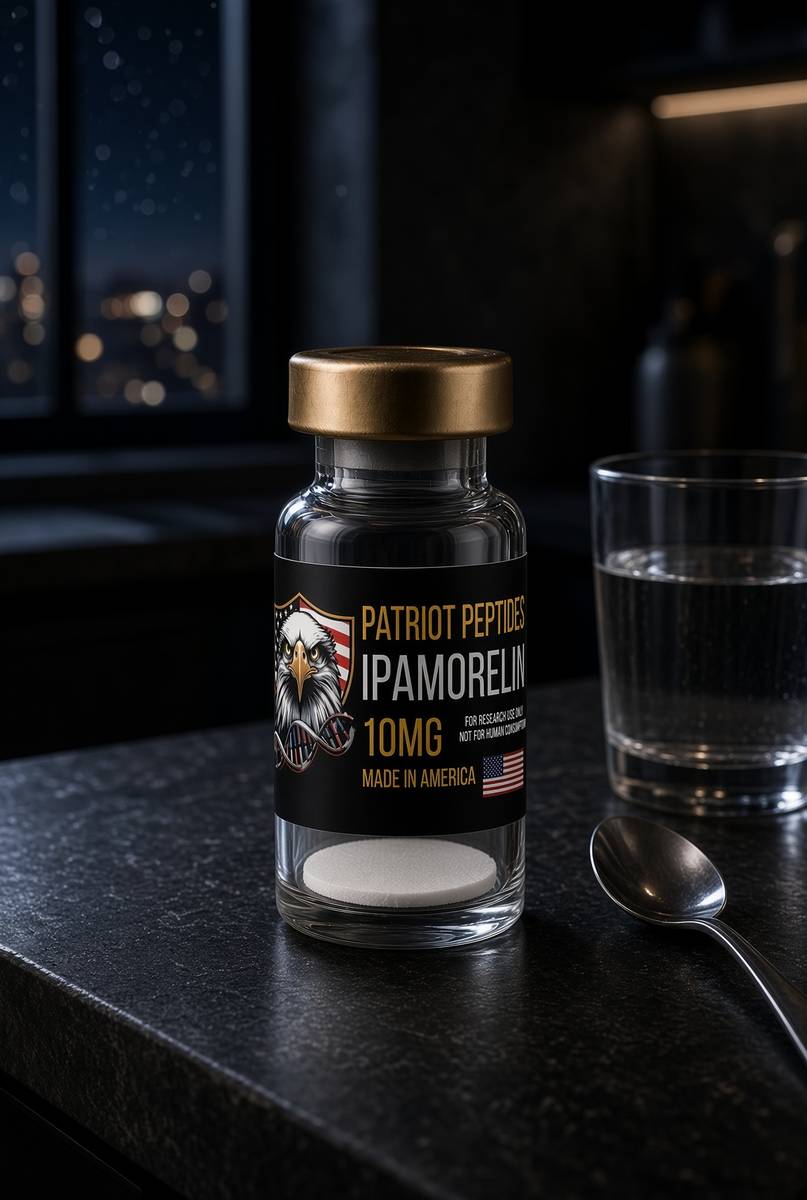
Ipamorelin
10 mg ipamorelin. The clean ghrelin-receptor pentapeptide.
4.7(457)
85 browsing this now · 4 purchased in the last 24 hours
10mg · In stock
£30.00
 Research only
Growth axis
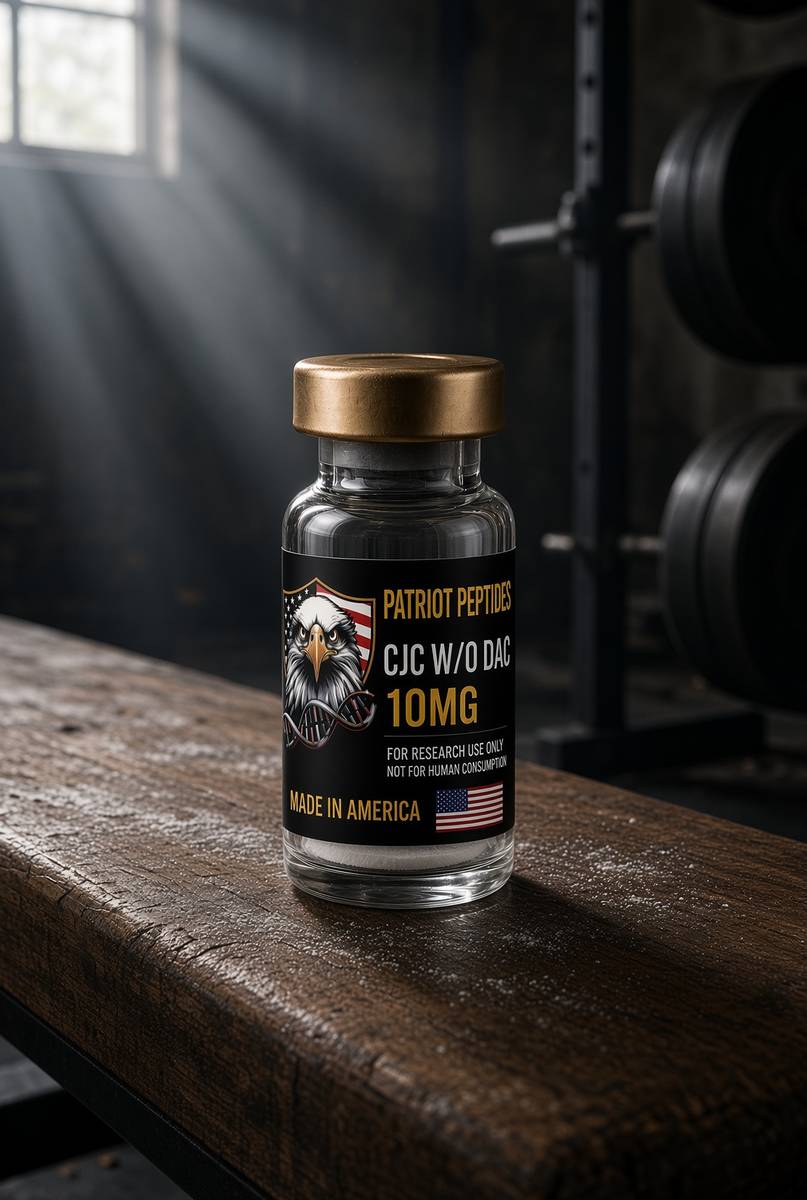
CJC without DAC
10 mg CJC without DAC — a GHRH pulse, not a weekly drip.
4.6(620)
49 browsing this now · 3 purchased in the last 24 hours
10mg · In stock
£30.00
Research use only. Not a combined-use instruction.
Read next
50 min · long read · Peptide research
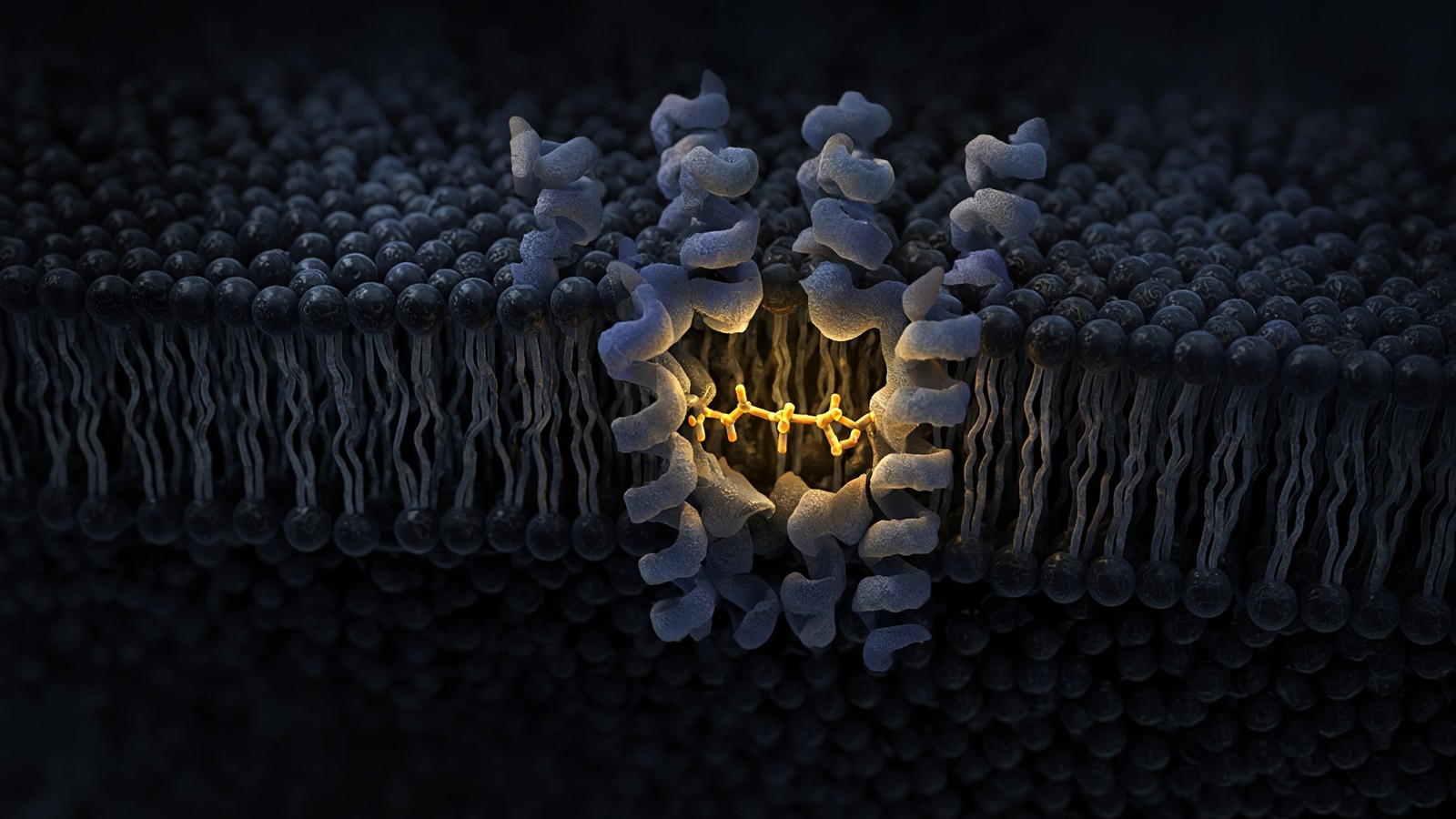
Ipamorelin: the ghrelin receptor without the circus
A pentapeptide GHS-R1a agonist that raises GH with minimal ACTH, cortisol or prolactin. Raun 1998 is still the paper. Selectivity is the entire product.
6 min · Peptide research
Tesamorelin: the GHRH analogue that actually got a licence
Forty-four residues, a tag that survives DPP-IV, a pulse of growth hormone, and a trial that shrank visceral fat in HIV lipodystrophy. Not CJC with DAC. Not a steroid.
41 min · long read · Peptide research
CJC-1295 without DAC: a GHRH analogue that still pulses
Modified GRF(1–29) with four substitutions that dodge DPP-IV, and deliberately without the Drug Affinity Complex that would glue it to albumin for a week. The design constraint is physiology.

11 min · Bodybuilding
Growth hormone, insulin, myostatin: the other levers on a fibre
After testosterone, the rest of the muscle-drug list is different receptors: a liver hormone, a storage hormone, and a brake. Food decides which of those signals becomes tissue.
More in this desk
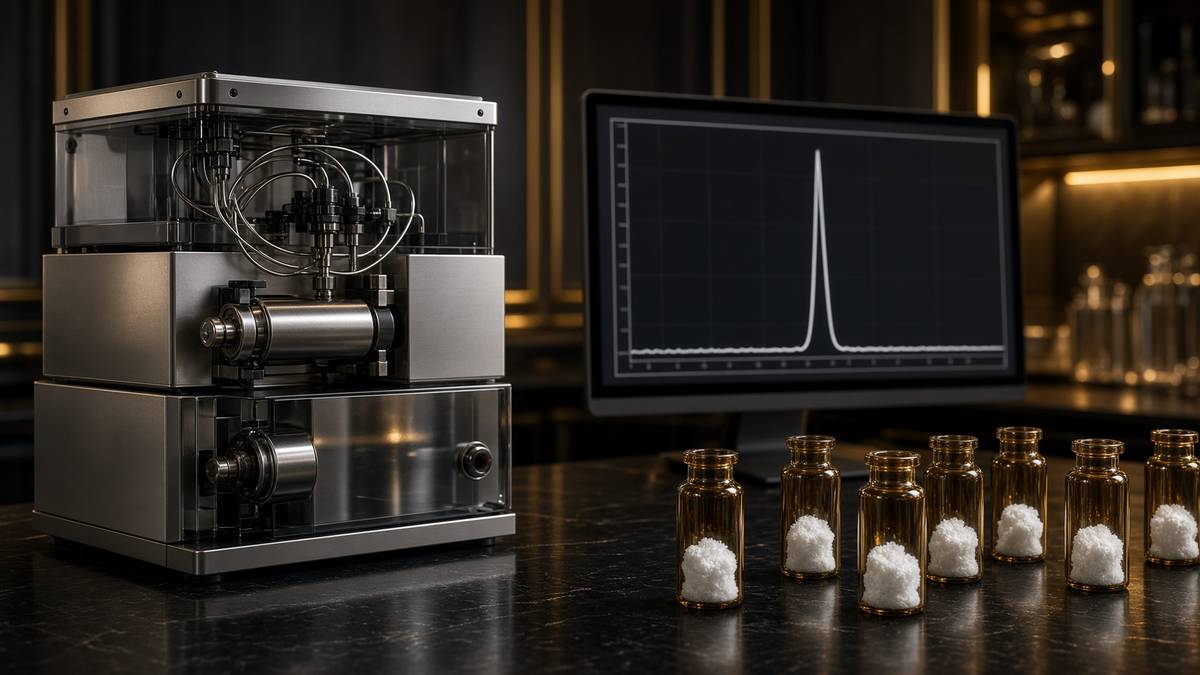
53 min · long read · Peptide research
How research peptides are made — and why HPLC actually matters
Solid-phase peptide synthesis builds a chain one residue at a time. HPLC then asks whether the main peak is what you think it is. ≥98% is not a slogan. It is a chromatogram.

52 min · long read · Peptide research
Recovery, GH pulses and the CJC / ipamorelin pair
Somatotrophs have two 'go' receptors. CJC without DAC is a slightly longer GHRH pulse. Ipamorelin is a selective ghrelin-receptor key that does not yank ACTH. Together they are the pair Bowers already showed is more than additive — not a gym protocol.
51 min · long read · Peptide research
Fatigue, cellular energy and the NAD+ / MOTS-c neighbourhood
NAD+ is the rechargeable chip every cell spends on fuel and DNA repair — and the pool shrinks with age. MOTS-c is a mitochondrial 16-mer sent out under metabolic stress. Two answers to 'I have no energy' that are not coffee.
51 min · long read · Peptide research
Melanocortin circuits: pigment, appetite and PT-141
Melanotan II lights MC1, MC3, MC4 and MC5 — pigment plus the rest of the sheet. PT-141 is the free-acid cousin pointed at MC3 and MC4, the circuitry papers use for desire and energy, not skin colour. Same Arizona family. Different question.
Essays describe published research. They are not medical advice and they do not authorise human use of any catalogue item.