

Peptide research · 5 min · 1,064 words
Semaglutide and tirzepatide: one receptor, then two
Semaglutide is GLP-1. Tirzepatide is GLP-1 plus GIP. The obesity trials printed about 15 percent and about 21 percent mean weight loss. Retatrutide adds glucagon. Stopping the drug hands appetite back.
What this essay actually tells you
- Semaglutide is a GLP-1 agonist. STEP-1: about 14.9% mean weight loss at 2.4 mg over 68 weeks. Tirzepatide also hits GIP. SURMOUNT-1: about 20.9% at 15 mg over 72 weeks.
- A fatty-acid tail lets albumin carry them so DPP-4 cannot destroy them in minutes. Retatrutide adds the glucagon receptor and is not either drug.
- Lean mass leaves with the fat if protein and loading are absent. Stop the drug and appetite returns. Extension studies show much of the weight returning.
What this actually means
Semaglutide activates only the GLP-1 receptor and produced about 15 percent mean weight loss in STEP-1. Tirzepatide also activates GIP and produced about 21 percent in SURMOUNT-1. A fatty-acid tail is why both last long enough to be weekly drugs. Stop them and the weight tends to return. Retatrutide is a third receptor on top.
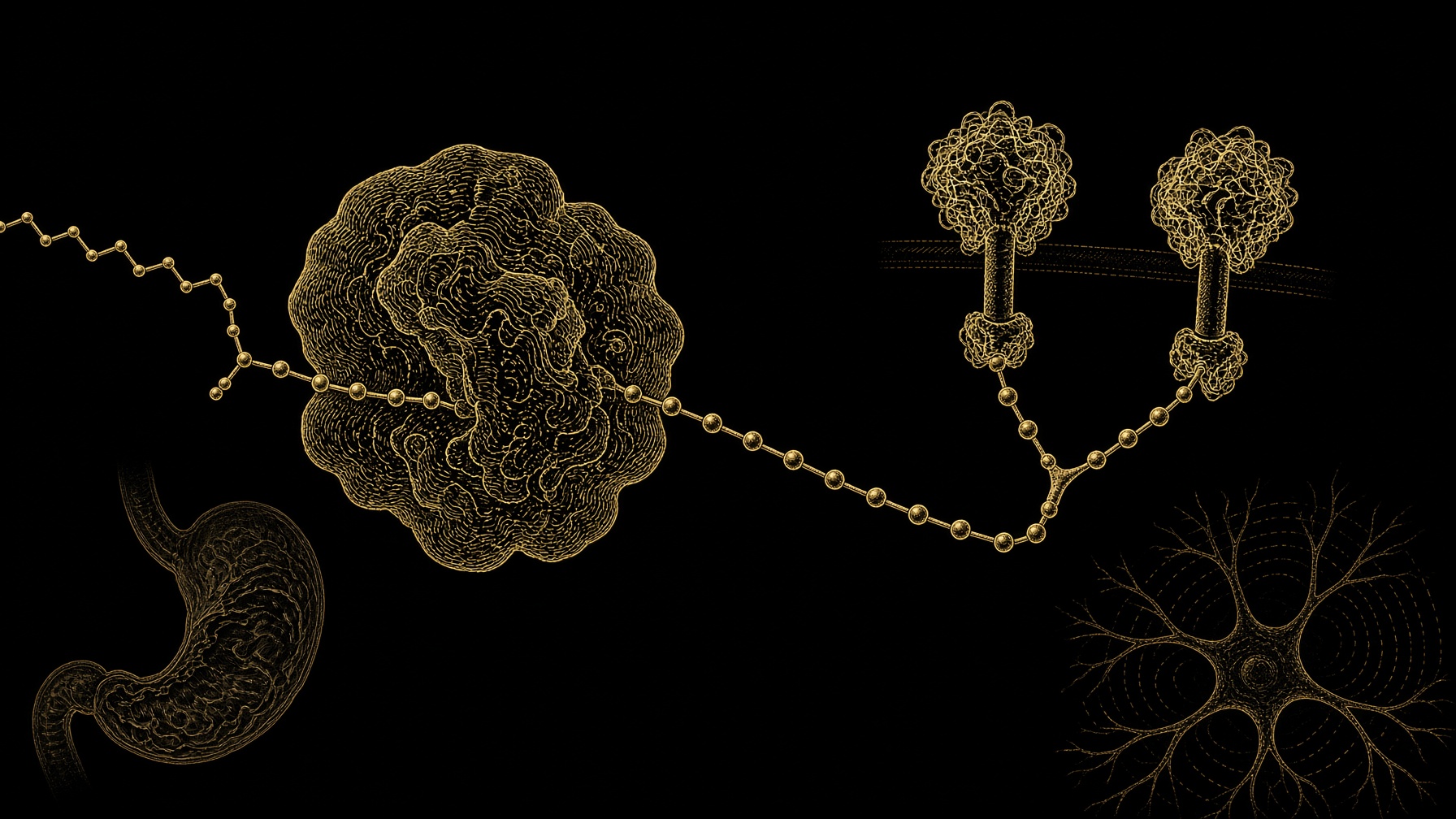
Semaglutide is a GLP-1 receptor agonist. Tirzepatide is a dual agonist at the GIP receptor and the GLP-1 receptor. Both are long peptides with a fatty-acid chain hung on them so albumin carries them and DPP-4, the enzyme that destroys native GLP-1 in about two minutes, cannot end the experiment before it starts. Semaglutide is the molecule in Ozempic and in Wegovy. Tirzepatide is the molecule in Mounjaro and in Zepbound. Retatrutide, the one this catalogue's research page is about, adds a third receptor, the glucagon receptor, and is a different structure, LY3437943. Three drugs, three receptor counts. The internet's habit of calling all of them 'GLP-1' keeps the least interesting fact and throws away the pharmacology.
In short. Semaglutide hits the GLP-1 receptor. Tirzepatide hits GLP-1 and GIP. Retatrutide hits those two plus glucagon. A fat tail on the chain is why they last days rather than minutes.
GLP-1, from the L cells of the gut, slows the stomach, raises insulin when glucose is high, lowers glucagon, and tells the brainstem and the hypothalamus that a meal has happened. That last signal is why appetite falls and why nausea is not an accident. You are occupying a receptor whose job includes making you decline the next plate. GIP, from the K cells, is the other incretin. For years it looked like the duller sibling. Tirzepatide's trials say the combination is not a copy of GLP-1 at a higher dose. The weight loss is larger, and the tolerability is not simply 'more GLP-1'. Glucagon, the third voice on retatrutide, adds energy expenditure and hepatic fat handling to the same conversation. Same family of ideas. Not the same molecule.
In short. GLP-1 slows the stomach and cuts appetite, which is also why people feel sick. GIP is the extra receptor on tirzepatide. Glucagon is the extra one on retatrutide. More receptors, different drug.
The numbers the trials actually printed
STEP-1, Wilding and colleagues, New England Journal of Medicine, 2021: adults with obesity, without diabetes, semaglutide 2.4 milligrams weekly. Mean weight loss about 14.9 percent at 68 weeks, against about 2.4 percent on placebo, both with a lifestyle programme. SURMOUNT-1, Jastreboff and colleagues, New England Journal of Medicine, 2022: tirzepatide at 5, 10 or 15 milligrams weekly. At 15 milligrams, mean loss about 20.9 percent at 72 weeks. Those are trial populations, titrated slowly because the nausea is dose-shaped, and they are not a promise to a person who was not in the trial. They are the reason the drugs exist as medicines. Retatrutide's phase 2, also Jastreboff, 2023, printed about 24 percent at the top dose over 48 weeks. Larger still, shorter trial, not yet the medicine the other two already are.
In short. In the big obesity trials, weekly semaglutide averaged about 15 percent weight loss in just over a year. Tirzepatide at the top dose averaged about 21 percent. Retatrutide's phase 2 was higher and is not the same kind of approval.
A share of the weight is lean tissue. Any large energy deficit takes muscle unless the person is eating enough protein and loading the fibres. The drug does not know the difference between a fat cell and a biceps. It knows appetite, gastric emptying and, for tirzepatide, a second incretin receptor. People who lose twenty kilograms without a stimulus for muscle keep less muscle than people who lift and eat protein while the same kilograms leave. That is ordinary physiology from the protein and fibre essays, arriving here because the deficit is unusually effective. Stopping the drug is the other plain finding. Appetite returns because the receptor is no longer occupied. The weight returns in the extension studies unless something else in the life has changed. Occupancy was doing the work.
In short. A lot of the lost weight can be muscle if you do not eat protein and train. Stop the drug and appetite comes back, and in the extension studies a lot of the weight comes back with it.
What the neighbours actually bind
MOTS-c, AOD-9604, growth hormone and a stimulant reach different proteins, and none of them occupies the GLP-1 receptor. MOTS-c is a mitochondrial peptide read from 12S rRNA. AOD-9604 is a fragment of growth hormone and does not bind GLP-1R. Growth hormone binds the growth-hormone receptor, JAK2 phosphorylates the tail, STAT5 writes IGF-1, and fat distribution can change without ever printing a STEP trial. A stimulant raises catecholamines at adrenergic receptors and does not slow gastric emptying through a gut-hormone receptor. The side-effect list of semaglutide and tirzepatide is the receptor list: nausea, vomiting, constipation or diarrhoea, a risk of gallbladder disease because the stomach is slow and the weight loss is fast, and a boxed warning carried over from the rodent C-cell finding that human calcitonin monitoring has not turned into a clinical epidemic. Diabetic retinopathy can worsen short-term if glucose falls very fast.
In short. These are not fat-loss peptides from a different family. The nausea, the gallbladder risk and the rebound are GLP-1 pharmacology. A fragment of growth hormone does not do this job.
- Semaglutide
- GLP-1 only
- Tirzepatide
- GIP and GLP-1
- Retatrutide
- those two, plus glucagon
- The tail
- albumin
STEP-1: about 14.9% at 2.4 mg, 68 weeks. Wilding, NEJM 2021.
SURMOUNT-1: about 20.9% at 15 mg, 72 weeks. Jastreboff, NEJM 2022.
Phase 2 near 24% at 48 weeks. Glucagon receptor as well as the two incretins.
Fatty-acid acylation. DPP-4 would otherwise destroy the hormone in minutes.
Questions the essay actually answers
- What is the difference between semaglutide and tirzepatide?
- Semaglutide activates the GLP-1 receptor. Tirzepatide activates GLP-1 and GIP. In the obesity trials, mean weight loss was about 15 percent with semaglutide 2.4 mg and about 21 percent with tirzepatide 15 mg.
- How is retatrutide different?
- It activates GLP-1, GIP and the glucagon receptor, so the liver also sees a glucagon signal on top of the two incretin signals. Phase 2 weight loss was larger still and the trial was shorter.
- Why do these drugs last a week?
- A fatty-acid chain lets albumin carry them, and it stops DPP-4 destroying them in minutes the way it destroys the GLP-1 your gut makes after a meal.
- Do you regain weight when you stop?
- In the extension studies, much of the weight returns after the drug is stopped. Appetite was being held down by receptor occupancy. Take the occupancy away and the appetite comes back.
- Do GLP-1 drugs cause muscle loss?
- A large share of lost weight can be lean mass if protein and loading are absent. The drug cuts appetite. It does not instruct a muscle to keep its protein. That still takes food and tension.
Hypothetical research reconstitution
How this vial is typically mixed
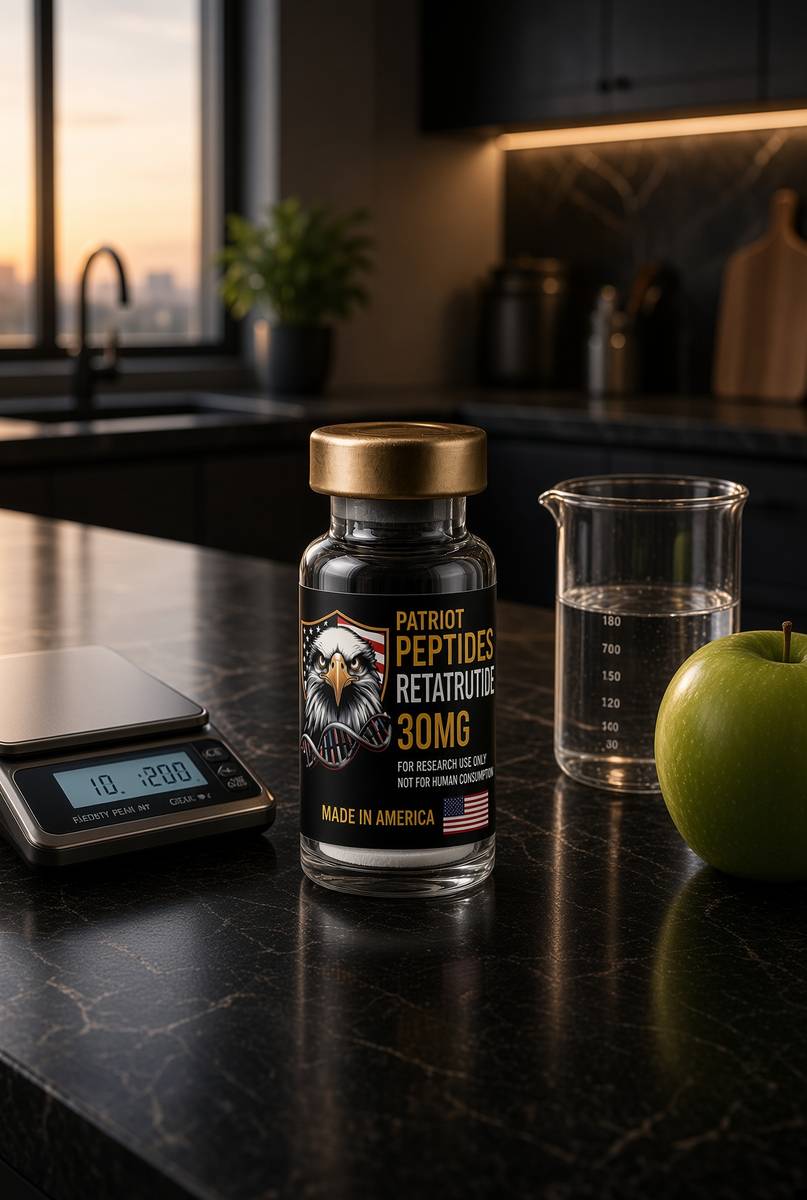
Hypothetical research reconstitution for the named catalogue vial. Not a protocol, not medical advice, not a use instruction. These amounts sit in published and commonly cited laboratory ranges. The vial is labelled for research use only — not for human or veterinary administration.
Retatrutide
30mg
Mix with 3 ml bacteriostatic water → 10 mg/ml
- Hypothetical aliquot
- 1–2 mg to start; published trial arms ran higher by week
- 0.10–0.20 ml · 10–20 units on a U-100 syringe (at 1–2 mg)
- How often
- Once weekly
- The Jastreboff NEJM 2023 arms ran 48 weeks. That is a trial, not a shop protocol.
Bench steps
- Let the vial sit until it is no longer cold to the touch.
- Wipe the stopper with 70% isopropyl alcohol. Let it dry.
- Draw 3 ml bacteriostatic water (0.9% benzyl alcohol).
- Run the water slowly down the inside glass — do not blast the cake.
- Roll between finger and thumb until the cake is gone. Do not shake.
- Label the date. Store the solution at 2–8 °C. Do not freeze. Use within 30 days unless the note below says otherwise.
LY3437943 architecture. Weekly, not daily. Those milligram figures are what the papers used on the investigational medicine — they are not a use instruction for this reagent.
Bacteriostatic water and sterile syringes ship with peptide orders over £75. Kit details · 10 ml bacteriostatic water
The American-made molecule
Identical to Eli Lilly’s LY3437943. Synthesised in the United States. HPLC-characterised.
 Made in USAOut of stock
Incretin
Retatrutide
US-made retatrutide 30mg — the published structure LY3437943, HPLC-MS verified.
4.6(609)
122 browsing this now · 5 purchased in the last 24 hours
30mg
£120.00
Read next
44 min · long read · Peptide research
Retatrutide (LY3437943): the published triple-agonist structure
A fatty-acylated unimolecular agonist at GIPR, GLP-1R and GCGR.
48 min · long read · Peptide research
From secretin to retatrutide: a century of gut hormones
Bayliss and Starling named the first hormone in 1902. A hundred and twenty years later a single American-made chain occupies GIP, GLP-1 and glucagon at once. The through-line is the gut talking to the pancreas.
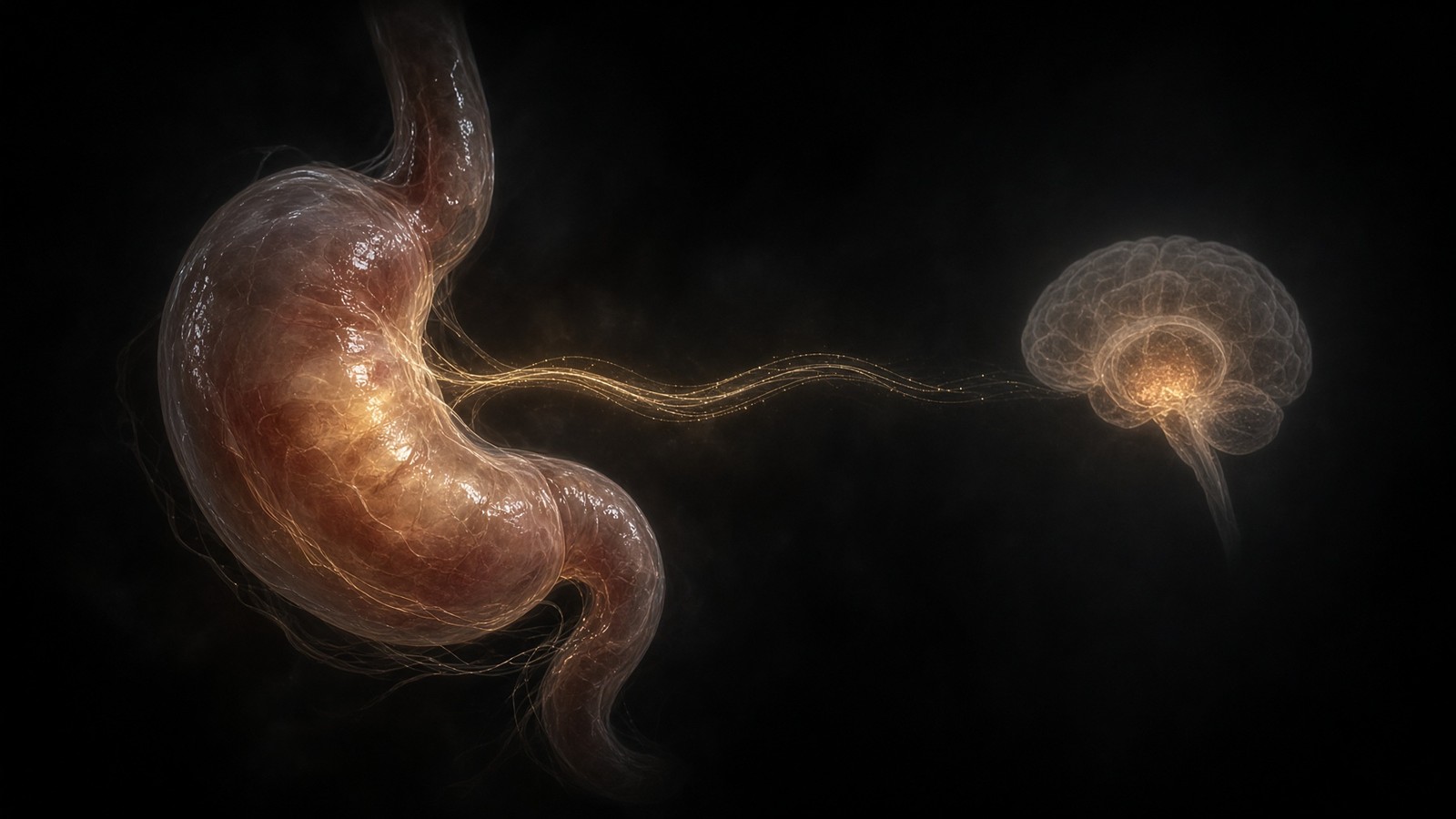
47 min · long read · Peptide research
Appetite, body weight and the peptides that sit on metabolic literature
Retatrutide is the published triple-agonist chain LY3437943 — GLP-1, GIP and glucagon on one molecule. MOTS-c is a mitochondrial 16-mer that talks to AMPK. One is an incretin story. One is a fuel-gauge story. Neither is a diet.
4 min · Peptide research
AOD-9604: the tail of growth hormone, and not the hormone
Residues 177–191, plus a tyrosine. The fragment was meant to move fat without IGF-1. Rodents agreed more than the human trials did. It is not somatropin, not a GHRH peptide, and not a GLP-1 drug.
More in this desk
53 min · long read · Peptide research
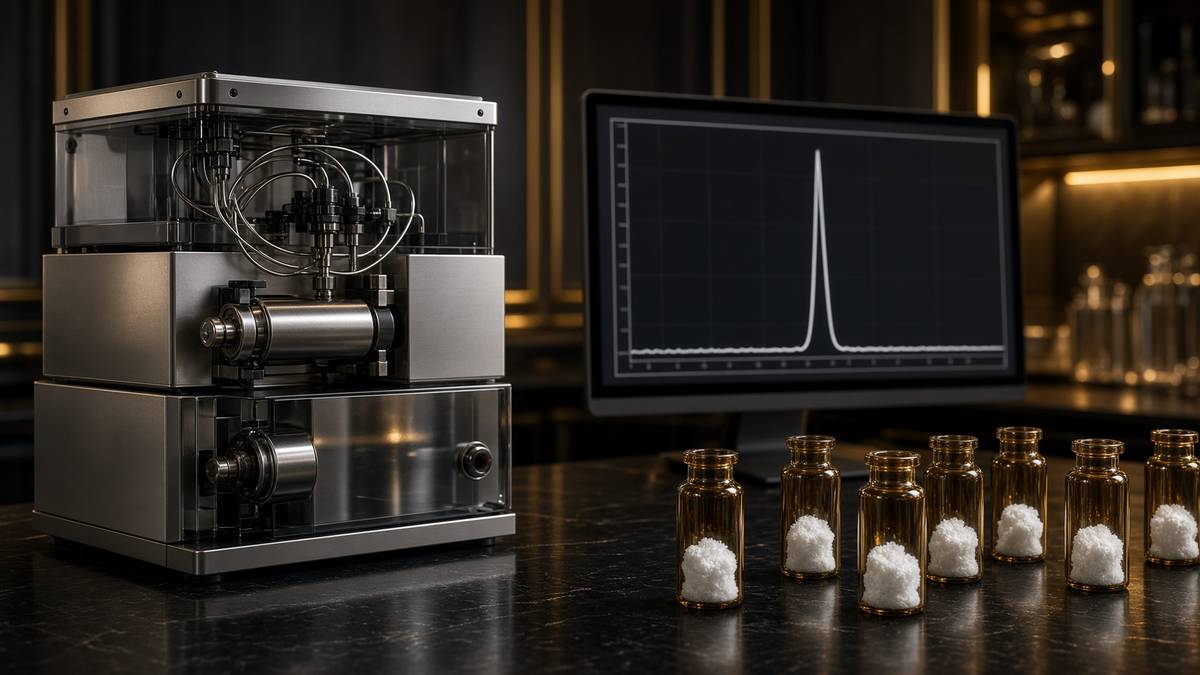
How research peptides are made — and why HPLC actually matters
Solid-phase peptide synthesis builds a chain one residue at a time. HPLC then asks whether the main peak is what you think it is. ≥98% is not a slogan. It is a chromatogram.

52 min · long read · Peptide research
Recovery, GH pulses and the CJC / ipamorelin pair
Somatotrophs have two 'go' receptors. CJC without DAC is a slightly longer GHRH pulse. Ipamorelin is a selective ghrelin-receptor key that does not yank ACTH. Together they are the pair Bowers already showed is more than additive — not a gym protocol.
51 min · long read · Peptide research
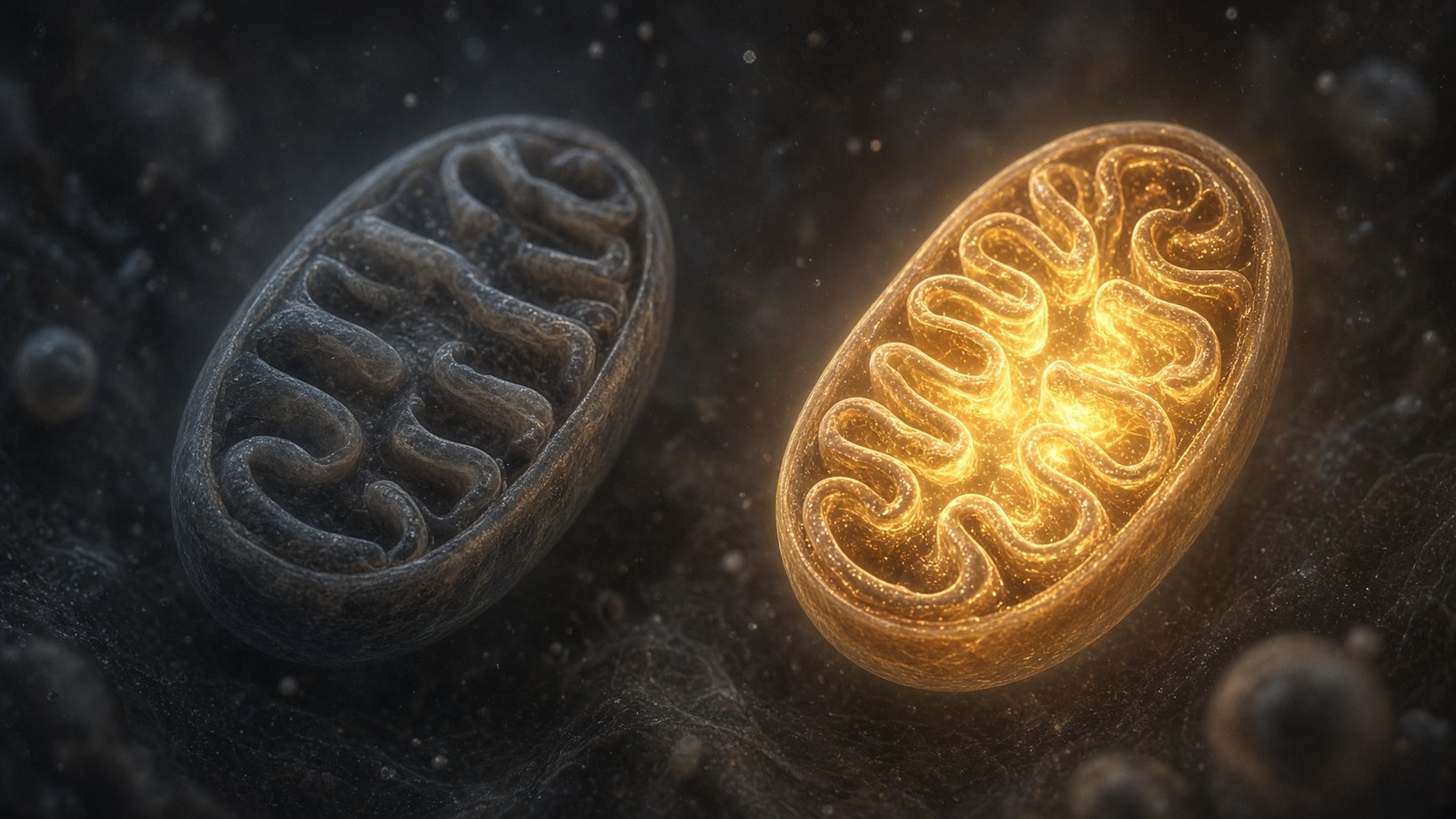
Fatigue, cellular energy and the NAD+ / MOTS-c neighbourhood
NAD+ is the rechargeable chip every cell spends on fuel and DNA repair — and the pool shrinks with age. MOTS-c is a mitochondrial 16-mer sent out under metabolic stress. Two answers to 'I have no energy' that are not coffee.
50 min · long read · Peptide research
Melanocortin circuits: pigment, appetite and PT-141
Melanotan II lights MC1, MC3, MC4 and MC5 — pigment plus the rest of the sheet. PT-141 is the free-acid cousin pointed at MC3 and MC4, the circuitry papers use for desire and energy, not skin colour. Same Arizona family. Different question.
The page is the mechanism: the protein, what it does in the cell, and the drug or peptide that talks to it.