


Peptide research · 50 min · 10,893 words
Sirtuins, caloric restriction and the NAD+ budget
Yeast SIR2, worm daf-16, mouse SIRT1 — a conserved story about spending NAD+ to deacylate the proteins that decide whether a cell is in famine or feast. The cofactor is the budget. We stock it at 1000mg.
What this essay actually tells you
- Yeast SIR2, worm sir-2.1, mouse SIRT1: a conserved NAD+-dependent deacylase family that couples nutrient state to chromatin and mitochondria. Same family, three kingdoms, one cofactor.
- Sirtuins consume NAD+ as a co-substrate. When the NAD+ pool falls (age, CD38, PARP), the deacylase programme has less fuel. Budget, not a slogan.
- Caloric restriction raises NAD+/NADH and sirtuin activity in animals. The cofactor is the budget. The diet is one way to spend it. NR and NMN are another conversation.
What this actually means
Eat less, live longer: in yeast, worms, flies, and often mice. One of the molecular stories behind that sentence is the sirtuins, enzymes that pull acyl groups off histones and metabolic proteins, and that cannot do the job without NAD+. Yeast SIR2, worm sir-2.1, mouse SIRT1 through SIRT7: same family, three kingdoms, one cofactor. When NAD+ is plentiful (fasted, young, NAMPT humming), sirtuins run. When it is scarce (old, inflamed, CD38-high, a PARP1 burst), they do not. SIRT1 deacetylates PGC-1α, FOXO and p53 in the nucleus. SIRT3 deacetylates Complex I subunits and SOD2 in mitochondria. SIRT6 sits on chromatin. Imai and Guarente built that map. Brenner, Verdin and Sinclair populated it, some more loudly than others. Caloric restriction raises NAD+/NADH in animals; AMPK, mTOR and insulin move too. Diet is one way to move the budget. NR and NMN are another conversation. Our NAD+ is the cofactor those enzymes spend: lyophilised β-NAD+, 1000 mg, the same molecule the papers measure, not a fasting mimic.
Sirtuins are enzymes that spend NAD+ — nicotinamide adenine dinucleotide, the small molecule that shuttles electrons — to take acetyl badges off proteins. Seven of them in us, in different rooms of the cell. Guarente's yeast work is where this story starts. Silent information regulator 2, SIR2, sits at silent mating-type loci and at telomeres in Saccharomyces cerevisiae and keeps those stretches transcriptionally quiet. Extra copies extended how many times a mother yeast could bud; deleting the gene shortened that replicative span. Leonard Guarente's laboratory spent the 1990s on that genetics. Shin-ichiro Imai, working there, then showed the enzyme is an NAD+-dependent histone deacetylase: it spends one molecule of NAD+ per lysine it deacylates, and nicotinamide plus O-acetyl-ADP-ribose come out the other side. Nature, 2000, 403: 795–800. Mammals made seven of them, SIRT1 through SIRT7, in three compartments. The worm orthologue is sir-2.1. The fly is dSir2. Same family, three kingdoms, one cofactor. Caloric restriction, in the organisms where it extends life, often raises the NAD+/NADH ratio and gives those enzymes something to spend. That is measured physiology, and restriction has other chapters besides this one.
In short. Sirtuins spend NAD+ to take marks off proteins. Yeast SIR2 started the story. Eating less can fill the cofactor they spend.
The dek on this page names daf-16 next to SIR2 and SIRT1, which is a neighbourhood, not an identity. DAF-16 is the Caenorhabditis elegans FOXO transcription factor — a DNA-binding protein that turns stress-resistance genes on — the downstream voice of the daf-2 insulin/IGF pathway that Kenyon, Ruvkun and others made famous. Mammalian FOXO proteins are SIRT1 clients: deacetylation leans them toward stress-resistance genes rather than toward a purely mitotic programme. Worm longevity genetics therefore has two microphones that talk to each other without being the same enzyme. sir-2.1 is the sirtuin. daf-16 is the FOXO. They share a conversation; they are not one protein. We're staying with the deacylase family, the NAD+ budget those enzymes spend, and the restriction physiology that moves the budget. AMPK, mTOR and insulin/IGF all move when you cut energy. Sirtuins are one chapter of that cut, a real one. You'd miss PGC-1α deacetylation, mitochondrial biogenesis and the FOXO stress programme if you walked past them. You'd also miss the rest of the network if you treated them as the whole of ageing.
In short. The worm FOXO gene sits next door to the worm sirtuin. They talk. They are not the same enzyme. Restriction moves more than one switch.
We stock lyophilised β-NAD+, 1000 mg, ≥98% by HPLC, because that is the cofactor the sirtuin papers actually weigh into a tube. Molecular weight 663.43. Formula C21H27N7O14P2. CAS 53-84-9. The biologically relevant anomer is β-NAD+. Those numbers are how you know which molecule is in the vial before you talk about famine and feast. The 1000 mg cake is a laboratory solid, not a fasting mimic. Nicotinamide riboside and nicotinamide mononucleotide are salvage precursors — stepping-stones cells can turn into NAD+ — and they have a different pharmacokinetics file. Intact extracellular NAD+ is a charged molecule of 663 daltons and a poor passenger across a plasma membrane. Writing the catalogue vial as a meal schedule skips that chemistry. What follows is the biochemistry you'd want before designing the assay you actually have the controls for: which isoform, which compartment, which client, which drain on the pool. The cofactor is named. The enzymes that spend it are named. The diet that can move the budget is a separate experiment.
In short. The shelf holds freeze-dried NAD+, the molecule these enzymes spend. That cake is a laboratory solid, not a diet or a precursor capsule.
David Sinclair's laboratory made this family famous outside the specialist literature, and the translational claims around that fame are contested. Both things can be true at once. Imai and Guarente built the map. Brenner mapped the nicotinamide riboside kinase route. Verdin's group put CD38 on the age-associated drain. Hirschey, Mostoslavsky, Auwerx, Baur, Kaeberlein: those labs populated isoforms, tissues and caveats, often more quietly. We're not picking a fandom. We're naming the reaction, the seven mammalian addresses, the restriction physiology that is in print, the resveratrol-activator mess that did not survive contact with the assays, and the reason a gram of characterised dinucleotide sits on a research shelf. The neighbouring NAD+ essay is the pool as pool: redox, PARP1, salvage, human NR and NMN trials. This one is the family that spends the pool on lysine. Read both if the node is the question. Read this one if the enzyme is.
In short. One laboratory made sirtuins famous. The enzyme chemistry is older than the publicity. This page stays with the enzymes and the cofactor they spend.
Same family, three kingdoms, one cofactor
The family is old. Bacteria have Sir2 homologs, CobB among the named ones, and they deacylate metabolic enzymes in a NAD+-dependent manner without a nucleus to silence. You're looking at a redox nucleotide that was recruited, early, as a way for proteins to listen to the energy state of the cell. That recruitment is the whole of the longevity story that later got loud. Saccharomyces made it a chromatin enzyme. Extra SIR2 copies extended how many times a mother yeast could bud; sir2 deletion shortened that replicative span. Lin, Defossez and Guarente, Science 2000, argued that caloric restriction in yeast required SIR2; Kaeberlein, Kennedy and colleagues later showed that some restriction protocols still extend yeast life when SIR2 is gone, via other nutrient-sensing paths. Both results can be true because restriction is not one protocol. Glucose concentration, amino-acid limitation, and the particular strain decide which chapter you are reading. The cofactor dependence of the enzyme did not become untrue when the genetics got messier. It became the floor you stand on.
In short. Bacteria already had this enzyme family. Yeast made it famous as a silencing protein. Restriction in yeast sometimes needs it and sometimes does not.
Caenorhabditis elegans sir-2.1 is the worm orthologue, and the lifespan literature around it is real and also argued, which is how a field ought to age. Tissenbaum and Guarente, Nature 2001: increased dosage of sir-2.1 extended lifespan. Subsequent work put the enzyme on the DAF-16/FOXO neighbourhood and on 14-3-3 proteins, a cytoplasmic holding pen for the transcription factor. Burnett, Gems, Partridge and colleagues, Nature 2011, outcrossed several of the classic overexpression lines and lost the lifespan effect, which was a necessary paper and a bruising one. Viswanathan and Guarente replied. Later work with different insertion sites and different dietary conditions recovered pieces of the phenotype. Cite 2001 alone, or 2011 alone, and you've picked a team. What we can say is that sir-2.1 is a NAD+-dependent deacylase whose dosage can move worm life under some conditions and does not under others, and that daf-16 remains the louder microphone on the insulin/IGF path. Same family. One cofactor. A model organism that will not be bullied into a single headline.
In short. The worm sirtuin can extend life in some experiments and not in others. The worm FOXO path is the louder longevity switch. Cite both sides.
Drosophila dSir2, sometimes written Sir2 or Sirt1 depending on the paper's vintage, is the fly version of the same argument. Overexpression in the fat body or the nervous system has been reported to extend life; ubiquitous overexpression has been reported to do nothing, or to cost fecundity. Rogina and Helfand, Newman, Partridge again: the bibliography is a set of conditions, not a verdict. Flies, like worms, have an insulin/IGF microphone that is easier to move with a mutation than with a sirtuin transgene. The chemistry does not care. dSir2 still spends NAD+ and still takes acyl groups off lysines. The organism-level phenotype is a function of tissue, diet, and which other sensors are already on. That is the licence to take the enzyme seriously in a mammal without treating a fly survival curve as a human protocol. Conservation is the reaction and the cofactor. Conservation is not a licence to scale a Kaplan–Meier plot across a billion years and a supermarket. Measure the enzyme in the animal you have.
In short. Fruit flies have the same enzyme and a messy lifespan literature. The chemistry is conserved. A survival curve in a fly is not a human plan.
Mammals made seven of them, and the census is worth lingering on. SIRT1, SIRT6 and SIRT7 are nuclear; SIRT2 is largely cytosolic and can visit the nucleus in G2/M; SIRT3, SIRT4 and SIRT5 are mitochondrial. All of them are NAD+-dependent lysine deacylases, with some of the family moonlighting as ADP-ribosyltransferases — SIRT4 and SIRT6 in particular. The acyl can be acetyl, succinyl, malonyl, glutaryl, long-chain fatty acyl, depending on the isoform and the paper, which is why deacylase, not deacetylase, is the family name that covers the chemistry. Nicotinamide is a product inhibitor. A NAMPT block raises nicotinamide and quiets sirtuins from both sides of the reaction, substrate down and product up. Compartment is the variable. NAD+ supply in that compartment is the other variable. A homogenate NAD+ number — a blended reading from a smashed cell — does not tell you whether SIRT3 had substrate this morning. Writing 'sirtuins' as if they were one enzyme in one place collapses a family of seven into a single caption.
In short. Humans have seven of these enzymes, in the nucleus, the cytosol and the mitochondria. Each spends NAD+. A blended measurement cannot tell you which room was empty.
Mouse genetics is where the family stopped being a yeast rumour. SIRT1 whole-body knockout is often lethal or near it, depending on background; tissue-specific knockouts are how the field actually works. SIRT1-overexpressing mice have been reported to look somewhat like restricted animals on metabolic assays without eating less, a claim that has survived more scrutiny in liver and in endothelium than as a universal longevity result. SIRT6-knockout mice (Mostoslavsky, Chua, Cell 2006) show genomic instability and a progeroid phenotype; male SIRT6-overexpressing mice (Kanfi, Cohen, Nature 2012) have been reported to live longer, one of the cleaner mammalian sirtuin-longevity results. SIRT3-knockout mice accumulate a hyperacetylated mitochondrial proteome and mishandle fuel under stress; they are not a cartoon of accelerated ageing so much as a cartoon of a matrix that cannot take its acetyl badges off. Those are named strains, named assays, named papers. They are why a mammalian page is allowed to sit next to a yeast one without being a collage.
In short. Mouse knockouts and extra copies show the family is real in mammals. Different members fail in different rooms of the cell. None of that is a yeast result copied onto a mouse.
SIR2 is an NAD+-dependent histone deacetylase. Extra copies extend replicative lifespan in yeast. The cofactor is not a bystander. It is the substrate the silencing enzyme spends.— Imai S, Armstrong CM, Kaeberlein M, Guarente L. Transcriptional silencing and longevity protein Sir2 is an NAD-dependent histone deacetylase. Nature. 2000; 403: 795–800.
The spend is stoichiometric
The chemistry is a spend, not a cycle, and that distinction is the whole of the budget metaphor. A dehydrogenase binds NAD+, takes a hydride at nicotinamide carbon 4, and releases NADH. The nicotinamide nucleotide is recycled. A sirtuin binds NAD+ and an acyl-lysine, transfers the ADP-ribose to the acyl oxygen, and releases nicotinamide plus O-acyl-ADP-ribose plus a deacylated lysine. The NAD+ is gone. One molecule per lysine. Sauve, Schramm, Denu, the chemical biologists who made that stoichiometry undeniable: the reaction is a NAD+-dependent transglycosidation, not a metal-dependent hydrolysis of the sort a classical HDAC runs. Classical HDACs (classes I, II, IV) do not spend NAD+. They hydrolyse the acetyl with a zinc ion and a water. Sirtuins are class III, and the class is defined by the cofactor. When the pool falls — age, CD38, a PARP1 burst after a DNA break — the deacylase programme has less fuel. That is a stoichiometric fact. Enthusiasm does not change the arithmetic.
In short. Ordinary metabolic enzymes borrow NAD+ and give it back. Sirtuins spend it, one molecule for each mark they remove. When the pool shrinks, they slow.
NAMPT, nicotinamide phosphoribosyltransferase, is the kinetic bottleneck of mammalian salvage, and it is the enzyme a sirtuin page has to name even though it is not a sirtuin. Nicotinamide, the product every consuming enzyme releases, is transferred a phosphoribosyl group from PRPP to make NMN. NMNAT isoforms then adenylate NMN to NAD+. Revollo, Imai, Journal of Biological Chemistry 2004, put NAMPT on Sir2 activity in mammalian cells. FK866 inhibits it and collapses the pool on a timescale of hours in a dish. AMPK can stabilise NAMPT. Circadian clocks write the gene in some tissues — Ramsey, Bass, the Northwestern papers on CLOCK/BMAL1 and NAD+. Restriction and exercise raise it in the tissues those papers actually measured. Age, in several depots, lowers it. Supply side. Demand side is CD38 and PARP1. Both sides, always. A sirtuin without salvage is an enzyme waiting for a delivery that does not come. Name the bottleneck and the spend starts to make sense as a budget.
In short. Cells rebuild NAD+ mainly by recycling leftover nicotinamide. The first enzyme on that path is the bottleneck. Fasting and clocks can raise it. Age often lowers it.
The competing drains are why 'low NAD+' is not one phenotype, and why a sirtuin programme can starve for reasons that have nothing to do with how many SIRT1 molecules you have. PARP1 binds DNA breaks, nicks NAD+, and polymerises ADP-ribose onto itself and onto nearby proteins. A genotoxic hit can drop cellular NAD+ by millimolar amounts in minutes. The NAD+ does not come back from that cycle as NAD+; it comes back, at best, as nicotinamide plus ADP-ribose, which salvage has to rebuild. CD38 is the age-associated NADase — an enzyme that chops NAD+. Camacho-Pereira, Chini, Verdin, Cell Metabolism 2016: CD38 expression rises with age in mice, the rise tracks the fall in tissue NAD+, and CD38-knockout animals keep more of the pool. Immune cells carry a lot of it. Inflamed tissue carries more. A NAMPT activator or an NR supplement is trying to refill a bucket that CD38 is still holing. The sirtuin programme is one spend among three. Measuring which drain is open is the move of a paper.
In short. Broken DNA and an age-linked chopping enzyme also spend NAD+. A sirtuin can look idle because something else emptied the tank, not because the sirtuin is missing.
Nicotinamide product inhibition is the unglamorous half of the same budget, and it is why high-dose nicotinamide is a poor single-handed sirtuin tool. The released ring binds back into the active site and slows the next turnover. At the same time, nicotinamide is the salvage substrate NAMPT wants. You can quiet a sirtuin with nicotinamide and feed salvage with nicotinamide in the same well, which is a fine reason to be careful and a poor reason to write a protocol on a vitamin. EX-527 (selisistat) is a SIRT1 inhibitor that does not pretend to be a precursor. 3-TYP is the SIRT3-biased tool people actually use. Splitomicin and nicotinamide analogue libraries exist for the yeast enzyme. Those are tools. Use them as tools. If a phenotype survives FK866 but dies with EX-527, you were never looking at pool size. You were looking at an enzyme. That is a better paper than a brochure in which NAD+ and sirtuin are used as synonyms for youth. Name the inhibitor. Name the isoform.
In short. Leftover nicotinamide slows the enzyme even as cells try to turn it back into NAD+. Use a real inhibitor if you want to ask whether the enzyme, not the pool, did the job.
The NADH/NAD+ ratio and the absolute NAD+ concentration are two measurements, and sirtuins care about the second more than headlines admit. As a redox gauge the ratio reports whether dehydrogenases are outrunning Complex I. A typical mitochondrial matrix sits more oxidised than the cytosol. As a signalling budget the absolute concentration of NAD+, not only the ratio, decides whether SIRT1, SIRT3 and SIRT6 have substrate. You can imagine a cell with a healthy ratio and a small pool: redox fine, sirtuins hungry. You can imagine the reverse: a large, reduced pool, Complex I congested, a sirtuin still able to spend. Assays that report 'NAD+' without saying total versus ratio, and without saying which compartment, are reporting a blur. The fluorescent biosensors — SoNar, Peredox, the genetically encoded NADH/NAD+ probes — exist because the blur was costing people papers. Use them, or use LC-MS on fractionated extracts, or say you measured a homogenate. The family cannot hear a blended soup.
In short. How much NAD+ there is, and how much of it is loaded with electrons, are different numbers. Sirtuins need enough of the empty form in the room they actually occupy.
Diagram
Sirtuins
SIRT1–7
Deacylate lysines. One NAD+ per lysine. Nicotinamide + OAADPr out.
PARP1
DNA-damage
Poly-ADP-ribose on a break. Can empty millimolar NAD+ in minutes.
CD38
NADase
Age- and inflammation-associated. A hole in the bucket, not a repair job.
NAMPT is the kinetic bottleneck of mammalian salvage (Revollo, Brenner). NR and NMN feed the same pool from different rungs. Restoration papers move the node. They do not own every phenotype downstream of it.
- Family
- SIR2 / sir-2.1 / SIRT1–7
- Stoichiometry
- 1 NAD+ per lysine
- SIRT1 clients
- PGC-1α, FOXO, p53
- SIRT3 clients
- Complex I, SOD2
- SIRT6
- H3K9ac / H3K56ac
- NAMPT
- kinetic bottleneck
- Restriction
- raises NAD+/NADH
- Catalogue cake
- 1000 mg β-NAD+
Yeast, worm, mammal. Same NAD+-dependent deacylase chemistry. Bacteria have homologs.
Nicotinamide + O-acyl-ADP-ribose out. A spend, not a redox cycle.
Nuclear. Biogenesis, stress resistance, a context-dependent damage response.
Mitochondrial acetyl-proteome. Restriction gives the enzyme something to spend.
Chromatin, DNA repair, glucose transcription. Male overexpression mice, Kanfi 2012.
Nicotinamide → NMN. Revollo, Imai. FK866 shuts it.
Animals, named tissues. AMPK, mTOR, insulin/IGF move too. Network, not a brand.
~1.5 mmol, ≥98% HPLC. Reagent. Not a fasting mimetic.
SIRT1, PGC-1α, FOXO, p53
SIRT1 is the isoform the caloric-restriction literature cannot stop talking about, and for once the attention is partly earned. Nuclear. Deacetylates histones — H3K9, H4K16, H1K26 among the named sites — and a client list of transcription factors and coactivators that is long because a lysine deacetylase with that address will find work. PGC-1α, FOXO1 and FOXO3, p53, NF-κB subunits, LXR, CLOCK, BMAL1, a set of nuclear receptors: those are the names you actually blot. When the nuclear pool is thin, SIRT1 is a slower enzyme, not a missing gene. Pharmacological SIRT1 activators have been a messy literature, and we will get to that mess under its own heading. The enzyme is real. The cofactor dependence is real. A 1000 mg cake of β-NAD+ is not a SIRT1 activator. It is the substrate. If your blot of acetyl-p53 moves, you have a deacetylase-and-client story. You still have to show the cofactor, the enzyme, and the localisation, or you have a mark without a mechanism. The nuclear NAD+ number is part of the result.
In short. SIRT1 lives in the nucleus and takes acetyl marks off proteins that run mitochondria, stress resistance and cell-death decisions. It can only work if NAD+ is plentiful there.
PGC-1α deacetylation is the mitochondrial-biogenesis sentence, and it is one you want in a restriction page. Peroxisome proliferator-activated receptor-γ coactivator 1-α is the nuclear coactivator that, once deacetylated, works with NRF1, NRF2 and ERRα to write nuclear genes for respiratory subunits and for TFAM, the mitochondrial transcription factor that then writes the thirteen proteins the organelle still encodes on-site. Rodgers, Puigserver, Nature 2005: SIRT1 and PGC-1α, nutrient control of glucose homoeostasis. GCN5 acetylates PGC-1α and quiets it; SIRT1 takes the acetyls off and the coactivator works. Restriction, exercise and a genuine fast all lean on this neighbourhood, often with AMPK phosphorylating PGC-1α as a parallel door. Cantó, Auwerx, PLoS Biology 2009 and the Cell Metabolism papers that followed: AMPK raises NAD+ and SIRT1 activity, a loop rather than a single switch. Biogenesis is a transcriptional programme. It is not a sirtuin sitting on a mitochondrion with a spanner. The mitochondrion heading is SIRT3. This heading is the nuclear order that can raise the organelle census.
In short. SIRT1 takes marks off a coactivator that tells the nucleus to build more mitochondria. Fasting, exercise and a fuel-gauge kinase all lean on that same neighbourhood.
FOXO deacetylation is the stress-resistance sentence, and it is why daf-16 is allowed to sit in the dek without being a sirtuin. Brunet, Greenberg, Science 2004: SIRT1 deacetylates FOXO3 and can shift it toward DNA-repair and cell-cycle-arrest genes and away from a purely pro-apoptotic set, a bias rather than an on-off. Mammalian FOXO1, FOXO3 and FOXO4 are insulin/IGF-sensitive; phosphorylation by Akt parks them in the cytosol, and deacetylation by SIRT1 is a second, NAD+-gated layer on the same factors. In C. elegans the orthologue is DAF-16, and the daf-2 insulin-receptor mutants that live longer need it. Hariharan and Sadoshima, among others, put FOXO deacetylation on starvation-induced autophagy in cardiac myocytes. The mammalian claim is not that SIRT1 is FOXO. It is that a nuclear NAD+ budget can rewrite how a FOXO factor behaves once it is in the nucleus. Insulin says whether it enters. NAD+ says what it does when it arrives. Two gates. One transcription factor. A worm paper and a mouse blot in the same conversation without being the same experiment.
In short. FOXO proteins decide stress-resistance genes. Insulin decides whether they enter the nucleus. SIRT1, using NAD+, decides how they behave once inside.
p53 is the client that makes people nervous, and the nervousness is earned. Vaziri, Luo, Guarente, Cell 2001, and the Luo, Avalos papers the same year: SIRT1 deacetylates p53 and can blunt p53-dependent apoptosis. Acetylation of p53, by p300/CBP among others, is part of how the tumour suppressor becomes a transcriptionally loud arrest-and-death factor after DNA damage. Taking those acetyls off is a way to quiet it. In a damaged cell that can be a problem. In a metabolically stressed cell that is trying not to die of a fuel dip, it can be a feature. Context is the whole of the p53–SIRT1 literature, and later papers made that context the point. What remains load-bearing is the chemistry: p53 is a lysine-acetylated protein, SIRT1 is a NAD+-dependent deacylase that can take those marks off, and the nuclear NAD+ pool gates the rate. If you claim a p53 phenotype for a cofactor experiment, show acetyl-p53, show it reverse with EX-527, and then show the NAD+ number.
In short. SIRT1 can quiet the p53 damage response by taking acetyl marks off it. That can save a stressed cell or, in the wrong context, let a damaged one linger.
Histone clients are how a metabolic enzyme becomes a chromatin enzyme, which is the yeast origin story restated in a mammal. H4K16ac is the Sir2 site that still gets named in every review; hypoacetylation there is compact chromatin and quieter transcription in the stretches Sir2 cares about. H3K9ac is a related open-chromatin mark. SIRT1 also deacetylates H1K26. The point of listing residues is not to decorate a paragraph. It is to say that a restriction-shaped NAD+ rise in the nucleus is, among other things, a chromatin-compaction programme, and that the transcription diagram on this page is not a decoration. Closed chromatin hides a promoter. Pioneer factors and histone acetyltransferases open it. A NAD+-gated deacetylase is an eraser on that same ledger. Whether the gene that gets hidden is a gluconeogenic enzyme, an inflammatory cytokine, or a ribosomal RNA is a tissue question. The eraser is the same class of enzyme. The cofactor is the same dinucleotide. The 1000 mg cake does not know which promoter you meant.
In short. SIRT1 also takes acetyl marks off histones, which can pack DNA more tightly and quiet genes. A rise in nuclear NAD+ is therefore a chromatin event, not only a fuel event.
Diagram
Closed chromatin (H3K27me3, DNA methylation) hides the promoter. Pioneer factors and histone acetyltransferases open it.
PIC: TFIID, TFIIH, Mediator, Pol II. Ser5 phosphorylation of the CTD lets the polymerase leave the promoter.
Elongation ~20–40 nt/s. Capping, splicing, cleavage and polyadenylation happen on the still-growing RNA.
Human genes are islands in 3.1 billion base pairs of mostly noncoding sequence. Promoter, enhancers, chromatin state and the Mediator complex decide whether Pol II is allowed to fire. Epithalon’s literature sits on TERT and pineal clocks — two of the rare promoters anyone bothers to name in a peptide essay.
SIRT3 and the mitochondrial invoice
SIRT3 is the mitochondrial deacetylase, and it is the isoform a respiratory-chain page actually needs. It deacetylates Complex I subunits including NDUFA9, SOD2, long-chain acyl-CoA dehydrogenase, IDH2, a matrix neighbourhood of fuel and of superoxide. Ahn, Verdin, and the Hirschey papers: knock it out and you get a hyperacetylated mitochondrial proteome and a mouse that mishandles fatty-acid oxidation under stress. Qiu, Chen, Verdin, Cell Metabolism 2010: caloric restriction reduces oxidative stress by SIRT3-mediated SOD2 activation — deacetylation of lysine 68, in that literature, lets the superoxide dismutase work. Lombard, Alt, 2007: SIRT3 as the major mitochondrial deacetylase. The organelle is a NAD+ customer twice: once as Complex I, which wants NADH oxidised back to NAD+, and once as SIRT3, which wants NAD+ as a co-substrate. Two jobs, one matrix pool, or at least one pool that is not freely mixed with the cytosol. Restriction raises NAD+/NADH. SIRT3 has something to spend. That does not make a gram of β-NAD+ a fasting mimic. It is still just the cofactor the assay asked for.
In short. The mitochondrial sirtuin takes marks off fuel-burning enzymes and the superoxide mop. Restriction can give it more NAD+ to spend. A gram in a vial is still only the cofactor.
Complex I is NADH:ubiquinone oxidoreductase, forty-five or so subunits in mammals, flavin and iron-sulphur clusters, a proton pump. Acetylation of its subunits is not a decoration. It is a way for the matrix to throttle a machine that, running untuned, leaks superoxide at flavin and at the Q site. SIRT3 deacetylation is one of the tuners. SOD2, manganese superoxide dismutase, is the matrix mop for the superoxide that still leaks. Acetylated SOD2 is a poorer mop; SIRT3-deacetylated SOD2 is the version the restriction papers actually measure. IDH2, the NADP+-dependent isocitrate dehydrogenase of the matrix, is another SIRT3 client, and its deacetylation has been tied to NADPH and to glutathione recovery — a different nucleotide, a related redox story. Long-chain acyl-CoA dehydrogenase is how a liver mitochondrion starts burning fat; acetylation slows it, SIRT3 speeds it. Name the clients. Subunit, acetyl-lysine, oxygen-consumption number: those are a SIRT3 result. 'Protects mitochondria' without them is still a wish. The named enzymes are the result.
In short. Named mitochondrial enzymes burn fuel and mop superoxide better when SIRT3 has taken their acetyl marks off. Name the enzyme, the lysine, and the oxygen number.
SIRT4 and SIRT5 share the organelle and will not be collapsed into SIRT3. SIRT4 has ADP-ribosyltransferase activity on glutamate dehydrogenase and a more recently argued deacylase activity on lipoyl and biotinyl marks; Haigis, Guarente, Cell 2006 is the GDH paper, and the later literature is still moving. SIRT5 prefers succinyl, malonyl and glutaryl over acetyl, which is why the family name had to widen. Park, Denu, and the Verdin desuccinylome papers: a hyper-succinylated matrix when SIRT5 is gone, urea-cycle and ketogenesis neighbourhoods among the ones that look drunk. Three mitochondrial sirtuins, three chemistries, one NAD+ pool behind an inner membrane the dinucleotide does not freely cross. SLC25A51 / MCART1 is the mammalian candidate importer (Kory, Mootha, Nature 2020). NMNAT3 is the textbook matrix adenylating enzyme. How the matrix is topped up is still being mapped. Adding β-NAD+ to a medium is not the same experiment as asking whether SIRT3 had substrate. Isolated mitochondria, matrix-targeted biosensors, and a SIRT3-client blot are the settings where the question is the question you think it is.
In short. Two other sirtuins share the mitochondrion and prefer different chemical marks. The organelle keeps its own NAD+ stash. Dumping cofactor into the dish is not the same as filling that stash.
Caloric restriction raises the mitochondrial NAD+/NADH ratio in several of the tissues people actually measured, which is the physiology this heading is for. Chen, Guarente; Hagopian; the Cantó and Auwerx mouse work; a liver, a muscle, a brown-fat pad when the protocol is a real cut in energy rather than a weekend. NAMPT often rises. CD38, in ageing tissue, often rises the other way and eats the gain. SIRT3 then has more or less to spend, and the acetyl-proteome of the matrix moves. That is a measured chain: diet to ratio to enzyme to client to oxygen consumption. It is also a chain with other links. AMPK phosphorylates acetyl-CoA carboxylase and turns down fat synthesis without asking SIRT3. mTORC1 turns down when amino acids and insulin fall, and autophagy starts, and a mitochondrion can be eaten rather than tuned. Insulin/IGF falls, FOXO enters, PGC-1α is written as well as deacetylated. Restriction is a NAD+ story with other chapters. SIRT3 is one chapter. The vial on the shelf is the coin that chapter spends, in a tube, with the drain named.
In short. Eating less can raise mitochondrial NAD+ and give this enzyme work. Fasting also moves other switches. The cofactor in a tube is for the assay, not a replacement meal schedule.
Peter Rich, Biochemical Society Transactions, 2003, is the citation for a number this journal keeps using because it is the right size. A human adult turns over on the order of forty to sixty kilograms of ATP per day. The standing pool is about fifty grams. Recycled, not stored. Almost all of that phosphate is minted on the inner membrane, which means almost all of it is downstream of NADH oxidation at Complex I or of FADH2/QH2 entry at II. SIRT3 sits on that neighbourhood as a tuner, not as the turbine. A 1000 mg cake of β-NAD+ is about 1.5 millimoles, coincidentally near a second of whole-body ATP flux as a count of molecules, and not a second of that flux as a physiology, because the cake is not in the matrix and the molecule does not become ATP. Scale is the reason to keep Rich in the same essay as a SIRT3 client list. Without the scale, a gram of cofactor starts to look like a body-weight of phosphate. It is not. It is a reagent for the assays that ask whether the tuner had substrate.
In short. You recycle roughly a body-weight of ATP every day on mitochondrial membranes. SIRT3 tunes that neighbourhood. A gram of NAD+ in a vial is not a day's energy.
Diagram
Matrix
- TCA cycle · β-oxidation · mtDNA nucleoids
- NADH produced here. Complex I spends it.
- MOTS-c (MRWQEMGYIFYPRKLR) from 12S rRNA.
Inner membrane
- I → II → III → IV → V (ATP synthase)
- ~150 mV proton-motive force
- ~40–60 kg of ATP turned over per human day
mtDNA is 16,569 bp, 37 genes, 13 proteins of the respiratory chain. Nuclear DNA encodes the other ~1,200 mitochondrial proteins. NAD+ is the hydride carrier between dehydrogenases and Complex I. MOTS-c is a 16-mer translated from 12S rRNA — a peptide the mitochondrion wrote itself.
SIRT6 on chromatin
SIRT6 sits on chromatin, and it is one of the cleaner longevity orthologues when you look across mouse genetics. Nuclear, chromatin-associated, a deacetylase of H3K9ac and H3K56ac, with a long-chain deacylase activity and an ADP-ribosyltransferase activity that the later papers will not let you forget. Mostoslavsky, Chua, Alt, Cell 2006: SIRT6-knockout mice are small, lymphopenic, genomically unstable, and die of a progeroid syndrome within weeks. The phenotype is ruder than SIRT1's tissue-specific knockouts, which is information. Kanfi, Cohen, Nature 2012: male mice overexpressing SIRT6 live longer, a result that has been replicated more carefully than most sirtuin-longevity claims and still has a sex caveat you are required to write down. Kawahara, Chua, Cell 2009: SIRT6 deacetylates H3K9 at NF-κB target promoters and attenuates NF-κB-dependent transcription, an inflammation microphone. Zhong, Mostoslavsky, Cell 2010: SIRT6 co-represses HIF1α and glycolytic genes, a glucose-transcription job. DNA repair, glucose transcription, inflammation, a histone octamer. One enzyme. A NAD+ budget on chromatin.
In short. SIRT6 lives on packed DNA, helps repair breaks, and quiets some sugar-burning and inflammation genes. Male mice with extra SIRT6 have been reported to live longer.
H3K9ac and H3K56ac are open-chromatin marks at promoters and at newly deposited histones. Taking them off is a way to compact a locus or to mark that a repair event is finished. SIRT6 at DNA-damage foci, PARP1 as a partner in some of the papers, a double-strand-break neighbourhood that also spends NAD+ through the polymerase: two NAD+ spends on the same break, one of them a flag (PAR) and one of them a histone eraser. Tian, Mostoslavsky, and the Toiber papers on SIRT6 and DSB repair are the reading list, with the usual caveats of cell type and of whether the ADP-ribosyltransferase activity or the deacetylase activity was the job. H3K56ac is a replication-and-repair mark in yeast; mammals kept a version of it. Name the residue, the genomic locus, and the NAD+ number, and you have an enzyme paper rather than a reputation. The chromatin-packing diagram on this page is the search problem the enzyme sits inside: two metres of DNA, thirty million nucleosomes, a promoter that is not a promoter until the origami opens the right thousand base pairs.
In short. SIRT6 takes acetyl marks off specific histone sites at broken DNA and at promoters. Repair enzymes spend NAD+ on the same break in a different way. Two jobs, one coin.
Glucose transcription is the metabolic half of the same enzyme, and it is why SIRT6 belongs in a caloric-restriction essay rather than only in a DNA-repair essay. HIF1α drives glycolytic genes when oxygen is low or when the cell has decided, for other reasons, to run Warburg-shaped metabolism. SIRT6 at those promoters, deacetylating H3K9, is a co-repressor: less acetylation, less transcription, less glucose uptake and glycolysis in the tissues where this has been measured. Knock SIRT6 out and cells take up more glucose, write more glycolytic enzymes, and look, on a Seahorse, like they have forgotten the mitochondrion. Restriction, which raises NAD+ in some nuclei, is a way to feed that co-repressor. Insulin and glucagon are other ways to talk to the same genes, from the receptor side. A hepatocyte listening to glucagon is not a SIRT6 experiment. A hepatocyte with a thin nuclear NAD+ pool is a SIRT6-rate experiment. Name the microphone. The enzyme does not own glucose homoeostasis. It owns a chromatin mark at a subset of the genes.
In short. SIRT6 can quiet genes that pull sugar into a cell and burn it in the cytosol. That is one microphone on glucose, not the whole of blood-sugar control.
SIRT7 is nucleolar, a deacetylase of H3K18ac and a regulator of RNA polymerase I transcription of ribosomal DNA, which is a different chromatin problem: repeats, nucleoli, a growth programme. Barber, Chua, Nature 2012; the later papers on SIRT7 and Myc, on SIRT7 and mitochondrial biogenesis via NRF1, a literature that is real and smaller than SIRT1's. The point of a census that includes SIRT7 in a SIRT6 heading is not to memorise seven catchphrases. It is to stop a restriction essay from treating 'nuclear sirtuin' as a synonym for SIRT1. SIRT1 is PGC-1α, FOXO, p53. SIRT6 is H3K9, DNA repair, HIF1α. SIRT7 is the nucleolus. Three addresses, three client lists, one cofactor. A NAMPT collapse will starve all three. A PARP1 burst will starve them on a minutes scale, nucleus-first. A CD38-high immune infiltrate will starve the precursors before any of them sees the dinucleotide. Compartment, drain, isoform. Those are the three words a chromatin sirtuin paper has to use before it talks about ageing.
In short. A third nuclear sirtuin lives in the nucleolus and talks to ribosome production. Saying 'nuclear sirtuin' as if it were one enzyme hides three different jobs.
Diagram
- 2 nmB-DNA0.34 nm/bp. Diploid G1 is ~2 metres of this.
- 11 nmNucleosome147 bp around a histone octamer. ~30 million per nucleus.
- loopsCTCF / cohesinEnhancers meet promoters by folding, not by sliding.
- µmA/B compartmentsHi-C: open A, closed B, territories at the lamina.
- 6–10 µmNucleusThe room. The search problem is the entire point of gene regulation.
Packing is not storage. It is the first regulatory decision: a promoter buried in H3K27me3 is not a promoter, it is furniture. Transcription starts when this origami opens the right 1,000 base pairs among 3.1 billion.
Restriction is a NAD+ story with other chapters
Caloric restriction, as a laboratory object, is older than sirtuins, and that order also matters. McCay, Crowell and Maynard, 1935, kept rats on a diet that stunted growth and extended life; the paper is a nutrition result, not a chromatin result. Weindruch, Walford, and the later NIA and University of Wisconsin rhesus-macaque studies — one of which saw a survival benefit and one of which mostly saw delayed disease, a discrepancy the field still argues about, diet composition among the suspects — made restriction a mammalian gerontology. Speakman, Fontana, Longo, the human observational and short-trial literature: fewer calories, if they are not malnutrition, move metabolic endpoints in people; a lifespan claim in humans is not a trial anyone has run. Sirtuins arrived in 2000 as one molecular story that might sit under a 1935 observation. They are not the observation. AMPK, mTOR, insulin/IGF, autophagy, thyroid tone, body temperature, a dozen other microphones all move when you cut energy. Sirtuins sit in that network as one chapter, a real one, next to the others.
In short. Eating less has extended life in animals since a 1935 rat study, long before sirtuins were named. Many sensors move. This enzyme family is one chapter.
What restriction does to NAD+ is the sentence this family actually owns. In multiple mouse tissues a genuine cut in energy raises the NAD+/NADH ratio, often raises NAMPT, and raises the activity of NAD+-dependent deacylases as a consequence rather than as a magic. Chen, Guarente; Rodgers; Cantó, Auwerx; the Yoshino and Imai NMN papers that then asked whether you could fake part of that rise with a precursor. The cofactor is the budget. Diet is one way to move it. Sleep is another, via circadian NAMPT. Exercise is a third, in muscle, with AMPK on the same loop. NR and NMN are another conversation: precursors that can raise the metabolome in mice and in people without asking the animal to eat less. Whether they recapitulate restriction's organism-level phenotypes is a different, harder, more contested literature, and the neighbouring NAD+ essay already sat with the human clamps. Keep the causal order straight. Restriction moves the budget. The enzymes spend what the budget holds. A tube of cofactor is an assay. A capsule of precursor is a metabolome experiment. Measuring the ratio after a fast is restriction physiology.
In short. Fasting can raise NAD+ and so give sirtuins more to spend. Precursor capsules are a different experiment. A tube of NAD+ is not a fast.
AMPK, mTOR and insulin/IGF are the other chapters, named, because a network that is not named will be stolen by whichever enzyme has the best press. AMPK senses AMP/ATP, phosphorylates ULK1 and ACC and PGC-1α, and can raise NAMPT; it is a fuel-gauge kinase, Hardie, Kahn, the Carling papers. mTORC1 at the lysosome senses amino acids and insulin, says build, and when it turns down autophagy can start; Sabatini, Zoncu, the Rag GTPases. Insulin and IGF-1, via PI3K–Akt, park FOXO in the cytosol and keep the animal in the fed transcriptional state; Kenyon's daf-2 worms are the existence proof that turning this microphone down can extend life in a nematode. Restriction moves all three, and moves the sirtuins, and moves thyroid and temperature and reproductive investment. Which of those is required for the life-extension, in which organism, on which protocol, is still a set of papers rather than a poster. Yeast can restrict via SIR2-dependent and SIR2-independent paths. Worms can live longer via daf-16 without asking sir-2.1 to do all the work. Mice restrict with or without particular sirtuin isoforms depending on the tissue you blot.
In short. A fuel-gauge kinase, a build-versus-recycle switch, and insulin all move when you eat less. Sirtuins move too. Life extension can lean on different members of that set.
Tissue specificity is the variable most restriction-sirtuin sentences under-report. Liver SIRT1 has a gluconeogenic and a PGC-1α literature; brain SIRT1 has a hypothalamic food-intake literature that, in some papers, is required for the mouse to show the full restriction phenotype; adipose SIRT1 has a FOXO1 and a PPARγ literature; skeletal-muscle SIRT1 and SIRT3 split the nuclear order and the matrix tuner; endothelium SIRT1 has a nitric-oxide and a capillary-density neighbourhood the Sinclair 2018 Cell paper put on NMN. Knock the enzyme out in one tissue and you have a tissue paper. Knock it out everywhere and you have a developmental mess. Overexpress it from a transgene with a specific promoter and you have that promoter's artefact plus, if you are careful, a phenotype. So the claim worth making is never 'sirtuins mediate caloric restriction'. It is: in this tissue, on this protocol, this isoform's clients moved, and the NAD+ number moved with them, and the other sensors were measured or at least named. Anything broader is a reviewer's problem, and a fair one.
In short. Which organ you look in changes the story. Brain, liver, muscle and fat do not use this family the same way. Name the tissue before you name the benefit.
Human restriction is a smaller, ruder literature, and it belongs here so a mouse NAD+ blot does not get to stand in for a clinic. CALERIE is the trial: two years of a 25% calorie cut in healthy humans, metabolic rate, cardiometabolic markers, a set of endpoints that moved and a set that did not. Fontana's Washington University work, Heilbronn, Ravussin, the short-term studies: insulin sensitivity often improves, core temperature often falls, thyroid tone often falls, which is the opposite of a stimulant story. Whether sirtuin activity in a human biopsy tracks those endpoints is a much thinner file. You can raise NAD+ metabolites with NR in people (Trammell, Brenner, 2016) and you can improve muscle insulin sensitivity modestly with NMN in a specific cohort (Yoshino, Klein, Science 2021). You cannot yet write that a human sirtuin programme, fed by a capsule, recapitulates CALERIE. The cofactor is the budget. Diet is one way. Precursors are another conversation. A characterised dinucleotide on a research shelf is a third object, for a tube, and it will not be asked to stand in for a two-year meal schedule.
In short. In people, eating less improves some metabolic numbers. Whether sirtuins are the reason is thinly measured. A capsule and a laboratory cofactor are not a two-year diet trial.
Theatre versus measurement
Resveratrol is the mess this heading exists to contain. Howitz, Sinclair, Nature 2003: resveratrol as a SIRT1 activator in a fluorescent peptide assay, lifespan in yeast. The paper launched a thousand bottles of red-wine extract. Kaeberlein, Fields, Kennedy, Journal of Biological Chemistry 2005, and then Pacholec, Pfizer, JBC 2010: the activation was largely an artefact of the Fluor-de-Lys substrate; on native peptide substrates and on the enzyme against real clients, resveratrol often did nothing as a direct SIRT1 binder. AMPK, PDE4, a handful of other targets, remain in the picture as indirect routes by which a polyphenol can still move a cell. Sinclair's later STAC papers (Hubbard, Nature 2013) argued allosteric activation toward certain acetylated substrates, a claim that a subset of the field accepts and a subset still treats as an assay argument. We're not refereeing a personality dispute. The enzyme is real, the cofactor dependence is real, a direct allosteric activator that survived every orthogonal assay is still a thinner file than the posters, and a 1000 mg cake of β-NAD+ is the substrate, not a STAC.
In short. A 2003 paper said a red-wine molecule turned SIRT1 on. Later assays often could not see that direct switch. The enzyme and its need for NAD+ were never the part in doubt.
David Sinclair's NMN mouse work exists. The 2013 Cell paper on NAD+ restoration and mitochondrial communication in ageing muscle, the 2018 Cell paper on NMN and capillary density, the later Science and npj papers, the company-adjacent interviews, the book: a serious enzyme family and a serious cofactor were asked to carry a public story about reversing ageing that the human data have not yet earned. Other serious people — Imai, Brenner, Verdin, Auwerx, Baur, Kaeberlein — have kept publishing, often more quietly and with more attention to which drain is open and which isoform is in which room. Imai's NMN work on insulin sensitivity in mice, and then the 2021 Science clamp in prediabetic women with Klein, is the quieter translational file: modest, cohort-specific, no claim to have reversed ageing. Brenner's NR metabolome papers are the cleanest precursor chemistry. Verdin's CD38 work is why a supply-side cartoon is a cartoon. We sell the cofactor; we do not pick a fandom. The mouse phenotypes are in print, the mechanisms are in print, and the leap from a C57BL/6 mouse drinking NMN to a human clinical claim is a leap.
In short. Mouse papers on restoring NAD+ are real. The publicity about reversing ageing in people ran ahead of the evidence. Quiet laboratories kept measuring which enzyme and which leak.
STACs, sirtuin-activating compounds, are a pharmacological idea that will not be written as a catalogue claim. The Hubbard 2013 argument is that some small molecules bind a N-terminal domain of SIRT1 and lower the Km for particular acetylated substrates, a substrate-specific allostery rather than a generic on-switch. SRT1720, SRT2104 and their cousins were the GlaxoSmithKline / Sirtris compounds; clinical development did not deliver a licensed sirtuin activator, which is information. Resveratrol, as above, is a poor example of the class if the class is defined by direct SIRT1 binding. This is a research-tool neighbourhood, with animal papers, with disputed enzymology, and with no object on this shelf. What this shelf holds is the co-substrate. Confusing an activator with a substrate is a category error. Confusing either with caloric restriction is a second one. Restriction raises NAD+ and NAMPT in tissues. An allosteric STAC, if it works, would make a given NAD+ concentration more productive at SIRT1 toward some clients. Different interventions. Different blots. Different papers. Keep them in their own drawers.
In short. Drugs designed to switch SIRT1 on more easily are a separate, contested tool kit. None of them is the cofactor, and none of them is a diet.
The yeast-to-human leap is where fields get sloppy, and sirtuins invited the sloppiness by being conserved. SIR2 spent NAD+ in Saccharomyces. The seven mammalian sirtuins still do. That conservation is a licence to take the biochemistry seriously enough to measure it, in the organism you have, with the controls the drains require. It is not a licence to treat a yeast replicative-lifespan assay as a human protocol, or a worm Kaplan–Meier as a clinic, or a 22 °C mouse room — cold for a clothed mouse, a chronic brown-fat stimulus — as a human bedroom. Mouse NMN doses, scaled by body-surface area or by the number someone picked, are often higher than a capsule a person swallows. Strain is a variable. Microbiome is a variable, and some NAD+ precursors are also microbial currency. The restoration literature is at its best when it names those. It is at its worst when it treats a metabolome shift as a clinical endpoint, or a sirtuin blot as a year of human life. We'll stay with the best. A clamp, a chromatogram, a named acetyl-lysine, and a drain: those are measurements. A press tour is something else.
In short. Sharing an enzyme family with yeast is a reason to measure carefully in the animal you actually have. It is not a reason to copy a yeast lifespan result onto a person.
What survived the noise is still a large, adult literature, and it is the reason this essay exists rather than a retraction. Imai and Guarente, Nature 2000, SIR2 as an NAD+-dependent deacetylase. Revollo, Imai, JBC 2004, NAMPT as the mammalian bottleneck. Rodgers, Puigserver, Nature 2005, SIRT1 and PGC-1α. Brunet, Science 2004, SIRT1 and FOXO. Lombard and Hirschey, SIRT3 and the mitochondrial acetyl-proteome. Qiu, Cell Metabolism 2010, SIRT3 and SOD2 under restriction. Mostoslavsky, Cell 2006, and Kanfi, Nature 2012, SIRT6 in mice. Camacho-Pereira, Verdin, Cell Metabolism 2016, CD38 as the age-NADase. Cantó, Auwerx, AMPK–NAD+–SIRT1 as a loop. Yoshino, Klein, Science 2021, NMN and a clamp in prediabetic women. Kaeberlein and Pacholec, the activator-assay corrections. That is a fortnight of evenings, not a guru. The restoration headlines will still be there when you come back, and they will look smaller. The enzymes will still spend NAD+. The restriction physiology will still raise the ratio in the tissues where it does. The catalogue will still hold the cofactor.
In short. A short stack of named papers covers the enzyme, the bottleneck, the mitochondrial and chromatin isoforms, the age-linked leak and the human clamp. Read those before any headline.
The catalogue is the cofactor, not a fast
The catalogue listing is lyophilised β-NAD+, 1000 mg, ≥98% by HPLC, molecular weight 663.43, formula C21H27N7O14P2, CAS 53-84-9. A white to off-white cake in a vial, a certificate of analysis, a reconstitution kit. It is the same carbon skeleton every sirtuin, PARP and dehydrogenase paper names. It is a laboratory reagent. The form is the form you weigh into a sirtuin assay, a PARP assay, a cycling assay, a set of isolated mitochondria, a standard curve for LC-MS. Purity is a chromatogram, not a feeling. Water, light and freeze–thaw are the enemies of a nicotinamide nucleotide in solution; the lyophilised solid is how you store it. You weigh nanomoles into a well. You write the milligrams on the label because that is how the solid ships. Treat 1000 mg as a human serving, or as a fasting mimic, and you have skipped the label — and the label is the legal class of the object.
In short. The vial is freeze-dried NAD+, a gram of it, purity on a chromatogram, for weighing into experiments. That is a laboratory chemical, not a diet and not a dose for a person.
A fasting mimetic, if the phrase means anything, would be a molecule that recapitulates the transcriptional and metabolic programme of caloric restriction without the cut in energy. Rapamycin on mTORC1 is the example the gerontology field actually argues about. Metformin on AMPK and on Complex I is another, with a messier enzymology. Resveratrol was asked to be a third and, as a direct SIRT1 activator, did not survive the assays. β-NAD+ was not asked to be a mimetic by any serious paper. It is the co-substrate. Putting it in a tube lets you ask whether a sirtuin, a PARP or a dehydrogenase had enough cofactor. Putting it in a mouse, or in a person, is a pharmacokinetics experiment about a charged dinucleotide, ectonucleotidases, CD38 facing out, and a cloud of nicotinamide, NR, NMN and ADP-ribose. The neighbouring NAD+ essay already wrote that pharmacokinetics file and the separate-company clinic appointment. A 1000 mg research cake is a reagent for a tube. Restriction lives in the metabolism essays. The dinucleotide is here.
In short. A true fasting mimic would copy the whole hungry-cell programme without the hunger. NAD+ is the coin those programmes spend, not the mimic.
NR and NMN are the precursor conversation, and they will stay a conversation rather than a listing. Nicotinamide riboside is Brenner's vitamin: NRK1 and NRK2 phosphorylate it to NMN, NAMPT is bypassed, Trammell 2016 moved the human metabolome. Nicotinamide mononucleotide is the NAMPT product and the NMNAT substrate; Yoshino, Imai, the mouse diabetes papers, the 2021 clamp. How NMN enters cells is still argued — Slc12a8, or CD73 to NR then in. Intact NAD+ is the dinucleotide, charged, 663 daltons, a poor membrane passenger, the reagent in the 1000 mg cake. Three rungs. Three experiments. Adding β-NAD+ to a medium and harvesting at twenty-four hours is an ectonucleotidase-plus-salvage experiment unless you have shown otherwise. Wanting the intact cofactor in a sirtuin tube, a PARP tube, or an isolated mitochondrion, you have the right object. We stock the named dinucleotide. NR, NMN, and a weekend of eating less are three other experiments. The chemistry of the three rungs is the whole of that distinction.
In short. Two popular capsules are stepping-stones cells can turn into NAD+. The laboratory solid is NAD+ itself. Three different experiments, three different questions.
MOTS-c is the other catalogue object in this neighbourhood, and the neighbourhood has to stay a neighbourhood. MRWQEMGYIFYPRKLR, sixteen residues, translated from an open reading frame in mitochondrial 12S rRNA — Lee, Kim, Cohen, Cell Metabolism 2015: AMPK, the folate–methionine cycle, metabolic homoeostasis in mice. Sitting on AMPK is one door away from PGC-1α and from NAMPT, which is why a sirtuin essay is allowed to mention a 16-mer without claiming it. NAD+ is the hydride coin Complex I and SIRT3 spend, and the nuclear coin SIRT1 and SIRT6 spend. A 16-mer written inside the organelle and a dinucleotide the organelle spends are two different jobs. Retatrutide, if it is on your bench, is occupancy at GLP-1R, GIPR and GCGR, organism-level fuel demand, a different floor of the building. Three objects, three mechanisms. Name the receptor, the cofactor, or the reading frame and they stay on a reading list instead of collapsing into one juice. Neighbourhood, in this journal, is a courtesy on that list. It is not a combination claim.
In short. A short mitochondrial peptide, a gut-hormone agonist and NAD+ all sit near energy biology. They do three different jobs. Keep them on one reading list, not in one juice.
Diagram
| Node | Catalogue | Conversation |
|---|---|---|
| GPCR | Ipamorelin, MT2, PT-141, retatrutide, CJC | Second messengers, secretion, appetite, pigment |
| RTK / IGF1R | IGF-1 LR3 | IRS–PI3K–Akt–mTOR and Shc–ERK |
| Cytokine receptor | Somatropin (HGH) | GHR–JAK2–STAT5b, hepatic IGF-1 |
| Cofactor | NAD+ | Sirtuins, PARPs, CD38, redox |
| Actin buffer | TB-500 / Tβ4 motif | G-actin sequestration, motility |
| Growth-factor-like | BPC-157 | VEGFR2 / FAK / eNOS neighbourhood |
| Copper ligand | GHK-Cu | Transcriptome shift in fibroblasts |
| MC fragment | KPV | NF-κB, PepT1, no pigment |
| Nuclear / pineal | Epithalon (AEDG) | TERT and melatonin literatures |
| mtORF peptide | MOTS-c | AMPK, folate–methionine cycle |
Each row is a different kind of molecular conversation. The catalogue peptides bind at these nodes; they are not interchangeable, and stacking them because a forum did mixes unrelated literatures.
How to design an honest sirtuin assay
Decide what you are measuring before you thaw the cake. A blot of a SIRT1 substrate is not a NAD+ measurement. Acetyl-p53, acetyl-PGC-1α, acetyl-FOXO, H3K9ac, H4K16ac: those report whether a deacetylase with that client was active, which is a function of enzyme abundance, enzyme localisation, the acyl-lysine supply, nicotinamide product inhibition, and NAD+ substrate. You can have a fat pool and a missing enzyme. You can have enzyme and no cofactor. Acetyl-SOD2 and acetyl-NDUFA9 are the equivalent honesty test on the SIRT3 side; H3K9ac at a named locus, or a SIRT6 chromatin immunoprecipitation, on the SIRT6 side. Total NAD(H) is a pool size. The NADH/NAD+ ratio is a redox state. They can move in opposite directions. LC-MS, with 13C internal standards, is how a metabolome paper earns the word metabolome. A cycling assay on a homogenate is a scout. Biosensors give you ratio in a living compartment. Pick one, and write which one. The cake on the shelf is for the assays that need the standard.
In short. A mark on a sirtuin target is not a NAD+ number. Show the enzyme, the cofactor, and the client. Say whether you measured pool size or redox balance.
Pharmacological controls are how you name the hole. FK866 inhibits NAMPT; the pool falls from the refill side, typically over hours, and a rescue with NR is the specificity check. EX-527 closes SIRT1 without emptying the pool; 3-TYP closes SIRT3 with the usual isoform caveats; a PARP inhibitor such as olaparib closes the minutes-scale nuclear drain; 78c and CD38 antibodies close the age-associated hydrolase in the literature that has them. Nicotinamide at high millimolar is a product inhibitor and a precursor at the same time, which is why it is a poor single-handed tool. If a restriction phenotype survives a sirtuin inhibitor, you were looking at AMPK or mTOR or insulin, and that is a better paper than a forced sirtuin story. If a NAD+ restoration phenotype dies with EX-527 in a nuclear assay, you may have a SIRT1 client. If it dies with 3-TYP in isolated mitochondria, you may have SIRT3. If it dies with a PARP inhibitor, you had a drain, not a sirtuin programme. Design the assay so that someone who did not run it can still believe the hole you named.
In short. Use drugs that block refill, SIRT1, SIRT3, DNA-repair spending or the age-linked chopping enzyme, so you can tell which hole and which isoform you are studying.
Compartmentation is the variable that decides whether you have a SIRT3 story or a SIRT1 story, and it is the variable most NAD+-sirtuin papers under-report. Digitinin at a titrated concentration will poke the plasma membrane and leave mitochondria, if you are careful and if you check citrate synthase and LDH as markers. Isolated mitochondria, prepared on a sucrose or Percoll gradient, are the classical SIRT3 object. Nuclear preparations are dirtier than people admit. Matrix-targeted and nuclear-targeted biosensors skip the fractionation and ask the living cell. SLC25A51 knockdown is how you ask whether mitochondrial NAD+ import was required. NAMPT localisation, NMNAT isoform knockdowns, a nuclear versus matrix NAD+ number: those are the tools. Cell-type choice is a control, not a convenience. A HEK293 well will tell you whether a construct and a precursor move a metabolome. It will not tell you what a hepatocyte SIRT1 does to PGC-1α, or what a myotube SIRT3 does to SOD2, or what a CD38-high macrophage does to a neighbour's pool. If the claim is restriction, the animal has to have been restricted, the tissue has to be named, and the isoform has to be the one that lives in that room.
In short. NAD+ lives in separate rooms, and so do the sirtuins. Fractionate, or use sensors aimed at one room. A blended soup cannot tell a mitochondrial story on its own.
Name the machines, because 'we measured sirtuins' does not tell you what you actually ran. A mass spectrometer with a HILIC method is how you separate NAD+, NADH, NMN, NR, nicotinamide, NAAD, ADP-ribose. A Seahorse XF or an Oroboros O2k is oxygen consumption, the Complex I invoice SIRT3 sits on. TMRM for membrane potential, with FCCP and oligomycin as the brackets. Westerns for SIRT1, SIRT3, SIRT6, NAMPT, CD38, PAR, PGC-1α, acetyl-p53, acetyl-SOD2, acetyl-FOXO, H3K9ac. Chromatin immunoprecipitation if the claim is a locus. qPCR for PGC-1α targets — TFAM, COX4I1, NDUFS1 — if biogenesis is the claim. A plate reader at 340 nm is the undergraduate cycling assay. None of that is glamorous. All of it is how a cofactor-and-restriction experiment stays a measurement. Extraction timing and redox-quench ruin more figures than the wrong precursor: snap-freeze, cold methanol, the acid/alkali split, internal standards at quench not at injection. NADH oxidises on a warm bench. Write the time. Write the quench. Write the standard. The cake in the vial is only as informative as the minute you chose to stop the chemistry.
In short. Name the machine: mass spectrometer for the metabolites, oxygen consumption for the mitochondria, blots for the enzymes and their clients. Freeze fast. The loaded form oxidises on the bench.
- Name the isoform and the room: SIRT1/6/7 nuclear, SIRT2 cytosolic, SIRT3/4/5 matrix. A homogenate is a scout.
- Name the client: acetyl-PGC-1α, acetyl-FOXO, acetyl-p53, acetyl-SOD2, H3K9ac at a locus. A sirtuin blot without a client is an abundance, not an activity.
- Name the pool: total NAD(H), NADH/NAD+ ratio, compartment. NADP(H) is a different nucleotide.
- Name the drain: PAR polymer, CD38 protein or activity, a competing sirtuin spend. FK866, EX-527, 3-TYP, a PARP inhibitor, a CD38 tool.
- Name the restriction protocol if you claim one: percent cut, duration, tissue, the other sensors (AMPK, mTOR, insulin). Diet is a protocol with numbers.
- Write the quench, the time point, and the internal standard. NADH will not wait. The cake is a standard for those assays.
Close: conserved family, public papers, laboratory reagent
The node is conserved, which is the only reason a yeast silencing gene, a worm dosage paper, a mouse acetyl-proteome and a human metabolome can sit in one essay without being a collage. SIR2 spent NAD+ in Saccharomyces. sir-2.1 spent it in a nematode. dSir2 spent it in a fly. The seven mammalian sirtuins still do, in three compartments, on histones and on PGC-1α and on SOD2 and on H3K9. PARP1 is a eukaryotic elaboration on a break. CD38 is a vertebrate NADase that ageing and inflammation both write. NAMPT is the bottleneck a mammal actually lives on. Complex I has wanted oxidised NAD+ since there was a proton-motive force to build. Caloric restriction, since McCay, is a way to move the ratio in animals. NR and NMN are a way to move the metabolome without the cut. The public story got loud because the node is central. The work got hard for the same reason. Conservation is not a licence to treat a mouse figure as a human protocol. It is a licence to measure the reaction, in the organism you have, with the isoform named, the client named, and the drain named.
In short. From yeast to humans, these enzymes spend NAD+ to take marks off proteins. A mouse result is not automatically a human plan. Name the enzyme and the leak.
What you should leave with is a topology, not a shopping list. Sirtuins are NAD+-dependent lysine deacylases. One NAD+ is spent per lysine. SIRT1 is nuclear: PGC-1α, FOXO, p53, histones. SIRT3 is mitochondrial: Complex I, SOD2, a matrix acetyl-proteome. SIRT6 is chromatin: H3K9, DNA repair, glucose transcription. NAMPT salvages. CD38 and PARP1 compete. Restriction raises the ratio in animals and is a network, not a single enzyme. Sinclair's public story is a press tour around a real family; Imai, Guarente, Verdin, Brenner and Auwerx are the quieter map. The 1000 mg cake is lyophilised β-NAD+ for the assays that topology demands. MOTS-c is a different object on the same campus. NR and NMN are different rungs. A meal schedule is a different intervention. If your experiment needs the cofactor, weigh it, quench it, and name the isoform. If it needs a precursor, the precursor papers are cited in the neighbouring essay. If it needs a medicine, this catalogue does not sell one. If it needs a fast, eat less, on purpose, with a clinician if the animal is you.
In short. Leave with the map: seven enzymes, one cofactor, three rooms, restriction as a network, mixed human outcomes. The gram in the vial is for the assay that map requires.
Research-use-only. Not for human consumption / not a medicine. The lyophilised β-NAD+ on this listing is a laboratory reagent, HPLC-characterised at ≥98 percent, labelled for in-vitro work: a sirtuin tube, a PARP assay, a standard curve, a set of isolated mitochondria whose oxygen consumption you actually record. The physiology in the paragraphs above is public, cited, and older than the vial. Use it to design the experiment you have the controls for, with the isoform named, the compartment named, the client named, and the time point written down. Read Imai, read Guarente, read Verdin, read the restriction papers that named AMPK and mTOR as well, then weigh the cake. We'll sell you the cofactor those enzymes spend. The cake is a reagent for a tube. Restriction is a meal schedule. A STAC is a different pharmacological idea. Cellular time is a set of rates. This rate you can measure, in a tube, with a chromatogram on the bench beside it.
In short. The vial is a research chemical for experiments, not a medicine and not food. The biology is public. Weigh it, name the enzyme, and keep the claim the size of the chromatogram.
Questions the essay actually answers
- Is this the same as NMN or NR?
- NMN and NR are salvage precursors that cells can convert to NAD+. This vial is the cofactor itself, for assays that want NAD+ and not a precursor story. Different molecule, different experiment. Brenner mapped NR; Imai and others mapped NMN. Intact β-NAD+ is the dinucleotide in the 1000 mg cake.
- Does caloric restriction require sirtuins?
- In some organisms and tissues, parts of the benefit are sirtuin-dependent; other parts are mTOR, AMPK and insulin/IGF. Yeast can restrict with and without SIR2 depending on the protocol. Worms have a loud daf-16 microphone. The NAD+ budget still matters, which is why the cofactor sits on the shelf. A vial does not replace a meal schedule.
- Do sirtuins consume NAD+?
- Yes. SIRT1–7 are NAD+-dependent lysine deacylases. One NAD+ is spent per lysine; nicotinamide and O-acyl-ADP-ribose are released. That is Imai and Guarente, Nature 2000, still the sentence. They do not redox-cycle the cofactor. They spend it. When the pool falls (age, CD38, PARP), the programme has less fuel.
- What is the difference between SIRT1, SIRT3 and SIRT6?
- SIRT1 is nuclear: PGC-1α, FOXO, p53, histones. SIRT3 is the mitochondrial deacetylase of Complex I subunits and SOD2. SIRT6 is chromatin-associated: H3K9ac, DNA repair, glucose transcription. Same family, three rooms, one cofactor. A homogenate cannot tell them apart.
- Did resveratrol activate SIRT1?
- Howitz and Sinclair, Nature 2003, reported that it did, in a fluorescent peptide assay. Later work (Kaeberlein; Pacholec) showed that much of the direct activation was an artefact of that substrate. AMPK and other indirect routes remain. A characterised dinucleotide is the co-substrate, not a red-wine extract.
- Is the 1000 mg NAD+ vial a fasting mimetic?
- No. A fasting mimetic would copy the restriction programme without the cut in energy. Rapamycin on mTOR is the example the field argues about. β-NAD+ is the co-substrate sirtuins spend. Restriction physiology lives in the metabolism essays. The dinucleotide is a laboratory reagent.
- Why does the NAD+ pool fall with age?
- Consumption outruns salvage in specific tissues. PARP1 can drain the pool after DNA damage; CD38 is an age- and inflammation-associated NADase (Camacho-Pereira, Verdin, Cell Metab 2016); NAMPT, the kinetic bottleneck of salvage, often falls. Supply and demand. Sirtuins then have less to spend.
- What did human NR and NMN trials actually show?
- The metabolome often moves (Trammell, Brenner, 2016 for NR). Clinical endpoints are mixed: a vascular signal in one NR cohort; muscle insulin sensitivity, modest, in prediabetic women on NMN with a clamp (Yoshino, Science 2021). Fitness and many metabolic endpoints often do not follow. A central node can shift without owning the phenotype.
- How is MOTS-c related to sirtuins?
- Neighbourhood, not identity. MOTS-c is a 16-mer from mitochondrial 12S rRNA (Lee, Cohen, Cell Metab 2015) and sits on AMPK, one door from PGC-1α and NAMPT. Sirtuins spend NAD+. Same energy campus. Two jobs. Two listings.
- Is this a supplement or a medicine?
- Neither. The listing is lyophilised β-NAD+, HPLC-characterised, labelled for in-vitro work: the co-substrate the sirtuin papers weigh into a tube. Pellagra was a niacin-deficiency disease; ageing is not pellagra. Restriction is a meal schedule. This cake is a reagent.
Hypothetical research reconstitution
How this vial is typically mixed
Hypothetical research reconstitution for the named catalogue vial. Not a protocol, not medical advice, not a use instruction. These amounts sit in published and commonly cited laboratory ranges. The vial is labelled for research use only — not for human or veterinary administration.
NAD+
1000mg
Mix with 10 ml bacteriostatic water → 100 mg/ml
- Hypothetical aliquot
- 50–100 mg
- 0.50–1.00 ml · 50–100 units on a U-100 syringe
- How often
- Two or three times per week in published infusion and assay notes
- 4–8 weeks, then a pause
Bench steps
- Let the vial sit until it is no longer cold to the touch.
- Wipe the stopper with 70% isopropyl alcohol. Let it dry.
- Draw 10 ml bacteriostatic water (0.9% benzyl alcohol).
- Run the water slowly down the inside glass — do not blast the cake.
- Roll between finger and thumb until the cake is gone. Do not shake.
- Label the date. Store the solution at 2–8 °C. Do not freeze. Use within 30 days unless the note below says otherwise.
A 1000mg cake wants 10 ml. Protect from light. Solution yellows as it oxidises — that is the cofactor dying, not a flavour. Use promptly.
Bacteriostatic water and sterile syringes ship with peptide orders over £75. Kit details · 10 ml bacteriostatic water
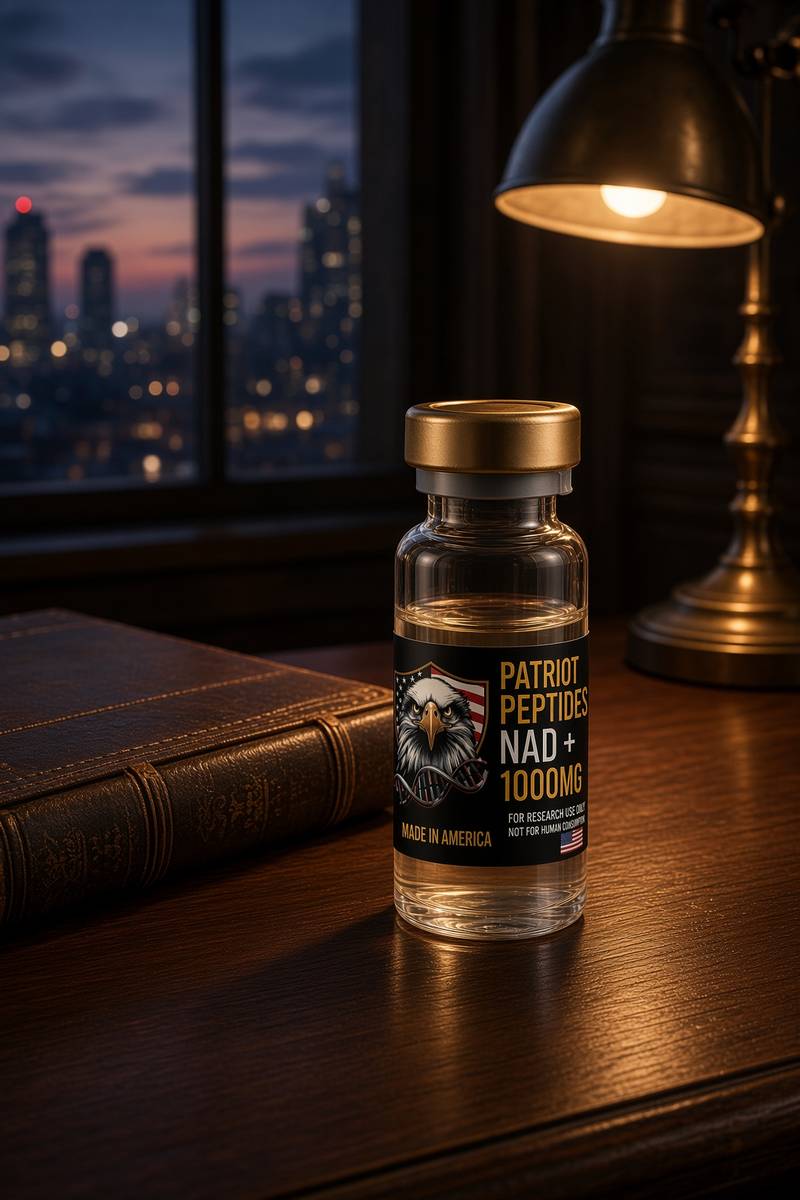
The molecule in the essay
The same published structure the essay describes — HPLC-characterised.
Read next
49 min · long read · Peptide research
NAD+: the currency of cellular time
NAD+ is nicotinamide adenine dinucleotide, the hydride coin Complex I wants oxidised and the stoichiometric substrate sirtuins, PARP1 and CD38 spend. Salvage through NAMPT is the kinetic bottleneck; the pool falls with age. Restoration in mice moves muscle, endothelium and stem-cell assays; human NR and NMN trials more often move the metabolome than a hard clinical endpoint. This essay is that topology, the named papers, and why a 1000 mg cake of lyophilised β-NAD+ is a laboratory reagent rather than an infusion.
50 min · long read · Metabolism
Fasting, autophagy and the mTOR switch
Eat, and mTOR builds. Fast, and AMPK and ULK1 start recycling the cell. The molecular story is a switch, not a personality.
49 min · long read · Peptide research
Senescent cells refuse to die, and they talk too much
Hayflick watched fibroblasts stop dividing. Campisi named the SASP — the inflammatory letters those arrested cells keep sending. Clearing p16-high cells in mice (INK-ATTAC) delayed aging phenotypes. The pathology is accumulation, not the programme itself.
More in this desk

53 min · long read · Peptide research
Recovery, GH pulses and the CJC / ipamorelin pair
Somatotrophs have two 'go' receptors. CJC without DAC is a slightly longer GHRH pulse. Ipamorelin is a selective ghrelin-receptor key that does not yank ACTH. Together they are the pair Bowers already showed is more than additive — not a gym protocol.
53 min · long read · Peptide research
How research peptides are made — and why HPLC actually matters
Solid-phase peptide synthesis builds a chain one residue at a time. HPLC then asks whether the main peak is what you think it is. ≥98% is not a slogan. It is a chromatogram.
52 min · long read · Peptide research
Fatigue, cellular energy and the NAD+ / MOTS-c neighbourhood
NAD+ is the rechargeable chip every cell spends on fuel and DNA repair — and the pool shrinks with age. MOTS-c is a mitochondrial 16-mer sent out under metabolic stress. Two answers to 'I have no energy' that are not coffee.
51 min · long read · Peptide research
Melanocortin circuits: pigment, appetite and PT-141
Melanotan II lights MC1, MC3, MC4 and MC5 — pigment plus the rest of the sheet. PT-141 is the free-acid cousin pointed at MC3 and MC4, the circuitry papers use for desire and energy, not skin colour. Same Arizona family. Different question.
Essays describe published research. They are not medical advice and they do not authorise human use of any catalogue item.