

Bodybuilding · 8 min · 1,679 words
Growth hormone, insulin, myostatin: the other levers on a fibre
After testosterone, the rest of the muscle-drug list is different receptors: a liver hormone, a storage hormone, and a brake. Food decides which of those signals becomes tissue.
What this essay actually tells you
- Growth hormone is JAK2–STAT5 at a cytokine receptor. The liver writes IGF-1. Without food the same hormone is lipolytic; collagen answers faster than sarcomeres. Acromegaly is the disease of too much, for too long.
- Insulin is a tyrosine kinase that moves GLUT4, fills glycogen and slows breakdown. A meal does this. Exogenous insulin without enough carbohydrate can drop blood glucose until the brain fails. No protocol is on this page.
- Myostatin is GDF-8, signalling through ACVR2B–SMAD2/3 to cap muscle size. Belgian Blue, the bully whippet, Schuelke’s patient: brake off, muscle up, tendons still on their own clock. EPO builds red cells, not myosin.
What this actually means
Growth hormone talks to the liver and shows up in muscle as IGF-1. Insulin stores the meal you just ate. Myostatin tells muscle to stay smaller. These are not versions of testosterone. None of them works without food, and insulin used as a bodybuilding drug is dangerous enough that this page will not describe how.
Once you leave the androgen receptor, the rest of the muscle-drug list is a set of different locks. Growth hormone binds a cytokine receptor and signals through JAK2 and STAT5. Insulin and IGF-1 bind receptor tyrosine kinases. Myostatin binds a TGF-β family receptor and tells the fibre to stay smaller. Beta-2 agonists bind a G-protein receptor and raise cAMP. Erythropoietin builds red cells, not sarcomeres, and belongs in a different essay. If a sentence cannot name the receptor, it is not yet about a drug. It is about a category from sport.
In short. These drugs are not variants of testosterone. Each one uses its own receptor. If you cannot name the receptor, you do not yet know what the drug does.
Growth hormone is a pulse, not a bath. The pituitary releases it when growth-hormone-releasing hormone says so, when ghrelin from the stomach says so, and when somatostatin allows it — mostly in deep sleep, and after certain kinds of stress and exercise. In the liver, STAT5 writes IGF-1, a seventy-residue peptide in the insulin family. Muscle also writes a local IGF-1 after it has been loaded. The circulating hormone is why a child grows. The local splice is part of why a trained fibre grows. Without food, growth hormone is a lipolytic signal: fat cells release fatty acids, and the muscle does not have the amino acids to match a rise in IGF-1 with new myosin. With food and tension, IGF-1 feeds the same PI3K–Akt path the protein essay already described, and Rheb can keep mTORC1 willing. The hormone did not lift the bar. It did not chew the steak.
In short. Growth hormone tells the liver to make IGF-1, and loaded muscle makes some IGF-1 of its own. Without food it mostly burns fat. With food and lifting it can help the fibre grow.
People hear 'growth hormone' and picture a larger muscle. The tissue that answers fastest is often collagen: tendon, skin, the matrix around the fibre. That can be useful and it can be how wrists and jaws change when the exposure is long and high. Insulin resistance rises because growth hormone tells fat and liver to release fuel and tells muscle to be a little deaf to insulin. A person who adds growth hormone and does not eat is running a lipolysis experiment. A person who adds it, eats in a surplus, and never recruits type II fibres is running an IGF-1 and water experiment. Acromegaly is the disease version of too much, for too long, and it is not a look to copy. The essays on the growth-hormone axis, on somatropin, and on IGF-1 LR3 are the catalogue versions of these receptors. They are laboratory reagents. They are not a prescription for this paragraph.
In short. Growth hormone also thickens collagen and can make muscle less sensitive to insulin. It is not a shortcut that skips meals and sets. The vials next door are research reagents, not a plan.
Insulin is the storage hormone, and it is the one I will not write a method for. The receptor is a tyrosine kinase. In muscle it moves GLUT4 to the membrane, takes glucose in, tops up glycogen, and helps amino acids stay inside the cell. It is strongly anti-catabolic: breakdown falls. A meal does this for you. Carbohydrate plus protein after a hard session does this for the fibres you just recruited, which is why the food essay cares about that window. Exogenous insulin in a bodybuilder's handbook is a different object. Too much, or insulin without enough carbohydrate, drops blood glucose until the brain cannot think. People die of that. I will name the physiology. I will not describe units, timing, or 'how to run slin'. If you need insulin, that is a diabetes team, not a journal.
In short. Insulin stores the meal and protects muscle from breakdown. Your own insulin does that after you eat. Using extra insulin without medical care can kill you by crashing blood sugar. This page stops there.
The brake, and the drugs that are not hypertrophy
Myostatin is GDF-8, a TGF-β family hormone that muscle writes to limit its own size. It binds activin receptor type IIB, Smad2/3 move, and the growth programme quiets. Knock it out and you get the Belgian Blue cow, the bully whippet, and a rare human child described by Schuelke with a myostatin mutation and a striking muscle mass. Follistatin binds myostatin and related ligands and lifts the brake from the other side. Antibodies such as bimagrumab block the receptor in trials aimed at wasting, not at a photoshoot. The diet correlation is easy to miss: a brake-off fibre still needs amino acids, energy and tension, and it still has tendons. A larger muscle on the same appetite is how you end up under-eating for the tissue you just grew. Myostatin is not a meal plan. It is a ceiling.
In short. Muscle makes a hormone that tells itself to stop growing. Rare people and animals without that hormone are heavily muscled. Removing the ceiling still requires food, and the tendons may not keep up.
Beta-2 agonists such as clenbuterol bind ADRB2, raise cAMP, and in animals can produce a real hypertrophy alongside a lot of lipolysis and a lot of tremor. The human sporting use is mostly a fat-loss story with a cardiac bill: the heart has the same receptor. I am not going to write a dose or a schedule. The mechanism is enough to file the drug away from androgens. It does not bind the androgen receptor. It does not refill glycogen. A low-carbohydrate diet plus a beta-agonist is two lipolytic signals and a miserable training week, not a hypertrophy stack.
In short. Clenbuterol-type drugs raise a different messenger and can lean you out, with a real cost to the heart. They are not testosterone, and they do not feed the muscle.
Erythropoietin, amphetamines and painkillers show up on banned lists and do not build sarcomeres. EPO grows red cells so endurance muscle sees more oxygen. Stimulants change effort and risk. Masking agents hide tests. If your question was 'how do I get a bigger fibre', those classes are the wrong corridor. Type I fibres care about oxygen. Type II fibres care about tension, glycogen and phosphocreatine. Pick the physiology that matches the fibre you named in the first essay.
In short. Some banned drugs help endurance or wakefulness. They do not build the contractile part of muscle. Stay with the fibre you actually meant.
Put the diet next to each lever, because that is the correlation people skip. Androgens ask for amino acids and, if you want growth rather than defence, a surplus. Growth hormone without calories is lipolysis; with calories and load it leans on IGF-1. Insulin without carbohydrate is dangerous rather than anabolic; insulin with a meal is what your pancreas already does. Myostatin blockade without protein is a larger appetite you failed to feed. Beta-agonists without food are a stimulant on an empty fibre. None of these replace the ten-set neighbourhood or the leucine threshold. They sit on top of a week that already made sense, or they sit on top of a week that did not, in which case they amplify the mistake.
In short. Each drug still needs the right food. Hormone plus an empty kitchen is not a bigger muscle. Hormone plus a sensible surplus and real lifting is the only version that matches the mechanism.
How the classes sit together
A fibre under a heavy bar, fed, in a modest surplus, is already running androgen receptor tone from your own testosterone, IGF-1 from your own growth hormone and from the muscle itself, and insulin from the meal. That is the un-drugged stack, and it is the one the last essay in this series tries to spend properly. Adding a drug means pushing one of those receptors past the physiological pulse. You then owe the fibre the substrate that receptor was asking for, and you owe the rest of the body the side of the receptor you did not want: lipids, glucose, heart, fertility, tendon. Ranking them into a stack pretends five mechanisms are one syrup.
In short. Your own hormones already run this system if you lift, eat and sleep. A drug pushes one receptor harder and sends you the bill. Combining several is not one simple plan.
Read the food-and-training essay next if you want the week: surplus, protein, carbohydrate around the fast fibres, creatine, sleep, and the sets that recruit type II. Read the protein essay for sestrin2 and the grams. Read the fibre essay if type I and type II have already blurred. The catalogue molecules that touch IGF-1 and growth hormone are labelled for the bench. Research use only. They are not the practical section.
In short. The practical part of this series is food and training. The hormones are the map. The vials are not the week.
Questions the essay actually answers
- How is growth hormone different from testosterone?
- Different receptor. Growth hormone uses JAK2–STAT5 and mostly reaches muscle as IGF-1. Testosterone binds the androgen receptor in the myonucleus. One is not a stronger version of the other.
- Does growth hormone build muscle without food?
- It mostly frees fatty acids. New myosin still needs amino acids, energy and tension. Collagen and water answer faster than sarcomeres.
- Why won't you explain insulin protocols?
- Because excess insulin causes hypoglycaemia, which can kill. The mechanism — GLUT4, glycogen, less breakdown — is what a normal meal already does. Dosing insulin for muscle is not a journal topic.
- What is myostatin?
- A hormone muscle makes to limit its own growth. Rare loss-of-function mutations produce very muscular animals and a few people. Turning the brake off still requires food, and tendons do not grow on the same clock.
- Is EPO a muscle-building drug?
- No. It increases red blood cells. That matters for oxygen delivery in endurance work, not for adding sarcomeres in a type II fibre.
- Are the growth-hormone peptides in the shop a cycle?
- No. CJC without DAC, ipamorelin, somatropin and IGF-1 LR3 are research reagents for the receptors named on this page. They are not medical advice and not a training plan.
Hypothetical research reconstitution
How these vials are typically mixed
Hypothetical research reconstitution for the named catalogue vial. Not a protocol, not medical advice, not a use instruction. These amounts sit in published and commonly cited laboratory ranges. The vial is labelled for research use only — not for human or veterinary administration.
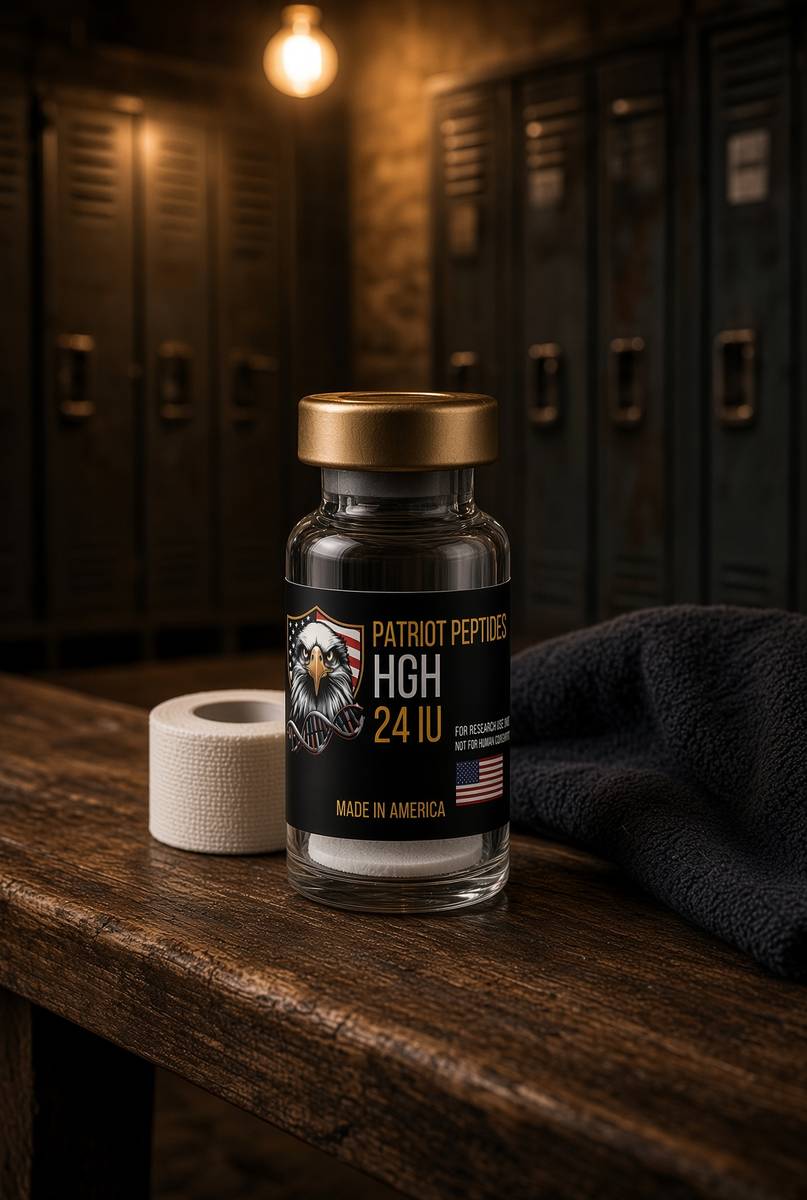
HGH
24 IU
Mix with 2 ml bacteriostatic water → 12 IU/ml
- Hypothetical aliquot
- 1–2 IU
- 0.08–0.17 ml · 8–17 units on a U-100 syringe
- How often
- Once daily, usually an evening aliquot in the somatropin notes
- 8–12 weeks, then a pause
Bench steps
- Let the vial sit until it is no longer cold to the touch.
- Wipe the stopper with 70% isopropyl alcohol. Let it dry.
- Draw 2 ml bacteriostatic water (0.9% benzyl alcohol).
- Run the water slowly down the inside glass — do not blast the cake.
- Roll between finger and thumb until the cake is gone. Do not shake.
- Label the date. Store the solution at 2–8 °C. Do not freeze. Use within 30 days unless the note below says otherwise.
24 IU in 2 ml. Two IU is about 17 units on the syringe. Gentle roll only — somatropin denatures if you beat it.
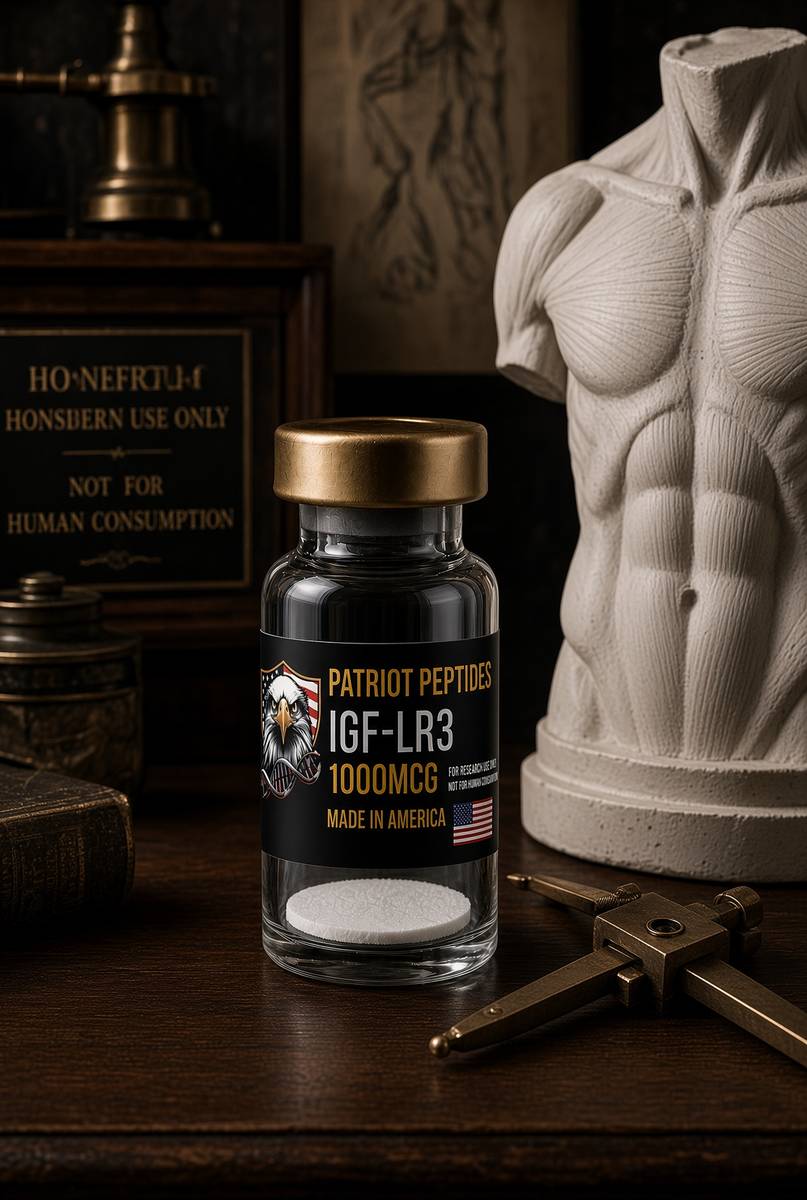
IGF-1 LR3
1000mcg
Mix with 1 ml bacteriostatic water → 1,000 mcg/ml
- Hypothetical aliquot
- 20–50 mcg
- 0.02–0.05 ml · 2–5 units on a U-100 syringe
- How often
- Once daily
- 4–6 weeks, then a pause
Bench steps
- Let the vial sit until it is no longer cold to the touch.
- Wipe the stopper with 70% isopropyl alcohol. Let it dry.
- Draw 1 ml bacteriostatic water (0.9% benzyl alcohol).
- Run the water slowly down the inside glass — do not blast the cake.
- Roll between finger and thumb until the cake is gone. Do not shake.
- Label the date. Store the solution at 2–8 °C. Do not freeze. Use within 30 days unless the note below says otherwise.
A thousand micrograms, not milligrams. 50 mcg is 5 units. Over-mixing the cake with a large water volume makes the marks unreadable — 1 ml is the point.
CJC-1295 (no DAC)
10mg
Mix with 2 ml bacteriostatic water → 5 mg/ml · 5,000 mcg/ml
- Hypothetical aliquot
- 100–300 mcg
- 0.02–0.06 ml · 2–6 units on a U-100 syringe
- How often
- Once daily, often with ipamorelin in the same window
- 8–12 weeks
Bench steps
- Let the vial sit until it is no longer cold to the touch.
- Wipe the stopper with 70% isopropyl alcohol. Let it dry.
- Draw 2 ml bacteriostatic water (0.9% benzyl alcohol).
- Run the water slowly down the inside glass — do not blast the cake.
- Roll between finger and thumb until the cake is gone. Do not shake.
- Label the date. Store the solution at 2–8 °C. Do not freeze. Use within 30 days unless the note below says otherwise.
No DAC — the pulse, not the drip. This is not CJC with DAC. Fridge. Often paired with the ipamorelin listing or the 10/10 blend.
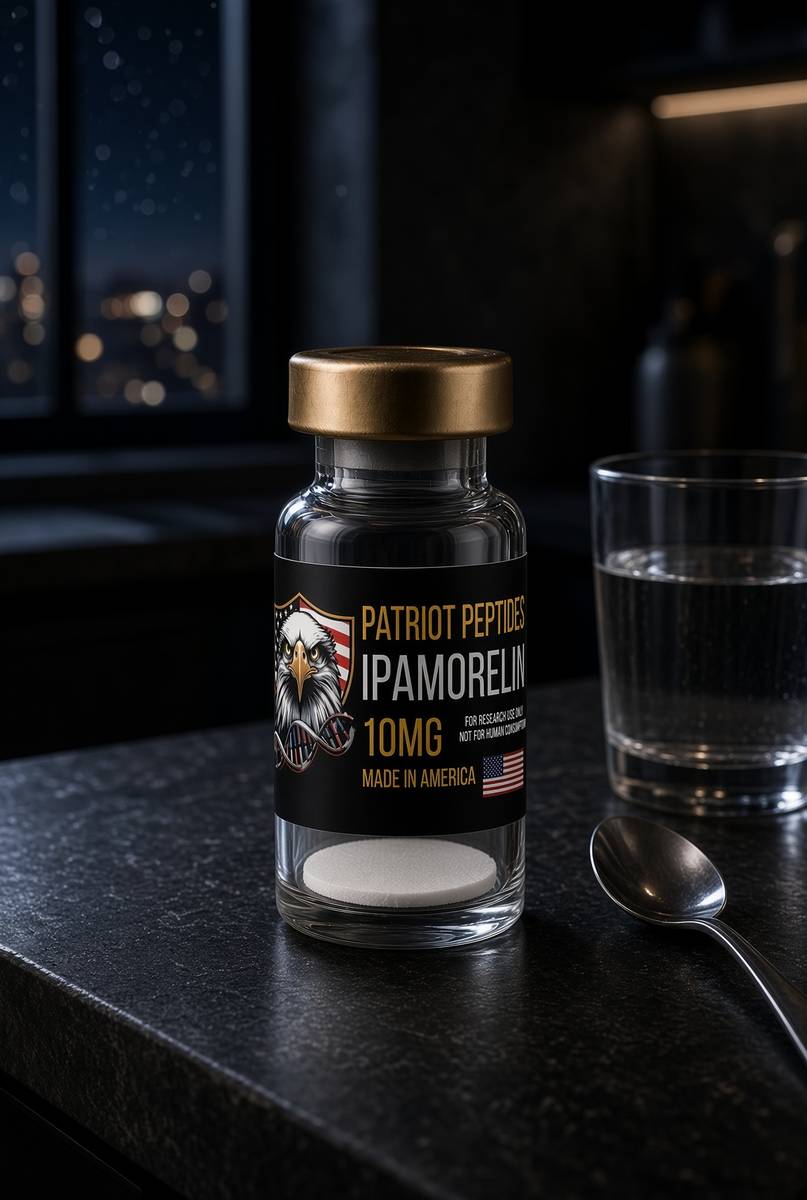
Ipamorelin
10mg
Mix with 2 ml bacteriostatic water → 5 mg/ml · 5,000 mcg/ml
- Hypothetical aliquot
- 200–300 mcg
- 0.04–0.06 ml · 4–6 units on a U-100 syringe
- How often
- Once or twice daily (morning and/or evening)
- 8–12 weeks
Bench steps
- Let the vial sit until it is no longer cold to the touch.
- Wipe the stopper with 70% isopropyl alcohol. Let it dry.
- Draw 2 ml bacteriostatic water (0.9% benzyl alcohol).
- Run the water slowly down the inside glass — do not blast the cake.
- Roll between finger and thumb until the cake is gone. Do not shake.
- Label the date. Store the solution at 2–8 °C. Do not freeze. Use within 30 days unless the note below says otherwise.
GHS-R1a hexapeptide. The 200 mcg mark is the usual starting aliquot. Stacks with CJC-1295 no DAC in the papers that run both.
Bacteriostatic water and sterile syringes ship with peptide orders over £75. Kit details · 10 ml bacteriostatic water
The vials this essay sits on
Named sequences the essay maps — HGH, IGF-1 LR3, CJC without DAC, Ipamorelin. Hypothetical research neighbourhood, not a protocol, not a medicine. One press puts every in-stock vial in the bag.
 Research only
 Research only
 Research only
Growth axis
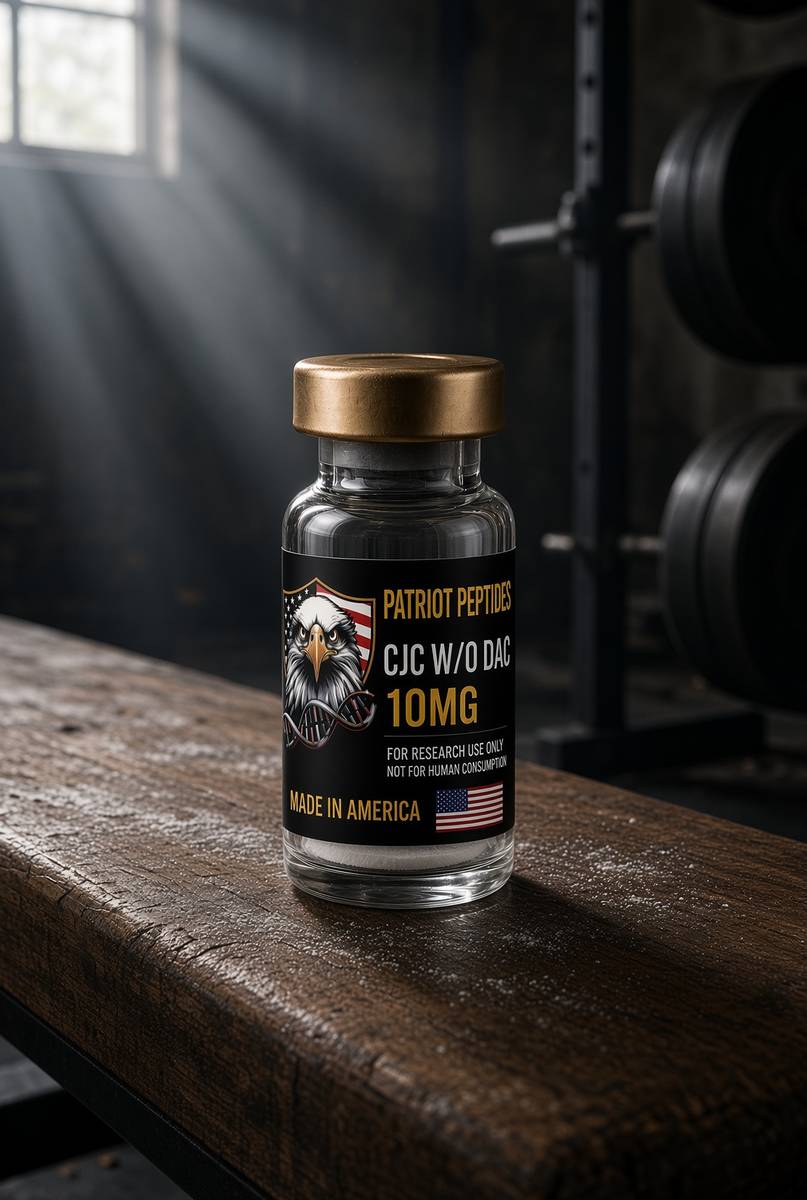
CJC without DAC
10 mg CJC without DAC — a GHRH pulse, not a weekly drip.
4.6(620)
60 browsing this now · 4 purchased in the last 24 hours
10mg · In stock
£30.00
 Research only
Growth axis
Ipamorelin
10 mg ipamorelin. The clean ghrelin-receptor pentapeptide.
4.7(457)
79 browsing this now · 3 purchased in the last 24 hours
10mg · In stock
£30.00
Research use only. Not a combined-use instruction.
Read next
10 min · Bodybuilding
Type I and type II: the two fibres a muscle actually is
Slow fibres last. Fast fibres throw the force. Diet, drugs and workouts all land on that split — so the muscle series starts with the myosin, not the vial.
8 min · Bodybuilding
Androgens: the hormone that talks to the muscle nucleus
Testosterone binds a receptor in the myonucleus, adds nuclei, and asks for food. It is not growth hormone, not a cycle written as an essay, and not a fibre you can buy.
10 min · Bodybuilding
Steroid families: four chemistries, one receptor
Testosterone, the 19-nors, the DHT-derived, and the orals that rent the liver. Wet and dry are oestrogen and water, not two kinds of muscle.
8 min · Bodybuilding
Androgens, peptides, and the meal
The nucleus, the growth-hormone receptor, and leucine do not share a lock. Here is what each one asks of a fibre, and what food still has to supply.
9 min · Bodybuilding
Food and training: how to spend the fibre you have
The practical half of the muscle series. Recruit the fast fibres, feed them, sleep, and stop asking a drug to do a week's work.
44 min · long read · Peptide research
The growth-hormone axis, properly explained
GHRH, ghrelin, somatotropin and IGF-1 are one conversation. CJC without DAC, ipamorelin, HGH and IGF-1 LR3 are four different microphones.
48 min · long read · Peptide research
Somatropin: the 191-residue ligand
Recombinant human growth hormone is one of the most studied proteins in endocrinology. Pulsatility, GHR–JAK2–STAT5b, lipolysis, IGF-1 generation — the map is public.
49 min · long read · Metabolism
Protein, training and muscle protein synthesis
Muscle isn't a mood. It is mechanical tension plus a leucine-gated translational programme. Here is the dose, the threshold, and why the gym still has to happen.
More in this desk
14 min · Bodybuilding
Actin and myosin: the motor inside the fibre
The sarcomere, the thin rope, the thick motor, the eight-nanometre stroke, and the calcium switch that lets a nerve turn all of it on. One ATP per pull.
9 min · Bodybuilding
The bill outside the fibre: axis, blood, liver, heart
The androgen receptor is in more places than the biceps. Fertility, HDL, haematocrit, the left ventricle, the voice, the tendon. A map of the tissues. Not a course.
9 min · Bodybuilding
What the set is doing: failure, volume, rest, range
Why the last reps matter more than the first, why ten hard sets is a floor and not a personality, and why a short rest quietly deletes the tension you came for.
8 min · Bodybuilding
How a fibre grows: tension, time, and the protein ledger
Synthesis minus breakdown, for weeks. Why soreness is the wrong score, why the pump is water, and why long ranges of motion keep showing up in the trials.
Essays describe published research. They are not medical advice and they do not authorise human use of any catalogue item.