

Bodybuilding · 8 min · 1,755 words
Androgens, peptides, and the meal
The nucleus, the growth-hormone receptor, and leucine do not share a lock. Here is what each one asks of a fibre, and what food still has to supply.
What this essay actually tells you
- The androgen receptor is a transcription factor in the myonucleus. CJC without DAC binds GHRHR, ipamorelin binds GHSR, somatropin binds the growth-hormone receptor, IGF-1 LR3 binds IGF1R. None of them is a steroid.
- They meet downstream only if the meal showed up: leucine at sestrin2, essential amino acids as bricks, insulin and IGF-1 via Akt, tension in the fibres you recruited. Protein stays 1.6–2.2 g/kg. Carbohydrate still feeds type II glycogen.
- Aromatase in fat sets how much oestradiol testosterone yields. A 17α-alkylated oral lowers HDL through the liver, not through butter. BPC-157 and TB-500 do not bind the androgen receptor. Research reagents. Not a stack.
What this actually means
Steroids change gene reading inside the muscle nucleus. The growth-hormone peptides in the catalogue hit different receptors and are not steroids. Protein, carbohydrate and sleep still do jobs neither of those can do. This page does not build a stack, and it does not give a dose.
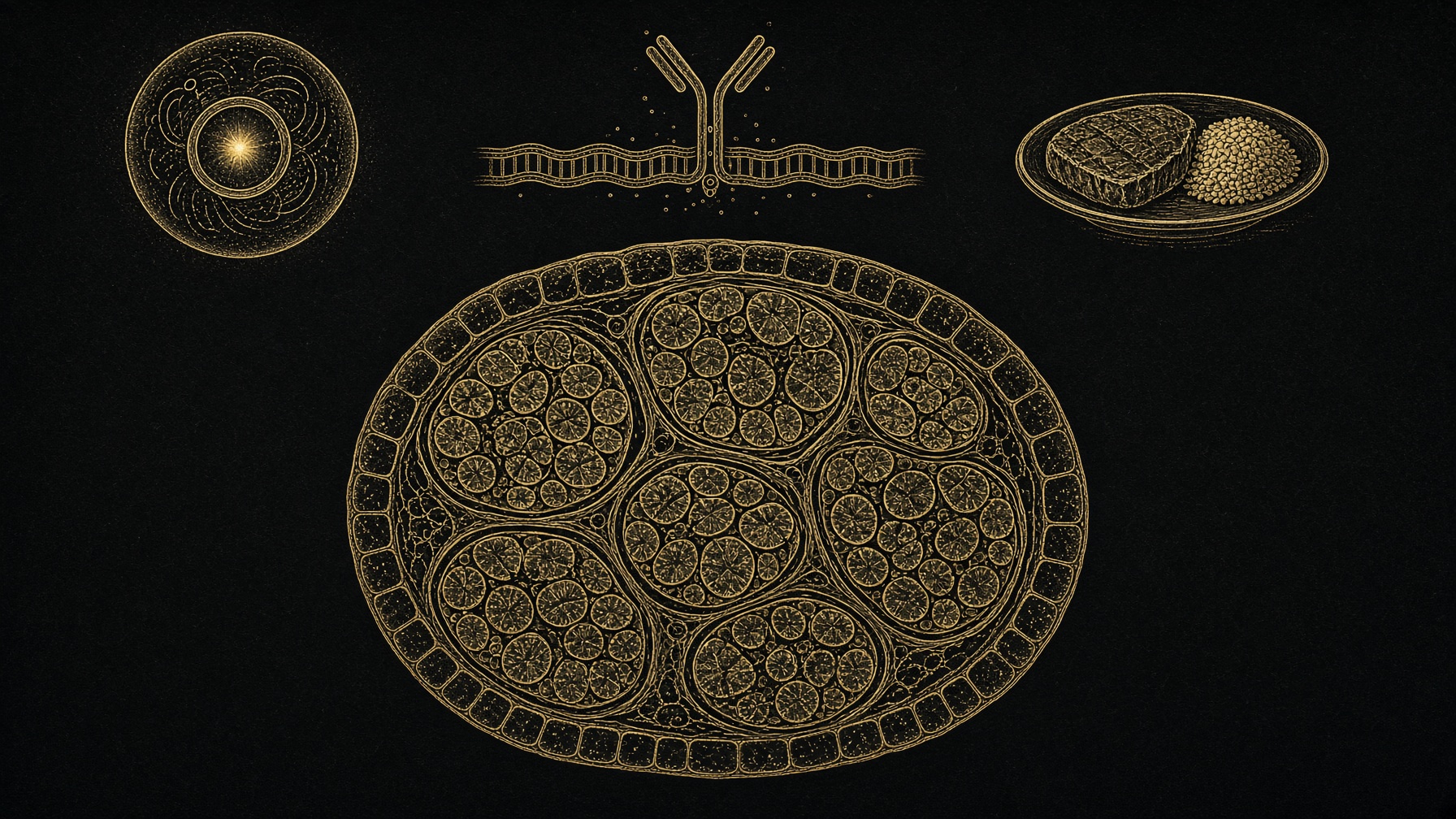
A steroid and a peptide can sit on the same fibre and still be strangers. The androgen receptor is a transcription factor inside the myonucleus. Growth hormone binds a cytokine receptor at the surface and, in the liver, gets STAT5 to write IGF-1. IGF-1 and insulin bind receptor tyrosine kinases and run PI3K–Akt toward mTORC1. Leucine does not bind any of those. It binds sestrin2, lets mTORC1 come to the lysosome, and then waits for amino acids as bricks and for tension as the reason to keep the protein. If you stack the words and not the receptors, you get a shopping list. The fibre got three different instructions and a materials bill.
In short. Steroids talk to the nucleus. Growth-hormone peptides talk to a surface receptor. Food talks to a nutrient switch. Same muscle cell, different locks.
What an androgen adds, on top of your own hormones, is more of that nuclear instruction: more muscle protein synthesis, less glucocorticoid-driven breakdown, more satellite cells donating nuclei as a type II fibre grows. It does not occupy the growth-hormone receptor. It does not occupy sestrin2. A person can be profoundly androgen-rich and still fail to translate myosin if the essential amino acids are missing, and can still fail to store glycogen in the fast fibres if the carbohydrate never came. Bhasin's trial showed testosterone adding lean mass, and adding more of it when the men also lifted. The trial did not show testosterone replacing the meal. Nitrogen in minus nitrogen out still needs a diet.
In short. Testosterone can speed building and slow breakdown. It still cannot make myosin out of an empty kitchen, and it still is not growth hormone.
The peptides in this catalogue that people file next to bodybuilding are the growth-hormone set. Modified GRF(1–29) without DAC — sold here as CJC — binds the GHRH receptor and asks the pituitary for a pulse, if somatostatin allows it. Ipamorelin binds the ghrelin receptor, GHSR, and asks for the same pulse from the other switch. Somatropin is the 191-residue hormone itself, so it skips the pituitary and binds the growth-hormone receptor directly. IGF-1 LR3 is an 83-residue analogue built to ignore the binding proteins that usually hide IGF-1, so a dish can see IGF1R. None of them bind the androgen receptor. None of them are a 19-nor, a DHT derivative, or a 17α-alkylated oral. Putting a vial beside a steroid in a sentence does not make them one drug.
In short. CJC, ipamorelin, somatropin and IGF-1 LR3 copy parts of the growth-hormone axis. They are not steroids, and they are research reagents, not a plan for a person.
Where they meet is downstream, and only partly. IGF-1 and the insulin from a real meal both lean on Akt, and Akt lets Rheb keep mTORC1 willing. An androgen has already changed which mRNAs are there to translate, and has made satellite cells more willing. Leucine has recruited the kinase to the lysosome. Tension, through integrins and phosphatidic acid, is why the motor units you actually recruited keep the protein. You can describe that as cooperation. You cannot describe it as addition of five products. Two of the signals — nocturnal growth hormone, and insulin after you eat — already happen if you sleep and if you have a meal. A peptide is a way for a laboratory to occupy one of those receptors on purpose. It is not a missing vitamin the week was waiting for.
In short. They can point the same growth switch in the same direction. Your own sleep and your own meals already run two of those signals.
What the meal still has to bring
Protein is the bricks, and the range does not change because a receptor is louder. About 1.6 to 2.2 grams per kilogram per day, in meals that each clear a leucine threshold, is still the research band from the protein essay. An androgen that raises synthesis raises the cost of missing that band. It does not raise a magic new ceiling past it. In a surplus of a few hundred kilocalories, more of the synthesis can stay as tissue. In a deficit, androgens are better at defending lean mass than at inventing it, and growth hormone without those calories is mostly a lipolytic signal: fatty acids out of fat cells, collagen thickening, not a new shelf of myosin. Carbohydrate sits with the fibre type. Hard sets spend glycogen in type II fibres. A low-carbohydrate week does not become more anabolic because an androgen is present. It becomes a week where the top sets fade earlier.
In short. Eat the same protein band as anyone who lifts. A surplus lets you add tissue. A deficit mostly lets a steroid defend it. Carbohydrate still feeds the fast fibres.
Oestradiol is a nutrient story disguised as a hormone story. Aromatase lives in fat, so a higher body-fat mass turns more testosterone into oestradiol. That is why the same testosterone looks wetter in a heavier person. The oestradiol is doing jobs: bone, a share of IGF-1, joints, libido. Driving it to zero because water bothers you removes those jobs. DHT-derived steroids and trenbolone do not replace it, because they do not aromatise. If they have also suppressed your own testosterone, the oestradiol can be gone. Food does not synthesise oestradiol from olive oil. The enzyme does, from an androgen that can be a substrate. Cholesterol in the diet is a separate confusion. The HDL drop from a 17α-alkylated oral is hepatic lipase, not the butter on the plate. You can eat carefully and still watch HDL fall. You cannot eat your way out of a C17 methyl group.
In short. Body fat changes how much oestrogen testosterone makes. Wiping that oestrogen out is not a diet trick. An oral's effect on cholesterol is the liver, not the butter.
Creatine stays in its own box. Three to five grams a day fills phosphocreatine, which type II fibres spend in the first seconds of a heavy rep. It is not an androgen and not a peptide. It does not care which steroid family you were reading about. Water and sodium move with glycogen and with oestradiol, so a wet androgen plus a high-carbohydrate week looks bigger on the scale before the myosin has caught up. That scale reading is not the hypertrophy. The tape a month later, on a fibre you actually loaded, is closer.
In short. Creatine fills a fuel store. Extra weight from carbohydrate and oestrogen is water, not new muscle, until the fibre has had weeks of load.
The tendon, and the things that are not this meeting
Myosin can outrun tendon collagen. Androgens speed the fibre. Growth hormone speeds collagen too, which is why wrists and soft tissue answer, and why that is not the same as a stronger tendon under a suddenly stronger muscle. BPC-157, in the papers, is a gastric fifteen-residue peptide with a vessel and tenocyte literature. TB-500 is an actin-binding fragment of thymosin β4. Neither binds the androgen receptor, and neither is a steroid family. They are the wrong answer to 'which oral is dry', and the right neighbouring reading if the question is why a tendon hurts after the bar jumped. They are research reagents on this site. They are not a repair protocol stapled to a steroid.
In short. Muscle can get ahead of tendon. The tendon peptides in the catalogue are not steroids and not a fix you add to one.
Erythropoietin, stimulants and fat-burners are the other wrong corridor. EPO builds red cells. Androgens also thicken blood, especially boldenone and high testosterone, so stacking an oxygen drug on an androgen is two ways to raise haematocrit, not a muscle plan. Beta-2 agonists hit ADRB2 and the heart. They do not fill glycogen and they do not bind the androgen receptor. Insulin, as a storage hormone, is already coming from your pancreas when you eat the meal this page is about. Extra insulin used as a bodybuilding drug can drop blood glucose until the brain fails. That method is not going to be written here.
In short. Some drugs on a banned list do not build muscle at all. Extra insulin is dangerous enough that this page will not describe it.
So the meeting is small enough to remember. The androgen receptor changes transcription and recruits nuclei. The growth-hormone peptides, if a laboratory is using them, change the IGF-1 side of Akt. The meal changes leucine, essential amino acids, glycogen and insulin. Sleep is when a large share of your own growth-hormone pulses happen, which is why a secretagogue is a poor substitute for a night. Train the type II fibres or the androgen has fewer of them to talk to. This shop sells the named peptides for the bench, research use only. It does not sell steroids, and this section does not assemble them into a stack.
In short. Nucleus, growth-hormone signal, meal, sleep, and a bar. That is the meeting. A stack is how people pretend those are one bottle.
- Androgen receptor
- nucleus
- GH and IGF-1
- surface receptors
- The meal
- leucine, glycogen, insulin
Transcription, satellite cells, less glucocorticoid breakdown. Needs amino acids or it has nothing to write.
CJC, ipamorelin, somatropin, IGF-1 LR3. Not steroids. Without food, growth hormone is mostly lipolysis.
1.6–2.2 g protein/kg. Carbohydrate around hard sets. Creatine 3–5 g for phosphocreatine.
Questions the essay actually answers
- Do peptides work like steroids?
- No. Steroids bind the androgen receptor in the nucleus. CJC, ipamorelin, somatropin and IGF-1 LR3 bind growth-hormone or IGF receptors. Different locks. They can meet downstream at the growth switch, and only if food and tension are there.
- Does testosterone replace protein?
- No. It can raise synthesis and defend lean mass. Myosin still needs essential amino acids. The practical band remains about 1.6–2.2 g per kg per day.
- Why does diet change a steroid's side effects?
- Aromatase in fat turns testosterone into oestradiol, so a heavier body makes more oestrogen from the same hormone. Carbohydrate and oestradiol both hold water. A 17α-alkylated oral lowers HDL through the liver, which a clean diet does not switch off.
- Can growth hormone build muscle without eating?
- It mostly frees fatty acids and pushes collagen. New myosin still needs amino acids, energy and load.
- Where do BPC-157 and TB-500 fit?
- They are not anabolic steroids. BPC-157 has a vessel and tendon literature. TB-500 binds actin. They do not replace the androgen receptor or the meal. Research use only.
- Is this a stack or medical advice?
- No. It is three receptors and a meal. Steroids are controlled medicines this catalogue does not sell. Insulin as a muscle drug is omitted because hypoglycaemia can kill. The peptides named here are laboratory reagents.
Hypothetical research reconstitution
How these vials are typically mixed
Hypothetical research reconstitution for the named catalogue vial. Not a protocol, not medical advice, not a use instruction. These amounts sit in published and commonly cited laboratory ranges. The vial is labelled for research use only — not for human or veterinary administration.
CJC-1295 (no DAC)
10mg
Mix with 2 ml bacteriostatic water → 5 mg/ml · 5,000 mcg/ml
- Hypothetical aliquot
- 100–300 mcg
- 0.02–0.06 ml · 2–6 units on a U-100 syringe
- How often
- Once daily, often with ipamorelin in the same window
- 8–12 weeks
Bench steps
- Let the vial sit until it is no longer cold to the touch.
- Wipe the stopper with 70% isopropyl alcohol. Let it dry.
- Draw 2 ml bacteriostatic water (0.9% benzyl alcohol).
- Run the water slowly down the inside glass — do not blast the cake.
- Roll between finger and thumb until the cake is gone. Do not shake.
- Label the date. Store the solution at 2–8 °C. Do not freeze. Use within 30 days unless the note below says otherwise.
No DAC — the pulse, not the drip. This is not CJC with DAC. Fridge. Often paired with the ipamorelin listing or the 10/10 blend.
Ipamorelin
10mg
Mix with 2 ml bacteriostatic water → 5 mg/ml · 5,000 mcg/ml
- Hypothetical aliquot
- 200–300 mcg
- 0.04–0.06 ml · 4–6 units on a U-100 syringe
- How often
- Once or twice daily (morning and/or evening)
- 8–12 weeks
Bench steps
- Let the vial sit until it is no longer cold to the touch.
- Wipe the stopper with 70% isopropyl alcohol. Let it dry.
- Draw 2 ml bacteriostatic water (0.9% benzyl alcohol).
- Run the water slowly down the inside glass — do not blast the cake.
- Roll between finger and thumb until the cake is gone. Do not shake.
- Label the date. Store the solution at 2–8 °C. Do not freeze. Use within 30 days unless the note below says otherwise.
GHS-R1a hexapeptide. The 200 mcg mark is the usual starting aliquot. Stacks with CJC-1295 no DAC in the papers that run both.
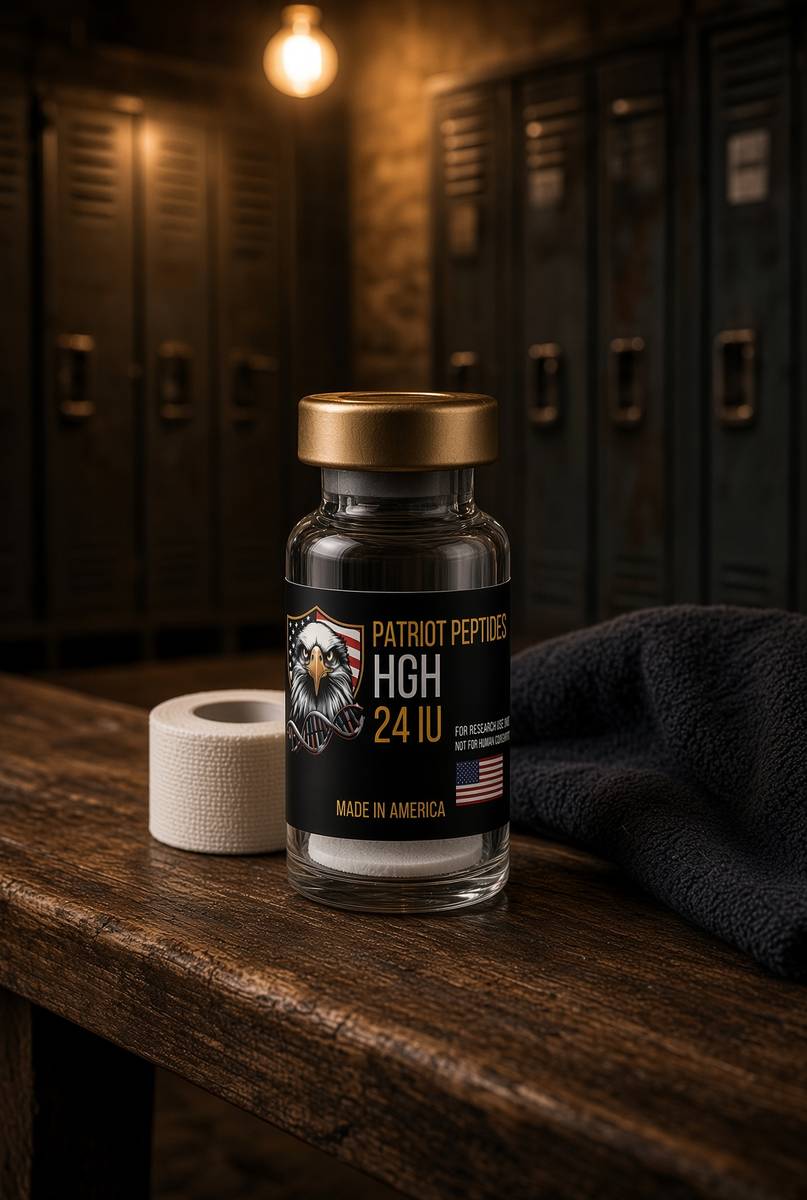
HGH
24 IU
Mix with 2 ml bacteriostatic water → 12 IU/ml
- Hypothetical aliquot
- 1–2 IU
- 0.08–0.17 ml · 8–17 units on a U-100 syringe
- How often
- Once daily, usually an evening aliquot in the somatropin notes
- 8–12 weeks, then a pause
Bench steps
- Let the vial sit until it is no longer cold to the touch.
- Wipe the stopper with 70% isopropyl alcohol. Let it dry.
- Draw 2 ml bacteriostatic water (0.9% benzyl alcohol).
- Run the water slowly down the inside glass — do not blast the cake.
- Roll between finger and thumb until the cake is gone. Do not shake.
- Label the date. Store the solution at 2–8 °C. Do not freeze. Use within 30 days unless the note below says otherwise.
24 IU in 2 ml. Two IU is about 17 units on the syringe. Gentle roll only — somatropin denatures if you beat it.
IGF-1 LR3
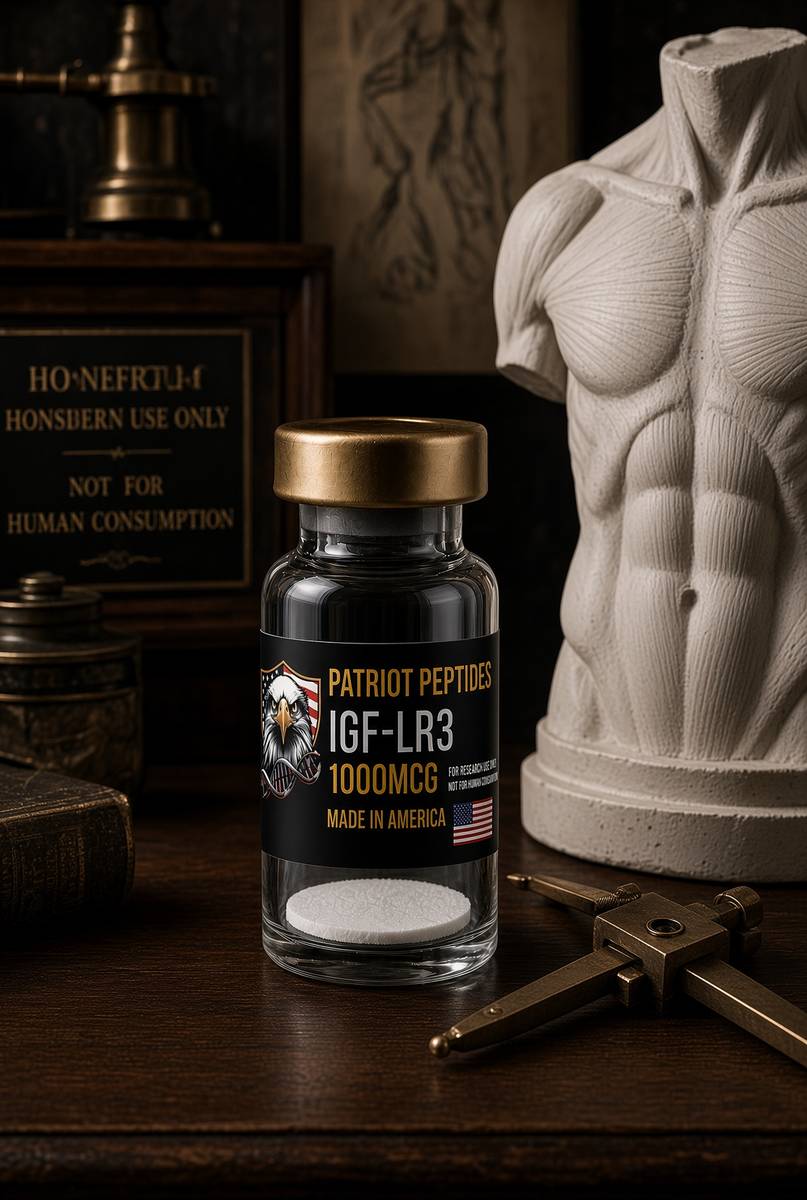
1000mcg
Mix with 1 ml bacteriostatic water → 1,000 mcg/ml
- Hypothetical aliquot
- 20–50 mcg
- 0.02–0.05 ml · 2–5 units on a U-100 syringe
- How often
- Once daily
- 4–6 weeks, then a pause
Bench steps
- Let the vial sit until it is no longer cold to the touch.
- Wipe the stopper with 70% isopropyl alcohol. Let it dry.
- Draw 1 ml bacteriostatic water (0.9% benzyl alcohol).
- Run the water slowly down the inside glass — do not blast the cake.
- Roll between finger and thumb until the cake is gone. Do not shake.
- Label the date. Store the solution at 2–8 °C. Do not freeze. Use within 30 days unless the note below says otherwise.
A thousand micrograms, not milligrams. 50 mcg is 5 units. Over-mixing the cake with a large water volume makes the marks unreadable — 1 ml is the point.
Bacteriostatic water and sterile syringes ship with peptide orders over £75. Kit details · 10 ml bacteriostatic water
The vials this essay sits on
Named sequences the essay maps — CJC without DAC, Ipamorelin, HGH, IGF-1 LR3. Hypothetical research neighbourhood, not a protocol, not a medicine. One press puts every in-stock vial in the bag.
 Research only
Growth axis
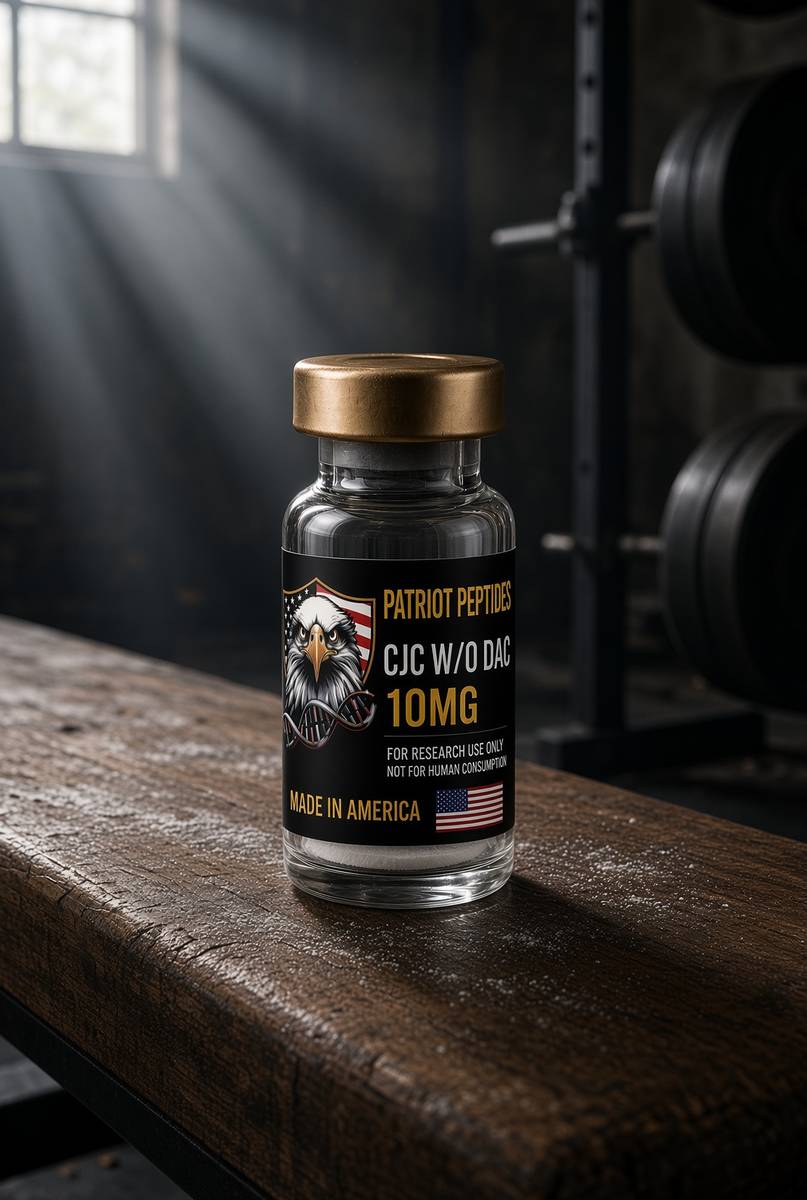
CJC without DAC
10 mg CJC without DAC — a GHRH pulse, not a weekly drip.
4.6(620)
107 browsing this now · 4 purchased in the last 24 hours
10mg · In stock
£30.00
 Research only
Growth axis
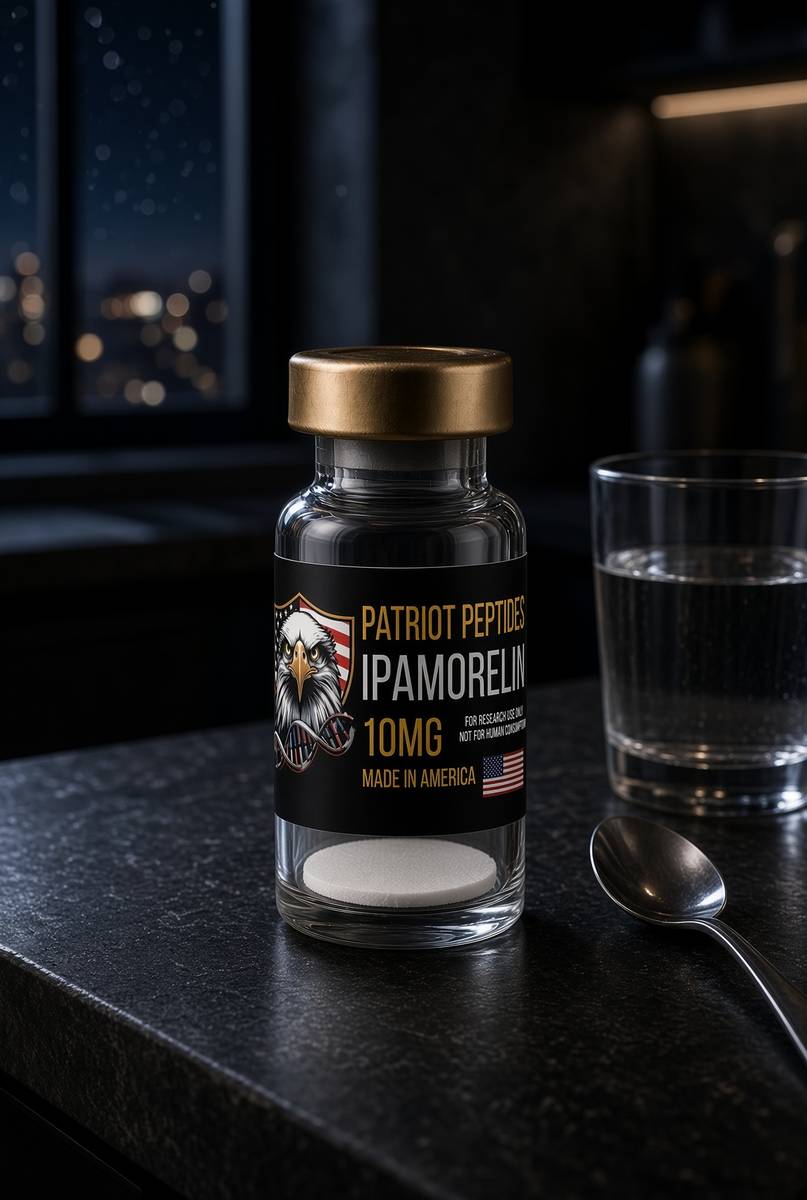
Ipamorelin
10 mg ipamorelin. The clean ghrelin-receptor pentapeptide.
4.7(457)
49 browsing this now · 3 purchased in the last 24 hours
10mg · In stock
£30.00
 Research only
 Research only
Research use only. Not a combined-use instruction.
Read next
10 min · Bodybuilding
Steroid families: four chemistries, one receptor
Testosterone, the 19-nors, the DHT-derived, and the orals that rent the liver. Wet and dry are oestrogen and water, not two kinds of muscle.
8 min · Bodybuilding
Androgens: the hormone that talks to the muscle nucleus
Testosterone binds a receptor in the myonucleus, adds nuclei, and asks for food. It is not growth hormone, not a cycle written as an essay, and not a fibre you can buy.
8 min · Bodybuilding
Growth hormone, insulin, myostatin: the other levers on a fibre
After testosterone, the rest of the muscle-drug list is different receptors: a liver hormone, a storage hormone, and a brake. Food decides which of those signals becomes tissue.
9 min · Bodybuilding
Food and training: how to spend the fibre you have
The practical half of the muscle series. Recruit the fast fibres, feed them, sleep, and stop asking a drug to do a week's work.
49 min · long read · Metabolism
Protein, training and muscle protein synthesis
Muscle isn't a mood. It is mechanical tension plus a leucine-gated translational programme. Here is the dose, the threshold, and why the gym still has to happen.
44 min · long read · Peptide research
The growth-hormone axis, properly explained
GHRH, ghrelin, somatotropin and IGF-1 are one conversation. CJC without DAC, ipamorelin, HGH and IGF-1 LR3 are four different microphones.
More in this desk
14 min · Bodybuilding
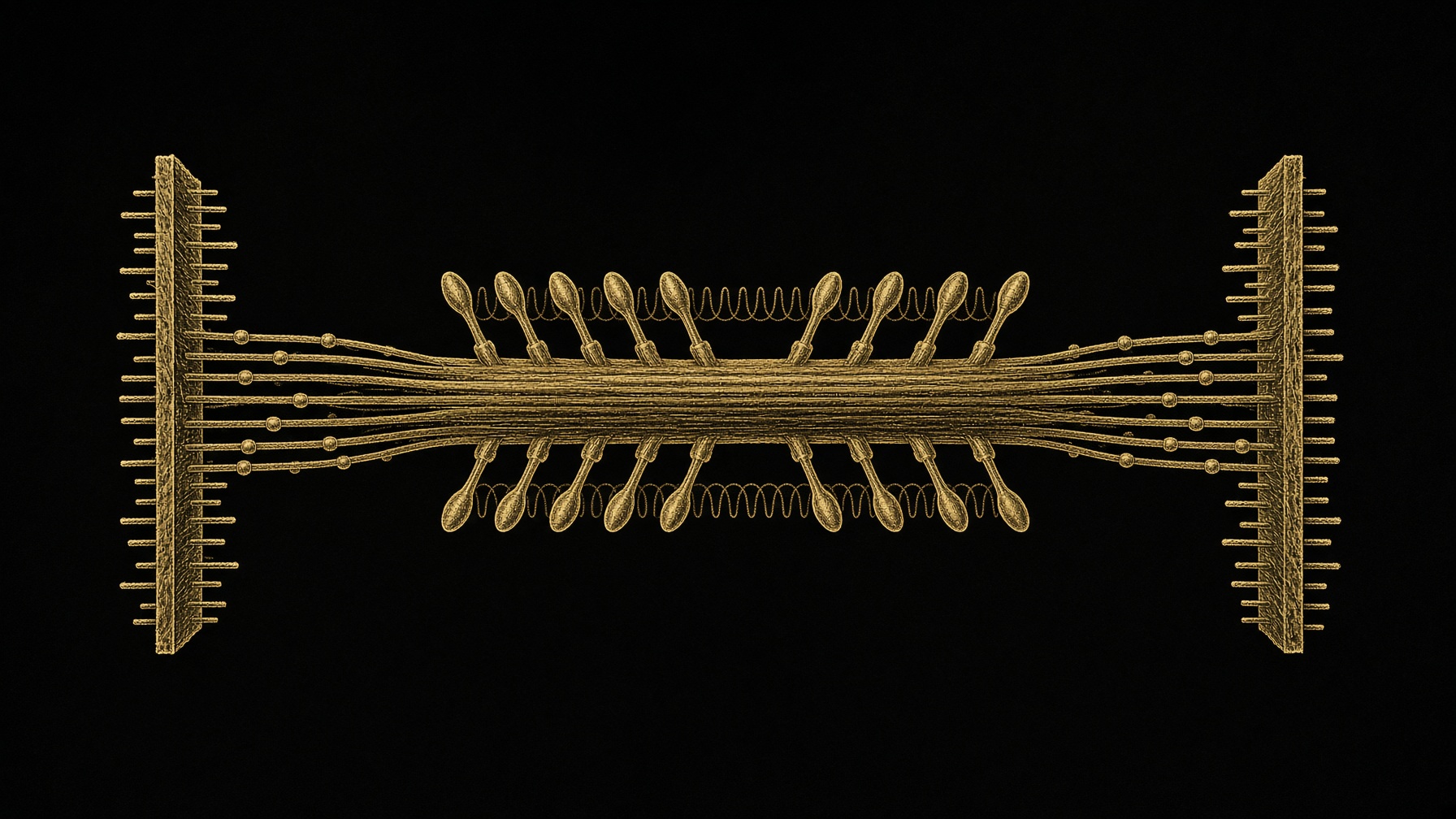
Actin and myosin: the motor inside the fibre
The sarcomere, the thin rope, the thick motor, the eight-nanometre stroke, and the calcium switch that lets a nerve turn all of it on. One ATP per pull.
10 min · Bodybuilding
Type I and type II: the two fibres a muscle actually is
Slow fibres last. Fast fibres throw the force. Diet, drugs and workouts all land on that split — so the muscle series starts with the myosin, not the vial.
9 min · Bodybuilding
The bill outside the fibre: axis, blood, liver, heart
The androgen receptor is in more places than the biceps. Fertility, HDL, haematocrit, the left ventricle, the voice, the tendon. A map of the tissues. Not a course.
9 min · Bodybuilding
What the set is doing: failure, volume, rest, range
Why the last reps matter more than the first, why ten hard sets is a floor and not a personality, and why a short rest quietly deletes the tension you came for.
Essays describe published research. They are not medical advice and they do not authorise human use of any catalogue item.