

Bodybuilding · 8 min · 1,666 words
Androgens: the hormone that talks to the muscle nucleus
Testosterone binds a receptor in the myonucleus, adds nuclei, and asks for food. It is not growth hormone, not a cycle written as an essay, and not a fibre you can buy.
What this essay actually tells you
- Skeletal muscle has very little 5α-reductase, so testosterone itself occupies the androgen receptor. DHT is a prostate, skin and hair story. The receptor is a transcription factor in the myonucleus.
- Bhasin et al., NEJM 1996: supraphysiological testosterone raised fat-free mass with and without lifting, and lifting added more. Sinha-Hikim: more satellite cells and myonuclei as the fibres grew. The bar was not optional in the larger result.
- Synthesis still needs essential amino acids and energy. In a deficit the hormone mostly defends lean mass. Anabolic steroids are controlled medicines. This catalogue does not sell them, and this page does not give a dose.
What this actually means
Testosterone tells muscle nuclei to build protein and to pull in more stem cells. Lifting decides which fibres hear it. Eating decides whether there is anything to build with. Other drugs people group as PEDs use different receptors. This shop does not sell steroids, and this page does not give a dose.
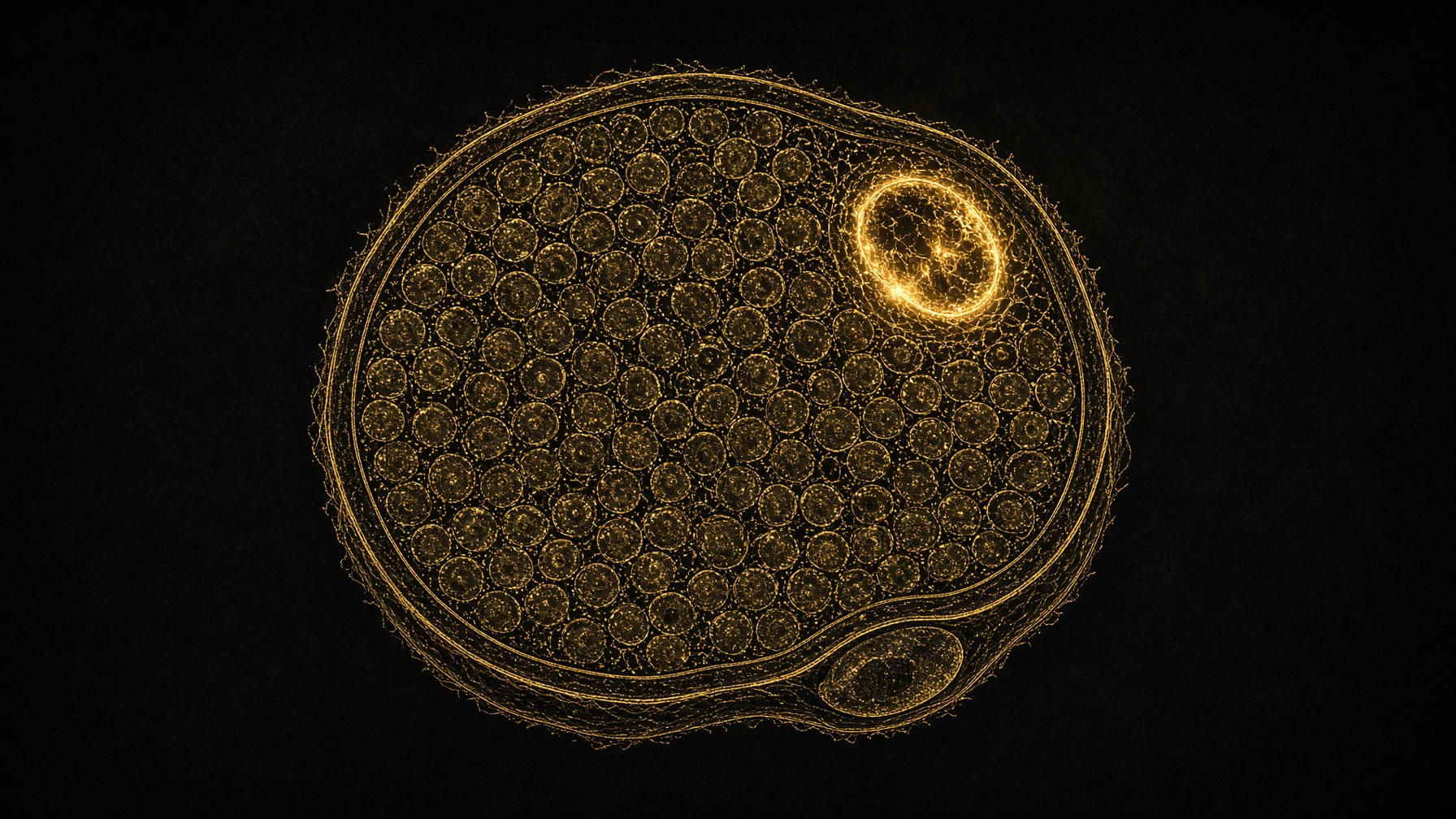
An androgen is a steroid hormone that binds the androgen receptor, a ligand-activated transcription factor. Testosterone is the one the testis writes. Inside some tissues, 5α-reductase turns it into dihydrotestosterone, a tighter ligand. Skeletal muscle is awkward on purpose: it has very little 5α-reductase, so the hormone that actually occupies the muscle receptor is testosterone itself. That is why a drug class people lump together as 'anabolics' is, in the fibre, a nuclear receptor story before it is a gym story. The receptor dimerises, moves to the myonucleus, and sits on androgen-response elements. Genes move. The fibre notices over days, not over a pump.
In short. Testosterone binds a receptor in the muscle cell's nucleus and changes which genes are read. Muscle mostly sees testosterone itself, not the stronger cousin some other tissues make.
What moves is not mysterious, and it is not magic nitrogen. In a fibre, androgens raise muscle protein synthesis and lean on muscle protein breakdown, partly by interfering with glucocorticoid signalling that would otherwise be catabolic. They also wake satellite cells. Sinha-Hikim, Bhasin and colleagues showed, in men given supraphysiological testosterone under trial conditions, more satellite cells and more myonuclei as the fibres grew. Bhasin's 1996 New England Journal of Medicine paper is the one to read before you read a forum: testosterone increased fat-free mass and strength, and the increase was larger when the men also lifted. The drug did not replace the bar. The bar did not replace the hormone in that experiment either. Both were real. The paper is not a recipe.
In short. Androgens speed the building of muscle protein, slow the breakdown, and recruit more stem cells onto the fibre. Lifting still adds something the hormone alone does not fully replace.
The diet correlation is blunt. A hormone that raises synthesis raises the demand for essential amino acids and for energy to pay the ATP bill of building myosin. In a genuine surplus, with protein in the range the protein essay already set — about 1.6 to 2.2 grams per kilogram — more of that synthesis can stay as tissue. In a deep deficit, androgens are better at defending lean mass than at inventing it. You cannot transcribe a myosin heavy chain out of a hormone and an empty fridge. Appetite often rises. Body weight then rises because food rose, and people credit the drug for the meals. Nitrogen balance studies from Kochakian onward are why this is not a metaphor. Nitrogen in, minus nitrogen out, is a crude whole-body integral of what the fibre is doing. It still needs carbon and amino groups from the diet.
In short. If you are not eating enough protein and energy, the hormone has nothing to build with. In a calorie deficit it mainly helps you hold muscle. In a surplus it can help you add it, and only if you also load the fibre.
Oestradiol is part of the same molecule's life, not a side plot. Aromatase converts a share of testosterone to oestradiol. Bone, libido, some IGF-1 signalling and the closing of the growth plates all listen to that oestrogen. Crushing it to zero because a forum is frightened of water retention is how people end up with sore joints and a worse lipid picture, not a purer anabolic signal. Muscle itself is not the main aromatase organ. Adipose tissue is. A heavier body aromatises more. That is physiology, and it is also why 'dry' and 'wet' compounds are a slang map of aromatisation and water, not a second receptor.
In short. Some testosterone becomes oestrogen. You need a little of that for bones, joints and drive. Wiping it out is not a smarter version of the same hormone.
Same receptor, different ligands
Synthetic androgens — the drugs grouped as anabolic-androgenic steroids — are testosterone with the rings edited so the molecule survives the liver longer, aromatises less or more, or binds the receptor with a different balance of anabolic and androgenic effects in old rat assays. Those assays (levator ani versus prostate) are how the field got the word 'anabolic'. They are not a human safety certificate. Nandrolone, drostanolone, stanozolol, methandienone: different structures, one receptor family, different fingerprints on liver, lipids, hair follicles and the heart. Naming them is not offering them. Patriot Peptides does not sell these medicines. They are controlled drugs. A research-peptide catalogue is a different legal object.
In short. Lab-made versions of testosterone still use the same receptor. They differ in side effects, not in kind. This shop does not sell them.
Selective androgen receptor modulators were an attempt to keep the muscle transcription and lose the prostate and skin transcription. Enobosarm and its cousins bind the same receptor and recruit a different mix of coactivators, in the theory. Cachexia trials showed some lean-mass signal and a side-effect list that did not match the brochure: liver enzymes, lipids, suppression of the body's own testosterone. 'Selective' is a design aim. It is not a promise that the hypothalamic-pituitary-gonadal axis will keep working. The axis reads androgen. Any ligand that looks enough like androgen will quiet GnRH, LH and FSH, and sperm production falls with them. That is suppression. It is not a myth invented to scare beginners.
In short. Drugs designed to hit muscle and spare other organs still switch off your own testosterone if they look enough like it. Selectivity was the hope. Suppression is common anyway.
The fibre types from the previous page still apply. Androgens do not invent a type III fibre. They enlarge the fibres you have, with a bias toward the type II fibres that hypertrophy under load, and they add myonuclei so the larger domain can be served. A person who takes an androgen and does not recruit high-threshold motor units grows less than a person who does, which is the Bhasin result in plain clothes. A person who recruits them and does not eat will not bank the protein. Glycogen still limits repeated hard sets. Creatine still buffers the first seconds of a type IIx effort. The hormone is an amplifier of a programme that already had three inputs: tension, amino acids, energy.
In short. Androgens enlarge the fibres you train, especially the fast ones, and they add nuclei. They do not replace heavy work or food.
Harms are part of the mechanism, not a footnote I am embarrassed to write. The same nuclear receptor in the liver changes HDL and LDL in the wrong direction for arteries. Erythropoiesis rises and haematocrit can climb. The left ventricle sees a pressure and a volume story that is not 'more biceps'. Tendon collagen lags the myosin, so a stronger fibre on the same tendon is a risk. The testes shrink because LH fell. Fertility falls because FSH fell. Women virilise because hair follicles and the voice are androgen tissues too. Adolescents close growth plates early if oestrogen from aromatised androgen arrives too soon. I am not going to write a dose, a cycle length, or a post-cycle plan. Those are medical acts. This is a map of the receptor.
In short. The same hormone that grows muscle can wreck cholesterol, thicken blood, quiet fertility, and load a tendon that has not caught up. This page will not tell you a dose.
What this class cannot be exchanged for
Growth hormone is not an androgen. It uses a cytokine receptor and JAK-STAT in the liver, and the muscle mostly hears it as IGF-1. Insulin is not an androgen. It is a storage hormone with a tyrosine kinase receptor. Myostatin is a brake in the TGF-β family. Beta-2 agonists hit a different receptor again and mostly remind the heart it has one. Grouping them as 'PEDs' is a legal and sporting category. It is a bad biology category. The next essay separates those chairs. If you only remember one line from this one, remember that the androgen receptor is a transcription factor in the myonucleus, that food is the substrate, and that the bar decides which fibres get the message.
In short. Testosterone is not growth hormone, not insulin, and not a training plan. It is a signal to the nucleus. Food is the building material.
The research peptides on this site that touch the growth-hormone axis — CJC without DAC, ipamorelin, somatropin, IGF-1 LR3 — are not androgens and do not bind the androgen receptor. They are named here so the categories stay clean. They are sold as laboratory reagents, for in-vitro work, not as a cycle. The protein-and-training essay is still the essay that tells you how leucine and tension build the fibre without any of these molecules.
In short. Nothing in the peptide catalogue is testosterone. The molecules that copy growth hormone are a different receptor, and they are research reagents, not a plan for a person.
Questions the essay actually answers
- How does testosterone build muscle?
- It binds the androgen receptor in muscle nuclei, raises muscle protein synthesis, opposes some glucocorticoid breakdown, and increases satellite-cell donation of myonuclei. Training and food still decide how much of that becomes sarcomeres.
- Does muscle turn testosterone into DHT?
- Barely. Skeletal muscle has very little 5α-reductase, so testosterone itself is the ligand. DHT matters in prostate, skin and hair.
- Do androgens work without lifting?
- In controlled trials, supraphysiological testosterone increased fat-free mass even without training, and increased it more with training. The drug is not a barbell. The barbell is not the drug.
- Why does diet still matter if the hormone is on?
- Synthesis needs essential amino acids and energy. In a deficit, androgens mostly defend lean mass. They do not create myosin from nothing.
- Are SARMs a safer version of the same thing?
- They were designed to be more selective. Trials still show suppression of your own testosterone, lipid changes and liver signals. Selective was the aim, not a guarantee.
- Will this page tell me a cycle?
- No. Anabolic steroids are controlled medicines with a real harm list. This is the receptor and the fibre. It is not a prescription, and this catalogue does not sell them.
Hypothetical research reconstitution
How these vials are typically mixed
Hypothetical research reconstitution for the named catalogue vial. Not a protocol, not medical advice, not a use instruction. These amounts sit in published and commonly cited laboratory ranges. The vial is labelled for research use only — not for human or veterinary administration.
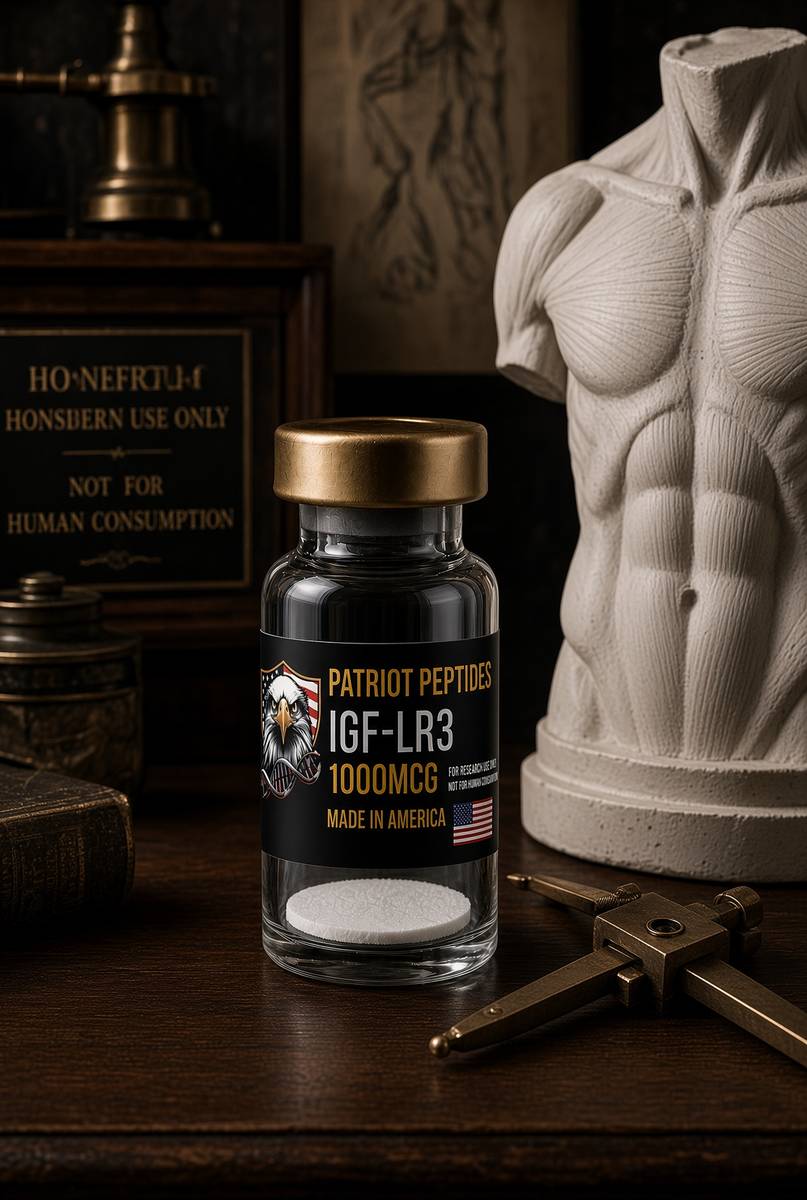
IGF-1 LR3
1000mcg
Mix with 1 ml bacteriostatic water → 1,000 mcg/ml
- Hypothetical aliquot
- 20–50 mcg
- 0.02–0.05 ml · 2–5 units on a U-100 syringe
- How often
- Once daily
- 4–6 weeks, then a pause
Bench steps
- Let the vial sit until it is no longer cold to the touch.
- Wipe the stopper with 70% isopropyl alcohol. Let it dry.
- Draw 1 ml bacteriostatic water (0.9% benzyl alcohol).
- Run the water slowly down the inside glass — do not blast the cake.
- Roll between finger and thumb until the cake is gone. Do not shake.
- Label the date. Store the solution at 2–8 °C. Do not freeze. Use within 30 days unless the note below says otherwise.
A thousand micrograms, not milligrams. 50 mcg is 5 units. Over-mixing the cake with a large water volume makes the marks unreadable — 1 ml is the point.
CJC-1295 (no DAC)
10mg
Mix with 2 ml bacteriostatic water → 5 mg/ml · 5,000 mcg/ml
- Hypothetical aliquot
- 100–300 mcg
- 0.02–0.06 ml · 2–6 units on a U-100 syringe
- How often
- Once daily, often with ipamorelin in the same window
- 8–12 weeks
Bench steps
- Let the vial sit until it is no longer cold to the touch.
- Wipe the stopper with 70% isopropyl alcohol. Let it dry.
- Draw 2 ml bacteriostatic water (0.9% benzyl alcohol).
- Run the water slowly down the inside glass — do not blast the cake.
- Roll between finger and thumb until the cake is gone. Do not shake.
- Label the date. Store the solution at 2–8 °C. Do not freeze. Use within 30 days unless the note below says otherwise.
No DAC — the pulse, not the drip. This is not CJC with DAC. Fridge. Often paired with the ipamorelin listing or the 10/10 blend.
Ipamorelin
10mg
Mix with 2 ml bacteriostatic water → 5 mg/ml · 5,000 mcg/ml
- Hypothetical aliquot
- 200–300 mcg
- 0.04–0.06 ml · 4–6 units on a U-100 syringe
- How often
- Once or twice daily (morning and/or evening)
- 8–12 weeks
Bench steps
- Let the vial sit until it is no longer cold to the touch.
- Wipe the stopper with 70% isopropyl alcohol. Let it dry.
- Draw 2 ml bacteriostatic water (0.9% benzyl alcohol).
- Run the water slowly down the inside glass — do not blast the cake.
- Roll between finger and thumb until the cake is gone. Do not shake.
- Label the date. Store the solution at 2–8 °C. Do not freeze. Use within 30 days unless the note below says otherwise.
GHS-R1a hexapeptide. The 200 mcg mark is the usual starting aliquot. Stacks with CJC-1295 no DAC in the papers that run both.
Bacteriostatic water and sterile syringes ship with peptide orders over £75. Kit details · 10 ml bacteriostatic water
The vials this essay sits on
Named sequences the essay maps — IGF-1 LR3, CJC without DAC, Ipamorelin. Hypothetical research neighbourhood, not a protocol, not a medicine. One press puts every in-stock vial in the bag.
 Research only
 Research only
Growth axis
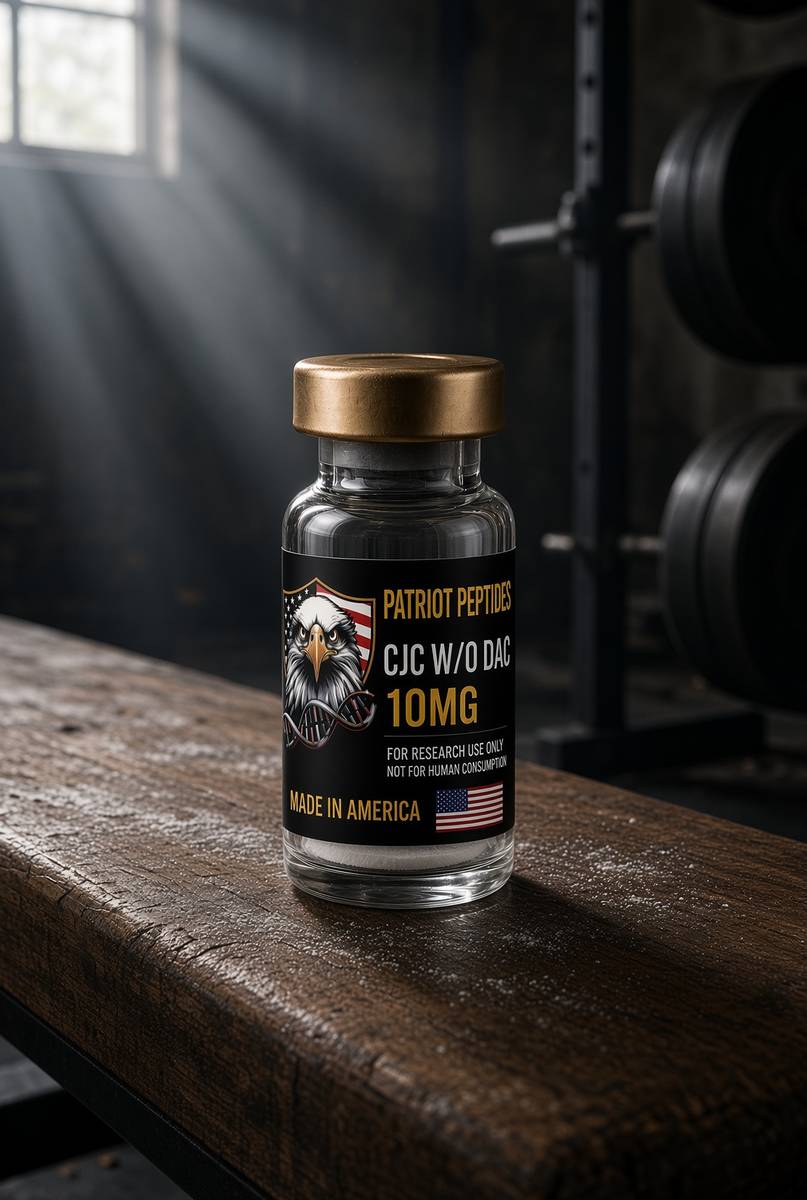
CJC without DAC
10 mg CJC without DAC — a GHRH pulse, not a weekly drip.
4.6(620)
72 browsing this now · 4 purchased in the last 24 hours
10mg · In stock
£30.00
 Research only
Growth axis
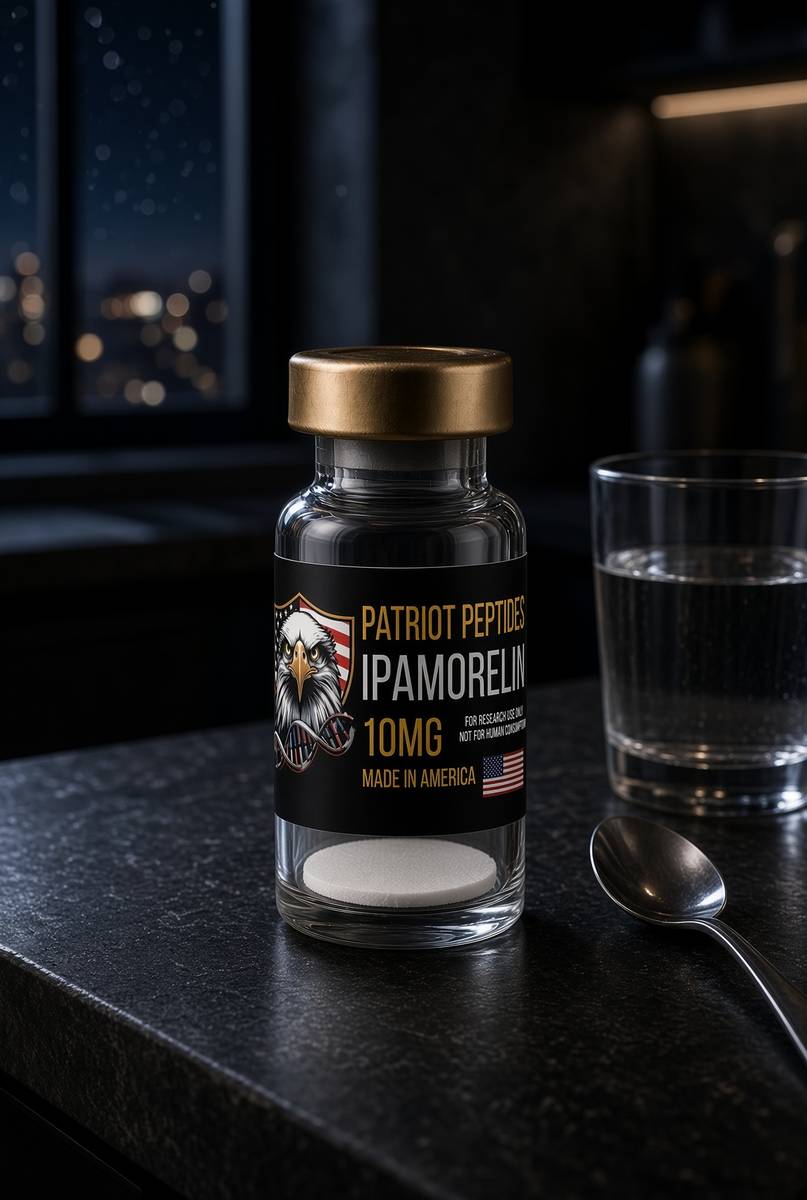
Ipamorelin
10 mg ipamorelin. The clean ghrelin-receptor pentapeptide.
4.7(457)
85 browsing this now · 3 purchased in the last 24 hours
10mg · In stock
£30.00
Research use only. Not a combined-use instruction.
Read next
10 min · Bodybuilding
Type I and type II: the two fibres a muscle actually is
Slow fibres last. Fast fibres throw the force. Diet, drugs and workouts all land on that split — so the muscle series starts with the myosin, not the vial.
10 min · Bodybuilding
Steroid families: four chemistries, one receptor
Testosterone, the 19-nors, the DHT-derived, and the orals that rent the liver. Wet and dry are oestrogen and water, not two kinds of muscle.
8 min · Bodybuilding
Androgens, peptides, and the meal
The nucleus, the growth-hormone receptor, and leucine do not share a lock. Here is what each one asks of a fibre, and what food still has to supply.
8 min · Bodybuilding
Growth hormone, insulin, myostatin: the other levers on a fibre
After testosterone, the rest of the muscle-drug list is different receptors: a liver hormone, a storage hormone, and a brake. Food decides which of those signals becomes tissue.
9 min · Bodybuilding
Food and training: how to spend the fibre you have
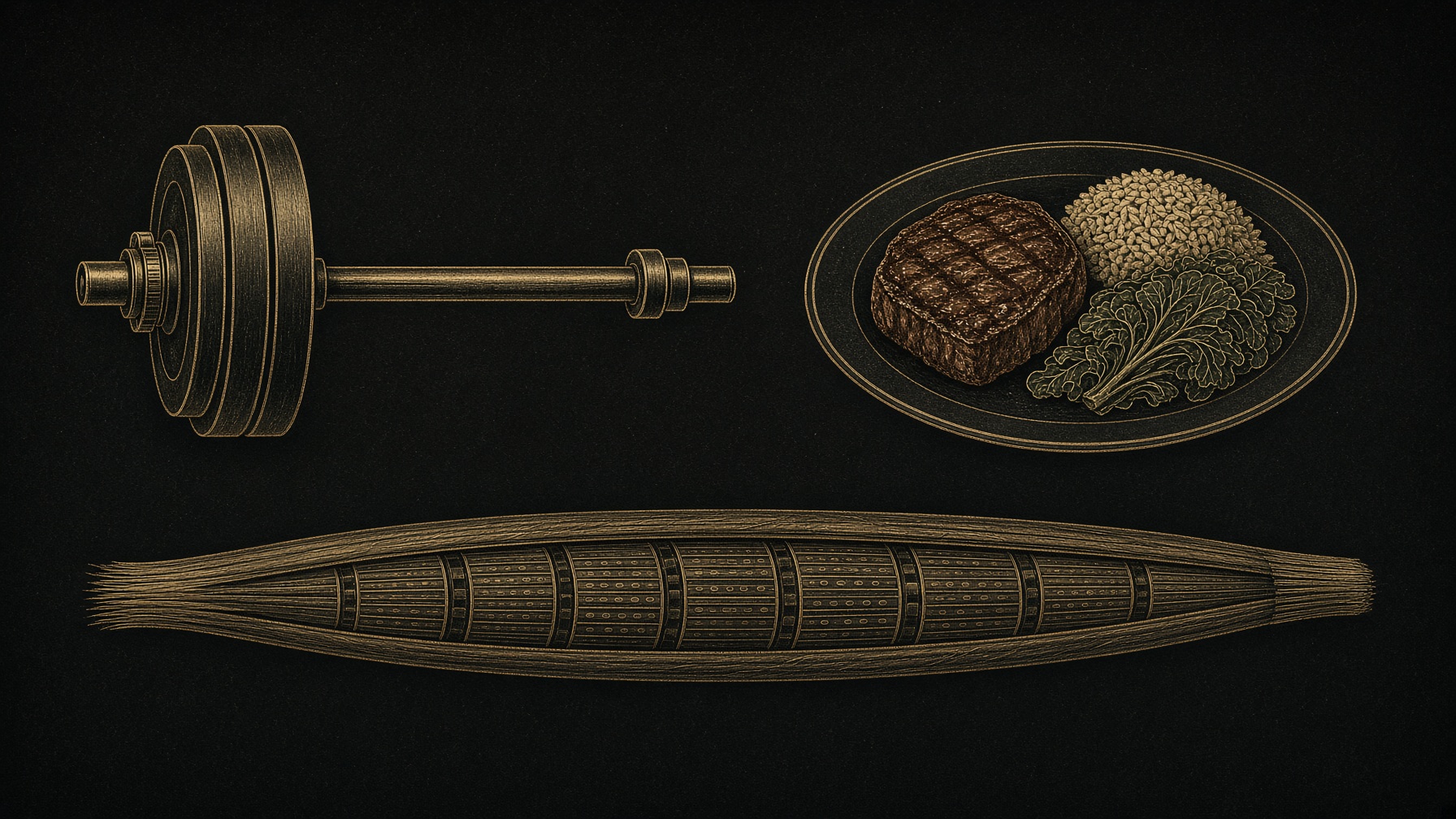
The practical half of the muscle series. Recruit the fast fibres, feed them, sleep, and stop asking a drug to do a week's work.
49 min · long read · Metabolism
Protein, training and muscle protein synthesis
Muscle isn't a mood. It is mechanical tension plus a leucine-gated translational programme. Here is the dose, the threshold, and why the gym still has to happen.
44 min · long read · Peptide research
The growth-hormone axis, properly explained
GHRH, ghrelin, somatotropin and IGF-1 are one conversation. CJC without DAC, ipamorelin, HGH and IGF-1 LR3 are four different microphones.
More in this desk
14 min · Bodybuilding
Actin and myosin: the motor inside the fibre
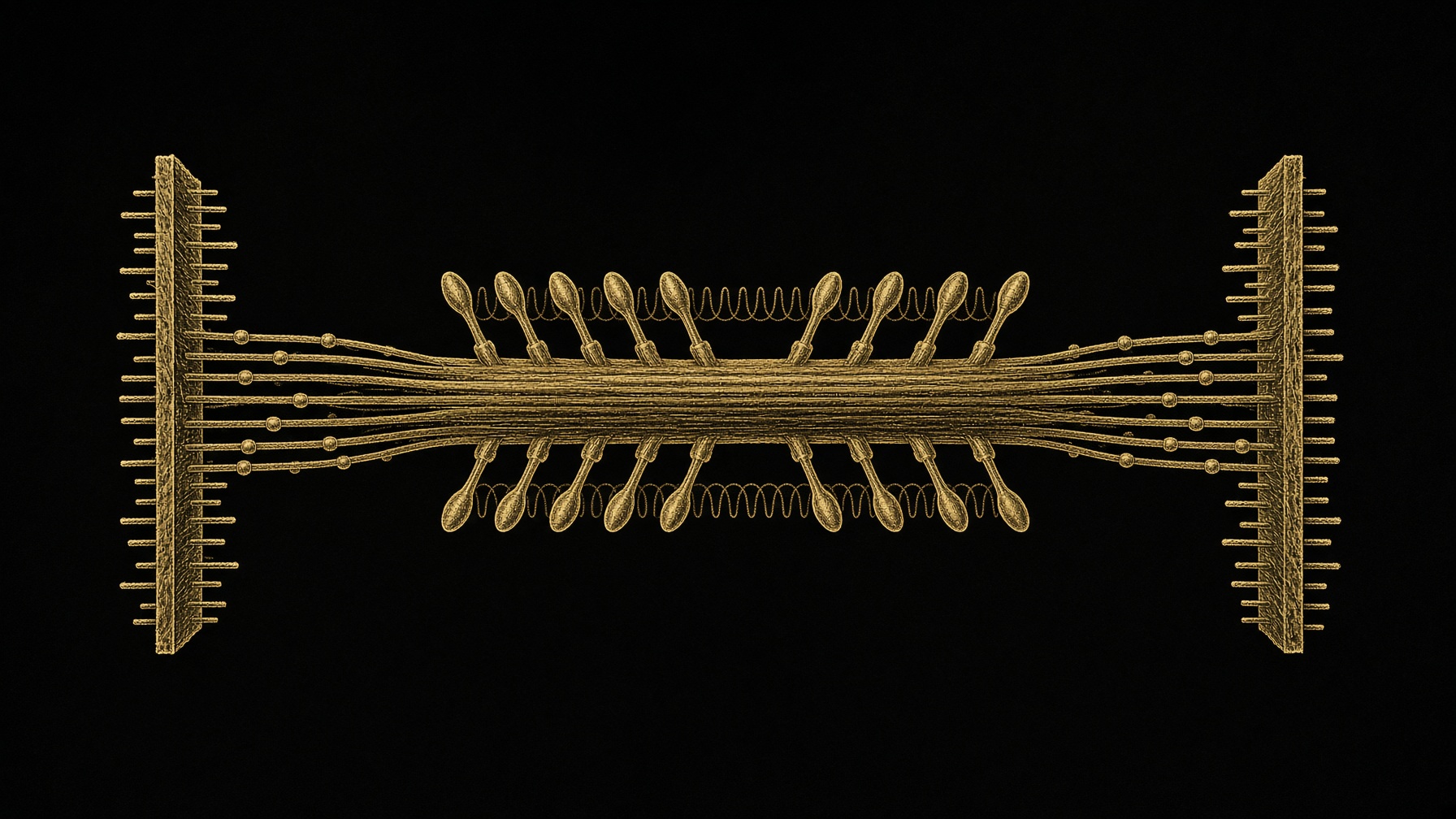
The sarcomere, the thin rope, the thick motor, the eight-nanometre stroke, and the calcium switch that lets a nerve turn all of it on. One ATP per pull.
9 min · Bodybuilding
The bill outside the fibre: axis, blood, liver, heart
The androgen receptor is in more places than the biceps. Fertility, HDL, haematocrit, the left ventricle, the voice, the tendon. A map of the tissues. Not a course.
9 min · Bodybuilding
What the set is doing: failure, volume, rest, range
Why the last reps matter more than the first, why ten hard sets is a floor and not a personality, and why a short rest quietly deletes the tension you came for.
8 min · Bodybuilding
How a fibre grows: tension, time, and the protein ledger
Synthesis minus breakdown, for weeks. Why soreness is the wrong score, why the pump is water, and why long ranges of motion keep showing up in the trials.
Essays describe published research. They are not medical advice and they do not authorise human use of any catalogue item.