

Bodybuilding · 7 min · 1,431 words
Yohimbine: taking the brake off the fat cell
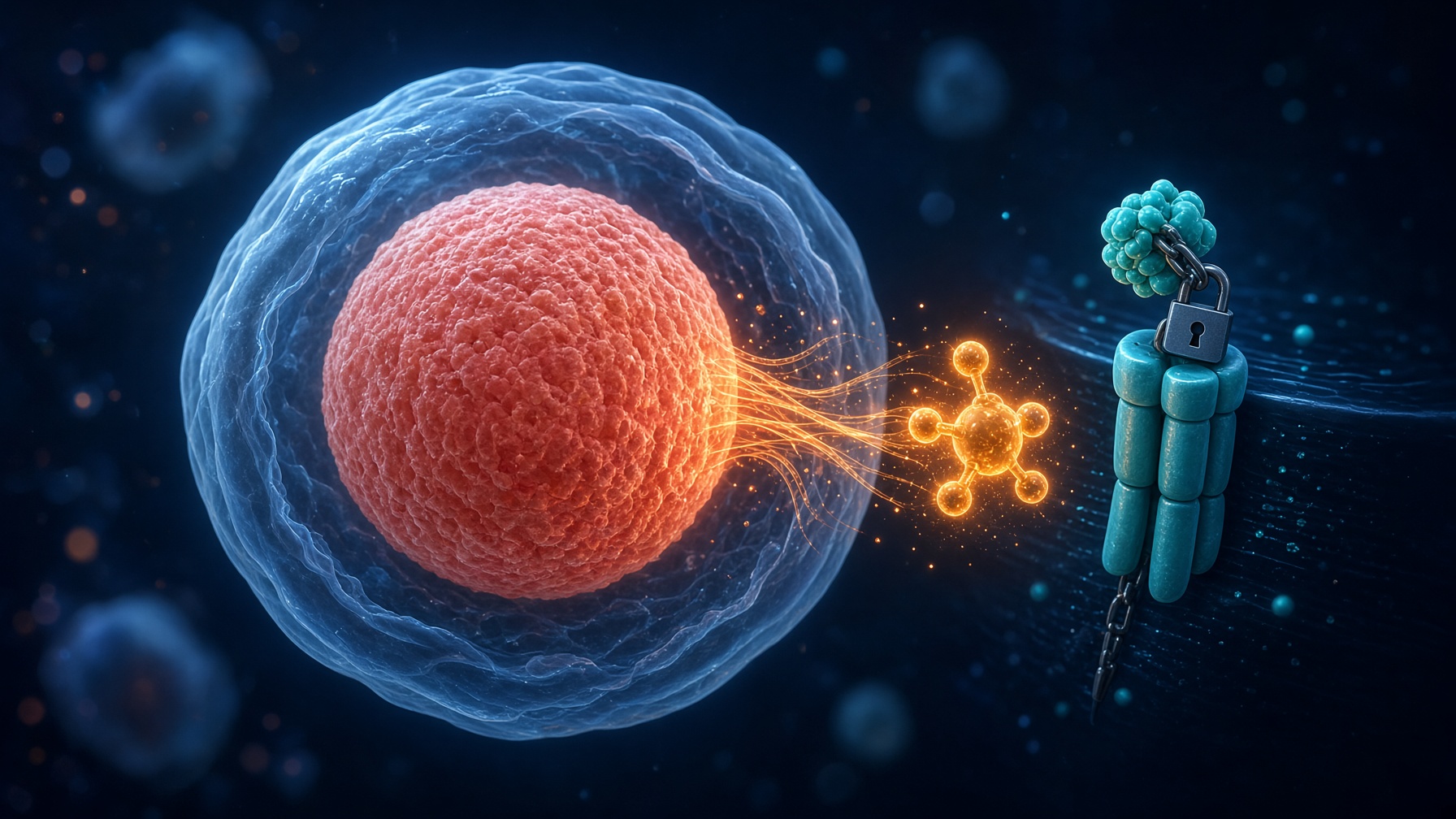
Alpha-2 holds a fat droplet shut. Yohimbine blocks that receptor so adrenaline can open it. The same block lets the nerves dump more noradrenaline, which is the pulse and the anxiety. It is not clenbuterol.
What this essay actually tells you
- Yohimbine blocks alpha-2 on the fat cell, the Gi brake that holds cyclic AMP down. Adrenaline can then open the droplet through beta-2.
- The same block lets nerves release more noradrenaline, so heart rate, blood pressure and anxiety rise. The bark is not the pure molecule.
- Insulin, through PDE3B, can keep the droplet shut anyway. It is not clenbuterol and it does not add myosin.
What this actually means
Yohimbine blocks the alpha-2 brake on a fat cell, so the adrenaline you already make can open the fat store. Insulin can still hold that store shut. The same block speeds the heart and can make you anxious. It is not clenbuterol and it does not build muscle.
Yohimbine is an alkaloid from the bark of Pausinystalia johimbe, and the molecule that matters is an antagonist at the alpha-2 adrenergic receptor. A fat cell listens to two opposing voices from the same nerve. Beta-2, the receptor clenbuterol occupies, raises cyclic AMP and lets hormone-sensitive lipase open the droplet. Alpha-2 is coupled to Gi. It lowers cyclic AMP and holds the lid on. Human subcutaneous fat, especially on the hips and the lower abdomen, is rich in alpha-2. That is why those pads stay quiet when you are only slightly stressed or slightly hungry: the brake is bigger than the accelerator. Yohimbine sits in the alpha-2 pocket and does not switch it on. The catecholamine that was already there can then use the beta receptor without the Gi hand cancelling it. Lafontan and Galitzky mapped this on human fat cells decades ago. The drug is not inventing lipolysis. It is taking the foot off a brake the fat cell was using.
In short. Fat cells have a brake called alpha-2. Yohimbine blocks that brake so adrenaline can open the fat store. It does not light a new fire. It stops the lid being held down.
Insulin is the other lid, and it is why the gym rumour says fasted. Insulin turns on PDE3B, a phosphodiesterase that destroys cyclic AMP in the fat cell, and it also pushes glucose in so the cell would rather store than release. A high insulin level can sit on top of an alpha-2 antagonist and the droplet still will not open. That is a mechanism, not a meal plan. The same alpha-2 receptors sit on sympathetic nerve endings, where they normally restrain how much noradrenaline the nerve dumps. Block them and the nerve releases more. Blood pressure rises. Heart rate rises. The hands can shake for a different reason than clenbuterol. People feel anxious, sweaty, and too awake, because the same antagonist is in the brain, where alpha-2 receptors were holding the sympathetic system down. Yohimbine hydrochloride is a defined molecule. The bark is a mixture, and the amount of the alkaloid in a capsule of bark is a guess. Those are not the same product.
In short. If insulin is high, the fat cell still will not open. Blocking alpha-2 also lets the nerves dump more adrenaline, so the pulse, the blood pressure and the anxiety go up. The pure chemical and the bark are not the same thing.
It is not clenbuterol, and it is not a stubborn-fat spell
Clenbuterol is an agonist. It sits on beta-2 and turns the accelerator on for about a day, including on the heart. Yohimbine is an antagonist. It sits on alpha-2 and takes a brake off, for a few hours, and the heart still hears the extra noradrenaline. Stacking them stacks two ways of raising cyclic AMP in a fat cell and two reasons for a rate to climb. Neither binds the androgen receptor. Neither stops LH falling if an androgen is in the picture. Neither adds a sarcomere. A study can show a little more fat leaving in lean, already-trained people when the drug is in and the calories are already short. That is a small shift in who wins the cyclic AMP argument, measured on a body that was going to lose fat anyway. It is not a pad of fat that has a postcode the drug can read. Alpha-2 richness is real. A drug that only empties one patch while you eat through the rest is still arithmetic.
In short. Clenbuterol presses the accelerator. Yohimbine takes a brake off. Using both leans on the heart twice. Neither one chooses a patch of fat by magic, and neither one builds muscle.
The off switches are ordinary. The drug leaves, alpha-2 works again, and the lid goes back on if insulin is up or the catecholamines have gone home. Tolerance here is not the beta-arrestin story clenbuterol tells, because yohimbine is not turning the receptor on. The cost that shows up in people is the sympathetic one: pressure, panic, a person who already runs anxious getting a worse afternoon. An MAOI antidepressant plus something that raises noradrenaline is the old dangerous combination, because the enzyme that was clearing the transmitter is already occupied. This page is only that brake. Read the clenbuterol page for the accelerator. Read the fibre pages for what actually adds myosin.
In short. When the drug wears off, the brake works again. The bill people actually meet is a faster pulse and more anxiety, not a new muscle.
Three receptors, one lid
Alpha-2 is three genes, ADRA2A, ADRA2B and ADRA2C, not one blob. The fat-cell brake and a great deal of the brain brake are alpha-2A. Alpha-2B and alpha-2C have their own posts, including on vessels and on some nerve endings, which is why a drug that is only 'alpha-2 selective' still moves blood pressure in more than one way. On the fat cell the receptor is Gi. The Gi subunit turns adenylyl cyclase down, cyclic AMP falls, and protein kinase A never gets to phosphorylate perilipin-1 or hormone-sensitive lipase. The protein coat stays on the droplet. The scissors never arrive. Yohimbine occupying that pocket does not phosphorylate the tail the way an agonist would, so this is not the beta-arrestin withdrawal clenbuterol uses. The brake simply works again when the antagonist leaves. Human white fat uses beta-1 and beta-2 as the accelerator. Beta-3, the receptor the rodent papers got excited about, is a quiet voice in human subcutaneous fat. A drug written as if you were a mouse is talking to a receptor you barely have.
In short. The brake is a named receptor, alpha-2A, that stops the kinase from opening the droplet. Human fat uses beta-1 and beta-2 to open it. The mouse receptor, beta-3, is barely there.
The parent molecule does not stay long. Clearance is on the order of an hour, and the liver enzyme CYP2D6 turns it into 11-hydroxyyohimbine, which is still an alpha-2 antagonist. A slow version of that enzyme keeps both molecules in the blood longer. A fast version clears them and wonders why the capsule did nothing. That is the same gene that handles a long list of other drugs, which is why two people can take the same milligram and have different afternoons. The bark adds further alkaloids the hydrochloride does not have, so a bad afternoon on bark is not a clean alpha-2A experiment. None of this selects a fat cell by postcode. A pad that is rich in alpha-2 will respond more when catecholamines are up and insulin is down. A pad that is mostly beta receptors was already going to open. Eating through either of them rebuilds the droplet, because the fatty acids that left are still calories.
In short. The drug lasts about an hour, and the liver turns it into a second blocker that also works. People with a slow liver enzyme keep both for longer. The fat that leaves is still a calorie you can put back.
- The brake
- alpha-2
- The accelerator
- beta-2
- The nerve
- more noradrenaline
- The other lid
- insulin
Gi receptor on the fat cell. It lowers cyclic AMP and holds the droplet shut.
Clenbuterol turns this on. Yohimbine does not touch it.
Alpha-2 on the nerve ending was the restraint. Block it and the pulse rises.
PDE3B destroys cyclic AMP. A fed fat cell can ignore the antagonist.
Questions the essay actually answers
- How does yohimbine burn fat?
- It blocks the alpha-2 receptor on the fat cell. Alpha-2 was lowering cyclic AMP and holding the fat droplet shut. With the brake off, the adrenaline you already have can open it through the beta receptor. If insulin is high, that still may not happen.
- Is yohimbine the same as clenbuterol?
- No. Clenbuterol turns the beta-2 accelerator on and stays for about a day. Yohimbine blocks the alpha-2 brake for a few hours. Both can raise heart rate, for different reasons. Neither is an anabolic steroid.
- Why do people say it only works fasted?
- Insulin turns on an enzyme, PDE3B, that destroys the same cyclic AMP the fat cell needs in order to open the droplet. A fed fat cell can ignore an alpha-2 blocker. That is the mechanism behind the rumour.
- Why does it make people anxious?
- Alpha-2 receptors in the brain and on nerve endings normally hold noradrenaline down. Block them and the nerve releases more. Blood pressure, heart rate and the feeling of panic are that extra transmitter.
- Is yohimbe bark the same as yohimbine?
- Yohimbine hydrochloride is one molecule with a known amount. The bark is a mixture, and the amount of that molecule in a capsule is not the label. The receptor story belongs to the molecule.
Read next
7 min · Bodybuilding
Clenbuterol: one receptor opens the fat cell and bills the heart
Clenbuterol sits on the beta-2 receptor, raises cyclic AMP, and lets a fat cell open its store. Muscle shakes because it wears the same receptor. The heart does too. Leave it occupied and the cell takes the receptor inside.
6 min · Bodybuilding
Caffeine: the brake adenosine was trying to pull
Caffeine sits in the adenosine receptor and does not switch it on. Alertness is a brake taken off, not energy poured in. The same chair is why a hard set feels easier, why sleep thins out, and why the mug stops working.
11 min · Bodybuilding
Growth hormone, insulin, myostatin: the other levers on a fibre
After testosterone, the rest of the muscle-drug list is different receptors: a liver hormone, a storage hormone, and a brake. Food decides which of those signals becomes tissue.
7 min · Bodybuilding
The blood test: which line is which organ
Total testosterone, LH, oestradiol, prolactin, haematocrit and the liver enzymes are different questions. ALT after squats is muscle. A low LH is suppression. Read the sentences, not the flags.
More in this desk

18 min · Bodybuilding
What each steroid does at the cell
Testosterone, nandrolone, trenbolone, boldenone, the DHT cousins, the orals. One receptor. Why two of them are not two muscles, what that asks of food, and what the side effects actually are.
16 min · Bodybuilding
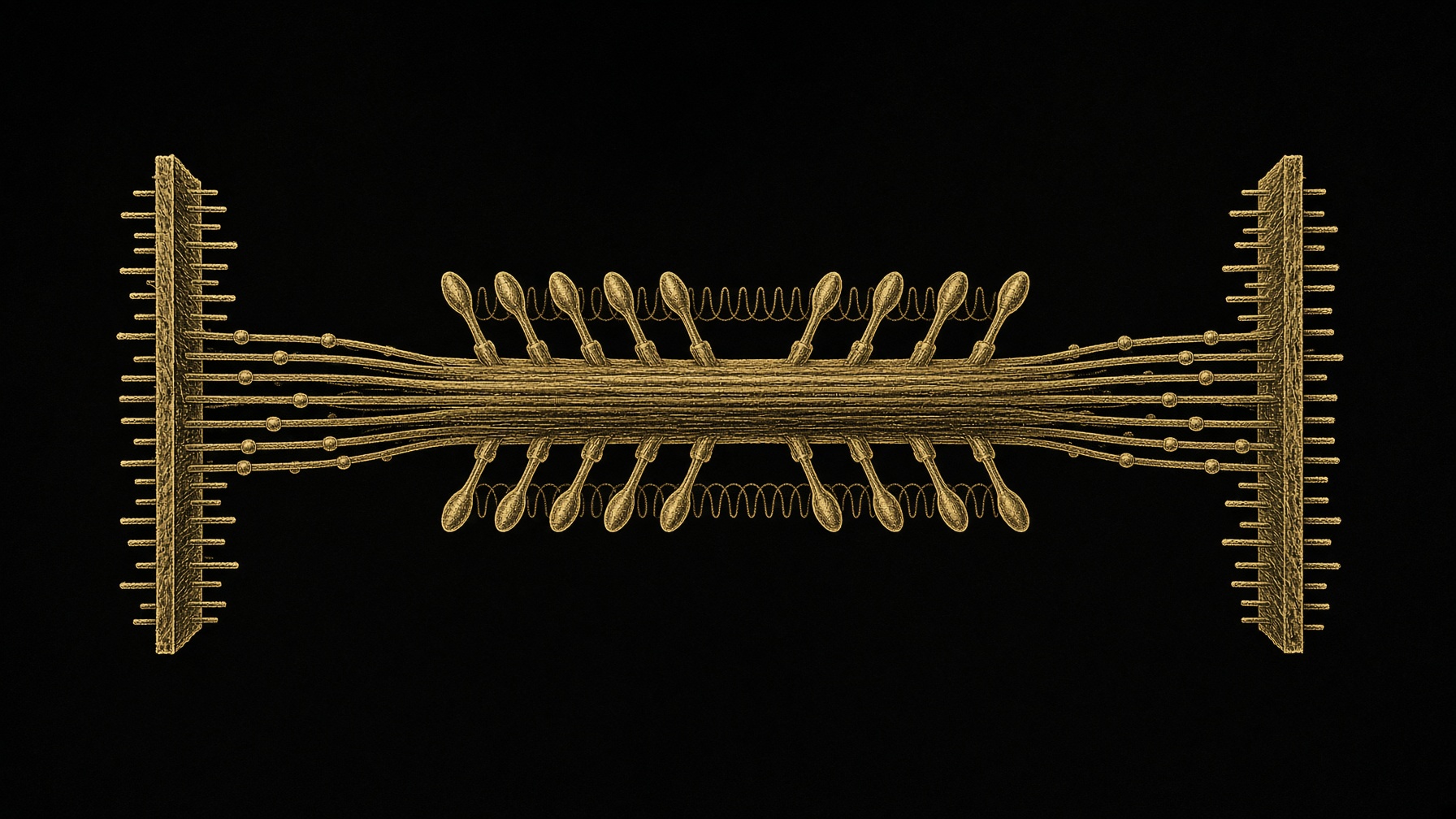
Actin and myosin: the motor inside the fibre
The sarcomere, the thin rope, the thick motor, the eight-nanometre stroke, and the calcium switch that lets a nerve turn all of it on. One ATP per pull.
13 min · Bodybuilding
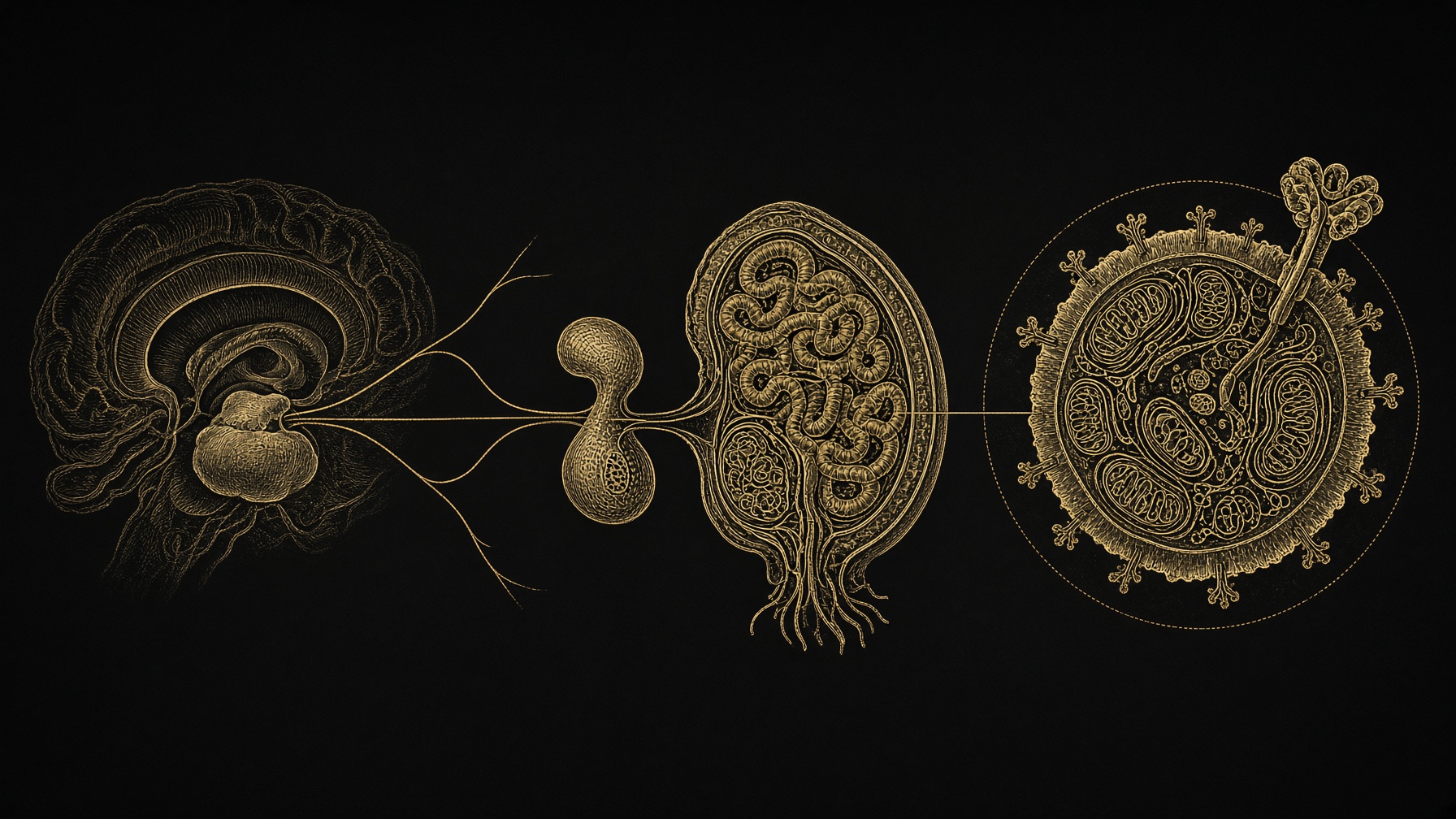
Coming off: SERMs, hCG, and what a supplement cannot do
How a SERM restarts GnRH, how each hCG and FSH option talks to the testis or the ovary, and how zinc, ashwagandha and CoQ10 turn that signal back into testosterone and sperm.
12 min · Bodybuilding
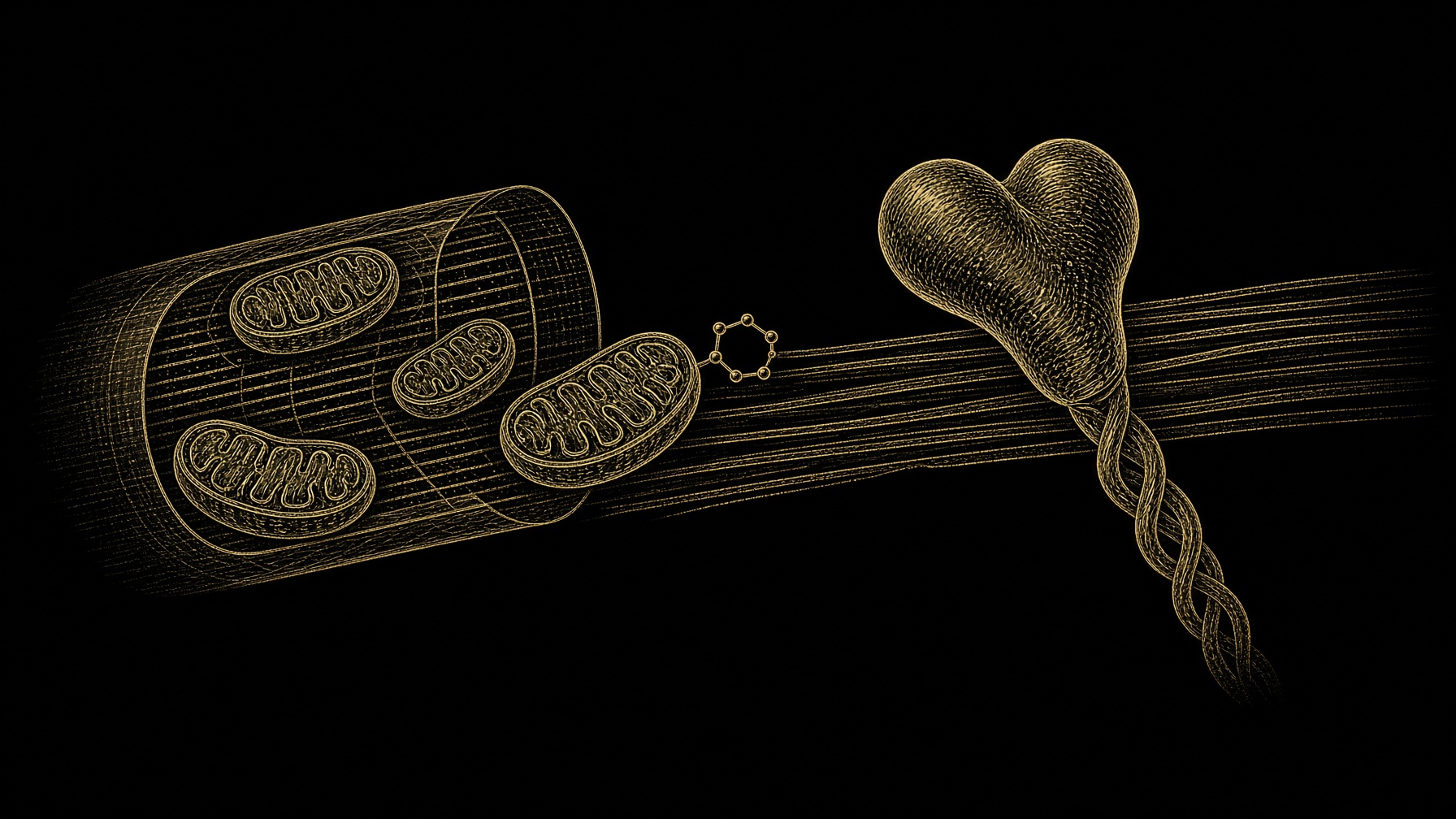
Creatine: the phosphate the fibre keeps next to the myosin
Phosphocreatine rebuilds ATP at the cross-bridge in a fraction of a second. Filling the store buys a few more hard reps. The early weight is water. The myosin still has to be earned.
The page is the mechanism: the protein, what it does in the cell, and the drug or peptide that talks to it.