

Bodybuilding · 5 min · 1,194 words
The burn: lactate is a fuel, not the wreckage
A hard set makes lactate so glycolysis can keep going. Other tissues burn it. The sting is not the muscle being dissolved, and the pump is not stored growth.
What this essay actually tells you
- Lactate dehydrogenase turns pyruvate into lactate so NADH becomes NAD+ and glycolysis can continue. At cell pH it is lactate, not an acid eating the fibre. Brooks: other fibres, the heart and the liver use it as fuel.
- Force drops from phosphate, ADP and messy calcium release at least as much as from protons. The burn is also group III and IV nerves reporting the soup. It is not a growth receptor.
- The pump is fluid and it leaves. High-rep burnouts add fatigue. They do not add a molecule that heavy tension was missing.
What this actually means
Lactate is made so a working muscle can keep making ATP. It is a fuel other muscles and the heart can use, not an acid that eats the fibre. The burn is a mix of fatigue chemicals and nerve signals. The pump is temporary fluid. Neither one is the growth.
The burn is not lactic acid eating the muscle. That sentence has been wrong in textbooks for long enough that the gym still repeats it. Lactate is what you get when pyruvate, the end of glycolysis, takes a pair of electrons from NADH. The enzyme is lactate dehydrogenase. The point of the reaction is not waste. It is to turn NADH back into NAD+, because glycolysis needs NAD+ to keep running when the mitochondria cannot take the electrons as fast as the fibre is producing them. A hard set of twelve is that situation. The fibre is making ATP without waiting for oxygen. Lactate is the other half of the deal that lets it continue. Call it lactic acid and you have named a molecule that, at the pH of a living cell, is almost all lactate, the charged form, plus a proton from elsewhere in the reactions. The sting is not a crystal of acid sawing through a fibril.
In short. Lactate is made so the fibre can keep producing ATP when oxygen can't keep up. It is not a toxin left over from the set. The burn is not the muscle being eaten.
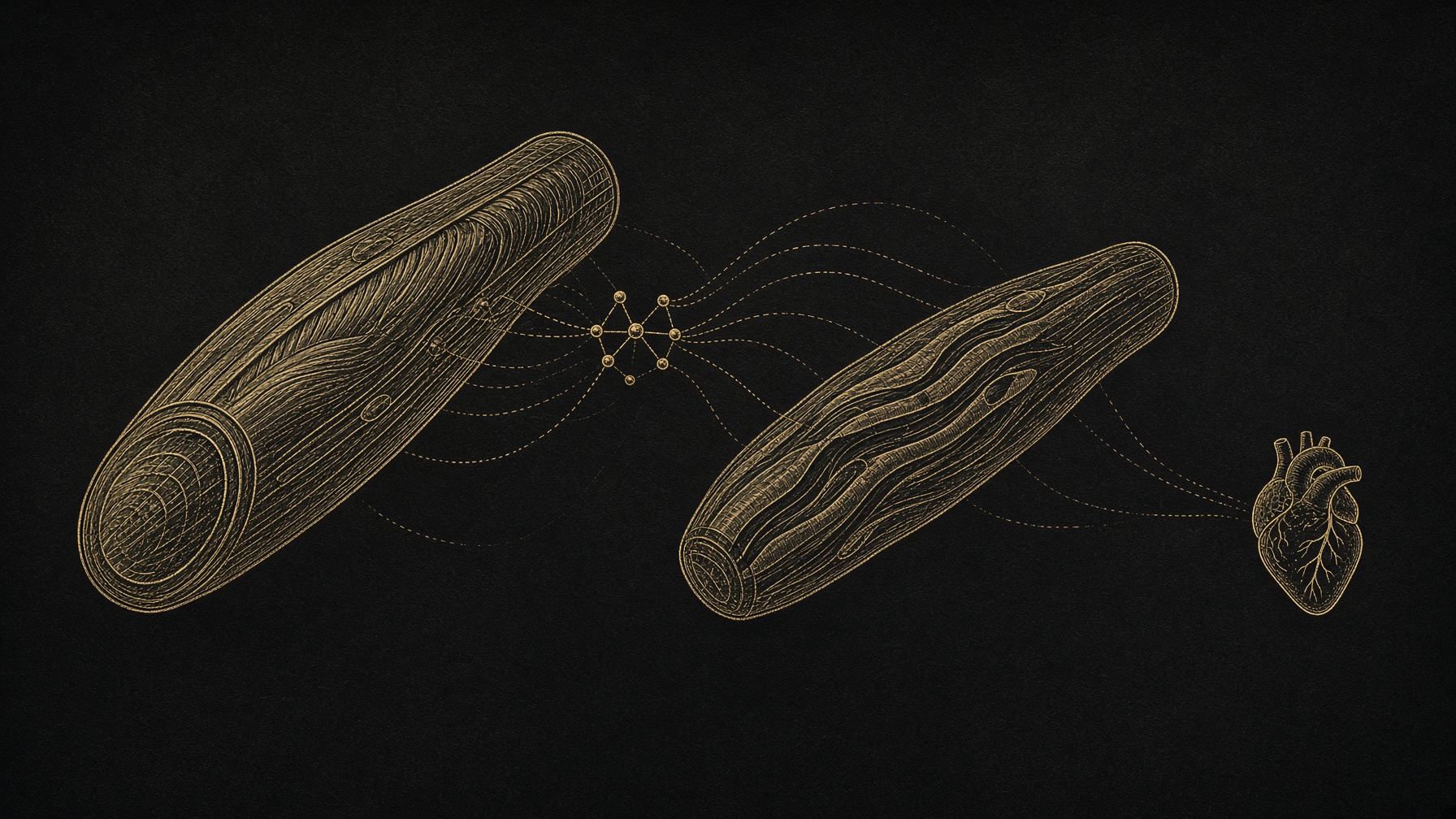
George Brooks spent decades on the next step, and it is the cool one. Lactate leaves the fibre through transporters, mostly MCT4 in the fast fibres that make a lot of it, and it can enter other cells through MCT1. A slow fibre next door can take it up and burn it. The heart likes it. The brain uses it. The liver can turn it back into glucose, the Cori cycle, which costs energy and is why you cannot run on lactate forever without a bill. This is a shuttle, not a bin. A fibre that 'feels the burn' is exporting a fuel. Blood lactate after a session is a sign the export got ahead of the clearance, not a sign of damage. Trained people often clear it faster and make more of it, because their fast fibres are better at glycolysis and their slow fibres and heart are better at using the result. More lactate can mean a fitter engine. It does not mean a better hypertrophy session.
In short. Lactate is shipped out and burned by other muscles, the heart, and the liver. Fitter people often deal with it better. A high lactate number is not a score for muscle growth.
What the burn actually is
Fatigue in a hard set is a pile of things arriving together. Inorganic phosphate and ADP climb as ATP is split. Calcium release from the sarcoplasmic reticulum gets messier. Potassium accumulates in the T-tubules and the electrical signal gets harder to push. Protons do rise, and a lower pH can interfere with the cross-bridge and with the enzymes of glycolysis. Westerblad and Allen, and a line of single-fibre work, put phosphate and the calcium problem ahead of lactate as the reason force drops. You can have a burning muscle that fails because the heads are wading through phosphate, not because lactate poisoned them. The sensation of burn is also the nerve. Group III and IV afferents fire when the chemical soup in the muscle changes, and they tell the spinal cord to ease off and the brain that something intense is happening. That signal is useful. It is not a growth receptor.
In short. The set falls apart because of phosphate, calcium and the electrical signal, with acidity in the mix. Lactate is present. It is not the villain. The feeling is a nerve report, not a growth signal.
The pump is the other sensation people file next to the burn. Blood in, fluid in, metabolites that pull water with them, a fibre swollen inside a fascia that doesn't stretch in ten minutes. Cell swelling can be a mild push on protein synthesis in cell models. It is not sarcomeres. Twenty minutes later the pump is gone and the ledger of synthesis is whatever the tension and the meal decided. Chasing a pump with tiny rests and partials can be a way to fatigue a muscle that a heavy bar was bothering, and a way to feel as if you trained when the tension was ordinary. The set piece already said the last hard reps are the point. The burn and the pump are what those reps often feel like. They are not a substitute for them. A set that burns and never got hard recruited fewer of the fibres you wanted.
In short. The pump is fluid. It leaves. A burning set that was never heavy or close to failure did less for the fibre than it felt like.
Drop sets, supersets and thirty-rep finishers have a place if you like them and the joint is sound. Their place is extra fatigue after the heavy work, or a way around a joint that will not take a load. Their place is not 'more lactate, more growth'. Lactate threshold, the pace where blood lactate starts to climb and stay up, is a real idea in running and cycling. It marks a shift in how much of the ATP is coming from glycolysis that the shuttle can't quite clear. It is a useful dial for an endurance week. It is a strange dial for a hypertrophy week, where the question is whether the high-threshold fibres saw tension at a long length, with enough rest to do it again. You can finish a session drowned in lactate and under-recruited, or rested, strong, and only burning on the last reps. The second one matches the mechanism. The first one matches the myth.
In short. Burning finishers are optional fatigue, not a special growth chemical. Lactate threshold matters for running. For muscle, the question is still whether the strong fibres were loaded.
- Lactate
- a fuel in transit
- The burn
- phosphate, acid, nerves
- The pump
- fluid, gone in minutes
Made to recycle NAD+. Used by neighbours, heart, liver. Not broken-glass acid.
Force drops for several reasons at once. The feeling is afferent feedback.
Swelling is not stored sarcomeres. Tension still is.
Questions the essay actually answers
- Does lactic acid cause the burn?
- No. Lactate is produced to keep glycolysis supplied with NAD+. At cell pH it isn't sitting there as an acid eating the fibre. The burn is protons, phosphate, and nerves reporting the chemical mix.
- Is lactate a waste product?
- No. It is shuttled to other fibres, the heart and the liver and used as fuel. Clearance is part of being fit. A high reading is not damage and not a hypertrophy score.
- Should I chase the pump?
- The pump is fluid and metabolites. It can feel like work and it fades. Growth still tracks hard tension over weeks. A pump after real sets is a side effect. A pump instead of them is a hobby.
- Do high-rep burnouts build more muscle?
- They add fatigue. They do not add a unique molecule that heavy sets lack. Use them after the heavy work, or when a joint will not take load. Don't use them as the reason the session counted.
Read next

9 min · Bodybuilding
What the set is doing: failure, volume, rest, range
Why the last reps matter more than the first, why ten hard sets is a floor and not a personality, and why a short rest quietly deletes the tension you came for.
14 min · Bodybuilding
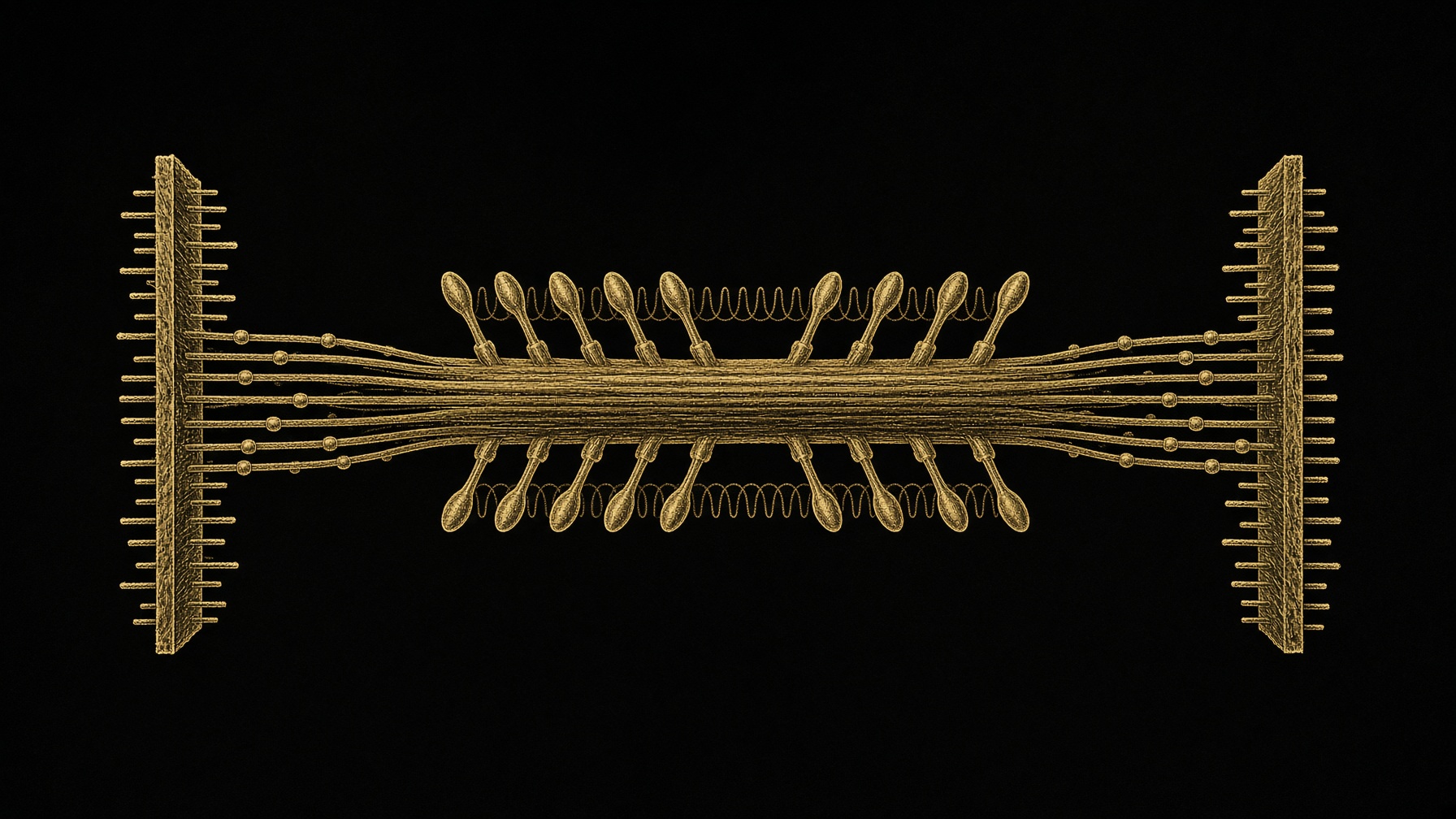
Actin and myosin: the motor inside the fibre
The sarcomere, the thin rope, the thick motor, the eight-nanometre stroke, and the calcium switch that lets a nerve turn all of it on. One ATP per pull.

8 min · Bodybuilding
How a fibre grows: tension, time, and the protein ledger
Synthesis minus breakdown, for weeks. Why soreness is the wrong score, why the pump is water, and why long ranges of motion keep showing up in the trials.

9 min · Bodybuilding
Type I and type II: the two fibres a muscle actually is
Slow fibres last. Fast fibres throw the force. Diet, drugs and workouts all land on that split — so the muscle series starts with the myosin, not the vial.
More in this desk

16 min · Bodybuilding
What each steroid does at the cell
Testosterone, nandrolone, trenbolone, boldenone, the DHT cousins, the orals. One receptor. Why two of them are not two muscles, what that asks of food, and what the side effects actually are.
10 min · Bodybuilding
Steroid families: four chemistries, one receptor
Testosterone, the 19-nors, the DHT-derived, and the orals that rent the liver. Wet and dry are oestrogen and water, not two kinds of muscle.
9 min · Bodybuilding
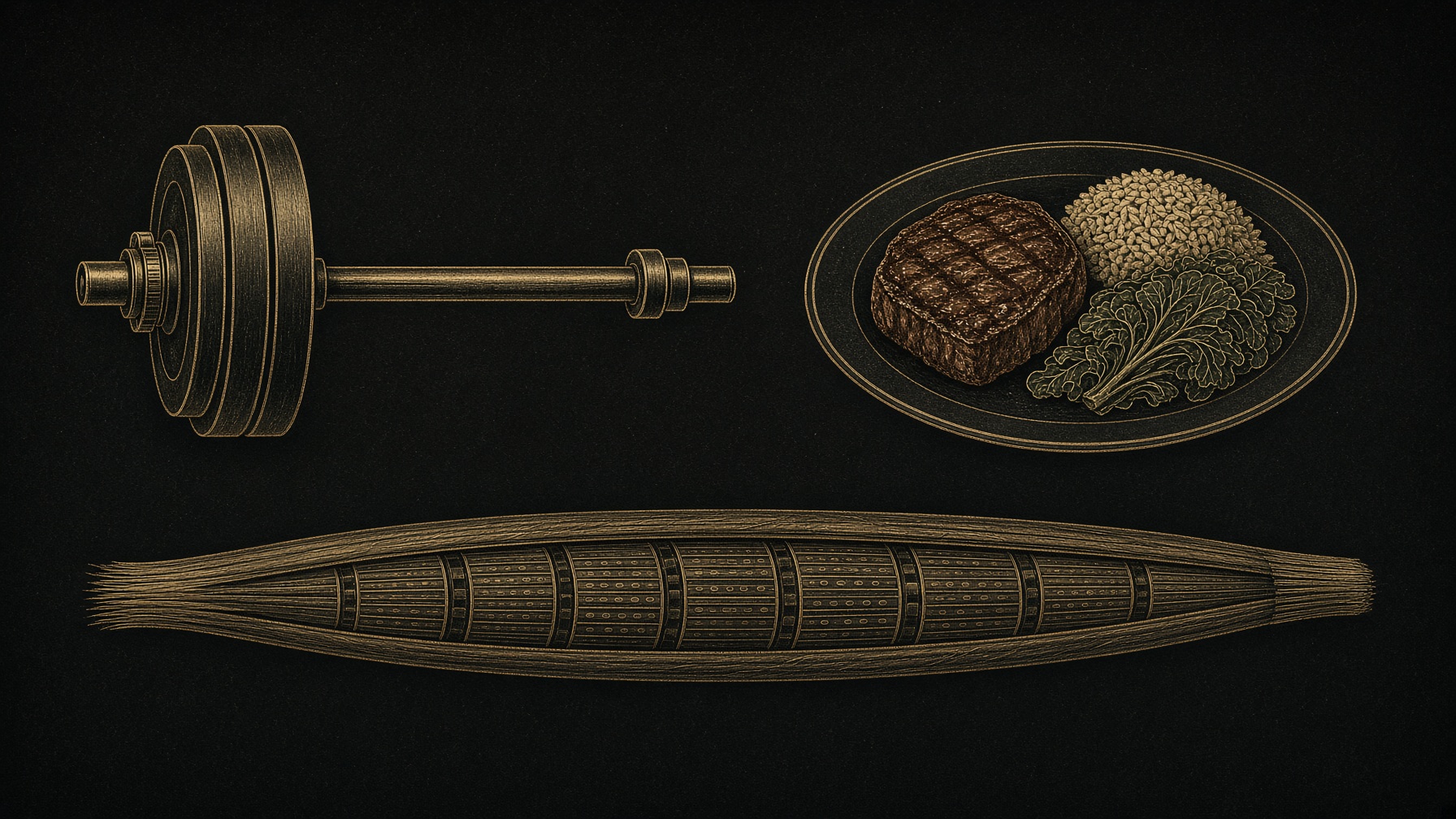
Food and training: how to spend the fibre you have
The practical half of the muscle series. Recruit the fast fibres, feed them, sleep, and stop asking a drug to do a week's work.

9 min · Bodybuilding
The bill outside the fibre: axis, blood, liver, heart
The androgen receptor is in more places than the biceps. Fertility, HDL, haematocrit, the left ventricle, the voice, the tendon. A map of the tissues. Not a course.
Essays describe published research. They are not medical advice and they do not authorise human use of any catalogue item.