

Bodybuilding · 8 min · 1,708 words
Gynaecomastia: the gland under the nipple, and the fat that isn't
A firm disc is breast tissue, grown when oestrogen or progesterone signalling beats androgen in that spot. Soft chest fat is a different problem. An aromatase inhibitor only closes one of the doors.
What this essay actually tells you
- A firm disc under the nipple is breast gland. Soft chest fat is a different tissue and leaves with a deficit. Old fibrotic gland often does not.
- Aromatase in fat turns testosterone into oestradiol. Nandrolone and trenbolone can grow the same gland through the progesterone receptor when oestradiol is not high. Anastrozole does not close that door.
- The ratio can tip after a cycle, when your own testosterone is still shut down. Prolactin is a lesser cause than the oestrogen and progesterone receptors.
What this actually means
Gynaecomastia is a firm disc of breast gland under the nipple, not ordinary chest fat. It grows when oestrogen signalling, or progesterone signalling from a 19-nor steroid, outweighs androgen in that tissue. An aromatase inhibitor only helps the oestrogen route. Old fibrous gland does not disappear because you dieted. Fat on the chest does.
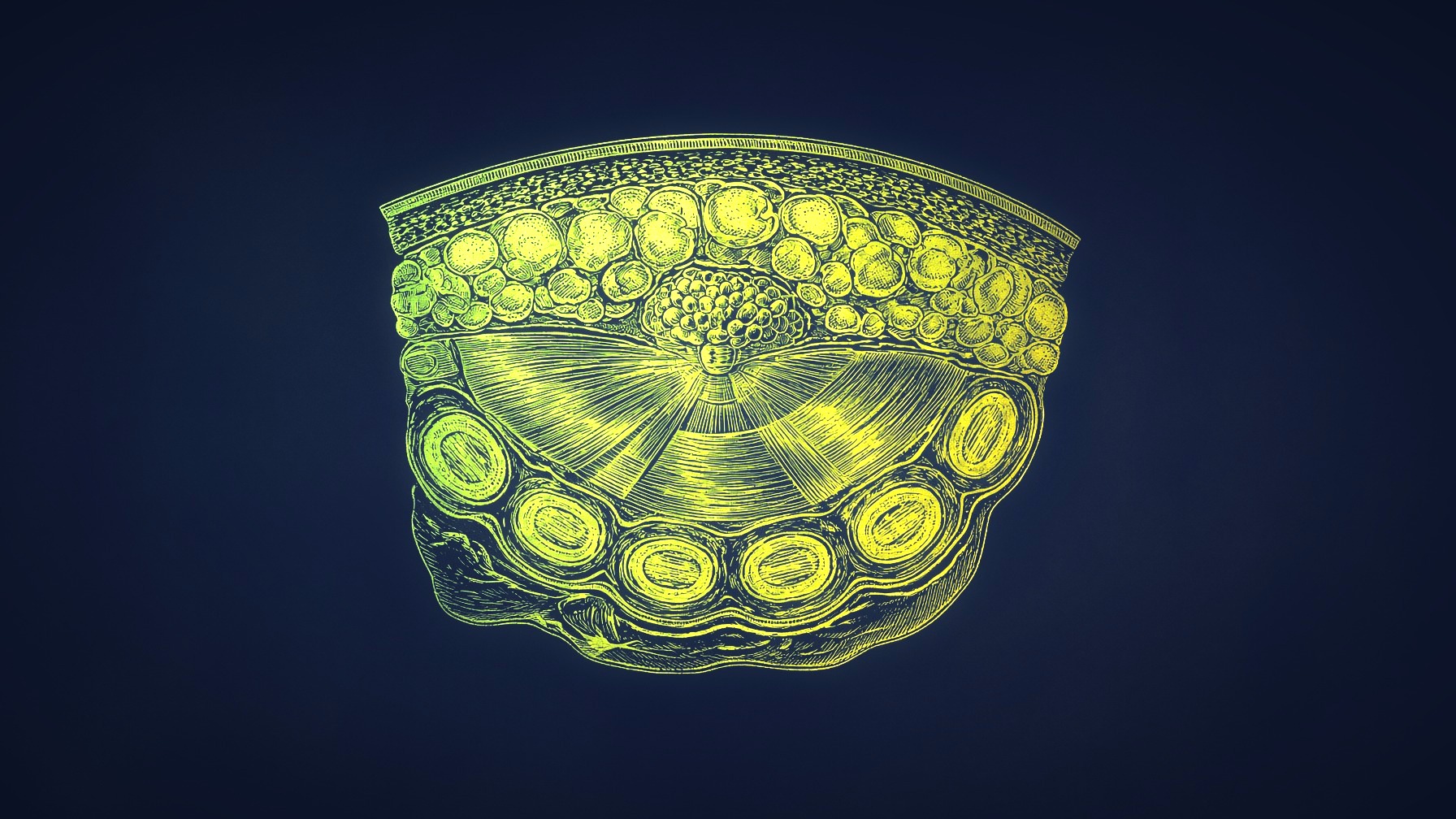
Gynaecomastia is breast gland in a man. Ducts and a little stroma, sitting under the nipple, firm, often tender when it is new, sometimes a disc you can pinch between finger and thumb while the rest of the chest is soft. Fat on the chest is not that. A heavy chest that is soft all the way to the nipple, with no disc, is adipose tissue, and it leaves when the energy balance does. The gland does not. It can shrink if the signal that grew it goes away early. Once it has been there for months and the tissue has fibrosed, it is a structure, and structures do not dissolve because you lost four kilograms. Men get both at once, which is why a cut sometimes reveals the gland that the fat was hiding. The word gyno gets used for all of it. The biology only fits the gland.
In short. A firm disc under the nipple is gland. Soft chest fat is fat. Fat goes when you diet. Old gland often does not.
The gland grows when oestrogen signalling is high relative to androgen signalling in that tissue. Men make oestradiol by aromatising androgens, mostly in fat, through CYP19A1. The breast has oestrogen receptors. More substrate, more aromatase, or less androgen opposing it, and the ratio tips. Puberty does this to a lot of boys, because the hormones arrive out of order, and most of that gland settles without anyone inventing a protocol. Adult gynaecomastia from a cycle is the same ratio, pushed on purpose. Testosterone becomes oestradiol. A high oestradiol beside a high androgen can still tip the breast if you are sensitive there. A crashed androgen, in the weeks after a cycle, with oestradiol slow to fall, tips it the other way. Both ends of a cycle are classic. The middle, when people feel fine, is not the only window.
In short. Breast gland grows when oestrogen signalling wins against androgen in that tissue. That can happen at the start of a cycle, during it, or in the weeks after, when your own testosterone is still shut down.
The kind that is not oestrogen
Nineteen-nor steroids break the simple story. Nandrolone and trenbolone can bind the progesterone receptor. Breast tissue listens to progesterone receptors as well as oestrogen receptors. A man can grow a disc with an oestradiol that is not high, and then attack the aromatase enzyme that was never the culprit. An aromatase inhibitor lowers oestradiol. It does not pull a 19-nor off the progesterone receptor. This is the dry gyno that forums treat as a paradox. It is two receptors. Oxymetholone is the other trap: it behaves like an oestrogen in the breast often enough, and it is a poor aromatase substrate, so blocking aromatase does not cleanly remove the signal. The family essays sort the drugs by enzyme. The breast is where you find out the sort was right.
In short. Nandrolone and trenbolone can grow breast tissue through the progesterone receptor even when oestradiol is low. An aromatase inhibitor does not block that. Anadrol often will not listen to one either.
Prolactin is blamed more often than it deserves. Very high prolactin can cause a discharge and can worsen a breast that was already being signalled, but ordinary gynaecomastia in a lifter is almost always the oestrogen receptor, the progesterone receptor, or both. A ghrelin peptide that also raises prolactin, or a 19-nor plus that peptide, is how the two get stacked. Ipamorelin's claim to usefulness is that it does not do the prolactin half. Blaming cabergoline-shaped thinking for every itch behind a nipple skips the receptor that is actually occupied. Measure oestradiol. Know whether the drug in the stack touches the progesterone receptor. Then you know which door you opened.
In short. Prolactin is rarely the main cause. Oestrogen and progesterone receptors are. Know which one your stack actually touches before you chase a prolactin story.
What the tissue does if you leave it
New gland is a proliferation. Oestrogen-receptor blockade, tamoxifen being the drug that has actually been studied in men with gynaecomastia, opposes that signal in the breast and can shrink a recent disc. Aromatase inhibition lowers the oestradiol being made, which helps when aromatisation was the source and does little when it was not. Neither is a fat-loss drug, and neither rebuilds a nipple that has been a fibrous button for a year. Surgery removes the gland. It does not switch the receptor off, so the same ratio, on the next cycle, can start a new one beside the scar. The tendon essay has the same shape. You can outrun a tissue for a while. The tissue keeps the score on its own clock.
In short. A new lump can shrink if you take the oestrogen signal off it early. An old fibrous one usually will not. Surgery removes it and does not stop the same hormones growing another.
Chest fat still matters, because fat is where a lot of the aromatase lives. A heavier man aromatises more of the same testosterone dose than a lean one. That is not moral. It is an enzyme expressed in adipose tissue. Losing fat reduces the factory. It does not dissolve a gland that has already been built. Training the chest does not burn the gland either. Muscle behind a disc makes the disc more obvious. The useful distinctions, in order, are: is it firm gland or soft fat, is oestradiol actually high, is there a 19-nor or an oral that acts like an oestrogen without needing aromatase, and how many months has the disc been there. Four questions. The nickname gyno answers none of them.
In short. Fatter men turn more testosterone into oestrogen, because the enzyme lives in fat. Losing fat slows that. It does not erase an old gland, and chest exercises do not burn it off.
What the disc is made of
Early gland is ducts. Oestradiol, through oestrogen receptor alpha, pushes the epithelium to proliferate and the stroma around the ducts to loosen and grow. Androgen receptor in that same tissue pushes the other way, which is why the ratio matters more than a single hormone in isolation. While the tissue is still cellular it can shrink if the signal leaves. Over months, fibroblasts lay collagen around the ducts. The disc becomes less a proliferation and more a scar with glands in it. That is the moment people discover that the thing they can pinch has stopped listening. Twelve months is the rough clinical memory of when regression gets unlikely. It is not a switch on day 365. It is fibrosis accumulating while the signal stays on.
In short. A new disc is growing ducts and can still shrink. After many months it is ducts wrapped in scar. Scar does not go because the hormone that built it has gone.
Tamoxifen is the drug with actual trials in men with gynaecomastia, because it blocks the oestrogen receptor in the breast rather than only lowering the oestradiol supply. It can shrink a recent, tender disc. It does not dissolve collagen that has already been laid down, and it does not remove chest fat. Raloxifene is a cousin with a different tissue map, studied less in men for this. Surgery takes the gland out through a small incision at the edge of the areola. The receptor is still in whatever tissue remains, and the next time the ratio tips, a new bud can start beside the scar. People treat the operation as the end of the biology. It is the end of that particular lump.
In short. Tamoxifen can shrink a new lump because it blocks the receptor in the breast. It will not erase an old scarred one. Surgery removes the lump and leaves the receptor, so the same hormones can start another.
Puberty, the clinic, and the nickname
Most adolescent gynaecomastia is the hormones arriving out of order. Oestradiol rises, the breast bud appears, the androgen catch-up happens, and the bud goes away over a year or two in the majority of boys. A bud that is still there at the end of puberty, or that appeared in a man of thirty on a cycle, is not that story. Adult tissue fibroses more readily, and the signal in a cycle is larger and longer than a messy six months of puberty. Pain and tenderness mean the proliferation is active. A painless, rubbery, long-standing disc means you are feeling the scar. Both can sit under fat. Pinch the nipple between finger and thumb, not the whole chest. If a discrete disc remains when the fat moves aside, you have gland. If the whole handful is the same softness, you have fat.
In short. Teenage gyno often leaves on its own. Adult gyno from a cycle is a stronger, longer signal and it scars. Tenderness means it is still growing. A painless rubber disc is the old one.
- Gland
- a firm disc
- Fat
- soft, no disc
- Oestradiol
- aromatase in fat
- The other door
- progesterone receptor
Ducts under the nipple. Tender when new. Fibrous when old.
Follows energy. Not oestrogen receptor biology.
Testosterone becomes oestradiol. An AI only helps this door.
Nandrolone, trenbolone. Can happen with normal oestradiol. Anadrol often ignores aromatase too.
Questions the essay actually answers
- What is gynaecomastia?
- Breast gland in a man: a firm disc of ducts under the nipple. Chest fat without that disc is not gynaecomastia, even if the word gets used for both.
- Can steroids cause gyno even with low oestrogen?
- Yes. Nandrolone and trenbolone can stimulate the progesterone receptor in breast tissue. Oxymetholone often acts like an oestrogen without being a clean aromatase product. Blocking aromatase does not close those doors.
- Will an aromatase inhibitor reverse it?
- It lowers oestradiol, so it can help when aromatisation was the cause and the gland is recent. It does nothing for progesterone-receptor signalling, and it will not remove fibrous gland that has been there for months.
- Does chest fat turn into gyno?
- No. Fat is where aromatase lives, so a heavier man makes more oestradiol from the same testosterone. The gland is a separate tissue. Losing fat shrinks the factory. It does not delete an old disc.
- Why does it appear after a cycle, not during?
- When your own testosterone is still shut down and oestradiol has not fallen as fast, the ratio in the breast tips toward oestrogen. The middle of the cycle is not the only window.
Read next
12 min · Bodybuilding
Steroid families: four chemistries, one receptor
Testosterone, the 19-nors, the DHT-derived, and the orals that rent the liver. Wet and dry are oestrogen and water, not two kinds of muscle.
18 min · Bodybuilding
What each steroid does at the cell
Testosterone, nandrolone, trenbolone, boldenone, the DHT cousins, the orals. One receptor. Why two of them are not two muscles, what that asks of food, and what the side effects actually are.
12 min · Bodybuilding
The bill outside the fibre: axis, blood, liver, heart
The androgen receptor is in more places than the biceps. Fertility, HDL, haematocrit, the left ventricle, the voice, the tendon. A map of the tissues. Not a course.
11 min · Bodybuilding
Androgens: the hormone that talks to the muscle nucleus
Testosterone binds a receptor in the myonucleus, adds nuclei, and asks for food. It is not growth hormone, not a cycle written as an essay, and not a fibre you can buy.
More in this desk
16 min · Bodybuilding
Actin and myosin: the motor inside the fibre
The sarcomere, the thin rope, the thick motor, the eight-nanometre stroke, and the calcium switch that lets a nerve turn all of it on. One ATP per pull.
13 min · Bodybuilding
Coming off: SERMs, hCG, and what a supplement cannot do
How a SERM restarts GnRH, how each hCG and FSH option talks to the testis or the ovary, and how zinc, ashwagandha and CoQ10 turn that signal back into testosterone and sperm.
12 min · Bodybuilding
Creatine: the phosphate the fibre keeps next to the myosin
Phosphocreatine rebuilds ATP at the cross-bridge in a fraction of a second. Filling the store buys a few more hard reps. The early weight is water. The myosin still has to be earned.
12 min · Bodybuilding
The tendon clock: the cable is older than the muscle
Myofibrils turn over in days. Tendon collagen turns over in months to years. Heavy slow strain is how a tenocyte keeps the rope. A fast jump in strength pulls on tissue that has not caught up.
Essays describe published research. They are not medical advice and they do not authorise human use of any catalogue item.