

Bodybuilding · 7 min · 1,473 words
The tendon clock: the cable is older than the muscle
Myofibrils turn over in days. Tendon collagen turns over in months to years. Heavy slow strain is how a tenocyte keeps the rope. A fast jump in strength pulls on tissue that has not caught up.
What this essay actually tells you
- Myofibrillar protein turns over in days. Core tendon collagen turns over in months to years, with a poorly supplied midsection. Strength can get ahead of the cable.
- Tenocytes write collagen for a day or two after heavy slow strain. Prolyl hydroxylase needs vitamin C. Lysyl oxidase needs copper. Gelatin supplies glycine and proline and does not saturate muscle protein synthesis.
- Tendinopathy wants repeatable heavy load more than months of rest or a new explosive movement. Androgens can widen the gap between a fast motor and an old rope.
What this actually means
Muscle gets stronger in weeks because its proteins are replaced quickly. The collagen core of a tendon is replaced over months or years, so the cable is older than the motor pulling it. Tenocytes make and cross-link that collagen when they feel heavy, slow strain, and they need vitamin C to do it. Gelatin supplies the amino acids for the rope and does almost nothing for the muscle. Rapid strength, including strength from androgens, can tear a tendon that never caught up.
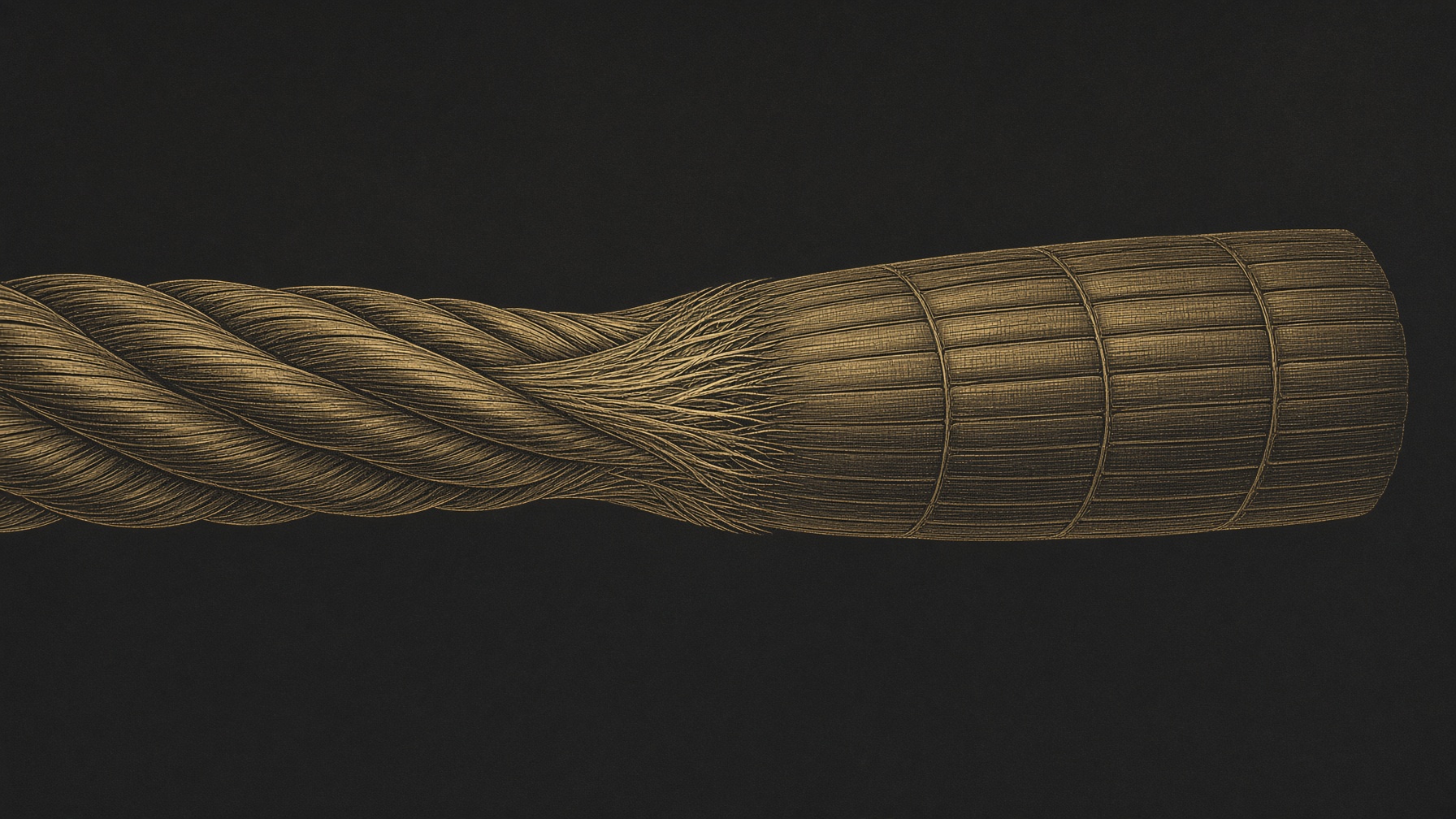
A fibre can be a different organ in eight weeks. Myofibrillar protein turns over on a scale of days, satellite cells donate nuclei, and a squat that was heavy in January is ordinary in March. The tendon on the end of that fibre did not get the same memo. Collagen in the core of an adult tendon is one of the slowest proteins in the body. Estimates for the half-life of that core run to years. The outside of the tendon, the sheath and the bit near the bone, turns over faster, months rather than decades, and that is where a lot of the adaptation you can actually measure lives. Stiffness can rise in a training block. The bulk of the rope you are pulling on was built a long time ago. This is why a rapid jump in muscle strength is a tendon problem waiting for a date. The motor got ahead of the cable.
In short. Muscle rebuilds in days and weeks. Tendon collagen is much older. Strength can arrive before the cable is ready for it.
A tendon is mostly type I collagen, wound as fibrils, fibres and fascicles, with a small population of tenocytes sitting in rows between them. The tenocyte is the only cell that maintains the rope. It feels strain through its cytoskeleton and writes collagen, and it writes the enzymes that cross-link that collagen. Lysyl oxidase needs copper to make those cross-links. Prolyl hydroxylase needs vitamin C and iron to make the hydroxyproline that lets the triple helix hold. A tendon without load goes slack and loses organised collagen. A tendon with sudden enormous load, the kind a new squat cycle or a new dose of enthusiasm produces, sees strain at a rate the tenocyte cannot match in the same week. The mid-portion of the Achilles and the patellar tendon are poorly supplied with blood, which is another reason a tear there heals on a calendar that feels insulting. Muscle bleeds and rebuilds. Tendon sulks and cross-links.
In short. Tenocytes maintain the rope, and they need load, vitamin C and copper to build and cross-link collagen. The middle of a big tendon has little blood, so it heals slowly.
Load is the signal, and it has a delay
Collagen synthesis in a tendon rises after a loading session and stays up for a couple of days. Miller, Magnusson and Kjaer measured that window. The useful picture is a short, heavy strain, then a day or two in which the tenocyte is actually writing, then another strain. Hours of bouncing on a sore tendon is a different stimulus: lots of compression and friction, not much organised new collagen. Heavy slow resistance, the kind Kongsgaard used on patellar tendons, works because the strain is large enough for the cell to notice and slow enough that the fibrils are loaded rather than snapped. Isometrics, the kind Rio used for patellar pain, work in the short term because they turn the pain down and let you load the tendon without the explosive bit that irritates it. Rest, as a months-long strategy, starves the tenocyte of the only signal it trusts. A tendon that hurts often wants less stupidity and more heavy, slow, repeatable strain, not a chair.
In short. After a heavy session the tendon makes collagen for a day or two. Slow heavy load is the signal. Endless bouncing irritates it. Total rest, for months, starves it.
Shaw and Baar's feeding work is the nutritional half, and it is narrower than a supplement advert. Collagen and gelatin are poor in leucine, so they do almost nothing for the myofibril. They are rich in glycine and proline, which is the amino acid weather a tenocyte needs. Vitamin C in the same window is the cofactor for the hydroxylase. A dose of gelatin plus vitamin C, taken before a short loading session, raised markers of collagen synthesis in their human study. That is a blood marker and an engineered tendon construct, not a guarantee that a patellar tendon will be new in a fortnight. It does say the tenocyte will use those amino acids if they are in the blood while the strain is happening. The muscle wants leucine and tension. The tendon wants glycine, proline, vitamin C, and a slower strain. One shake aimed only at the muscle is a complete meal for one of those tissues.
In short. Gelatin is useless as a muscle protein and useful as tendon raw material, if vitamin C is there and you load the tendon while those amino acids are in the blood.
The injuries that follow from ignoring the clock are dull and predictable. Proximal hamstring tendons in people who discovered deficit deadlifts. Patellar tendons in people who added a hundred kilograms to a squat in a season, or who returned from a lay-off at the old weight because the muscle memory essay was right about the nuclei and wrong if you applied it to the tendon. Biceps tendons in people who chased a peak curl. Achilles tendons in people who mixed a big calf and a lot of jumping. Androgens and growth hormone change this picture, and not always kindly. Muscle and fluid arrive faster, collagen synthesis can rise, and the stiffness of the tendon does not automatically keep the ratio. A stronger pull on an older rope is the whole mechanism of a rupture that 'came out of nowhere' on a warm-up set. The warm-up set was the first heavy strain of a tissue that had been losing the race for months.
In short. Tendons fail when strength, or a drug-driven strength, gets ahead of a rope that turns over in months. The warm-up set is often just the first heavy pull the old collagen has seen.
How to respect a slow tissue
Add load to the ranges the tendon feels, and add it on a tendon calendar. That means the deep squat, the full hinge, the calf at a stretch, progressed over months, not jumped because the muscle could take it on Tuesday. Keep some heavy slow work in the week even when you are chasing a pump, because the tenocyte does not read the pump. If a tendon is already sore in a precise spot, especially in the morning or at the start of a session before it warms, that is tendinopathy: a disorganised collagen and a grumbly tenocyte, more than a simple inflammation you can ice away. The session that helps is usually heavy enough to be a strain signal and boring enough to recover from. The session that keeps it is the one with a novel violent movement on a tissue that already hurts. Muscle soreness in the belly is the other essay. A hot line from bone to muscle, worse on the first steps, is this one.
In short. Progress the ranges a tendon actually feels, over months. A precise morning pain at the tendon is a different problem from muscle soreness, and it wants heavy slow load more than it wants a new violent exercise.
- Muscle
- days
- Tendon core
- months to years
- The signal
- heavy, slow strain
- The meal
- glycine, proline, vitamin C
Myofibrils turn over fast. Eight weeks can be a different fibre.
Type I collagen, few cells, poor blood in the middle. Stiffness can still change sooner, at the outside.
Collagen synthesis stays up for a day or two after. Bouncing a sore spot is friction, not that signal.
Gelatin feeds the rope, not the myosin. Leucine still feeds the myosin. They are different groceries.
Questions the essay actually answers
- Why do tendons snap when the muscle feels fine?
- Muscle protein turns over in days, tendon collagen in months or years. Strength, especially strength that arrived quickly, pulls on a cable that has not caught up. The set that goes is often an ordinary one on an old rope.
- Does collagen powder build muscle?
- No. It is low in leucine, so it barely starts muscle protein synthesis. It does supply glycine and proline, which tenocytes use to make collagen, particularly if vitamin C is available and the tendon is loaded in that window.
- Should a sore tendon be rested until it is silent?
- Complete rest lets the tenocyte lose the strain signal it uses to organise collagen. Tendinopathy usually responds to heavy, slow, repeatable loading and gets worse with new explosive work on the same spot. Diffuse next-day muscle ache is a different tissue.
- Do steroids change the tendon?
- They can speed the muscle and the pull, and collagen metabolism does shift, but stiffness does not automatically keep pace. A faster motor on last year's rope is the rupture story.
Hypothetical research reconstitution
How these vials are typically mixed
Hypothetical research reconstitution for the named catalogue vial. Not a protocol, not medical advice, not a use instruction. These amounts sit in published and commonly cited laboratory ranges. The vial is labelled for research use only — not for human or veterinary administration.
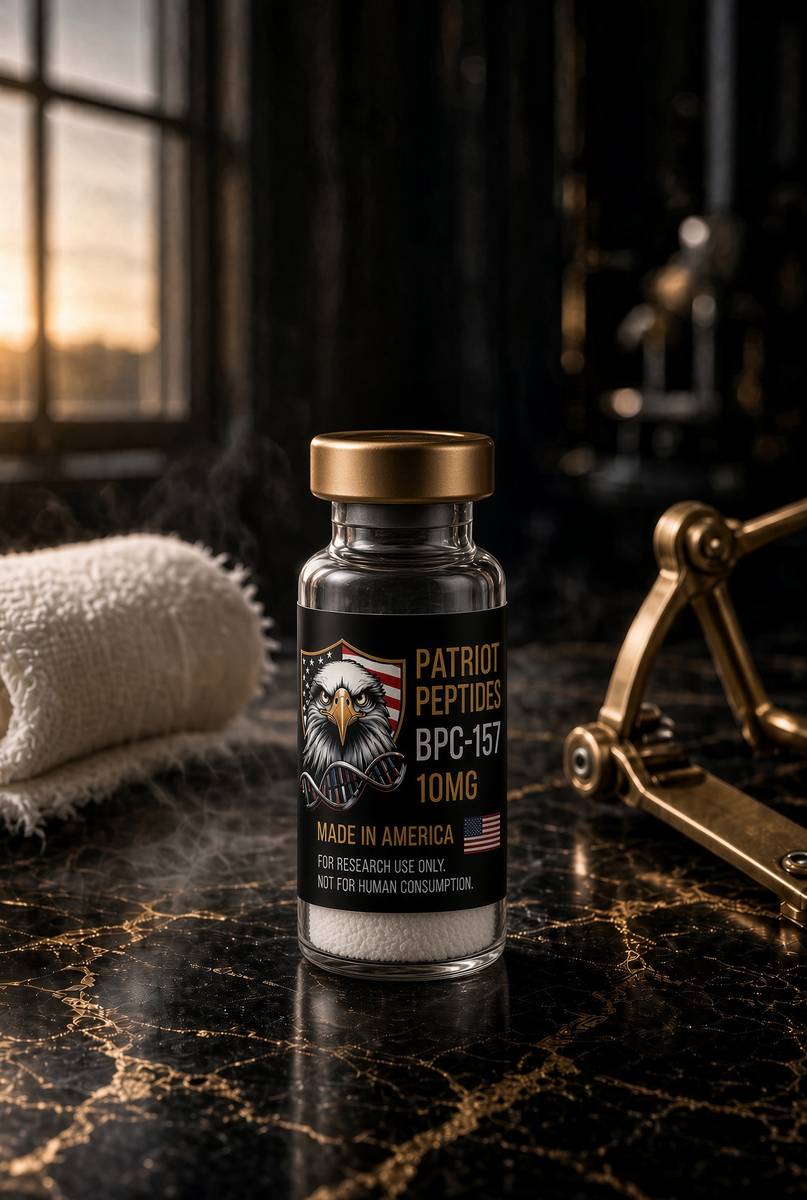
BPC-157
10mg
Mix with 2 ml bacteriostatic water → 5 mg/ml · 5,000 mcg/ml
- Hypothetical aliquot
- 250 mcg
- 0.05 ml · 5 units on a U-100 syringe
- How often
- Once or twice daily
- 2–4 weeks in the papers that actually run a course
Bench steps
- Let the vial sit until it is no longer cold to the touch.
- Wipe the stopper with 70% isopropyl alcohol. Let it dry.
- Draw 2 ml bacteriostatic water (0.9% benzyl alcohol).
- Run the water slowly down the inside glass — do not blast the cake.
- Roll between finger and thumb until the cake is gone. Do not shake.
- Label the date. Store the solution at 2–8 °C. Do not freeze. Use within 30 days unless the note below says otherwise.
Stable in bacteriostatic water in the fridge. 500 mcg is the upper end of what most bench notes call a daily aliquot; 250 mcg is the usual starting mark.
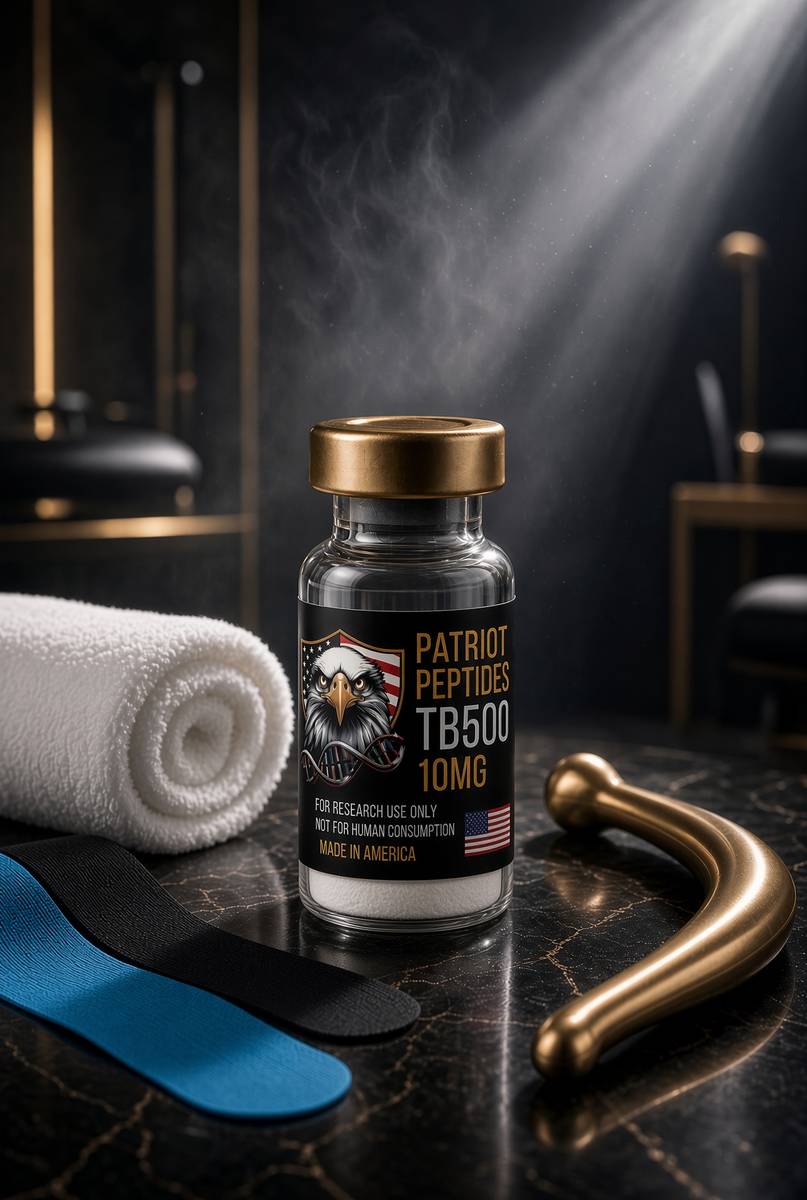
TB-500
10mg
Mix with 2 ml bacteriostatic water → 5 mg/ml
- Hypothetical aliquot
- 2 mg
- 0.40 ml · 40 units on a U-100 syringe
- How often
- Twice weekly for four weeks, then once weekly
- 4–6 weeks loading, then a weekly hold if the assay continues
Bench steps
- Let the vial sit until it is no longer cold to the touch.
- Wipe the stopper with 70% isopropyl alcohol. Let it dry.
- Draw 2 ml bacteriostatic water (0.9% benzyl alcohol).
- Run the water slowly down the inside glass — do not blast the cake.
- Roll between finger and thumb until the cake is gone. Do not shake.
- Label the date. Store the solution at 2–8 °C. Do not freeze. Use within 30 days unless the note below says otherwise.
Thymosin β4 fragment. The literature uses milligrams, not micrograms — do not treat it like BPC-157. Same fridge rule.
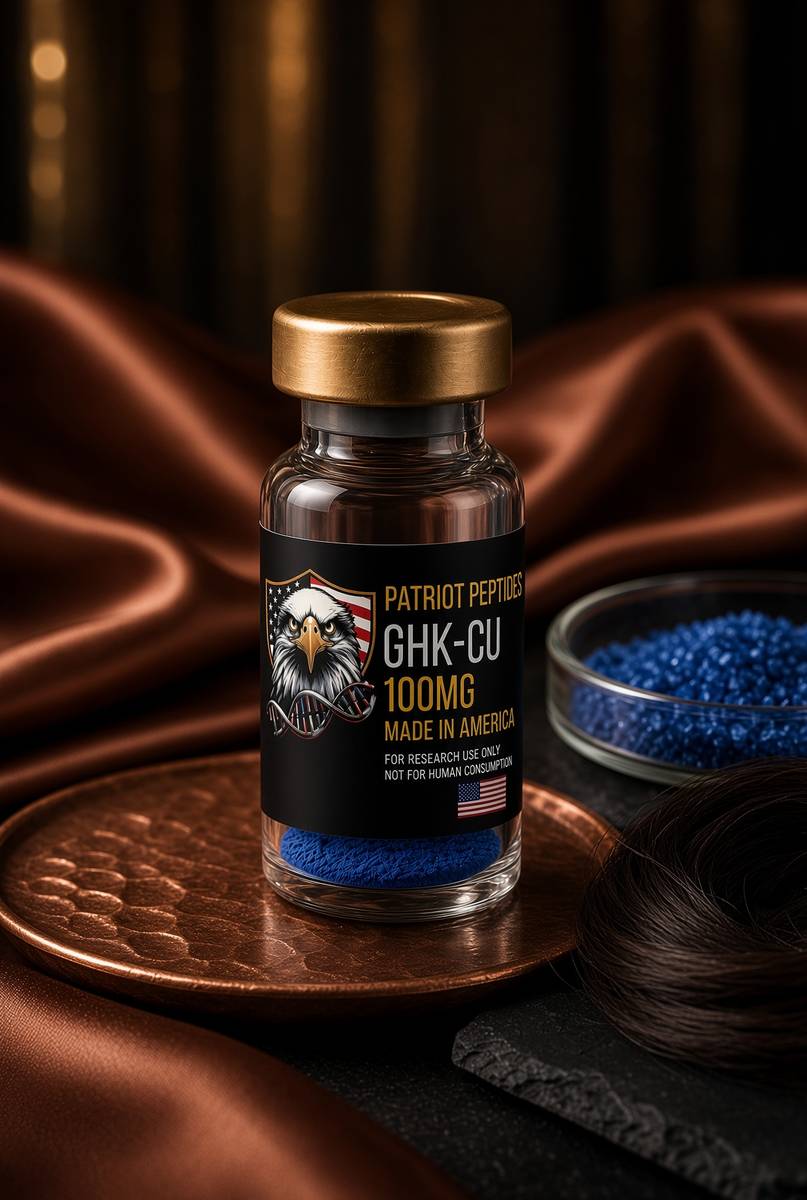
GHK-Cu
100mg
Mix with 5 ml bacteriostatic water → 20 mg/ml
- Hypothetical aliquot
- 1–2 mg
- 0.05–0.10 ml · 5–10 units on a U-100 syringe
- How often
- Once daily
- 4–8 weeks
Bench steps
- Let the vial sit until it is no longer cold to the touch.
- Wipe the stopper with 70% isopropyl alcohol. Let it dry.
- Draw 5 ml bacteriostatic water (0.9% benzyl alcohol).
- Run the water slowly down the inside glass — do not blast the cake.
- Roll between finger and thumb until the cake is gone. Do not shake.
- Label the date. Store the solution at 2–8 °C. Do not freeze. Use within 30 days unless the note below says otherwise.
The solution is blue if the copper is on the peptide. Grey or colourless is the wrong cake. 100mg wants 5 ml or the syringe marks get silly.
Bacteriostatic water and sterile syringes ship with peptide orders over £75. Kit details · 10 ml bacteriostatic water
The vials this essay sits on
Named sequences the essay maps — BPC-157, TB-500, GHK-Cu. Hypothetical research neighbourhood, not a protocol, not a medicine. One press puts every in-stock vial in the bag.
Research use only. Not a combined-use instruction.
Read next
8 min · Bodybuilding
How a fibre grows: tension, time, and the protein ledger
Synthesis minus breakdown, for weeks. Why soreness is the wrong score, why the pump is water, and why long ranges of motion keep showing up in the trials.
6 min · Bodybuilding
Soreness: the Z-disk you pulled apart, a day late
Next-day ache is eccentric damage and the immune cells that come to clear it. Lactate left an hour ago. Being ruined is not the same number as growing.
7 min · Bodybuilding
Muscle memory: the nuclei that stay when you stop
Why a muscle you have built before comes back faster. Skill in the nerve, extra nuclei in the fibre, and DNA marks that linger. The week-one shrink is mostly water.
8 min · Bodybuilding
Androgens: the hormone that talks to the muscle nucleus
Testosterone binds a receptor in the myonucleus, adds nuclei, and asks for food. It is not growth hormone, not a cycle written as an essay, and not a fibre you can buy.
More in this desk
16 min · Bodybuilding
What each steroid does at the cell
Testosterone, nandrolone, trenbolone, boldenone, the DHT cousins, the orals. One receptor. Why two of them are not two muscles, what that asks of food, and what the side effects actually are.
14 min · Bodybuilding
Actin and myosin: the motor inside the fibre
The sarcomere, the thin rope, the thick motor, the eight-nanometre stroke, and the calcium switch that lets a nerve turn all of it on. One ATP per pull.
10 min · Bodybuilding
Coming off: SERMs, hCG, and what a supplement cannot do
How a SERM restarts GnRH, how each hCG and FSH option talks to the testis or the ovary, and how zinc, ashwagandha and CoQ10 turn that signal back into testosterone and sperm.
10 min · Bodybuilding
Steroid families: four chemistries, one receptor
Testosterone, the 19-nors, the DHT-derived, and the orals that rent the liver. Wet and dry are oestrogen and water, not two kinds of muscle.
Essays describe published research. They are not medical advice and they do not authorise human use of any catalogue item.