

Bodybuilding · 7 min · 1,492 words
Muscle memory: the nuclei that stay when you stop
Why a muscle you have built before comes back faster. Skill in the nerve, extra nuclei in the fibre, and DNA marks that linger. The week-one shrink is mostly water.
What this essay actually tells you
- Regaining size is faster than building it the first time. The skill is neural. The tissue side is extra myonuclei, which stay put in several animal atrophy models, plus DNA methylation marks that lingered through a layoff in human retraining studies.
- Bruusgaard and Gundersen: nuclei can remain while the fibre shrinks. Other models show nuclear loss. Don't treat it as a scan of your own arm. Seaborne: hypomethylation at growth genes partly survived detraining.
- Week one of looking smaller is glycogen and water. A month off is not a deleted history. A steroid year can add nuclei and is not a recommendation.
What this actually means
Muscle you have built before returns faster. The lift itself is a skill your nerves kept. The size is partly extra nuclei and chemical marks on DNA. The dramatic shrink in week one is glycogen and water, not the whole muscle leaving.
People say muscle memory and mean two different things. One is that a lift comes back into your hands after years away, which is the nerve remembering a pattern. The other is that the arm fills out faster the second time than it did the first. Both are real. They are not the same object. The skill lives in the spinal cord and the cortex, in which motor units you recruit and in what order. The size lives, partly, in the fibre itself: extra nuclei donated when it grew, and chemical marks on the DNA of the nuclei that were already there. If you only remember the gym version — 'it comes back quick' — you miss why, and you miss the part that is still argued.
In short. Coming back fast is two stories. The lift is a skill your nervous system kept. The size is partly nuclei and DNA marks the fibre kept. They are not the same thing.
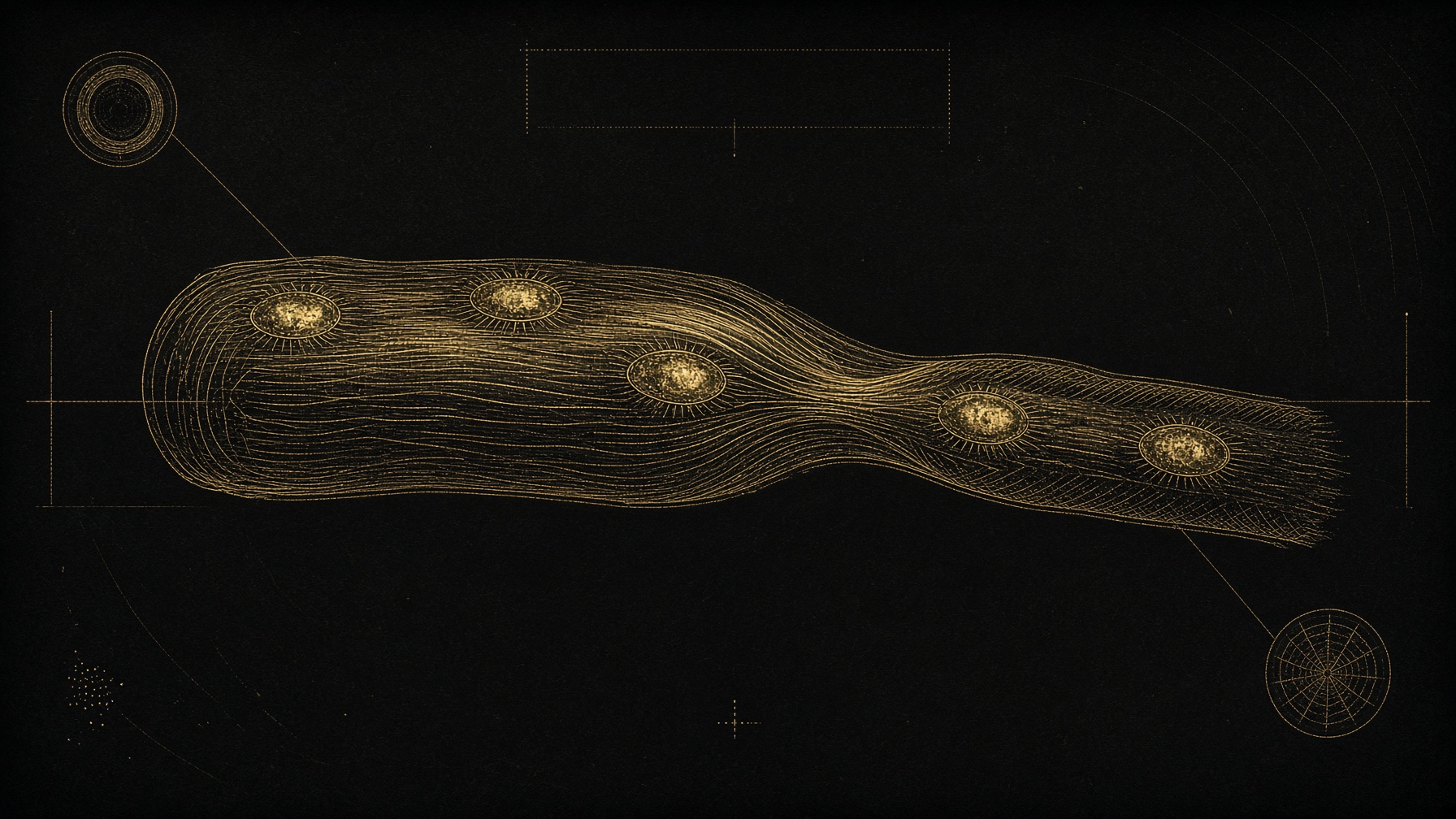
A fibre is one cell with many nuclei. Each nucleus can only support so much cytoplasm, so when a fibre gets seriously thicker, satellite cells under the basal lamina fuse into it and donate nuclei. That part is in the growth piece. The surprise is what happens when you stop. In several animal models — Bruusgaard and Gundersen, denervation and unloading in mice — the fibre shrinks and the extra nuclei stay. They are not cleared on the same timetable as the protein. A smaller fibre with a full set of nuclei is a fibre that can rebuild protein without waiting to recruit stem cells again. That is a beautiful mechanism, and it is not a law carved on the fibre. Other labs, looking at other ways of making a muscle waste, do see nuclei lost. The human biopsy literature is thinner than the mouse literature. Treat 'the nuclei never leave' as a strong finding in some models, not as something you can count on a scan of your own arm.
In short. When a fibre grows a lot, it takes on extra nuclei. In a lot of animal experiments those nuclei stay after the fibre shrinks. Other experiments disagree. It is a real mechanism, not a guarantee.
What a human leg actually does
The observation in people is older and ruder than the mechanism. Train, stop, train again, and the second rise in size and strength is steeper. Staron's women, detrained and retrained, are the classic picture: the muscle came back faster than it was built. You do not need a myonuclear theory to use that. You do need one if you want to know what you are counting on. Seaborne, Sharples and colleagues looked at something the nuclei-stay story doesn't cover. They had people lift, stop for weeks, and lift again, and they read methylation across the genome — small chemical tags on DNA that change how willingly a gene is read, without changing the letters. A cluster of genes involved in growth lost those tags during the first training block. A share of the tags were still off after the layoff. On the way back, the muscle grew with a methylation pattern that already looked trained. That is an epigenetic memory. It can sit in nuclei you never added. So even if some nuclei are lost, the ones that remain can be easier to switch on the second time.
In short. People who have lifted before regrow muscle faster. Part of that may be extra nuclei. Part of it is the DNA in the remaining nuclei still carrying a 'we have done this' mark.
There is a third store, and it is the one you feel in week one. The squat pattern is a motor programme. Synergies between quads, glutes and the muscles that stop you folding. A reduced habit of co-contracting the hamstrings against yourself. Those are neural, and they decay slower than glycogen and faster than a personality. A year away and the groove is rusty. It is not gone. Strength 'memory' in the first fortnight back is mostly this, plus the fact that you are no longer afraid of the bar. Cross-section comes after, if you eat and if you stay. People credit the nuclei for the first week because the bar moved. The bar can move with almost no new myosin. The next piece, on strength before size, is that distinction in full. Here the point is narrower. The skill and the tissue both outlast the habit of going.
In short. The first weeks back are mostly the nervous system finding the lift again. The muscle filling in is slower, and that part is the nuclei and the DNA marks.
What a layoff actually costs
Protein goes first. A few weeks of not loading a fibre and the sarcomeres you added start to come apart. Strength drops partly because those sarcomeres left and partly because you stop recruiting high-threshold motor units in ordinary life. Glycogen and the water that sat with it leave in days, which is why a holiday looks dramatic on a scale and milder on a tape. Tendon and bone, which turn over slowly, hardly notice a fortnight. The nuclei, if the animal story holds in you, are the patient ones. A month off is not a deleted training history. A year off is not either, but it is long enough that the neural pattern and some of the protein are a rebuild, not a switch you flick.
In short. You lose the water and some of the protein first. The tendon barely notices a short break. A month away is not a wiped hard drive.
Age changes the terms. Satellite cells get less willing. The same loading adds fewer nuclei, and a long illness can take fibres out in a way a holiday doesn't — denervation, inflammation, steroids used as medicine, a limb in a cast. Muscle memory is not a promise against that. It is an advantage for the person who used to train and stopped because life happened, then started again. Anabolic steroids complicate it, and I am not going to write that as a plan. Supraphysiological androgens push satellite-cell fusion, so a drug-built fibre may have been given nuclei a drug-free fibre wouldn't have collected yet. When the drug stops, the protein often leaves faster than those nuclei. That is one reason people say the size 'comes back' when they return to the drug. Some of it is nuclei. Some of it is water, glycogen, and training again. It is not a reason to have taken it.
In short. Getting older, or being properly ill, is a different kind of loss from a month off. Extra nuclei from a steroid year are not a recommendation. They are a mechanism.
Use it plainly. If you have trained before, the second build is shorter if you repeat something like the old tension and you eat. You do not need a novel split to 'shock' a muscle that already knows the pattern. You need the pattern, loaded, and protein. If you have never trained, there is no memory to spend. The first time is the slow one, and it is where the nuclei and the marks are written. Stopping for a bit does not erase them as fast as the mirror suggests in week one, when the glycogen has gone and the shirts fit again.
In short. If you've built it once, build it the same way again. The first time is the slow time. A flat week on the scale at the start of a comeback is mostly water, not a lost muscle.
- Days
- glycogen and water
- Weeks
- protein and skill
- The leftover
- nuclei and methylation
The dramatic bit. Not the muscle you built.
Sarcomeres come apart. The lift gets rusty. Both can return.
Extra nuclei stick around in several animal models. DNA marks lingered in the human retraining studies. Still argued. Not a scan you can book.
Questions the essay actually answers
- Is muscle memory real?
- Yes, as an observation: people regain size and strength faster than they built them. The mechanisms are a motor skill, extra nuclei that may persist when the fibre shrinks, and DNA methylation marks that can linger. The nuclei story is strong in some animal models and still debated.
- Do you lose muscle nuclei when you stop lifting?
- Not on the same clock as the protein, in the Bruusgaard and Gundersen experiments. Other atrophy models do show nuclear loss. Human biopsies are fewer. Don't treat it as a certainty about your own arm.
- Why do I look smaller after one week off?
- Glycogen and the water stored with it leave quickly. That is not the sarcomeres. Strength in that first week back is mostly the nervous system finding the lift.
- Does a steroid year give you permanent muscle?
- It can add nuclei while the dose is on. Protein often leaves faster than those nuclei when it stops. That is not a reason to take one, and this shop does not sell them.
Read next
8 min · Bodybuilding
How a fibre grows: tension, time, and the protein ledger
Synthesis minus breakdown, for weeks. Why soreness is the wrong score, why the pump is water, and why long ranges of motion keep showing up in the trials.
6 min · Bodybuilding
Strength before size: the nerve learns first
The bar moves for weeks before the fibre gets thicker. Recruitment, firing rate, and less fighting yourself. Size is the later ceiling.
14 min · Bodybuilding
Actin and myosin: the motor inside the fibre
The sarcomere, the thin rope, the thick motor, the eight-nanometre stroke, and the calcium switch that lets a nerve turn all of it on. One ATP per pull.
9 min · Bodybuilding
Food and training: how to spend the fibre you have
The practical half of the muscle series. Recruit the fast fibres, feed them, sleep, and stop asking a drug to do a week's work.
More in this desk
16 min · Bodybuilding
What each steroid does at the cell
Testosterone, nandrolone, trenbolone, boldenone, the DHT cousins, the orals. One receptor. Why two of them are not two muscles, what that asks of food, and what the side effects actually are.
10 min · Bodybuilding
Steroid families: four chemistries, one receptor
Testosterone, the 19-nors, the DHT-derived, and the orals that rent the liver. Wet and dry are oestrogen and water, not two kinds of muscle.
9 min · Bodybuilding
Type I and type II: the two fibres a muscle actually is
Slow fibres last. Fast fibres throw the force. Diet, drugs and workouts all land on that split — so the muscle series starts with the myosin, not the vial.
9 min · Bodybuilding
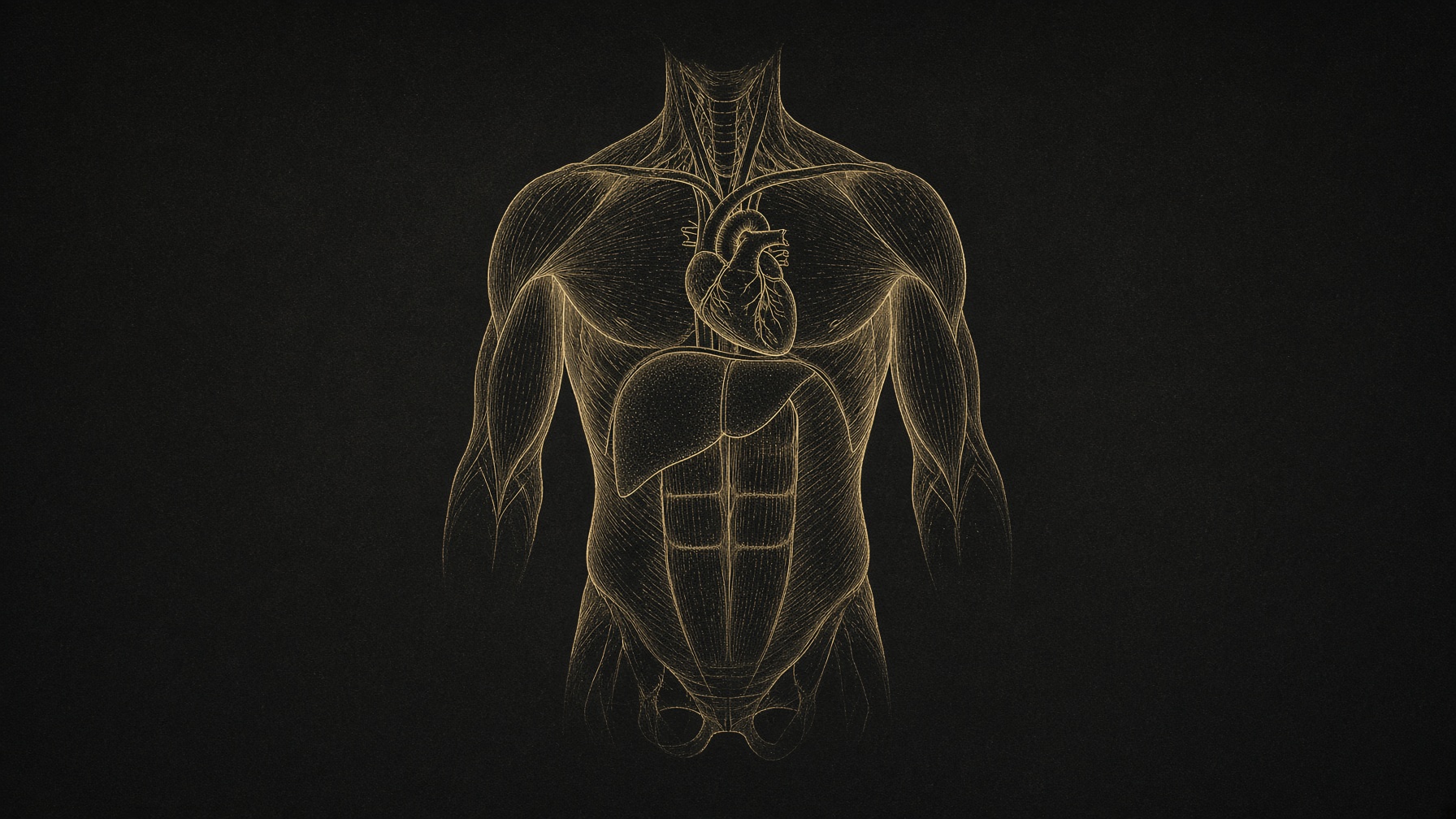
The bill outside the fibre: axis, blood, liver, heart
The androgen receptor is in more places than the biceps. Fertility, HDL, haematocrit, the left ventricle, the voice, the tendon. A map of the tissues. Not a course.
Essays describe published research. They are not medical advice and they do not authorise human use of any catalogue item.