

Bodybuilding · 6 min · 1,246 words
Strength before size: the nerve learns first
The bar moves for weeks before the fibre gets thicker. Recruitment, firing rate, and less fighting yourself. Size is the later ceiling.
What this essay actually tells you
- Early strength is recruitment, firing rate and less antagonist co-contraction. Moritani and deVries: force rises before the fibre thickens. EMG tells you the nerve changed.
- Strength is specific to the pattern. A new exercise resets the skill even when the muscle is the same. Cross-education: the untrained limb gains a fraction of the strength through central drive, not through new sarcomeres.
- Once you can already recruit the big motor units, more strength needs more muscle. A drug does not install a lift you never practised.
What this actually means
Beginners get stronger because the nerve learns to use the muscle, not because the muscle grew yet. You recruit more fibres, fire them faster, and stop tensing the opposite muscle so hard. After that, more strength needs more muscle. A new exercise makes even a trained person a beginner again.
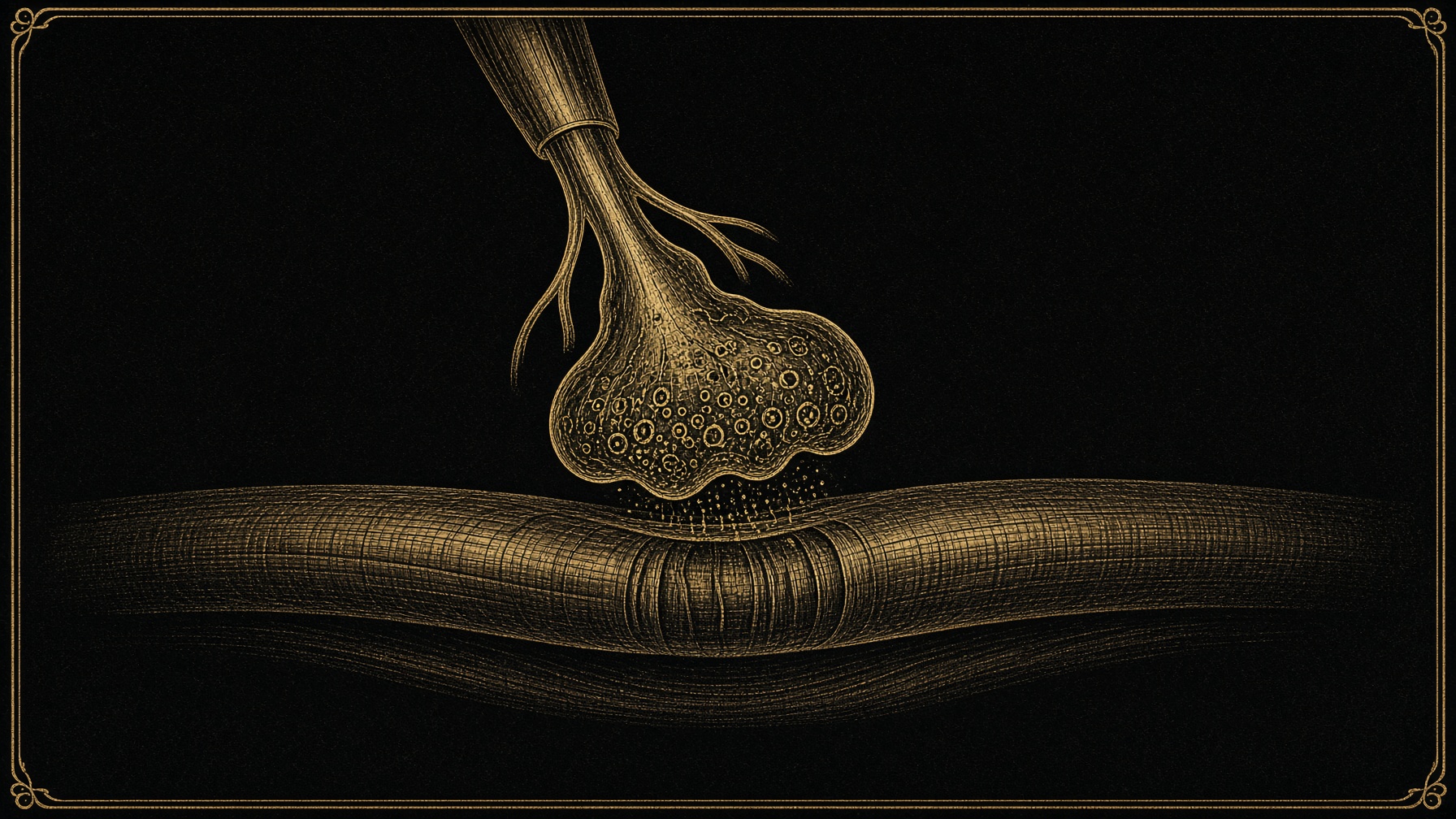
The bar gets heavier before the arm gets bigger. Everyone who has started lifting has watched this and invented a story. The useful story is anatomical. A fibre only contracts if a motor neuron tells it to. In the first weeks you get better at that message: more of the high-threshold units come in, they fire faster, and the muscles that were quietly pushing the other way quieten down. Moritani and deVries separated this years ago with EMG. Early on, force rose more than the electrical size of the muscle's effort would suggest if the only change were bigger fibres. Later, the muscle itself had to grow or the force stalled. Beginners live in the first half. People who have lifted for years live in the second, which is why their strength and their size move together, slowly, and why a new exercise still gives them a quick neural jump that flatters the mirror.
In short. You get stronger first because the nerve gets better at using the muscle you already have. The muscle getting bigger is the later job.
A motor unit is one neuron and the fibres it owns. Small units, mostly type I, are on for posture and light work. Large units, type II, wait until the force or the fatigue demands them. Henneman's size principle still sorts the queue. What training changes is how willingly you reach the back of the queue, and how fast those neurons fire once they are in. Rate coding — more impulses per second — sums the twitches into a smoother, higher force. A doublet, two spikes close together at the start of a contraction, takes up the slack in the tendon and makes the force rise faster. That is a skill. You cannot see it. You can lift something you could not lift last month because of it, with the same sarcomeres.
In short. Training teaches the nerve to recruit the strong fibres and to fire them faster. Same muscle, more of it actually switched on.
You also stop sabotaging the lift. Antagonist muscles — hamstrings during a hard knee extension, the upper back loosening during a press — co-contract so the joint doesn't fall apart. Early on they co-contract too much. Force you paid for gets spent holding yourself still. With practice the brake eases where it can, and stays where the joint still needs it. That is not 'mind-muscle' as a mood. It is less electrical activity in the muscle that was opposing you, measured, dull, and worth having. The cue to feel a muscle can help a beginner find a motor pool they were skipping, especially on a curl or a lateral raise. On a squat it is a smaller effect than learning the position. Feeling a squeeze is not the same as producing force against a heavy bar.
In short. Beginners often tense the opposing muscle too hard and waste force. Practice turns that down. Squeezing a muscle in the mirror is a small version of this, not the whole thing.
Why strength is specific, and why one arm trains the other
Neural strength is stubbornly specific. You get strong at the joint angles, the speed, and the setup you practised. A leg press and a squat both use the quadriceps. They do not write the same programme. Change the pads, the grip, the depth, and part of the weight you 'lost' is a pattern you haven't got yet, not a fibre that shrank. This is why swinging between twelve new exercises a week feels productive and measures as nothing. The nerve is always on exercise one. The fibre never gets a repeated tension long enough to keep the protein. Specificity is also why a powerlifter and a bodybuilder can look mismatched: one has practised one groove until the neural ceiling is high, the other has practised length and fatigue across more grooves and owns more sarcomeres in parallel.
In short. You get strong at the exact lift you practise. A new exercise resets the skill even when the muscle is the same. That is why random variety hides progress.
Train one limb and the other gets a little stronger. Cross-education, on the order of a tenth of the trained side's gain, shows up too fast and too cleanly to be hypertrophy in a limb that did no work. The drive is central. The cortex and the cord learned a recruitment pattern and can send a version of it down the other side. It is not a full substitute for training the injured limb. It is why, in a cast, working the free side is not superstition. The fibres in the cast still atrophy. The pattern is less lost than it would have been. When the cast comes off, the neural half of the return has a head start, and the protein half still has to be loaded.
In short. Training your right arm makes the left a bit stronger, through the brain and the spinal cord, not through magic protein appearing in a limb you didn't use.
When the nerve runs out of tricks
Neural gains do not compound forever. Once you can recruit the big units and fire them quickly in that groove, more practice maintains the skill and does less to raise the ceiling. The ceiling becomes the muscle: how many heads in parallel, at what overlap, on what tendon. That is the growth piece and the set piece. A useful consequence: a beginner should not chase failure on every set or a huge surplus in week two. The bar will move anyway, from the nerve, and the joints are learning positions under load. An advanced lifter who waits for the nerve to save a stalled squat will wait a long time. Their nerve already knows the squat. They need more tension on the fibres, recovered from, for long enough to keep sarcomeres. Drugs do not rewrite this order. An androgen can add protein and can make you willing to grind. It does not install a motor pattern you never practised. The first clean rep is still a nerve.
In short. Beginners get stronger almost no matter what, for a while. After that, the nerve has done its share and the fibre has to grow. A drug doesn't teach the lift.
- Weeks 1–4
- mostly nerve
- After that
- mostly muscle
- A new lift
- nerve again
Recruitment, firing rate, less fighting yourself. Little change in fibre thickness.
Same skill, more sarcomeres. Strength and size start to move together.
Even in a trained person. The muscle is old. The pattern is new.
Questions the essay actually answers
- Why am I getting stronger but not bigger?
- Early on, the nervous system learns to recruit more fibres, fire them faster, and waste less force in the opposing muscle. Fibre thickness lags that by weeks.
- Does mind-muscle connection build more muscle?
- A cue can help you find a muscle you were skipping, especially on isolation lifts. It is a small neural skill. It does not replace load, and on a heavy squat the position matters more than the squeeze.
- Why did my strength drop when I changed exercises?
- Strength is specific to the pattern you practised. A new setup is a new skill, even if the same muscles are tired afterwards.
- Can I keep an injured side stronger by training the other one?
- A little. Cross-education is a neural transfer, roughly a tenth of the gain, not new muscle in the unused limb. The unused fibres still shrink until they are loaded.
Read next
9 min · Bodybuilding
Type I and type II: the two fibres a muscle actually is
Slow fibres last. Fast fibres throw the force. Diet, drugs and workouts all land on that split — so the muscle series starts with the myosin, not the vial.
8 min · Bodybuilding
How a fibre grows: tension, time, and the protein ledger
Synthesis minus breakdown, for weeks. Why soreness is the wrong score, why the pump is water, and why long ranges of motion keep showing up in the trials.
9 min · Bodybuilding
What the set is doing: failure, volume, rest, range
Why the last reps matter more than the first, why ten hard sets is a floor and not a personality, and why a short rest quietly deletes the tension you came for.
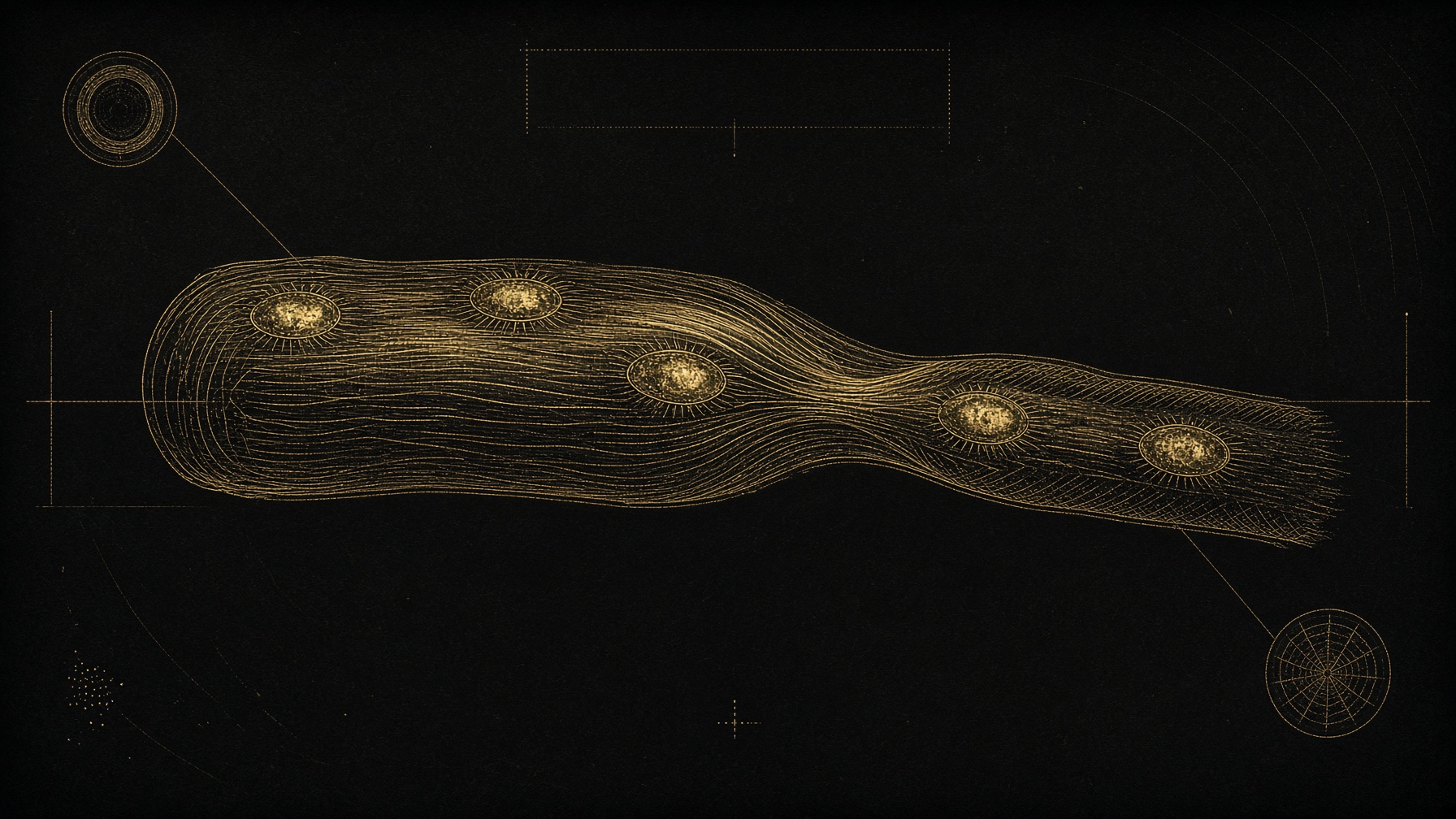
7 min · Bodybuilding
Muscle memory: the nuclei that stay when you stop
Why a muscle you have built before comes back faster. Skill in the nerve, extra nuclei in the fibre, and DNA marks that linger. The week-one shrink is mostly water.
More in this desk

16 min · Bodybuilding
What each steroid does at the cell
Testosterone, nandrolone, trenbolone, boldenone, the DHT cousins, the orals. One receptor. Why two of them are not two muscles, what that asks of food, and what the side effects actually are.
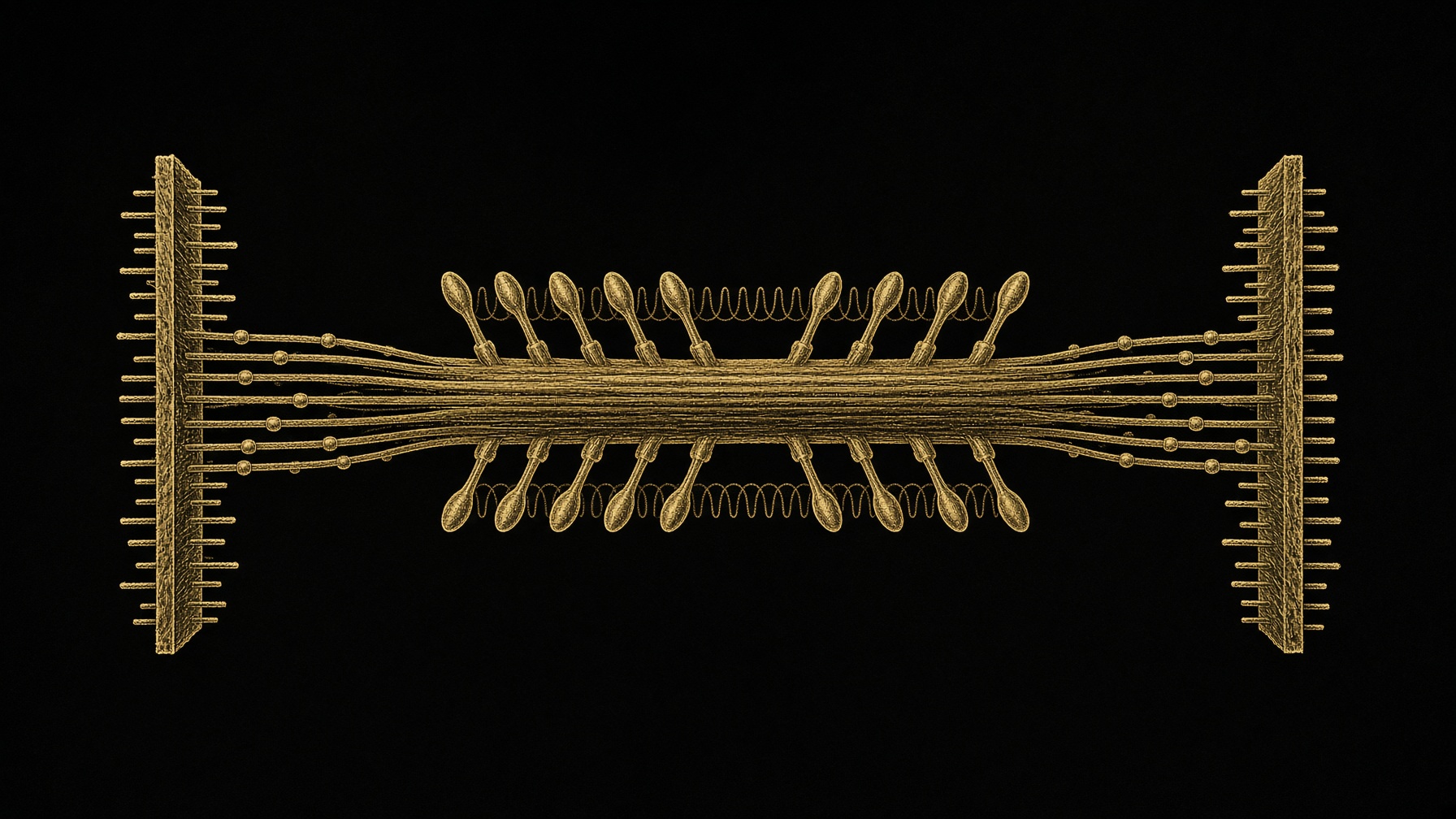
14 min · Bodybuilding
Actin and myosin: the motor inside the fibre
The sarcomere, the thin rope, the thick motor, the eight-nanometre stroke, and the calcium switch that lets a nerve turn all of it on. One ATP per pull.
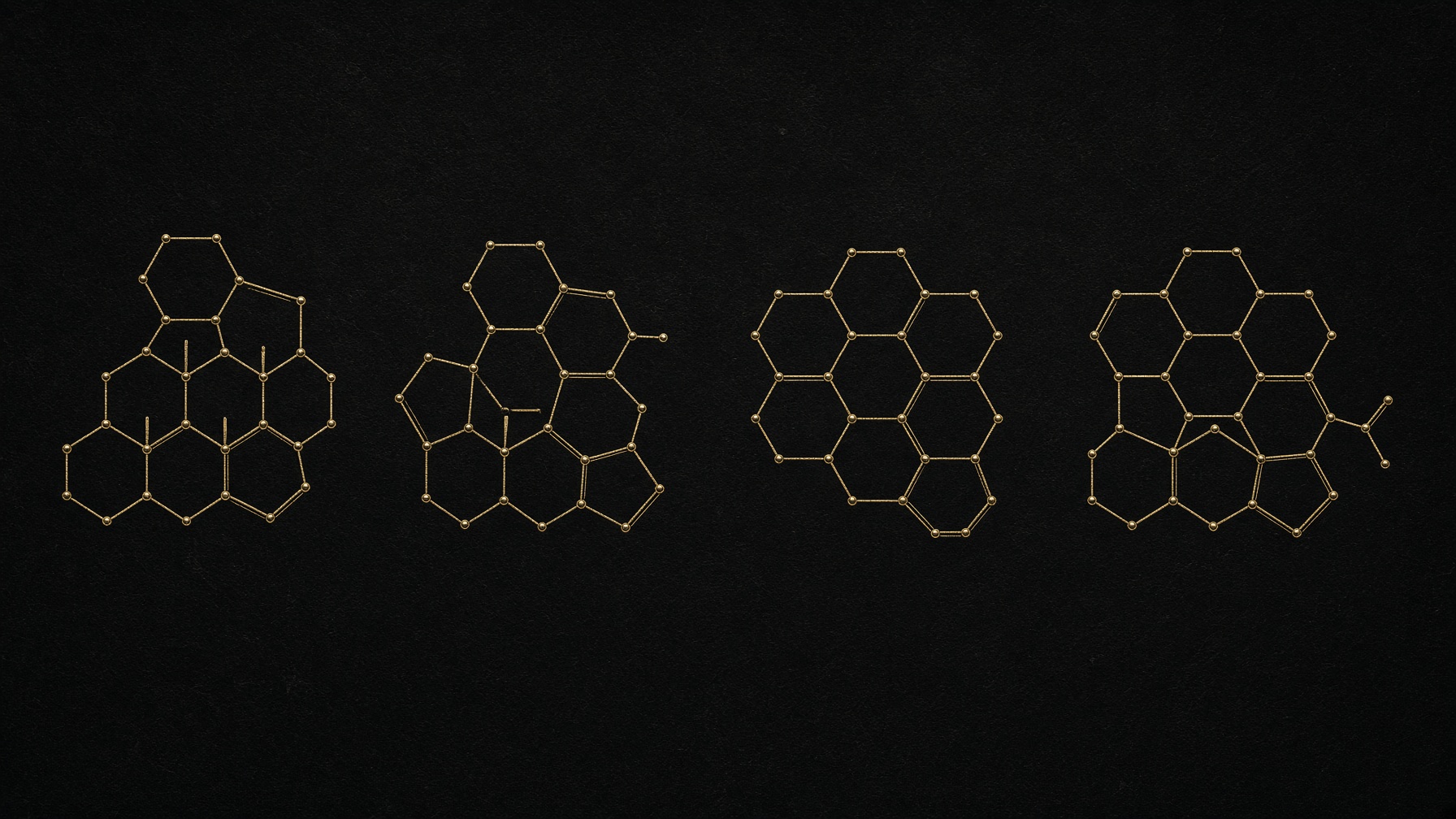
10 min · Bodybuilding
Steroid families: four chemistries, one receptor
Testosterone, the 19-nors, the DHT-derived, and the orals that rent the liver. Wet and dry are oestrogen and water, not two kinds of muscle.
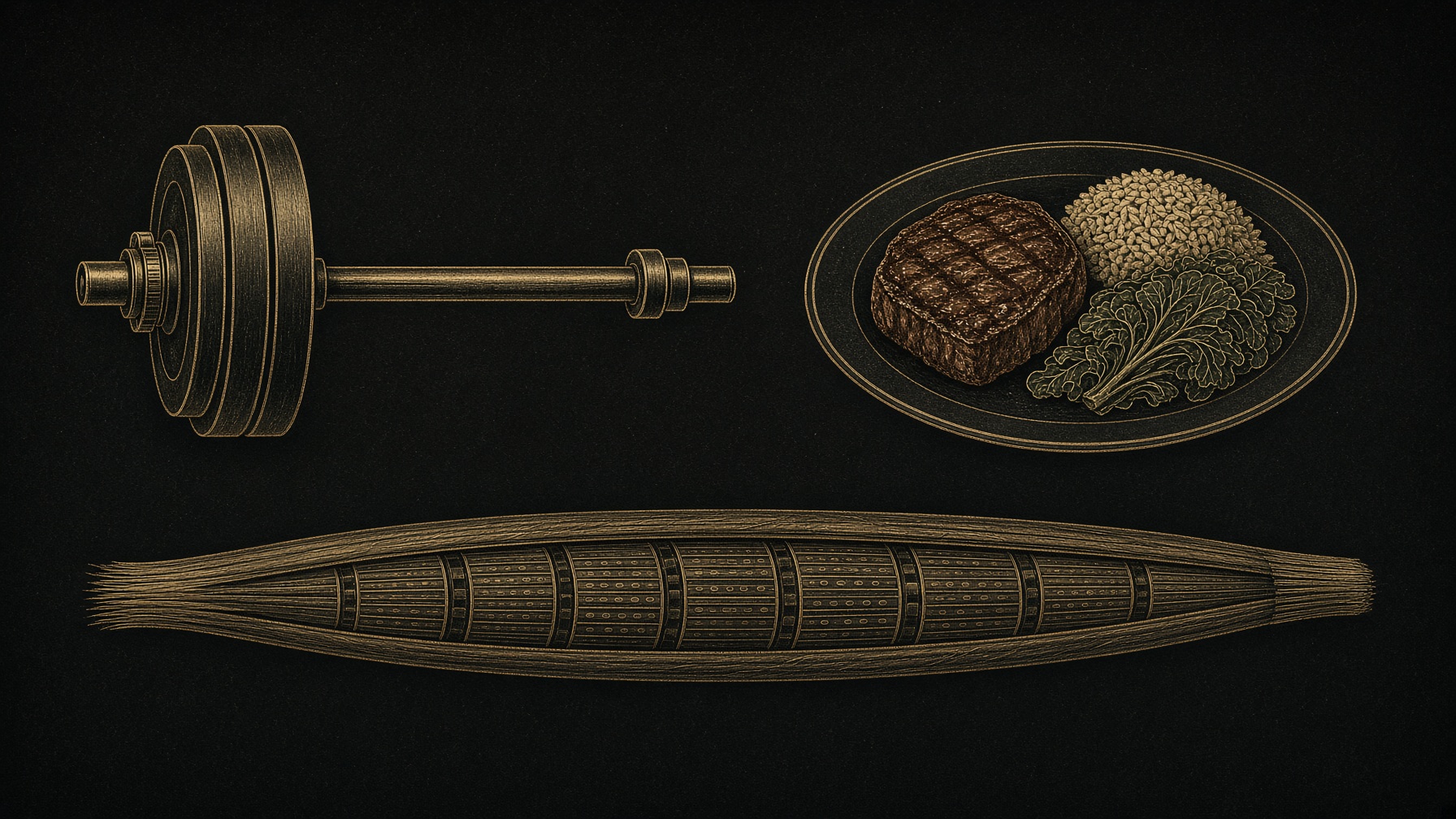
9 min · Bodybuilding
Food and training: how to spend the fibre you have
The practical half of the muscle series. Recruit the fast fibres, feed them, sleep, and stop asking a drug to do a week's work.
Essays describe published research. They are not medical advice and they do not authorise human use of any catalogue item.