

Bodybuilding · 6 min · 1,329 words
Soreness: the Z-disk you pulled apart, a day late
Next-day ache is eccentric damage and the immune cells that come to clear it. Lactate left an hour ago. Being ruined is not the same number as growing.
What this essay actually tells you
- Delayed soreness peaks one to three days later. Lactate is gone in about an hour. Eccentric lowering pops weak sarcomeres and streams the Z-disk. Neutrophils and macrophages, plus bradykinin and prostaglandins, are the ache.
- Early in a new programme, a lot of protein synthesis is repair. Damas and Phillips: that soreness does not predict later growth. Trained muscle grows with less damage.
- The same session hurts less the next week because the cytoskeleton was reinforced. A new joint angle starts it again. Daily anti-inflammatories can blunt the same pathway the repair was using.
What this actually means
The ache the next day is not lactic acid. Lowering a weight can pop the weakest sarcomeres and fray the Z-disk. Immune cells arrive a day later and that is the soreness. The first weeks of a new lift hurt the most and a lot of the protein synthesis then is repair. Once you are trained, muscle grows with less wreckage. The second time you do the same session it hurts less because the fibre reinforced itself.
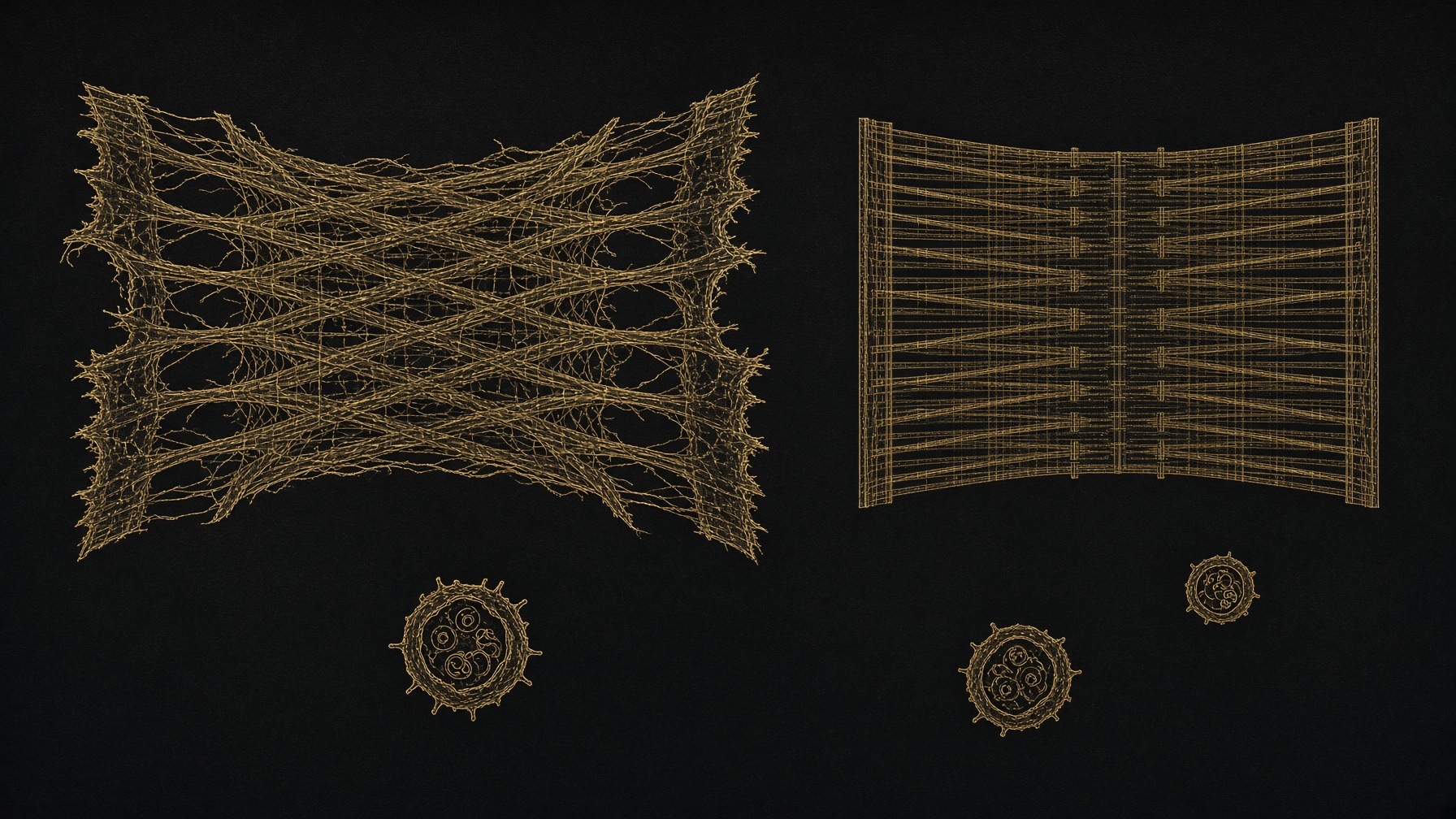
The ache on the stairs the next morning is not leftover lactate. Lactate is cleared in about an hour, back through the shuttle the burn essay already named. Delayed-onset muscle soreness arrives at twelve to twenty-four hours, peaks around two days, and can still be there on day four. The timing is the clue. Something was damaged during the session, the damage called an inflammatory crew, and the crew is what the nerves are reporting. The session that does this most reliably is the one where the muscle is lengthening while it produces force. Lowering a squat. Lowering a Romanian deadlift. Running downhill. Those are eccentric contractions. The myosin heads are still gripping actin while the filaments are being dragged apart, and the weakest sarcomeres in series pop.
In short. Next-day soreness is damage and inflammation, not lactic acid. It comes from lowering the weight, when the muscle is forced to lengthen while it is still pulling.
Morgan and Proske's picture is the useful one. Sarcomeres are in series. A few of them are slightly longer and slightly weaker. Under eccentric load they yield, the filaments are pulled past the overlap they can re-grab, and the Z-disk streams. Electron micrographs the day after a novel eccentric bout look like a tidy ladder that someone shook. Calcium leaks. Proteins that belong inside the fibre, creatine kinase and myoglobin among them, show up in the blood. Neutrophils arrive within hours. Macrophages follow over the next day or two, clearing debris and releasing the signals that make the nociceptors fire: bradykinin, prostaglandins, a local pressure from the swelling. That is why pressing the muscle hurts, and why the same muscle can still produce force, just less of it, and with a smaller range before it complains. You are not weak because you are lazy the next day. A fraction of the series was taken offline for repairs.
In short. A few sarcomeres pop, the Z-disk frays, and immune cells arrive the next day. That crew is the ache. Some of your force is simply offline while it is rebuilt.
Soreness is a poor scoreboard for growth
Damas, Phillips and Libardi measured the awkward part. In the first weeks of a new programme, muscle protein synthesis is high and a lot of it is repair, not new contractile protein. The people who are sorest are not the people who grow the most once the programme is familiar. Trained muscle still grows, and it does it with less damage, because the cytoskeleton has already been reinforced and the sarcomeres that used to pop have been replaced by ones that hold. If you need to be unable to sit down in order to believe the session worked, you will keep chasing novelty and wreckage, and you will spend the next session too sore to load the fibre properly. Growth is synthesis ahead of breakdown for weeks. Damage is a side effect of a new or a very long eccentric stress. They overlap at the start. They are not the same number.
In short. Early soreness tracks repair, not the muscle you will have in three months. Trained muscle grows with less damage. Chasing wreckage gets in the way of the next heavy session.
The repeated-bout effect is the kindest adaptation you own. Do the same eccentric session a week later and it hurts less, the blood proteins rise less, and the force comes back faster. The fibre added proteins that hold the Z-disk and the costamere, titin included, so the next yield is harder to produce. That is why the first week of a new exercise feels like an injury and the fourth week feels like training. It is also why a muscle you have hammered for a year can still be wrecked by one new angle. Incline curls after a year of flat curls. A deep squat after a year of half reps. The length you have not visited is a new sarcomere population. Soreness there means you finally loaded a range. It does not mean you should live there until you cannot walk.
In short. The second time you do the same hard lowering, it hurts less, because the fibre reinforced the parts that tore. A new angle can make an old muscle sore again.
Anti-inflammatories sit on this crew. Ibuprofen blocks cyclo-oxygenase, so less prostaglandin, so less of the ache, and in some studies less of the satellite-cell and protein-synthesis response that was riding the same signal. A rare dose so you can sleep is a trade you can see. A daily dose so the diary never hurts is a trade against the adaptation you came for. Cold water after every session is the same family of question: it turns the sensation down, and if you do it every time you may turn the signal down with it. The inflammation is not the growth. It is adjacent to the growth in a novel bout. Flattening it on purpose, every day, is how people collect a comfortable week and a smaller fibre.
In short. Painkillers and daily ice can turn the ache down, and they can turn down the repair signal that was travelling with it. Occasionally is a trade. Every session is a different experiment.
What to do with the ache
Light movement the next day brings blood through the tissue and usually feels better than a day on the sofa. It does not speed the Z-disk by a miracle. It stops you protecting the muscle so hard that the next real session is a stranger. Train the sore muscle again when the force is back, not when the tenderness is zero. Tenderness can outlast the force loss. Waiting for zero tenderness is how a week becomes two sessions. If the pain is sharp, in a tendon, or on one side in a way that changes your walk, that is a different tissue from this page. DOMS is diffuse, in the belly of the muscle, worse on the stairs, gone in a few days. A pop during the set, a bruise, a strength that does not return, is a strain. The biology of a strain is a larger tear in the same structure. The timetable is longer. Do not file it under 'good session'.
In short. Move a bit the next day. Train again when strength is back, even if it is still tender. Sharp, one-sided, or still weak after several days is a strain, not a badge.
- When
- 12–72 hours
- Which reps
- the lowering
- Growth
- not the same score
- Next time
- the repeated bout
Lactate is gone in about an hour. The ache is the repair crew.
Eccentric load pulls weak sarcomeres apart. Z-disk streaming. CK and myoglobin in the blood.
Early synthesis is partly repair (Damas). Trained muscle grows while getting less sore.
Same session hurts less a week later. A new angle starts the clock again.
Questions the essay actually answers
- If I am not sore, did I waste the session?
- No. Soreness means some sarcomeres were pulled apart, usually by a new or a very hard lowering. Growth in a trained muscle happens with less of that. The scoreboard is whether the load and the reps moved, not whether the stairs hurt.
- Why do legs hurt more than arms?
- Squats, lunges and deadlifts lower a lot of load through a long range. More muscle, more eccentric work, more weak sarcomeres in series. Arms can do it too, the first time you take a curl all the way down.
- Should I take ibuprofen so I can train tomorrow?
- It dulls the prostaglandin part of the ache. Used every session, that same pathway is tied up with the repair and satellite-cell response. A one-off so you can sleep is different from a daily habit.
- How is this different from a pulled muscle?
- DOMS is spread through the belly, peaks a day or two later, and fades. A strain is a larger tear: often a moment you felt, sharper, sometimes bruised, and the strength does not come back on the usual timetable.
Read next
5 min · Bodybuilding
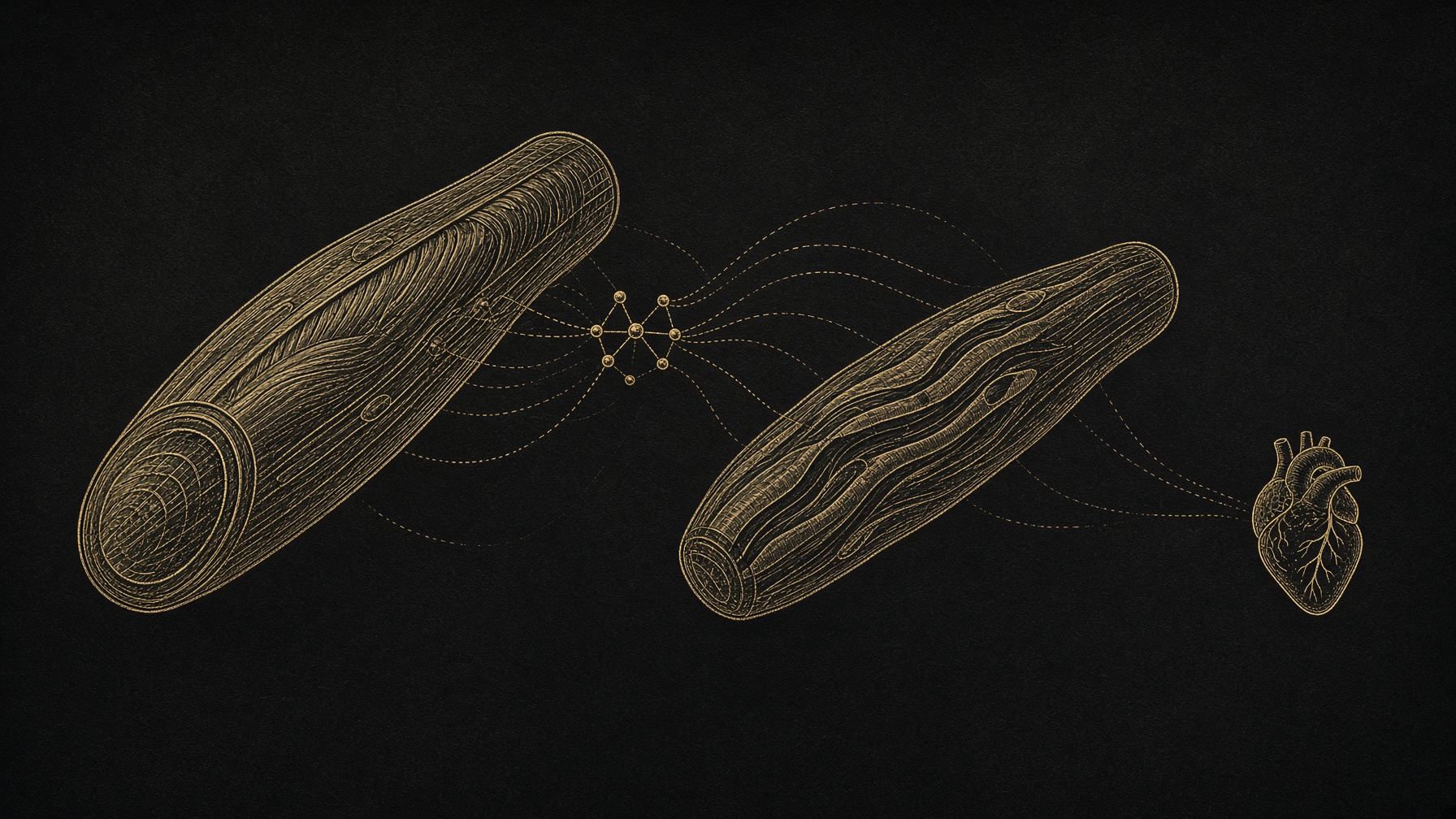
The burn: lactate is a fuel, not the wreckage
A hard set makes lactate so glycolysis can keep going. Other tissues burn it. The sting is not the muscle being dissolved, and the pump is not stored growth.
8 min · Bodybuilding
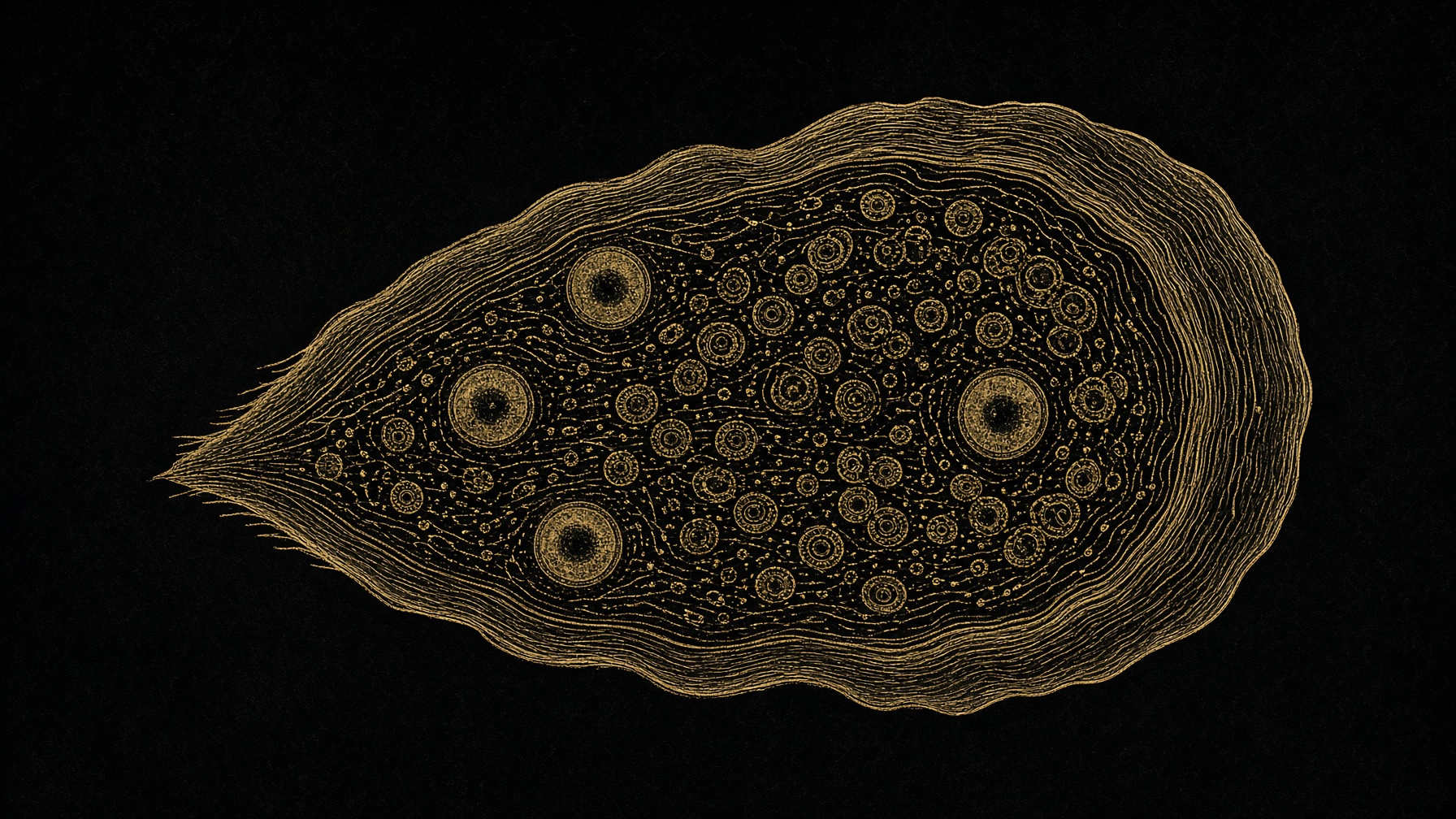
How a fibre grows: tension, time, and the protein ledger
Synthesis minus breakdown, for weeks. Why soreness is the wrong score, why the pump is water, and why long ranges of motion keep showing up in the trials.
14 min · Bodybuilding
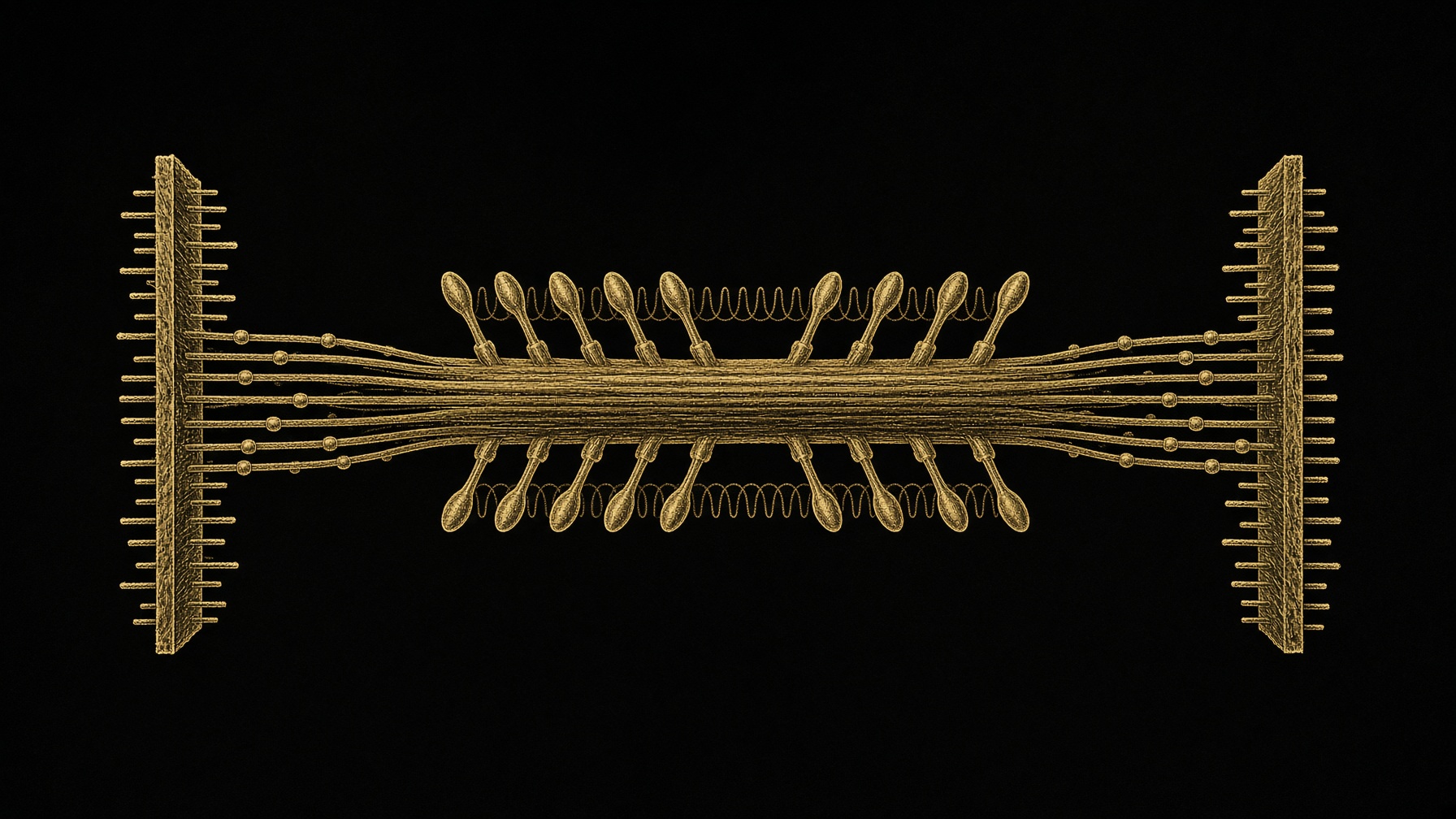
Actin and myosin: the motor inside the fibre
The sarcomere, the thin rope, the thick motor, the eight-nanometre stroke, and the calcium switch that lets a nerve turn all of it on. One ATP per pull.
7 min · Bodybuilding
Muscle memory: the nuclei that stay when you stop
Why a muscle you have built before comes back faster. Skill in the nerve, extra nuclei in the fibre, and DNA marks that linger. The week-one shrink is mostly water.
More in this desk
16 min · Bodybuilding
What each steroid does at the cell
Testosterone, nandrolone, trenbolone, boldenone, the DHT cousins, the orals. One receptor. Why two of them are not two muscles, what that asks of food, and what the side effects actually are.
10 min · Bodybuilding
Coming off: SERMs, hCG, and what a supplement cannot do
How a SERM restarts GnRH, how each hCG and FSH option talks to the testis or the ovary, and how zinc, ashwagandha and CoQ10 turn that signal back into testosterone and sperm.
10 min · Bodybuilding
Steroid families: four chemistries, one receptor
Testosterone, the 19-nors, the DHT-derived, and the orals that rent the liver. Wet and dry are oestrogen and water, not two kinds of muscle.
9 min · Bodybuilding
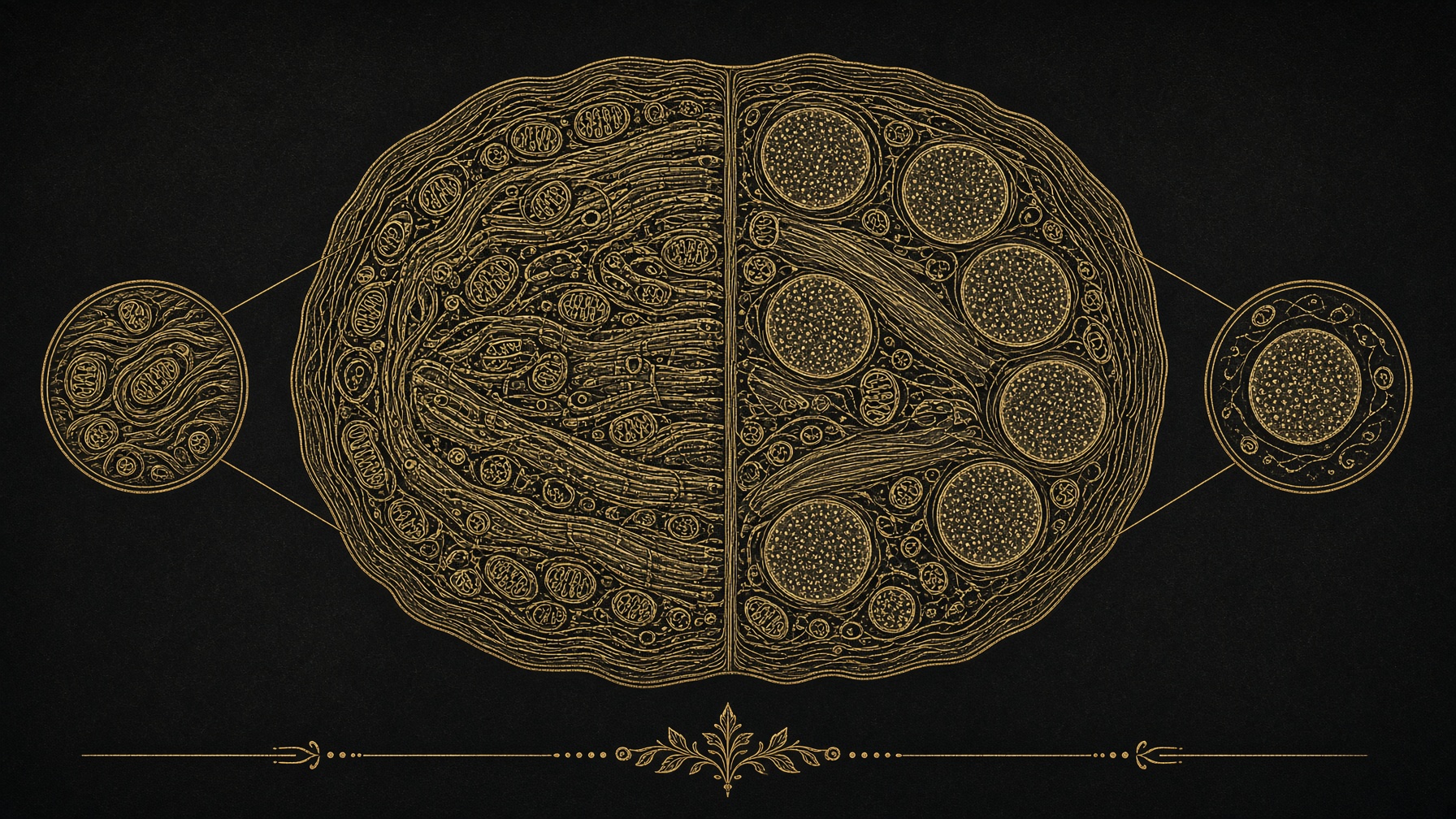
Type I and type II: the two fibres a muscle actually is
Slow fibres last. Fast fibres throw the force. Diet, drugs and workouts all land on that split — so the muscle series starts with the myosin, not the vial.
Essays describe published research. They are not medical advice and they do not authorise human use of any catalogue item.