

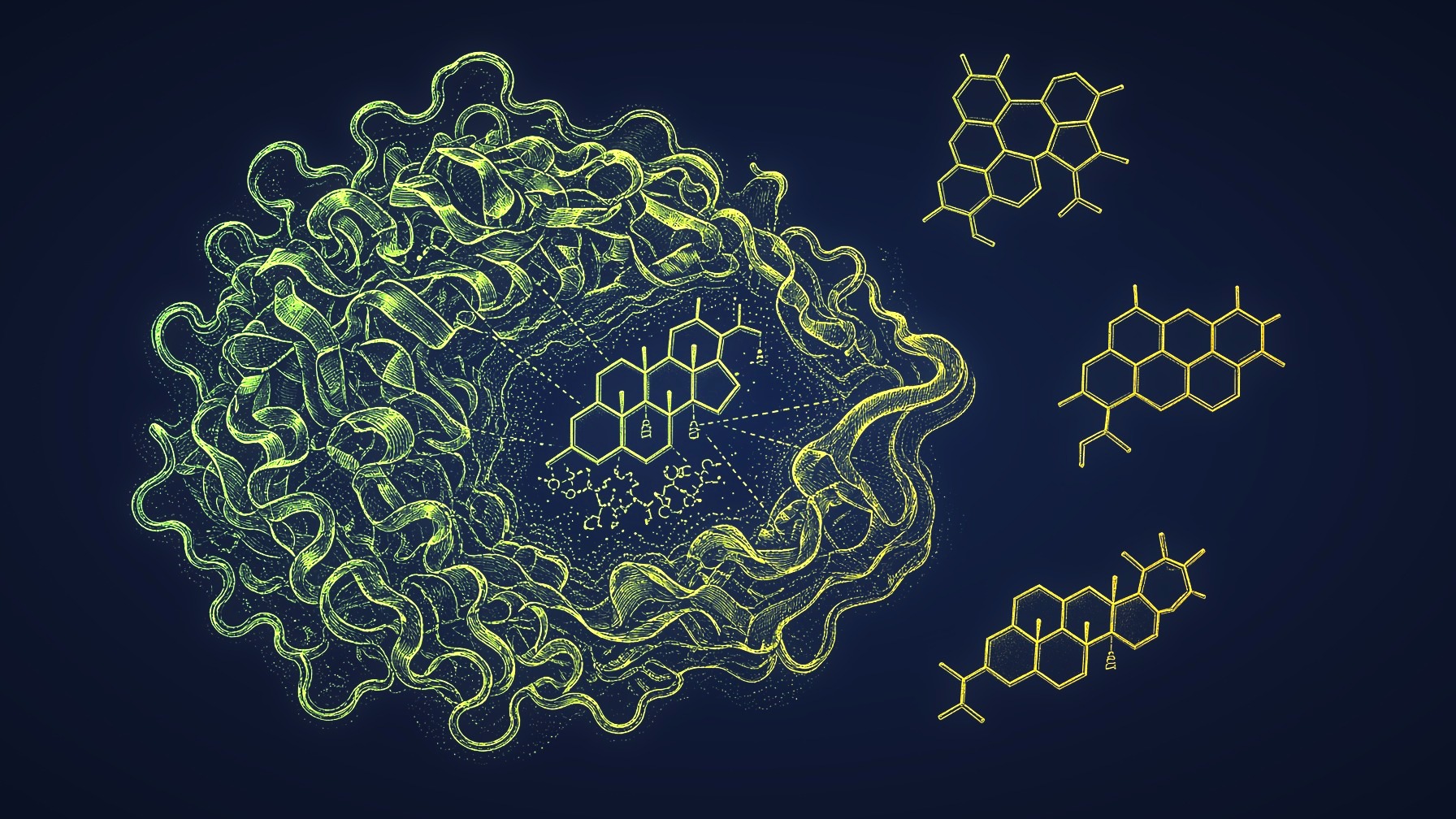
Bodybuilding · 8 min · 1,690 words
Aromatase: the enzyme that makes oestradiol, and the three drugs that sit on it
Anastrozole, letrozole and exemestane are not the same chair. They lower oestradiol by occupying CYP19A1. They do not close the progesterone door, and men still need some oestradiol.
What this essay actually tells you
- CYP19A1 turns testosterone into oestradiol. Anastrozole and letrozole sit in the enzyme and let go. Exemestane inactivates the enzyme protein itself.
- Finkelstein, NEJM 2013: bone, fat and sexual function in men tracked oestradiol, not only testosterone. Deleting the conversion deletes a signal.
- An aromatase inhibitor does not block the progesterone receptor. Nandrolone, trenbolone and often oxymetholone can still grow breast gland.
What this actually means
Aromatase converts testosterone into oestradiol. Anastrozole and letrozole block the enzyme and let go; letrozole blocks it harder. Exemestane destroys the enzyme protein. Men need some oestradiol for bone, fat distribution and sex drive. These drugs do not stop gynaecomastia driven by the progesterone receptor.
Aromatase is CYP19A1, a cytochrome P450 that takes an androgen and aromatises the A ring into an oestrogen. Testosterone becomes oestradiol. Androstenedione becomes oestrone. The enzyme lives in fat, in the brain, in bone, in the gonads, and in breast tissue. Men do not 'have no oestrogen'. Men make oestradiol on purpose, mostly by this enzyme, and a long list of tissues uses it. An aromatase inhibitor is a drug that occupies that enzyme so less oestradiol is made. Anastrozole, letrozole and exemestane are the three that exist as medicines. They were built for breast cancer. Everything a lifter means by 'an AI' is a borrowing of that pharmacology.
In short. Aromatase turns testosterone into oestradiol. Anastrozole, letrozole and exemestane slow that enzyme. They were designed for breast cancer, not for the gym.
The reaction is why body fat changes the result of the same testosterone. Adipose stroma expresses the enzyme. More fat, more factory, more oestradiol from a given androgen load. That is not a moral claim about being lean. It is where the gene is transcribed. It is also why two men on the same drug can print two different oestradiol numbers, and why crashing the enzyme in a very lean man is a different experiment from trimming it in a heavier one. The SHBG page sits next to this one, because oestradiol is one of the signals that tells the liver to make more of the carrier. Lower the oestradiol hard enough and SHBG falls with it. The free fraction moves for a reason that is not 'androgen dose'.
In short. The enzyme sits in fat, so a heavier man makes more oestradiol from the same testosterone. Oestradiol also tells the liver to make SHBG, so crushing it moves the free-testosterone maths as well.
Three chairs, not one liquid
Anastrozole and letrozole are nonsteroidal. They compete for the active site and let go again. While they are sitting there, the androgen does not become the oestrogen. Letrozole is the more complete suppressor of the two in the oncology comparisons. Complete is not automatically better in a man who still needs oestradiol for bone, libido and a share of his IGF-1 tone. Anastrozole is the one used in the male studies people quote, including the work that asked what happens when you lower oestradiol on purpose and watch bone and body fat. Exemestane is the odd one. It is a steroid-shaped suicide substrate. The enzyme starts to turn it over and dies in the act. A new enzyme protein has to be made before activity returns. That is why exemestane's clock is the clock of protein replacement, not only the clock of the drug leaving the blood.
In short. Anastrozole and letrozole sit in the enzyme and let go. Letrozole switches it off harder. Exemestane wrecks the enzyme molecule itself, so you wait until the body builds a new one.
Finkelstein and colleagues, New England Journal of Medicine, 2013, did the experiment the folklore skips. They gave men a GnRH analogue so their own production stopped, replaced testosterone at several doses, and in half the men blocked aromatase as well. Bone resorption, body fat and sexual function tracked oestradiol as well as testosterone. You can have a high androgen on paper and a miserable set of oestradiol-shaped symptoms if the conversion is gone. Joints that feel like sandpaper, a flat libido, a mood that will not lift: those are not proof the inhibitor 'isn't working'. They are often proof it is working past the point the tissues wanted. Oestradiol in a man is a signal. Treating it only as a side effect is how the signal gets deleted.
In short. A proper trial switched men's own production off, gave testosterone back, and blocked aromatase in half of them. Bone, fat and sex drive followed oestradiol, not just testosterone. Too little is a result, not a badge.
The doors it does not close
An aromatase inhibitor lowers the oestradiol you make. It does not occupy the oestrogen receptor. Tamoxifen does that, which is why tamoxifen can oppose breast tissue even when some oestradiol is still circulating, and why the two drugs are not swaps. It also does not occupy the progesterone receptor. Nandrolone and trenbolone can grow a disc under the nipple through that receptor while oestradiol is ordinary or low. Blocking CYP19A1 in that situation removes a hormone the breast was not using as its main cue, and it leaves the progesterone receptor occupied. Oxymetholone is the other mismatch: it behaves like an oestrogen in the breast often enough, and it is a poor substrate for aromatase, so there is not a clean pool of oestradiol to shrink. The gynaecomastia essay is the tissue version of this paragraph. The enzyme is only one of the doors.
In short. An AI lowers oestradiol. It does not block the oestrogen receptor, and it does not block the progesterone receptor that nandrolone and trenbolone use. It also does little for anadrol.
Blood tests lie here in a specific way. The immunoassays built for women are noisy down at male oestradiol concentrations. A man can be told his oestradiol is 'high' or 'fine' by a method that was not designed for the range he lives in. Liquid chromatography with mass spectrometry is the assay that can actually see a low male number. Chasing an inhibitor against a bad assay is how people erase a hormone they were not high in. If the number is not trustworthy, the drug is a guess. And a guess that removes oestradiol removes a hormone bone has already told us it wants.
In short. Many cheap oestradiol tests are wrong in men. The accurate one is mass spectrometry. Blocking the enzyme because a rough test looked high is how you end up with too little, not with control.
The same enzyme, different addresses
CYP19A1 is one gene with several promoters, so different tissues switch it on for different reasons. Fat uses a promoter that listens to cytokines and to cortisol. The gonads use another. The brain uses another again. That is why a man can aromatise a lot in adipose stroma and still have a separate, local production of oestradiol inside the hypothalamus, where it is part of the feedback that tells kisspeptin to quieten. Blocking the enzyme blocks it everywhere you have distributed the drug. You do not get to turn off the nipple and leave the bone, the brain, and the growth-plate history alone. Bone in men reads oestradiol through its own receptors. The osteoclasts speed up when that signal falls. A low oestradiol for a few weeks is a mood and a joint. A low oestradiol for a year is a density scan.
In short. The enzyme is the same protein in fat, brain, and bone, switched on by different local signals. A drug that blocks it blocks it in all of them. Bone is one of the tissues that notices a year of too little oestradiol.
If the axis is still intact, lowering oestradiol also lifts the brake. The hypothalamus sees less oestrogen feedback, LH rises, and the testis makes more testosterone. That is the logic of using an aromatase inhibitor in a man who is not on testosterone and whose oestradiol is genuinely high relative to his androgen. It is a useless logic in a man whose LH is already zero because an outside androgen has switched the asking off. There is no kisspeptin pulse to rescue. The inhibitor still removes oestradiol. It does not restart a pituitary that is being told, by the androgen receptor, to stay quiet. People borrow the fertility practice result and paste it onto a cycle. The pituitary in those two situations is not the same pituitary.
In short. In a man who is still making his own hormones, less oestradiol can mean more LH and more testosterone. On a cycle, LH is already off. The inhibitor still deletes oestradiol and does not turn LH back on.
How hard each drug actually presses
Letrozole suppresses oestradiol further than anastrozole at the doses used in oncology, which is why it is so easy to overshoot in a man whose entire male oestradiol production was never that large. Exemestane's quirk is not only that it kills the enzyme. A metabolite of exemestane has mild androgenic activity, so the drug is not a pure blank. For a woman in a breast-cancer trial that is a footnote. For a man counting every androgenic signal, it is a reason the three names are not interchangeable liquids. None of them occupies the oestrogen receptor, so none of them does tamoxifen's job. Using a stronger inhibitor to fix a progesterone-receptor problem, or an anadrol problem, is pressing harder on the wrong chair. The oestradiol number falls. The disc does not.
In short. Letrozole switches the enzyme off harder than anastrozole. Exemestane also has a weakly androgenic metabolite. None of them blocks the oestrogen receptor, so none of them replaces tamoxifen, and none of them fixes tren or anadrol.
- The enzyme
- CYP19A1
- Anastrozole
- reversible, nonsteroidal
- Letrozole
- stronger suppression
- Exemestane
- suicide inhibitor
Androgen in, oestrogen out. Fat, brain, bone, gonad, breast.
The one in the male studies. Lets go of the enzyme.
Same class. More complete. Easier to overshoot in a man.
Steroid-shaped. Kills the enzyme protein. Recovery waits on new protein.
Questions the essay actually answers
- What is an aromatase inhibitor?
- A drug that blocks CYP19A1, the enzyme that converts testosterone to oestradiol. Anastrozole, letrozole and exemestane are the three used as medicines. They were developed for breast cancer.
- What is the difference between anastrozole and exemestane?
- Anastrozole binds the enzyme and lets go. Exemestane is a steroid-shaped inhibitor that inactivates the enzyme, so activity returns only when new enzyme is made. Letrozole is in anastrozole's class and suppresses oestradiol more completely.
- Does an aromatase inhibitor stop gyno from tren or deca?
- Not if the breast is being driven through the progesterone receptor. An aromatase inhibitor only lowers oestradiol. It does not block that receptor, and it does little for oxymetholone either.
- Why do joints and libido suffer when oestrogen is low?
- Men use oestradiol. In the 2013 New England Journal experiment, bone resorption, fat and sexual function tracked oestradiol even when testosterone was replaced. Deleting the conversion deletes a signal, not a side effect.
- Can a standard blood test measure oestradiol in men?
- Often poorly. Immunoassays aimed at the female range are unreliable at male concentrations. Mass spectrometry is the method that can see a low male oestradiol.
Read next
8 min · Bodybuilding
Gynaecomastia: the gland under the nipple, and the fat that isn't
A firm disc is breast tissue, grown when oestrogen or progesterone signalling beats androgen in that spot. Soft chest fat is a different problem. An aromatase inhibitor only closes one of the doors.
7 min · Bodybuilding
SHBG: the protein that decides how much testosterone is free
The liver builds a cage. Most testosterone sits in it. Oestrogen and thyroid hormone make more cage. Insulin and androgens make less. The free fraction is the only part the muscle can use.
12 min · Bodybuilding
Steroid families: four chemistries, one receptor
Testosterone, the 19-nors, the DHT-derived, and the orals that rent the liver. Wet and dry are oestrogen and water, not two kinds of muscle.

12 min · Bodybuilding
The bill outside the fibre: axis, blood, liver, heart
The androgen receptor is in more places than the biceps. Fertility, HDL, haematocrit, the left ventricle, the voice, the tendon. A map of the tissues. Not a course.

18 min · Bodybuilding
What each steroid does at the cell
Testosterone, nandrolone, trenbolone, boldenone, the DHT cousins, the orals. One receptor. Why two of them are not two muscles, what that asks of food, and what the side effects actually are.
More in this desk
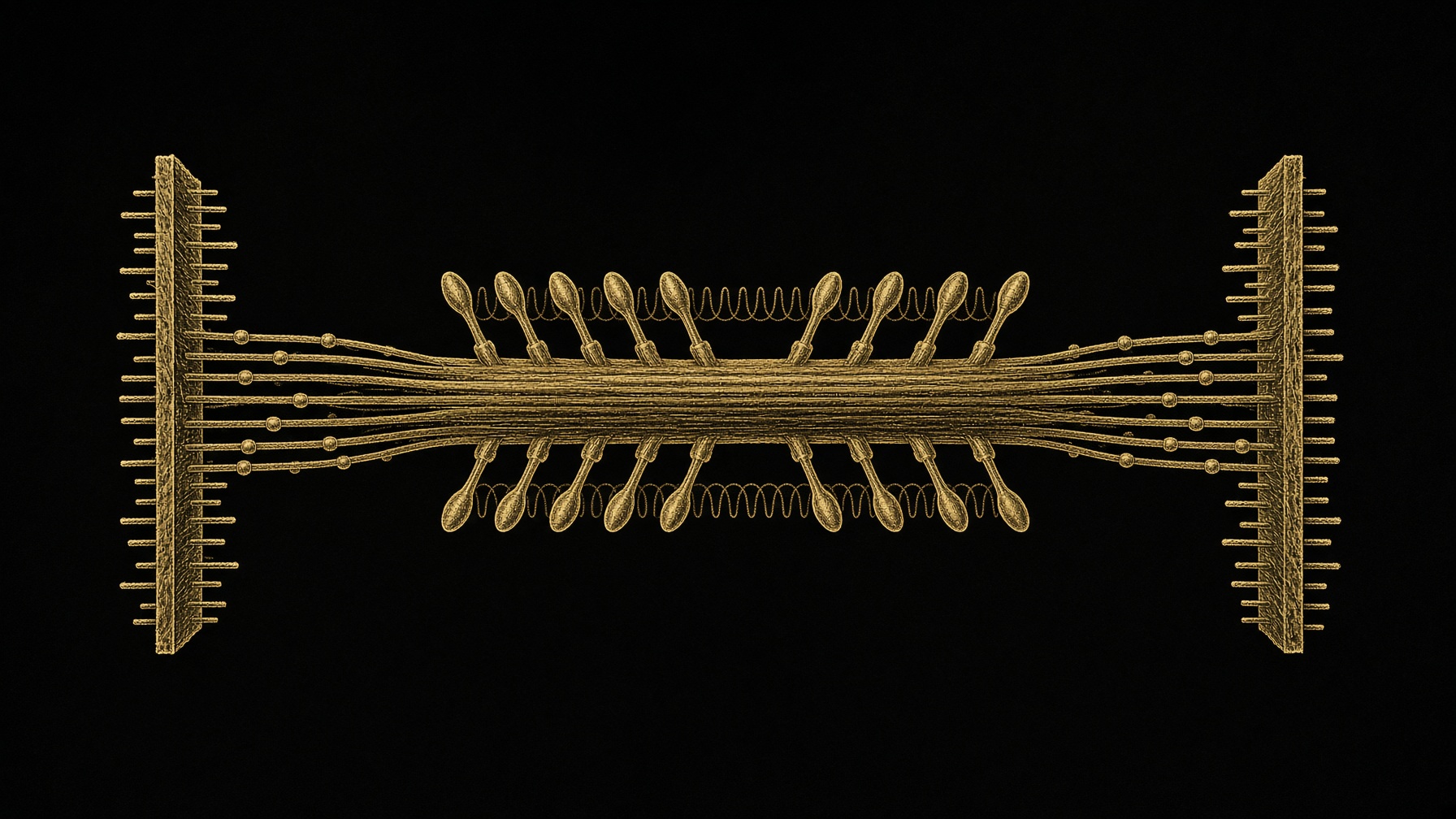
16 min · Bodybuilding
Actin and myosin: the motor inside the fibre
The sarcomere, the thin rope, the thick motor, the eight-nanometre stroke, and the calcium switch that lets a nerve turn all of it on. One ATP per pull.
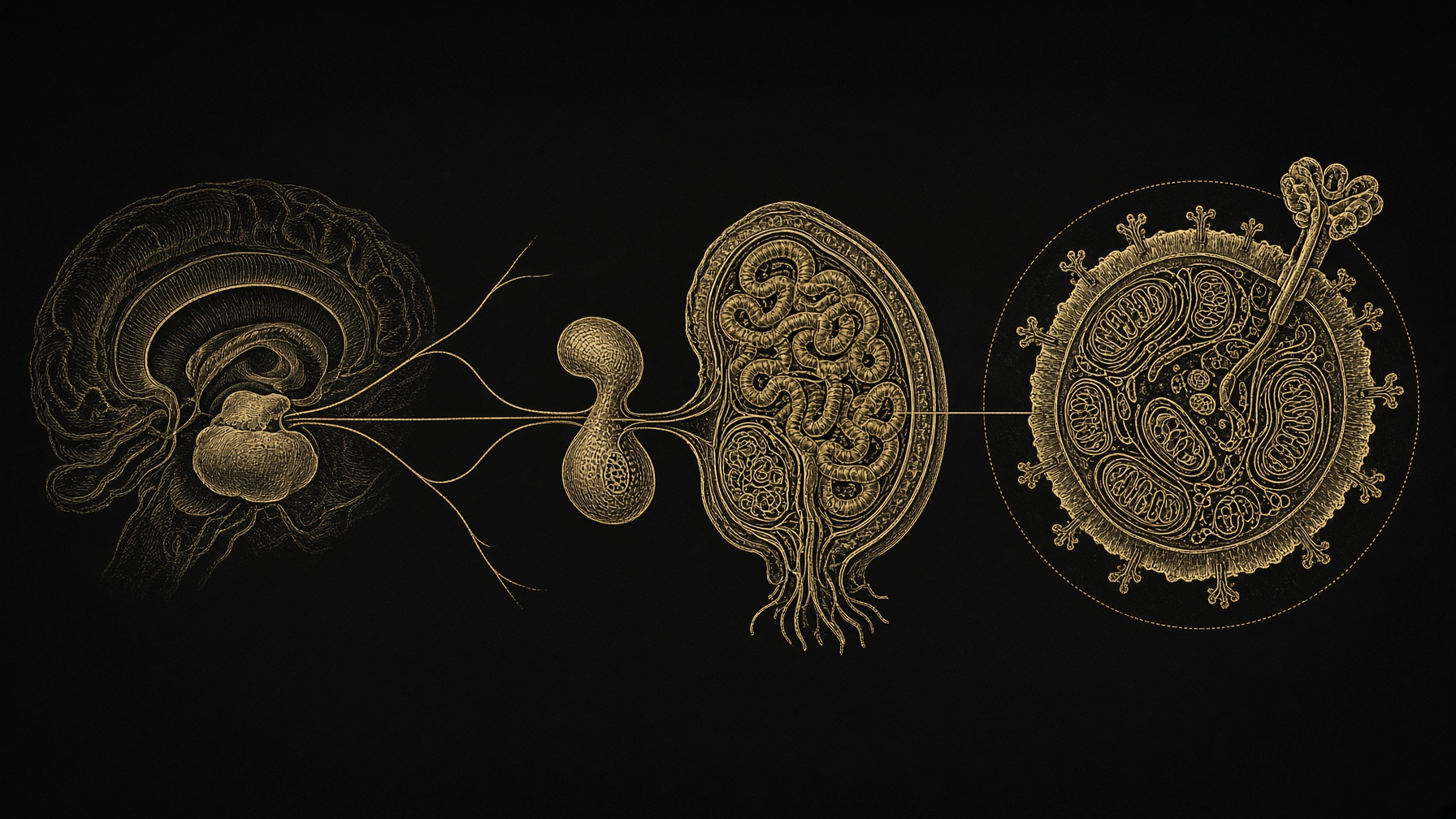
13 min · Bodybuilding
Coming off: SERMs, hCG, and what a supplement cannot do
How a SERM restarts GnRH, how each hCG and FSH option talks to the testis or the ovary, and how zinc, ashwagandha and CoQ10 turn that signal back into testosterone and sperm.
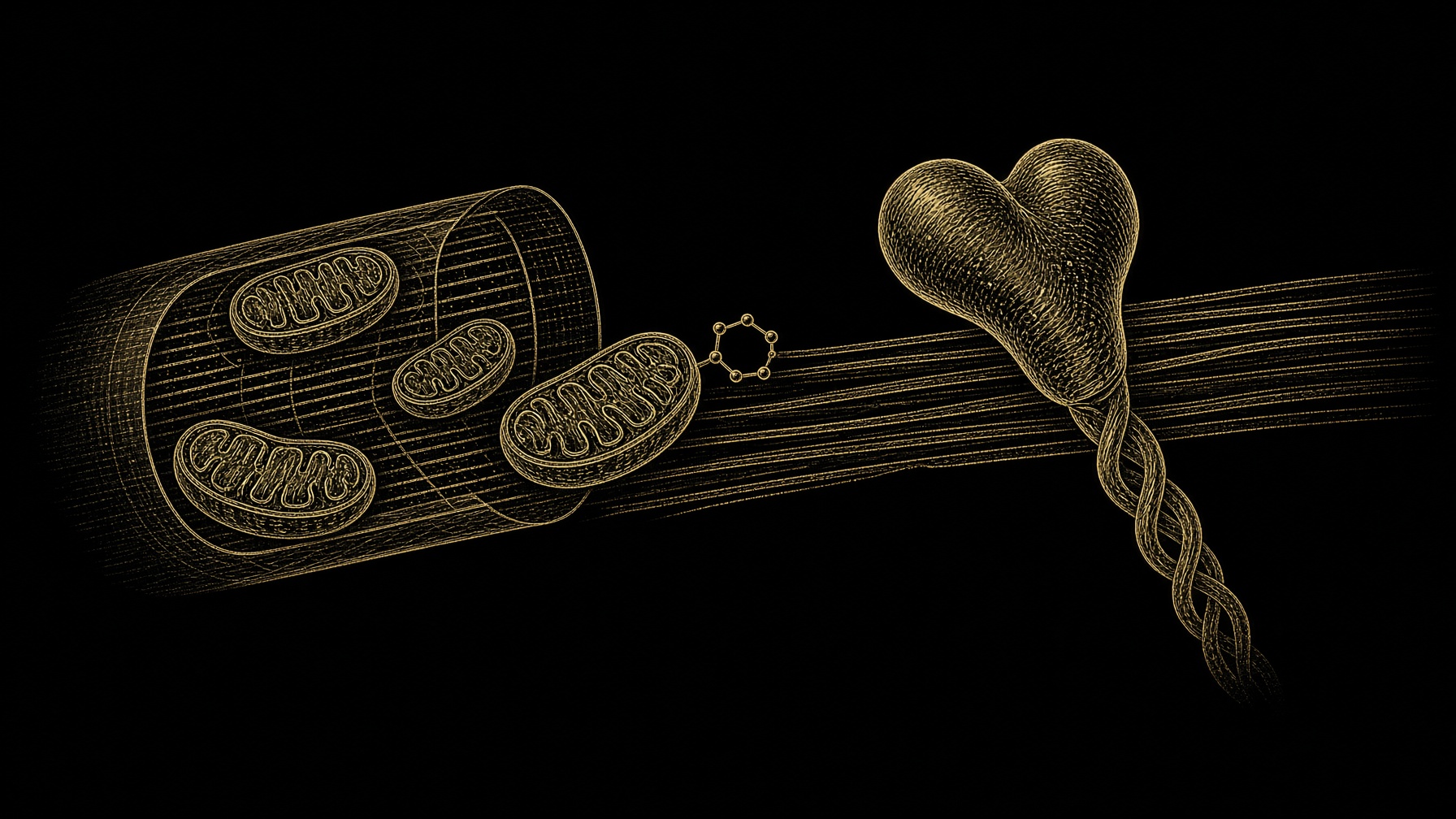
12 min · Bodybuilding
Creatine: the phosphate the fibre keeps next to the myosin
Phosphocreatine rebuilds ATP at the cross-bridge in a fraction of a second. Filling the store buys a few more hard reps. The early weight is water. The myosin still has to be earned.
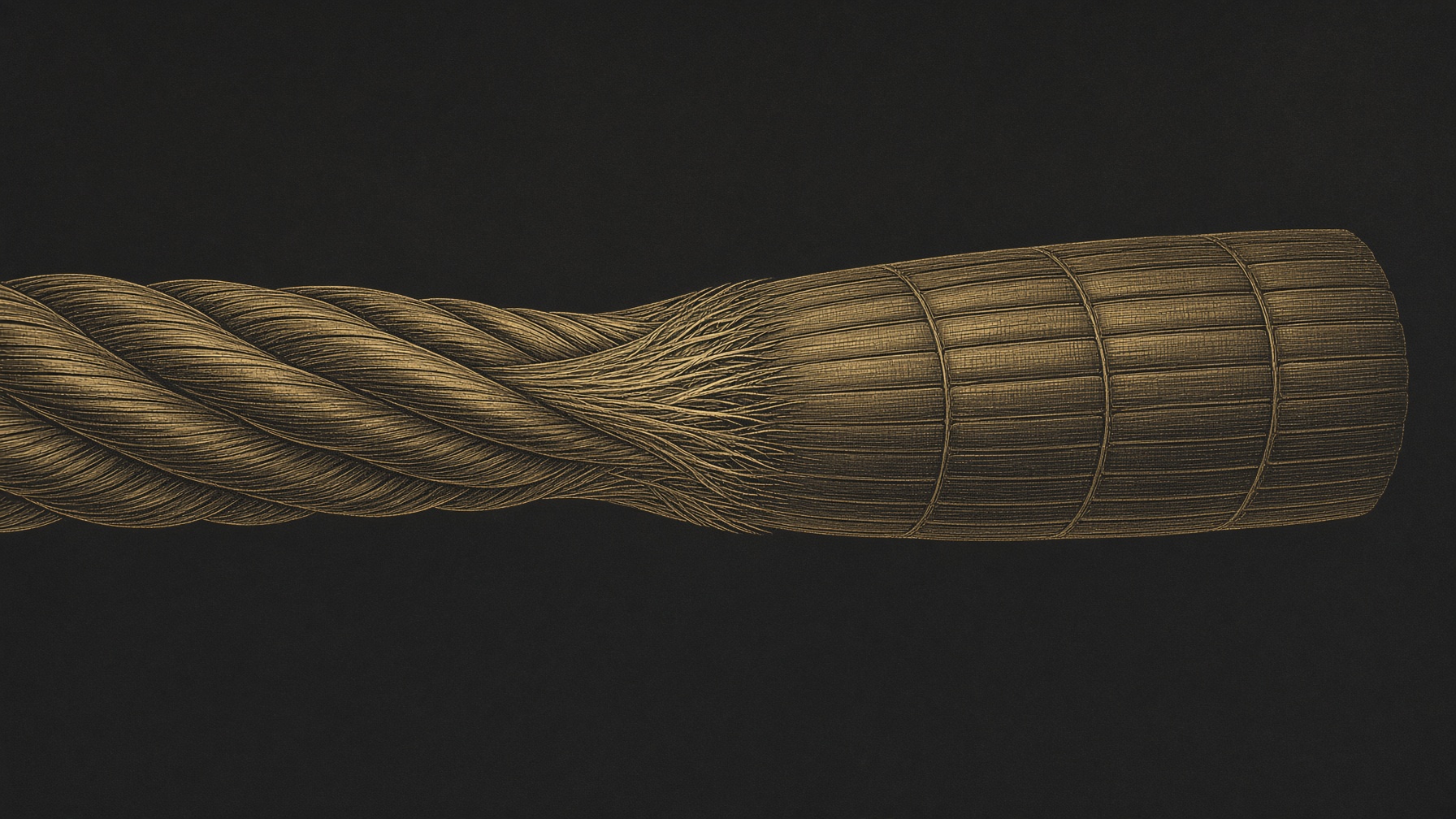
12 min · Bodybuilding
The tendon clock: the cable is older than the muscle
Myofibrils turn over in days. Tendon collagen turns over in months to years. Heavy slow strain is how a tenocyte keeps the rope. A fast jump in strength pulls on tissue that has not caught up.
The page is the mechanism: the protein, what it does in the cell, and the drug or peptide that talks to it.