

Bodybuilding · 5 min · 1,097 words
The hormone spike: the rush after a set isn't the muscle
Testosterone and growth hormone do jump after hard training. The arm that sat in that spike did not grow more. Weeks of a raised baseline are a different story.
What this essay actually tells you
- Post-workout testosterone, growth hormone and cortisol rise for under an hour. West, Burd and Phillips: an arm trained inside the spike from a hard leg session did not grow more, and did not make more myofibrillar protein because of it.
- Bhasin is a different experiment: weeks of a raised testosterone baseline at the androgen receptor. A forty-minute wave is not that integral. Local IGF-1 in a loaded fibre is not the liver's pulse either.
- Women add relative muscle with much lower testosterone. Short rests inflate the hormone graph and drop the load. The spike moves fuel. It is the wrong scoreboard.
What this actually means
A hard workout briefly raises testosterone, growth hormone and cortisol. That rush does not appear to be why the muscle grows. An arm trained during a big spike did not beat an arm trained without one. Testosterone over many weeks can still build muscle. A one-hour bump is not that.
A hard session raises testosterone, growth hormone and cortisol. You can measure it. The story built on top of the measurement is that this spike is why the muscle grows, and that you should train in whatever way makes the spike largest — short rests, huge muscle groups, a drop set to finish — so the hormone shower does the building. That story is tidy. The experiments that tried to spend it did not pay out. West, Phillips and colleagues had people train an arm either on its own, with a small hormonal response, or after a heavy leg session that dragged testosterone, growth hormone and IGF-1 up. The arm that bathed in the spike did not grow more, and it did not synthesise more myofibrillar protein because of the company. The association people quote is mostly 'hard training changes hormones and hard training grows muscle', which is two effects of one session, not one effect causing the other.
In short. Hormones do jump after a hard workout. That jump does not seem to be what grows the muscle. The arm that trained inside a big hormone spike did not grow more than the arm that didn't.
The clocks don't match. A testosterone pulse after squats is back toward baseline inside an hour. Muscle protein synthesis from the session stays up for many hours, and the fibre is thicker only after weeks of that ledger staying positive. Growth hormone pulses in the blood are also brief, and a large share of the growth hormone that matters for a night is the one you release in deep sleep, not the one you squeezed out with a giant set. Cortisol rises too. The testosterone-to-cortisol ratio, treated as a recovery oracle, is a number from two hormones with different jobs measured at an arbitrary minute. It is not a programme. If it falls because you slept badly and trained like a fool, the sleep and the training are the problem. The ratio is a shadow.
In short. The hormone bump lasts about an hour. Building the fibre takes weeks. A ratio of testosterone to cortisol on a post-workout blood test is not a plan.
What actually listens, over weeks
None of this cancels the androgen receptor. Weeks of higher testosterone, in Bhasin's trials, do add lean mass, with and without lifting, and more with lifting. That is a different exposure: a raised baseline, day after day, occupying the receptor in the myonucleus, not a forty-minute wave after leg day. Local IGF-1 made inside the loaded fibre is also a different object from the liver's IGF-1 riding a growth-hormone pulse you induced with short rests. Mechanical tension is what starts that local conversation. You do not need a hormonal thunderstorm in the cubital vein to have it. Androgen receptor content in the muscle, and how many satellites you can recruit, track training status better than the height of Thursday's spike. The drug pages are about occupying that receptor on purpose, for weeks, and about the bill. They are not a permission slip to chase a blood peak with drop sets.
In short. Testosterone over weeks can build muscle. Testosterone for forty minutes after a workout is not that experiment. The fibre cares more about being loaded than about the size of the spike.
Women grow muscle from the same tension with much lower testosterone. That was always the awkward fact for the spike theory. If the post-workout rise were the main anabolic event, the sex difference in that rise would show up as a large difference in relative hypertrophy. It doesn't. Trained women add fibre thickness, relative to what they started with, about as well as trained men. They are not running a smaller version of a male hormone shower and getting a smaller percentage. They are running tension, food, and sleep, on a different androgen baseline. The baseline matters for absolute size. The spike was never the lever.
In short. Women build muscle with far less testosterone. If the post-workout spike were the cause, that would be hard to explain. The loading isn't.
So what is the spike for? It is a stress response that mobilises fuel. Growth hormone and cortisol both lean toward getting fatty acids and glucose out where a working muscle can burn them. Testosterone's acute rise is real and small next to what the testis writes across a day, and smaller still next to a pharmacological exposure. You can train in a way that maximises the spike — little rest, a lot of muscle, a lot of burnout — and get a magnificent blood test and a worse stimulus, because the loads fell and the sets became conditioning. The set piece is the opposite priority: rest long enough to keep the tension. If a method is justified only by the hormone graph, it has the wrong scoreboard. Sleep, food, and the next session will do more for the receptor than the minute you felt 'anabolic' in the car park.
In short. The spike helps move fuel during the session. Chasing the biggest spike usually means worse sets. Sleep and the next session matter more.
The arm did not grow more for having been in the room while the legs emptied the hormone cupboard.— West, Burd, Phillips and colleagues. A systemic spike is not a prescription for the fibre that happened to be nearby.
- Minutes
- the spike
- Hours
- synthesis
- Weeks
- the receptor
Testosterone, growth hormone, cortisol. Back down inside an hour or so.
The fibre is still building because it was loaded, not because the spike is still up.
A raised baseline of testosterone can add mass. A workout blip is not that baseline.
Questions the essay actually answers
- Does the testosterone spike after training build muscle?
- The spike is real and brief. In the West and Phillips experiments, bathing an arm in the hormones from a hard leg session did not make that arm grow more. Weeks of higher testosterone is a different, larger exposure.
- Should I take short rests to boost growth hormone?
- Short rests raise the hormone graph and drop the load. Growth from lifting tracks tension you can repeat, not the height of a one-hour pulse. A lot of the growth hormone that matters is released in deep sleep.
- What about the testosterone-to-cortisol ratio?
- It is two hormones with different jobs, sampled at one moment. It is not a programme. If you are wrecked, fix sleep and training. Don't manage a ratio.
- Why can women gain muscle with less testosterone?
- Because the main signal from the session is mechanical, plus food. The sex difference shows up more in absolute muscle size than in the percentage a trained person can add.
Read next
8 min · Bodybuilding
Androgens: the hormone that talks to the muscle nucleus
Testosterone binds a receptor in the myonucleus, adds nuclei, and asks for food. It is not growth hormone, not a cycle written as an essay, and not a fibre you can buy.
7 min · Bodybuilding
Growth hormone, insulin, myostatin: the other levers on a fibre
After testosterone, the rest of the muscle-drug list is different receptors: a liver hormone, a storage hormone, and a brake. Food decides which of those signals becomes tissue.
9 min · Bodybuilding
What the set is doing: failure, volume, rest, range
Why the last reps matter more than the first, why ten hard sets is a floor and not a personality, and why a short rest quietly deletes the tension you came for.
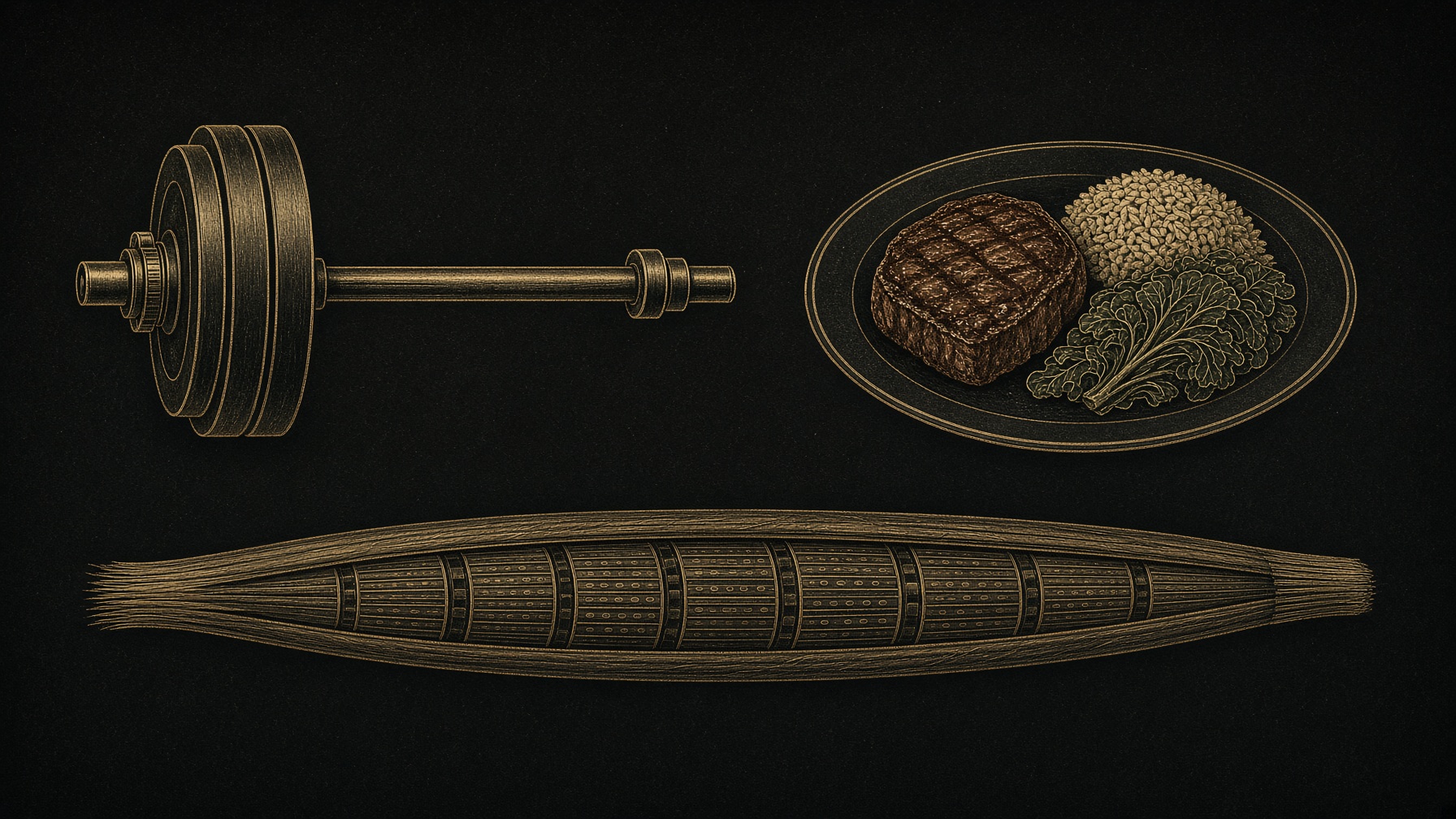
9 min · Bodybuilding
Food and training: how to spend the fibre you have
The practical half of the muscle series. Recruit the fast fibres, feed them, sleep, and stop asking a drug to do a week's work.
More in this desk

16 min · Bodybuilding
What each steroid does at the cell
Testosterone, nandrolone, trenbolone, boldenone, the DHT cousins, the orals. One receptor. Why two of them are not two muscles, what that asks of food, and what the side effects actually are.
14 min · Bodybuilding
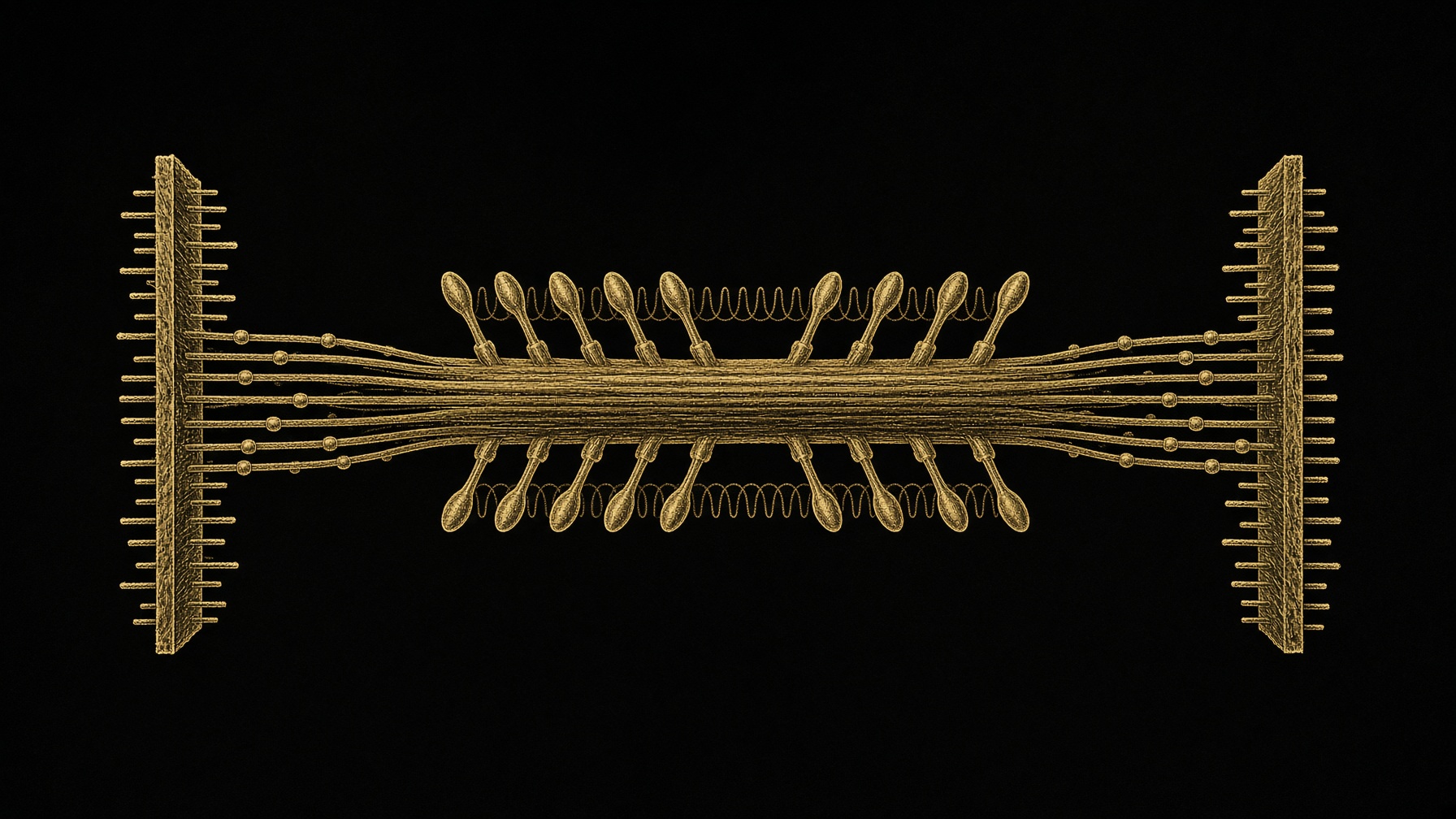
Actin and myosin: the motor inside the fibre
The sarcomere, the thin rope, the thick motor, the eight-nanometre stroke, and the calcium switch that lets a nerve turn all of it on. One ATP per pull.
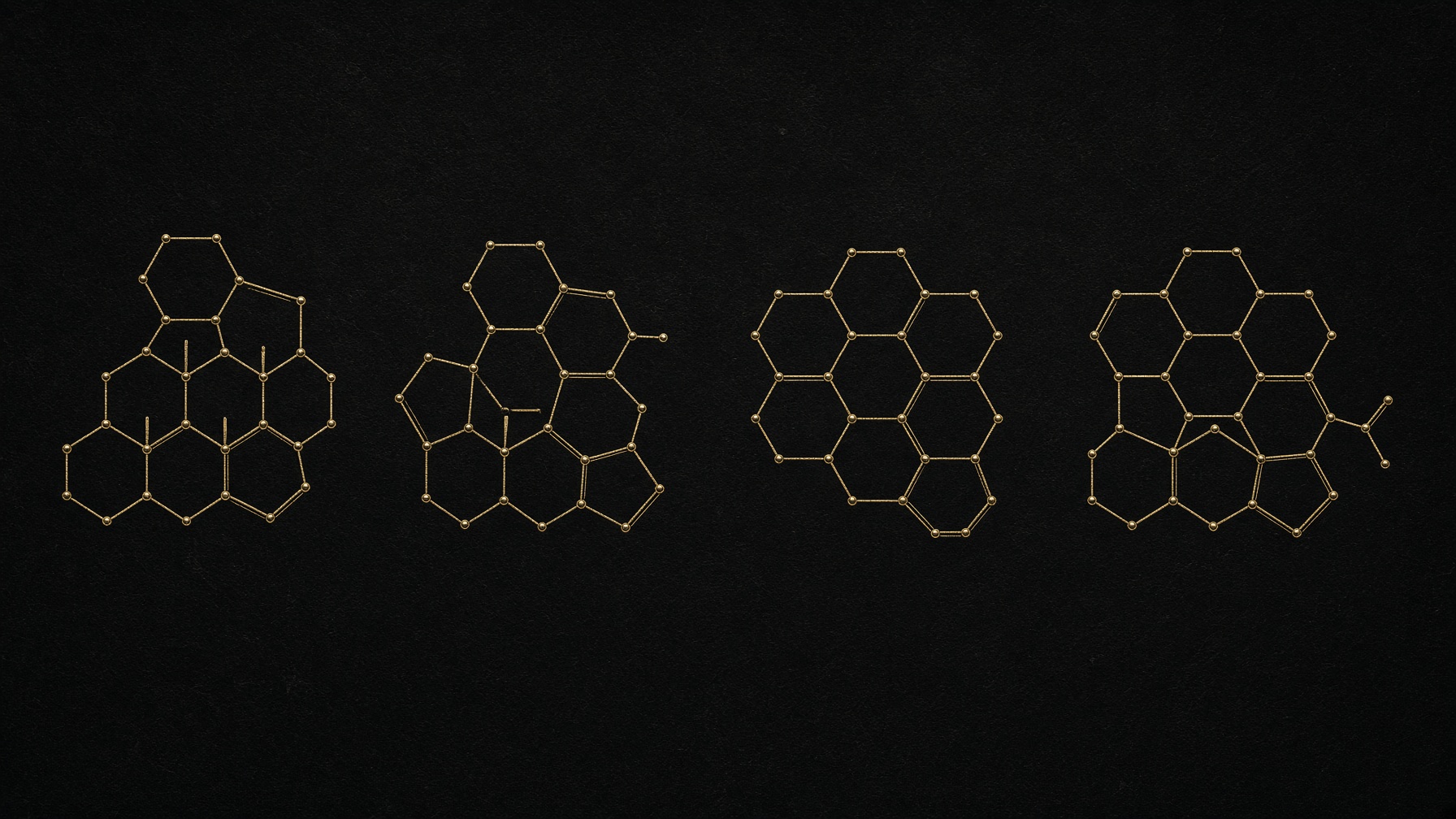
10 min · Bodybuilding
Steroid families: four chemistries, one receptor
Testosterone, the 19-nors, the DHT-derived, and the orals that rent the liver. Wet and dry are oestrogen and water, not two kinds of muscle.
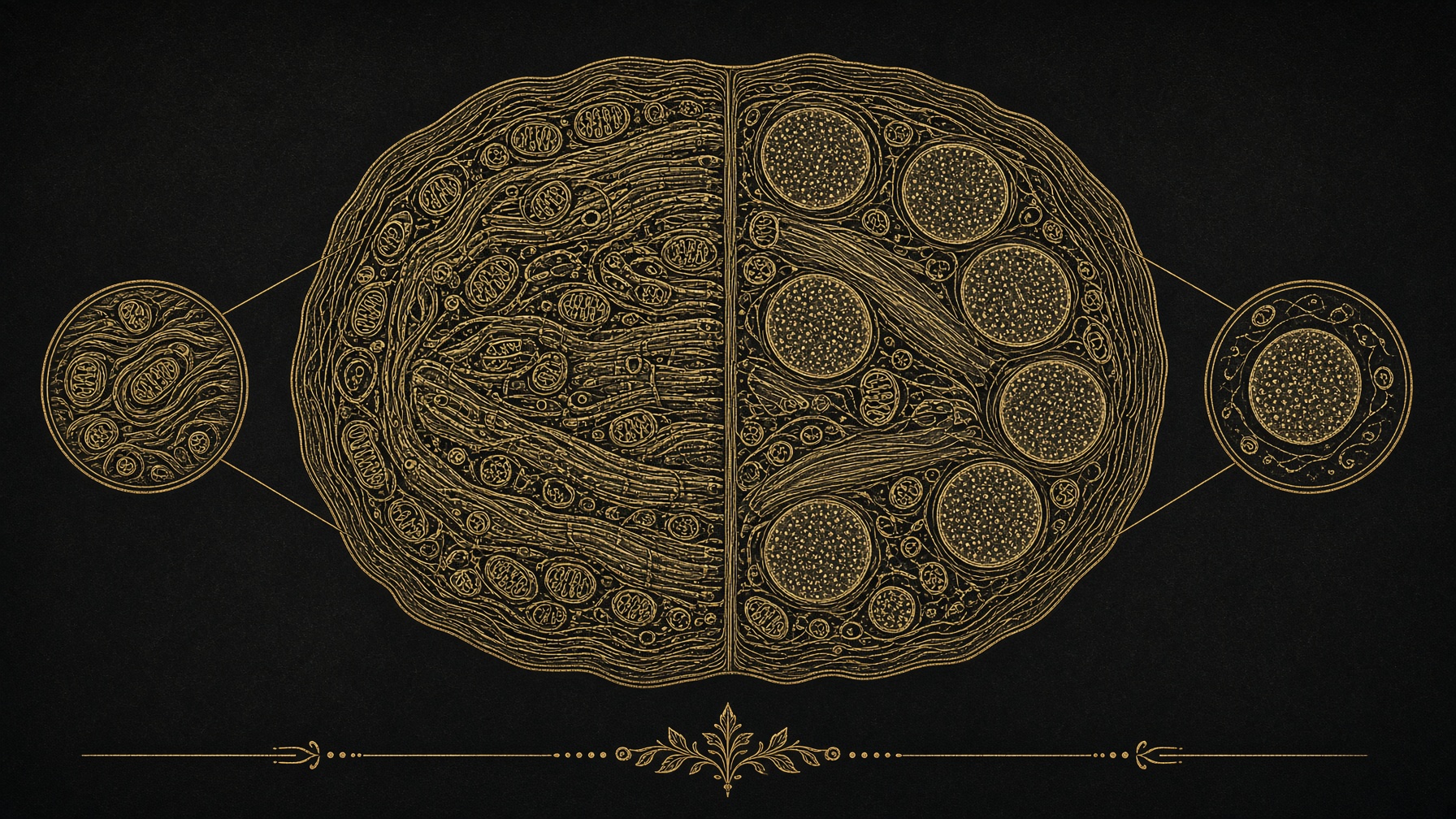
9 min · Bodybuilding
Type I and type II: the two fibres a muscle actually is
Slow fibres last. Fast fibres throw the force. Diet, drugs and workouts all land on that split — so the muscle series starts with the myosin, not the vial.
Essays describe published research. They are not medical advice and they do not authorise human use of any catalogue item.