


Bodybuilding · 6 min · 1,304 words
Enclomiphene: the isomer that asks the testis to work
Clomiphene is two drugs. Enclomiphene blocks oestrogen feedback in the hypothalamus so LH rises. Zuclomiphene lingers. Neither is testosterone, and neither lowers the oestradiol number.
What this essay actually tells you
- Enclomiphene is the trans isomer of clomiphene. It blocks hypothalamic oestrogen feedback so LH and FSH rise. Zuclomiphene is the slower, more oestrogenic half.
- It asks a working testis to make testosterone. It does nothing useful when LH is already high. It is the opposite of injecting testosterone, which suppresses sperm.
- The FDA did not approve it. It does not lower the oestradiol number. Tamoxifen's useful antagonism is in the breast. An aromatase inhibitor is what lowers the number.
What this actually means
Enclomiphene is the trans half of clomiphene. It blocks oestrogen's feedback in the brain, LH rises, and a working testis makes more testosterone and sperm. The other half, zuclomiphene, is more oestrogenic and lasts longer. It was not approved as a medicine. It does nothing for a testis that is already being shouted at by a high LH.
Enclomiphene is the trans isomer of clomiphene. Clomiphene, the fertility drug, is a mixture of that trans isomer and the cis isomer, zuclomiphene. They are the same atoms arranged as mirror images, and the body does not treat mirror images as the same drug. Enclomiphene occupies the oestrogen receptor in the hypothalamus and blocks oestradiol's negative feedback. Kisspeptin and GnRH are released from that restraint, the pituitary makes more LH and FSH, and a testis that still works makes more testosterone and more sperm. Zuclomiphene is cleared more slowly and is the more oestrogenic of the pair. When someone says clomiphene felt like oestrogen for a week after they stopped, they are often describing the isomer that stayed behind.
In short. Enclomiphene is one half of clomiphene. It blocks oestrogen's 'enough' signal in the brain, so LH rises and the testis makes more testosterone. The other half, zuclomiphene, hangs around and acts more like oestrogen.
This is not testosterone. Testosterone from outside switches the same axis off. Enclomiphene switches the asking-signal up, and then you depend on the testis to answer. If LH is already high and testosterone is low, the pituitary is already asking and the gland is not answering. More asking will not build Leydig cells that are not there. That is why the drug was studied for secondary hypogonadism, the picture where LH is low or inappropriately normal and the testis would work if it were asked. Repros took enclomiphene forward as Androxal. The FDA did not approve it. The trials showed testosterone rising while sperm counts were preserved better than they are on exogenous testosterone. Lack of approval is a regulatory fact. The receptor fact is older than the application.
In short. It only works if the testis can still answer. It is the opposite of injecting testosterone, which tells the brain to stop asking. The FDA did not approve Androxal. The trials did raise testosterone and tended to keep sperm, because LH rose and the Leydig cell answered.
How it differs from tamoxifen
Both are selective oestrogen-receptor modulators. The selectivity is the point, and it is not the same map. Tamoxifen antagonises the receptor in breast, which is why it is the drug with actual data in male gynaecomastia, and in the hypothalamus it can also lift gonadotrophins. Enclomiphene's useful antagonism is that hypothalamic one. In bone and uterus the two molecules do not behave as clones. Raloxifene was built to be an antagonist in breast and an agonist in bone. Swapping the names because they are all 'SERMs' is how a tissue you were not thinking about receives a ligand. None of them lowers the oestradiol concentration in the blood. They occupy the receptor. Anastrozole, letrozole and exemestane are the drugs that lower the concentration, by sitting on the enzyme. A man can have a normal oestradiol number and a blocked receptor, or a low number and an open receptor. Symptoms follow the tissue, not the nickname.
In short. Tamoxifen blocks the receptor in the breast. Enclomiphene's main useful block is in the brain, so LH rises. Neither drug lowers the oestradiol number. An aromatase inhibitor is what lowers the number.
Fertility is the comparison that makes the class obvious. Exogenous testosterone lowers FSH and sperm can fall to nothing. Enclomiphene, in the studies Kaminetsky, Wiehle and others published, raised testosterone in men with secondary hypogonadism while sperm parameters held up in a way testosterone replacement did not. That is the pharmacological reason anyone bothers to split the isomer out of clomiphene. It is also why enclomiphene cannot be the recovery tool for a testis that has been silent for a long time and has not yet restarted its own machinery. LH in the blood is not spermatogenesis. Sperm take roughly seventy to ninety days. A hormone panel two weeks after a SERM is a pituitary result. It is not a semen analysis.
In short. Compared with injected testosterone, enclomiphene raises testosterone while being kinder to sperm in the studies. Sperm still take three months. A blood test next week is not a fertility result.
The isomer that leaves, and the isomer that stays
Enclomiphene is cleared in about a day. Zuclomiphene stays for weeks. A tablet of ordinary clomiphene is therefore a short signal and a long signal in the same swallow. Stop clomiphene and the enclomiphene is gone quickly, while zuclomiphene is still occupying oestrogen receptors and still behaving as the more oestrogenic twin. That is a plausible reason some men describe feeling 'oestrogenated' well after the last tablet, and a reason the isolated trans isomer was worth making. It is also a reason blood tests the week you stop a mixed tablet are not a clean look at life without the drug. The long isomer is still there. Visual symptoms, floaters and shimmering, are an uncommon clomiphene effect and a reason the drug is not a sweet. They are reported with the mixture. They are a reminder you are ligating a receptor in more places than the hypothalamus.
In short. Enclomiphene is gone in about a day. Zuclomiphene lingers for weeks, which is why clomiphene can still feel oestrogenic after you stop. Visual sparkles are uncommon and real. The drug is not only acting in the brain.
Put it on the ladder with the other ways of asking the testis to work. Kisspeptin is the permit above GnRH. Enclomiphene lifts oestrogen's foot off that permit, so kisspeptin and GnRH can rise if the neurons are able. hCG skips the brain and mimics LH at the Leydig cell, which is why it can make testosterone even when the pituitary is silent, and why it also raises intratesticular testosterone enough to matter for sperm. Enclomiphene cannot do that bypass. If the pituitary will not release LH, enclomiphene has nothing to amplify. If the testis will not answer LH, neither enclomiphene nor a higher LH will build testosterone, and hCG may also fail. Men coming off a long run of exogenous androgen are often in a silent phase where the hypothalamus has not restarted. A SERM is a push on a system that is capable of being pushed. It is not a starter motor for a system that has been switched off for a year. The coming-off essay is the rest of that ladder. Sperm, either way, remain a three-month manufacture.
In short. Enclomiphene only works if the brain can still send LH and the testis can still answer. hCG skips the brain and mimics LH at the testis. Neither restarts a system that has been silent for a year by magic, and sperm still take three months.
- Enclomiphene
- trans isomer
- Zuclomiphene
- cis isomer
- Tamoxifen
- different map
- Testosterone
- the opposite
Blocks hypothalamic oestrogen feedback. LH and FSH rise.
Cleared slowly. The more oestrogenic half of clomiphene.
Antagonist in breast. Also can lift LH. Not the same tissues.
Suppresses LH and FSH. Sperm fall. Enclomiphene asks the testis to work.
Questions the essay actually answers
- What is enclomiphene?
- The trans isomer of clomiphene. It blocks oestrogen receptors in the hypothalamus, so GnRH, LH and FSH rise, and a working testis makes more testosterone. It is not testosterone.
- How is enclomiphene different from clomiphene?
- Clomiphene is a mixture of enclomiphene and zuclomiphene. Zuclomiphene lasts longer and is more oestrogenic. Enclomiphene is the isomer that does the LH-raising job with less of that lingering oestrogenic twin.
- Is enclomiphene FDA approved?
- No. It was developed as Androxal for secondary hypogonadism and was not approved. The published trials did show testosterone rising with sperm counts preserved better than on testosterone replacement.
- Does enclomiphene work if LH is already high?
- That pattern means the pituitary is already asking and the testis is not answering. Pushing LH higher does not repair a testis that cannot respond. The drug fits low or inappropriately normal LH.
- Does enclomiphene lower oestradiol?
- No. It blocks the receptor in some tissues. Aromatase inhibitors lower the amount of oestradiol. Tamoxifen is the SERM with the clearer breast antagonism. They are three different actions.
Read next
13 min · Bodybuilding
Coming off: SERMs, hCG, and what a supplement cannot do
How a SERM restarts GnRH, how each hCG and FSH option talks to the testis or the ovary, and how zinc, ashwagandha and CoQ10 turn that signal back into testosterone and sperm.
7 min · Bodybuilding
SHBG: the protein that decides how much testosterone is free
The liver builds a cage. Most testosterone sits in it. Oestrogen and thyroid hormone make more cage. Insulin and androgens make less. The free fraction is the only part the muscle can use.

12 min · Bodybuilding
The bill outside the fibre: axis, blood, liver, heart
The androgen receptor is in more places than the biceps. Fertility, HDL, haematocrit, the left ventricle, the voice, the tendon. A map of the tissues. Not a course.

7 min · Wellbeing
HIM and HER FERTILITY, at the cell
How CoQ10, carnitine, folate, NAC, zinc and selenium change a sperm's midpiece, its DNA, an egg's mitochondria, and the neural tube.
4 min · Peptide research
Kisspeptin: the peptide that lets puberty, and every pulse after it, happen
KISS1 neurons permit GnRH. Without them there is no puberty. Testosterone, oestradiol and a long energy deficit all quiet the same cells. hCG and enclomiphene sit on different rungs.
8 min · Bodybuilding
Aromatase: the enzyme that makes oestradiol, and the three drugs that sit on it
Anastrozole, letrozole and exemestane are not the same chair. They lower oestradiol by occupying CYP19A1. They do not close the progesterone door, and men still need some oestradiol.
More in this desk

18 min · Bodybuilding
What each steroid does at the cell
Testosterone, nandrolone, trenbolone, boldenone, the DHT cousins, the orals. One receptor. Why two of them are not two muscles, what that asks of food, and what the side effects actually are.
16 min · Bodybuilding
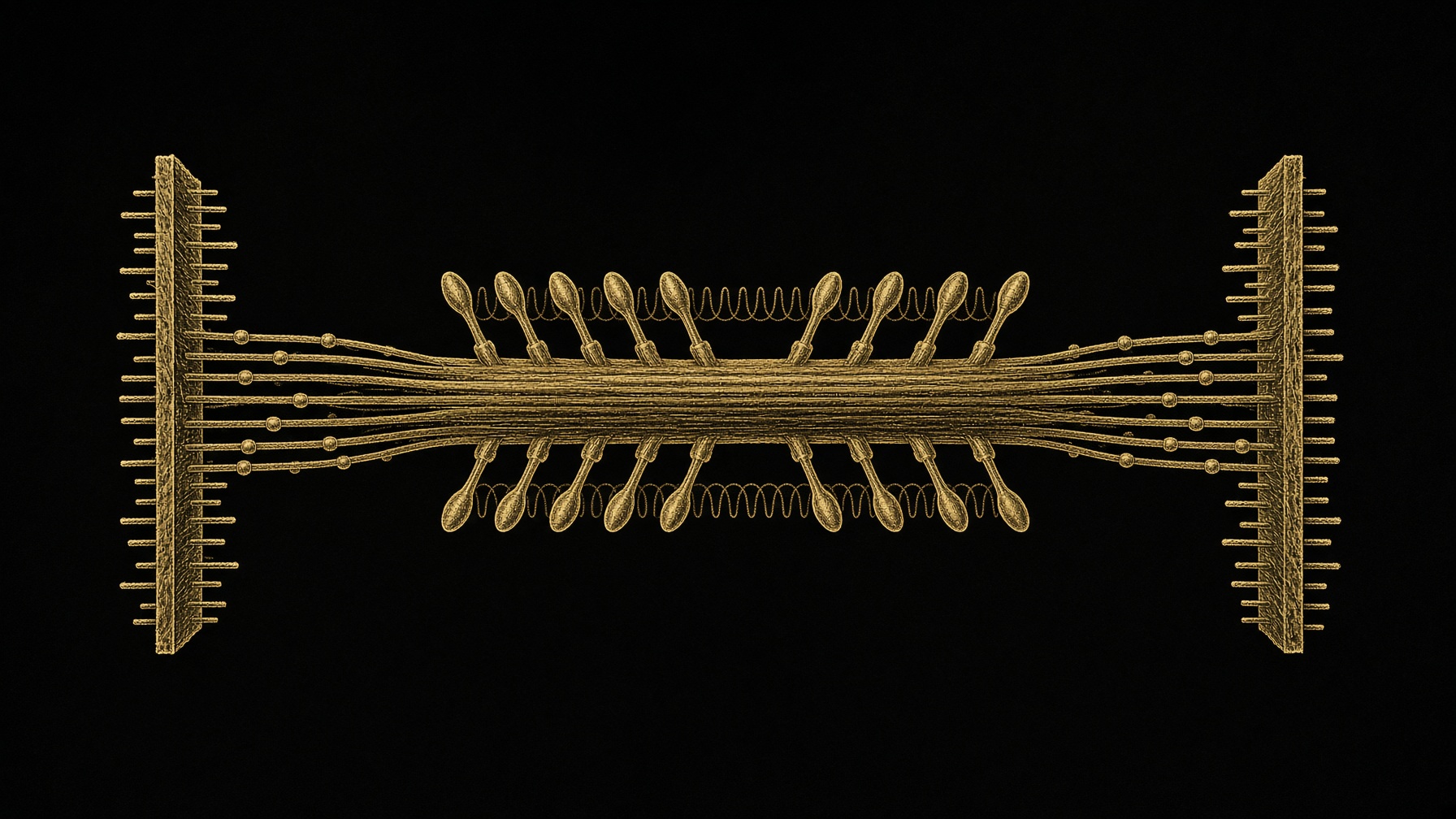
Actin and myosin: the motor inside the fibre
The sarcomere, the thin rope, the thick motor, the eight-nanometre stroke, and the calcium switch that lets a nerve turn all of it on. One ATP per pull.
12 min · Bodybuilding
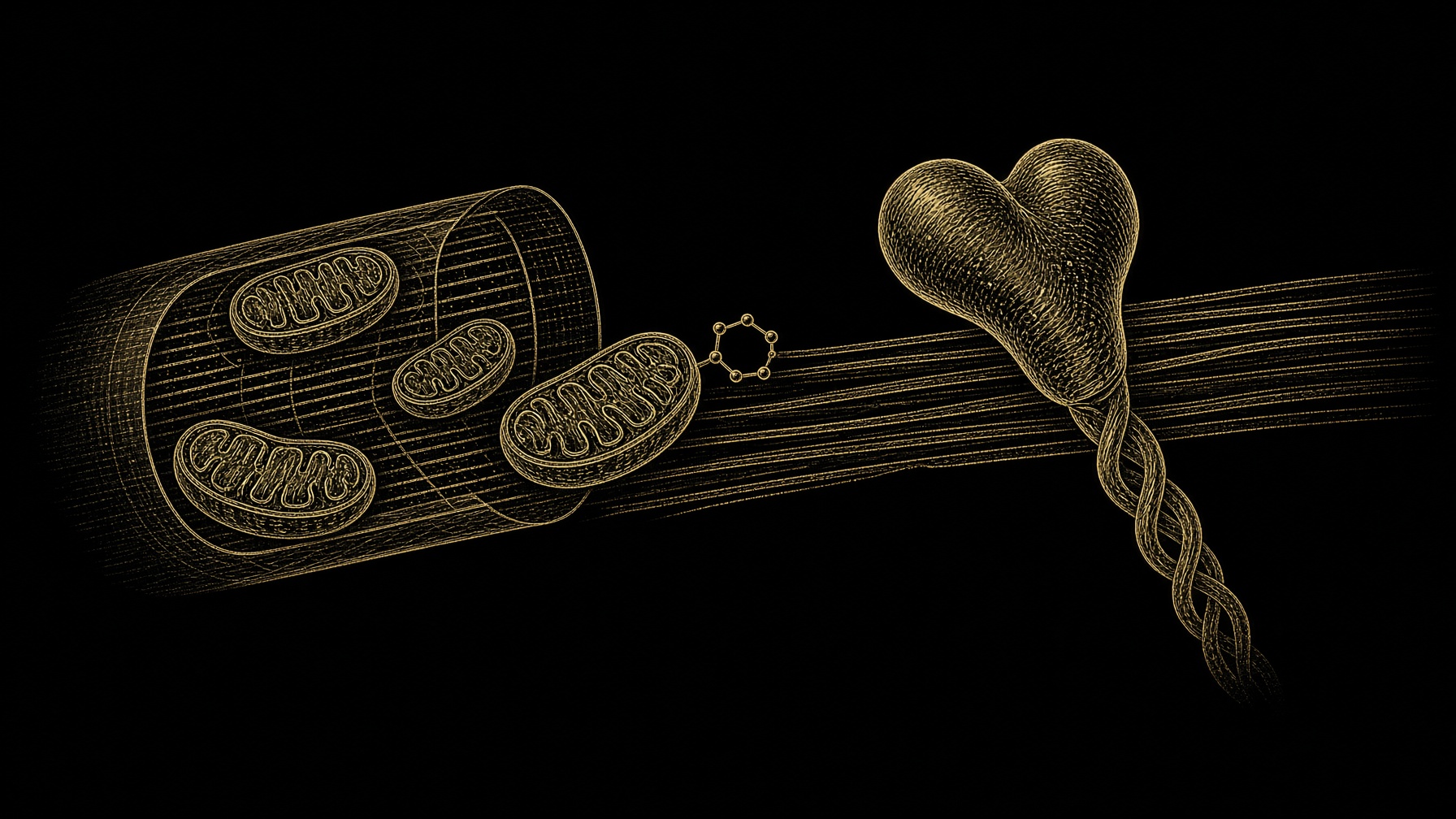
Creatine: the phosphate the fibre keeps next to the myosin
Phosphocreatine rebuilds ATP at the cross-bridge in a fraction of a second. Filling the store buys a few more hard reps. The early weight is water. The myosin still has to be earned.
12 min · Bodybuilding
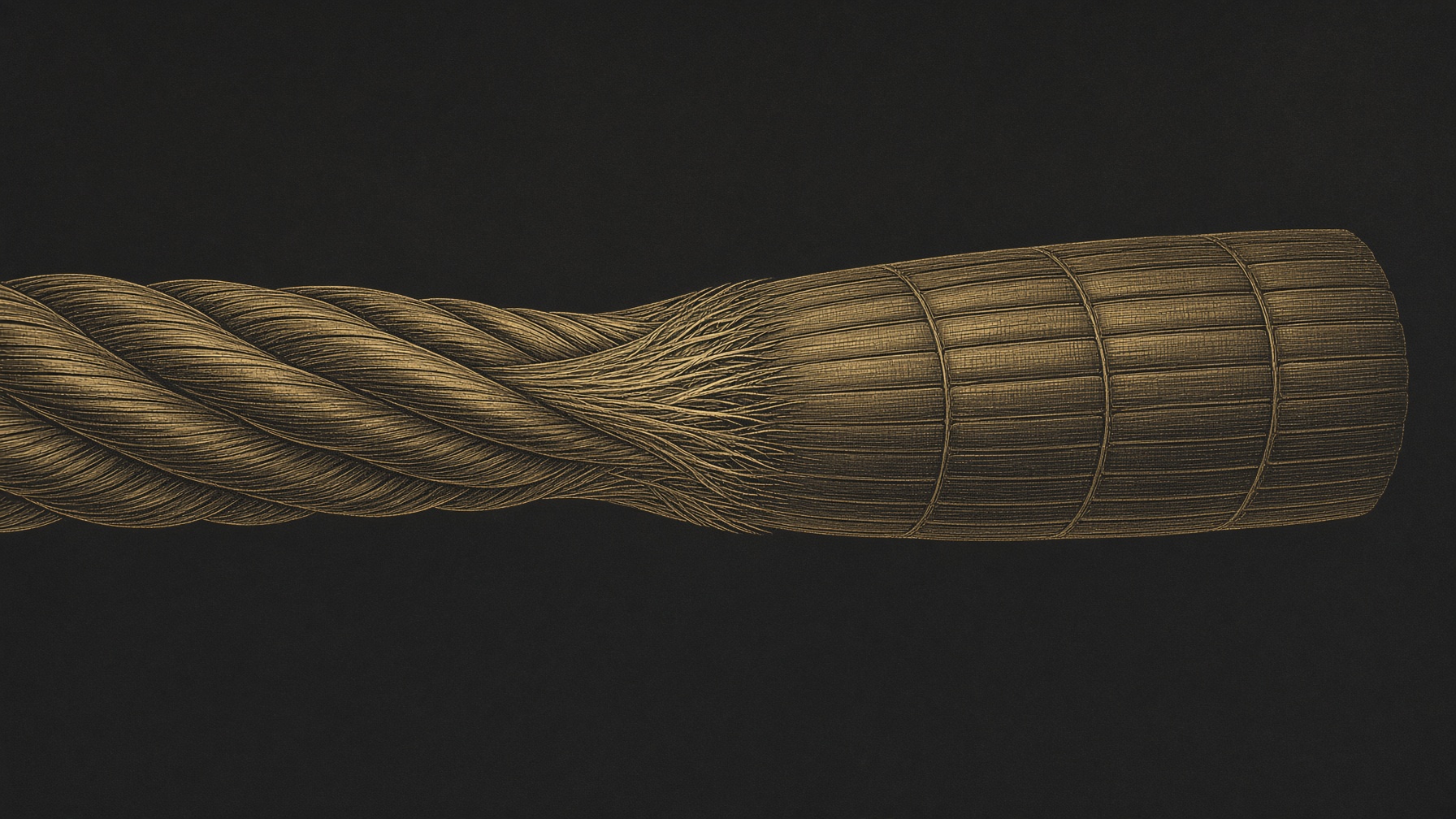
The tendon clock: the cable is older than the muscle
Myofibrils turn over in days. Tendon collagen turns over in months to years. Heavy slow strain is how a tenocyte keeps the rope. A fast jump in strength pulls on tissue that has not caught up.
The page is the mechanism: the protein, what it does in the cell, and the drug or peptide that talks to it.