

Bodybuilding · 7 min · 1,560 words
Clenbuterol: one receptor opens the fat cell and bills the heart
Clenbuterol sits on the beta-2 receptor, raises cyclic AMP, and lets a fat cell open its store. Muscle shakes because it wears the same receptor. The heart does too. Leave it occupied and the cell takes the receptor inside.
What this essay actually tells you
- Clenbuterol occupies the beta-2 receptor, raises cyclic AMP, and lets hormone-sensitive lipase open a fat droplet. It does not bind the androgen receptor.
- The same receptor is on skeletal muscle, which is the tremor, and on the heart. It also drives potassium into muscle, so the blood level falls.
- Continuous occupancy pulls the receptor inside via beta-arrestin, which is why the effect fades. Salbutamol hits the same lock and then leaves. Clenbuterol stays about a day.
What this actually means
Clenbuterol turns on the beta-2 receptor. In a fat cell that opens the fat store. In muscle it causes the shake. In the heart it raises the rate, and it pulls potassium out of the blood into muscle. It is not testosterone. If you never let the receptor rest, the cell removes it and the fat-loss effect fades.
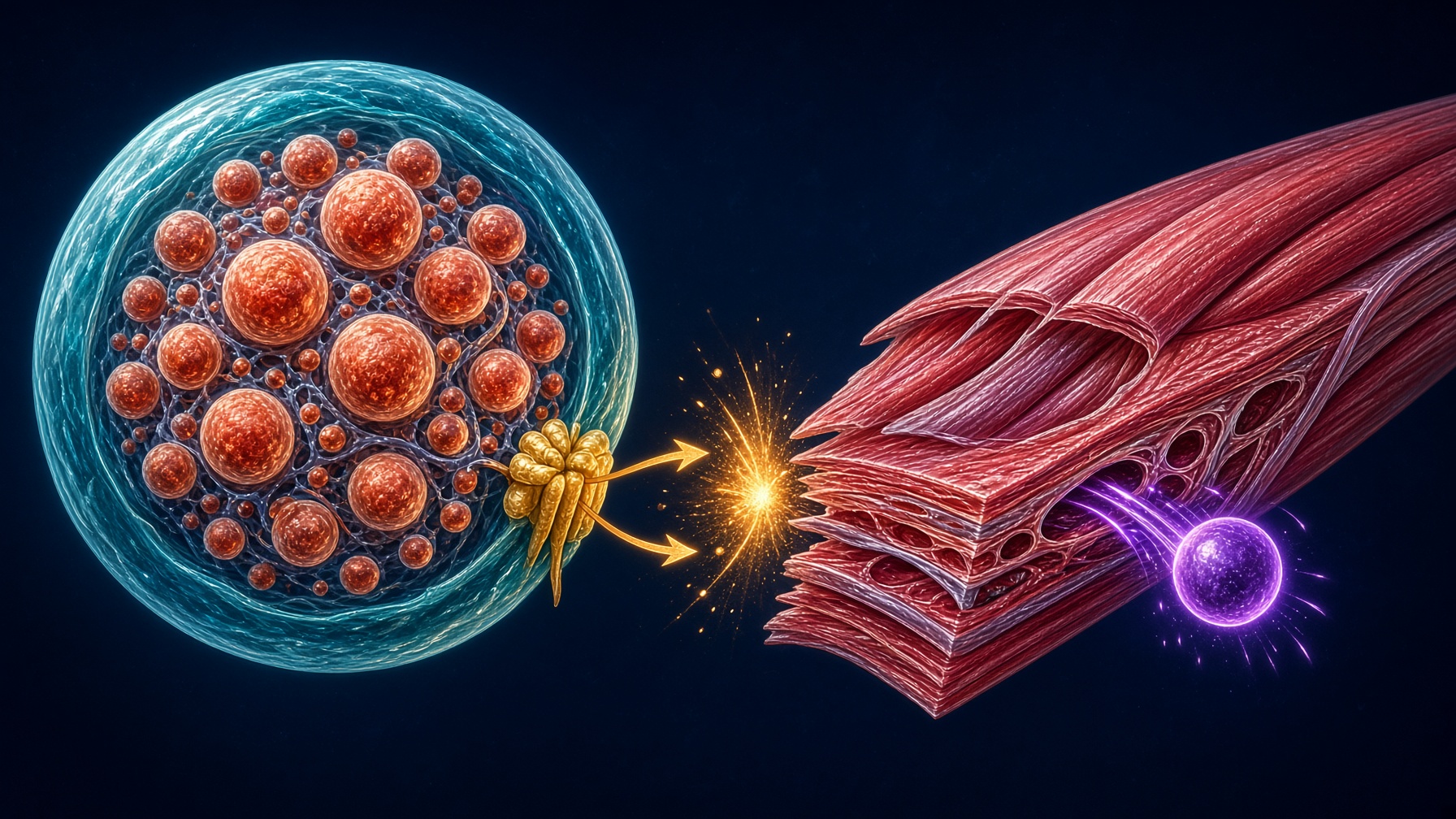
Clenbuterol is a long-acting agonist of the beta-2 adrenergic receptor, ADRB2. The receptor is a seven-pass protein coupled to a Gs protein. When the drug sits in the pocket, Gs lets a membrane enzyme, adenylyl cyclase, turn ATP into cyclic AMP. Cyclic AMP wakes protein kinase A. That kinase is the hand that does the useful work and the expensive work, and it does both because the same receptor is nailed into more than one kind of cell. In a fat cell it phosphorylates perilipin and hormone-sensitive lipase, the coat and the scissors on a lipid droplet, so stored triglyceride comes apart into fatty acids and glycerol the blood can carry. In a skeletal muscle fibre the same rise in cyclic AMP is why the hands shake. In a heart muscle cell it is why the rate climbs and, if you keep the occupancy up for long enough, why the wall has been seen to thicken in animals. None of that is an androgen receptor story. Clenbuterol does not bind the androgen receptor, it does not aromatise, and it does not suppress LH. People file it next to steroids because it shows up in the same conversations. The protein it occupies is a different protein.
In short. Clenbuterol switches on the beta-2 receptor. That raises a small messenger, cyclic AMP, which opens fat stores. The same receptor sits on muscle and on the heart, which is the shake and the pulse. It is not a testosterone drug.
The fat-cell half is the half everyone buys it for, and it is real chemistry, with a ceiling. Adult human white fat listens mostly to beta-1 and beta-2. Beta-3, the receptor people got excited about in rodents, is a quieter voice in human subcutaneous fat. Clenbuterol is beta-2 selective, so it is talking to a receptor the fat cell already uses when adrenaline arrives. Protein kinase A phosphorylates perilipin-1, the protein coat cracks, and hormone-sensitive lipase can reach the triglyceride. Fatty acids leave, albumin carries them, and a working muscle or a liver can burn them. That is lipolysis. It is not the creation of a calorie. If the fatty acids are re-esterified because you ate through the signal, the droplet is rebuilt and the morning scale is unimpressed. Adrenaline already knew this trick. The drug is a long, blunt version of a hormone you make when you are cold or afraid.
In short. In a fat cell the drug lets lipase cut stored fat into acids the blood can carry. If you eat those calories back, the fat cell puts them away again. Adrenaline does the same job, briefly, for free.
Why the hands shake, and why the heart is in the room
Skeletal muscle is covered in beta-2 receptors. That is the tremor. A small rise in cyclic AMP in the fibre changes calcium handling and the way the fibre holds a low-level contraction, so a hand that was steady starts to oscillate. Bodybuilders treat the shake as a side effect to be endured. It is the receptor announcing that it has been occupied in the tissue they actually train. The same occupancy, in animals, is why clenbuterol became a repartitioning agent in livestock: less fat, and a real increase in muscle protein, large enough that residues in meat became a regulatory problem. The human muscle data are much thinner than the cattle data. A person can look harder because the subcutaneous fat is leaving and the muscles are full of glycogen and a bit of fluid. That is not the same sentence as a fibre adding sarcomeres the way testosterone asks it to. If the training and the food are already doing that job, a beta-2 agonist does not get to take the credit for the myosin.
In short. The shake is the drug hitting the muscle you train. In animals it can also spare and build muscle. In people the obvious change is usually the fat leaving, not a new set of filaments.
The heart carries beta-1 and beta-2. Clenbuterol prefers beta-2, but at the concentrations people chase for fat loss the preference is not a wall. Rate rises. Contractility rises. The heart is doing extra work while potassium is being driven into skeletal muscle, because beta-2 receptors also speed the sodium-potassium pump on the fibre. Serum potassium falls. A low potassium and a fast, irritable myocardium is the combination that shows up in the case reports: arrhythmia, a long QT in someone who already had one, a collapse that looked like a panic attack until the blood gas came back. Salbutamol, the blue inhaler, is the same receptor used for minutes in a wheeze, then gone. Clenbuterol's half-life is on the order of a day, so yesterday's dose is still in the chair when today's arrives. That is the entire difference between an asthma drug you inhale and a tablet that never lets the receptor go home.
In short. The heart has the same family of receptors, so the pulse rises. The drug also pushes potassium into muscle, and low potassium plus a fast heart is how people get into trouble. Unlike a blue inhaler, clenbuterol hangs around for about a day.
Why it stops working if you never take your foot off it
A beta-2 receptor that is occupied for days does what G-protein receptors do. A kinase, GRK2, phosphorylates the tail. Beta-arrestin binds that phosphate, uncouples the receptor from Gs, and walks it off the membrane into the cell. Fewer receptors face the drug. The cyclic AMP peak shrinks. The tremor eases, which people read as tolerance, and the lipolysis eases with it, because it was the same messenger. This is tachyphylaxis, and it is why the gym folklore is two weeks on and two weeks off. The folklore is a clumsy answer to a real piece of cell biology. I am not writing the calendar. The biology is that continuous occupancy is how you turn the signal down, and a gap is how new receptors return to the surface. Ketotifen, an antihistamine some people add because it can slow that internalisation in other settings, is another drug with its own sedation and its own receptor sheet. It does not change the fact that the heart was occupied on the days the fat cell was.
In short. Leave the receptor switched on and the cell pulls it inside. The shake fades and so does the fat-loss signal, because they were the same switch. A break lets receptors come back. That is the whole of the on-off rumour.
Thyroid hormone is the other drug people put in the same sentence, and it is a different sentence. Liothyronine, T3, binds a nuclear receptor and changes which genes a cell transcribes. Metabolic rate rises because pumps and uncoupling change over days, not because a droplet opened this afternoon. Clenbuterol does not occupy the thyroid receptor. Stacking them stacks two thermogenic bills and two reasons for a heart to race, and it does not create a third pathway. An androgen stacked on top still works through the androgen receptor, still suppresses LH, and still asks the marrow for red cells. The beta-2 agonist will not protect HDL, will not stop a testis standing down, and will not keep potassium normal because you are growing. Read the blood-panel page for what to measure. Read the fibre pages for what actually adds myosin. This page is only the receptor that spends a droplet and invoices the heart.
In short. T3 changes genes. Clenbuterol opens a fat droplet today. Putting them together, or putting testosterone on top, does not merge them into one safe signal. Each one still sends its own bill.
- The lock
- ADRB2
- The fat cell
- perilipin and lipase
- The cost
- heart rate, low potassium
- The fade
- arrestin takes the receptor in
Beta-2 receptor, Gs, cyclic AMP, protein kinase A. Not the androgen receptor.
The droplet opens. Fatty acids leave. Eating them back rebuilds it.
Same receptor family on the heart. The pump drives potassium into muscle.
Continuous occupancy turns the signal down. A gap is how it returns.
Questions the essay actually answers
- How does clenbuterol burn fat?
- It occupies the beta-2 receptor on fat cells, raises cyclic AMP, and lets hormone-sensitive lipase break down stored triglyceride. The fatty acids still have to be burned. Eating through the signal puts them back.
- Is clenbuterol a steroid?
- No. It does not bind the androgen receptor, it does not convert to oestradiol, and it does not switch off LH. The shake, the pulse and the fat loss are all the beta-2 receptor.
- Why do the hands shake?
- Skeletal muscle carries the same receptor. Cyclic AMP changes how the fibre holds a light contraction, so the hand oscillates. The tremor easing off is often the receptor being pulled inside the cell, not the drug becoming safe.
- Why does it stop working?
- A receptor that stays occupied is phosphorylated, bound by beta-arrestin, and removed from the membrane. Lipolysis and tremor fade together. New receptors return when the occupancy stops.
- How is it different from a salbutamol inhaler?
- Salbutamol hits the same receptor and then leaves. Clenbuterol is still there the next day, so the heart and the potassium shift never get a gap. That duration is the risk, not a stronger version of a puff.
Read next

11 min · Bodybuilding
Growth hormone, insulin, myostatin: the other levers on a fibre
After testosterone, the rest of the muscle-drug list is different receptors: a liver hormone, a storage hormone, and a brake. Food decides which of those signals becomes tissue.
7 min · Bodybuilding
The blood test: which line is which organ
Total testosterone, LH, oestradiol, prolactin, haematocrit and the liver enzymes are different questions. ALT after squats is muscle. A low LH is suppression. Read the sentences, not the flags.
7 min · Bodybuilding
Haematocrit: the red cells androgens tell the marrow to make
Testosterone raises haematocrit by freeing iron and driving erythropoietin signalling. The mid-fifties is where clinics stop. Donating blood lowers the number and does not switch the signal off.
10 min · Bodybuilding
Androgens: the hormone that talks to the muscle nucleus
Testosterone binds a receptor in the myonucleus, adds nuclei, and asks for food. It is not growth hormone, not a cycle written as an essay, and not a fibre you can buy.
More in this desk

18 min · Bodybuilding
What each steroid does at the cell
Testosterone, nandrolone, trenbolone, boldenone, the DHT cousins, the orals. One receptor. Why two of them are not two muscles, what that asks of food, and what the side effects actually are.
16 min · Bodybuilding
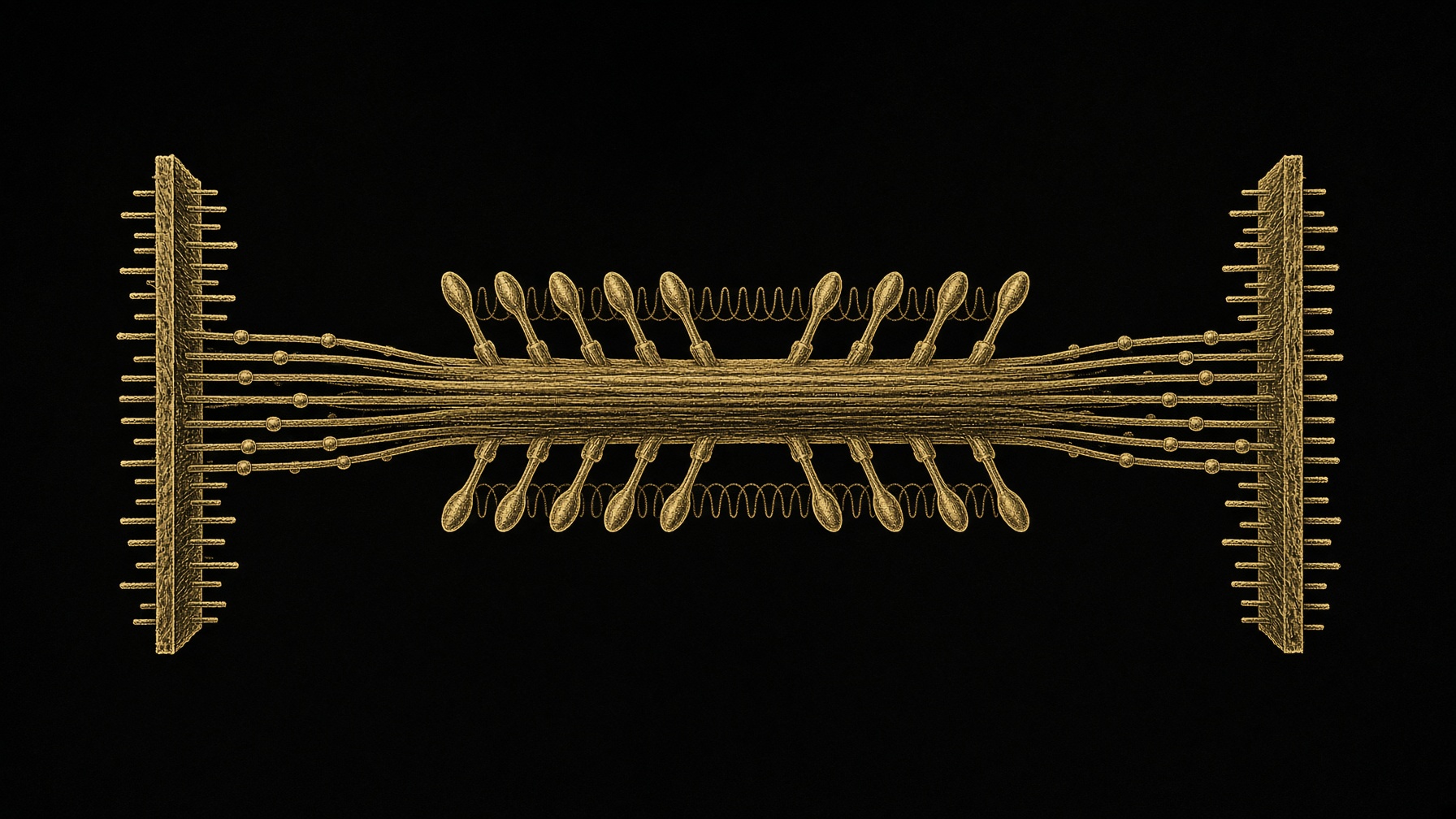
Actin and myosin: the motor inside the fibre
The sarcomere, the thin rope, the thick motor, the eight-nanometre stroke, and the calcium switch that lets a nerve turn all of it on. One ATP per pull.
13 min · Bodybuilding
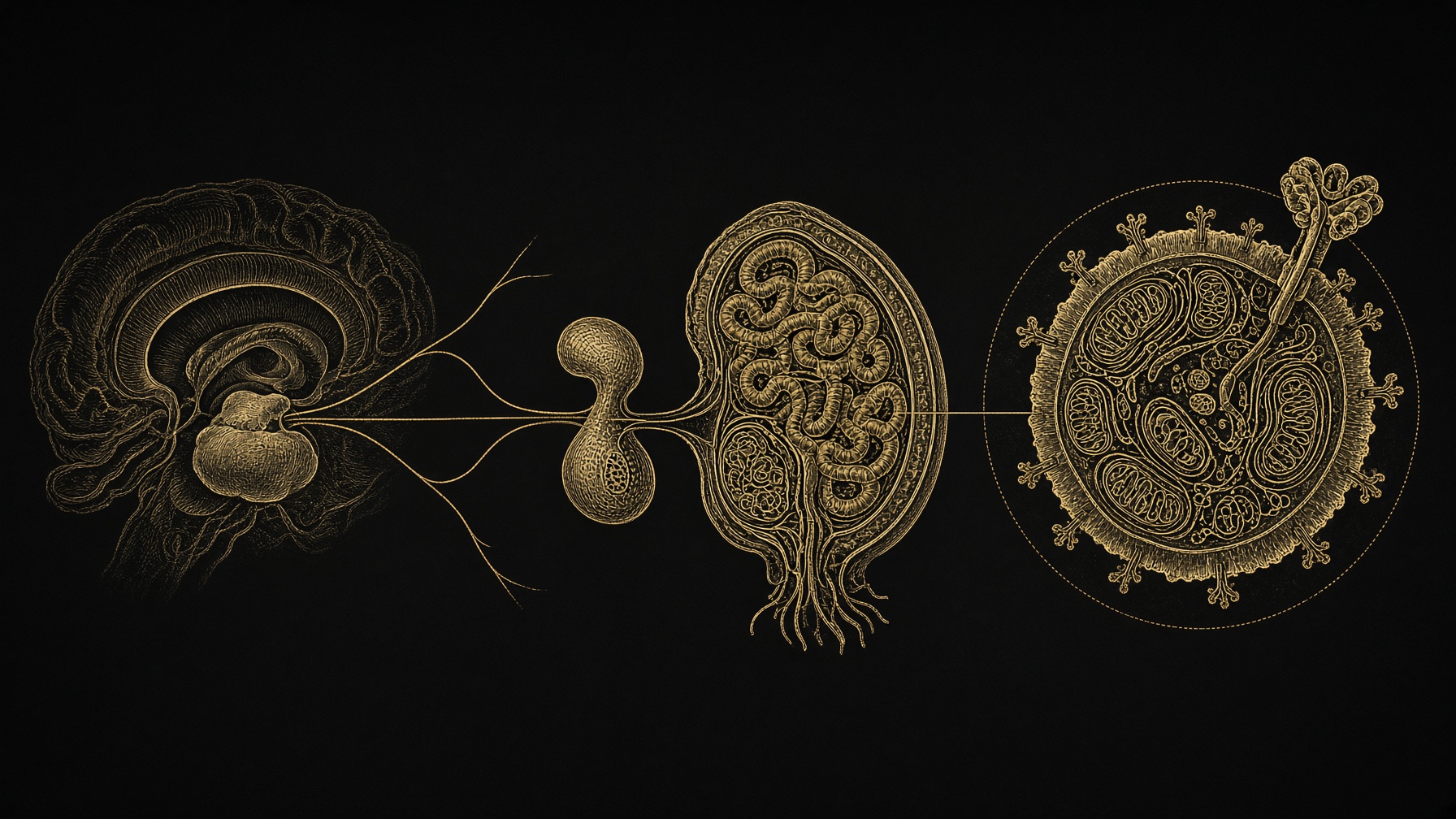
Coming off: SERMs, hCG, and what a supplement cannot do
How a SERM restarts GnRH, how each hCG and FSH option talks to the testis or the ovary, and how zinc, ashwagandha and CoQ10 turn that signal back into testosterone and sperm.
12 min · Bodybuilding
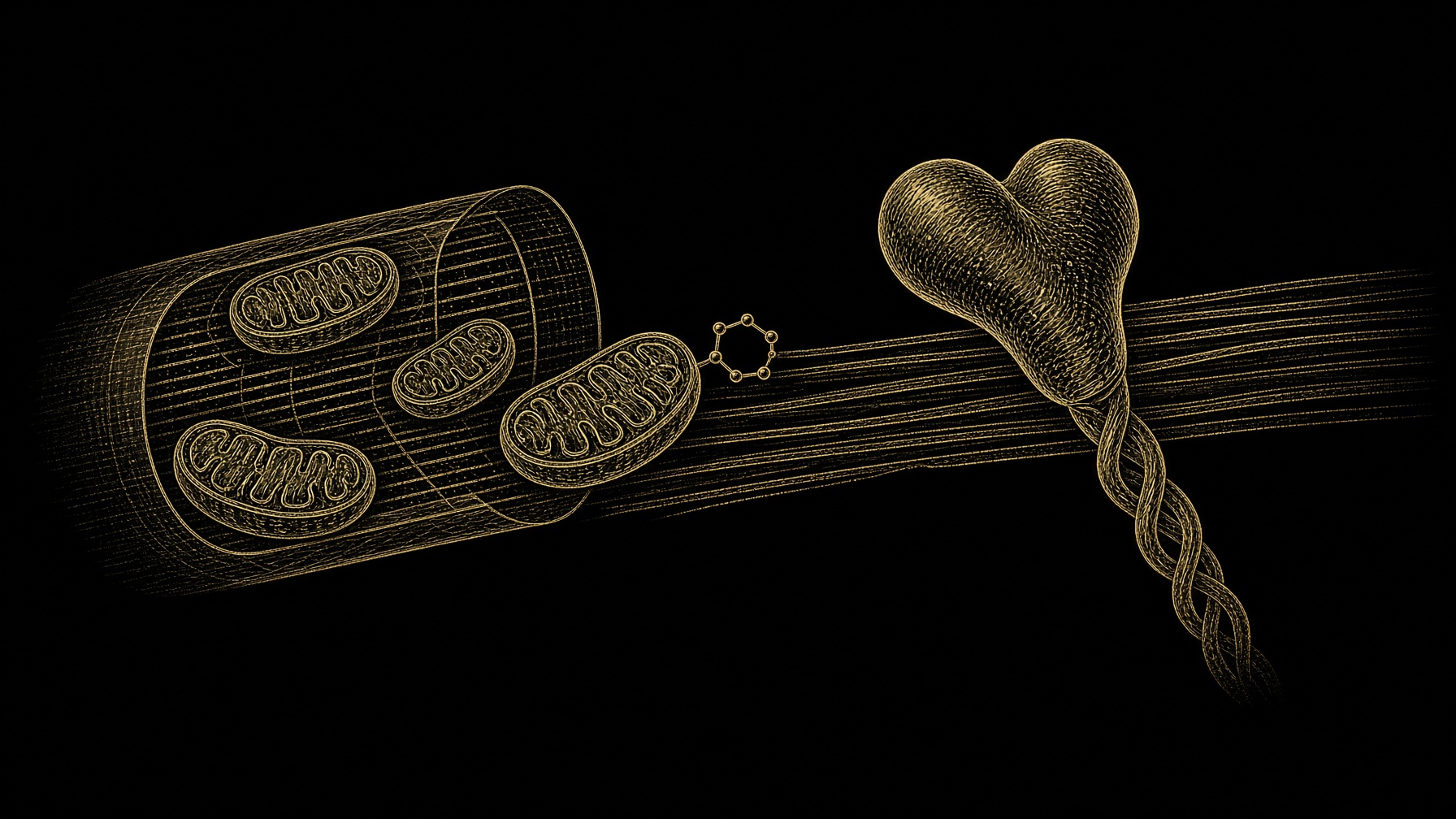
Creatine: the phosphate the fibre keeps next to the myosin
Phosphocreatine rebuilds ATP at the cross-bridge in a fraction of a second. Filling the store buys a few more hard reps. The early weight is water. The myosin still has to be earned.
The page is the mechanism: the protein, what it does in the cell, and the drug or peptide that talks to it.