

Bodybuilding · 6 min · 1,231 words
Cold water: the bath that turns the growth signal down
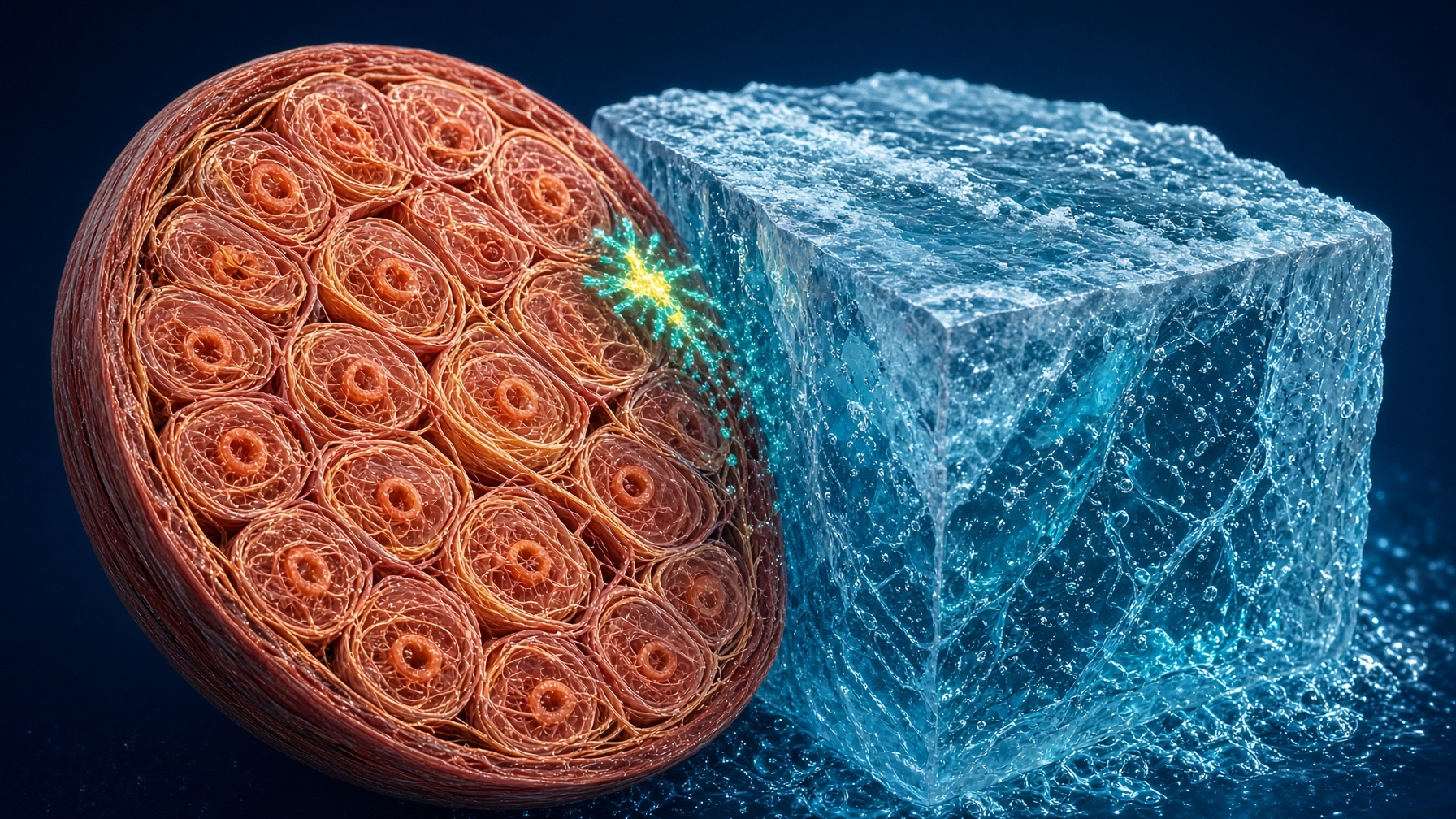
Ten minutes in cold water after lifting clamps the blood flow and quiets mTORC1. Soreness falls. In the twelve-week trial, so did the muscle they were trying to build.
What this essay actually tells you
- Roberts 2015: cold water straight after lifting, for twelve weeks, produced less muscle and less strength than active recovery.
- The bath clamps blood flow and lets AMPK lean on mTORC1, the kinase that was going to make new protein. Less soreness is less fluid and slower nerves.
- It is not the sauna and it is not clenbuterol. Ice in the hours after the set is the tax. The next morning is a different job.
What this actually means
A cold bath straight after lifting makes the muscle less sore by cutting the blood flow. The same cold quiets the kinase that was going to build it. Over twelve weeks the people who did that grew less. Ice the next morning, or when you have to perform again tomorrow, is a different job.
A cold bath after lifting is a blood-flow experiment wearing a recovery costume. Ten minutes in water around 10°C clamps the vessels in the muscle you just trained. Less blood means less of the amino acids, the insulin, and the inflammatory cells that were on their way into that fibre. It also cools the fibre itself. The kinase complex that turns a hard set into new protein, mTORC1, listens to tension, to leucine, and to a permissive bit of insulin. Cold and the energy stress that comes with shivering push the opposite way: AMPK, the fuel gauge, phosphorylates the same neighbourhood and leans on mTORC1 until it quietens. Roberts, Raastad and colleagues put trained men through twelve weeks of lifting and then sat half of them in that cold bath after each session. The cold group added less muscle and less strength than the group that just pedalled lightly. The set was the same. The bath was the difference.
In short. Cold water after a session squeezes the blood out of the muscle and quiets the kinase that builds it. In a twelve-week trial the people who iced grew less than the people who didn't.
The soreness argument is why people keep doing it, and the soreness is real. Cold slows nerve conduction and narrows vessels, so the next-day ache is often smaller and the muscle feels tighter and less swollen. That is analgesia and less fluid, not a fibre that repaired itself faster. Satellite cells, the stem cells parked on the outside of the fibre, also respond less when the inflammatory burst is blunted. Those cells donate nuclei when a fibre gets large enough to need more protein factories. You can live without that donation for a while. You cannot call a smaller ache a bigger muscle. A tournament with another match tomorrow is a different job: you are buying the ability to perform again, and you are spending some of the adaptation. A Tuesday squat whose only point was growth is the job the Roberts trial actually measured.
In short. The bath can make you less sore. Less sore is not more muscle. The stem cells that donate nuclei to a growing fibre also hear less of the signal when you ice it straight away.
What the cold is not
It is not the sauna, and it is not a beta-2 agonist. Heat, on the page next door, raises heat-shock proteins and can expand plasma volume. Cold does the opposite to skin blood flow and asks brown fat and shivering muscle to make heat through uncoupling protein-1 and through ordinary contraction. That is a calorie trick of modest size, not a repartitioning drug. Clenbuterol opens a fat droplet by sitting on the beta-2 receptor for a day and bills the heart. A cold plunge does not occupy that receptor, does not raise cyclic AMP in a fat cell for an afternoon, and does not pull potassium into muscle the way the drug does. People stack them because both feel like 'doing something metabolic'. They are two different bills. One is a kinase in the fibre you just loaded. The other is a receptor on the heart.
In short. Ice is not the sauna and it is not clenbuterol. Heat shocks proteins. Clenbuterol sits on the beta-2 receptor. Cold mostly starves the growth signal of blood and quiets it.
Later trials have been kinder when the plunge is shorter, warmer, or hours after the session, and meaner when it is long and immediate. That spread is the mechanism, not a contradiction. mTORC1's interesting window is the hours after the set, while the fibre is still phosphorylating S6K1 and still taking up amino acids. Ice in that window steps on it. Ice the next morning is a different conversation, mostly about how you feel. If the food is also missing, the cold is the second insult: no leucine for sestrin-2, and a fuel gauge already arguing for shutdown. Read the fibre pages for what actually adds myosin. This page is only the bath that turns that signal down.
In short. Ice in the hours after the set is the problem. Ice the next morning is mostly about how you feel. Skip the protein as well and you have taken away both the signal and the building material.
Which kinase, and which cells stop showing up
mTORC1's readout in a biopsy is phosphorylation of p70S6K at threonine 389, and of 4E-BP1, the protein that had been holding the translation machinery down. Roberts measured that signal falling after the cold, and measured fewer satellite cells in the weeks that followed. Those cells, marked by Pax7, sit on the outside of the fibre and lend nuclei when the fibre has more protein than its current nuclei can support. Cold does not poison them. It quiets the burst that calls them: less blood, fewer of the acute signals a hard set normally sends, and AMPK phosphorylating TSC2 and Raptor so mTORC1 cannot stay on the lysosome. The fibre can still hurt less, because skin and muscle vessels have narrowed under alpha-adrenergic tone and the nerves conduct more slowly when they are cold. Analgesia is a conduction story. Growth is a phosphorylation story. They happen in the same limb and they are not the same event. Shivering later, if you stay in, recruits motor units to make heat, and brown fat can leak the mitochondrial gradient through uncoupling protein-1. Adults have a small amount of that fat. The heat you feel is mostly shivering muscle, spending glycogen, not a drug-like opening of a subcutaneous droplet.
In short. The cold turns down the phosphate mark on the kinase that starts translation, and fewer satellite cells turn up to donate nuclei. Less pain is just the nerves and the vessels slowing down. Shivering burns a little fuel. It does not build the fibre.
- The trial
- less growth
- The kinase
- mTORC1 down
- The ache
- smaller, not better
- The timing
- the hours after
Roberts 2015. Twelve weeks, cold bath after lifting, smaller gains in size and strength.
Cold and AMPK lean on the complex that was going to make new protein.
Less blood and slower nerves. The soreness falling is not the fibre growing.
Immediate ice spends the adaptation. Next morning is a different job.
Questions the essay actually answers
- Does a cold plunge after lifting stop muscle growth?
- Immediate cold water, around ten minutes at about 10°C, reduced the gains in muscle size and strength across twelve weeks in the Roberts trial. The set was the same. The bath was the difference.
- Why does it feel like it helps?
- Cold narrows the vessels and slows the nerves, so the muscle is less swollen and less sore the next day. That is comfort. The kinase that builds the fibre, mTORC1, is quieter in that same window.
- Is icing the same as sitting in a sauna?
- No. Heat raises heat-shock proteins and can expand plasma. Cold reduces blood flow in the muscle you just trained and leans on that growth signal through AMPK. Opposite temperatures, opposite jobs.
- When is the plunge not a tax on growth?
- When the point of the day is to perform again soon, not to add myosin. A match tomorrow is that job. A growth session is not. Leaving it until the next morning steps on a much quieter window.
- Does cold water burn fat like clenbuterol?
- No. Shivering and brown fat spend some energy. Clenbuterol sits on the beta-2 receptor, opens a fat droplet, and keeps the heart occupied. A plunge does not occupy that receptor.
Read next
11 min · Bodybuilding
How a fibre grows: tension, time, and the protein ledger
Synthesis minus breakdown, for weeks. Why soreness is the wrong score, why the pump is water, and why long ranges of motion keep showing up in the trials.
11 min · Bodybuilding
Soreness: the Z-disk you pulled apart, a day late
Next-day ache is eccentric damage and the immune cells that come to clear it. Lactate left an hour ago. Being ruined is not the same number as growing.
7 min · Bodybuilding
Heat-shock proteins, and what a sauna is actually doing
HSF1 answers unfolded proteins with chaperones. A sauna turns that on, expands plasma, and in Finnish men tracked with fewer cardiac deaths. The growth-hormone bump is real and does not build the muscle.
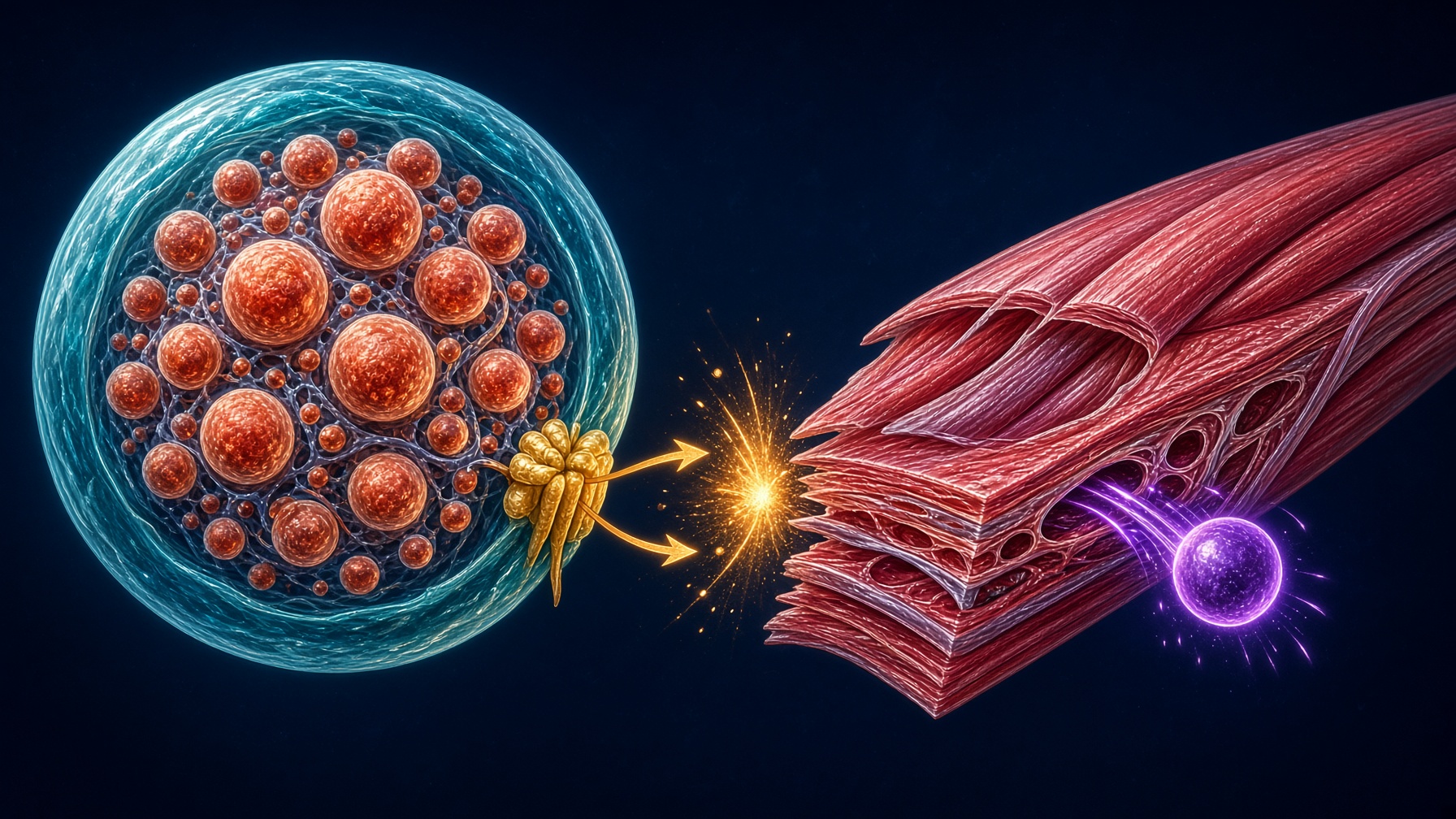
7 min · Bodybuilding
Clenbuterol: one receptor opens the fat cell and bills the heart
Clenbuterol sits on the beta-2 receptor, raises cyclic AMP, and lets a fat cell open its store. Muscle shakes because it wears the same receptor. The heart does too. Leave it occupied and the cell takes the receptor inside.
More in this desk
18 min · Bodybuilding
What each steroid does at the cell
Testosterone, nandrolone, trenbolone, boldenone, the DHT cousins, the orals. One receptor. Why two of them are not two muscles, what that asks of food, and what the side effects actually are.
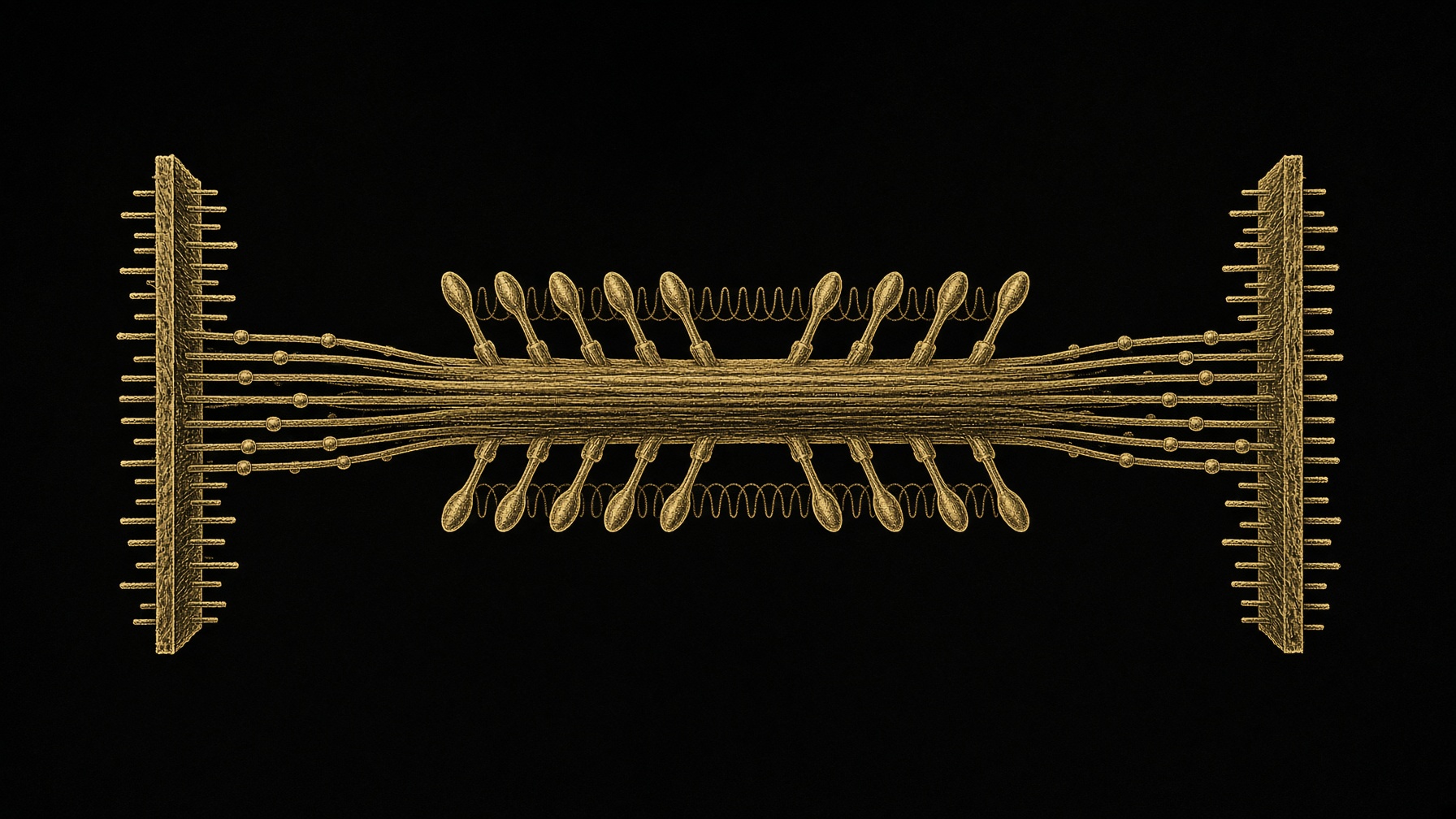
16 min · Bodybuilding
Actin and myosin: the motor inside the fibre
The sarcomere, the thin rope, the thick motor, the eight-nanometre stroke, and the calcium switch that lets a nerve turn all of it on. One ATP per pull.
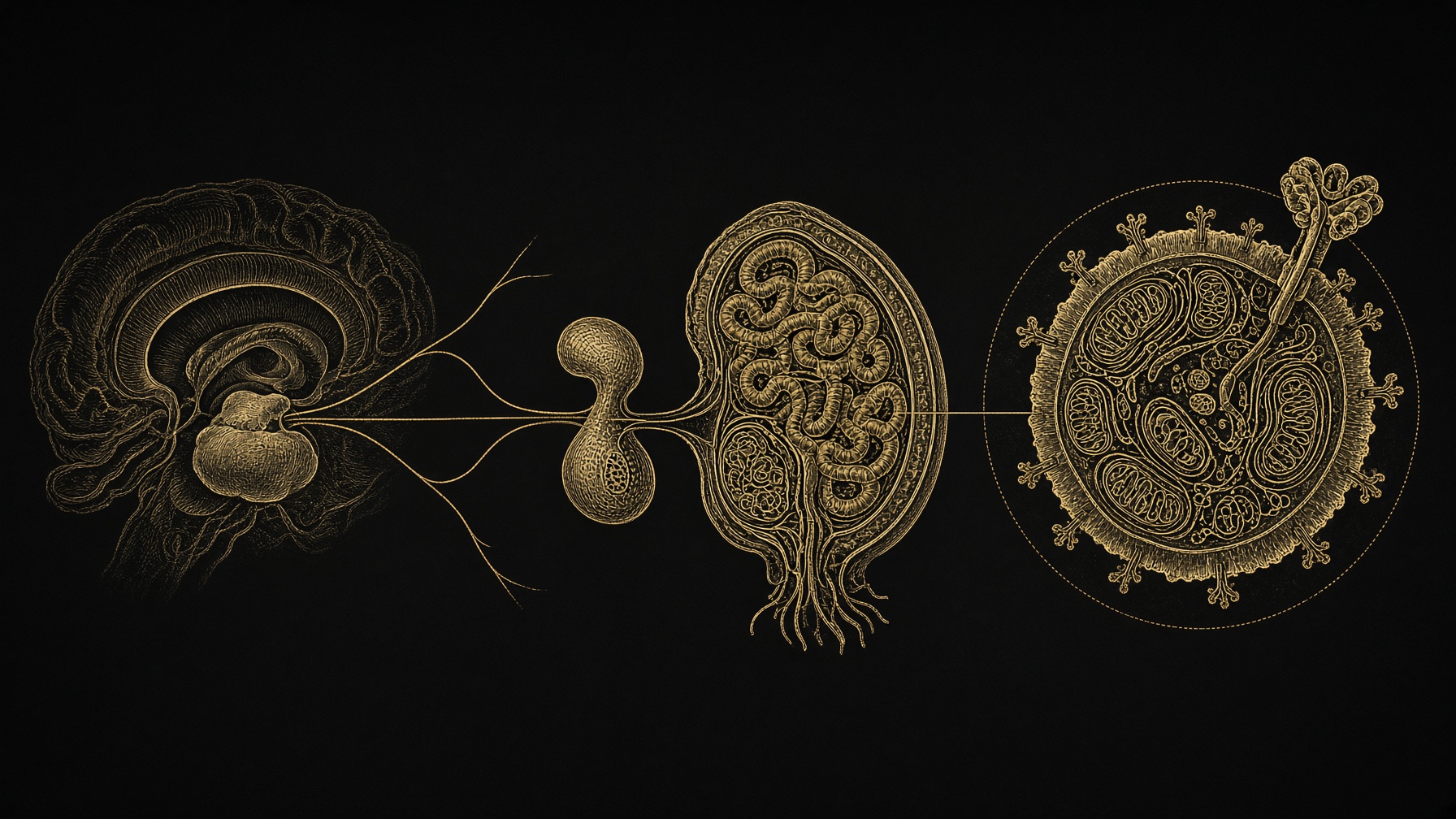
13 min · Bodybuilding
Coming off: SERMs, hCG, and what a supplement cannot do
How a SERM restarts GnRH, how each hCG and FSH option talks to the testis or the ovary, and how zinc, ashwagandha and CoQ10 turn that signal back into testosterone and sperm.
12 min · Bodybuilding
Creatine: the phosphate the fibre keeps next to the myosin
Phosphocreatine rebuilds ATP at the cross-bridge in a fraction of a second. Filling the store buys a few more hard reps. The early weight is water. The myosin still has to be earned.
The page is the mechanism: the protein, what it does in the cell, and the drug or peptide that talks to it.