

Frontier biology · 46 min · 10,101 words
Romulus, Remus and the argument over a dire wolf
Three pups born from grey-wolf cells edited with Ice Age DNA became the most famous animals of 2025. They are also the most disputed.
What this essay actually tells you
- Colossal announced Romulus and Remus as dire-wolf analogues (grey-wolf chassis plus palaeogenomic edits) and the argument is whether that is a dire wolf. It is an argument. We noticed.
- Aenocyon dirus is a separate lineage from Canis lupus. Coat and size edits do not rewind phylogeny, however good the photographs.
- The honest sentence is: an edited wolf that looks like the fossil. The species name is the fight, and taxonomists will not be kind about it.
What this actually means
Colossal took DNA from a 13,000-year-old dire-wolf tooth and a 72,000-year-old skull, found the genes that made Aenocyon dirus different from living grey wolves, and CRISPR-edited about twenty of those differences into grey-wolf cells. Two males, Romulus and Remus, were born on 1 October 2024. A female, Khaleesi, followed on 30 January 2025. The company calls this the first de-extinction. A lot of biologists we read (and a few we know) call it a genetically modified grey wolf wearing dire-wolf features. We hold both descriptions. The pups are real. The species label is the fight.
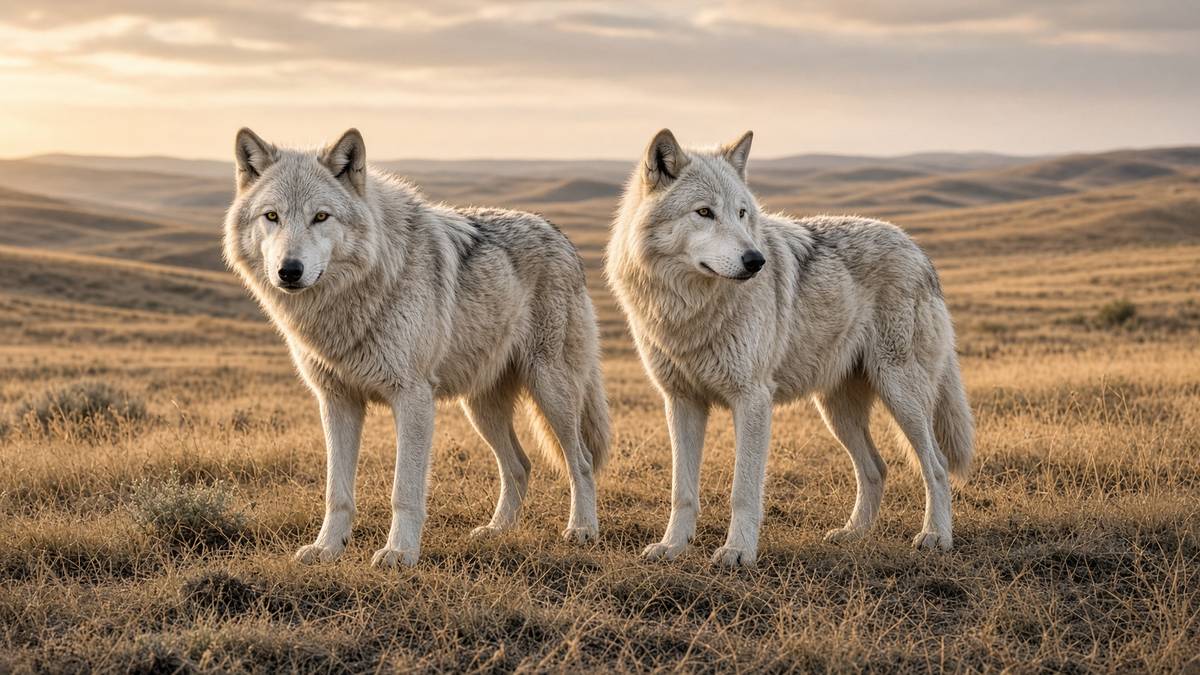
On 7 April 2025 Colossal Biosciences told the world that three canid pups were the first de-extinct animals of the century. TIME put them on a cover. Robert Clark had photographed the two males on a private reserve: white coats, big paws, the kind of picture that travels faster than a methods paragraph. Their names are Romulus, Remus and Khaleesi. They are grey wolves with about twenty CRISPR edits, chosen from dire-wolf DNA fished out of a 13,000-year-old Ohio tooth and a 72,000-year-old Idaho skull. I want you to hold both halves of that at once. The pups are alive in this century. The Ice Age species, Aenocyon dirus, is not. An edited wolf that looks like the fossil is the sentence that tells the truth about both, and it's the sentence this piece will keep returning to. Beth Shapiro, Colossal's chief scientist, has said out loud that you cannot bring back something identical. The press line still uses de-extinction as the umbrella. Both claims are in what follows. The animals are real. The passport is the fight.
In short. Three gene-edited wolf pups were born in 2024 and 2025. They are living grey wolves wearing a short list of dire-wolf edits, not a resurrected Ice Age species.
Colossal's method wasn't to find a dire-wolf egg. There isn't one. There is a 13,000-year-old tooth recovered from Sheridan Pit in Ohio, a 72,000-year-old skull fragment from American Falls in Idaho, and a living grey wolf, Canis lupus, whose genome can still be cloned. Ancient-DNA work pulled a palaeogenomic parts list from those two fossils. Computational comparison against grey-wolf sequence named the coding differences that likely made Aenocyon dirus look the way the bones say it looked: stature, musculature, hair colour, hair texture, hair length, coat patterning. CRISPR then wrote a subset of those differences into cultured grey-wolf cells. Twenty edits, fourteen genes, fifteen of the edits billed as exact extinct variants. The remaining five were chosen to make a pale coat without borrowing the deafness-and-blindness alleles that the same pigment genes carry in living wolves. Those cells were cloned. Eight embryo transfers, tens of embryos each, produced three live births. The animals live on a private reserve. That pipeline is the industrial fact. The species label is the argument that followed it onto the internet.
In short. Those scientists read Ice Age DNA, copied a handful of those differences into grey-wolf cells, and cloned three pups. The pipeline is real. What to call the pups is the fight.
The honest molecular sentence is shorter than the press line, and it's the sentence this piece will keep returning to. Beth Shapiro, Colossal's chief scientist, has said it out loud: these animals are grey wolves with a defined set of edits; you can't bring back something identical to a species that used to be alive. The company's other sentence remains that those edits are enough to bring back the dire wolf. Conservation geneticists counter that twenty sites don't a species make, and that calling genetically modified grey wolves de-extinct Aenocyon risks draining meaning from both words. We're with Shapiro on the molecular sentence. We're with the conservation people on the vocabulary. Both can be true at the same time, which is why 2025 got so loud. An edited wolf that looks like the fossil is already one of the strangest true sentences in zoology. Pretending the look is the lineage is how that sentence gets cheap. Pretending the pups are a render is how you miss the decade you're living in.
In short. The honest line is an edited wolf that looks like the fossil. The species name is the fight. The pups themselves aren't imaginary.
We're writing this as working scientists, not as a press office and not as a cancellation. Named papers, named numbers, named machines. Perri and colleagues, Nature 2021, put Aenocyon on a lineage that split from living canids about 5.7 million years ago. Wilmut's nuclear-transfer factory, from Dolly onward, is how an edited cell becomes a neonate. Doudna and Charpentier's CRISPR-Cas9, and the multiplex editors that followed, are how you write twenty sites into a living genome without waiting on a Pleistocene egg. None of those three machines was built to settle a taxonomic argument on Twitter. All three of them now sit on the same bench in Dallas, and the output of that bench is three animals that howl. The rest of this piece is the phylogeny, the palaeogenome, the edit list, the clone, and the reason coat and size don't rewind a split that's older than the genus Homo. Analogies will be used once and then dropped. The photograph won't be asked to do phylogenetic work it can't do.
In short. So: three tools made these pups: ancient DNA, gene editing, and cloning. None of those tools can turn a grey wolf into a separate Ice Age lineage by changing twenty letters.
Aenocyon dirus is not a large grey wolf
Dire wolves were, for most of a century, filed as Canis dirus: a Pleistocene wolf, bigger-headed, heavier-boned, specialised for the megafauna of the Americas. The bones licensed the filing. La Brea alone has yielded thousands of individuals, a death assemblage so rich that the animal became a textbook predator, the wolf you drew when you meant Ice Age. Morphologists noticed the broader skull, the bone-cracking cheek teeth, the limb proportions that aren't quite grey-wolf. They still put the animal in Canis, because resemblance had always been the argument and because, until ancient DNA became a complete book rather than a museum caption, resemblance was most of what anyone had. Perri, Mitchell, Frantz, Shapiro, Wayne, Larson, Cooper and a long author list published the correction in Nature in January 2021. Five nuclear genomes, from remains dated between about 13,000 and more than 50,000 years, plus collagen from a La Brea specimen. The tree did not put dire wolves next to Canis lupus. It put them on a lineage that had been walking the New World on its own for millions of years.
In short. So dire wolves look like big grey wolves, so they were filed as wolves for a century. Ancient DNA showed they belong to a much older American lineage instead.
The number to keep is 5.7 million years. That's Perri's split of the dire-wolf lineage from living canids, give or take the usual molecular-clock caveats, and it's the tripwire in everything that follows. Grey wolves, coyotes and dholes evolved in Eurasia and colonised North America relatively recently. Dire wolves were already there. The last time the two walks shared a common ancestor, Australopithecus had not yet been named and the genus Canis itself was a young idea. Hybridisation is common across Canidae: wolves, coyotes, domestic dogs, and various jackals have been swapping alleles for as long as field biologists have been able to sequence them. Perri found no evidence of gene flow between dire wolves and either North American grey wolves or coyotes. Isolation, not a large subspecies. That's why the 1918 genus Aenocyon, Merriam's 'terrible wolf', came back out of the synonymy drawer. The animal that looks like a wolf on a tar-pit slab is, on the genome, a different invoice.
In short. So dire wolves split from living dogs and wolves about 5.7 million years ago and never mixed with grey wolves. Looking alike was convergent evolution, not close kinship.
Convergence is the word the 2021 paper forces on anyone who grew up with the tar-pit diorama. Two lineages, hunting similar prey on similar grassland, independently assembling a wolflike body plan: large head, slicing and cracking cheek teeth, a cursorial frame. The resemblance is real. The relatedness is not. African black-backed and side-striped jackals sit closer to Aenocyon on some of the trees than Canis lupus does, which is the sentence that made otherwise calm people sit down. A jackal isn't a dire wolf either. The point is narrower. If your chassis for a de-extinction is the closest living relative, grey wolf is a morphological neighbour, not a sister species, and the genetic distance is the distance you're asking twenty CRISPR sites to cross. Twenty sites don't cross 5.7 million years. They recode a handful of trait modules on the neighbour. That recoding can be done well. It remains recoding of Canis lupus.
In short. The wolf-like body was built twice, by two separate families of dog. A grey wolf is a neighbour to the dire wolf, not a sister, and twenty gene edits don't close that gap.
La Brea is still the richest window onto what the extinct animal actually did. Dire wolves hunted in numbers; the pits preserve them as a social predator that specialised on large herbivores, bison and camelids and the other Pleistocene walkers whose disappearance is the other half of the extinction. The skull is broader than a grey wolf's. The bite is a bone-cracking bite. Body mass estimates for Aenocyon dirus sit above living C. lupus, often in the 60 to 70 kilogram range for large individuals, with the usual fossil-allometry caveats. None of that's a coat colour. None of it's a single locus. It's a hunting ecology assembled over millions of years of New World isolation, and it vanished with the prey guild around the end of the Pleistocene. A white-coated pup on a fenced reserve in 2025 isn't that ecology. It's not trying to be, if the papers is read honestly. The ecology is the thing a species name is supposed to remember when the photograph has already moved on.
In short. Ice Age dire wolves hunted large American herbivores in packs and had heavier, bone-cracking skulls. A white pup on a fenced reserve isn't that way of life.
Extinction timing is 10,000 to 13,000 years ago, a window rather than a date, because the last bones are a sampling problem. The megafaunal collapse of the late Pleistocene took the prey. Humans were on the continent. Climate rearranged the grasslands. Dire wolves did not hybridise their way into the grey-wolf gene pool as a refuge, which is one of the sadder implications of Perri's no-gene-flow result: when the niche closed, the lineage closed. Grey wolves and coyotes, incoming from Eurasia, inherited the continent. That taxonomic distance is why otherwise calm people started shouting at each other on the internet in 2025. If Aenocyon had been a sister species, twenty edits might have been a conversation about how many loci make a subspecies. It's not a sister species. Coat and size edits, however photogenic, don't rewind phylogeny. A pitch that this rewinds phylogeny hasn't looked at the 2021 tree. A pitch that the tree is a gotcha against the pups hasn't looked at the neonates.
In short. Dire wolves died out with the giant prey of the Ice Age and left no hybrids behind. That distance is why a handful of coat and size edits can't rewind the family tree.
Merriam's Aenocyon was proposed in 1918 and then mostly ignored, because morphology had voted Canis and because genus names, in vertebrate palaeontology, are conservative until a genome forces the issue. Perri, Mitchell and colleagues put the genus back on the table. Xiaoming Wang, who knows the American fossil canids as well as anyone alive, said the name could be resurrected. The resurrection that actually happened, in the literature, was nomenclatural: Aenocyon dirus, a New World lineage, not Canis. The resurrection that happened in Dallas is a different verb. An edited grey wolf isn't a nomenclatural act. It's an engineering act. Collapsing the two resurrections into one press sentence is how a Nature phylogeny and a cloned neonate get asked to do each other's jobs. We'll not collapse them. The bones were Aenocyon. The pups are Canis lupus with a defined punch list. The punch list is interesting. It's not a time machine.
In short. Scientists brought back the old genus name because the DNA demanded it. That paper resurrection isn't the same act as editing a living wolf to look the part.
A tooth is a library, not a nucleus
Svante Pääbo's Neanderthal genome was the proof that ancient DNA could be a complete book, not a footnote in a museum caption. Since then the field has industrialised, quietly, while the rest of us were looking at CRISPR. Petrous bone and teeth as harvest sites. Silica-column cleanup of ultrashort fragments. Damage patterns, cytosine-to-thymine at the ends, used as authentication rather than noise. Computational genomes assembled from contamination-riddled soup. Colossal's dire-wolf work used a 13,000-year tooth and a 72,000-year skull fragment. Mammoth work uses permafrost-preserved tissue whose collagen still remembers the Holocene. The output of all of that chemistry isn't a nucleus. You get a consensus sequence with coverage gaps, especially in repetitive and GC-rich regions. Editors therefore don't restore the genome. They restore chosen loci, the ones that likely encode the phenotype you can see and husband: hair, stature, dentition, a coat you can photograph. The rest of the extinct animal is imputed from the living sister, or in this case from the living neighbour. That's the method. That's the method, and it should be said plainly.
In short. So ancient DNA gives a reconstructed text, not a frozen nucleus. Editors copy chosen letters from that text into a living relative. The rest of the animal is borrowed.
The Ohio tooth is from Sheridan Pit. The Idaho specimen is an ear-bone and skull neighbourhood from American Falls, dated around 72,000 years. Those are the two libraries Colossal has named. A tooth is dentine and cementum, a mineral cage that can hold fragments after the soft tissue is a rumour. Neither has a nucleus you can transplant. The fragments are tens of bases long, chemically damaged, mixed with bacteria and with whoever excavated the pit. Authentication is a damage pattern plus a phylogenetic placement: if the reads sit on the Aenocyon branch of Perri's tree, you're not looking at a coyote that fell into the same hole. Coding sequence is easier than repeats. Mitochondrial genomes assemble first because there are hundreds of copies per cell; nuclear genomes take more library. Colossal's nuclear reconstruction is the document the edit list was built from. It has not, as of the public record we have, been dropped as a complete Aenocyon genome in a repository the way a Nature paper would drop one. That gap is a methods gap, not a conspiracy. It's also a reason the species claim is running ahead of the supplement.
In short. So the Ice Age DNA came from a tooth in Ohio and a skull in Idaho. Those fossils hold damaged scraps of sequence, not a working cell you can clone.
Chosen loci are a phenotype bet, and the bet should be named as a bet. Hair colour, hair texture, hair length, coat patterning, body size, musculature: those are the modules Colossal said they targeted. Each module is a handful of genes with large, visible effects, which is why they are the genes you can afford to edit if your success criterion is a photograph. Coat colour in canids is a famous map — MC1R, CBD103/K locus, ASIP, MITF, MLPH, a textbook. Stature has LCORL, a ligand-dependent nuclear-receptor corepressor-like protein that shows up in horse and dog size papers and that Colossal has named as a dire-wolf variant they wrote in. A bone-cracking dentition, a pack-hunting brain, an immune repertoire tuned to Pleistocene pathogens, a reproductive timing matched to American seasons: those aren't twenty sites. They are the rest of the palaeogenome, the part that remains imputed from grey wolf. Imputation isn't a sin. It's how every de-extinction on a living chassis has to work. It's a sin only if the press line pretends the imputed majority is the extinct majority.
In short. The edits targeted looks you can see: coat, size, muscle. Most of the Ice Age genome was left as grey wolf. That's the method, and it should be said plainly.
Chromatin is why twenty sites is even a tractable number. A canid genome is on the order of 2.4 billion base pairs, packed into a nucleus a few micrometres across, nucleosomes every 147 base pairs, loops, compartments, a search problem. CRISPR-Cas9 doesn't browse that origami like a reader. A guide RNA finds a complementary stretch next to a PAM, the nuclease cuts, and a template or a base editor writes the intended allele. The locus has to be findable: open enough, unique enough, not a repeat so blasted that the guide has a hundred off-targets. Ancient DNA doesn't tell you the chromatin state of a 13,000-year tooth. It tells you sequence. The living grey-wolf nucleus supplies the packing, the repair machinery, the off-target landscape. That's another way of saying the chassis is Canis lupus at every scale except the twenty rewritten codons. Packing isn't storage. It's the first regulatory decision. A promoter buried in heterochromatin won't express your beautiful coat allele. The edit list assumes the grey-wolf regulatory genome will drive the extinct coding variants. Often it will. That assumption is load-bearing, and it's almost never in the headline.
In short. So gene editors have to find their targets inside a tightly folded genome. The living wolf supplies that folding. The extinct sequence supplies only a few rewritten letters.
Diagram
- 2 nmB-DNA0.34 nm/bp. Diploid G1 is ~2 metres of this.
- 11 nmNucleosome147 bp around a histone octamer. ~30 million per nucleus.
- loopsCTCF / cohesinEnhancers meet promoters by folding, not by sliding.
- µmA/B compartmentsHi-C: open A, closed B, territories at the lamina.
- 6–10 µmNucleusThe room. The search problem is the entire point of gene regulation.
Packing is not storage. It is the first regulatory decision: a promoter buried in H3K27me3 is not a promoter, it is furniture. Transcription starts when this origami opens the right 1,000 base pairs among 3.1 billion.
Twenty sites, fourteen genes
The punch list, as Colossal has described it, is twenty unique edits across fourteen genes, of which fifteen are the exact extinct variants recovered from the palaeogenome and five are living-wolf routes to a pale coat. Multiplex CRISPR in endothelial progenitor cells drawn from grey-wolf blood, then whole-genome sequencing and karyotyping of the edited lines before anyone is allowed to clone them. That last clause is the adult sentence in the methods. An edited cell with a translocation is a veterinary problem, not a de-extinction. Twenty sites in a vertebrate is a record Colossal has been willing to boast about, and as a multiplexing achievement it's real. As a fraction of the differences between Aenocyon and Canis it's a rounding error. Nic Rawlence, among others, pointed out that even if the two genomes are 99.5 percent alike as a crude identity, the remaining half-percent is still millions of bases. Twenty isn't millions. The photograph doesn't know that. The phylogeny does.
In short. Twenty DNA changes were made in fourteen genes of grey-wolf cells, then checked by sequencing. That's a technical feat. It's still a tiny slice of an Ice Age genome.
No ancient DNA was spliced into the grey-wolf genome. The sentence is Colossal's, and it's the right sentence. What happened is rewriting: the living gene was edited until the protein sequence matched, at the chosen residues, the extinct allele. That's a cleaner experiment than trying to paste a 72,000-year fragment into a chromosome, and it's also the experiment that makes the chassis undeniable. The chromosome is still a grey-wolf chromosome. The centromeres, the repeats, the regulatory DNA, the olfactory-receptor repertoires, the immune genes, the mitochondrial genome that arrived with the oocyte: Canis. Coding edits at fourteen loci ride on that. If you heard 'Ice Age DNA put into a wolf' and pictured a chimeric chromosome has the wrong cartoon. The cartoon is a word processor. Find the living sentence. Change the letters that the fossil says were different. Leave the rest of the book. The book is still titled Canis lupus.
In short. Those did not paste fossil DNA into a wolf. They rewrote fourteen living genes so a few letters matched the extinct animal. The rest of the book is still a grey wolf.
Coat colour is where the honesty of the punch list is easiest to see, and where the photograph is most willing to lie. The dire-wolf palaeogenome carries protein-coding substitutions in OCA2, SLC45A2 and MITF, three pigment genes whose living-canid variants can lighten a coat and, in dogs and wolves, can also take hearing and sight with them. White coats in some dog breeds come with deafness for exactly this reason. Colossal did not write those three extinct alleles. They induced loss-of-function in MC1R and MFSD12, a path already known to suppress eumelanin and pheomelanin in grey wolves without that particular veterinary invoice. CORIN, a follicle serine protease that suppresses the agouti pathway, was named as a dire-wolf variant they did use. The pups are white. The white is, in part, a safety detour around the fossil. That detour is good husbandry. It's also a confession: even at the most photogenic trait, the extinct allele wasn't always the allele they wrote. Phenotype was the target. Phylogeny was not.
In short. The white coats weren't copied from the riskiest Ice Age pigment genes, because those can cause deafness. Safer living-wolf edits were used instead. Looks first, lineage second.
LCORL is the stature sentence, and it's one of the cleaner named genes in the public record. Ligand-dependent nuclear-receptor corepressor-like sits in a neighbourhood that mammalian size papers keep rediscovering: horses, cattle, dogs, a transcription-adjacent brake or throttle on growth. Colossal has said a dire-wolf LCORL variant was among the fourteen. Body size is polygenic in every mammal anyone has mapped; one locus of large effect isn't a Pleistocene growth programme. It's a nudge. The six-month males were reported near four feet and 80 to 90 pounds, about 20 percent ahead of grey-wolf pups at the same age, with a projected adult around six feet and 150 pounds. Those numbers, if they hold as the animals fill out, are consistent with a size nudge landing. They are also consistent with good nutrition on a private reserve, with litter effects, with the fact that two data points aren't a growth curve. A single LCORL edit doesn't make Aenocyon. It can make a larger Canis. Hold the distinction when the next photograph arrives.
In short. One growth gene was rewritten to push the pups toward a bigger adult size. Bigger isn't the same as being the Ice Age species, and two well-fed animals aren't a growth study.
Musculature, hair texture, hair length, coat patterning: the rest of the module list, less fully named in public than the coat-colour detour and the LCORL nudge. FGF5 is the classic long-hair locus in mammals; whether it sits on this punch list hasn't been the sentence Colossal led with. Hair-shaft keratins and follicle-cycle genes are the usual suspects when a coat is the phenotype. The woolly-mouse programme next door stacked FGF5, TGM3, FAM83G and a melanin path into Mus, and that stacking is public because a mouse preprint can be. The wolf punch list is thinner in the open literature. We'll not invent the missing gene names. We'll say what that thinness means. If you can't list fourteen genes, twenty alleles, and the off-target census from the whole-genome sequencing is the papers that's still a press kit. The pups can still be real. The claim that the fourteen recapture Aenocyon can't be heavier than the list.
In short. So: some of the coat and muscle genes have been named; many have not. The pups can be real while the public gene list is still too thin to carry a species claim.
Fifteen extinct variants and five living-wolf workarounds is already a mixed object, and mixed objects are where vocabulary goes to die. Functional de-extinction, the phrase the field reached for, means: recover the ecological role, or recover a visible trait set, using a living chassis. Phylogenetic de-extinction would mean: recover the lineage, the branch on Perri's tree, the reproductive community that doesn't exchange genes with Canis. Twenty sites can serve the first. They can't serve the second. Shapiro has been willing to say proxy, Colossal's dire wolves, grey wolves with twenty edits. Ben Lamm has been willing to say the species is back. Those two sentences shouldn't have been asked to share a TIME cover without a methods paragraph between them. They did share one. The paragraph you're in is the one that should have been on page two. An edited wolf that looks like the fossil is a true sentence. Aenocyon dirus walks again is a different sentence. Only one of them currently has three heartbeats underneath it.
In short. A look-alike built on a living wolf can copy some Ice Age traits. It can't copy the extinct family tree. Those are two different projects sharing one press cycle.
Transcription is the step the edit list quietly assumes, and it's why a gene-to-protein diagram belongs in a de-extinction essay rather than only in a cell-desk one. A rewritten MC1R allele does nothing until a melanocyte finds the promoter, opens the chromatin, assembles a polymerase, and prints a message the ribosome can turn into a receptor that no longer pushes eumelanin as hard. LCORL has to be transcribed in the growth plates and the other tissues where size is decided. CORIN has to be expressed in the follicle. The grey-wolf regulatory genome is doing that work. Enhancers, promoters, the Mediator complex, promoter-proximal pausing, splicing of whatever isoforms the living species already runs: all of that's Canis, running extinct coding variants as cargo. If a dire-wolf enhancer, now dust in a tooth, used to drive a different expression pattern, twenty coding edits won't restore it. Phenotype isn't sequence. Phenotype is sequence expressed in a developmental context. The context here is a grey-wolf pup, cloned, carried by a dog, raised on a reserve. That context will express what it can. It won't remember a Pleistocene follicle it never had.
In short. Here, a changed gene only matters if the living wolf turns it on in the right cells. The on-switches are still grey wolf. The Ice Age version of those switches is gone.
Diagram
Closed chromatin (H3K27me3, DNA methylation) hides the promoter. Pioneer factors and histone acetyltransferases open it.
PIC: TFIID, TFIIH, Mediator, Pol II. Ser5 phosphorylation of the CTD lets the polymerase leave the promoter.
Elongation ~20–40 nt/s. Capping, splicing, cleavage and polyadenylation happen on the still-growing RNA.
Human genes are islands in 3.1 billion base pairs of mostly noncoding sequence. Promoter, enhancers, chromatin state and the Mediator complex decide whether Pol II is allowed to fire. Epithalon’s literature sits on TERT and pineal clocks — two of the rare promoters anyone bothers to name in a peptide essay.
Our animals are grey wolves with 20 edits that are cloned. Colloquially, they’re calling them dire wolves and that makes people angry.— Beth Shapiro, as reported in 2025 interviews
From a blood cell to a neonate
The donor cells, in the public description, were endothelial progenitor cells taken from grey-wolf blood, not a skin fibroblast from a zoo animal and not an oocyte from Aenocyon, which doesn't exist. Blood is a practical biopsy on a wild canid. EPCs grow, take edits, and still have a nucleus you can transfer. That choice already tells you the chassis: a living wolf's circulating cells, multiplex-edited, sequenced, karyotyped, then promoted to donor for nuclear transfer. Somatic-cell nuclear transfer is Wilmut's factory. You take the nucleus of the edited cell, you put it into an enucleated oocyte, you persuade the egg to treat that nucleus as if it were a fertilisation, and you hope the reprogramming is complete enough that a blastocyst forms. Dolly was a mammary epithelial cell and a sheep oocyte and a great many failures. The wolf programme is the same physics in a different species, with CRISPR as a preface. Cloning doesn't copy an extinct animal. It copies the nucleus you actually transferred. The nucleus you transferred was Canis lupus, edited.
In short. So the starting cells came from living grey-wolf blood. Their nuclei were put into emptied eggs and grown as clones. Cloning copies the cell you have, not the fossil you wish you had.
The oocytes and the surrogates were domestic dogs. Canis familiaris is a subspecies of Canis lupus on most modern treatments; the reproductive compatibility is the point of using dogs rather than, say, a fox. Enucleated dog ova received the edited wolf nuclei. Embryos were cultured and transferred. Colossal has said eight surrogates, an average of about forty-five embryos each, three live births. That arithmetic is cloning arithmetic: many transfers, few neonates, a success rate that reproductive biologists won't be surprised by and that press releases won't lead with. Two surrogates carried Romulus and Remus to term for a 1 October 2024 birth. A third carried Khaleesi to a 30 January 2025 birth. The dogs, Colossal has said, later went to homes after a humane-society training programme. The pups went to a private reserve. Experimental pregnancy in a domestic animal is a smaller ethical object than experimental pregnancy in an endangered Asian elephant, which is why the wolf was always going to be the first large de-extinction the factory could actually finish. The mammoth is still waiting on a cow.
In short. Domestic dogs carried the pregnancies because dogs and grey wolves can still breed. Eight attempts and many embryos produced three live pups. That's how cloning usually looks.
Reprogramming is the silent failure mode, and it deserves a paragraph because cloned livestock taught the field to expect it. A differentiated nucleus has to forget its endothelial past and remember how to be an embryo. Imprints, chromatin marks, mitochondrial-nuclear mismatch between a wolf nucleus and a dog oocyte: each is a way for a clone to look fine at birth and not be fine at a year. Dolly had a public health argument attached to her; later cloned animals have had a quieter one. Colossal has presented the three pups as healthy. We've not seen the veterinary charts, and we're not going to pretend a TIME photograph is a cardiology work-up. Large-animal cloning can work. It can also throw up mosaicism, large-offspring syndrome, incomplete reprogramming, and a sudden death that a press cycle isn't built to absorb. Three survivors from eight transfers is a numerator. The denominator is the embryos that did not become a cover. Both numbers belong in the sentence. The factory works well enough to produce edited neonates of a living species wearing extinct traits. Working well enough isn't the same as a routine breeding programme.
In short. A cloned nucleus has to forget its old job and become a whole animal. That step fails often. Three healthy-looking pups don't make cloning routine, and a photo isn't a vet chart.
Mitochondria are a separate invoice, and they are almost never in the de-extinction headline. The mitochondrial genome comes with the oocyte. These oocytes were dogs. The nuclear genome is edited grey wolf. Aenocyon's mitochondria are in the tooth, a 16-kilobase circle that won't be in these animals unless someone has done a mitochondrial replacement that hasn't been claimed. Respiratory-chain subunits are written on both genomes; they coevolved in Aenocyon for millions of years and in Canis for millions of different years. A dog mitochondrion driving a wolf nucleus is already a hybrid bioenergetic object. Add twenty nuclear edits and you haven't made that object more Pleistocene. You have made it more mixed. For a pup on a reserve, mixed may be metabolically fine. For a species claim, mixed is another way of saying the chassis is living canid all the way down, including the organelles that actually burn the fat. We keep the neighbouring mitochondria essay in view here because de-extinction is sold as a genome story and is, in the cell, also an organelle story.
In short. So the energy factories in these cells come from dog eggs, not from Ice Age wolves. Even the insides of the cells are living-canid, not resurrected.
1 October 2024 is a real date that now sits next to Dolly, next to the first CRISPR babies as a caution, next to Casgevy as a licensed medicine, in the small set of days when a genome-writing factory produced something the public could see. Romulus and Remus were two males, named for the twins a she-wolf nursed at the founding of Rome, which is a joke the press office was always going to make. Khaleesi arrived in January, named for a television throne, which is a joke the other half of the internet was always going to make. We can survive the names. The animals live, as of the last public walk-through, on a fenced estate with the usual large-canid husbandry: space, a diet, a veterinary programme, no Pleistocene camelids to chase. They howl. They have white coats. They have heavy heads. That pipeline — palaeogenomics to CRISPR to clone to neonate — is a new industrial capability, whether or not the IUCN ever issues a dire-wolf passport. The mammoth, the dodo and the thylacine are queued on the same factory floor. The fight over names is downstream of the fact that the factory works.
In short. So the first two pups were born on 1 October 2024, a third in January 2025. They live on a fenced reserve. The production line is new, whatever name goes on the cage.
- Lineage split
- ~5.7 million years
- Extinction window
- 10,000–13,000 years ago
- Palaeogenomic libraries
- 13 ka tooth, 72 ka skull
- Edit punch list
- 20 sites / 14 genes
- Canid genome
- ~2.4 billion bp
- Transfers to births
- 8 surrogates → 3 live
- Births
- 1 Oct 2024; 30 Jan 2025
- Six-month males
- ~80–90 lb, ~4 ft
Perri et al., Nature 2021. Aenocyon from living canids. No gene flow with Canis lupus.
Americas. Megafaunal prey guild closed. The branch ended.
Sheridan Pit, Ohio; American Falls, Idaho. Fragments, not a nucleus.
15 extinct variants; 5 living-wolf coat workarounds (MC1R, MFSD12).
Twenty sites are a multiplexing record and a phylogenetic rounding error.
~45 embryos each. Dog ova, dog pregnancies, wolf nuclei.
Romulus, Remus; then Khaleesi. Private reserve, not a Pleistocene steppe.
Projected adult ~150 lb / 6 ft. A size nudge, not a species.
Coat and size do not rewind phylogeny
The photographs did the political work that twenty alleles could not. White coats photograph. Heavy heads photograph. A howl on a reserve, filmed at dusk, will travel further than Perri's tree. We're not immune to it. A 13,000-year-old tooth yielded sequence; sequence yielded edits; edits yielded animals that exist in this century; the animals are beautiful in the way large canids are beautiful. That pipeline deserves the looking. What it doesn't deserve is a taxonomic laundering in which the look is treated as the lineage. Coat colour is a handful of melanocyte genes. Body size is a polygenic nudge plus a diet. Skull breadth and tooth shape, the characters that made Aenocyon a bone-cracker at La Brea, are developmental programmes that fourteen genes may have kissed and haven't been shown, in a peer-reviewed morphometrics paper, to have restored. Until someone publishes the calipers, the photograph is a coat. A coat isn't a phylogeny. We'll keep saying that until the calipers arrive, and we'll keep looking at the photographs anyway, because the factory is the story even when the name is not.
In short. White coats and big heads made the pictures travel. Looks are a few genes and a diet. A family tree is millions of years. The pictures can't settle the tree.
Game of Thrones did more for Aenocyon dirus as a public animal than a century of tar-pit science, and that cultural capture is now part of the methods. Colossal leaned into it with Khaleesi's name and with a white coat the show had already trained a billion people to read as dire wolf. Pleistocene Aenocyon, on the pigment genes Colossal themselves recovered, may have been pale; Shapiro has also said they can't rule out colour morphs, because colour morphs are common in canids. The show-white pup is a decision, not a census of the tar pits. Decisions of that kind are how de-extinction becomes a media object, and media objects are how capital is raised for the mammoth and the dodo, which is a sentence about political economy as much as about genomes. We don't pretend to be above the photograph. We do insist that the photograph not be asked to outvote Perri. A television silhouette is a poor holotype. The holotype of Aenocyon dirus is a fossil. The pups are a living argument about how close a chassis-plus-cassette has to get before a company is allowed to use the fossil's name.
In short. Television taught the world to expect a white dire wolf, and the pups were built to match that picture. A TV look isn't a museum specimen, and it shouldn't outvote the fossils.
Behaviour and ecology are the chapters an edit list of coat and size can't open, and they are the chapters a species name is supposed to cover. Dire wolves, on the tar-pit evidence, were pack hunters of large Pleistocene herbivores. Their howl, their seasonality, their immune history, their gut microbiome, their learned hunting culture — none of that's in a tooth as a module you can CRISPR. Some of it might emerge from a canid brain running on a reserve. Some of it's gone because the prey is gone and the pack is three animals and a fence. A howl is a phenotype; it's also a behaviour shaped by who is listening. Three pups raised together on an estate will howl like what they are: canids in a managed landscape. They won't remember a bison run they never saw. Restoring a predator without restoring a world is a zoo, not Pleistocene America. The ecological half of the de-extinction sales pitch — an apex predator back in the system — is a different paper, and it hasn't been written, because the animals are on a private reserve and the system is still extinct.
In short. Hunting culture, prey and landscape died with the Ice Age. Three animals behind a fence can have white coats. They can't have that vanished world, and a species name usually includes the world.
Scale is the reason a base-pair edit and a 150-pound canid keep getting confused in public. A CRISPR cut is a chemistry at a nanometre. A coat is a millimetre-scale arrangement of pigmented hairs. A pup is a metre-scale animal with a brain and a microbiome and a mitochondrial pool borrowed from a dog. A species is a lineage, a reproductive community, a branch that Perri measured in millions of years. Those aren't the same object at different zoom settings. They are different kinds of object. Writing twenty letters and then pointing at a metre-scale body as proof of a million-year branch is a category error with good lighting. The scale diagram on this page is here so the error has to walk past a labelled axis. Hydrogen atom, peptide, protein, ribosome, mitochondrion, nucleus, cell, tissue, organism, lineage. The edit sits near the protein. The photograph sits at the organism. Aenocyon sits at the lineage. Neighbourhood isn't identity. A white coat is closer, in this diagram, to a melanocyte receptor than it's to a genus.
In short. A few DNA letters sit at protein scale, a pup at animal scale, a species at family-tree scale. Those aren't the same thing.
Diagram
- 0.1 nmHydrogen atomA proton and an electron. Chemistry starts here.
- 0.3 nmWater molecule70% of a cell by mass. The solvent life is.
- 1 nmAmino acidTwenty kinds. Peptide bonds string them.
- 2–4 nmResearch peptideA named chain. BPC-157 is 1.4 kDa, 15 residues.
- 4–10 nmGlobular proteinHaemoglobin, a GPCR’s extracellular face.
- 25 nmRibosomeThe factory that reads mRNA into protein.
- 5 nmMembraneA lipid bilayer. Every compartment starts here.
- 0.5–1 µmMitochondrionA bacterium the cell swallowed and kept.
- 6–10 µmNucleusTwo metres of DNA folded into a sphere.
- 10–30 µmTypical cellA city. 10¹⁰ proteins. One genome.
- 1 mmTissue grainA thousand cells talking across ECM.
- 1.7 mYou~36 trillion human cells. Most of them are red blood cells.
Lengths are characteristic, not exact. A research peptide is closer in size to a water molecule than to the cell that assays it — which is why a 15-mer can occupy a receptor pocket a small-molecule drug also wants.
The species name is the fight
Colossal's public claim, on 7 April 2025, was the first de-extinction of a large apex predator, the return of a species absent for more than 10,000 years. That's a historical claim, and historical claims have a standard of evidence. The IUCN Species Survival Commission's 2016 guiding principles on creating proxies of extinct species already had a word for what Dallas built: a proxy, an ecological stand-in assembled from a living relative, not the extinct taxon itself. Functional de-extinction is the friendlier phrase the company prefers. Philosophers of biology will reach for the biological species concept, the phylogenetic species concept, the genotypic-cluster concept, and won't agree, because they don't agree about living wolves either. The practical test is ruder. Would a conservation geneticist put these three animals on an Aenocyon studbook? Would a museum curator label the skins Aenocyon dirus? Would a palaeontologist accept a living holotype that's 99-point-something percent Canis lupus by sequence? The answers we keep hearing, from people who curate actual canids, are no, no, and please do not. The pups remain interesting after every no.
In short. So calling this the return of a species is a historical claim. Conservation bodies already had a word for what was built: a proxy, a living look-alike, not the extinct animal itself.
Shapiro's honesty is on the record, and it's the reason this piece isn't a pile-on. She has said, from the beginning in her telling, that the animals are grey wolves with twenty edits, that identity with a vanished species is impossible, that proxy is a word she will take. How to Clone a Mammoth, her 2015 book, already ran this argument for Mammuthus: you get a cold-tolerant elephant, not a time-traveller. The 2025 press cycle compressed that book into a cover line that couldn't hold the caveat. Compression isn't a crime. It's how a factory raises the next round. It becomes a scientific problem when the compressed line starts being cited as if it were the methods. We would rather have Shapiro's sentence and Lamm's ambition in the same piece, labelled as themselves, than a single word, de-extinction, asked to cover both. De-extinction, if it's going to be a technical term, needs a denominator: de-extinction of what, to what standard, on which chassis, with which remaining distance to the palaeogenome. Without the denominator it's a brand.
In short. So: colossal's chief scientist has said these are grey wolves with twenty edits, and that a true copy of an extinct species is impossible. The cover line did not have room for that caveat.
The conservation objection isn't fussiness about Latin. It's a worry about what happens to the words we still need for animals that are actually gone and for animals that are actually here and dying. Red wolves, Canis rufus, are a critically endangered living canid with a hybridisation problem, a habitat problem, and a political problem. Colossal has also cloned red wolves; Hope, a cloned red-wolf pup, walked through the same news cycle as a quieter sibling. If the cover goes to a white proxy and the living endangered canid goes to page sixteen, the field has a media-allocation problem that will show up, eventually, as a funding-allocation problem. Nic Rawlence's 'grey wolf with dire-wolf-like characteristics' is the conservation-genetics sentence. GMO wolves, in the ruder coverage, is the same sentence with less Latin. Twenty sites don't move an animal from one IUCN box to another. They can move a photograph. Photographs aren't listings. We care about the listings because listings are how remaining wild canids keep a legal existence. Spending the word extinct on a proxy is how listings get sloppy.
In short. So living red wolves are still endangered while a white proxy took the cover. The worry is that extinct gets spent on a look-alike and living animals lose the light.
A species, on the biological concept, is a reproductive community. Dire wolves, Perri showed, weren't exchanging genes with grey wolves even when they shared a continent. These three pups, if they breed, will breed as canids on a grey-wolf-plus-dog background; their offspring will be that community, not a recovered Aenocyon population. A species, on the phylogenetic concept, is a branch. The branch ended. Twenty apomorphies, even if every one of them is a true extinct allele, don't reattach a branch. They decorate a twig of Canis. A species, on the genotypic-cluster concept, is a cloud of genomes. Three clones from one edited cell line aren't a cloud. They are a point. Cloning from a handful of edited nuclei is how you get a proof of principle. It's the opposite of how you get a population genetics. If the programme proceeds to seven or eight animals, as Lamm has sketched, you still have a kennel, not a Pleistocene gene pool. Kennels can be beautiful. They can even, in a careful conservation programme, be useful. They don't resurrect a branch.
In short. Here, a species is a breeding population and a family tree, not a handful of clones from one edited cell. Three or even eight animals are a kennel, not a recovered lineage.
Twenty sites don't a species make. That sentence is the conservation-genetics half of the argument, and it's correct as far as it goes. It doesn't go all the way to 'nothing happened'. Something happened. A palaeogenome informed a multiplex edit. The edit survived cloning. The clone survived birth. The neonate grew a coat the extinct coding sequence had predicted, by a path that sometimes used the extinct allele and sometimes used a living workaround. That's a new capability in vertebrate engineering, and it will be used again, on elephants, on pigeons, on dunnarts, on whatever chassis the next extinct phenotype requires. Dismissing the capability because the name is wrong is how a serious methods argument becomes a sneer. Defending the name because the capability is real is how a serious engineering argument becomes a brand. The fight is loud because both halves are holding something true. We can argue taxonomy after we've admitted the pups exist. We can admire the pups without handing them Aenocyon's passport. That dual admission is this journal's whole job on this subject.
In short. Twenty changes don't make a species, and that's true. It's also true that the pups exist and the production line works. Both facts can sit in one paragraph.
What we'll not do is tidy the sentence until it's only one of the two true things. Three gene-edited wolf pups exist. Their genomes are mostly grey wolf. Their selected traits were chosen from dire-wolf DNA, with a documented detour around the pigment alleles that would have risked deafness. They were cloned from edited endothelial progenitors, carried by dogs, born in 2024 and 2025, raised on a private reserve. Colossal calls that de-extinction. Conservation geneticists call it a genetically modified grey wolf. Shapiro will take proxy. The fossil is still Aenocyon dirus, a New World lineage, 5.7 million years from Canis, extinct when the megafauna went. Coat and size edits don't rewind that. An edited wolf that looks like the fossil is the honest molecular sentence. The species name is the fight. We hold both descriptions. We expect to be holding them the next time a calf or a hatchling arrives from the same floor, because the factory isn't going to stop while the nomenclators finish arguing, and the nomenclators shouldn't stop because a cover was printed.
In short. The clean true sentence is an edited wolf that looks like the fossil. We'll not flatten that into either a miracle species or a nothing-burger. The pups are real. The passport is the fight.
We at Colossal are happy for them to be called proxy dire wolves. You can call them Colossal’s dire wolves. You can call them gray wolves with 20 edits that make them look like dire wolves.— Beth Shapiro, 2025, on the acceptable names
The same factory floor
Once you can edit a living relative with extinct DNA and clone the result, you can put more than one ghost on the calendar. Colossal's mammoth programme is Asian-elephant cells taking on cold-coat and cold-haemoglobin alleles, a calf targeted around 2028, a 22-month gestation that's why they built woolly mice first. The mice exist: multiplex coat-and-metabolism edits in Mus, golden, shaggy, a three-week answer to a two-year question. The dodo is a Nicobar-pigeon chassis and an avian-reproduction problem, primordial germ cells, an egg rather than a uterus. The thylacine is Andrew Pask's genome from a 108-year-old pouch young and a fat-tailed dunnart as the developmental testbed. No mammoth calf walks. No dodo hatches. No thylacine hunts a paddock. Three edited wolf pups do exist, which is why this animal, not the mammoth, became the argument the public actually had. The wolf was the factory's first finished object. Finished, here, means born. It doesn't mean named to everyone's satisfaction.
In short. So the same company is trying a mammoth, a dodo and a Tasmanian tiger on living relatives. The wolves are the first ones actually born, which is why they became the public argument.
Woolly mice are the rehearsal the wolf programme did not get in public, and the comparison is instructive. Seven or so coat-and-fat genes in a laboratory mouse, a preprint, a phenotype you can score in weeks, a genome that's still Mus musculus on every honest blot. Nobody serious calls the mouse a mammoth. The mouse is allowed to be a multiplex assay. The wolf wasn't allowed to be a multiplex assay, because the wolf is charismatic, because a white canid photographs as a character, and because the company used the species name in the announcement. Charisma isn't the papers. It's a reason paperss get skipped. If Romulus had been billed as a grey wolf with a dire-wolf trait cassette, the conservation objection would have been smaller and the engineering achievement would have been easier to see. The billing went the other way. We can still recover the engineering achievement by reading past the billing. That is, unglamorously, the job.
In short. So: woolly mice with mammoth-like coats are still called mice. The wolf project did the same kind of trait-editing and then used the extinct species name. Charisma changed the billing, not the method.
Red-wolf cloning is the quieter canid story on the same floor, and it's the one a conservation budget should have been able to hear. Canis rufus isn't extinct. It's close. Habitat, hybridisation with coyotes, a captive population that has been through a bottleneck: the living problem is management, not Lazarus. A cloned red-wolf pup doesn't raise a phylogenetic fight, because the species still has a passport. It raises a practical one: can a biotech factory help a studbook that's running out of founders. That's a serious question. It's also a question that doesn't land a TIME cover, which is information about covers. We're not going to scold a company for announcing the loud animal. We're going to keep putting the quiet animal in the same paragraph, because a factory that can clone an endangered canid and a factory that can dress a common canid in extinct traits are the same factory, and the public conversation keeps pretending they are different morals. They are different products. They are one capability.
In short. So the same lab also cloned an endangered red wolf, a living species that still needs help. That quieter animal is the conservation use of the factory; the white proxy is the famous one.
Neighbourhood isn't identity, and this is the sentence the peptide-map diagram is on the page to hold, even though the objects here are animals rather than catalogue ligands. A mammoth-like calf, if it arrives, will be an edited elephant. A dodo-like hatchling will be an edited pigeon. A thylacine-like neonate will be an edited dunnart. A dire-wolf-like pup is an edited grey wolf. Four chassis, four extinct phenotype cassettes, one industrial idea. Sitting them on the same map is a courtesy to the reader who has to keep the programmes straight. Collapsing them into a single de-extinction is how a press cycle becomes a fog. The map is also a warning to our own catalogue-adjacent brain: MOTS-c isn't NAD+, retatrutide isn't a sirtuin, and Aenocyon isn't Canis, even when the photograph wants them to share a word. Different nodes. Different jobs. A reading list can sit them together. A protocol cannot. The wolf pups are the first row of that map that has a living occupant. The other rows are still empty, and we'll keep them empty on the scoreboard until something else is born.
In short. Mammoth work sits on elephants, dodo work on pigeons, thylacine work on a small marsupial, dire-wolf work on grey wolves. Same idea, four different animals. Don't mash them into one word.
Diagram
| Node | Catalogue | Conversation |
|---|---|---|
| GPCR | Ipamorelin, MT2, PT-141, retatrutide, CJC | Second messengers, secretion, appetite, pigment |
| RTK / IGF1R | IGF-1 LR3 | IRS–PI3K–Akt–mTOR and Shc–ERK |
| Cytokine receptor | Somatropin (HGH) | GHR–JAK2–STAT5b, hepatic IGF-1 |
| Cofactor | NAD+ | Sirtuins, PARPs, CD38, redox |
| Actin buffer | TB-500 / Tβ4 motif | G-actin sequestration, motility |
| Growth-factor-like | BPC-157 | VEGFR2 / FAK / eNOS neighbourhood |
| Copper ligand | GHK-Cu | Transcriptome shift in fibroblasts |
| MC fragment | KPV | NF-κB, PepT1, no pigment |
| Nuclear / pineal | Epithalon (AEDG) | TERT and melatonin literatures |
| mtORF peptide | MOTS-c | AMPK, folate–methionine cycle |
Each row is a different kind of molecular conversation. The catalogue peptides bind at these nodes; they are not interchangeable, and stacking them because a forum did mixes unrelated literatures.
Close: an edited wolf that looks like the fossil
The public papers and documents are few enough to actually read, and they should be read before the next cover. Perri, Nature 2021, for the tree and the 5.7-million-year split and the absence of gene flow. Merriam 1918, if you want the genus name in its first life. IUCN SSC 2016, for proxy as a conservation word that predates the pups. Shapiro's 2015 book, for the chassis-and-cassette argument applied to mammoths before Dallas applied it to wolves. The April 2025 Colossal technical narrative, for the twenty sites, the fourteen genes, the MC1R and MFSD12 detour, the LCORL nudge, the eight surrogates, the three births. Shapiro's interviews, for the grey-wolves-with-twenty-edits sentence that the cover couldn't hold. Rawlence and the conservation-genetics commentary, for the GMO-wolf objection. Wilmut, Nature 1997, if you need the cloning factory in its original animal. That's a week of evenings, not a guru. The photographs will still be there when you come back, and they will look slightly smaller.
In short. Here, a short stack of papers and public notes covers the family tree, the gene edits, the cloning and the conservation objection. Read those before the next cover story.
What you should leave with is a map, not a fandom. Aenocyon dirus is a New World canid lineage, morphologically wolflike by convergence, genomically distant from Canis lupus, extinct when the Pleistocene prey guild closed. Palaeogenomics recovered coding sequence from a tooth and a skull. CRISPR wrote twenty sites into grey-wolf endothelial progenitors; fifteen of those sites were extinct variants and five were living-wolf coat workarounds. Nuclear transfer into dog ova, eight surrogates, three live births in 2024 and 2025. The animals are real. Their genomes are mostly grey wolf. Their looks were chosen from the fossil and, at the riskiest pigment loci, from a safer living path. Colossal calls that de-extinction. Conservation genetics calls it a genetically modified grey wolf. Shapiro will take proxy. Coat and size edits don't rewind phylogeny. The species name is the fight. The factory that made the fight possible will run again, on larger and stranger chassis, and the same topology will apply, with the numbers changed.
In short. So: leave with the map: a distant Ice Age lineage, a handful of rewrites in a living wolf, three cloned pups, and a fight over the name.
An honest papers, if this were a paper rather than a cover, would say the following and then stop. Donor: Canis lupus endothelial progenitors. Edits: twenty sites, fourteen genes, listed, with extinct versus workaround labelled, off-targets from whole-genome sequencing attached as a supplement. Oocyte: Canis familiaris, mitochondria therefore dog. Surrogates: eight, births three, dates given. Phenotype: coat, mass, morphometrics, veterinary panel, as measured, not as projected from a photograph at six months. Phylogeny: not claimed. Proxy: claimed, if you want the IUCN word. De-extinction: not claimed, or claimed only with a denominator so large it becomes a different paper. That papers would have disappointed a headline writer and would have served a field. We're not Colossal's editor. We're a neighbouring bench, writing down what the papers would have had to say, because the pups are too interesting to be left to a brand fight and too chimeric to be left to a miracle narrative. Interesting is the word the evidence currently earns.
In short. A proper methods write-up would list the living donor, the exact DNA changes, the dog eggs, the birth rate and the measurements, and wouldn't claim a resurrected species.
We can argue taxonomy after we've admitted the pups exist. We can admit the pups exist without handing them a passport they haven't earned. Both halves of that are the opposite of the internet's preferred move, which is to pick one half and use it as a club. Clubs are easy. Kennels of edited canids are hard. Palaeogenomics is hard. Multiplex editing that survives a karyotype is hard. Cloning a large mammal is hard. Naming the resulting animal without lying to a conservation studbook is also hard, and it's the hardness this piece is for. Romulus, Remus and Khaleesi howl in this century. Aenocyon dirus does not. An edited wolf that looks like the fossil is the sentence that keeps both of those facts in view. We'll use that sentence again when the calf comes, and when the hatchling comes, and when the pouch-young comes, because the factory isn't a one-animal trick. It's a way of making proxies. Proxies are new. They aren't the dead. That distinction is the whole of the argument, and it's not a small one, and it's not going away.
In short. So the three pups are alive in this century. The Ice Age species is not. An edited wolf that looks like the fossil is the sentence that tells the truth about both.
Scoreboard, kept boring on purpose, because boring is how this subject stays true. Dire-wolf-like pups: born, three, 2024 and 2025, grey-wolf chassis, twenty edits, private reserve. Mammoth-like calf: targeted around 2028, not born. Woolly mice: born, a rehearsal. Dodo and thylacine: announced, staffed, not hatched. Red-wolf clones: born, living endangered species, quieter. Aenocyon dirus: still a fossil, still a 5.7-million-year branch that ended with the megafauna, still not a grey wolf. Canis lupus: still the chassis, still the neighbour, still the genome that was cloned. The photograph on the cover is the pups. The phylogeny in Nature is the tree. We'll not let either of them delete the other. When the next animal arrives from Dallas, or from Melbourne, or from wherever the next chassis is being edited, we'll update the scoreboard in the same typeface. Born or not born. Chassis named. Edit count named. Species name marked as the fight. That's the current, true board, and we'll keep it that boring on purpose.
In short. Scoreboard: three edited wolf pups born; mammoth, dodo and thylacine not born. The Ice Age dire wolf is still a fossil. We'll keep that board this plain on purpose.
- Name the chassis: Canis lupus endothelial progenitors, not an Aenocyon nucleus.
- Name the libraries: 13,000-year Ohio tooth, 72,000-year Idaho skull. Fragments, not a cell.
- Name the punch list: 20 sites, 14 genes, 15 extinct variants, 5 coat workarounds. List them.
- Name the clone: dog ova, dog mitochondria, eight surrogates, three live births.
- Name the phenotype as measured, not as a six-month photograph projected to adulthood.
- Name the tree: Perri 2021, 5.7 million years, no gene flow. Coat and size do not rewind it.
Questions the essay actually answers
- Are Romulus and Remus dire wolves?
- They are grey wolves with a defined set of edits chosen from dire-wolf DNA, including a documented coat-colour detour around alleles that can cause deafness. Colossal calls that de-extinction. Conservation geneticists call it a genetically modified grey wolf. Shapiro will take proxy. Both descriptions are in the essay.
- How were they made?
- Ancient DNA from a 13,000-year Ohio tooth and a 72,000-year Idaho skull informed CRISPR edits of twenty sites in fourteen genes in grey-wolf endothelial progenitor cells. Those nuclei were transferred into enucleated dog eggs. Eight surrogates, three live births: Romulus and Remus on 1 October 2024, Khaleesi on 30 January 2025.
- Why is the species label disputed?
- Aenocyon dirus split from living canids about 5.7 million years ago (Perri et al., Nature 2021) and did not exchange genes with grey wolves. Twenty sites don't reattach that branch. Coat and size edits don't rewind phylogeny. The pups are real. The passport is the fight.
- What is Aenocyon dirus?
- The Ice Age dire wolf, a New World canid lineage morphologically similar to grey wolves by convergence, not by close kinship. Formerly filed as Canis dirus. Extinct around 10,000–13,000 years ago with the Pleistocene megafauna. The bones are common at La Brea. The genome isn't a wolf's.
- Did they splice ancient DNA into a wolf?
- No. They rewrote living grey-wolf genes so chosen residues matched the extinct coding sequence. Fifteen of twenty edits are billed as exact extinct variants. Five are living-wolf routes to a pale coat (MC1R and MFSD12 loss-of-function) because the fossil pigment alleles can take hearing and sight in canids.
- Why grey wolves and not a closer relative?
- Grey wolf is the morphological neighbour that can still be cloned into a dog oocyte. On Perri's tree it's not the sister species; some African jackals sit closer. There is no living Aenocyon, and no living canid that hybridised with one. The chassis is the animal you can actually husband.
- Are the white coats authentic Ice Age colour?
- Partly a decision. The palaeogenome suggested pale coats via OCA2, SLC45A2 and MITF, but those genes can cause deafness and blindness in living wolves. Colossal used a safer grey-wolf path to white instead. Shapiro has said other colour morphs can't be ruled out. A television silhouette isn't a holotype.
- What does this have to do with the mammoth and the dodo?
- Same factory, different chassis. Mammoth-like calves would be edited elephants; dodo-like birds, edited pigeons; thylacine-like neonates, edited dunnarts. The wolves are the first row of that map with a living occupant. Neighbourhood isn't identity.
- Is this the same as cloning a red wolf?
- No. Red wolves are a living endangered species; cloning them is a studbook tool. Romulus, Remus and Khaleesi are a common species wearing an extinct trait cassette. Same cloning factory. Different product. Different moral, if you need one, and one capability.
- What should we actually call them?
- An edited wolf that looks like the fossil. Proxy dire wolves, Colossal's dire wolves, or grey wolves with twenty edits, in Shapiro's list. Aenocyon dirus remains the fossil lineage. We hold the living sentence and the Latin one separately, because mixing them is the whole problem.
Read next
48 min · long read · Frontier biology
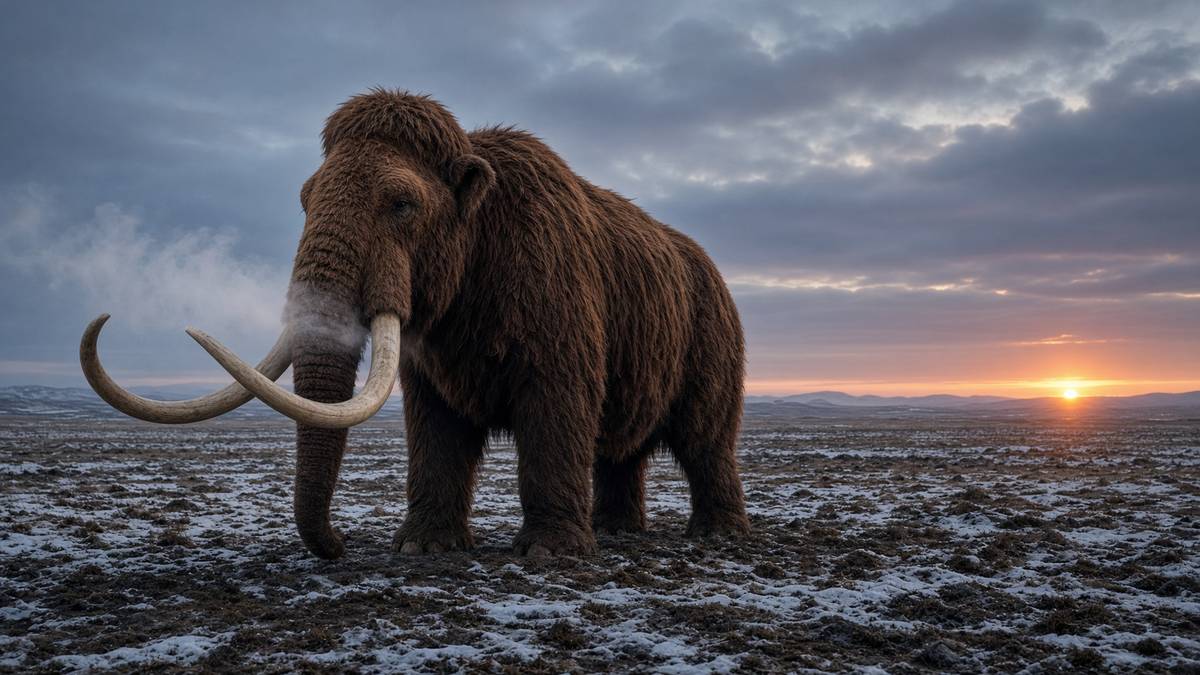
The mammoth is being rewritten in Texas
Inside Colossal Biosciences’ Dallas headquarters, Asian elephant cells are taking on the genes of a 4,000-year-old ghost. The target is a calf around 2028. This is not a film treatment.
44 min · long read · Frontier biology
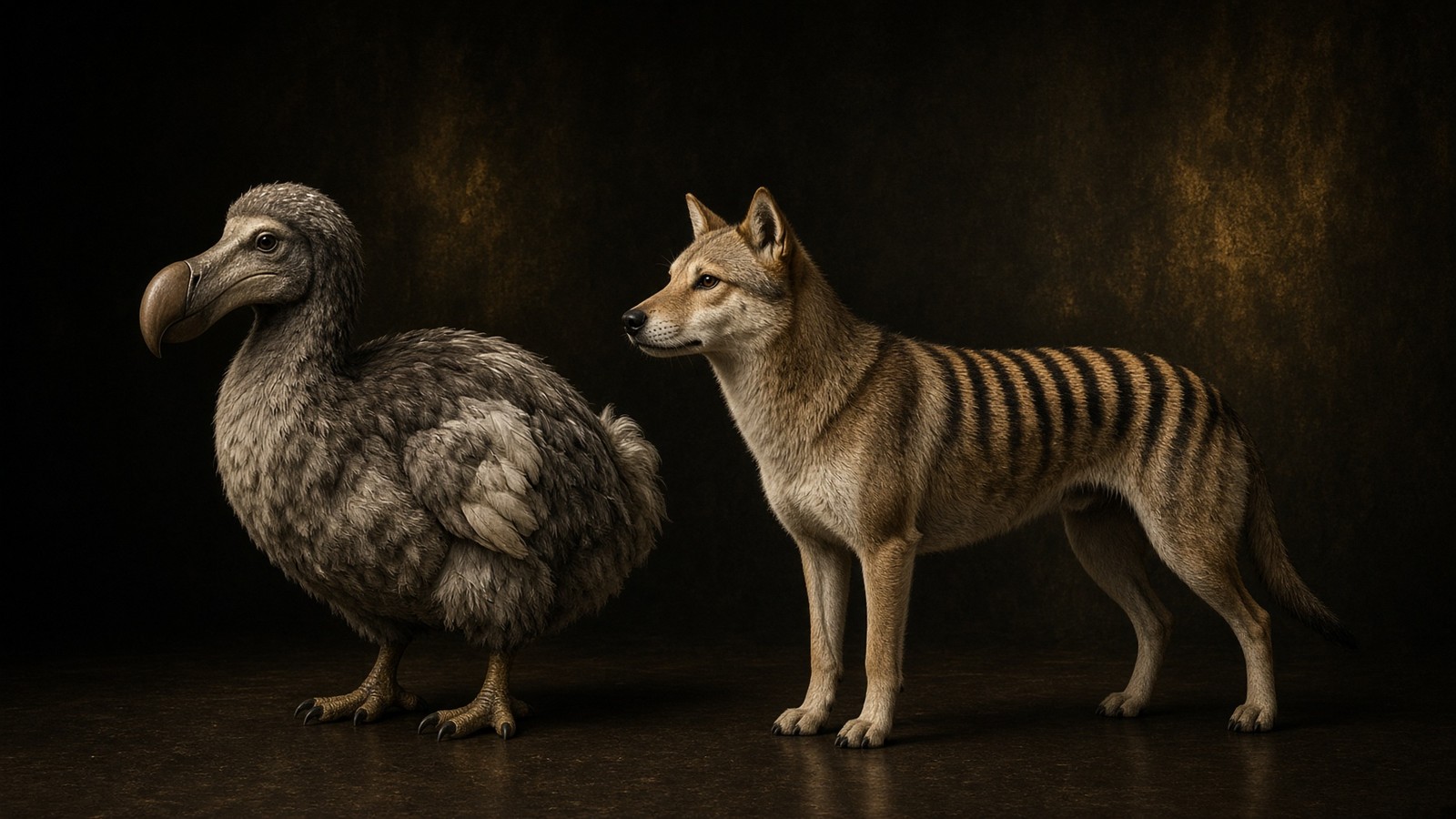
The dodo and the thylacine are in the same queue as the mammoth
Colossal’s pipeline is not one animal. After dire wolves and a mammoth timeline: a Mauritius bird rebuilt from a Nicobar pigeon, and a Tasmanian tiger rebuilt from a fat-tailed dunnart.
47 min · long read · Frontier biology
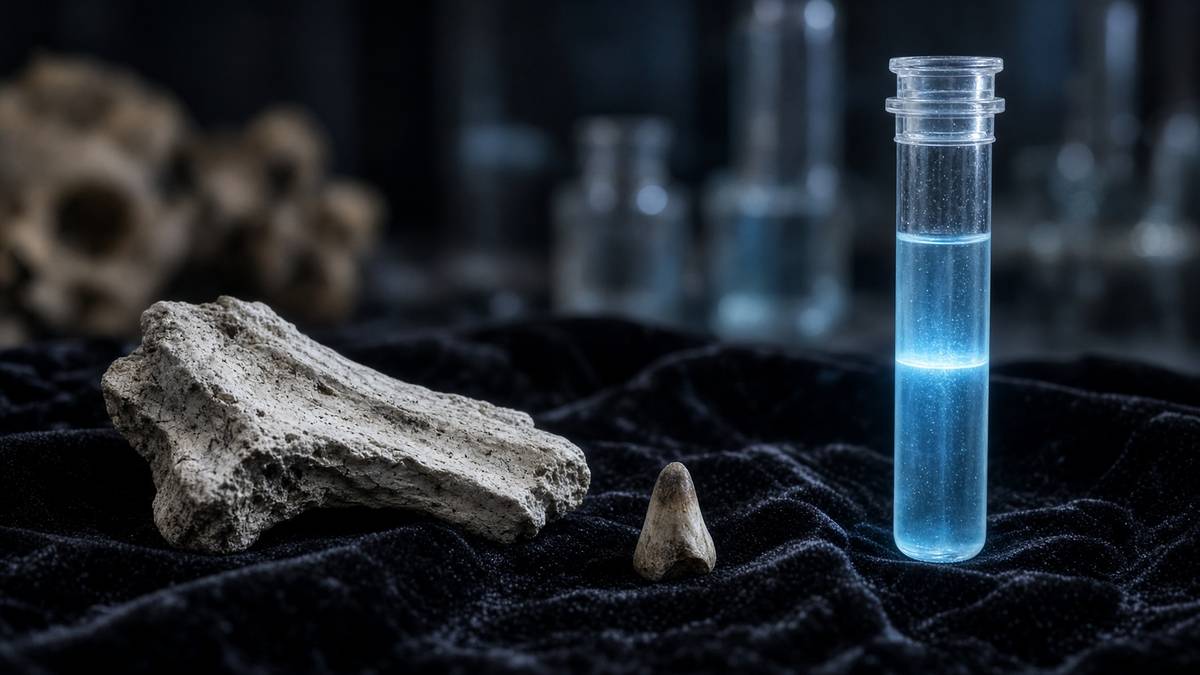
How a frozen tooth becomes a working gene
Palaeogenomics turned dirt, bone and dental calculus into genomes. De-extinction is downstream of that quieter revolution.

50 min · long read · Frontier biology
We can rewrite a genome the way a word processor rewrites a sentence
CRISPR cut DNA. Base editors change one letter without a double-strand break. Prime editors write arbitrary edits from an RNA template. The machinery is no longer hypothetical.
49 min · long read · Frontier biology
The woolly mouse is the mammoth’s twenty-day dress rehearsal
Colossal edited seven coat-and-metabolism genes into laboratory mice and got golden, shaggy, cold-curious animals. Elephant gestation is 22 months. A mouse tells you in three weeks whether the edit was worth the wait.
More in this desk
51 min · long read · Frontier biology
Tardigrades taught a human protein how to ignore radiation
Dsup, a disordered DNA-binding protein from a water bear, protects cultured human cells from X-rays. The animal that dries to a tun and lives through vacuum brought a transferable shield.
50 min · long read · Frontier biology
Xenobots: frog cells that became a new kind of machine
No genome was rewritten. Skin and heart cells from Xenopus were sculpted — first by hand, then by an evolutionary algorithm — into millimetre-scale organisms that walk, heal, and assemble copies of themselves.
49 min · long read · Frontier biology
We have the Neanderthal genome. Some of it is still in you.
Svante Pääbo pulled a genome out of bone powder, won the 2022 Nobel, and found that most people outside Africa carry a percent or two of an extinct human. Palaeogenomics is not only mammoths.
48 min · long read · Frontier biology
Brain organoids: a cortex the size of a lentil
Stem cells, left to their own patterning, build layered neural tissue in a dish. They are not minds. They are the most honest model of human development we have ever had.
Essays describe published research. They are not medical advice and they do not authorise human use of any catalogue item.