

Frontier biology · 44 min · 9,678 words
The dodo and the thylacine are in the same queue as the mammoth
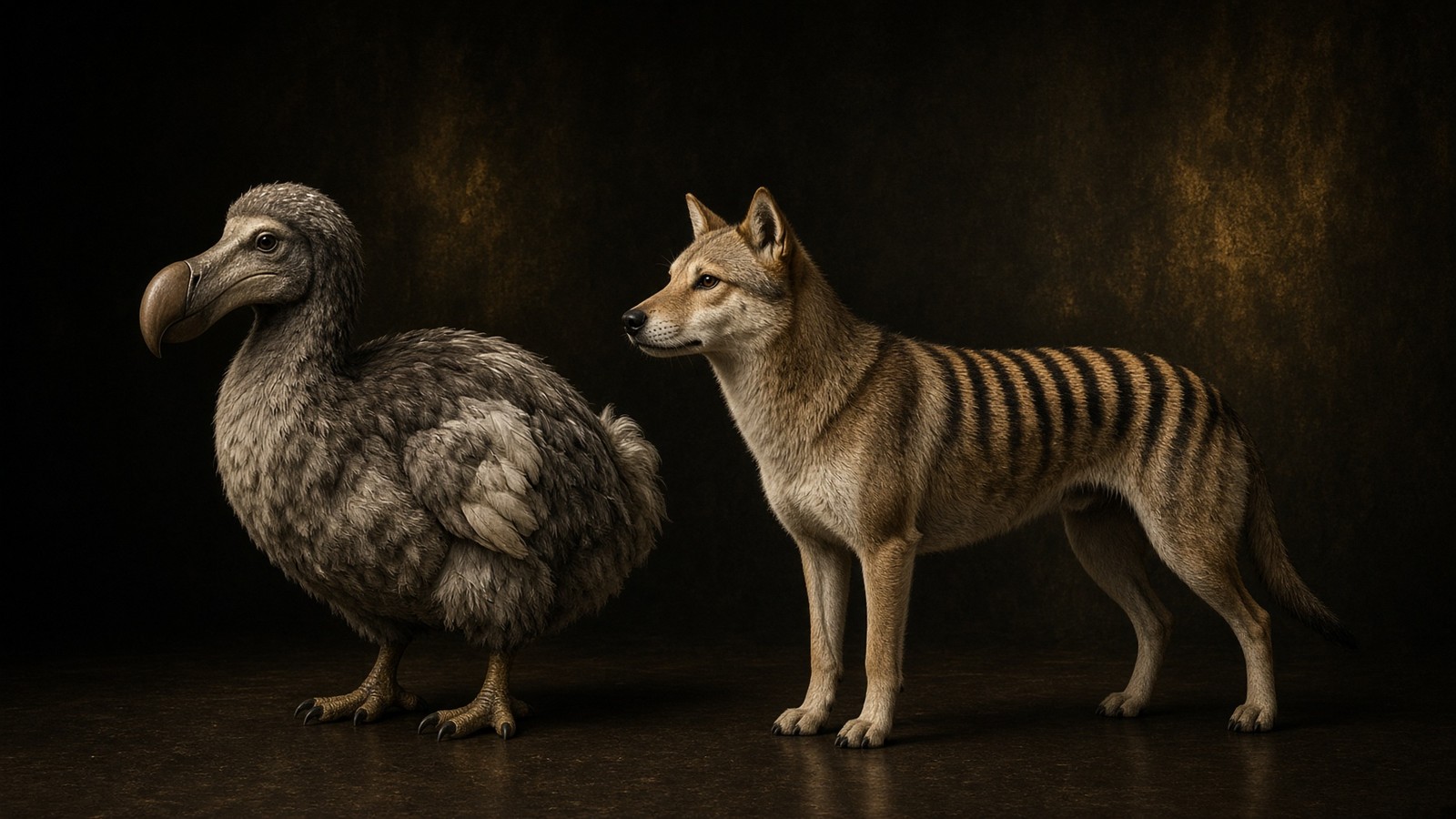
Colossal’s pipeline is not one animal. After dire wolves and a mammoth timeline: a Mauritius bird rebuilt from a Nicobar pigeon, and a Tasmanian tiger rebuilt from a fat-tailed dunnart.
What this essay actually tells you
- The dodo (Raphus cucullatus) is a giant pigeon. Colossal's path is an edited Nicobar pigeon, not a museum mount brought to life. Chassis first. Always chassis first.
- The thylacine genome has been reconstructed from a 110-year-old pouch young. A fat-tailed dunnart is the developmental chassis. Marsupial, small, breedable.
- Both sit behind the mammoth in the same factory logic: palaeogenome → living relative → trait cassette → surrogate. Queue, not a resurrection spell.
What this actually means
Once you can edit a living relative with extinct DNA, you can put more than one ghost on the calendar. Colossal has publicly committed to the dodo, using the Nicobar pigeon as the closest living stand-in, and to the thylacine (the Tasmanian tiger), using a small marsupial, the fat-tailed dunnart, as the developmental chassis. No dodo walks a forest yet. No thylacine hunts a paddock. The same Dallas-and-partners machinery that made three edited wolf pups is pointed at both, and we're keeping the scoreboard honest.
Once you have a factory that can take a palaeogenome, write a subset of it into a living relative, and push the edited cell through a surrogate, you can put more than one ghost on the calendar. That's the industrial sentence behind Colossal's dodo and thylacine programmes, and I want you to hear it as engineering rather than as a poster. The dodo, Raphus cucullatus, is a giant flightless columbid that died on Mauritius in the seventeenth century; the closest living stand-in is the Nicobar pigeon. The thylacine, Thylacinus cynocephalus, is a marsupial carnivore that died in Tasmania in 1936; the closest living stand-in small enough to husband is the fat-tailed dunnart. Same four-step line as the mammoth: palaeogenome, trait modules, living chassis, a reproductive path. Different birds, different pouches, different calendars. Nothing has hatched. The instrumentation is real. If you write 'Colossal is bringing back extinct species' as if those were one experiment, you haven't looked at a reproductive-biology lab. The factory is shared. The animals are not.
In short. The same edit-and-surrogate factory now has a dodo and a thylacine on the calendar. Nothing has hatched. The living stand-ins are a pigeon and a dunnart.
We've been watching this one the way we watch a methods paper, not a film still. Colossal announced the dodo programme in January 2023, with Beth Shapiro as the genomic lead and the Nicobar pigeon (Caloenas nicobarica) named as chassis. The thylacine work is older in the academy than it's in the press: Andrew Pask's laboratory at the University of Melbourne had already reconstructed much of the genome from an ethanol-preserved pouch young before the company partnered the programme and pointed a fat-tailed dunnart (Sminthopsis crassicaudata) at the remaining developmental problem. No dodo walks a forest. No thylacine hunts a paddock. Treating a press-render as a census is how this subject gets cheap. Treating the pipeline as imaginary is how you miss the decade you're living in. The dire-wolf pups are the existence proof that the factory can produce edited neonates of a living species wearing extinct traits. The dodo and the thylacine are the next two objects on that floor, and they are harder, for reasons a reproductive biologist could have told you before anyone hired a renderer.
In short. So nobody has a walking dodo or a hunting thylacine. The wolf pups show the factory can make edited young. These two animals are next, and they are harder.
A queue is an industrial fact. It's also a taxonomic argument waiting to happen, and we're not going to pretend those two sentences cancel. Twenty CRISPR sites did not make Romulus and Remus into Aenocyon dirus; they made grey wolves with a defined set of Ice Age alleles, and the fight over the species label is downstream of the fact that the pups breathe. The same fight is already queued for whatever hatches from a Nicobar chassis and whatever a dunnart pouch is eventually asked to carry. We hold both descriptions, as we did for the wolves. The animals, if they arrive, will be real. The passport is the fight. What this piece is for is the factory sentence itself, walked slowly enough that a colleague from another lab can see where the methods end and the render begins. Palaeogenome, then chassis, then cassette, then surrogate. Four gates. Two animals. One scoreboard we intend to keep boring on purpose.
In short. Here, a queue is just the order of work. If something hatches, it will be a real animal with a disputed name, the same argument already running over the edited wolves.
A palaeogenome is a text, not a nucleus
DNA falls apart after death, but not instantly and not evenly. In the cold, and in ethanol, and in the dense bone of a petrous pyramid, fragments survive. You fish those fragments out, sequence them by the billion, and reconstruct a consensus of something that has been dead for decades or for millennia. Svante Pääbo's Neanderthal genome was the proof that ancient DNA could be a complete book rather than a footnote in a museum caption. Since then the field has industrialised, quietly, while the rest of us were looking at CRISPR. Silica-column cleanup of ultrashort fragments. Damage patterns — C-to-T at the ends — used as authentication rather than noise. Computational genomes assembled from contamination-riddled soup. Dire-wolf work used a 13,000-year tooth and a 72,000-year skull. Mammoth work uses permafrost-preserved tissue whose collagen still remembers the Holocene. Dodo work uses museum skins and bones. Thylacine work uses a pouch young that has been sitting in ethanol since 1909. The output, in every case, is a text. I want you to keep that on the table.
In short. Dead tissue can still yield DNA scraps. You sequence the scraps and rebuild a written genome. That rebuilt text isn't a living cell, and it's not a nucleus you can implant.
The output isn't a nucleus. You get a consensus sequence with coverage gaps, especially in repetitive and GC-rich regions, and you get it with a damage map that tells you the fragments are old rather than a laboratory contaminant. Editors therefore don't restore the genome. They restore chosen loci, the ones that likely encode the phenotype you can see and husband: hair, haemoglobin, stature, dentition, the skeletal and integumentary arguments that made a flightless pigeon a flightless pigeon and a striped marsupial a striped marsupial. The rest of the extinct animal is imputed from the living sister species. That's why the mammoth is an edited elephant, the dire wolf is an edited wolf, the dodo is an edited Nicobar pigeon, and the thylacine is an edited dunnart. That's the method, not a workaround. The sci-fi is in the pipeline, not in a clone that doesn't exist.
In short. You don't restore a whole extinct genome. You copy chosen traits into a living relative and let that relative stand in for the rest. That's the method, not a workaround.
Beth Shapiro sequenced the dodo into the columbid tree two decades before Colossal hired her as chief scientist. Shapiro, Sibthorpe, Rambaut and colleagues, Science 2002, Flight of the dodo: mitochondrial sequence placing Raphus inside the pigeons, closer to the Nicobar than the folk taxonomy had wanted to admit. Soares and colleagues later put complete mitochondrial genomes under that tree and revised the timing of the columbiform radiation. The nuclear genome has been walked since, museum skin by museum skin, until Colossal could say it had a high-coverage dodo and a sister extinct species, the Rodrigues solitaire (Pezophaps solitaria), in the same folder. A chromosome-scale Nicobar genome, published from that programme, is the living reference you actually align against. The extinct bird is a variant list on that reference. That sentence is the whole palaeogenomic half of the dodo. The other half is an egg. I want you to keep that on the table.
In short. So the dodo was shown to be a pigeon by museum DNA twenty years ago. Its living reference is the Nicobar pigeon. The extinct bird is a list of differences on that reference.
The thylacine genome has been reconstructed from a 110-year-old pouch young. Feigin, Newton, Pask and colleagues, Nature Ecology & Evolution 2018, sequenced Museums Victoria specimen C5757, a female about a month old at death, one of a litter of four collected with their mother on 23 June 1909 and stored in ethanol. About 188 gigabases of reading, contaminant-filtered down to about 151, an assembly good enough to put Thylacinus as the basal lineage in Dasyuromorphia and to test, and mostly reject, the idea that its wolf-like face was written by the same amino-acid changes as a true canid. Later work in the Colossal partnership has pulled RNA from a 110-year-old skull, which is a different object: expression, not just letters, a hint of what a thylacine tongue, retina and brain were writing. Pask has said the improved genome is the most complete extinct-animal assembly they have walked, and that they hope to put it in print. A pouch young in a jar isn't a nucleus. It's the best text this animal left.
In short. The thylacine genome comes from a pouch baby stored in alcohol since 1909. Later work even recovered old RNA. That's a written record, not a cell you can grow.
What a museum mount can't give you is the rest of the nuclear argument. Chromatin is gone. Nucleosomes are gone. The histone marks that told a dodo cell which pigeon genes to treat as furniture and which to fire in a developing limb bud are gone. Hi-C maps, A and B compartments, CTCF loops, the geometry that put an enhancer on a promoter a megabase away — all of that dies with the cell, and it dies faster than the sequence. A palaeogenome is a FASTA file with gaps. The living relative is the only place those letters will ever sit on an octamer again. That's a physical reason, not a philosophical one, for chassis-first. You're not waking a stuffed bird. You're asking a Nicobar nucleus, with Nicobar packing, Nicobar methylation, Nicobar three-dimensional folding, to tolerate a cassette of dodo-derived alleles and still run a developmental programme that hatches. The packing is the half of the genome the jar can't store.
In short. A stuffed bird doesn't keep the folding and chemical marks that tell genes when to switch on. Only a living relative still has that packing. That's why the chassis has to come first.
Diagram
- 2 nmB-DNA0.34 nm/bp. Diploid G1 is ~2 metres of this.
- 11 nmNucleosome147 bp around a histone octamer. ~30 million per nucleus.
- loopsCTCF / cohesinEnhancers meet promoters by folding, not by sliding.
- µmA/B compartmentsHi-C: open A, closed B, territories at the lamina.
- 6–10 µmNucleusThe room. The search problem is the entire point of gene regulation.
Packing is not storage. It is the first regulatory decision: a promoter buried in H3K27me3 is not a promoter, it is furniture. Transcription starts when this origami opens the right 1,000 base pairs among 3.1 billion.
Chassis first
A chassis, in this factory, is a living species close enough that its cells will run an edited genome, and close enough that a surrogate of that species, or of a neighbour, can carry the result. The Asian elephant (Elephas maximus) is the mammoth chassis. The grey wolf (Canis lupus) is the dire-wolf chassis. The Nicobar pigeon is the dodo chassis. The fat-tailed dunnart is the thylacine chassis. Genetic distance is the first filter and not the only one. Birds lay eggs; marsupials crawl into a pouch after a short gestation; elephants carry for twenty-two months. The developmental system is the second filter, and it's the one that decides the queue order more honestly than a press office does. You pick the living animal whose reproduction you can actually instrument, then you ask how many extinct alleles that animal will tolerate before the embryo fails. Chassis first is the sentence a reproductive biologist writes. Museum-mount-brought-to-life is the sentence a renderer writes. We're staying with the first.
In short. So the chassis is the living species you actually edit and try to breed. You pick it for genetic closeness and because you can work its reproduction, not because it looks like the ghost.
The dodo is a giant pigeon. That's not a joke at the bird's expense; it's the phylogeny. Columbidae, the pigeons and doves, already contain a flightless giant as a historical fact, and the Nicobar pigeon is the closest living branch. Caloenas nicobarica is itself an island animal, dark-green and hackled, listed as near-threatened, with a range across the Andaman, Nicobar and other Indo-Pacific islands that's not Mauritius and doesn't need to be. Colossal has stood up a breeding colony in Texas, which is husbandry, not de-extinction, and is the unglamorous half that has to work before anyone talks about primordial germ cells. The genetic distance from Nicobar to dodo is smaller than mammoth-to-elephant in some respects and harder in others, because the missing physiology isn't a fat layer and a coat. It's flightlessness, mass, beak, gut, a frugivore's ecology on an island that has been without that bird for three and a half centuries. The chassis is a pigeon. The cassette is everything that made the pigeon a dodo.
In short. So the dodo was a giant pigeon, and the Nicobar pigeon is the closest living one. That living bird is what gets edited. A Texas breeding colony is husbandry, not a hatched dodo.
The fat-tailed dunnart is a mouse-sized dasyurid, Sminthopsis crassicaudata, fifteen grams of nocturnal insectivore with a store of fat in the tail that gives it the English name. It's not a thylacine any more than a mouse is a mammoth. It's the closest practical developmental chassis in Dasyuromorphia: short gestation, a pouch, a generation time you can run in a building, a genome already close enough that the edit list is a list rather than a rewrite of the whole animal. Pask's group has been using it as a marsupial model for years; the Colossal partnership industrialised that choice. Gestation is on the order of thirteen days. The neonate then crawls to a pouch and attaches, which is the entire point of a marsupial testbed — you're not asking an elephant cow to carry an experimental pregnancy for the better part of two years. You're asking a dunnart to do in a fortnight what the thylacine did in a pouch, and you're asking whether the cassette of thylacine-derived alleles will still let that crawl happen.
In short. The fat-tailed dunnart is a tiny marsupial used because it breeds fast and has a pouch. It's not a thylacine. It's the testbed you can actually run in a building.
Hold the four chassis in one view, because the coverage rarely does. Elephant, wolf, pigeon, dunnart. A 22-month pregnancy, a 63-day canid pregnancy, an egg, a 13-day marsupial dash into a pouch. The palaeogenomes sitting on those four animals are a 4,000-year-old mammoth, a 13,000-year-old dire wolf, a 17th-century pigeon, and a 1909 pouch young. The factory logic is identical. The instrumentation is not. If you write 'Colossal is bringing back extinct species' as if those four sentences were one experiment, you haven't looked at a reproductive-biology lab. If you write that the dodo and the thylacine are therefore imaginary, you haven't looked at the dire-wolf methods. The honest position is narrower and less exciting, which is why we prefer it. Four living relatives. Four edit lists. Four surrogate problems. Two of the four have produced neonates. Two have not. I'm still a little thrilled by that result, and then we move.
In short. So four living relatives, four kinds of pregnancy or egg, four extinct genomes. Two have produced young. The dodo and the thylacine have not. Same logic, different clocks.
Diagram
- 0.1 nmHydrogen atomA proton and an electron. Chemistry starts here.
- 0.3 nmWater molecule70% of a cell by mass. The solvent life is.
- 1 nmAmino acidTwenty kinds. Peptide bonds string them.
- 2–4 nmResearch peptideA named chain. BPC-157 is 1.4 kDa, 15 residues.
- 4–10 nmGlobular proteinHaemoglobin, a GPCR’s extracellular face.
- 25 nmRibosomeThe factory that reads mRNA into protein.
- 5 nmMembraneA lipid bilayer. Every compartment starts here.
- 0.5–1 µmMitochondrionA bacterium the cell swallowed and kept.
- 6–10 µmNucleusTwo metres of DNA folded into a sphere.
- 10–30 µmTypical cellA city. 10¹⁰ proteins. One genome.
- 1 mmTissue grainA thousand cells talking across ECM.
- 1.7 mYou~36 trillion human cells. Most of them are red blood cells.
Lengths are characteristic, not exact. A research peptide is closer in size to a water molecule than to the cell that assays it — which is why a 15-mer can occupy a receptor pocket a small-molecule drug also wants.
- Dodo
- Raphus cucullatus
- Nicobar pigeon
- Caloenas nicobarica
- Thylacine
- Thylacinus cynocephalus
- Pouch young
- C5757, 23 June 1909
- Dunnart gestation
- ~13 days
- Elephant gestation
- 22 months
- Dire-wolf-like pups
- 3 live births
- Mammoth-like calf
- targeted ~2028
Giant flightless pigeon of Mauritius. Extinct by the 1660s. Chassis: Nicobar pigeon.
Closest living relative. Breeding colony in Texas. The letters you actually pack into chromatin.
Last known individual died, Hobart Zoo, 7 September 1936. Chassis: fat-tailed dunnart.
Museums Victoria, ethanol. Feigin, Pask 2018. The 110-year-old text the reconstruction still sits on.
Then a pouch. Sminthopsis crassicaudata, ~15 g. The clock that makes a marsupial testbed a testbed.
Why the mammoth is slow, and why the woolly mouse exists. Same factory, different rung.
Romulus and Remus, 1 October 2024; Khaleesi, 30 January 2025. About twenty edits. The factory's existence proof.
Announced, staffed, not born. Dodo and thylacine sit behind that date on the same scoreboard.
The dodo is a giant pigeon
Raphus cucullatus lived on Mauritius and nowhere else. The sailors' accounts are messy, the paintings are messier, and the skeletal material is good enough that we don't need either. A flightless columbid, on the order of ten to eighteen kilograms, a metre tall in the reconstructions that aren't cartoons, a heavy beak, reduced keeled sternum, a gut built for fruit and the large seeds an island tree needed moved. Dutch landing in 1598. Extinction, on the usual reading, by the 1660s — hunted, and more decisively habitat-stripped and predator-introduced, rats and pigs and macaques doing the work that a hungry crew only started. Three generations of naturalists then spent a century arguing about whether the bird had been a myth. It had not. It was a pigeon that had been allowed, on an island without terrestrial mammals, to become enormous and grounded. That's not a moral. It's an evolutionary sentence, and it's the sentence Colossal has to reverse in a chassis that still flies.
In short. So the dodo was a huge flightless pigeon on Mauritius, gone by the 1660s. Hunters started the loss; rats, pigs and ruined forest finished it. It was never a myth.
The ecological claim, which we like because they said it out loud, is a large flightless frugivore that shaped an island. Tambalacoque, Sideroxylon grandiflorum, the so-called dodo tree, was once sold as a species that couldn't germinate without a dodo gut; that story did not survive contact with the botanists, and we'll not revive it. What survives is simpler. Mauritius had a guild of large frugivores, of which the dodo was one, the solitaire of Rodrigues another, and the surviving endemic pigeons and flying-foxes aren't a substitute for a ten-kilogram ground bird. Colossal announced the project with Mauritian wildlife authorities in the mix and later convened a Mauritius Dodo Advisory Committee to talk rewilding rather than a glass case. Ecology, not a museum mount, is the stated point. We'll like it more when something hatches, and we'll like it more still when someone publishes what a hatched bird actually eats, where it nests, and whether an island that has had three centuries to forget it still has a job for it.
In short. So the stated aim is a big fruit-eating bird that could shape a forest again, not a stuffed exhibit. That claim waits on a hatch, and then on what the bird actually does.
Columbid phylogeny is the map you need before you pick a cassette. The Nicobar pigeon is the closest living species. The tooth-billed pigeon, Didunculus strigirostris, the manumea of Samoa, is a critically endangered cousin that folk names still call a little dodo; Colossal's avian group has been generating a genome for it and, separately, helping field people look for the living bird with bioacoustics. The Rodrigues solitaire is the extinct sister, flightless on the next island, a second palaeogenome in the same radiation. Goura, the crowned pigeons of New Guinea, are large living ground-dwellers that never quite committed to the dodo's bet. Quail have been used as a developmental stand-in because avian embryology already knows Coturnix. That's a neighbourhood of genomes, not a single edit. Colossal has said it has chromosome-scale or high-quality assemblies for Nicobar, manumea, solitaire and Goura, which is how you find the variants that are actually dodo rather than generally pigeon. The cassette is the residue of that subtraction.
In short. So several living and extinct pigeons sit around the dodo on the family tree. You sequence them so you can tell which DNA letters are truly dodo, not just pigeon.
Flightlessness, in birds, is a developmental argument more than a missing organ. The keel reduces, the carpometacarpus shortens, body mass climbs, the neuromuscular pattern that would have made a downstroke never quite commits. Some of that's growth-rate. Some of it's a handful of named loci in other island rails and ducks that have made the same bet — the same convergence problem the thylacine paper already had to walk for faces. You can't assume the dodo's grounding is one gene. You can assume it's a finite set, because island birds have grounded many times, and because the Nicobar still flies, so the difference is in principle findable. Mass and beak are slower, polygenic, the sort of architecture a palaeogenome covers unevenly and a living reference covers well. Gut microbiome isn't in the FASTA file at all. Anyone promising a dodo from a variant list without a sentence about polygenic mass and a sentence about an island diet is promising a silhouette.
In short. Losing flight is a growth-and-skeleton programme, not one missing gene. Size and beak are spread across many letters. A list of edits isn't yet a bird that can eat on Mauritius.
A giant pigeon is still a pigeon at the molecular machines that matter for the factory. Same karyotype neighbourhood, same avian sex chromosomes (ZW, the female is the heterogametic one, which is the half of sex determination a mammal lab has to re-learn), same egg, same extra-embryonic membranes, same primordial germ cells that migrate into a genital ridge. That conservation is why a chicken surrogate is even discussable. It's also why the cassette has to be chosen with an avian developmental geneticist in the room, not only a palaeogenomicist. SOX2, BMP pathways, the limb-bud conversation that decides a wing, the thyroid and growth-hormone axes that decide mass: those are living pathways in a Nicobar embryo. You don't paste a dodo nucleus into an empty egg. You ask those pathways to tolerate dodo-derived alleles and still gastrulate. The giantism is the phenotype. The pigeon is the machine.
In short. Under the huge flightless body is still a pigeon's breeding system: eggs, sex chromosomes, the same early-embryo toolkit. That's why a chicken can even be discussed as a helper.
Birds lay eggs, so the surrogate is a germ cell
Mammalian de-extinction, as currently practised, is somatic-cell nuclear transfer plus a uterus. Avian de-extinction can't be that, because a bird's oocyte is a yolk-filled cell you don't easily enucleate and because the embryo is already a disc on that yolk when you can get at it. The workaround the poultry field spent thirty years building is the primordial germ cell. PGCs are the lineage that will become sperm or egg. In chickens they can be isolated from blood at a few days of incubation, cultured, genetically modified, and injected into a recipient embryo whose own germ line has been disabled, so that the hatchling is a chimera whose gonads make donor gametes. Mate two such chimeras and the offspring can be wholly donor-derived. That's how you write a chicken that lays another chicken's eggs. Colossal's avian bet is that you can do the same with pigeons.
In short. You can't clone a bird the way you clone a mammal. Grow the cells that become sperm and eggs, put them in a host, and let that host lay the edited offspring.
In September 2025 Colossal announced what it called the first long-term culture of pigeon primordial germ cells, together with gene-edited chicken surrogates that don't make their own germ cells. The chicken work sits on a decade of academic PGC culture — van de Lavoir, McGrew, the Roslin and Edinburgh lineage — in which CRISPR-edited chickens have already produced offspring from donor PGCs. Pigeons aren't chickens. Their PGCs had not, until that announcement, been a stable laboratory object. If the methods hold, the path is: edit Nicobar PGCs with a dodo cassette, inject them into a germ-line-empty chicken or pigeon host, hatch a chimera, breed, and wait for an egg whose genome is the edited one. Five to seven years was the public timeline to seeing a bird. Timelines in this factory have been wrong before, in both directions. The PGC culture is the piece that had to exist before a timeline meant anything.
In short. In 2025 they said pigeon germ cells grow in the lab, and some chickens can't make their own. The hatch clock only starts once that tool is real.
A gene-edited chicken surrogate is a husbandry object with an ethical file, and we'll not skip the file. You're using Gallus gallus domesticus as a vessel for another species' gametes. The animal hatches, grows, mates, and is asked to produce offspring that aren't itself. Poultry science already does versions of this for conservation of rare chicken breeds; the jump is the species barrier and the extinct cassette on the far side of it. Nicobar pigeons are near-threatened. Chickens are not. Using the abundant bird as the host and the scarce bird as the germline donor is, on the arithmetic, the right way round. It's still an experimental use of a sentient vertebrate, and the Mauritius committee's job, if it's doing the job, is to say whether a hatched dodo-like bird is a conservation object or a spectacle that happens to have a committee. We can describe the PGC pipeline without pretending that sentence is small.
In short. Those host chickens would carry another bird's eggs, as they already do for rare breeds. Using that tool for an extinct pigeon is still an experiment on animals.
The developmental programme that has to run inside that egg is a transcription problem, which is why the next diagram isn't a decoration. A Nicobar PGC, sitting in a chicken gonad, has to keep a germline identity — DAZL, DDX4/VASA, the RNA-binding set that marks the lineage — and then, after fertilisation, the zygote has to unzip a pigeon genome in a yolk-rich cell, gastrulate, make a primitive streak, and put PGCs of its own into a new ridge. Pol II will read the cassette you wrote only if the chromatin of the chassis permits it. An allele that made sense in a dodo skin, sitting in a Nicobar promoter with Nicobar enhancers looping in from a Nicobar TAD, may not fire at the hour a limb bud needs it. Mosaicism in the chimera, silencing of the transgene, and simple failure to migrate down the germ-cell path are the adult failure modes. The factory's avian half is therefore a transcription-and-lineage half. Editing the letters is the tractable piece. Getting a gonad to treat those letters as a germline is the art.
In short. So the edited cells must still switch on the right genes at the right hour. Changing the DNA is easier. Making a working ovary or testis is the hard step.
Diagram
Closed chromatin (H3K27me3, DNA methylation) hides the promoter. Pioneer factors and histone acetyltransferases open it.
PIC: TFIID, TFIIH, Mediator, Pol II. Ser5 phosphorylation of the CTD lets the polymerase leave the promoter.
Elongation ~20–40 nt/s. Capping, splicing, cleavage and polyadenylation happen on the still-growing RNA.
Human genes are islands in 3.1 billion base pairs of mostly noncoding sequence. Promoter, enhancers, chromatin state and the Mediator complex decide whether Pol II is allowed to fire. Epithalon’s literature sits on TERT and pineal clocks — two of the rare promoters anyone bothers to name in a peptide essay.
Hatch is still the gate. Cultured PGCs, edited chickens, a Nicobar colony, three new columbid genomes and an advisory committee are a staffing plan, not a bird. Avian reproduction is littered with chimeras that made gonads and did not make transmitting gametes, and with transmitting gametes that made embryos that died on day three. The dodo cassette will be worse than a breed-swap inside Gallus, because the cassette is trying to move mass, beak and a grounded skeleton across a species split. We would rather have the PGC paper than the render. We'll not write the PGC paper as a hatch. Colossal's own scoreboard, read honestly, already knows this: dire-wolf-like pups born, mammoth-like calf targeted around 2028, dodo and thylacine announced and staffed. The avian column of that scoreboard is a cell-culture result. Cell culture is how this factory always starts. It's not how it's allowed to finish, and the Mauritius forest doesn't care about a well.
In short. Grown germ cells and edited host birds are a plan, not a hatch. Many chimeras fail to pass on the donor eggs or sperm. Mauritius still has no dodo in that forest.
A marsupial is a different factory again
The thylacine was a striped, wolf-shaped marsupial, the largest carnivorous Australian marsupial to survive into the modern era, and it wasn't a wolf. Last common ancestor with the eutherian canids about 160 million years ago; the facial resemblance is the textbook case of convergence, and Feigin and Pask spent a paper showing that the amino-acid homoplasies are largely consistent with neutral evolution rather than a shared adaptive script. Thylacinus cynocephalus: a stiff tail, a pouch that opened backward, a gape the photographs still make people uncomfortable about, a hunting pattern we've to reconstruct from tracks, stomach contents and a handful of moving pictures. It was already rare on the Australian mainland by the late Holocene, persisted in Tasmania, and was then bountied into a zoo. The last known individual died in Hobart Zoo on 7 September 1936. That date still makes the Australian members of our reading pile wince. It's also within living memory of a living genome, which is why this animal is even on a factory floor.
In short. So the thylacine looked like a wolf and was a marsupial, last seen dead in Hobart Zoo in 1936. The wolf face is convergent, not kinship. That recent date is why a genome still exists.
Convergence is the scientific reason to care, and it's the reason a dunnart chassis isn't a cop-out. If the wolf-face were a hundred identical amino acids, you could paste them. It's not. Comparative genomics in the 2018 paper found that the genes and pathways under positive selection in thylacines and in canids differ markedly; the silhouette was reachable by more than one molecular route. That's a gift to a de-extinction programme and a warning. A gift, because you may not need to rewrite a canid face onto a dasyurid. A warning, because the alleles that made a thylacine skull a thylacine skull may be many, small, regulatory, and only visible once a neonate has to suckle and gape. Twenty edits made a paler, heavier-headed wolf. Two hundred, or two thousand, is the range people now argue for a thylacine, and we're not going to pretend we know the number. The number is an experimental object. It will be whatever a dunnart embryo will tolerate while still crawling to a pouch.
In short. Looking like a wolf doesn't mean sharing a wolf's gene list. The face was built by a different route. Nobody yet knows how many edits a stand-in marsupial can carry and still live.
A 110-year-old pouch young is a very particular fossil. Soft tissue, ethanol, a female a month old, DNA fragments of 300 to 600 base pairs rather than the ultrashort wreckage of a Pleistocene bone. That's why the assembly exists at all. Pääbo's field had to invent authentication for scraps of fifty bases; Pask's specimen was, by ancient-DNA standards, luxurious. It was still dead. It still had no intact chromosomes to transfer, no spindle to put them on, no uterus of its own. The later RNA from a 110-year-old skull is more luxurious still, and more fragile: expression hints for taste, smell, vision and brain, if the damage map and the contamination controls hold. We find that sentence moving in a way a render is not. A dead pouch young, speaking, through a sequencer, about what its tongue was doing. The factory then has to decide which of those expressed loci are cassette material and which are a dunnart's business to keep.
In short. So the pouch baby in alcohol still had longer DNA pieces than an Ice Age bone, which is why the genome could be rebuilt. It was still dead. Nothing in the jar can be grown.
Andrew Pask is the academic through-line, and naming him is how you find the papers. University of Melbourne, School of BioSciences; the 2018 genome; earlier work putting a thylacine gene into a mouse and getting a developmental readout, which is the existence proof that at least some thylacine loci still mean something in a living mammal. Colossal partnered the laboratory, then absorbed its focus. Pask has told Australian reporters he hopes to publish the improved genome and that a living animal by 2036 — the centenary of the Hobart death — is the date he is willing to say out loud. Eight years, from a 2026 interview, is a reproductive-biology date, not a sequencer date. The sequencer date is sooner. The pouch date is the one that counts. We'll keep those two clocks separate, as we do for the mammoth's 2028, because conflating a genome announcement with a neonate is how this subject got loud enough to drown the methods.
In short. So Andrew Pask's Melbourne lab built the genome and now runs the company's marsupial work. A finished genome is soon. A living animal, if it comes, is a much later clock.
Marsupial reproduction is the reason this factory isn't the wolf factory with stripes drawn on. The neonate is embryonic by eutherian standards: a crawl, an attachment to a teat, a pouch that does the work a placenta would have done. That's a gift, because failures happen at a gram rather than at a kilogram, and because the pouch is observable in a way a uterus is not. It's a constraint, because the crawl is a behaviour a genome can break, and because dunnart husbandry at the scale of an experimental colony is still a specialist craft. Colossal has published, through the Melbourne partnership, an embryonic atlas of the fat-tailed dunnart and a description of the pregnant endometrium, which is how you stop treating the chassis as a mouse with a pouch. Comparative mammalian developmental biology is the actual discipline. De-extinction is the press name for a subset of its assays.
In short. Marsupial young are born tiny and finish growing in a pouch. That makes failures cheaper to see, and it makes the crawl to the pouch a step the genome isn't allowed to break.
The dunnart as developmental chassis
Sminthopsis crassicaudata has been a laboratory marsupial for a reason. It breeds in captivity, it tolerates a range of temperatures, it stores fuel in the tail, and its genome sits inside Dasyuromorphia with the thylacine rather than across the 160-million-year gulf that separates either of them from a wolf. Pask has quoted a figure of the order of 99.8 percent identity; we'll treat that as a company-adjacent number until a paper tables the alignment, because identity percentages are how this field oversells a chassis. What isn't in dispute is relatedness: dunnart, quoll, Tasmanian devil, numbat, thylacine, a radiation of marsupial carnivores and termite-eaters that share a pouch logic and a karyotype neighbourhood. The devil is endangered and a specialist. The dunnart is the one you can keep in a rack. Chassis choice is that practical. It's also an ecological debt, because Sminthopsis crassicaudata is itself listed as a species you don't casually spend, and a factory that burns through dunnarts to debug a thylacine cassette will have to say so in the ethics section, not only in the methods.
In short. So the fat-tailed dunnart is the small marsupial you can breed in a lab and whose family tree sits next to the thylacine.
Thirteen days of gestation, then a pouch. The embryonic atlas now in print is the document a developmental biologist actually wants: stage by stage, the hour at which a neural tube closes, a limb bud appears, a PGC arrives. You can't debug a cassette you can't stage. Mouse staging (Theiler) and chick staging (Hamburger–Hamilton) are a century old; marsupial staging at this resolution is new enough to be a result in itself. Once you have it, the edit list becomes a set of predictions you can fail. Knock a craniofacial enhancer and look at the hour the snout should lengthen. Stack myosin and skeletal alleles and look at the hour the neonate must climb. That's trait engineering with a clock, which is a much less glamorous sentence than a striped render and a much better one. The dunnart isn't a miniature thylacine. It's a living assay for whether those modules, stacked, produce a programme you can later call a proxy.
In short. Here, a published stage-by-stage map of dunnart embryos lets you test each edit at a known hour. The small animal is an assay for the trait package, not a toy tiger.
In October 2024 Colossal reported more than 300 unique genetic changes written into a fat-tailed dunnart cell line, and called it the most-edited animal cell to date. We'll let that superlative sit with the press office. The number is the interesting document. Three hundred is already an order of magnitude above the dire-wolf twenty, which is what you would expect if you were serious about a species split inside Dasyuromorphia rather than a coat-colour cassette inside Canis. Multiplex CRISPR, prime editing, base editing: the same family of tools the neighbouring CRISPR essay walks, pointed at a marsupial fibroblast. A cell line isn't a neonate. Most of those 300 will have to survive cloning or some other route into an oocyte, then a 13-day gestation, then a crawl. The failure modes are mosaicism, off-target writing, an essential dunnart locus sacrificed to a thylacine allele, and simple aneuploidy. Three hundred edits is a punch list. It's not yet a pouch.
In short. Hundreds of changes have been written into dunnart cells, far more than for the wolf pups. A changed cell isn't a baby. Those edits still have to survive a pouch.
Whether twenty, two hundred or two thousand edits make a thylacine is the same argument already running over the dire wolves, only with a pouch. Conservation geneticists will say, correctly, that a species is a population, a phylogeny, a reproductive community, not a silhouette assembled from a punch list. Colossal will say, also correctly, that a proxy organism you can husband is a different and defensible goal, and that the papers never promised a time machine. Shapiro has been the one to say the molecular sentence out loud for the wolves: these animals are grey wolves with a defined set of edits. The equivalent sentence for a future pouch young is that it will be a dunnart with a defined set of thylacine-derived alleles. We're with Shapiro on the molecular sentence. We're with the conservation people on the vocabulary. Both can be true at the same time, which is why this one will get loud, and why we're writing the sentence down before the render does.
In short. A handful of edits did not make a new wolf species, and a larger handful won't automatically make a thylacine. The honest name is a dunnart carrying chosen extinct traits.
Cloning into a dunnart egg is the remaining mammalian gate, and it's not a small one. Somatic-cell nuclear transfer in marsupials isn't the industrial technique it's in cattle and in mice. Oocyte yield, oocyte maturity, the trick of enucleation on a small egg, electrofusion, and the peculiar timing of marsupial cleavage: those are the crafts. Pask's group and the company have to make them routine before 300 edits in a fibroblast become 300 edits in a neonate. Artificial wombs have been mentioned in the same breath as this programme; a marsupial, whose uterus is already a short-stay car park before the pouch, is the least absurd place to try one. Mentioned isn't demonstrated. Until a cloned dunnart neonate with a non-trivial cassette attaches to a teat and stays there, the thylacine column of the scoreboard is a cell line and a genome. We've looked at the striped renders more times than we'll admit. We still stop on that sentence.
In short. So: putting an edited nucleus into a dunnart egg is still a hard, specialist step.
The trait cassette is a punch list
Name the modules, because the names are how you actually design one. For the mammoth the list is public enough to recite: hair-follicle density and length, subcutaneous fat, ear size, cold-stable haemoglobin, a handful of others. For the dire wolf it was coat, skull, stature, about twenty genes, fifteen of them extinct-derived. For the dodo the list is still being subtracted from the Nicobar, manumea, solitaire and Goura neighbourhood: mass, keel, beak, perhaps a colour, perhaps a gut-enzyme set, the flight-muscle programme run backward. For the thylacine it's craniofacial shape, stripe, stature, dentition, a sensory sheet the RNA may help to pick. A cassette is that list, written as alleles, ranked by how likely they are to move a husbandable phenotype and by how likely they are to kill an embryo. You don't start with the romantic ones. You start with the ones a neonate can survive. Coat before tusk. Beak before island. Stripe before gape. That ranking is engineering, and it's more honest than a viral image of a calf, a pigeon or a pouch young.
In short. So each animal is a short list of traits you can breed for: coat, beak, skull, stripes. Start with the changes a newborn can survive, not the poster.
Multiplex editing is the machine that makes a cassette a cassette rather than a decade of serial crosses. Cas9 for the cuts you can tolerate, base editors for the single letters you can't afford to indel, prime editors for the small insertions a palaeogenome actually asks for. David Liu's laboratory spent a decade turning scissors into pencils; Dallas is a customer of that decade. Off-target writing, on-target mosaicism, and the simple arithmetic of delivering a dozen guides into one nucleus are the adult problems. A 300-edit dunnart cell that's a mosaic of 300 different incomplete lists isn't a chassis, it's a library. Clone from a cell you have sequenced, not from a dish you have treated. That's the same discipline a gene-therapy manufacturing suite already knows, pointed at an extinct punch list. A clean 'we edited the genome' pitch without those caveats is selling a press release. A claim that it can't be done is 2012 talking.
In short. So: many genes have to be changed in one cell, cleanly, and then that exact cell has to be the one you clone. A messy mix of half-edited cells is a library, not a parent.
Regulatory sequence will dominate the interesting half of both cassettes, and palaeogenomics is at its weakest there. Amino-acid changes in a coding exon are the easy recoveries: you see them, you can check they aren't damage, you can write them with a base editor. An enhancer that sat 400 kilobases from a craniofacial transcription factor in a dodo TAD is a guess, even with a Nicobar Hi-C map in hand, because the dodo's looping is gone. Some of the giantism and some of the snout will live in those guesses. This is why a developmental chassis with a staged atlas matters more than another increment of coverage on the extinct FASTA. You write the best guess, you stage the embryo, you see whether the snout moved. Failed guesses are data. The factory that can't throw a failed cassette away isn't a factory, it's a museum with a sequencer. We would like Colossal to publish the failed lists. We don't expect to get them.
In short. So many important differences sit in DNA switches, not in the genes, and those switches are hard to rebuild from old bone. Test the guess in an embryo.
Our animals are grey wolves with 20 edits that are cloned. Colloquially, they’re calling them dire wolves and that makes people angry.— Beth Shapiro, as reported in 2025 interviews — the molecular sentence this whole queue still has to say out loud
Shapiro's sentence travels. Replace grey wolves with Nicobar pigeons and 20 with whatever the avian cassette settles at; replace them with dunnarts and 300. Colloquially, a hatch will be called a dodo and a pouch young will be called a thylacine, and that will make people angry, and some of those people will be right about the vocabulary while being wrong about the achievement. A 13,000-year-old tooth yielded sequence, sequence yielded edits, edits yielded animals that howl in this century. That pipeline — palaeogenomics to CRISPR to clone to neonate — is a new industrial capability, whether or not the IUCN ever issues a dire-wolf passport. The dodo and the thylacine are queued on the same floor. The fight over names is downstream of the fact that the floor works. We can argue taxonomy after we've admitted the pups exist, and we can refuse the word 'dodo' for an edited pigeon without refusing the PGC culture that made the argument possible. Both refusals are available. Only one of them is serious.
In short. So the scientist in charge already says the wolf pups are edited grey wolves. The same honest sentence will have to be said of any pigeon or dunnart that follows, whatever the posters call it.
One neonate is not a species
A species, on the definition a conservation geneticist will actually defend, is a population that persists, interbreeds, and occupies a niche. One edited hatch is a proof of pipeline. Ten are a colony in a barn. A hundred, on Mauritius, with a diet, a nest, a predator sheet and a disease sheet, would be the beginning of an ecological argument. Colossal's Mauritius Dodo Advisory Committee exists to talk that argument into being before the hatch, which is the right order if the committee has teeth. An island that has spent three centuries without a ten-kilogram ground bird has filled the gap with invasives and with people. Releasing a proxy into that gap is a translocation, and translocations fail often enough that the IUCN has guidelines. We'll not write a rewilding prospectus. We'll write that ecology was named as the point, that naming it's better than not, and that a committee isn't a forest. The neighbouring conservation programmes — whooping-crane genomics, manumea surveys — are the bit of this company that already looks like a conservation lab. They are also easier to defend than a dodo.
In short. One hatched bird would prove the pipeline. A species would be a breeding population doing a job on Mauritius. A committee can plan that. It can't stand in for a forest.
Tasmania is a different ecological file. The thylacine was an apex predator in a landscape that now has Tasmanian devils, feral cats, an island-wide devil facial-tumour epidemic, and a human politics of culling and of conservation that doesn't need a striped ghost in order to be difficult. Pask has talked about a living animal by 2036 and about a return to the wild on a longer clock. A dunnart-derived proxy on a private reserve is the likely first public fact, by analogy with the wolf pups. A hunting population in Tasmania is a much larger fact, and it's one a factory in Dallas can't ship. Disease, prey-base, public consent, and the simple ethics of putting a novel carnivore onto an island are the remaining gates, and they aren't CRISPR gates. We still stop on that sentence. The pouch is the scientific remaining gate. The island is the civic one. Conflating them is how you get a documentary in which a render walks through a paddock and nobody asks who owns the paddock.
In short. Here, a thylacine-like animal on a private reserve is one kind of result. A hunting population in Tasmania is another, and it runs into disease, prey, consent and law, none of which are gene-editing problems.
Endangered surrogates are the ethical cost the mammoth programme can't dodge, and the dodo and thylacine programmes are, on this one point, cleaner. Asian elephants are endangered; putting them through experimental pregnancy for a cold-adapted cousin is the gate Church's group has always known was the hard one. Nicobar pigeons are near-threatened, but the host in the PGC scheme can be a chicken. Dunnarts aren't elephants. The arithmetic of who suffers the experiment is better for the two animals at the back of the queue than for the one at the front. That doesn't make the arithmetic free. Germ-line-empty chickens, dunnart oocyte donors, a colony of Nicobars kept in Texas rather than in the Indo-Pacific: those are animal-use files, and a serious programme publishes numbers culled, numbers failed, numbers standing. We've not seen those numbers at the resolution we would like. We'll keep asking. A factory that won't count its surrogates isn't yet a factory we would let near an island.
In short. Using chickens and small marsupials as hosts is easier to defend than using endangered elephants. It's still an animal experiment, and the failures have to be counted in public.
The conservation flywheel is the company's preferred frame: tools built for ghosts, applied to the living. Whooping-crane genomics showing a 70 percent loss of historical diversity despite a demographic recovery; bioacoustics for the manumea; a 2026 partnership between the Colossal Foundation and the IUCN Species Survival Commission with money attached. Those are real documents. They don't make a dodo a conservation win in advance. They do make it harder to write the whole enterprise off as spectacle, and we'll not do that writing. A sequencer pointed at a museum skin and a sequencer pointed at a whooping crane are the same machine. A PGC culture that could hatch a dodo could also hatch a pigeon breed that's down to a few pairs. Platform technologies don't care about the ethical payload. People have to. That's the unsettling elegance, and we're living inside it, and the dodo is one of the payloads, not the proof that the platform is virtuous.
In short. The same tools can help living endangered birds, and some of that work is already real. That doesn't automatically make a dodo a conservation win. People still have to choose the target.
Diagram
| Node | Catalogue | Conversation |
|---|---|---|
| GPCR | Ipamorelin, MT2, PT-141, retatrutide, CJC | Second messengers, secretion, appetite, pigment |
| RTK / IGF1R | IGF-1 LR3 | IRS–PI3K–Akt–mTOR and Shc–ERK |
| Cytokine receptor | Somatropin (HGH) | GHR–JAK2–STAT5b, hepatic IGF-1 |
| Cofactor | NAD+ | Sirtuins, PARPs, CD38, redox |
| Actin buffer | TB-500 / Tβ4 motif | G-actin sequestration, motility |
| Growth-factor-like | BPC-157 | VEGFR2 / FAK / eNOS neighbourhood |
| Copper ligand | GHK-Cu | Transcriptome shift in fibroblasts |
| MC fragment | KPV | NF-κB, PepT1, no pigment |
| Nuclear / pineal | Epithalon (AEDG) | TERT and melatonin literatures |
| mtORF peptide | MOTS-c | AMPK, folate–methionine cycle |
Each row is a different kind of molecular conversation. The catalogue peptides bind at these nodes; they are not interchangeable, and stacking them because a forum did mixes unrelated literatures.
The queue, kept in order
Scoreboard, kept boring on purpose. Dire-wolf-like pups: born, three of them, 2024 and 2025, grey-wolf genomes with a defined cassette, living on a private reserve, the species label in dispute. Mammoth-like calf: targeted around 2028, Asian-elephant chassis, editing phase described as largely complete, IVF and ovum retrieval running for years, no calf. Dodo: Nicobar chassis, pigeon PGC culture announced 2025, gene-edited chicken hosts, genomes for the neighbourhood, Mauritius committee, not hatched. Thylacine: 110-year-old pouch-young genome, dunnart chassis, embryonic atlas, hundreds of edits in a cell line, not pouched. Woolly mice exist as the mammoth's twenty-day dress rehearsal. The avian and marsupial columns are still cell culture and a genome, which is how the factory always starts. That's the current, true board. We'll update it when a hatch or a pouch young forces us to. We'll not update it for a render, a fundraising round, or a timeline that slides.
In short. Born: three edited wolf pups and the woolly mice. Not born: the mammoth calf, the dodo, the thylacine. That's the whole scoreboard, kept dull on purpose.
The factory works well enough to produce edited neonates of a living species wearing extinct traits. The factory hasn't yet produced a dodo or a thylacine. Both halves of that couplet are required, and the coverage rarely holds both. A 13,000-year-old tooth to a variant list to twenty CRISPR edits to a cloned neonate is a pipeline that did not exist when most of us learned biology. It exists now, in Texas, with a press office, and in Melbourne, with a pouch-young jar on the methods lineage. Our job is to describe it without inflating the taxonomy or shrinking the achievement. Both sins are common. Both are avoidable if you just say what the papers says. Palaeogenome, living relative, trait cassette, surrogate. The dodo is a giant pigeon, and the path is an edited Nicobar, not a museum mount brought to life. The thylacine genome has been reconstructed from a 110-year-old pouch young, and a fat-tailed dunnart is the developmental chassis. Chassis first. Queue, not a spell.
In short. The factory can already make living young that wear a few extinct traits. It hasn't made these two animals. Say both of those things, in that order, and the story stays the right size.
Named papers, because a queue without documents is a rumour. Feigin, Pask, Nature Ecology & Evolution 2018, the pouch-young genome. Shapiro, Science 2002, the dodo inside the pigeons. Soares and the later columbid mitochondrial trees. The 2025 chromosome-level Nicobar genome from the Colossal avian group. The dunnart embryonic atlas. Chen and colleagues on the woolly mouse, bioRxiv 2025, seven coat-and-metabolism genes stacked in Mus. Liu's prime-editing Nature paper, 2019, the pencil this factory writes with. Pääbo's Neanderthal genome, the proof that a book can be recovered from fragments. van de Lavoir and the chicken-PGC literature, the only reason an avian column on this scoreboard is discussable. That's a fortnight of evenings, not a guru. The renders will still be there when you come back, and they will look smaller, which is the correct size for a render sitting next to the papers.
In short. Here, a short stack of named papers covers the thylacine genome, the dodo's place among pigeons, pigeon germ cells, and the editing tools. Read those before any poster.
What you should leave with is a map, not a poster. De-extinction, done honestly, is trait engineering with a living relative as chassis. The palaeogenome is a text with gaps. The chassis supplies the nucleus, the chromatin, the egg or the pouch, the husbandry. The cassette is a ranked list of alleles you're willing to write and a longer list you're not. The surrogate is a chicken gonad, a dunnart teat, an elephant uterus, a wolf uterus — four different machines, one word. Two of those machines have produced neonates. Two have not. The dodo and the thylacine sit behind the mammoth because an egg and a pouch are harder instrumentation problems than the press cycle wants, not because they are less real as programmes. Treating them as resurrected is a category error. Treating them as vapour is a different category error. The queue is the remaining honest noun.
In short. So: leave with the map: old text, living relative, chosen traits, surrogate. Two of four surrogates have produced young. The dodo and the thylacine are real programmes on an unsolved reproductive problem.
- Palaeogenome: consensus sequence from skin, bone, tooth or a 1909 pouch young. Text, not nucleus.
- Living relative: Nicobar pigeon, fat-tailed dunnart, Asian elephant, grey wolf. Chassis supplies chromatin and reproduction.
- Trait cassette: ranked alleles for a husbandable phenotype. Twenty for a wolf; hundreds in a dunnart cell; the dodo list still being subtracted.
- Surrogate: PGC chimera and an egg; a dunnart pouch; an elephant uterus; a wolf uterus. Two of these have produced neonates.
- Population: not a hatch. An island, a disease sheet, a committee with teeth, a census that is not a render.
The dates still startle me, because the dates are how you stop a queue becoming a myth. Mauritius without a dodo since the 1660s. Hobart Zoo, 7 September 1936. Pouch young collected 23 June 1909, sequenced a century later, still the text. Dire-wolf-like males on 1 October 2024, a female on 30 January 2025. Woolly mice born October 2024, shown March 2025. Pigeon PGC culture, September 2025. Mammoth-like calf, targeted around 2028. Pask's public thylacine, 2036, a centenary he is willing to aim at. Dodo hatch, five to seven years from the PGC announcement if you believe the public clock, longer if you believe avian chimeras. Write them in a lab book. The factory is a calendar. Calendars slip. The methods don't become imaginary when they slip, and they don't become a forest when they hold. Hold that; we will need it two headings from now.
In short. The useful dates are the deaths, the pouch-young collection, the wolf births, and the still-future hatch. Write them down. A slipped calendar isn't a fake factory.
Close, then, on the two animals rather than on the company. The dodo is a giant pigeon. Colossal's path is an edited Nicobar pigeon, not a museum mount brought to life. Chassis first. The thylacine genome has been reconstructed from a 110-year-old pouch young. A fat-tailed dunnart is the developmental chassis. Both sit behind the mammoth in the same factory logic: palaeogenome, living relative, trait cassette, surrogate. Queue, not a resurrection spell. If a bird hatches, we'll describe the bird, the cassette, the host, and the island it's not yet on. If a pouch young attaches, we'll describe the neonate, the edit list, the dunnart that carried it, and the paddock it's not yet hunting. Until then the honest paragraph is the one you have just read, and the honest picture is a factory floor with two empty slots and a scoreboard we're keeping that boring on purpose.
In short. The dodo path is an edited living pigeon. The thylacine path is an edited living dunnart. Both wait behind the mammoth on the same four-step line. Nothing has hatched. That's the news.
Questions the essay actually answers
- Are the dodo and the thylacine being brought back?
- Colossal has announced both, staffed both, and hatched neither. The dodo uses a Nicobar pigeon chassis; the thylacine uses a fat-tailed dunnart. Both sit behind the mammoth on the same four-step factory logic: palaeogenome, living relative, trait cassette, surrogate.
- Why a Nicobar pigeon for the dodo?
- It's the closest living relative of Raphus cucullatus. The dodo is a giant pigeon; Colossal's path is an edited Nicobar, not a museum mount brought to life. Birds lay eggs, so the surrogate problem becomes primordial germ cells and an avian hatch.
- What about the Tasmanian tiger?
- The last known thylacine died in Hobart Zoo on 7 September 1936. Andrew Pask's lab reconstructed the genome from a 110-year-old ethanol-preserved pouch young (Museums Victoria C5757, collected 1909). A fat-tailed dunnart is the developmental chassis. No thylacine hunts a paddock yet.
- Is the dodo a pigeon?
- Yes. Raphus cucullatus is a giant flightless columbid. Shapiro, Science 2002, put it inside the pigeons on mitochondrial sequence, closer to Caloenas nicobarica than folk taxonomy wanted. Chassis first follows from that tree.
- How do you make a bird if you can't clone an egg?
- Primordial germ cells. Culture them, edit them, inject them into a host embryo whose own germline is disabled, hatch a chimera, breed. Colossal announced pigeon PGC culture and germ-line-empty chickens in September 2025. That's a cell-culture result, not a hatch.
- Why a fat-tailed dunnart?
- Sminthopsis crassicaudata is a mouse-sized dasyurid with a ~13-day gestation and a pouch, related to the thylacine inside Dasyuromorphia. It's a developmental testbed, not a miniature thylacine. Failures happen at a gram rather than at a kilogram.
- How many edits make a thylacine?
- We don't know, and we're not going to pretend to. Dire-wolf-like pups carried about twenty. Colossal has reported more than 300 changes in a dunnart cell line. A species isn't a punch-list length. The honest molecular sentence is a dunnart with a defined set of thylacine-derived alleles.
- What is a palaeogenome?
- A consensus sequence reconstructed from fragments in bone, skin, tooth or, here, a 1909 pouch young. Coverage gaps, damage maps, no nucleus, no chromatin. Editors restore chosen loci. The living sister species imputes the rest.
- Where does this sit relative to the mammoth and the dire wolves?
- Same factory floor, later in the queue. Dire-wolf-like pups exist. A mammoth-like calf is targeted around 2028. Dodo and thylacine are announced and staffed. Egg and pouch are harder instrumentation than a wolf uterus, which is why they sit behind.
- Would a hatch be a dodo?
- It would be a Nicobar pigeon with a defined set of dodo-derived alleles, on the same logic Beth Shapiro has already used for the wolves. Colossal may call it a dodo. Conservation geneticists will not. Both descriptions belong in the essay. The bird, if it hatches, will be real. The passport is the fight.
Read next
48 min · long read · Frontier biology
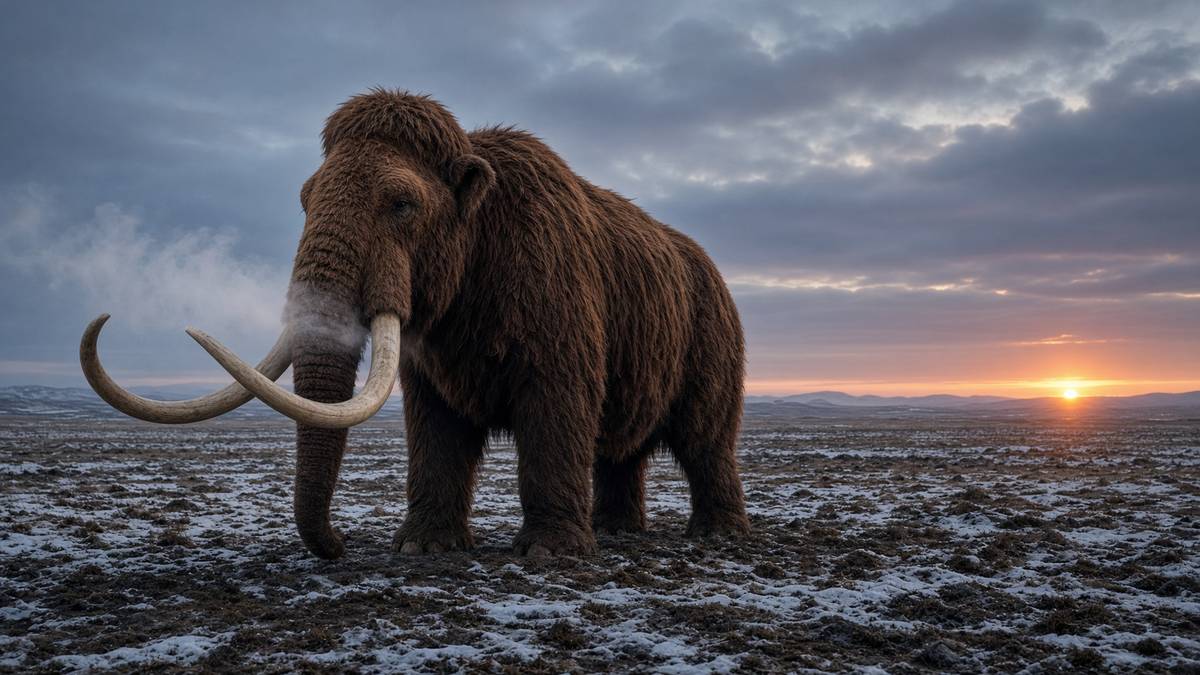
The mammoth is being rewritten in Texas
Inside Colossal Biosciences’ Dallas headquarters, Asian elephant cells are taking on the genes of a 4,000-year-old ghost. The target is a calf around 2028. This is not a film treatment.
46 min · long read · Frontier biology
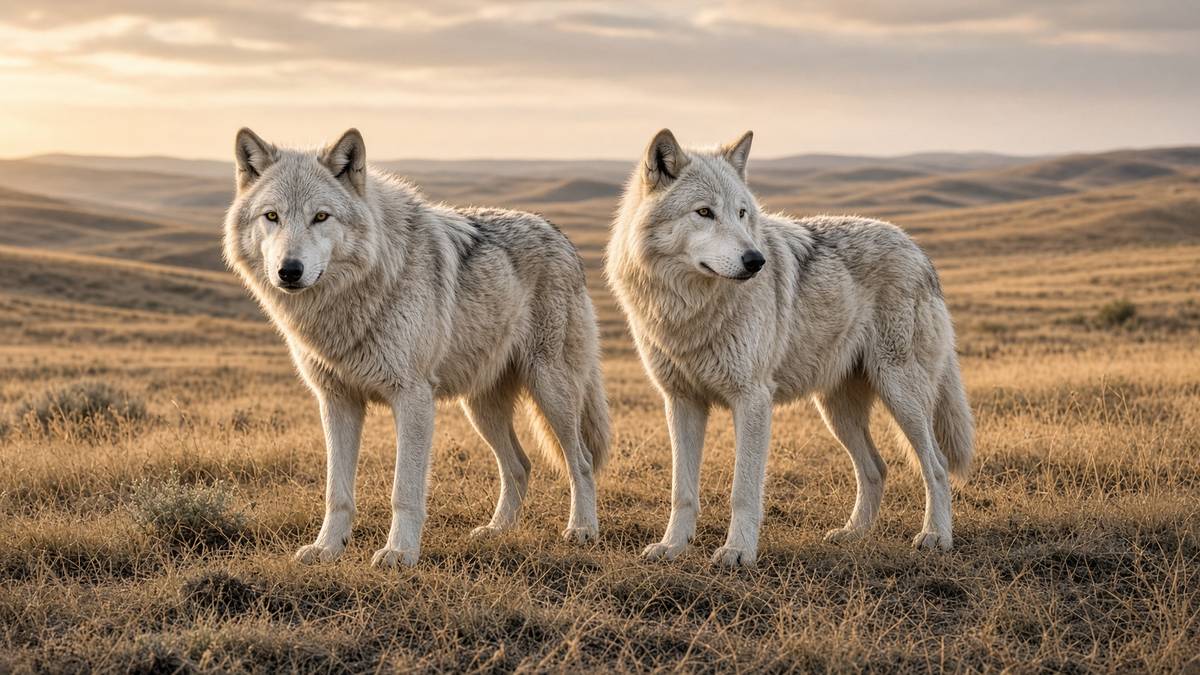
Romulus, Remus and the argument over a dire wolf
Three pups born from grey-wolf cells edited with Ice Age DNA became the most famous animals of 2025. They are also the most disputed.
47 min · long read · Frontier biology
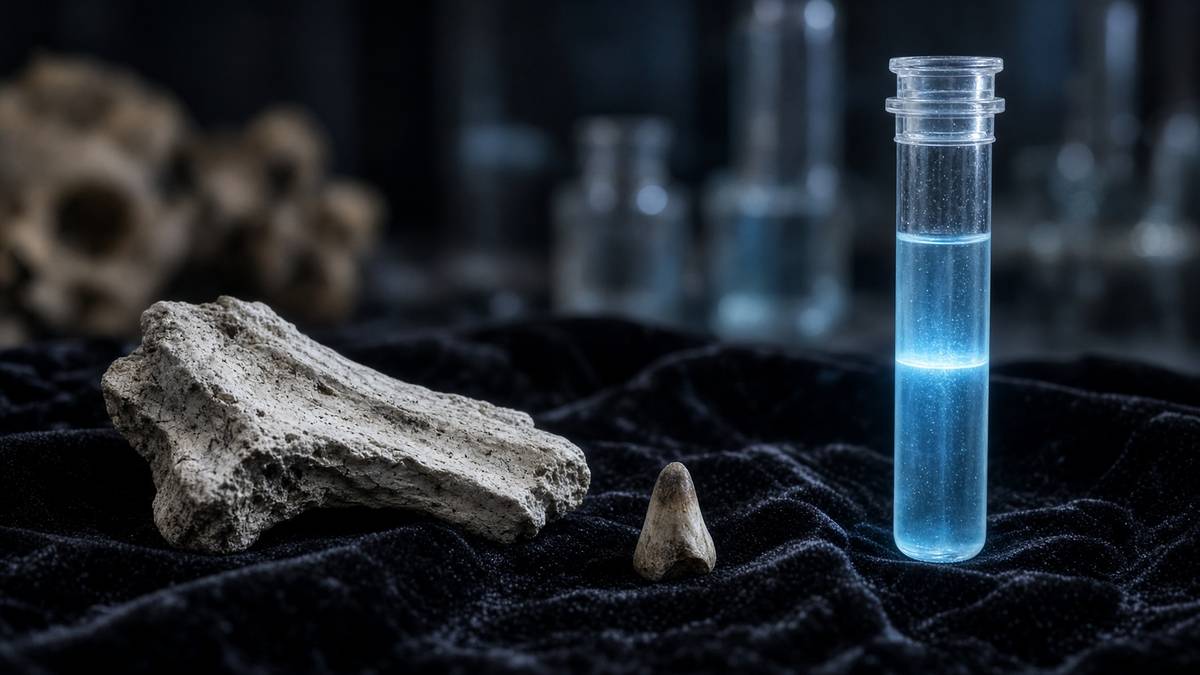
How a frozen tooth becomes a working gene
Palaeogenomics turned dirt, bone and dental calculus into genomes. De-extinction is downstream of that quieter revolution.
More in this desk
51 min · long read · Frontier biology
Tardigrades taught a human protein how to ignore radiation
Dsup, a disordered DNA-binding protein from a water bear, protects cultured human cells from X-rays. The animal that dries to a tun and lives through vacuum brought a transferable shield.
50 min · long read · Frontier biology
Xenobots: frog cells that became a new kind of machine
No genome was rewritten. Skin and heart cells from Xenopus were sculpted — first by hand, then by an evolutionary algorithm — into millimetre-scale organisms that walk, heal, and assemble copies of themselves.
50 min · long read · Frontier biology
We can rewrite a genome the way a word processor rewrites a sentence
CRISPR cut DNA. Base editors change one letter without a double-strand break. Prime editors write arbitrary edits from an RNA template. The machinery is no longer hypothetical.
49 min · long read · Frontier biology
We have the Neanderthal genome. Some of it is still in you.
Svante Pääbo pulled a genome out of bone powder, won the 2022 Nobel, and found that most people outside Africa carry a percent or two of an extinct human. Palaeogenomics is not only mammoths.
Essays describe published research. They are not medical advice and they do not authorise human use of any catalogue item.