

Frontier biology · 50 min · 10,950 words
We can rewrite a genome the way a word processor rewrites a sentence
CRISPR cut DNA. Base editors change one letter without a double-strand break. Prime editors write arbitrary edits from an RNA template. The machinery is no longer hypothetical.
What this essay actually tells you
- CRISPR–Cas9 is a programmable cut. Base editors change one letter without a double-strand break. Prime editing (Anzalone et al., Nature 2019) writes a short new sequence from an RNA template.
- Prime editing can, in principle, correct most known pathogenic SNPs without donor DNA. In principle. That's a large 'most' and a real 'without'.
- Off-targets and delivery (AAV, LNP) are still the clinical bottleneck. The chemistry of the edit is no longer the scarce step. Getting it into the right cell is.
What this actually means
Ten years ago gene editing meant cutting DNA and hoping the cell repaired the break the way you wanted. Now there are tools that change one DNA letter without cutting both strands, and tools that insert or swap short sequences from an RNA instruction sheet. Some of these have already been used in people in early trials. The same toolkit is what makes de-extinction and cell therapy possible in the same decade, which still feels slightly illegal to type.
CRISPR–Cas9 is a programmable endonuclease — an enzyme you can send to cut DNA at an address you type. Streptococcus pyogenes Cas9 is 1,368 amino acids. A single-guide RNA walks it to a twenty-nucleotide match, and the protein then cuts both strands three bases upstream of an NGG protospacer-adjacent motif, the short neighbouring password Cas9 insists on before it will unwind the helix. That cut is the original trick, and it's still the right trick when a disruption is what you want. Jennifer Doudna and Emmanuelle Charpentier, with Martin Jinek, published the programmable dual-RNA-guided DNA endonuclease in Science in 2012; the 2020 Nobel Prize in Chemistry followed. Feng Zhang, George Church, Keith Joung and a crowded mammalian-cell field then put the enzyme into human cells, mice, and eventually a licensed medicine. David Liu's laboratory spent the next decade turning a scissors into a pencil. Cytosine and adenine base editors chemically convert one base pair to another without a double-strand break. Prime editing — Anzalone, Randolph, Davis, Sousa and Liu, Nature 2019 — writes a short new sequence from an RNA template. The 2010s industrialised the cut. Delivery is the work that's left.
In short. Cas9 is a programmable DNA cut. Base editors change one letter without breaking both strands. Prime editors write a short new sequence from an RNA template.
Ten years ago a gene edit meant a double-strand break and a hope, and if you were in a lab then you already know how that felt. Non-homologous end joining stitches the ends and usually leaves a small insertion or deletion, which is how you knock a gene down if a frameshift is acceptable. Homology-directed repair can copy a donor template across the break and write a specified change, but it's a minority pathway in most mammalian cells, it prefers S and G2, and it competes with the messy stitch at the same cut. Post-mitotic neurons and cardiomyocytes barely run it at all. That was the blunt instrument, and it still has jobs — disruption of an enhancer, a knockout screen, a multiplex trait cassette in a fibroblast. What changed is that you no longer have to use a blunt instrument for a spelling correction. Base editors change one letter without cutting both strands. Prime editors insert, delete or swap a short stretch from an RNA instruction. Some of both have already been used in people. The cell is no longer being asked to guess the new sentence from a broken one.
In short. Ten years ago an edit meant a cut and a hope. The new tools specify the new letter, or a short new stretch, without asking the cell to guess.
The same family of editors now sits in three rooms that the coverage keeps trying to keep apart, and I find that cousinhood more interesting than most of the headlines. In November 2023 the UK's MHRA licensed exagamglogene autotemcel — Casgevy — a CRISPR–Cas9 rewrite of a BCL11A enhancer in a patient's own blood stem cells; the FDA followed in December. In Dallas, Colossal's mammoth programme uses the same nuclease family to drop cold-trait alleles into Asian elephant fibroblasts. In December 2025 the New England Journal of Medicine published the first prime-editing patients: two people with p47phox-deficient chronic granulomatous disease, autologous CD34+ cells, a two-nucleotide deletion in NCF1 corrected from an RNA template. The ethical payloads could not be more different. The enzyme does not care. That's the unsettling elegance of a platform technology, and we're living inside it. What follows is the topology of the platform: the cut, the single-letter tools, the RNA-templated writer, then the two adult problems that did not go away when the chemistry started working.
In short. The same family of editors now sits in a licensed sickle-cell medicine, in early prime-editing trials, and in a de-extinction freezer. The enzyme does not care about the story.
If you're sitting down with this toolkit for an afternoon, you want names and numbers rather than a mood about rewriting life. Jinek, Chylinski, Fonfara, Hauer, Doudna, Charpentier, Science 2012: a dual-RNA-guided DNA endonuclease, then a fused single guide. Cong, Zhang, Science 2013, and Mali, Church, Science 2013: mammalian cells. Komor, Kim, Packer, Zuris, Liu, Nature 2016: cytosine base editor, C•G to T•A, no double-strand break. Gaudelli, Komor, Rees, Packer, Badran, Bryson, Liu, Nature 2017: adenine base editor, A•T to G•C, a laboratory-evolved TadA. Anzalone, Randolph, Davis, Sousa, Koblan, Levy, Chen, Yin, Doman, Liu, Nature 2019: more than 175 specified edits in human cells, all twelve base-to-base conversions, small insertions and deletions, no donor DNA, and a ClinVar census that put about 89% of known pathogenic variants in principle in range. Gillmore, Intellia, New England Journal of Medicine 2021: in-vivo CRISPR in lipid nanoparticles, TTR. Gori, Haddad, Frangoul, Kohn and colleagues, New England Journal of Medicine, December 2025: prime editing in two people. Off-targets and delivery — adeno-associated virus, lipid nanoparticles, ex-vivo electroporation — are still the clinical bottleneck. The chemistry of the edit is no longer the scarce step.
In short. Here is the map: the cut, the single-letter tools, the RNA-templated writer, then off-targets and delivery. Chemistry is no longer the scarce step.
You nick one strand, reverse-transcribe an RNA template into the nick, and the cell finishes the edit. Search-and-replace, in an actual genome. We still cannot quite believe Liu got it to work.
A bacterial immune system, then a tool
The repeats were a curiosity before they were a method, which is a sentence I like because it keeps the organism in the room. Yoshizumi Ishino and colleagues, 1987, sequencing the iap gene of Escherichia coli, noticed unusual clustered palindromes downstream and had no function to hang on them. Francisco Mojica, working on Haloferax and later on a census of microbial genomes, recognised the same architecture across archaea and bacteria and, with Ruud Jansen in 2002, landed on the acronym CRISPR: clustered regularly interspaced short palindromic repeats. The spacers between the repeats matched fragments of phage and plasmid DNA. That match is the sentence. A bacterium that survives an infection stores a piece of the invader's genome in a CRISPR array, transcribed as a CRISPR RNA, and on the next visit a CRISPR-associated nuclease uses that RNA as a wanted poster. Adaptive immunity, in a prokaryote, written as sequence. We were taught that bacteria do not have that. They do. The tool is downstream of that fact, and a 2012 cover that skips the organism has skipped the inventor.
In short. Bacteria stored fragments of viral DNA as a memory. The repeats that looked like clutter were the index of that memory.
Rodolphe Barrangou, Philippe Horvath and colleagues, Science 2007, made the immunity claim experimentally, in Streptococcus thermophilus, because the dairy industry needed phage-resistant starter cultures and not because anyone was trying to edit a human gene. Strains that acquired spacers matching a phage became resistant; delete the spacers and resistance fell. Jennifer Doudna's laboratory and Emmanuelle Charpentier's, working on the type II system of Streptococcus pyogenes, then took the biochemistry apart. Cas9 is the nuclease. CRISPR RNA names the target. trans-activating CRISPR RNA is the handle that lets Cas9 hold the CRISPR RNA. In 2012 they showed you could fuse those two RNAs into one single-guide RNA and send Cas9 to any DNA sequence that matched the guide and sat next to a protospacer-adjacent motif. Programmable, in the strict sense: change the twenty nucleotides of the guide, change the address, leave the protein alone. Viruses had been doing addressable nucleases for a long time. Restriction enzymes had been doing short, fixed addresses. This was an address you could type.
In short. In 2007 a dairy-industry paper showed that those stored fragments confer immunity. A spacer is a wanted poster for the next infection.
Jinek, Chylinski, Fonfara, Hauer, Doudna and Charpentier, Science 17 August 2012, is the paper most of us still start from, and it's worth reading as a biochemistry paper rather than as origin myth. A dual-RNA structure directs Cas9 to introduce site-specific double-strand breaks in vitro. A chimaeric single-guide RNA is enough. The HNH-like domain nicks the complementary strand; the RuvC-like domain nicks the non-complementary strand; together they make a blunt cut three base pairs upstream of the NGG motif. Change the guide, change the site. The same month, and in the months that followed, Gasiunas, Siksnys and colleagues published a parallel biochemical dissection of a type II system. Priority arguments are a sport. The document the field actually cloned from is Jinek. Two years later Doudna and Charpentier had a company, a patent fight with the Broad, and a method that every competent molecular-biology lab could run by Monday. The 2020 Nobel Prize in Chemistry made the origin story official. The origin story is still a bacterial nuclease plus an RNA you can transcribe off an oligonucleotide. That's a smaller object than the culture that grew around it, and a more useful one to keep on the bench.
In short. In 2012 a single guide RNA was enough to send Cas9 to any matching DNA address with the right neighbouring motif. The scissors became programmable.
Mammalian cells were the next sentence, and they arrived fast. Cong, Ran, Cox, Lin, Barretto, Habib, Hsu, Wu, Jiang, Marraffini, Zhang, Science January 2013: Streptococcus pyogenes Cas9 and a guide, expressed in human and mouse cells, targeted cleavage, NHEJ and HDR outcomes. Mali, Yang, Esvelt, Aach, Guell, DiCarlo, Norville, Church, Science February 2013: the same enzyme, a different lab, multiplex guides, a homology donor. Hwang, Joung, Nature Biotechnology 2013: zebrafish. The next five years were PAM variants, Cas12a, Cas13, high-fidelity Cas9s, anti-CRISPR proteins, and a tools arms race that made the original SpCas9 look like a first draft. Editas, CRISPR Therapeutics, Intellia, Beam, Verve, Prime Medicine: the company list is a map of which flavour of the enzyme people thought they could take into people. A licensed medicine in 2023 is the industrial proof that the 2012 scissors works in a manufacturing suite. It is not proof that every subsequent flavour does. The 2010s industrialised the cut. The 2020s have been trying to industrialise the write.
In short. Mammalian cells, mice and a licensed medicine followed. The 2010s industrialised the cut. The 2020s have been trying to industrialise the write.
Cas9 is a programmable double-strand break
Streptococcus pyogenes Cas9 is a 1,368-residue protein with two nuclease domains, an arginine-rich bridge helix, and a C-terminal domain that reads the protospacer-adjacent motif. The guide RNA is a twenty-nucleotide spacer fused to a scaffold that Cas9 holds; the first eight to twelve bases of the spacer, the seed, dominate discrimination. The PAM for SpCas9 is NGG, two or three guanines on the non-target strand immediately downstream of the spacer. Without a PAM the protein does not stably unwind. With a PAM it pries the helix into an R-loop, tests the RNA–DNA hybrid, and, if the hybrid holds, fires both nucleases. The cut is blunt, or nearly blunt, three base pairs upstream of the PAM. That geometry is why a twenty-base guide is not a twenty-base search of the genome: it is a twenty-base search next to every NGG, of which the human genome has hundreds of millions. Specificity is seed plus PAM plus whatever mismatches the protein will still tolerate in the distal spacer. If you can say those three things, you're talking about Cas9. If you can't, you're still talking about a brand.
In short. Cas9 finds a twenty-letter match next to a short motif, pries the helix open, and cuts both strands. The address is RNA. The cut is protein.
The two cutting sites have names, and the names matter once you start inactivating them. The HNH domain nicks the strand that is complementary to the guide. The RuvC-like domain nicks the displaced strand. D10A kills RuvC and leaves a nick on the target strand; that nickase is the protein inside cytosine and adenine base editors, and inside the first half of a prime editor. H840A kills HNH and nicks the non-target strand; that nickase is the protein inside the canonical prime editor, PE2. D10A plus H840A is dCas9, catalytically dead, a programmable DNA-binding domain that can still open an R-loop and can still recruit a fused enzyme. The original scissors is both nucleases on. The pencils are one nick, or none, plus a cargo. Writing CRISPR as if those four proteins were the same object skips the active-site mutants. A double-strand break, a nick, and a dead binder are three different requests to the cell, and the cell answers them with three different repair programmes.
In short. Two cutting sites on Cas9 nick opposite strands. Turn both on and you get a blunt break. Turn one off and you have a nick the later tools write into.
A double-strand break in a mammalian genome is not an invitation to a specified rewrite. It's a lesion the cell is under pressure to close before the next mitosis. Non-homologous end joining and microhomology-mediated end joining stitch the ends, often with a small insertion or deletion, and they run throughout the cell cycle. Homology-directed repair copies a sister chromatid, or a supplied donor, across the break; it is largely an S/G2 pathway, it wants a resection, a RAD51 filament, and a close-matching template, and it loses the competition with end joining in most transformed cell lines and in almost all post-mitotic tissue. That's why a Cas9 cut plus a single-stranded oligo donor can give you a clean knock-in in a dividing HEK293T well at a few percent, and why the same recipe is a rumour in a neuron. p53 sees the break. A karyotype after a nuclease treatment is not optional decoration; it's how you ask whether the scissors also produced a translocation. Casgevy uses the messy stitch on purpose — disrupt an enhancer, drop BCL11A in the erythroid lineage, let foetal haemoglobin rise — which is a knockout logic, not a spelling-correction logic.
In short. Cells mend a double-strand break by stitching ends, which is messy, or by copying a donor, which is fussy and mostly a dividing-cell trick.
For a precise correction, then, a cut plus a donor is a blunt instrument. You can make it less blunt: nickases paired on opposite strands, a silent PAM mutation in the donor so the enzyme cannot recut, a cell cycle arrest, a 53BP1 block to favour resection, a Cas9 fused to a donor-recruiting domain. None of them made HDR the default in a non-dividing human cell. None of them removed the p53 response to a double-strand break. None of them stopped the indel byproduct at the on-target site from competing with the correction. That's the gap Liu's group spent a decade closing from the other side: do not make the break. Convert the base chemically, or write a short new sequence into a nick from an RNA template, and ask mismatch repair and flap ligation to finish a job they already know how to finish. The scissors remains the right tool for a disruption. It was never the right tool for most of ClinVar. If you're still designing a point-mutation correction around a double-strand break in 2026, you should be able to say why the pencils failed, not why you haven't looked at them.
In short. For a precise correction, a cut plus a donor is a blunt instrument. Post-mitotic tissues barely do the careful form of repair at all.
Diagram
- 0.1 nmHydrogen atomA proton and an electron. Chemistry starts here.
- 0.3 nmWater molecule70% of a cell by mass. The solvent life is.
- 1 nmAmino acidTwenty kinds. Peptide bonds string them.
- 2–4 nmResearch peptideA named chain. BPC-157 is 1.4 kDa, 15 residues.
- 4–10 nmGlobular proteinHaemoglobin, a GPCR’s extracellular face.
- 25 nmRibosomeThe factory that reads mRNA into protein.
- 5 nmMembraneA lipid bilayer. Every compartment starts here.
- 0.5–1 µmMitochondrionA bacterium the cell swallowed and kept.
- 6–10 µmNucleusTwo metres of DNA folded into a sphere.
- 10–30 µmTypical cellA city. 10¹⁰ proteins. One genome.
- 1 mmTissue grainA thousand cells talking across ECM.
- 1.7 mYou~36 trillion human cells. Most of them are red blood cells.
Lengths are characteristic, not exact. A research peptide is closer in size to a water molecule than to the cell that assays it — which is why a 15-mer can occupy a receptor pocket a small-molecule drug also wants.
- SpCas9
- 1,368 aa, ~4.1 kb
- Guide spacer
- 20 nt
- SpCas9 PAM
- NGG
- AAV packaging
- ~4.7 kb
- ClinVar pathogenic, 2019
- 75,122 variants
- Base conversions
- 4 transitions, then 12
- Casgevy
- MHRA 16 Nov 2023
- PM359
- NEJM Dec 2025
HNH + RuvC. D10A or H840A makes a nickase. Both off is dCas9.
Seed of 8–12 bases dominates discrimination. Scaffold holds Cas9.
Cut three base pairs upstream, blunt or nearly blunt. No PAM, no R-loop.
Cas9 plus a guide barely fits. A prime-editor ORF does not, as one piece.
Anzalone et al. census. Prime editing in principle ~89%. Principle is not a trial.
CBE 2016: C•G→T•A. ABE 2017: A•T→G•C. Prime 2019: all twelve, plus small indels.
FDA 8 Dec 2023. Ex-vivo Cas9 at a BCL11A enhancer. A scissors, licensed.
First prime-editing patients. Two people, p47-CGD, NCF1 delGT. Two is two.
Base editors change one letter without a double-strand break
Alexis Komor, Yongjoo Kim, Michael Packer, John Zuris and David Liu, Nature 20 April 2016, is the cytosine paper, and it still makes me sit up. They fused rat APOBEC1, a cytidine deaminase that turns C into U on single-stranded DNA, to a catalytically impaired Cas9, and added a uracil glycosylase inhibitor so base-excision repair would not take the U back out. Third-generation cytosine base editors use the D10A nickase, nicking the unedited strand so the cell is biased to use the U-containing strand as template. The product is a C•G to T•A conversion in a window of about five nucleotides on the exposed R-loop strand, at efficiencies the paper put between 15 and 75 percent of sequencing reads in the cell lines they measured, with indels typically at or below 1 percent. That last number is the point. A nuclease at the same site would have given you a mix of indels and, if you were lucky and the cell was dividing, a few percent of donor-templated correction. The deaminase does not ask for a donor. It does not ask for a double-strand break. It asks for an R-loop and a C in the window.
In short. A cytosine base editor is a deaminase fused to a nicking Cas9. It turns C into U, which the cell reads as T, without breaking both strands.
Adenine was harder, because a deaminase that turns A into inosine on DNA did not exist as a useful enzyme. Gaudelli, Komor, Rees, Packer, Badran, Bryson and Liu, Nature 2017, evolved Escherichia coli TadA, an RNA adenine deaminase, through seven rounds of selection on DNA until it would deaminate adenine in an R-loop. Inosine is read as guanine. The product is an A•T to G•C conversion. ABE7.10, then ABEmax, then ABE8e: each generation raised efficiency and narrowed some of the off-target deamination on RNA that the early enzymes carried as a hangover from TadA's original substrate. The chemistry is the same spend in reverse of the cytosine editor. Nick the unedited strand. Let the cell treat the inosine strand as truth. No double-strand break, no donor, indels low. Between CBE and ABE you have the four transition mutations: C to T, G to A, A to G, T to C. Transversions, specified insertions and specified deletions were out of scope. A large fraction of ClinVar is transitions, which is why base editors ate a large fraction of the therapeutic slide decks after 2017. The remaining fraction is why prime editing had a job.
In short. An adenine base editor is an evolved bacterial deaminase fused the same way. It turns A into inosine, which the cell reads as G. Transversions were out of scope.
The window is a design constraint, not a footnote. Early CBEs edited cytosines across positions 4 to 8 of the spacer, give or take, which means a bystander C in that window is a bystander mutation you will have to argue about. Narrow-window deaminases, sequence-context-picky deaminases, and Cas9 variants with different PAMs are how the field spent the next five years turning a five-base spray into something you can aim. C to G base editors, adenine transversion editors, and glycosylase-using tools later punched at the transversion gap; they are real, they are less mature than ABE and CBE, and they have not closed ClinVar. Off-target deamination is the other constraint. A cytidine deaminase fused to Cas9 can still touch C's in RNA and, in some architectures, in DNA at sites the guide never named. Transcriptome-wide RNA off-targets were a 2019 scare that later high-fidelity deaminases reduced. Genome-wide DNA off-targets want GUIDE-seq, Digenome-seq, CHANGE-seq, or a nominated-site amplicon panel, not a sentence that says highly specific. The enzyme is a chemist. The chemist has a radius. Measure the radius.
In short. The editor acts in a small window on the exposed strand. Neighbouring letters of the same kind can change too. That is a design problem, not a footnote.
Skipping the double-strand break is the pharmacological point, and it's why base editors moved toward the clinic on a different track from Cas9 nucleases. A nick is a lesion mismatch repair already handles. A double-strand break is a lesion p53, BRCA1, 53BP1 and the translocation machinery all handle, some of them badly. Post-mitotic cells will tolerate a nick and a deaminase far more readily than they will tolerate a cut they cannot repair by HDR. Verve Therapeutics took an adenine base editor at PCSK9 into people by lipid nanoparticle; Beam has BEAM-101 in sickle-cell disease, an ex-vivo adenine-base-edit of the same foetal-haemoglobin axis Casgevy cuts. Those programmes will have their own asterisks, as every first-in-human editor has. The chemical claim they rest on is no longer in dispute: you can change one DNA letter in a living cell without cutting both strands, and the indel rate at the target can be a percent or lower. A clean we edited the genome still owes you the window, the bystander, the RNA off-targets and the delivery route. A claim that a single-letter change requires a scissors is selling 2015.
In short. Skipping the double-strand break is the point in cells that cannot divide, and in any genome you do not want p53 staring at a cut.
Prime editing writes a short new sequence from an RNA template
Andrew Anzalone, Peyton Randolph, Jessie Davis, Aditya Sousa and David Liu, Nature 21 October 2019, is the search-and-replace paper, and I still remember first reading the abstract. A prime editor is a Cas9 H840A nickase fused to an engineered M-MLV reverse transcriptase, complexed with a prime editing guide RNA that both names the site and encodes the edit. The pegRNA is a long RNA: a spacer, a Cas9 scaffold, then a primer-binding site that matches the nicked DNA, then a reverse-transcriptase template that carries the new sequence. The protein nicks the PAM-containing strand. The 3' end of that nick hybridises to the primer-binding site. The reverse transcriptase writes DNA using the template on the pegRNA. The cell is then asked to resolve a flap: the newly written 3' flap versus the original 5' flap. If the new flap wins, mismatch repair and ligation install the edit on both strands. No double-strand break. No donor DNA. All twelve base-to-base conversions, small insertions, small deletions, more than 175 distinct edits in the paper, in four human cell lines and in primary post-mitotic mouse cortical neurons. The 2019 abstract still reads like a list of things people had been saying were impossible.
In short. Prime editing nicks one strand and reverse-transcribes an RNA instruction into that nick. The cell is then asked to keep the new flap.
Name the parts, because the names are how you actually design one. PE1 was Cas9 H840A fused to wild-type M-MLV reverse transcriptase; it worked poorly. PE2 used an engineered RT with five mutations that raised thermostability, processivity and DNA–RNA substrate affinity, and that is the protein most subsequent papers start from. The pegRNA is not a twenty-base CRISPR RNA. The primer-binding site is typically 8 to 17 nucleotides; too short and the nick will not prime, too long and the RNA misfolds or the flap equilibrium sours. The reverse-transcriptase template carries the desired sequence plus enough homology to the target that the flap can anneal; template length is a variable, not a constant, and a 30-to-40-nucleotide template is a common starting guess rather than a law. The spacer still wants a PAM. The nick is still three bases upstream of that PAM, on the non-complementary strand. Everything specified in the template is written 3' of that nick. A designer who cannot draw those five objects — nickase, RT, spacer, primer-binding site, template — is not yet designing a prime edit. Software helps. The RNA still has to fold.
In short. The protein is a nicking Cas9 fused to a reverse transcriptase. The RNA both finds the site and carries the new sequence.
The cell's half of the cycle is flap ligation and mismatch repair. After reverse transcription you have a 3' flap that contains the edit and a 5' flap that contains the original sequence. Cellular nucleases (FEN1 is the textbook 5'-flap enzyme) and ligases have to pick. PE3 adds a second guide RNA that nicks the unedited strand, downstream of the first nick, so the cell is biased to resynthesise that strand using the edited strand as template. PE3b places that second nick only after the edit has been written, by using a guide that matches the edited sequence, which cuts down on the double-nicking that can still look like a double-strand break. Chen, Liu and colleagues, Cell 2021, then put MLH1dn — a dominant-negative mismatch-repair protein — into PE4 and PE5, because MMR was throwing some of the edits away. PEmax recoded the protein. Engineered pegRNAs (epegRNAs, Nelson, Liu, Nature Biotechnology 2022) added a 3' structured motif so the primer-binding site would not be chewed off. Each of those is a real increment. The 2019 cycle is still the cycle: nick, prime, reverse-transcribe, resolve the flap, let the cell finish.
In short. Primer-binding sequence, reverse-transcriptase template, nick, flap, mismatch repair: that is the cycle. Search-and-replace, in an actual genome.
The 2019 figures are worth reading as figures, not as a press release. They installed and corrected the Glu6Val-coding transversion in HBB in HEK293T cells — the sickle-cell letter, an A•T to T•A swap that no base editor of 2019 could do. They deleted four nucleotides in HEXA, the Tay–Sachs four-base insertion's reverse, a specified indel. They wrote a protective G-to-T in PRNP. They inserted epitope tags. They compared prime editing to Cas9-initiated HDR in four human cell lines and found higher or similar efficiency with fewer byproducts. They took the editor into primary post-mitotic mouse cortical neurons and still saw the specified change. Off-target editing at known Cas9 off-target sites was much lower than with the nuclease, because a nick plus a mismatched pegRNA is a higher bar than a cut plus a mismatched twenty-mer. Complementary strengths and weaknesses versus base editing were already in the discussion: base editors are faster and often more efficient at the four transitions when a clean window exists; prime editors reach the other eight substitutions and the short indels, and they do not spray a deaminase window. Both tools, one laboratory, one decade. The field has been walking that map ever since.
In short. The 2019 paper showed all twelve single-letter swaps, small insertions and small deletions, in human cells, without a donor DNA. Including the sickle-cell letter.
The 89 percent figure is a ClinVar census, not a clinical claim, and it has to be held at that size. Anzalone and colleagues took 75,122 pathogenic human genetic variants from ClinVar in July 2019 and asked which classes a prime editor could in principle write: all substitutions, insertions up to tens of bases, deletions up to tens of bases. That arithmetic landed at about 89 percent. It assumes a nearby PAM, a well-behaved pegRNA, a cell that will resolve the flap, and an editor you can actually deliver. It does not assume a manufacturing suite, a toxicology package, or a tissue you can reach. It does not include structural variants, repeat expansions, or aneuploidies. It does not mean 89 percent of patients. It means most of the named single-letter and small-indel diseases in a 2019 database are the kind of change the chemistry can write, if everything else works. The honest sentence is the one in the abstract: in principle, up to 89 percent of known pathogenic variants, without a double-strand break and without donor DNA. Principle is a census. A trial is a person. We will keep those two nouns on opposite sides of a full stop.
In short. In principle the method can reach most known disease-causing single-letter changes and many small indels. Principle is a database census, not a trial.
The years after 2019 have been efficiency, not a new idea, which is how a method ages when it is real. PE4 and PE5 put mismatch-repair modulation into the protein. PEmax recoded and re-tagged. epegRNAs structured the 3' end. PE6, Doman, Pandey, Liu, Cell 2023, evolved both the Cas9 and the reverse-transcriptase halves and produced a family of smaller, more efficient editors. PE7, Yan, Liu and colleagues, 2024, recruited a pegRNA-binding protein to keep the RNA in the complex. Twin prime editing nicks both strands with two pegRNAs and can write larger replacements, or land recombinase sites for a subsequent integration. PASSIGE, twinPE plus a serine recombinase, is how people now talk about inserting kilobases without a double-strand-break HDR. Each of those papers is a tools paper. None of them replaced the 2019 cycle. All of them are answers to the same complaint you'd have had on first reading Anzalone: the efficiencies in HEK293T are not the efficiencies in a primary hepatocyte, a CD34+ cell, or a neuron, and a 6.3-kilobase editor is not a 4.1-kilobase Cas9 when you have 4.7 kilobases of AAV. The idea was search-and-replace. The work is making search-and-replace travel.
In short. Later prime editors improved efficiency and the RNA's stability. Twin systems and recombinase partners are how people now talk about larger cargo.
Diagram
Closed chromatin (H3K27me3, DNA methylation) hides the promoter. Pioneer factors and histone acetyltransferases open it.
PIC: TFIID, TFIIH, Mediator, Pol II. Ser5 phosphorylation of the CTD lets the polymerase leave the promoter.
Elongation ~20–40 nt/s. Capping, splicing, cleavage and polyadenylation happen on the still-growing RNA.
Human genes are islands in 3.1 billion base pairs of mostly noncoding sequence. Promoter, enhancers, chromatin state and the Mediator complex decide whether Pol II is allowed to fire. Epithalon’s literature sits on TERT and pineal clocks — two of the rare promoters anyone bothers to name in a peptide essay.
Chromatin is not a text file
A genome in a nucleus is not a string. Two metres of DNA are wrapped on nucleosomes, eight histone proteins per bead, 147 base pairs of wrap, then looped by cohesin into domains, then plastered in places against the nuclear lamina. Heterochromatin is compact and sparsely transcribed. Euchromatin is open and busy. Cas9 has to find an NGG, open an R-loop, and hold it long enough for a nuclease, a deaminase or a reverse transcriptase to work. Nucleosomes get in the way. Pioneer-like behaviour has been claimed for Cas9 at some sites and refuted at others; the boring truth is that accessibility is a variable, that a site which edits at 60 percent in a plasmid or a HEK293T euchromatic locus may edit at 6 percent in a closed neuronal locus, and that ATAC-seq or a nuclease-accessibility assay belongs in a paper that claims a primary-cell efficiency. Chromatin remodellers, a paired Cas9 to pry, and simply picking a more accessible PAM are the practical answers. The word-processor metaphor in the title of this piece is allowed once. After that, the genome is a packed, moving, histone-coated object, and the editor is a protein that has to sit down.
In short. DNA in a nucleus is wrapped on nucleosomes and looped into domains. An editor that cannot sit down has nothing to nick.
The PAM is the other gate, and it is a sequence gate rather than a packing gate. SpCas9 wants NGG. That's abundant, and it is not everywhere. A target letter that sits 20 bases from the nearest NGG, on the wrong strand, at the wrong distance from where you need to nick, is a target you cannot prime-edit with PE2 as originally built. xCas9, SpG, SpRY, Cas9-NG, SaCas9 (NNGRRT), Cas12a (TTTV), and a drawer of evolved and orthologous PAMs exist because of that sentence. Each new PAM protein is a new specificity profile, a new off-target census, and a new packaging problem if you were already tight on AAV capacity. Prime editing has an extra geometric constraint on top of the PAM: the nick has to sit such that the reverse-transcriptase template can reach the edit, typically within a few tens of nucleotides. Anzalone put that range on a figure. Later papers stretched it. A site that is CRISPR-able in a nuclease screen is not automatically prime-editable, and a site that is prime-editable with SpRY is not automatically a site you would take into a person. Motif, strand, distance, chromatin. Four filters.
In short. The short motif next to the target still gates where Cas9-based tools can land. Silent chromatin is a second gate. Both have to be true.
Calling these tools a word processor was useful once, and the title of this piece spent that analogy on purpose. A word processor finds a string and replaces it, in a file that is uniformly accessible, with an undo stack and no chromatin. A genome is a packed nucleoprotein, with a PAM grammar, a repair programme that depends on cell cycle and cell type, and a delivery problem that a text buffer does not have. The analogy earned its keep as a way to say: we are no longer limited to cutting and hoping. It does not earn its keep as a way to say the remaining problems are clerical. Off-target nicks, pegRNA-dependent insertions at the wrong address, reverse-transcriptase processivity, mismatch-repair throwing the flap away, a nucleosome on the seed, an AAV that cannot hold the protein, a lipid nanoparticle that lands in the liver when you wanted muscle: those are not formatting errors. They are the adult constraints, and they are why a 2019 Nature paper and a 2025 New England Journal brief report can both be true without the second one being a routine clinic.
In short. A genome is not a text file. Calling the tools a word processor was useful once. After that, chromatin and the motif are the actual constraints.
Diagram
- 2 nmB-DNA0.34 nm/bp. Diploid G1 is ~2 metres of this.
- 11 nmNucleosome147 bp around a histone octamer. ~30 million per nucleus.
- loopsCTCF / cohesinEnhancers meet promoters by folding, not by sliding.
- µmA/B compartmentsHi-C: open A, closed B, territories at the lamina.
- 6–10 µmNucleusThe room. The search problem is the entire point of gene regulation.
Packing is not storage. It is the first regulatory decision: a promoter buried in H3K27me3 is not a promoter, it is furniture. Transcription starts when this origami opens the right 1,000 base pairs among 3.1 billion.
Off-targets are a measurement, not a rumour
A twenty-nucleotide guide can tolerate mismatch, especially distal to the seed, and the human genome is large enough that related sites exist for most spacers. Tsai, Joung, Nature Biotechnology 2015, GUIDE-seq: double-strand breaks trap a short oligo, you sequence the junctions, you get an empirical off-target list in the cell you actually treated. CIRCLE-seq, CHANGE-seq, Digenome-seq, SITE-seq, DISCOVER-seq: the biochemical and cellular cousins, each with a bias. Cas-OFFinder and similar tools nominate. Nomination is not measurement. A paper that reports only the on-target amplicon, and a computational list of off-targets it did not sequence, has not finished the experiment. High-fidelity Cas9 variants (eSpCas9, SpCas9-HF1, HypaCas9, HiFi Cas9) cut the mismatch tolerance and usually cut the on-target efficiency with it. That trade is a design choice. It is not a reason to skip the genome-wide method. Off-targets are a measurement. A rumour that CRISPR is promiscuous and a rumour that this guide is specific are the same rumour in opposite costumes if neither one cites a method.
In short. A twenty-letter guide can tolerate some mismatch. Off-targets are measured with named sequencing methods, or they are a rumour.
Nucleases, base editors and prime editors have different off-target personalities, which is the bit a single CRISPR safety heading always flattens. A Cas9 nuclease off-target is a double-strand break at a related site: indel, possibly translocation, possibly p53 activation. A cytosine or adenine base editor off-target is a single-letter change at a related R-loop, plus whatever transcriptome-wide RNA deamination the deaminase still has in it, plus, in some architectures, guide-independent DNA deamination. A prime editor off-target is, in principle, harder: you need a nick at a related site and a pegRNA primer-binding site that can still anneal and a reverse-transcriptase event that still writes. Anzalone reported much lower off-target editing than Cas9 nuclease at known Cas9 off-target sites. That is not the same as zero, and it is not a substitute for a genome-wide method on the actual pegRNA you will take into a manufacturing suite. pegRNA-dependent insertions at unintended addresses, and reverse-transcriptase jumping, are the PE-specific worries. A paper that only reports the on-target percentage of correctly edited reads has reported a numerator. The denominator is the rest of the genome.
In short. Nucleases, base editors and prime editors have different off-target personalities. A paper that only reports the on-target percentage has not finished the experiment.
Assays, named, because we looked for off-targets is not a methods line. GUIDE-seq and DISCOVER-seq for breaks. CHANGE-seq and CIRCLE-seq for biochemical nomination, then amplicon-seq of the nominated sites in the relevant cell. Whole-genome sequencing of clones, with a matched untreated parent, for base editors and prime editors where the expected event is a substitution not a break. RNA-seq for deaminase cargo. Unbiased karyotype or long-read sequencing if you used a nuclease or a double-nick. Castellation of a few PCR amplicons around the on-target site is how you catch large deletions the short amplicon missed; Kosicki, Tomberg, Bradley, Nature Biotechnology 2018, is the paper that made that catch famous. If you claim a therapeutic candidate, the off-target package is part of the candidate, not an appendix you run after the press release. If you claim a research edit in a dish, a nominated-site panel plus the on-target amplicon is the minimum a careful reader will believe. Deaminases can touch RNA and unexpected DNA. Reverse transcriptases have bystander risks. Name the assay. Show the table. Then talk about specificity.
In short. Deaminases can also touch RNA and unexpected DNA. Reverse transcriptases have their own bystander risks. Name the assay, then talk about specificity.
Delivery is the remaining scarce step
Writing the right chemistry in a tube is no longer the scarce step. In 2012 the scarce step was a programmable cut. In 2016 it was a single-letter change without a break. In 2019 it was a specified small insertion without a donor. Those three chemistry problems have named solutions, with named efficiencies in named cell lines, and a decade of variants. What remains scarce is getting the protein and the RNA into the right cell, in a living person, at a dose that edits enough of the tissue to matter, without editing enough of the wrong tissue to matter, and without a manufacturing failure in between. Adeno-associated virus, lipid nanoparticles, and ex-vivo electroporation of stem cells are the three delivery answers the clinic actually has. Each one is a field. Each one has a tropism, a capacity, an immune biography and a toxicology. The editor you can clone on a Monday is not the editor you can put in a vein on a Friday. Skipping that gap is a slide. Treating the gap as a reason the chemistry did not work is 2012.
In short. Writing the right chemistry in a tube is no longer the scarce step. Putting the protein and the RNA into the right cell, in a person, is.
Adeno-associated virus is the gene-therapy vector the field already knew how to make. Packaging capacity is about 4.7 kilobases between the inverted terminal repeats. Streptococcus pyogenes Cas9 is about 4.1 kilobases of coding sequence. A promoter, a guide cassette and a nuclease already fill a single AAV to the brim. A cytosine or adenine base editor is Cas9 plus a deaminase plus, for CBE, uracil glycosylase inhibitor — tighter still. A prime editor is Cas9 plus a reverse transcriptase, on the order of 6.3 kilobases of open reading frame before expression parts. It does not fit. Dual-AAV strategies split the protein at a split-intein: two capsids, two successful transductions per cell. Smaller Cas orthologues (SaCas9, NmeCas9, the compact editors in the PE6 family) buy back some bases. AAV has serotypes with tropisms, pre-existing capsid immunity in a large fraction of adults, a duration of expression you may not want for a nuclease, and a cargo limit that does not care about your Nature paper. It remains the vector you can actually get into a non-liver tissue in 2026.
In short. A common virus vector holds about 4.7 kilobases. Cas9 barely fits. A prime editor does not, unless you split it or shrink it.
Lipid nanoparticles deliver RNA, and they are the reason an editor can be a pulse rather than a resident gene. The COVID-era LNP chemistry takes mRNA into hepatocytes with a tropism the field did not have to invent for this purpose. Gillmore, Intellia, New England Journal of Medicine 2021: NTLA-2001, Cas9 mRNA plus a TTR guide, a single infusion, deep and durable knockdown of transthyretin in people with ATTR amyloidosis. That is in-vivo CRISPR, in a vein, in a liver, as a pulse of protein that then goes away. Verve's base-editor LNP at PCSK9 is the same chassis with a pencil instead of a scissors. Prime-editor mRNA is longer, the pegRNA is a structured RNA that nucleases like to chew, and the two have to land in the same cell at the same time; those are solvable engineering problems and they are not solved as a general tissue platform. For a liver disease, that tropism is a gift. For muscle, brain, lung, haematopoietic stem cells in situ, it is the bottleneck the 2019 paper could not write its way around.
In short. Lipid nanoparticles can deliver the editor as RNA, mostly to liver so far. That is how one in-vivo CRISPR medicine reached transthyretin amyloidosis.
Ex-vivo electroporation is the third answer, and it is the one that already has a licence. Take CD34+ haematopoietic stem cells out of the patient, electroporate Cas9 protein and a guide RNA (or a base editor, or a prime editor and a pegRNA), put the cells through a manufacturing suite, condition the patient's marrow with busulfan or equivalent, infuse. Casgevy does this at a BCL11A erythroid enhancer. The delivery trick is that you never had to target a cell inside a body; you targeted a cell in a bag. The cost is myeloablation, a manufacturing run per patient, a price in the low millions, and a hospital stay. Prime Medicine's PM359 uses the same chassis with a prime editor instead of a nuclease: correct a two-nucleotide deletion in NCF1, restore p47phox, restore NADPH oxidase in neutrophils. Ex-vivo is honest about what it cannot do. It cannot edit a hepatocyte, a myofibre, a photoreceptor, a neuron. It can edit a stem cell you can take out and put back. For the diseases where that is the right cell, the bottleneck is no longer the editor. It is the conditioning, the scale, and the price.
In short. Taking stem cells out, electroporating the editor, and putting them back is how the first licensed CRISPR medicine works. The brutal half is the conditioning.
Jennifer Gori, Elie Haddad, Haydar Frangoul, Donald Kohn and colleagues, New England Journal of Medicine 7 December 2025, is the first prime-editing clinical paper, and it belongs here because it is a delivery paper as much as an editor paper. PM359: autologous CD34+ cells, a prime editor correcting the common delGT in exon 2 of NCF1, the two-nucleotide deletion that accounts for most autosomal-recessive p47phox-deficient chronic granulomatous disease. Two participants, 18 and 57, myeloid conditioning with busulfan, infusion. Neutrophils engrafted on days 14 to 16, platelets on days 12 to 19. Drug-product colony-forming cells were 68 and 91 percent prime-edited. By one month, 69 and 80 percent of circulating neutrophils showed NADPH oxidase activity at healthy-donor intensity on the dihydrorhodamine assay, and that activity held through last follow-up at six and four months. Adverse events were the conditioning. No PM359-attributed serious events in that report. Two people, a rare immunodeficiency, an ex-vivo bag, a four-to-six-month window. That is not a platform approval. It is the first time the 2019 cycle was run in a human haematopoietic system and produced a protein the patient's neutrophils had been missing. We wrote that sentence down twice.
In short. In late 2025 two people with a rare immune disease received prime-edited stem cells. Engraftment held. The missing oxidase activity came back. Two patients is two patients.
What delivery does not yet do is the rest of the body, and the rest of the body's timescales. Muscle wants a vector that hits myofibres and satellite cells without a ruinous capsid dose. Brain wants a serotype and a route that is not a press-release MRI. Mosaicism — some cells edited, neighbours not — is acceptable in a liver if the edited hepatocytes are a large enough fraction, and unacceptable in a cardiomyocyte syncytium or a developing retina if the unedited neighbours ruin the circuit. Embryos are a separate ethical and technical object: a zygote is a delivery problem you can solve with a pipette, and a mosaic blastocyst is the failure mode the pipette does not advertise. Germline editing is not this piece, and it is not a licensed medicine, and collapsing it into a sentence about prime editing's 89 percent is how the subject gets cheap. The adult problems have names. Off-target writing, delivery into the right cell, mosaicism in a tissue. A clean we edited the genome without those caveats is a press release. A claim that it cannot be done is 2012.
In short. Muscle, brain, mosaicism in a tissue, and anything you would have to do to an embryo remain the adult problems. Skipping those is a slide, not a map.
Prime editing substantially expands the scope and capabilities of genome editing, and in principle could correct up to 89% of known genetic variants associated with human diseases.— Anzalone AV et al. Search-and-replace genome editing without double-strand breaks or donor DNA. Nature. 2019; 576: 149–157.
From a dish to a patient to an extinct species
The same logic scales in both directions, and that's the bit that keeps a frontier desk up. In vivo base editing is in the clinic for some liver and haematological targets. Ex-vivo Cas9 is a licensed medicine at a BCL11A enhancer. Ex-vivo prime editing has now been through two people. In a Dallas freezer, the same family of editors is how you add mammoth haemoglobin alleles to an elephant fibroblast. A London pharmacy fridge, a Boston manufacturing suite, a Texas de-extinction programme: cousins of the same enzyme, ethical payloads that could not be more different. The enzyme does not care. Platform technologies are unsettling for that reason, and the coverage that treats a mammoth and a sickle-cell ward as the same story is making a category error in one direction, while the coverage that treats them as unrelated is making it in the other. The category is programmable nucleic-acid chemistry. The payload is the part you are morally on the hook for. We find that cousinhood more interesting than most of the headlines, and we wish more of the headlines would say the second sentence.
In short. The same editor family is in a London pharmacy fridge, a Dallas de-extinction freezer, and a Boston trial. The ethical payload is not shared. The enzyme is.
De-extinction programmes, at least the ones that have produced animals rather than renders, still mostly use the original scissors. Colossal's dire-wolf pups were grey-wolf cells with about twenty CRISPR–Cas9 edits chosen from a palaeogenome, then cloned. The woolly-mouse cassette is multiplex nuclease work: FGF5, MC1R, keratin and lipid loci, a phenotypic sandbox on a three-week generation time. A mammoth-like calf, if the Dallas timeline holds, will be an edited Asian-elephant genome carried by an elephant cow. Those jobs are trait modules — hair, haemoglobin, ear size, fat — and a knockout or a specified substitution at a handful of loci is what a nuclease, sometimes with a donor, is for. Prime editing is the wrong tool for a twenty-locus coat programme and the right tool for a single pathogenic letter in a child. Confusing those jobs is how a journal becomes a stack. The neighbouring essays on the mammoth, the wolves, the palaeogenome and the pigs are the payload half. This piece is the enzyme half. A woolly calf does not prove that prime editing works. Casgevy does not prove that a mammoth is a medicine.
In short. De-extinction programmes mostly still use the original cut, because they want trait modules, not a single-letter repair. Different job, same shelf of tools.
Mosaicism, germline and embryos are the remaining sentences a frontier piece has to write without inflating them. A somatic edit in an adult liver, or in a bag of stem cells, dies with the person and does not enter a lineage. A mosaic embryo is a different object: some blastomeres edited, some not, a body that is a patchwork, a possible germline take if the patchwork includes the gonad. The tools can be pipetted into a zygote. The tools should not be, outside a regulated protocol with a question that only an embryo can answer, and this journal does not have that protocol on the bench. Off-target writing in a soma is a pharmacovigilance problem. Off-target writing in a germline is a population problem. Hold the distinction. Editing a cell is not editing an organism, and editing an organism is not editing a species. The headline sometimes skips that. We can argue about calves and about sickle-cell wards after we have said which cell was edited, by which enzyme, through which door, and whether the next generation is on the hook.
In short. Editing an embryo, a mosaic tissue, or a whole organ is a delivery-and-lineage problem. The papers already knew that. The headline sometimes does not.
Diagram
| Node | Catalogue | Conversation |
|---|---|---|
| GPCR | Ipamorelin, MT2, PT-141, retatrutide, CJC | Second messengers, secretion, appetite, pigment |
| RTK / IGF1R | IGF-1 LR3 | IRS–PI3K–Akt–mTOR and Shc–ERK |
| Cytokine receptor | Somatropin (HGH) | GHR–JAK2–STAT5b, hepatic IGF-1 |
| Cofactor | NAD+ | Sirtuins, PARPs, CD38, redox |
| Actin buffer | TB-500 / Tβ4 motif | G-actin sequestration, motility |
| Growth-factor-like | BPC-157 | VEGFR2 / FAK / eNOS neighbourhood |
| Copper ligand | GHK-Cu | Transcriptome shift in fibroblasts |
| MC fragment | KPV | NF-κB, PepT1, no pigment |
| Nuclear / pineal | Epithalon (AEDG) | TERT and melatonin literatures |
| mtORF peptide | MOTS-c | AMPK, folate–methionine cycle |
Each row is a different kind of molecular conversation. The catalogue peptides bind at these nodes; they are not interchangeable, and stacking them because a forum did mixes unrelated literatures.
How to read an editing paper without a press office
Report efficiency and purity separately, because they move independently and because a press release will add them. Efficiency is the fraction of sequenced alleles that carry the specified change. Purity is the fraction of edited alleles that carry only that change — no accompanying indel, no bystander substitution in the window, no scaffold-sequence insertion from a pegRNA, no large deletion the short amplicon missed. A nuclease paper that says 80% edited often means 80% of alleles have some disruption, most of them a mixed indel population. A base-editor paper that says 60% C to T owes you the bystander C's in the same window and the indel rate at the same site. A prime-editing paper that says 40% correct owes you the remaining 60%: unedited, imprecise flaps, pegRNA-scaffold insertions, the PE3 nick's own indel. HEK293T efficiencies are a scout. Primary-cell efficiencies are the measurement. Bulk sequencing of a population is not a clone. A clone is not a tissue. If the claim is correction, show the specified allele, show the byproducts, and do not add them together into a number that sounds like a cure.
In short. Report efficiency and purity separately. A high percentage of edited reads with a mess of insertions is not a correction.
Sequencing, named, because NGS is not a methods line. On-target: a well-designed amplicon that spans far enough to catch a 50-base deletion, or a long-read pass, with a UMI if you are going to talk about rare alleles. Off-target: a genome-wide method appropriate to the lesion — GUIDE-seq or DISCOVER-seq if you cut, nominated-site amplicon-seq plus a clone whole-genome if you nick and write. RNA-seq if a deaminase is in the construct. Karyotype or long-read if a double-strand break was possible, including PE3 double-nicks. Controls sit on the same run: untreated, nickase-only, reverse-transcriptase-dead, a pegRNA with a scrambled primer-binding site, a mismatched spacer. If the phenotype survives a dead editor, you were never looking at an edit; you were looking at transfection, at selection, at a contaminant, at a story. Cell type is a control, not a convenience. HEK293T is a transformed kidney line with a weird karyotype and a wide-open HDR appetite. A hepatocyte, a CD34+ cell, a neuron, a zygote and an elephant fibroblast are five different repair programmes. Publish the one you used. Do not imply the other four.
In short. On-target amplicons, genome-wide off-target methods, and a karyotype if you cut, are the minimum. A transformed kidney cell is not a hepatocyte.
Cell cycle, chromatin state and the PAM next door decide whether a published efficiency will travel, and they are the variables most editing papers under-report. A dividing cell offers HDR to a nuclease and a different mismatch-repair diet to a prime editor than a G1-arrested cell does. A closed locus will refuse an R-loop that an open locus accepts. A PAM-flexible Cas9 that gained sites also gained off-targets. If you change the cell type, the cycle, the locus or the PAM protein and keep the efficiency number from the previous figure, you have not done the next experiment. You have done a copy-paste. Time points matter in the same way. A Cas9 cut is scored in days, after indels have been fixed. A base-editor conversion can look different at 48 hours and at two weeks, once selection and mismatch repair have finished arguing. A prime-edit flap that has not yet been resolved is not an edit. Write the hour. Write the passage number. Write whether you sorted. A figure that could only have come from the experiment you actually ran is the one worth believing.
In short. Cell type, cell cycle, chromatin state and the motif next door decide whether a published efficiency will travel. A dish is a dish.
A press line that says we edited the genome is doing a job a paper cannot do, and a paper is doing a job a press line cannot do. Both can exist. They should not be copy-pasted into each other. The working enzyme exists: Cas9 as a licensed medicine, base editors in people, prime editors in two people as of the December 2025 brief report, a Dallas freezer of edited elephant cells, a mouse with a golden coat. The caveats exist: off-targets as a measurement, delivery as a tropism, mosaicism as a fraction, embryos as a different object, 89 percent as a census, two patients as two patients. Hold both. The field got loud because the chemistry is central. The work got hard for the same reason. A catalogue of research peptides, sitting on the other side of this journal, occupies receptors and cofactor pockets and does not rewrite a base; that neighbourhood is a reading-list courtesy and not a combination claim. CRISPR is the gene editor. Occupying a receptor, if that is even the right verb, is not rewriting a letter. Different floors of the building. Different assays. Different legal objects, where a legal object exists.
In short. A press line that says we edited the genome, without those caveats, is a press line. The working enzyme still exists. Hold both.
A protocol on this subject is boring on purpose. Name the editor: nuclease, CBE, ABE, PE2, PE3, PE4, PEmax, PE6, with the mutations. Name the guide or pegRNA, with primer-binding site and template lengths, and show a folding prediction you are willing to be wrong about. Name the PAM and the nick coordinate. Name the cell, the cycle, the delivery (electroporation of protein, mRNA, plasmid, AAV, LNP), the dose, the hour of harvest. Name the on-target amplicon and the off-target method. Name the controls, including the dead enzyme. If the payload is a person, name the tissue fraction, the conditioning, the follow-up, and the assay that would falsify the claim — dihydrorhodamine, a clamp, a TTR level, a haemoglobin electrophoresis, not a well-being score. If the payload is an elephant fibroblast, name the allele and the clone, and do not call it a calf. Boring is the point. The 2019 paper was exciting because the chemistry was new. The 2025 brief report was exciting because two people were edited with that chemistry and did not fail to engraft. Everything in between is named reagents, named hours, named assays. We would rather have those.
In short. Name the editor, the RNA, the cell, the door it went through, the hour you harvested, and the measurement that could have proved you wrong.
- Name the editor: nuclease, cytosine base editor, adenine base editor, or a named prime editor. D10A and H840A are not the same nick.
- Name the RNA: spacer, PAM, and for prime editing the primer-binding site and reverse-transcriptase template lengths.
- Name the lesion you are asking the cell to handle: double-strand break, nick, deamination window, or a flap.
- Name the cell and the cycle. HEK293T is a scout. Primary tissue is the measurement.
- Name the door: electroporation, AAV (serotype, split or not), LNP, or an ex-vivo bag. Capacity and tropism are part of the editor.
- Name the off-target method and the dead-enzyme control. An on-target percentage is a numerator.
Close: a working enzyme, a remaining door
The node is conserved, which is the only reason a dairy-phage paper, a 2012 in-vitro scissors, a 2019 reverse transcriptase and a 2025 neutrophil oxidase assay can sit in one piece without being a collage. Bacteria store spacers. Cas9 cuts where the spacer says, next to a PAM. A deaminase on a nickase converts a letter. A reverse transcriptase on a nickase writes a short new stretch from an RNA template. Human mismatch repair, flap ligation and nucleotide excision are older than any of those fusions; the fusions are hitchhiking on repair the cell already runs. You can walk this argument from Streptococcus pyogenes to a CD34+ manufacturing suite and the nick at H840A will still be the chemistry. Conservation is not a licence to treat a HEK293T figure as a paediatric protocol. It is a licence to take the biochemistry seriously enough to measure it, in the cell you have, with the off-target method the cargo requires, through the door you can actually open. The popular story got loud because the node is central. The work got hard for the same reason.
In short. A bacterial defence, a programmable cut, a single-letter pencil, an RNA-templated writer: one decade of tools, older repair chemistry underneath.
The public papers are the reading list, and they are short enough to actually read. Ishino 1987, if you want the repeats before they were a method. Barrangou, Science 2007, if you want the immunity. Jinek, Doudna, Charpentier, Science 2012, the scissors. Cong and Mali, 2013, the mammalian cells. Komor, Nature 2016, cytosine. Gaudelli, Nature 2017, adenine. Anzalone, Nature 2019, the search-and-replace cycle and the 89 percent census. Chen, Cell 2021, mismatch-repair modulation. Nelson, Nature Biotechnology 2022, epegRNAs. Gillmore, New England Journal of Medicine 2021, an LNP into a liver. Casgevy's MHRA and FDA dates, November and December 2023, a scissors with a licence. Gori, New England Journal of Medicine, December 2025, two prime-editing patients. Kosicki, Bradley, 2018, so the large deletion the short amplicon missed stays in the picture. Tsai, Joung, GUIDE-seq, so off-targets stay a measurement. That's a fortnight of evenings, not a guru. The rewriting-life headlines will still be there when you come back, and they will look smaller.
In short. The reading list is short enough to actually read. Jinek 2012, Komor 2016, Gaudelli 2017, Anzalone 2019, then the delivery papers and the first prime-editing patients.
What you should leave with is a topology, not a catchphrase. CRISPR–Cas9 is a programmable cut. Base editors change one letter without a double-strand break. Prime editing writes a short new sequence from an RNA template, and can in principle correct most known pathogenic SNPs without donor DNA. Off-targets are a measurement with named methods, and they differ by cargo. Delivery is AAV, lipid nanoparticles, or an ex-vivo bag, each with a tropism and a capacity, and it is still the clinical bottleneck. Casgevy is a licensed scissors at an enhancer. PM359 is two people, a prime editor, a two-nucleotide deletion, oxidase activity back. A Dallas freezer is using cousins of the same enzyme on an elephant genome. The chemistry of the edit is no longer the scarce step. The door into the right cell is. If your experiment needs a disruption, use the nuclease and show the karyotype. If it needs a transition, look at a base editor and show the window. If it needs a transversion or a short specified indel, look at a pegRNA and show the flap byproducts. If it needs a medicine, this journal does not sell one.
In short. Leave with the map: cut, letter, template; off-targets measured; delivery as the bottleneck. Most known single-letter diseases are in scope on paper. People are not paper.
Off-targets and delivery are still the clinical gates, and they will still be the gates when the next prime-editor generation has a smaller protein and a tidier pegRNA. A high-fidelity enzyme that you cannot get into a myofibre is a paper. An LNP that you can get into a hepatocyte is a trial. An ex-vivo bag that you can get through a manufacturing suite is, once, a licence, and that licence is currently a scissors at BCL11A, not a prime editor at NCF1. The order of those sentences is the order of the bottleneck. Chemistry, then measurement of the wrong sites, then the door. We have walked the first. We are walking the second. The third is why a 2019 Nature paper and a 2026 clinic can both be true without a routine genome-as-text-editor existing in between. Writing the remaining work as a rounding error skips an AAV payload limit, a pre-existing capsid titre, a busulfan consent form, and a GUIDE-seq gel. Writing the remaining work as a reason to ignore the enzyme skips the 2019 figures, and two patients whose neutrophils lit up on dihydrorhodamine.
In short. Off-targets and getting the tool into the right cell are still the clinical gates. The chemistry of the edit is no longer the scarce step.
We'd rather have the caveats and the working enzyme. The caveats are off-target writing, delivery into the right cell, mosaicism in a tissue, and a germline we are not on the hook for. The working enzyme is a bacterial nuclease that became a pencil and then an RNA-templated writer, a licensed medicine in one flavour, a brief report in another, a freezer of elephant cells in a third. The title of this piece spent a word-processor analogy because the 2019 paper earned it: specified substitutions, insertions and deletions, no double-strand break, no donor DNA, a short new sequence written from an RNA template. The analogy is hereby dropped. What remains is a protein, an RNA, a nick, a flap, a door, and a measurement. Use them in that order. Read Anzalone before the headline. Read Gori before the platform claim. Read GUIDE-seq before the word specific. The machinery is no longer hypothetical. The clinic is no longer a slide. The remaining scarce step has a name, and the name is not the chemistry of the edit.
In short. A clean we edited the genome without those caveats is a press release. A claim that it cannot be done is selling 2012. The enzyme is real either way.
Questions the essay actually answers
- What is prime editing?
- A Cas9 nickase fused to a reverse transcriptase writes a specified short sequence from a pegRNA template into a nick. Search-and-replace in an actual genome, without a double-strand break and without donor DNA. Anzalone et al., Nature 2019.
- How is it different from Cas9 cutting?
- Classic CRISPR–Cas9 cuts both strands and hopes the cell repairs the way you wanted — usually a messy stitch, sometimes a donor-templated rewrite in a dividing cell. Base editors change one letter without that break. Prime editors write longer, specified edits from an RNA template.
- What is a base editor?
- A deaminase fused to a nicking Cas9. Cytosine base editors (Komor, Nature 2016) convert C•G to T•A. Adenine base editors (Gaudelli, Nature 2017) convert A•T to G•C. Four transitions, no donor, indel rates often around 1% or lower at the target.
- Can prime editing correct most pathogenic SNPs?
- In principle, yes: Anzalone's 2019 ClinVar census put about 89% of then-known pathogenic variants in range — all substitutions plus small insertions and deletions — without donor DNA. Principle is a database arithmetic. A trial is a person, a tissue, and a door.
- What is a pegRNA?
- A prime editing guide RNA: a spacer that finds the site, a Cas9 scaffold, a primer-binding site that anneals to the nick, and a reverse-transcriptase template that carries the new sequence. It both targets and encodes. Folding of that RNA is a design variable.
- Why is delivery the bottleneck?
- AAV holds about 4.7 kb; SpCas9 is ~4.1 kb; a prime-editor ORF is larger still and needs a split or a smaller orthologue. Lipid nanoparticles take RNA mostly to liver. Ex-vivo electroporation works for stem cells you can take out and put back. The chemistry of the edit is no longer the scarce step. The door is.
- Is this a licensed medicine?
- Prime editing itself is a platform. Casgevy, the first licensed CRISPR medicine (MHRA November 2023, FDA December 2023), is a Cas9 nuclease at a BCL11A enhancer — a scissors, covered in the neighbouring essay. PM359 is the first prime-editing clinical report (NEJM, December 2025): two people, not a licence.
- What did the first prime-editing patients show?
- Two people with p47phox-deficient chronic granulomatous disease received autologous CD34+ cells prime-edited at NCF1 delGT (PM359). Neutrophils engrafted. NADPH oxidase activity returned in a majority of circulating neutrophils by one month and held through last reported follow-up. Adverse events tracked busulfan. Two patients is two patients.
- What are off-targets, here?
- Related genomic sites where the guide still binds, plus cargo-specific bystanders: deaminase activity on RNA or unexpected DNA for base editors; pegRNA-dependent writes and RT bystanders for prime editors. GUIDE-seq, CHANGE-seq, clone whole-genome sequencing — named methods. A paper that only reports the on-target percentage has not finished.
- What does this have to do with de-extinction?
- The enzyme family is shared. A clinic in London and a freezer in Dallas are both using programmable editors to write DNA. De-extinction programmes still mostly use the nuclease, because they want trait modules, not a single-letter repair. The ethical payload is not shared.
Read next
48 min · long read · Frontier biology
CRISPR is no longer a paper. It is a medicine.
In 2023 the UK and then the US licensed exagamglogene autotemcel — Casgevy — the first CRISPR-based therapy. Sickle-cell and β-thalassaemia patients had their own stem cells rewritten at BCL11A. The sci-fi crossed the pharmacy counter.
47 min · long read · Frontier biology
CRISPR pigs, and the first gene-edited organs in people
Knock out the sugar that human antibodies attack, knock out porcine retroviruses, add human complement regulators — then sew a pig heart into a man. That sentence has already been true, more than once.
48 min · long read · Frontier biology
The mammoth is being rewritten in Texas
Inside Colossal Biosciences’ Dallas headquarters, Asian elephant cells are taking on the genes of a 4,000-year-old ghost. The target is a calf around 2028. This is not a film treatment.
47 min · long read · Frontier biology
How a frozen tooth becomes a working gene
Palaeogenomics turned dirt, bone and dental calculus into genomes. De-extinction is downstream of that quieter revolution.
More in this desk
51 min · long read · Frontier biology
Tardigrades taught a human protein how to ignore radiation
Dsup, a disordered DNA-binding protein from a water bear, protects cultured human cells from X-rays. The animal that dries to a tun and lives through vacuum brought a transferable shield.
50 min · long read · Frontier biology
Xenobots: frog cells that became a new kind of machine
No genome was rewritten. Skin and heart cells from Xenopus were sculpted — first by hand, then by an evolutionary algorithm — into millimetre-scale organisms that walk, heal, and assemble copies of themselves.
49 min · long read · Frontier biology
We have the Neanderthal genome. Some of it is still in you.
Svante Pääbo pulled a genome out of bone powder, won the 2022 Nobel, and found that most people outside Africa carry a percent or two of an extinct human. Palaeogenomics is not only mammoths.
49 min · long read · Frontier biology
The woolly mouse is the mammoth’s twenty-day dress rehearsal
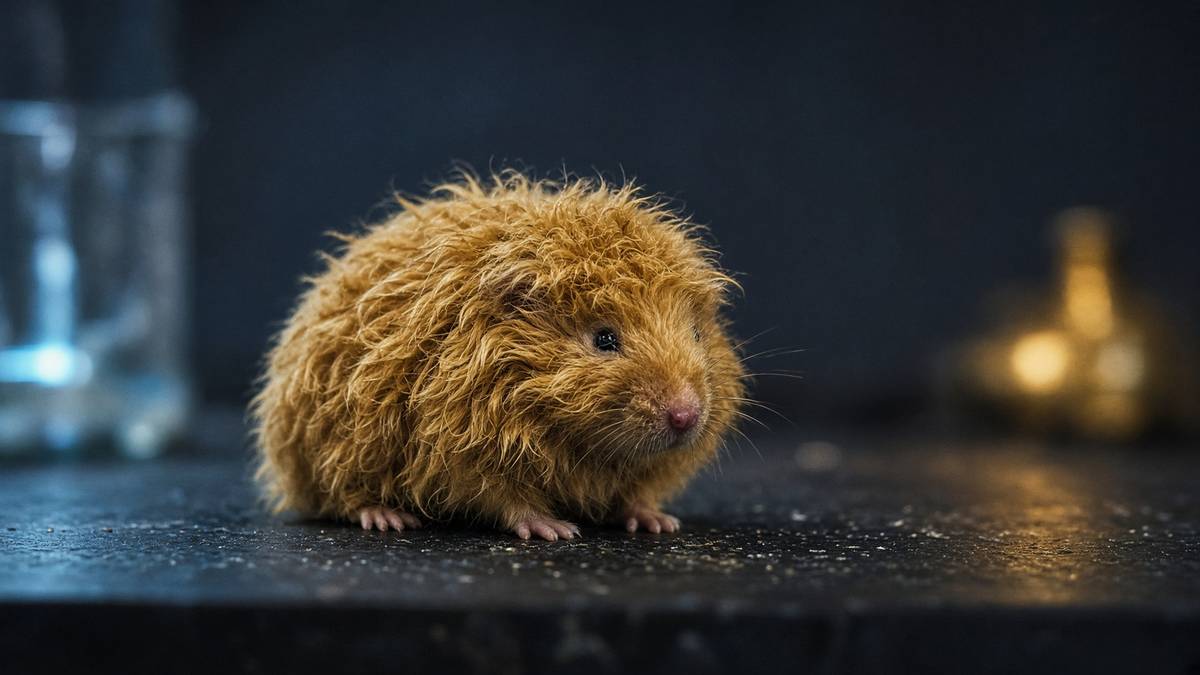
Colossal edited seven coat-and-metabolism genes into laboratory mice and got golden, shaggy, cold-curious animals. Elephant gestation is 22 months. A mouse tells you in three weeks whether the edit was worth the wait.
Essays describe published research. They are not medical advice and they do not authorise human use of any catalogue item.