

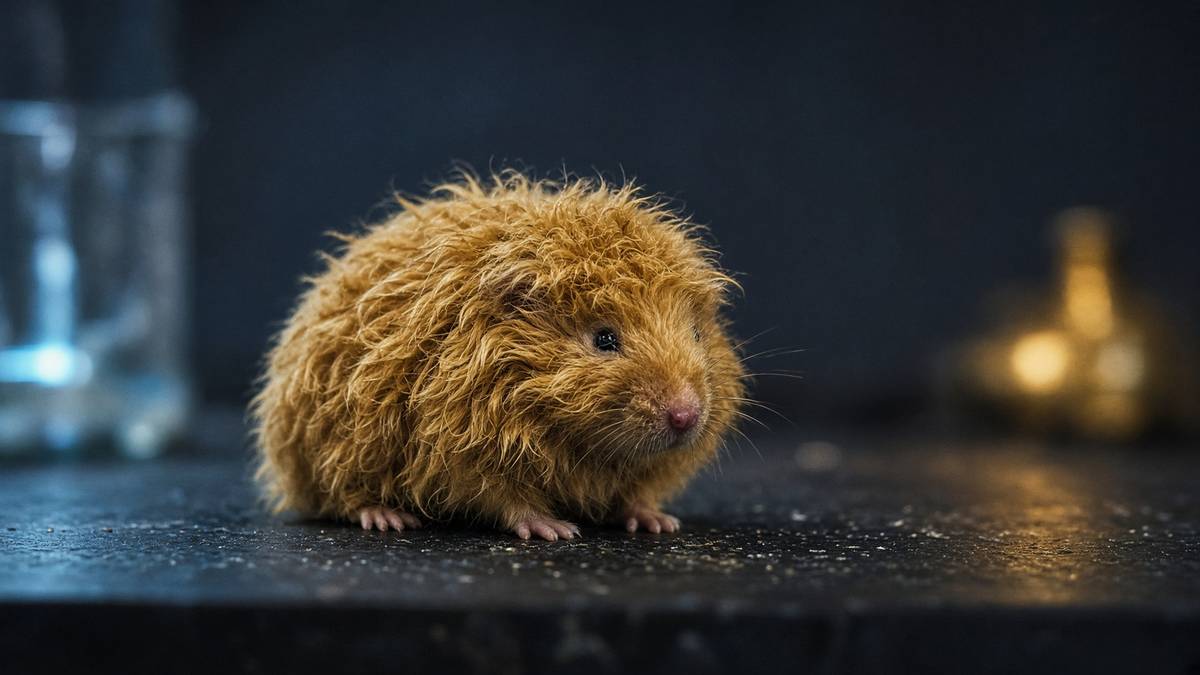
Frontier biology · 49 min · 10,889 words
The woolly mouse is the mammoth’s twenty-day dress rehearsal
Colossal edited seven coat-and-metabolism genes into laboratory mice and got golden, shaggy, cold-curious animals. Elephant gestation is 22 months. A mouse tells you in three weeks whether the edit was worth the wait.
What this essay actually tells you
- Colossal's woolly mice (born October 2024, shown 2025) carry stacked edits including FGF5 (long hair), MC1R (gold coat) and a lipid-metabolism allele. Named genes, not a costume.
- A mouse generation is three weeks. Asian-elephant gestation is 22 months. That arithmetic is why the dress rehearsal is a mouse, and why anyone quoting a calf date should show their working.
- The genome is still Mus musculus. The phenotype is a cold-coat programme. A woolly mouse is not a miniature mammoth, and Colossal didn't claim it was.
What this actually means
You don't debug a woolly mammoth on an elephant timetable. We wouldn't either. Colossal took ordinary laboratory mice and simultaneously edited a handful of genes that control hair length, curl, colour and fat handling, the same trait modules they want in a cold-adapted elephant. The first woolly mice were born in October 2024 and shown to the world in March 2025: long golden coats, textured fur, a metabolism tweak aimed at cold. A mouse generation is three weeks. That's why this animal exists, and why we keep pointing at it whenever someone only wants to talk about the 2028 calf.
A woolly mammoth calf, if the Dallas timeline holds, is an edited Asian-elephant genome carried by an elephant cow for twenty-two months. Fail the coat edit and you have wasted two years and a surrogate you cannot spare. We wouldn't debug that on an elephant timetable either. Colossal took ordinary laboratory mice and simultaneously edited a handful of genes that control hair length, curl, colour and fat handling — the same trait modules they want in a cold-adapted elephant — and got a coat you can see. It isn't a mammoth, and it isn't an elephant pregnancy. It's a rehearsal that a working biologist can actually hold: born 2024, shown 2025, written up as a bioRxiv preprint by Chen and colleagues. FGF5 is the brake on the growth phase of a hair follicle; knock it back and the hair runs long. MC1R is the pigment receptor; a handful of other keratin and polarity genes finish the shaft. If you have ever waited on a slow organism, you would have built the mouse too. The photographs are easy to over-read. The paper is the object.
In short. Woolly mice are laboratory mice with hair and fat genes edited to mimic mammoth coat modules. They are a rehearsal, not a baby mammoth.
The first woolly mice were born in October 2024 and shown to the world in March 2025, with a bioRxiv preprint the same week as the photographs. Chen, Coquelin, Shapiro, Church, Lamm, Abrams and colleagues, Colossal Biosciences in Dallas, with Love Dalén's palaeogenomics group on the author line: Multiplex-edited mice recapitulate woolly mammoth hair phenotypes. Up to seven loci edited in a single genome. Loss-of-function alleles in hair-cycle and keratin genes, including FGF5, TGM3 and FAM83G, a melanin-pathway edit at MC1R, and a lipid-metabolism change shared with mammoth. The coats came out long, curly, gold-shifted, textured. Hair on the order of five centimetres, roughly three times a wild-type laboratory coat. Curled whiskers. A golden-brown that's not lab-black and not agouti. The scientific payload isn't a trunk or a tusk or a steppe ecology. It's a living assay for whether those modules, stacked, produce a cold-coat programme you can later try to port into Elephas. We've looked at the photographs more times than is professional. We've also read the preprint, which is the part that matters.
In short. So the mice were born in October 2024 and shown in 2025. They have long golden coats because several hair and colour genes were edited at once.
The genome is still Mus musculus. That sentence has to sit at the top of the essay, not in a footnote, because the coverage will keep implying otherwise. A woolly mouse is a laboratory mouse whose hair-cycle brake, pigment receptor, shaft-crosslinking enzymes and a lipid-handling gene have been rewritten. It has a mouse skull, a mouse dentition, a mouse metabolic rate, a mouse social behaviour, a mouse lifespan of a couple of years if you're kind. It doesn't have a trunk. It doesn't have mammoth haemoglobin. It doesn't have the fat architecture or the ear geometry or the 22-month developmental timetable of a proboscidean. The phenotype is a cold-coat programme running on a rodent chassis. Colossal did not claim the animal was a miniature mammoth; the internet did that job for them. We're going to keep the chassis and the programme in separate clauses, because de-extinction, done honestly, is trait engineering with a living relative as the body, and this particular body is the wrong species for the eventual product and the right species for the rehearsal.
In short. These are still ordinary mice with extra-long golden fur. The genome is a mouse genome. A woolly mouse isn't a baby mammoth.
Seven genes is a programme, not a mascot
FGF5 is the classic long-hair locus, and it has been the classic since 1994. Hébert, Rosenquist, Götz and Martin, writing in Cell, showed that fibroblast growth factor 5 is a secreted signal that tells an anagen follicle to stop. Knock it out and the hair keeps growing. The angora mouse, go, was already sitting in the fancy-mouse fancy as a spontaneous Fgf5 allele; long-haired cats, some dogs, and a subset of human trichomegaly later mapped to the same gene. The protein is a paracrine ligand, an FGF-family member that binds FGFR1 and FGFR2 on the dermal papilla and the matrix, and its expression in the outer root sheath rises late in anagen as a built-in timer. Loss of function doesn't invent a new follicle. It removes the brake. Colossal's woolly mice all carry an FGF5 loss-of-function edit, which is why the coats in the photographs are the coats in the photographs. Three times wild-type length is what you get when anagen is allowed to overstay. That's not a mammoth gene dropped into a mouse. It's a mouse gene broken because mammoths, and a century of mouse genetics, had already pointed at this node as the length control.
In short. FGF5 is the signal that tells growing hair to stop. Break that gene and the hair keeps getting longer. That's the most famous edit in these mice.
The receptor half of that sentence is an FGF receptor tyrosine kinase, FGFR1 or FGFR2, on the dermal papilla and the matrix. Ligand binding dimerises the receptor, autophosphorylation follows, and the papilla hears MAPK/ERK and a side of phospholipase C-γ. Heparan-sulphate proteoglycans are cofactors; FGFs without a sugar landscape don't signal cleanly. The follicle already runs other FGFs for other jobs: FGF7 and FGF10 as keratocyte growth factors from the papilla, FGF18 in telogen as a stay-quiet signal, FGF22 in the inner sheath. FGF5 is the late-anagen specialist. Specificity is ligand plus receptor plus place plus time, not a unique receptor reserved for length. That's why an FGF5 null is viable and shaggy rather than a developmental catastrophe. It's also why a drug that blocked FGFR broadly would be a terrible long-hair protocol. Colossal did not drug the receptor. They deleted the ligand in the genome, which is the cleanest way to ask whether this particular timer is still the timer. In a mouse, it was.
In short. So the stop signal docks on a receptor in the hair root. Other related signals use similar receptors for other jobs, so the edit had to hit this ligand, not the whole family.
Name the cycle, because the names are how the organ actually works. A hair follicle is a mini-organ that runs a clock. Anagen is growth: the matrix proliferates, the shaft is keratinised, the follicle is deep. Catagen is regression: apoptosis in the lower follicle, the dermal papilla follows the receding bulb. Telogen is rest. Exogen is the old shaft leaving. In a mouse, anagen on the back is a synchronised wave you can date from birth; in a human scalp it's a mosaic, each follicle on its own clock, which is why a person doesn't moult. FGF5 is the late-anagen ligand that trips catagen. Other signals sit on the same decision — TGF-β, BDNF, the BMP neighbourhood, a Wnt decline — but FGF5 is the one with the cleanest loss-of-function coat. Prolong anagen and you get length. Fail to cycle and you get a hair-biology paper, not a thermoregulatory animal. The woolly-mouse coat is, at the FGF5 node, a cycling phenotype. It's not proof that the animal is cold-adapted. It's proof that the timer was the timer people thought it was, stacked with other edits that change what the extra length looks like.
In short. So hair grows, stops, rests, and falls out on a cycle. FGF5 is the stop signal. Extra-long fur means the growth phase was allowed to run on.
MC1R is how you get gold instead of lab-black. Melanocortin 1 receptor sits on the melanocyte, a Gs-coupled GPCR whose endogenous agonist is α-melanocyte-stimulating hormone. Occupancy raises cyclic AMP, MITF is licensed, tyrosinase and the eumelanin enzymes are written, and the melanosome makes the dark polymer. The antagonist is agouti signalling protein, which flips the same receptor towards pheomelanin, the red-gold polymer. Loss-of-function MC1R alleles in mice, humans, dogs and a famous mammoth paper (Römpler, Hofreiter, Schöneberg, Science 2006) shift the mix towards pheomelanin. Colossal's edit is a modified MC1R, a melanin-pathway change that produces golden-brown hair rather than wild-type black or agouti. The receptor is the same receptor the melanocortin essays in this journal occupy from the other direction with Melanotan II and afamelanotide. Here the move is genomic rather than pharmacological: change the receptor's sequence, change the pigment the follicle deposits, and the coat reads as mammoth-adjacent in a photograph. Pigment isn't insulation. It's a visible marker that the multiplex landed, and a nod to a palaeogenomic polymorphism that was already in the literature before anyone in Dallas electroporated a zygote.
In short. In short, mC1R is the pigment receptor on pigment cells. Changing it shifts dark melanin towards red-gold melanin, which is why these mice look golden.
The polymer chemistry is older than the receptor. Tyrosinase oxidises tyrosine to dopaquinone. If cysteine is scarce and TYRP1 and dopachrome tautomerase are on, the path runs to eumelanin, the brown-black insoluble polymer that packs ellipsoidal melanosomes. If MC1R is quiet and cysteine is available, dopaquinone is diverted into cysteinyldopas and pheomelanin, the red-gold, sulphur-rich polymer that packs spherical granules and photogenerates radicals more readily than eumelanin does. That last fact is why ginger skin and red hair carry a UV-risk conversation in humans, and why a gold mouse coat is a pigment switch, not a sunscreen. Melanosomes mature through stages I to IV and are then handed to keratinocytes. An MC1R edit changes the mix inside those organelles. It doesn't change how many follicles there are, or how long the shaft is. Stack it with FGF5 and you get a long gold coat rather than a long black one. The gold is the photograph. The length is the thermoregulatory claim people will over-read. Keep the jobs separate.
In short. In short, dark pigment and red-gold pigment are two polymers made from the same starting amino acid. The receptor decides which mix the pigment cell produces.
Keratin and transglutaminase edits change shaft structure, which is the difference between long straight hair and the woolly, wavy, curled-whisker coats that made the press kit. TGM3 is transglutaminase 3, the enzyme that cross-links trichocyte keratins and associated proteins in the inner root sheath and the shaft; loss of function in mice and some human woolly-hair pedigrees gives a wavy, poorly compacted fibre. FAM83G is a palmoplantar and coat locus; the woolly-mouse allele in the fancy already pointed here. FZD6 is Frizzled-6, a Wnt receptor whose loss scrambles hair-whorl polarity and contributes a frizzled, irregular lay. TGFA, transforming growth factor alpha, is the waved-1 mouse, and mammoths themselves carry a non-functional TGFA that has been implicated in coat. KRT27 is a type I inner-root-sheath keratin; a mammoth variant sits in the comparative tables. Colossal did not stack all of those in every founder. The preprint is a panel: different combinations, up to seven loci in one genome, FGF5 as the common length edit, then texture genes in various mixes. Read it as a combinatorial coat factory, not as one canonical genotype. The photographs are the successful mixes. I want you to keep that on the table.
In short. Other edits change how the hair shaft is built and how it lies. That's the woolly texture and the curly whiskers, not just extra length.
A mammoth coat wasn't one hair. Guard hairs, some reported over a metre, overlaid a dense underwool that did the actual insulation, with an intermediate coat in between, and a lipid film on the skin that water had trouble with. Follicle density, shaft diameter, medullary structure, and the angle the fibre leaves the skin are the engineering. A laboratory mouse already has a dense pelage; five centimetres of wavy gold on that background is a change in length and texture, not the invention of underwool. Woolly mammoths also had a seasonal moult that a mouse hair cycle, measured in weeks, only loosely rhymes with. If you wanted to phenocopy the architecture rather than the look, you would be counting follicles per square millimetre, scoring guard-to-wool ratios, and asking whether a new fibre type had appeared. The preprint scored coats. That's the right first measurement. It's not a reconstruction of a Pleistocene parka. If you sees the photograph and infers metre-scale guard hair on an elephant has jumped a body-size class and a fibre class in one glance.
In short. Mammoth insulation was a dense underwool under long guard hairs. The mice have longer, wavier fur on a coat they already had. That's not the same architecture.
A lipid-metabolism allele, chosen because mammoths carried a version of it, is the metabolic half of the cassette: not fur, fuel. FABP2 is fatty-acid-binding protein 2, an intestinal lipid chaperone; a truncated mammoth-like version was written into some of the mouse lines. The hypothesis is cold-adjacent: change fatty-acid handling, change the substrate pool a thermogenic tissue might burn. The reported result, in the coverage and in the preprint's quieter tables, is that body mass did not move in any dramatic way. That's a useful negative. A coat you can photograph isn't a calorimetry. Cold tolerance is oxygen consumption, brown fat, haemoglobin-oxygen affinity, surface-to-volume, behaviour, and a winter. A truncated FABP2 in a mouse that lives at 22 °C in a Dallas animal room is a sequence experiment. It's not an Arctic physiology. We'll keep saying so, because the press kit's 'cold-curious' is doing work the oxygen-consumption figure hasn't yet done. Stack the lipid allele with the coat cassette and you're asking whether a small set of genes is modular enough to travel. You're not yet asking whether the animal prefers 4 °C.
In short. One edit copies a mammoth change in a fat-handling gene. The mice did not obviously change weight. A coat isn't the same thing as being good in the cold.
Stack those and you're no longer making a cute mutant. You're asking whether a small cassette of coat-and-fat genes is modular enough to survive being moved across five million years of elephant divergence, after a dress rehearsal in a rodent that diverged from that lineage in the Cretaceous. That's a serious question dressed as a fluffy animal. Modularity is the bet. If FGF5, MC1R, a transglutaminase, a Frizzled and a FABP2 truncation behave as loosely coupled modules, then an elephant programme can port them, or their elephant orthologues, without having to rewrite the rest of the skin. If they are tangled in a species-specific network — different enhancers, different keratin clusters, different dermal-papilla transcripts — then the mouse is a methods rehearsal for multiplex writing and a poor rehearsal for the phenotype. Both readings are allowed by the data. The photographs argue for the first at the level of a coat. The elephant, which hasn't been born, is the only experiment that can argue for the second. Seven genes is a programme because the alternative was one photogenic knockout, and one knockout wouldn't have tested the pipeline they actually need.
In short. Editing several coat and fat genes at once tests whether those traits can travel as a package. A single fluffy mutant wouldn't have asked that question.
Confirm in 20 days what would take 22 months to test in an elephant.— The woolly-mouse rationale, as Colossal has framed it
- FGF5 — secreted FGF, late-anagen brake. Loss of function prolongs growth. Hébert et al., Cell 1994. The length edit.
- MC1R — melanocyte Gs-GPCR. Alleles shift eumelanin towards pheomelanin. The gold.
- TGM3 — transglutaminase 3, shaft cross-linking. Wavy, poorly compacted fibre.
- FAM83G — coat and palmoplantar locus. Woolly texture in the mouse fancy and in this panel.
- FZD6 — Frizzled-6, Wnt polarity. Whorls, frizzled lay, curled whiskers.
- TGFA / KRT27 — mammoth-implicated coat genes. Waved-1 and an inner-root-sheath keratin.
- FABP2 — fatty-acid-binding protein 2, truncated towards a mammoth allele. Fuel, not fur. Mass did not obviously move.
The follicle has to transcribe the brake
An FGF5 edit only works because the wild-type gene is transcribed in a specific place at a specific time. The outer root sheath, late anagen, a pulse of message, a secreted ligand, a receptor on the papilla, catagen. Break the coding sequence and that pulse becomes a truncated protein or nothing, and the timer fails. That's a transcription story before it's a CRISPR story. The gene has to be found in a nucleus, in a lineage that left the bulge, in a chromatin neighbourhood that's open for business in the follicle and quiet in the hepatocyte. Enhancers for hair-cycle genes aren't the enhancers for liver genes. A multiplex knockout in a zygote deletes the coding sequence in every cell; the phenotype appears only where the gene was going to be read. That's why a whole-animal FGF5 null is a coat, not a dead embryo. The ligand is dispensable for viability and indispensable for a polite anagen. If you write 'we edited FGF5' without a sentence about where FGF5 is transcribed, you are writing a press release. The follicle is the address.
In short. So the long-hair gene only matters in the hair follicle, at the end of the growth phase. Editing it in every cell still only shows up as longer fur.
A hair follicle is also a developmental argument that starts before anyone has hair. The placode is an epidermal thickening that talks to a dermal condensate: Wnt up, BMP modulated, EDA/EDAR, a Shh pulse, a downgrowth. The dermal papilla is the organiser the adult follicle can't do without; transplant it and you can, in the classical experiments, induce a follicle where there wasn't one. Keratin genes then fire in a strict inner-to-outer, proximal-to-distal order as the shaft is built. A woolly-mouse panel that knocks TGM3 and KRT27 is poking that assembly line, not the placode. An FZD6 edit is poking planar polarity, the Wnt-Frizzled code that tells neighbouring follicles which way to point. FGF5 is later still, a cycling adult. Seven genes, three developmental tenses. Stacking them in one zygote is a bet that those tenses don't fatally interfere. The founders that lived, and they did live, are the existence proof that, in a mouse, they mostly do not. An elephant follicle has the same tenses and a different timetable, a different shaft diameter, a different density. The mouse doesn't finish that sentence.
In short. Here, a hair follicle is built in stages, from a skin patch in the embryo to a cycling adult organ. The seven edits hit different stages. In mice, the stack still let animals live.
Transcription itself is the machine the neighbouring Cell-desk essays keep drawing, and it belongs here because a CRISPR knockout is a real conversation with that machine's input. A promoter, enhancers, chromatin, Mediator, Pol II, a pause, a release. FGF5 has a promoter the outer-root-sheath cell can find. MC1R has a promoter a melanocyte can find. Keratin genes sit in clusters whose enhancers are among the most lineage-restricted in the mammal. Delete the coding sequence and Pol II still arrives; it just has nothing honest to copy, or it copies a frameshift that the ribosome aborts. Base-edit a stop and the same thing happens with a smaller scar. The woolly-mouse methods mixed those scars on purpose: Cas9 nuclease for some loci, cytosine base editors for others, homology-directed repair when they wanted a specified allele rather than a mess of indels. Three ways to silence or rewrite a message. One phenotype if the messages that matter are the coat messages. Off-target writing, if it happened, would be a different message in a different tissue, and the preprint's health claim is, among other things, a claim that those other messages were mostly left alone.
In short. So gene editing works by changing the DNA a follicle cell reads. Different tools make different kinds of change. The coat is what you see if the change hit the hair genes.
Diagram
Closed chromatin (H3K27me3, DNA methylation) hides the promoter. Pioneer factors and histone acetyltransferases open it.
PIC: TFIID, TFIIH, Mediator, Pol II. Ser5 phosphorylation of the CTD lets the polymerase leave the promoter.
Elongation ~20–40 nt/s. Capping, splicing, cleavage and polyadenylation happen on the still-growing RNA.
Human genes are islands in 3.1 billion base pairs of mostly noncoding sequence. Promoter, enhancers, chromatin state and the Mediator complex decide whether Pol II is allowed to fire. Epithalon’s literature sits on TERT and pineal clocks — two of the rare promoters anyone bothers to name in a peptide essay.
Melanocytes add a second transcriptional programme to the same follicle. Neural-crest-derived, they migrate into the bulb, sit on the basement membrane, and shuttle melanosomes into keratinocytes. MITF is the master transcription factor; MC1R signalling licenses it via CREB and the cAMP path; PAX3 and SOX10 keep the lineage. A gold coat is MITF still on, tyrosinase still written, but the downstream choice between TYRP1-heavy eumelanin and the pheomelanin branch shifted by a quieter MC1R. That's why an MC1R edit isn't albinism. Albinism is no melanin. This is a different polymer. The mammoth literature already had a reduced-function MC1R allele in some specimens, which is the palaeogenomic excuse for poking the mouse receptor. Whether a Pleistocene mammoth was ginger, dark, or polymorphic is a separate argument Römpler started and later genomes have complicated. The mouse is ginger because the receptor was rewritten, not because a mammoth melanocyte was transplanted. Two transcriptional programmes, keratinocyte and melanocyte, in one follicle, hit by different edits in the same animal. That's the multiplex, described from the nucleus rather than from the press kit.
In short. So colour is a second gene programme in the same follicle, run by pigment cells. Changing the pigment receptor makes gold fur, not white fur, because pigment is still being made.
Chromatin, clusters, and a different skin
Keratin genes don't sit as lonely flags on a chromosome. Type I and type II clusters, tens of genes, a chromatin neighbourhood that a hair-shaft keratinocyte unpacks and a hepatocyte does not. Nucleosomes, 147 base pairs on a histone octamer; H3K27ac at the enhancers that are on; H3K27me3 at the ones Polycomb is holding shut; a loop onto a promoter via cohesin and CTCF. Hair-follicle stem cells in the bulge keep a poised state: enough openness to renew, enough repression not to keratinise in place. As a cell leaves the bulge and commits, the cluster opens, inner-root-sheath keratins fire, then shaft keratins, in an order textbooks still draw as a colourful bar. A KRT27 variant is a letter in that bar. A TGM3 loss is a missing cross-link after the bar has been translated. Chromatin is why you can knock seven coat genes and not knock the animal: the genes were already specialised, already follicle business, already dispensable for the rest of the soma. A mouse cluster and an elephant cluster share that logic, not that sequence.
In short. Hair keratin genes live in packed groups that only open in skin cells making a shaft. That's why breaking them changes fur and not the whole animal.
Diagram
- 2 nmB-DNA0.34 nm/bp. Diploid G1 is ~2 metres of this.
- 11 nmNucleosome147 bp around a histone octamer. ~30 million per nucleus.
- loopsCTCF / cohesinEnhancers meet promoters by folding, not by sliding.
- µmA/B compartmentsHi-C: open A, closed B, territories at the lamina.
- 6–10 µmNucleusThe room. The search problem is the entire point of gene regulation.
Packing is not storage. It is the first regulatory decision: a promoter buried in H3K27me3 is not a promoter, it is furniture. Transcription starts when this origami opens the right 1,000 base pairs among 3.1 billion.
The bulge is the stem-cell niche the adult follicle lives on, and it's a chromatin object as much as an anatomical one. Label-retaining cells, a slow cycle, CD34 and Keratin-15 as the mouse markers, a lineage that can make all the epithelial parts of the follicle and, after wounding, some epidermis. The dermal papilla is the mesenchymal organiser those cells listen to. Hair-cycle stages are, on this reading, stem-cell activation, proliferation, and a return to quiescence, with FGF5 arriving as an extrinsic stop from the sheath rather than as a stem-cell intrinsic clock. Colossal's edits mostly spare the bulge's identity genes. They hit the products the progeny make: shaft, pigment, cross-links, a Wnt receptor for polarity. That's good engineering. It's also why the animals could be born, nurse, and, in the revised preprint, transmit the alleles through the germline. A multiplex that had hit a bulge transcription factor — SOX9, LGR5, a p63 neighbourhood — would have been a skin-development paper, and possibly a lethal one. The coat cassette is downstream on purpose. Downstream is how you get a photogenic adult. Upstream is how you get a methods disaster.
In short. So: hair is made by stem cells in a pocket of the follicle. The woolly-mouse edits mostly change what those cells' daughters build, not the stem cells themselves, which is why the animals could live.
Mouse skin isn't elephant skin, and this is the paragraph the photographs can't carry. A mouse has a dense pelage, a thin dermis, a panniculus carnosus, a hair cycle measured in weeks, and a surface-to-volume ratio that already lives near hypothermia. An Asian elephant has sparse hair, a thick dermis, an enormous thermal mass, ears that are radiators, and a follicle density that's a different organ in all but name. Woolly mammoths had a dense underwool, an outer guard hair, a lipid-rich skin, and a cold-steppe job. Writing mouse FGF5 and mouse TGM3 into a mouse tests mouse modules. Writing elephant FGF5, elephant keratins, elephant MC1R towards mammoth alleles tests elephant modules. The gene names match. The enhancers, the cluster architecture, the dermal-papilla transcriptome, the shaft diameter, the density per square centimetre, do not. Victoria Herridge's public scepticism — that an elephant is a harder and less charted experimental animal than a mouse, and that the number of genes in the real phenotype is larger — is the adult version of this paragraph. The woolly mouse is allowed to be a multiplex rehearsal without being a skin-biology transfer. We'll not blur those.
In short. Mouse skin and elephant skin are different organs that happen to share some gene names. Success in a mouse coat doesn't automatically mean success in an elephant coat.
There is a chromatin-scale honesty test for any de-extinction cassette, and it's not a photograph. Can you show, in the target species, that the orthologous locus is expressed in the right lineage, that the enhancer logic is close enough for a coding edit to mean the same thing, and that the rest of the network doesn't compensate? In a mouse, a century of knockouts already answered a lot of that for FGF5, MC1R, TGM3, FZD6. In an elephant you have organoids if you're lucky, iPSC-derived keratinocytes if the protocols hold, and a 22-month wait if you want a follicle on an animal. Colossal's larger programme is supposed to be doing the elephant-cell half in Dallas. The mouse is the half you can run while that half is still a fibroblast. Two metres of DNA sit in a six-micrometre nucleus. Finding the gene with a guide RNA is the easy step. Knowing that the same logic, pointed at an elephant nucleus, will unpack the same phenotype, is the step that's still unpaid.
In short. In short, mice we already knew these hair genes did what the textbooks said. In elephants that homework is still being done in cells, not in coats.
Three weeks versus twenty-two months
A mouse generation, in the sense this journal means it, is three weeks. Gestation is nineteen to twenty-one days. Sexual maturity is later, six to eight weeks, which is why a true breeding colony isn't a twenty-day miracle. The woolly-mouse claim is narrower and still decisive: from an edited zygote to a pup whose coat you can score is on the order of three weeks, and from a founder to a germline-confirmed line is a handful of those cycles. Asian-elephant gestation is twenty-two months. Sexual maturity is a decade. Generation interval is a career. That arithmetic is why the dress rehearsal is a mouse, and why anyone quoting a calf date should show their working. You can electroporate a thousand mouse zygotes on a Tuesday. You can't electroporate a thousand elephant oocytes on a Tuesday, and if you could, you would still be waiting two years to see the coat. The mouse isn't a miniature elephant. It's a clock. Clocks are why model organisms exist. Drosophila, C. elegans, Arabidopsis, Mus: we picked them because time was the scarce reagent. De-extinction doesn't get to skip that lesson because the product is charismatic.
In short. A mouse pregnancy is about three weeks. An elephant pregnancy is twenty-two months. That's the whole reason to test coat edits in mice first.
Diagram
- 0.1 nmHydrogen atomA proton and an electron. Chemistry starts here.
- 0.3 nmWater molecule70% of a cell by mass. The solvent life is.
- 1 nmAmino acidTwenty kinds. Peptide bonds string them.
- 2–4 nmResearch peptideA named chain. BPC-157 is 1.4 kDa, 15 residues.
- 4–10 nmGlobular proteinHaemoglobin, a GPCR’s extracellular face.
- 25 nmRibosomeThe factory that reads mRNA into protein.
- 5 nmMembraneA lipid bilayer. Every compartment starts here.
- 0.5–1 µmMitochondrionA bacterium the cell swallowed and kept.
- 6–10 µmNucleusTwo metres of DNA folded into a sphere.
- 10–30 µmTypical cellA city. 10¹⁰ proteins. One genome.
- 1 mmTissue grainA thousand cells talking across ECM.
- 1.7 mYou~36 trillion human cells. Most of them are red blood cells.
Lengths are characteristic, not exact. A research peptide is closer in size to a water molecule than to the cell that assays it — which is why a 15-mer can occupy a receptor pocket a small-molecule drug also wants.
Scale isn't only time. A 20-gram mouse has a surface-to-volume ratio that makes hair a serious thermal tool; a three-tonne elephant has a thermal mass that makes hair a different conversation, which is why living elephants are sparse-haired in the tropics and why a woolly mammoth's coat was a Pleistocene answer to a different body. Hair length that looks dramatic on a mouse — five centimetres on a 10-centimetre animal — is a different fraction of an elephant's surface. Follicle density, shaft diameter, underwool versus guard hair, the lipid film on the skin, the counter-current in the limbs: those are the cold kit as an engineer would draw it. The woolly mouse tests a subset, the photogenic subset, at mouse scale. Thermoregulation at elephant scale is haemoglobin that still unloads oxygen when the blood is cold, a fat architecture, ear size, and a coat that has to work in wind at −30 °C, not in a ventilated rack. We like the mouse. We refuse to let it impersonate a heat budget.
In short. Long fur on a tiny mouse isn't the same thermal tool as long fur on a three-tonne elephant. Body size changes what a coat is even for.
The comparative-genomics half of the scale argument is the 121 genomes. Colossal's team, with Dalén's palaeogenomics, sat mammoth and elephant assemblies next to each other and asked which coding differences looked like coat, fat, and cold. That's a real dataset. It's also a coding-sequence dataset, which is the layer you can see in a table, not the enhancer layer you would need for a full transfer. Amino-acid substitutions, premature stops, a truncated FABP2, a TGFA loss, a KRT27 variant: those are the portable objects. Regulatory rewiring over five million years is the unportable remainder until someone maps it. A mouse, which last shared an ancestor with elephants in the Mesozoic, can't tell you which elephant enhancers still mean what they meant in a mammoth. It can tell you that if you break the mouse orthologues of the coat genes the table named, you get a coat. That's a non-trivial methods result. It's not a reconstruction of Mammuthus primigenius. The scale-of-life diagram in this piece is there so the 20-gram animal and the 3-tonne target stay in the same picture without being asked to be the same experiment.
In short. Comparing mammoth and elephant genomes named some coat and fat genes. A mouse can test those gene names. It can't test elephant DNA switches that a table of protein letters doesn't show.
- Birth of the founders
- October 2024
- Mouse gestation
- ~20 days
- Asian-elephant gestation
- 22 months
- Loci in one genome
- up to 7
- Coat length
- ~5 cm, ~3× wild type
- Genomes compared
- 121
- Elephant–mammoth split
- ~5 million years
- Chassis genome
- Mus musculus
Shown publicly March 2025, with the bioRxiv preprint the same week.
A coat you can score in three weeks. The rehearsal clock.
Fail the coat edit and you have used a surrogate of an endangered species.
Eight edits across seven genes in the headline panel. Combinatorial, not one canonical genotype.
FGF5 loss of function. The photograph's actual molecule.
Mammoth and elephant assemblies. Coding differences, not a full enhancer map.
Elephas maximus is the chassis. The mouse is not.
The phenotype is a cold-coat programme. The species is still a mouse.
How the multiplex was actually written
The methods are the reason this paper is a methods paper, and they got less airtime than the fur. Three editing technologies, combined, because no single tool is optimal at seven loci. CRISPR–Cas9 ribonucleoprotein electroporation into zygotes: protein plus guide, no plasmid, a pulse, a double-strand break, an indel if you want loss of function. Direct zygote editing knocked out up to five genes at once with reported efficiencies above 90 percent in the experiments that worked. A decade ago two-locus CRISPR in a zygote was a celebration. Five-locus RNP at that efficiency is a pipeline. Cytosine base editors were the second tool: a nickase or disabled Cas fused to a deaminase, C·G to T·A, a stop or a specified substitution without a double-strand break. Pronuclear injection of CBE mRNA plus guides put Fgf5, Mc1r, Fam83g, Fzd6, Tgm3, Astn2 and Fabp2 on one embryo in some experiments. Homology-directed repair, the third, writes a specified allele when the mammoth change is a particular substitution. Three scars. One animal if mosaicism doesn't ruin the genotype.
In short. Those used three kinds of CRISPR tool at once: cutting to break genes, base editors to change one letter, and a repair template when they needed a precise swap.
Zygotes and embryonic stem cells are different objects, and Colossal used both. A zygote edit, if it lands early and evenly, gives a whole animal of one genotype. If it lands late or unevenly, you get a mosaic: some cells edited, some not, a coat that's a patchwork and a germline that may not carry what the photograph suggests. Mouse embryonic stem cells, edited as clones, sequenced until the clone is clean, then injected into blastocysts, give chimeras you can breed. Slower. Cleaner. The preprint's later version added germline transmission of founder mice, which is the sentence a mouse geneticist actually waits for. A photogenic founder is an anecdote. A transmitting line is a reagent. For an elephant programme the analogue of the mESC clone is an edited fibroblast or iPSC that you trust before you attempt nuclear transfer, because you won't get seven chances at a 22-month pregnancy. The mouse work is, on this reading, a factory test of multiplex writing plus a factory test of going from a clone to an animal. The coat is the quality-control readout. Cute is a side-effect Ben Lamm has admitted they did not budget for.
In short. So some mice were edited as fertilised eggs, some as stem-cell clones put into embryos. A line that passes the edits to offspring is the result that counts, not one cute founder.
Mosaicism, off-targets, and embryonic lethality are the adult problems, and they are why seven genes is impressive rather than routine. Cas9 cuts where the guide tells it, and sometimes where the guide almost told it. Base editors deaminate in a window, and the window can include neighbouring cytosines. Seven guides are seven opportunities. The animals that were born were, on Colossal's account, healthy, which is a claim about the guides they kept and the embryos they discarded. Many experimental embryos did not become viable pups. That's ordinary mouse editing, scaled up, and a warning for the elephant: the discard pile that's acceptable in a mouse facility isn't acceptable when the oocyte came from an endangered cow. High efficiency in the embryos that continued is the number in the abstract. Conditional survival is the number in the methods. Both belong in a reading of the paper. A multiplex that works can still be a black box with nice fur, which is Lovell-Badge's request for a mechanism figure the preprint did not make its centre.
In short. Editing many genes at once means many chances to hit the wrong DNA or to kill the embryo. The mice that were born were the successes. Lots of embryos never made it at all.
Prime editing is the neighbouring essay, and it belongs in this methods heading as the tool they mostly did not need. Anzalone, Liu, Nature 2019: a Cas9 nickase fused to a reverse transcriptase, a pegRNA that targets and templates, search-and-replace without a double-strand break. In principle it can write most of the substitutions a mammoth table contains. In a mouse zygote, at seven loci, a nuclease knockout and a base editor are still faster if loss of function or a C-to-T is enough. Colossal mixed RNP knockouts, CBE, and HDR. That's a 2024–2025 mouse-room toolkit, not a single-platform sermon. The elephant fibroblasts in Dallas may well see prime editors when the allele they want isn't a stop. The enzyme doesn't care whether the payload is a haemoglobin substitution or a sickle-cell correction. Delivery and mosaicism care. The CRISPR-prime-editing piece in this journal is the chemistry. This piece is what that chemistry looks like when the customer is a coat and the clock is a mouse pregnancy. Same decade. Same scissors-to-pencils arc. Different animal in the photograph.
In short. Here, a newer CRISPR tool can write precise DNA from an RNA instruction. These mice mostly used older, faster tools because breaking a gene or changing one letter was enough.
Scoring the paper the way a mouse geneticist would is unglamorous and required. Whole-genome or amplicon sequencing of each founder, at each locus, with allele tables, not a gel. A mosaicism estimate: what fraction of cells carry the intended edit, and is the germline among them? Off-target nomination from the guide list, then a look at those sites, or a long-read genome if you're being thorough. Coat morphometry: hair length distributions, not a photograph; whisker curl as a binary or a grade; a colourimetric or melanin-assay number if gold is the claim. n of independent founders, not n of littermates from one chimera. The revised preprint's germline-transmission figure is the one that moved this from a press kit to a line. If you can't say how many embryos died, how many pups were mosaic, and how the coat was measured, is still a press kit. Chen et al. is better than that, and still thinner on mechanism and thermal physiology than a Cell paper would have demanded. Read it as a pipeline paper. Ask it pipeline questions.
In short. So judge the work by genotypes, how many embryos died, whether the edits reached sperm and eggs, and measured hair, not by how cute the photograph is.
What the mammoth genomes actually said
You can't edit a mammoth allele into a living cell if you can't first read a mammoth. Pääbo's palaeogenomics, Dalén's permafrost genomes, the 2015 Nature woolly-mammoth assemblies and the denser panels since, turned bone and hair into coding sequence. Ancient DNA is fragmented, deaminated, contaminated. The wet and computational rules that make a mammoth genome a genome, rather than a modern sequence with dirt on it, are the quiet infrastructure under every de-extinction press release. Love Dalén sitting on the woolly-mouse author line isn't decoration. It's the read-path meeting the write-path in one PDF. Coat colour (MC1R), hair structure (TGFA, KRT27 and others), lipid handling (FABP2 among the candidates), haemoglobin-oxygen affinity, fat deposition, ear morphology: those are the trait modules the comparative tables keep returning. The mouse work took a subset that had mouse genetics behind it. That subset bias is a feature. You rehearse on the genes whose loss-of-function phenotype you can already predict. You don't rehearse first on the haemoglobin of a rodent that doesn't have an elephant's cold-unloading problem. Honesty about which modules were chosen is how this stays a methods paper.
In short. So mammoth DNA from old bone named some coat, colour and fat genes. The mouse work picked the ones mouse genetics already understood, which is the sensible place to start.
Mammoth haemoglobin is the module this mouse was never going to test, and it's the module that made palaeogenomics feel like physiology the first time. Campbell, Di Prisco, and colleagues, and the later Church-adjacent expression work, showed that mammoth globin substitutions keep oxygen unloading reasonable when the blood is cold, a problem a tropical elephant doesn't have and a mouse, at 37 °C core, is a poor stand-in for. You express the globins in a bacterial or mammalian system, you run an oxygen-equilibrium curve, you get a number. That assay doesn't need a shaggy mouse. It needs a spectrophotometer and a cold circulating bath. The fact that the woolly-mouse cassette skipped haemoglobin isn't a criticism. It's triage. Coat genes have a mouse genetics literature; haemoglobin-oxygen affinity at 10 °C doesn't live in a mouse coat. The elephant-cell programme is where those globin alleles belong. If you treats the golden mouse as a cold-blood result has mixed the modules. We named haemoglobin here so that mix is harder to make.
In short. Mammoth blood pigment was built to let go of oxygen even when cold. That's a test-tube measurement, not a mouse-fur measurement, and it wasn't part of this experiment.
Mammoths themselves carry a non-functional TGFA and a KRT27 variant implicated in coat structure. Those are among the closer 'mammoth-like' letters in the mouse panel. Louise Johnson's comment on the Science news piece is the one to keep: of the mutations engineered into the mice, only a few actually make the mouse gene closer to a known mammoth gene. The rest are mouse knockouts that phenocopy a mammoth trait without being the mammoth allele. FGF5 loss of function is the type specimen of that move. Mammoths may have regulated FGF5 differently; the mouse experiment broke the mouse gene because breaking it's how you get long hair in a mouse. Phenocopy is a legitimate engineering strategy. It's not a resurrection of a sequence. A woolly mouse with a broken Fgf5 is closer, as a coat, to a mammoth than a nude mouse is. It's not closer, as a haplotype, than a carefully written elephant FGF5 carrying the actual mammoth coding differences would be. Both experiments have jobs. Confusing them is how a phenocopy becomes a seance.
In short. Only some of the mouse edits copy real mammoth DNA letters. Others just break a mouse gene to mimic the look. Looking like a trait isn't the same as carrying the extinct sequence.
The rest of the cold kit isn't in this animal, and naming it's how we stop the mouse impersonating a programme. Haemoglobin that remains cooperative at low temperature is a mammoth classic, a protein biochemistry with a pedigree older than Colossal. Subcutaneous fat, a hump, a different adipocyte geography. Small ears, short tail, the surface-area edits. A circadian and seasonal metabolism. A gut that had a steppe diet. None of that's FGF5. Colossal's elephant-cell work is supposed to be stacking those modules in the actual chassis, which is Elephas maximus, not Mus. Church and Lamm have said in public that the core trait-edits on the elephant side are largely done and that IVF and ovum retrieval have been running for years. We've a neighbouring essay on that, the Dallas mammoth piece, and we'll not restack it here. The woolly mouse is the coat-and-a-bit-of-fat rehearsal. The calf, if it comes, will be judged on haemoglobin, fat, hair, and whether an elephant cow can carry the pregnancy. A golden mouse doesn't move that judgement. It only shows that the factory can write a visible cassette and get a living animal.
In short. Cold blood, body fat, small ears and a steppe diet are the rest of the mammoth kit. These mice weren't built to test those. They were built to test a coat.
Five million years of elephant–mammoth divergence is both a small number and a large one. Small, because Asian elephants and woolly mammoths are close enough that a hybridisation-of-modules strategy is thinkable; you wouldn't try this with a hyrax. Large, because five million years is plenty of time for enhancers to drift, for gene families to expand, for a keratin cluster to rearrange, for a haemoglobin subunit to pick up substitutions that only make sense in an elephant blood cell. The 0.4 percent sequence difference you see in popular accounts is a genome-wide average, not a map of the 0.4 percent that does the cold work. De-extinction of this type is the decision to treat that 0.4 percent as a parts list. Palaeogenomics writes the list. CRISPR writes the parts into the living relative. The mouse sits off to the side as a prototype of the writing, using a parts list that only partly overlaps. We find that sideways prototype more honest than a render of a calf, and less honest than an elephant cell whose haemoglobin actually unloads in the cold. The journal needs all three objects on the bench: the read, the rodent rehearsal, the chassis.
In short. Elephants and mammoths are close relatives, which is why the project is thinkable, and still far enough apart that a parts list isn't a whole animal.
The path from an edited elephant cell to a calf isn't a mouse zygote electroporation. It's somatic-cell nuclear transfer, or an IVF embryo from an edited cell, then a transfer into an Asian-elephant cow. Dolly was a mammary cell and a sheep oocyte in 1996. Endangered-species cloning has a scatter of successes and a large graveyard of failed reconstructions: the oocyte has to reprogram a somatic nucleus, the placenta has to be right, the pregnancy has to hold. Elephants aren't sheep. There is no industrial elephant IVF, no surplus of oocytes, no spare surrogates. Colossal has been running ovum retrieval for years, which is the unphotogenic half of the 2028 claim. A mouse that went from RNP to pup in three weeks doesn't debug nuclear reprogramming in a 22-month pregnancy. It debugs the edit list you're willing to put into that pregnancy. Mixing those two debugs is how a coat cassette gets sold as a cloning programme. They share a company. They don't share the papers.
In short. Making a calf means putting an edited elephant nucleus into an egg and getting a cow to carry it. That's cloning, not mouse genetics, and it's still the unsolved half.
A phenotype is not a species
A woolly mouse isn't a miniature mammoth. We've already said so, and we're saying so again in a heading because this is the conceptual payload, not a scold. Species, in the sense a taxonomist will fight you about, is a lineage with a history, a reproductive community, a phylogenetic address. Mus musculus is that address. Mammuthus primigenius is another, extinct, last individuals on Wrangel Island about four thousand years ago. Editing seven coat genes doesn't move a mouse along that tree. It moves a coat. De-extinction as currently practised by Colossal is trait engineering on a living chassis: dire-wolf analogues from grey-wolf cells, a planned mammoth analogue from elephant cells, a dodo analogue from a Nicobar pigeon. Beth Shapiro has said the quiet part: you can't bring back something identical to a species that used to be alive. The company's press line still uses de-extinction as the product word. Both can sit in one paragraph if the phenotype and the lineage stay labelled. Nobody serious is filing this animal under Mammuthus. The wolves are where the vocabulary fight got loud. The mouse is where the methods got public.
In short. Changing how a mouse looks doesn't change what species it is. De-extinction here means adding extinct-style traits to a living relative, not raising the dead.
Romulus and Remus, the dire-wolf analogues, were born on 1 October 2024, the same month as the first woolly mice, which is a coincidence of a factory rather than a myth. Grey-wolf chassis, on the order of twenty edits, white coats, heavy heads, a private reserve, a taxonomic argument that's still running. Aenocyon dirus isn't Canis lupus. Coat and skull edits don't rewind phylogeny. The neighbouring essay holds both descriptions: the pups are real, the species label is the fight. The woolly mouse is usefully less fraught. No one is proposing to rewild a golden mouse as a mammoth. The animal's job is to show that multiplex writing produces a predicted, stacked phenotype in a living mammal, fast. It did. Henry Greely's line, that the woolly mouse has the 'aww' factor and is missing the 'awe', is a critic's version of the same distinction. Cute isn't a methods result. Seven-locus germline-transmitting coat engineering is a methods result. We can like the photographs and still file them under the second sentence. The wolves will need a longer argument. The mouse only needs you to stop calling it a mammoth.
In short. Colossal's edited wolf pups started a fight about the word species. The woolly mouse is simpler: everyone can agree it's a mouse, and that the coat edits worked.
The last mammoths, on Wrangel Island in the Arctic Ocean, died about four thousand years ago, a remnant population that had already shrunk and inbred. Palkopoulou, Dalén, and the island palaeogenomics that followed are a cautionary genome: loss of heterozygosity, a shrinking effective population, the opposite of a vigorous steppe herd. If you were designing a de-extinct analogue from an elephant chassis, those last genomes aren't obviously the template you want. You want a well-sampled Pleistocene individual from a large population, a coat and a haemoglobin from when the species still had genetic room. The woolly mouse doesn't face that choice. Its template is a table of coat modules, not a particular mammoth's whole genome. That's a mercy of the phenocopy strategy. It's also a reminder that 'the mammoth genome' is a series of individuals, some of them already genetically unwell, and that a parts list cherry-picked for hair isn't a resurrection of Wrangel's last cow. The island is a grave. The mouse is a coat factory. They shouldn't be asked to eulogise each other.
In short. So the last mammoths lived on a remote island and were already inbred. The mouse project copies selected coat genes, not those last, genetically worn-out animals.
Trait engineering with a living relative as chassis is an older idea than the company. Domestic dogs are trait-engineered wolves. Long-haired cats are FGF5 mutants we kept because we liked them. Dairy cattle are lactation-engineered aurochs, if you want to be rude about it. What is new is the direction: towards an extinct palaeogenomic target, using CRISPR, on a generation time that used to make the experiment a fantasy. The woolly mouse is domestic-mouse genetics pointed at a mammoth parts list. That sentence is less glamorous than de-extinction and more accurate. It also generalises. A band-tailed pigeon pointed at a passenger-pigeon parts list. A Nicobar pigeon pointed at a dodo. A fat-tailed dunnart pointed at a thylacine. In every case the honest product is a living genome plus a table of extinct alleles, born from a living surrogate, looking like the extinct animal to a degree the edit list can buy. How much list is enough is a marketing question, a conservation question, and a taxonomy question, and those three won't agree. The mouse is the case where the list is short and the chassis is uncontroversial. Learn it there.
In short. So people have been breeding animals for looks for millennia. What is new is aiming those changes at an extinct genome with CRISPR, and testing the idea in a mouse.
You can drive phenotypic changes using these technologies and ancient DNA as the guide for selecting them, and the animals remain healthy.— Beth Shapiro, Colossal chief scientist, on what the woolly mouse is for
What the mouse can tell an elephant programme
It can tell you that a multiplex of coat-and-metabolism edits can be written into a mammal, at high efficiency, and yield a living, fertile animal whose hair matches the prediction. That's not nothing. Mouse rooms have been making double and triple knockouts for years; seven-locus simultaneous editing with a combinatorial panel and a palaeogenomic rationale is a step-change in ambition, and the germline-transmission figure is how you know it's a line rather than a stunt. It can tell you that FGF5, MC1R and the texture genes still do, when stacked, roughly what they do alone, which is the modularity bet at mouse resolution. It can tell you that a truncated FABP2 does not, in this housing, rewrite body mass. Negatives are data. It can tell you that the factory in Texas isn't only a render of a calf in 2028. We'll take a living assay over a render, every time. What it can't tell you is whether an elephant follicle will read the orthologous cassette as a woolly coat, or whether an elephant cow can carry an edited cousin. Those are different papers. Pretending the mouse closed them is how a methods result becomes a myth.
In short. The mouse shows that many coat edits can be stacked in a living mammal and look as predicted. It doesn't show that an elephant pregnancy will work.
Cold tolerance is the claim that needed a figure and did not get a sufficient one. Lovell-Badge asked for it. The coverage used 'cold-curious'. Calorimetry, thermal preference, a shivering threshold, a noradrenaline-stimulated brown-fat assay, haemoglobin-oxygen dissociation if you were being greedy: those are the measurements. A golden coat in a 22 °C room isn't among them. Hair length can reduce convective heat loss in a small animal; it can also mat, wet, and fail. Mice with long hair exist in the fancy and aren't Arctic specialists. The lipid allele, as noted, did not move mass. If Colossal has unpublished thermal data, the place for them is a revision, not a caption. Until then the honest phenotype is the coat, the pigment, the whiskers, the texture, and a metabolism edit whose organism-level effect is unimpressive. That's already a paper. Padding it with cold makes the paper look hungrier than it is. We would rather a strong coat paper than a weak Arctic paper. The elephant programme will have to do the Arctic paper in an elephant, which is the whole point of the chassis, and which no mouse, however shaggy, can substitute.
In short. Nobody has shown these mice cope better with cold in a proper heat-budget experiment. Long fur in a warm mouse room isn't Arctic biology.
The ethics conversation is real and should stay specific. A mouse facility's discard pile is a regulated ordinary. An elephant ovum-retrieval and surrogacy programme is an intervention in an endangered species, with a 22-month pregnancy, a calf that may not thrive, and a public that won't treat a failed elephant the way it treats a failed litter of mice. That's why the rehearsal exists, and it's also why the rehearsal doesn't finish the ethics. Conservation geneticists have asked whether the money would be better spent on living elephants, living habitat, living anti-poaching. That's a values question this journal can name without pretending to close. Tom Gilbert, an advisor to Colossal, has called ecosystem re-embedding of a de-extinct animal 'complete crap' as a restoration strategy, while still calling the mouse a proof of principle. Hold both. A coat cassette that works in a mouse doesn't restore a mammoth steppe. A calf that looks cold-adapted doesn't restore a mammoth steppe either, not by itself. The mouse's job is narrower: don't spend the endangered surrogate on an edit you could have killed in a cage. On that job, the mouse has already paid.
In short. Testing in mice spares elephant mothers from doomed pregnancies. It doesn't answer whether bringing mammoth-like elephants back is a good use of conservation money.
Porting is the remaining technical word, and it deserves a methods meaning. To port the cassette is to take the elephant orthologues of the modules that worked in the mouse — or the actual mammoth coding alleles, where you have them — and write them into elephant cells, then into an embryo, then into a pregnancy. The mouse doesn't come along. The knowledge does: which combinations were lethal, which were mosaic, which transmitted, which coats looked like the prediction, which lipid edit did nothing obvious. That knowledge is a prior. It's not a guarantee. Elephant FGF5 may already be regulated differently; elephant MC1R may already sit on a different pigment set-point; elephant keratins may not miss TGM3 the way a mouse shaft misses TGM3. The prior still saves you from the stupidest stacks. In software, a dress rehearsal on a small machine is how you find the crashes before you rent the supercomputer. In reproductive biology, the small machine is Mus and the supercomputer is an elephant cow. We would have run the small machine. We'll not pretend the crash log is the product.
In short. So lessons from the mice — which gene mixes were safe, which coats looked right — go forward into elephant cells. The mice themselves do not.
The next honest assay, if the mouse is a rehearsal, is an elephant keratinocyte, an iPSC-derived follicle organoid if the field can build one, or a chimeric skin graft that lets you score a shaft without a pregnancy. Follicle organoids in mice already exist in a handful of labs; elephant versions would be a methods paper worth more, for the coat question, than another golden pup. You could ask whether elephant FGF5, broken or rewritten, prolongs anagen in that tissue. You could ask whether a mammoth KRT27 coding change alters shaft structure in an elephant keratinocyte. You could do it in months, not in twenty-two of them. Colossal may already be running versions of this behind the Dallas door. If they are, those figures belong next to the mouse, not behind it. A living assay over a render, we said. An elephant-cell assay over a mouse photograph is the same sentence, one chassis closer. Until those data are public, the woolly mouse remains the public coat result, and the elephant remains a fibroblast with a press date. I want you to keep that on the table.
In short. So the right next experiment is elephant skin cells in a dish, asking if the same coat edits work there. That can be done without making a calf.
Diagram
| Node | Catalogue | Conversation |
|---|---|---|
| GPCR | Ipamorelin, MT2, PT-141, retatrutide, CJC | Second messengers, secretion, appetite, pigment |
| RTK / IGF1R | IGF-1 LR3 | IRS–PI3K–Akt–mTOR and Shc–ERK |
| Cytokine receptor | Somatropin (HGH) | GHR–JAK2–STAT5b, hepatic IGF-1 |
| Cofactor | NAD+ | Sirtuins, PARPs, CD38, redox |
| Actin buffer | TB-500 / Tβ4 motif | G-actin sequestration, motility |
| Growth-factor-like | BPC-157 | VEGFR2 / FAK / eNOS neighbourhood |
| Copper ligand | GHK-Cu | Transcriptome shift in fibroblasts |
| MC fragment | KPV | NF-κB, PepT1, no pigment |
| Nuclear / pineal | Epithalon (AEDG) | TERT and melatonin literatures |
| mtORF peptide | MOTS-c | AMPK, folate–methionine cycle |
Each row is a different kind of molecular conversation. The catalogue peptides bind at these nodes; they are not interchangeable, and stacking them because a forum did mixes unrelated literatures.
The peptide neighbourhood is real and shouldn't be overplayed. MC1R is a Gs-coupled melanocortin receptor. This journal already has essays on Melanotan II, the pan-agonist, and on the licensed cousins that picked one job each. Occupancy by a cyclic heptapeptide and a genomic edit of the same receptor are two ways to move the eumelanin–pheomelanin mix. One is a ligand you can wash off. The other is a letter in every melanocyte of the animal. Neighbourhood, not identity. FABP2 isn't a catalogue object. The point of sitting a woolly mouse in a peptide house's science section is the same point as sitting Pääbo there, or a tardigrade, or an organoid: the century that synthesises a 39-residue triple agonist also multiplex-edits a mouse towards a Pleistocene coat. Sequence in, phenotype out, by chemistry or by CRISPR. We stock the chemistry, labelled for research. We write about the CRISPR because pretending those are rival religions is how you miss the decade. A reader who came for retatrutide is allowed to leave knowing what FGF5 is.
In short. So the same pigment receptor these mice have edited is the one some research peptides turn on from the outside. Two different tools, same protein, same century.
Close: a living assay, a render, a calf
What you should leave with is a map, not a mascot. Colossal's woolly mice, born October 2024, shown 2025, carry stacked edits including FGF5 for long hair, MC1R for a gold coat, keratin and transglutaminase alleles for texture, and a lipid-metabolism allele chosen from the mammoth table. A mouse generation is three weeks; Asian-elephant gestation is 22 months; that arithmetic is why the dress rehearsal is a mouse. The genome is still Mus musculus. The phenotype is a cold-coat programme. A woolly mouse isn't a miniature mammoth, and the company did not need it to be. Multiplex writing worked. Germline transmission, in the revised preprint, worked. Cold physiology wasn't shown. Elephant skin wasn't tested. The 2028 calf, if it arrives, will be an Asian-elephant genome carrying a larger cassette, held by an elephant cow for two years. The mouse can't shorten that pregnancy. It can only stop you spending it on a coat stack you had not looked at. That's a good job for a 20-gram animal. It's not a Pleistocene resurrection. We would like the coverage to learn the difference, and we're not optimistic, and we wrote this anyway.
In short. Leave with the map: seven genes, a three-week clock, a mouse genome, a coat you can see. It's not a mammoth, and it's not an elephant pregnancy. A rehearsal that actually happened.
The public papers are short enough to actually read. Hébert, Cell 1994, FGF5 as the anagen brake, still the sentence. Römpler, Science 2006, a mammoth MC1R polymorphism, the palaeogenomic colour paper. Chen et al., bioRxiv 2025, the multiplex mouse, three platforms, seven loci, the figures under the fur. Pääbo and Dalén on reading permafrost genomes, so the parts list has a provenance. Anzalone, Liu, Nature 2019, prime editing, so the writing tools have a chemistry. Shapiro's public comments, so the chief scientist's version of 'not identical' sits next to the press line. Lovell-Badge and Herridge, so the scepticism has names. That's a week of evenings, not a guru. The photographs will still be there when you come back, and they will look more like a methods figure and less like a children's book. We think that's an improvement. The neighbouring essays — the Dallas mammoth, the dire wolves, the CRISPR-prime-editing toolkit, the Pääbo read-path — are the rest of the shelf. This one is the animal you can hold, if they would let you, and should not.
In short. Here, a handful of named papers cover the hair gene, the mammoth colour variant, the 2025 mouse methods, and the DNA-reading and DNA-writing tools. Read those before the photographs.
Dallas has a life-sized mammoth in fake ice in a lobby, and we've all done the eye-roll, and then we've all looked at the staffing plan. The woolly mouse is the first public object from that building that a working biologist can score without a non-disclosure agreement: a coat, a genotype, a preprint, a conflict-of-interest list, a patent. That's a healthier object than a render. It's also a reminder that de-extinction is now an industry with a pipeline, a valuation, and a social-media department, and that the science will have to be read through those, not around them. Conflicts of interest don't void a blot. They do oblige you to read the blot. We've tried to. Seven genes, a gold coat, a three-week clock, a species that's still a mouse. If the calf comes, we'll read that paper the same way, and we'll ask where the haemoglobin figure is, and we'll ask what the surrogate paid. The dress rehearsal went fine. Opening night is a different animal.
In short. So the woolly mouse is a real, published animal from a company that also sells a future calf. Judge the mouse on its paper. Judge the calf, if it comes, on its own.
Questions the essay actually answers
- Are woolly mice baby mammoths?
- No, They are laboratory mice with a handful of hair and fat genes edited to mimic mammoth trait modules. The genome is still Mus musculus. Cute, golden, not a proboscidean.
- Why mice and not elephants first?
- Gestation. A mouse tells you in weeks whether FGF5, MC1R and a lipid allele stack into a coat you actually want. An elephant tells you in two years, after you have used up a surrogate of an endangered species. The mouse is the cheaper experiment, which is the point of a model.
- Which genes were edited?
- A combinatorial panel, up to seven loci in one genome. FGF5 (long hair), MC1R (gold pigment), TGM3, FAM83G and FZD6 (shaft and polarity), with TGFA and KRT27 as mammoth-implicated coat genes, and a FABP2 truncation as the lipid-metabolism allele. Not every founder carries every allele.
- What does FGF5 actually do?
- Fibroblast growth factor 5 is a secreted ligand that ends the growth phase of a hair follicle (Hébert et al., Cell 1994). Loss of function prolongs anagen. That's why angora mice, long-haired cats and these woolly mice all have extra length. It's a timer, not a mammoth gene transplanted whole.
- When were they born, and are they a line?
- Founders were born in October 2024 and shown in March 2025 with a bioRxiv preprint. A later version of the preprint reported germline transmission. A photogenic founder is an anecdote. A transmitting line is a reagent.
- Did they put mammoth DNA into a mouse?
- Mostly they broke or rewrote mouse genes whose loss phenocopies a mammoth-like coat. A few alleles, including a FABP2 truncation and some TGFA/KRT27 work, were chosen because mammoths carry related changes. Phenocopy isn't a seance. Louise Johnson's point stands: only some of the mutations make the mouse gene closer to a known mammoth gene.
- Does the woolly mouse prove de-extinction works?
- It proves a multiplex coat cassette can be written into a mouse and look as predicted. De-extinction of a mammoth analogue is an elephant-cell, elephant-pregnancy, elephant-physiology problem. Different chassis, different paper. Shapiro has said you can't bring back something identical to an extinct species. Believe her.
- Are they cold-adapted?
- Not on the evidence in the preprint. Hair is long. Body mass did not obviously move with the lipid allele. Thermal preference, calorimetry and haemoglobin-oxygen affinity weren't the centre of the paper. A 22 °C mouse room isn't the steppe.
- How does this connect to CRISPR prime editing?
- The woolly mice were written with Cas9 RNP knockouts, cytosine base editors and some homology-directed repair. Prime editing (Anzalone, Liu, 2019) is the neighbouring tool for specified substitutions without a double-strand break. Same family of pencils. Different job on this animal.
- Is a woolly mouse a research peptide?
- No. It's a genetically modified mouse. MC1R, the pigment receptor they edited, is the same receptor some melanocortin ligands in this catalogue occupy from the outside. Neighbourhood, not identity. The animal isn't for sale on a peptide list, and the peptide isn't a coat.
Read next
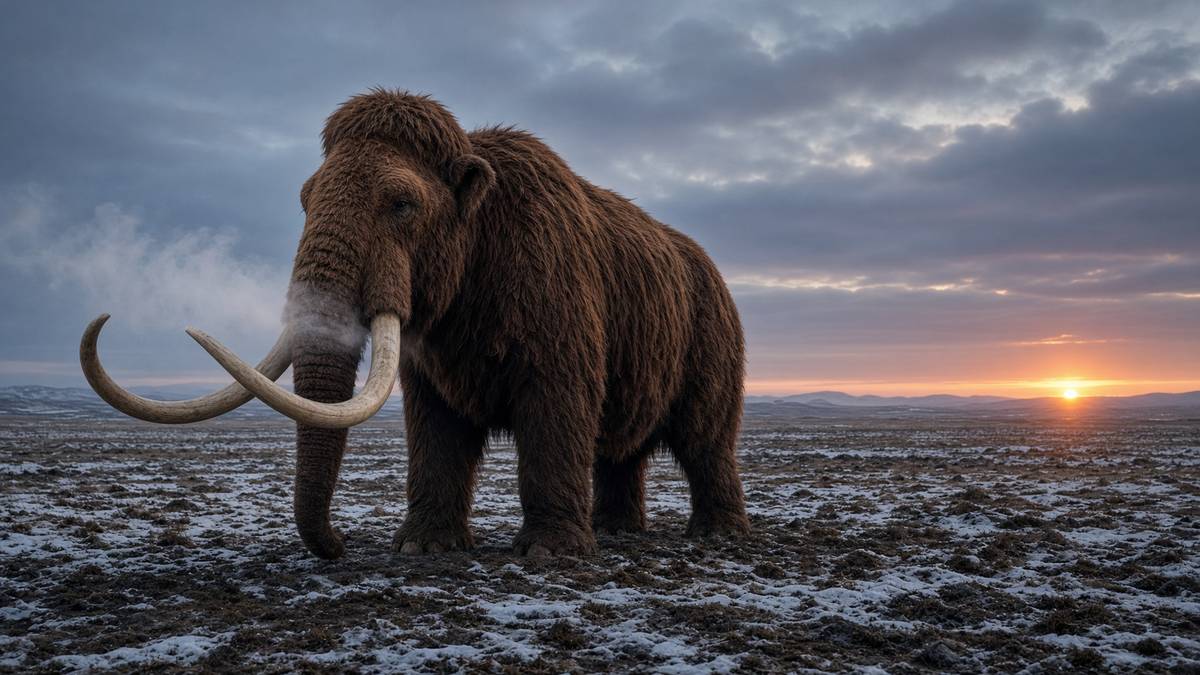
48 min · long read · Frontier biology
The mammoth is being rewritten in Texas
Inside Colossal Biosciences’ Dallas headquarters, Asian elephant cells are taking on the genes of a 4,000-year-old ghost. The target is a calf around 2028. This is not a film treatment.
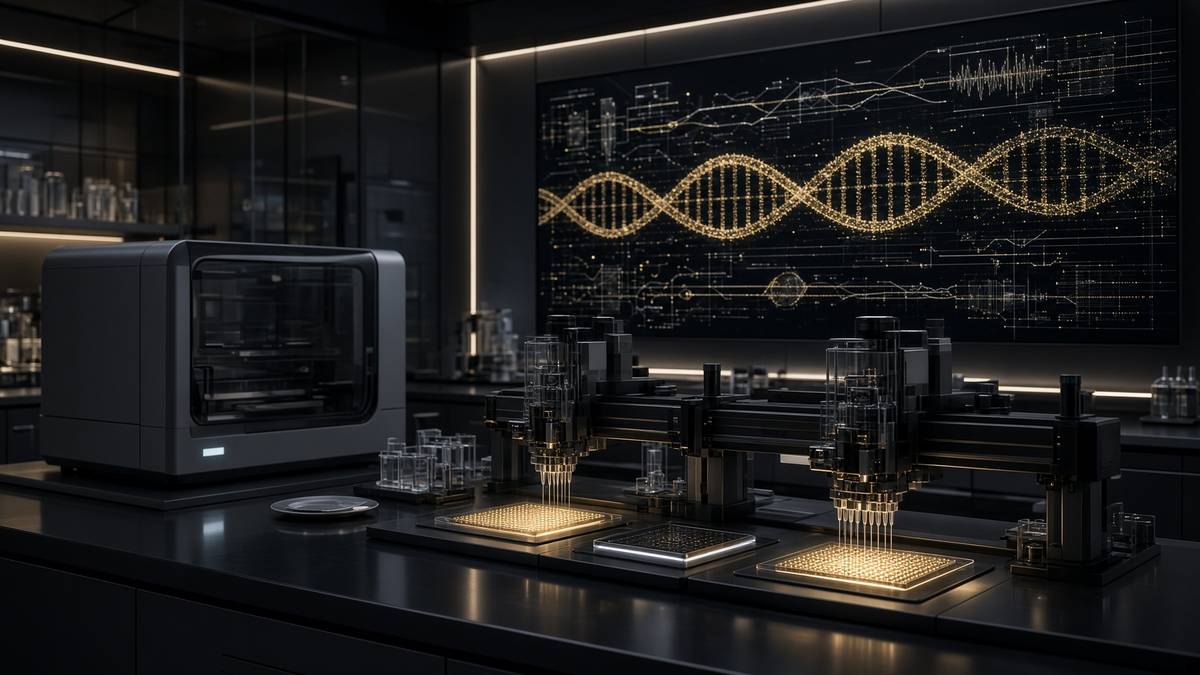
50 min · long read · Frontier biology
We can rewrite a genome the way a word processor rewrites a sentence
CRISPR cut DNA. Base editors change one letter without a double-strand break. Prime editors write arbitrary edits from an RNA template. The machinery is no longer hypothetical.
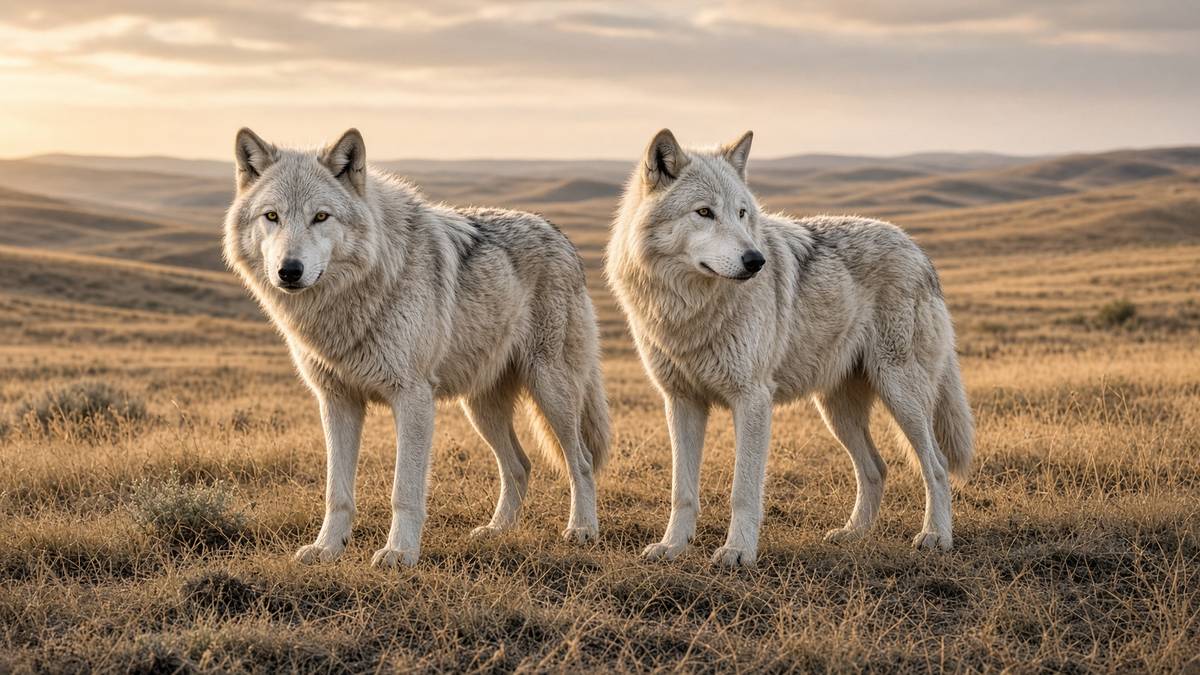
46 min · long read · Frontier biology
Romulus, Remus and the argument over a dire wolf
Three pups born from grey-wolf cells edited with Ice Age DNA became the most famous animals of 2025. They are also the most disputed.
More in this desk
51 min · long read · Frontier biology
Tardigrades taught a human protein how to ignore radiation
Dsup, a disordered DNA-binding protein from a water bear, protects cultured human cells from X-rays. The animal that dries to a tun and lives through vacuum brought a transferable shield.
50 min · long read · Frontier biology
Xenobots: frog cells that became a new kind of machine
No genome was rewritten. Skin and heart cells from Xenopus were sculpted — first by hand, then by an evolutionary algorithm — into millimetre-scale organisms that walk, heal, and assemble copies of themselves.
49 min · long read · Frontier biology
We have the Neanderthal genome. Some of it is still in you.
Svante Pääbo pulled a genome out of bone powder, won the 2022 Nobel, and found that most people outside Africa carry a percent or two of an extinct human. Palaeogenomics is not only mammoths.
48 min · long read · Frontier biology
Brain organoids: a cortex the size of a lentil
Stem cells, left to their own patterning, build layered neural tissue in a dish. They are not minds. They are the most honest model of human development we have ever had.
Essays describe published research. They are not medical advice and they do not authorise human use of any catalogue item.