

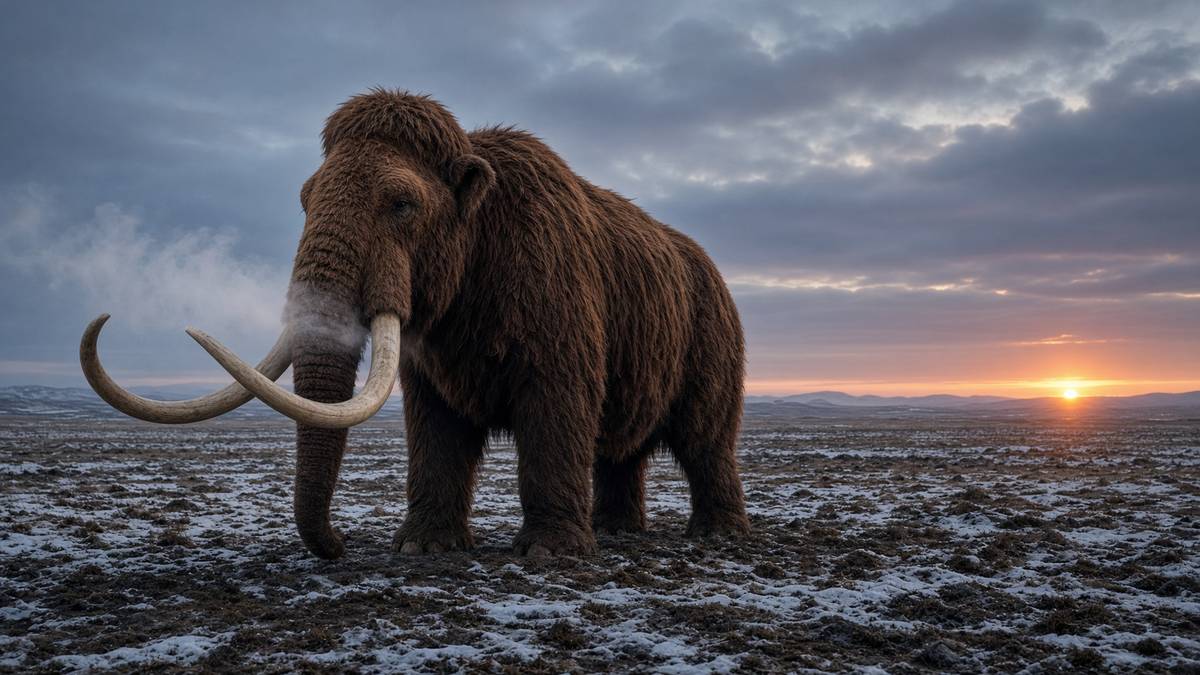
Frontier biology · 48 min · 10,515 words
The mammoth is being rewritten in Texas
Inside Colossal Biosciences’ Dallas headquarters, Asian elephant cells are taking on the genes of a 4,000-year-old ghost. The target is a calf around 2028. This is not a film treatment.
What this essay actually tells you
- Colossal's chassis is the Asian elephant. Edits target cold-coat, fat and haemoglobin modules reconstructed from mammoth palaeogenomics. Texas, an elephant, and a genome from permafrost.
- Elephant gestation is 22 months. The public timeline has pointed at a calf this decade. A woolly mouse is the published dress rehearsal. Arithmetic before press release.
- De-extinction here is trait engineering on a living relative. Not Jurassic Park from a frozen cell, and the mammoth DNA is fragments, not a nucleus.
What this actually means
A Dallas laboratory is rewriting Asian elephant cells so they pick up the cold kit of the woolly mammoth: the shaggy coat, the fat layer, haemoglobin that still unloads oxygen when the blood is cold. Those cells are meant to become embryos, then calves carried by elephant surrogates. Church and Lamm have been saying the core trait-edits are largely done, and the IVF work with elephants has been running for years. The woolly mouse is the published three-week dress rehearsal. Nobody has a walking mammoth. We might, around 2028, have a calf that looks like one. De-extinction here is trait engineering on a living relative. Mammoth DNA is fragments, not a nucleus.
Northwest of downtown Dallas there is a 55,000-square-foot laboratory with a life-sized mammoth standing in a block of fake ice in the lobby. The ice is a sculpture, and I rather like it, but it isn't the programme. The programme behind it is a staffing plan, a freezer farm, and a public timeline that still points at a mammoth-like calf around 2028. Colossal Biosciences, founded in 2021 by the entrepreneur Ben Lamm and the Harvard geneticist George Church, has spent five years turning a National Geographic slide into a factory floor: more than two hundred geneticists and reproductive biologists, a palaeogenomic parts list assembled from dozens of mammoth genomes spanning hundreds of millennia, and Asian elephant cells as the living chassis. In February 2026 Lamm told reporters that the editing phase was largely complete and that ovum retrieval and IVF work had been running for two and a half years. NPR walked the new lab in March 2026. Beth Shapiro, the chief scientist, put the first mammoth at about two years out. A render isn't a neonate. A capitalised reproductive-biology programme is a different object from a slide, and that difference is why this piece exists at Cell-desk length.
In short. A Dallas lab is editing Asian elephant cells toward a mammoth-like calf around 2028. The ice in the lobby is a sculpture; the staffing is real.
De-extinction, on this factory floor, is trait engineering on a living relative. The chassis is Elephas maximus, the Asian elephant, which already shares about 99.6 percent of its genome with Mammuthus primigenius. The remaining four-thousandths are the argument: cold-coat, subcutaneous fat, haemoglobin that still unloads oxygen when the blood is cold, smaller ears, a handful of other tundra modules reconstructed from palaeogenomics. Church's group has been saying a version of that sentence since the mid-2010s, when CRISPR first made a multiplex edit list look like an engineering problem rather than a museum wish. Colossal's public materials now talk of more than a hundred edits, some single-nucleotide, some larger cassettes, drawn from an assembly of on the order of fifty to sixty-five mammoth genomes. The film picture people bring to this page is a nucleus pulled from permafrost. The laboratory object is fragments plus an elephant cell. Hold that distinction for the rest of the essay, because every honest paragraph below is a commentary on it. I want you to keep that on the table.
In short. This isn't cloning ice. It's rewriting cold-coat, fat and blood genes into a living Asian elephant, the closest relative still walking.
Asian elephants are the closest living relatives of woolly mammoths. African elephants, Loxodonta, split earlier; they are the larger, more numerous cousins, and they are the animals most often discussed as possible surrogates because Elephas maximus is endangered and numerically scarce. Phylogeny here is a methods variable, not a mascot. The 99.6 percent figure is a sequence identity across a roughly 3.3-gigabase genome, which still leaves millions of differences, including thousands of protein-coding changes. You can't edit millions of sites with today's multiplex tools and call the product a resurrected nucleus. You can choose the modules that made a mammoth a tundra specialist — hair-follicle density and shaft structure, a thick fat layer, cold-adapted haemoglobin, reduced pinnae — and ask whether those modules, stacked into an elephant fibroblast, produce a calf you can actually husband. That's a smaller claim than 'bring back the mammoth' and a larger one than a coat colour mutant. The rest of this piece is the molecular and reproductive content of that smaller, larger claim.
In short. So Asian elephants share almost all of their DNA with woolly mammoths. The work is to edit the cold-survival pieces, not to rebuild every letter.
Mammoth DNA is fragments, not a nucleus. After death, genomes fall into ultrashort pieces; cytosines deaminate to uracils; contamination from handlers, soil and living elephants is the default background. Svante Pääbo's laboratory wrote the wet and computational rules that made authentic ancient genomes possible: petrous bone and teeth as harvest sites, damage patterns (C-to-T at fragment ends) used as authentication rather than discarded as noise, and consensus sequences assembled from contamination-riddled soup. You get a text with coverage gaps, especially in repetitive and GC-rich regions. You don't get a spindle-ready nucleus sitting in a thawed oocyte. Editors therefore don't restore a genome. They restore chosen loci, the ones that likely encode the phenotype you can see and husband, and they restore them inside a living elephant cell whose chromatin, imprints and mitochondrial population are already a going concern. Skip this paragraph and you're selling a clone that doesn't exist. The method is the imputation, and the imputation is why the mammoth, if it arrives, will be an edited elephant.
In short. So dead mammoth DNA comes in scraps, not as a ready cell nucleus. Living elephant cells supply the nucleus; the scraps supply a short edit list.
Why a mammoth, scientifically
The romantic answer for why a mammoth is the ecological one people actually want to argue about. Pleistocene grasslands of the north — the mammoth steppe — were kept open, in part, by megaherbivores that knocked down shrubs, compacted snow and kept carbon parked in frozen soil. Sergey Zimov has been running a version of that argument at Pleistocene Park in Siberia for decades: replace the moss and shrub with grass, and the albedo and soil-carbon ledgers of a warming Arctic might move. Whether a handful of cold-adapted elephants can restart that biome is a real argument and a contested one. A calf doesn't settle it. What isn't contested is the molecular premise sitting underneath the ecology. Cold haemoglobin, subcutaneous fat, hair-follicle density, ear size: those are finite genetic modules. Edit the modules and you have a proxy organism you can, in principle, husband. Husbandry is a much less glamorous sentence than rewilding a continent, and a much better one to start with. Ecology, if it comes, comes after a neonate that can stand.
In short. So people want mammoths because Ice Age grasslands may have needed big cold-adapted grazers. A calf is still only a calf. The genes for fur, fat and blood are the starting job.
Trait modules are the honest unit of this programme, and they are a genetics sentence before they are a press sentence. A hair follicle is a mini-organ with a cycle — anagen, catagen, telogen — gated by FGF5, TGF-α, BMPs, WNTs and a keratin-and-transglutaminase structural programme in the shaft. Adipose expansion is a different transcription factor neighbourhood: PPARγ, C/EBPs, a set of lipid-handling enzymes, and the innervation and vascularisation that make a ten-centimetre subcutaneous layer a thermal battery rather than a histology slide. Haemoglobin is a tetramer whose oxygen-binding curve is written in a handful of globin residues and in the 2,3-bisphosphoglycerate pocket; cold shifts that curve, and mammoths appear to have compensated. Ear pinnae and tail length are surface-to-volume problems with their own developmental genetics. Colossal's bet, stated without the adjectives, is that those modules are modular enough to survive being moved across the few million years that separate Mammuthus from Elephas. If they are, a proxy walks. If they are not, you have an expensive elephant with a shaggy coat and a haemoglobin blot that doesn't match the tundra.
In short. In short, fur, fat, cold-proof blood and small ears are separate genetic kits. The bet is that those kits still work when you move them into an elephant.
The last woolly mammoths died on Wrangel Island in the Arctic Ocean about four thousand years ago, well into the Holocene, while the pyramids were already up. That date is the ghost in Colossal's dek, and it's worth sitting with. These weren't Jurassic animals. They were Holocene survivors of a lineage that had already been through bottleneck after bottleneck, with the genomic scars of inbreeding that Palkopoulou, Dalén and colleagues documented in the 2015 complete genomes. A 4,000-year-old ghost is close, in palaeogenomic terms. Close is why the fragments are readable. Close is also why the ecological claim isn't a cartoon of a vanished world nobody can describe: people were already farming when the last mammoths died, and the Arctic they died out of is a recognisable, if rapidly changing, place. The Dallas programme is therefore aiming at a recently lost tundra specialist, using a living sister species, with a parts list measured in millennia rather than in deep time. That's still an extraordinary sentence. It's a more ordinary sentence than the film treatment, which is the point of writing it this way.
In short. The last mammoths died only about 4,000 years ago, on an Arctic island. That's recent enough for readable DNA, and recent enough that the lost habitat is still a real place.
Church's laboratory put mammoth alleles into elephant cells in 2015, aiming at something like sixty genes that experiments had tagged as cold-relevant: a high-domed skull, oxygen handling at low temperature, fatty tissue, hair. That paper-adjacent work is the ancestor of the Dallas punch list, and it's why Colossal can talk about an editing phase that's largely done rather than about a gene they hope to find. The list has grown. Public remarks in 2026 put the count above a hundred edits, mixing CRISPR-Cas9 cuts with base editors and prime editors so that some changes are single-letter conversions without a double-strand break. Integrases and recombinases show up in the company's own descriptions of how larger pieces get written. Sixty was a seminar number. A hundred is a staffing number. Neither number is a species. The phenotype you can husband — coat, fat, blood, ears — is the test, and the test is still an elephant pregnancy. Keep the 2015 date in view, though. This programme did not start when a valuation hit the newspapers. It started when a multiplex editor made a sixty-locus list look like work rather than a wish.
In short. So Church's lab began writing mammoth genes into elephant cells in 2015. The edit list is now longer, and still only a list until a pregnancy works.
Texas isn't a palaeontological accident. Dallas was chosen as a headquarters because it could hold a 55,000-square-foot lab, a reproductive-biology group, and the kind of capital that treats a 2028 calf as a milestone rather than as a metaphor. Valuations reported around ten billion dollars in 2025 are a fact about investors, not a fact about haemoglobin. They do, however, buy sequencers, editors, elephant IVF and the headcount that makes a nonlinear reproductive programme survivable. Lamm has been blunt that the company is in the attention business as well as the biology business; Shapiro has been equally blunt that you can't bring back something identical to a species that used to be alive. Both sentences can sit in one protocol if you let them. This journal is for the second sentence. The first sentence explains why a life-sized ice mammoth stands in a lobby where, in another decade, there would have been a poster. Capital is a reagent. It's not a result. The result, if it arrives, will be a calf whose genome you can sequence and whose coat you can photograph in ordinary light.
In short. So Dallas is a staffed factory, not a museum. Money bought the editors and the elephant IVF. A calf, if one comes, is the only result that counts.
Palaeogenomics is a parts list
Palaeogenomics is the quieter half of this story, and it had to work first. DNA after death is a race against deamination and contamination. The field industrialised on petrous bone, silica-column cleanup of ultrashort fragments, and computational genomes assembled under the assumption that most of the molecules in the tube are wrong. Pääbo's Neanderthal genome was the proof that ancient DNA could be a complete book. Mammoth work had a head start because permafrost is a freezer: collagen still remembers the Holocene, and some specimens are young enough that coverage is generous by ancient-DNA standards. van der Valk, Shapiro, Dalén and colleagues reported million-year-old mammoth DNA in Nature in 2021, which is the current outer bound of the readable past for this lineage. Dire-wolf work used a 13,000-year tooth and a 72,000-year skull. The same pipeline, different chassis. De-extinction is the loud half. Palaeogenomics is the half that actually had to exist before anyone could write an edit list that wasn't a guess from a morphology textbook.
In short. So old DNA is smashed and chemically scarred. Permafrost and careful lab rules made mammoth genomes readable. Without that work, there is no edit list.
A million-year-old genome isn't a working gene until someone reconstructs a coding sequence and asks a living cell to transcribe it. That reconstruction is a consensus: many damaged fragments, aligned, with deaminated cytosines called as the thymines they became, and with gaps filled from related genomes when coverage dies. The output is a FASTA file with confidence intervals that a press release won't print. Campbell, Storz and colleagues, in 2010, took reconstructed mammoth globin sequences, expressed them in Escherichia coli, and measured oxygen-binding curves at cold temperature — a frozen tooth becoming a cuvette assay. That paper is the textbook example of palaeogenomics as a working gene, and it's still the haemoglobin paragraph this programme has to cite. Lynch and colleagues, Cell Reports 2015, then put whole elephantid genomes against the same question and named a broader set of arctic adaptations. The Dallas edit list is downstream of those documents. Sequence from bone, cassette into a living relative, phenotype if the developmental biology cooperates. Three steps. The first two are in print. The third is a pregnancy.
In short. A reconstructed gene is a best-guess sequence from damaged scraps. Some mammoth blood genes have already been built and tested in bacteria. That's how a fossil becomes an experiment.
Colossal has said it used on the order of fifty to sixty-five mammoth genomes, spanning perhaps 700,000 years in one telling and 1.2 million in another, to assemble a reference against which Asian elephant sequence can be compared. Multiple genomes matter because a single specimen is a single animal, possibly inbred, possibly a local variant, and because consensus across time is how you tell a mammoth-lineage allele from a damaged site. Coverage is uneven. Repeats, centromeres and GC-rich promoters are the usual casualties. The comparison then produces a variant list: millions of differences, a subset in protein-coding sequence, a smaller subset with a plausible story about coat, fat, haemoglobin, ears, skull, nerves. Editors take that smaller subset. The rest of the extinct animal is imputed from Elephas. That imputation isn't a scandal and it's not a gotcha. It's how every palaeogenomic trait-engineering programme actually works, including the dire-wolf pups that already exist and the dodo and thylacine projects sitting in the same queue. Skip this paragraph and you will spend the rest of the decade arguing about passports rather than about phenotypes.
In short. In short, dozens of mammoth genomes, compared with elephant DNA, produce a list of differences. Only the cold-survival ones get edited. The rest of the animal is still an elephant.
Chosen loci, not a restored genome. That sentence is the papers, and it's the sentence conservation geneticists reach for when the word species enters the room. Twenty sites did not make Romulus and Remus into Aenocyon dirus; a hundred sites won't automatically make an edited Asian elephant into Mammuthus primigenius. Phylogeny is a tree, not a punch list. What a punch list can do is move named traits: hair length and curl, fat deposition, the oxygen-binding curve of haemoglobin, pinna size. Those are husbandry traits. They are also the traits a tundra proxy would need if the ecological argument is ever going to be tested rather than rendered. Shapiro has said out loud that you can't bring back something identical. Colossal's press line still uses de-extinction as the umbrella. This journal holds both descriptions, as it did for the wolves. The animals, if they arrive, will be real. The species label is the fight that will follow them around for the rest of their lives, and it's a fight a protocol can see coming from a variant table.
In short. Editing selected cold genes doesn't rewind a species. It can change fur, fat and blood. The name on the passport will be argued for years.
Lynch, Bedoya-Reina, Ratan, Sulak, Palkopoulou and colleagues, Cell Reports 2015, is the elephantid-genome paper a mammoth papers still walks through. They compared woolly mammoth genomes with Asian and African elephants and pointed at amino-acid changes in proteins for temperature sensation, hair, fat, and insulin signalling — a molecular map of arctic specialisation rather than a single heroic locus. TGF-α loss of function, keratin variants including KRT27, and a suite of lipid-metabolism alleles sit on that map and on Colossal's later mouse cassette. Campbell's haemoglobin work sits beside it as a functional assay rather than a list. The point of naming the papers isn't piety. It's to stop a punch list looking as if it were invented in a Dallas branding meeting. The alleles were in the literature. Multiplex editors made it possible to stack them. Stacking is the engineering. The literature is the reason the stack has a chance of meaning something in a follicle, an adipocyte and an erythrocyte at the same time.
In short. Here, a 2015 genome paper named many of the cold-survival genes. Later editing stacked those known changes. The list was science before it was a company slide.
Diagram
- 2 nmB-DNA0.34 nm/bp. Diploid G1 is ~2 metres of this.
- 11 nmNucleosome147 bp around a histone octamer. ~30 million per nucleus.
- loopsCTCF / cohesinEnhancers meet promoters by folding, not by sliding.
- µmA/B compartmentsHi-C: open A, closed B, territories at the lamina.
- 6–10 µmNucleusThe room. The search problem is the entire point of gene regulation.
Packing is not storage. It is the first regulatory decision: a promoter buried in H3K27me3 is not a promoter, it is furniture. Transcription starts when this origami opens the right 1,000 base pairs among 3.1 billion.
Sequence is not a nucleus
Sequence on a disk isn't a nucleus in a cell. Two metres of DNA in a mammalian nucleus are folded through nucleosomes, CTCF-and-cohesin loops, A and B compartments, and lamina-associated territories, and that folding is the first regulatory decision: a promoter buried in H3K27me3 is furniture, not a gene. An Asian elephant fibroblast already has that origami, already has the pioneer factors and the Mediator complex and the Pol II that will have to find any mammoth allele you paste in. Palaeogenomic sequence doesn't come with histone marks. It doesn't come with the three-dimensional contacts that made a mammoth enhancer talk to a mammoth promoter in a tundra keratinocyte. You're hoping that elephant chromatin at the orthologous locus is similar enough that the swapped coding sequence, or the swapped regulatory letter, is still found and still read. Sometimes it will be. Sometimes the elephant enhancer will ignore you. Chromatin is why 'we inserted the gene' is the start of a phenotype paper, not the end of one.
In short. In short, dNA in a living cell is folded, and the folding decides which genes get read. A mammoth letter only works if the elephant cell can still find it.
The living relative is therefore doing more work than a chassis metaphor admits. Elephas maximus supplies the nuclear architecture, the mitochondrial population (thirteen proteins still written on-site, the rest imported), the imprinting marks that a placenta will have to interpret, and the developmental programme that turns a totipotent nucleus into a trophoblast and an inner cell mass and, months later, a trunk. Somatic-cell nuclear transfer, if that's the route, asks an enucleated oocyte to reprogramme an edited fibroblast nucleus back toward totipotency — the Dolly problem, named, unsolved in the general case, merely made to work often enough in sheep, cattle, goats, dogs and, with grim efficiency numbers, in a handful of other mammals. Elephants aren't sheep. An elephant oocyte is a scarce object. Reprogramming proteins, histone turnover, DNA methylation wipes and re-writing: those are the minutes and hours after activation, and they are why a perfect FASTA file can still die as a blastocyst. The palaeogenome doesn't attend that meeting. The elephant cytoplasm does.
In short. The elephant cell brings its own mitochondria, gene-folding and pregnancy programme. Ancient sequence can't replace those. Cloning has to reprogramme an edited nucleus, and that step is hard.
Imprinting is the quiet veto. Mammals silence some genes according to parent of origin; the placenta in particular is a battlefield of imprinted loci, and somatic-cell clones have been failing that battlefield since the 1990s. Large offspring syndrome, placental hyperplasia, early embryonic loss: cloned cattle and sheep wrote those phenotypes into the veterinary literature long before anyone proposed an elephant surrogate. An Asian elephant pregnancy lasts twenty-two months. A failed imprint that would have shown up at day thirty in a mouse shows up, in this animal, after a year of an endangered cow's life. X-inactivation in a female conceptus is another lottery the palaeogenome doesn't help you win. None of this is a reason to stop the programme. It's a reason to treat the woolly mouse, and any elephant blastocyst work that's not yet public, as the actual science, and to treat a 2028 render as a date on a slide. Developmental epigenetics is the remaining gate that sequence identity can't open. Twenty-two months is how long that gate takes to declare itself.
In short. So: some genes must be switched on from the mother or the father for a placenta to work. Clones often get that wrong. In an elephant, you wait almost two years to find out.
Dolly was born on 5 July 1996, announced in 1997, from a mammary epithelial cell fused into an enucleated oocyte, Wilmut, Campbell, Nature 385: 810–813. One live lamb from 277 reconstructed embryos is the number the papers still quotes when someone says cloning as if it were a pipette step. Cattle cloning later became an industry with better percentages and a thick file of abnormalities. Dogs, as the dire-wolf programme demonstrated, can be made to carry edited canid cells to term; Romulus and Remus are the existence proof that palaeogenomic edits plus somatic-cell nuclear transfer plus a domestic surrogate can produce a neonate. Elephants are a different factory. Fewer oocytes, a twenty-two-month gestation, an endangered Asian species you may not want to spend as a surrogate, and no agricultural cloning industry standing behind the protocol. Church showed years ago that the editing is the tractable piece. Reproduction is the art. If a mammoth-like calf is born near 2028, it will be because an elephant cow carried an edited cousin to term, and because the reprogramming dice came up. We still stop on that sentence.
In short. So Dolly the sheep showed a cloned mammal is possible, at a steep failure rate. Dogs have now carried edited cells. Elephants are slower, rarer, and much harder.
This is why the frozen-cell fantasy dies on contact with a nucleus. A mammoth cell with an intact nucleus hasn't been recovered, and the chemistry of death makes that recovery extraordinarily unlikely: membranes lyse, nucleases cut, chromatin falls apart, mitochondria stop being organelles and become debris. What permafrost keeps is collagen, some lipid, and DNA fragments short enough to sequence and too short to chromosome. The living relative isn't a compromise forced by public relations. It's the only known source of a spindle, a cytoplasm, a mitochondrial population and a chromatin programme that can carry a reconstructed trait list to term. De-extinction as currently practised — mammoth, dire wolf, dodo, thylacine — is the same sentence with different sister species. Chassis plus palaeogenome. The chassis is the animal. The palaeogenome is the edit list. Anyone asking for a pure-blood mammoth from a thawed bone hasn't yet sat with how DNA survives, or with how a mammal is built from an oocyte.
In short. No intact mammoth cell has been found in the ice. Only a living relative can provide a working egg and nucleus. That's the method, not a compromise.
Substitutions in woolly mammoth hemoglobin confer biochemical properties adaptive for cold environment. A frozen sequence, expressed, is a working protein with a curve you can measure.— Campbell KL, Roberts JEE, Watson LN, Stetefeld J, Sloan AM, Signore AV, Howatt JW, Tame JRH, Rohland N, Shen TJ, Miller NJ, Weber RE, Fago A, Schweitzer MH, Hoekstra HE, Donlan RM, Storz JF. Substitutions in woolly mammoth hemoglobin confer biochemical properties adaptive for cold environment. Nat Genet. 2010; 42: 536–540.
Three modules: coat, fat, haemoglobin
FGF5 is the classic long-hair locus, and it belongs in the first coat paragraph because the mouse genetics already did the work. Fibroblast growth factor 5 is a ligand that helps push a follicle out of anagen; loss of function keeps the follicle growing, which is how you get the coats that made angora mice, long-haired cats and, in Colossal's hands, the golden woolly mouse. TGF-α, when nonfunctional in mammoths, is another hair-cycle and follicle-density input. KRT27 and other keratin genes change shaft structure — the difference between a coarse guard hair and the underwool that actually insulates. TGM3, a transglutaminase, cross-links the cornified envelope of the shaft. FAM83G sits in the same structural neighbourhood. MC1R shifts eumelanin versus pheomelanin, which is how a lab mouse goes gold instead of black, and which is a colour story more than a tundra story. Stack those and you're no longer making a cute mutant. You're asking whether a small cassette of coat genes is modular enough to move. The photographs are the assay. The genes are the mechanism.
In short. Here, a few named hair genes decide length, curl and colour. Turning them off or swapping them is how you get a shaggy coat in a mouse, and perhaps in an elephant.
Colossal's own descriptions of the mammoth phenotype lean on five kinds of hair, a ten-centimetre insulating fat layer, and smaller ears. Those are husbandry numbers dressed as palaeontology, and they are useful because they are measurable. Hair types you can section. Fat thickness you can ultrasound, in principle, on a calf. Pinna area you can photograph. The fat module isn't the coat module. Adipocyte differentiation, lipid-droplet proteins, a mammoth-lineage allele in a fat-handling enzyme, and the hypothalamic and sympathetic tone that decide whether a ten-centimetre layer is actually laid down in a growing calf: that's a developmental-metabolic programme, not a keratin gene. The woolly mouse carried a lipid-metabolism edit alongside the hair cassette precisely because the company wanted a living assay of both halves of cold tolerance — fur and fuel — on a three-week clock. An elephant calf will take twenty-two months to tell you whether the fat layer showed up. Arithmetic before press release, as the neighbouring facts file already put it. The mouse is the arithmetic.
In short. So mammoths had several kinds of hair, a thick fat layer and small ears. Fur genes and fat genes are different jobs, and a mouse can test both in weeks.
Haemoglobin is the module you can take to a spectrophotometer. Adult haemoglobin is an α2β2 tetramer; oxygen binding is cooperative, pH-sensitive, and temperature-sensitive, and 2,3-bisphosphoglycerate in the red cell shifts the curve toward unloading. Campbell, Hoekstra, Berenbrink, Storz and colleagues, Nature Genetics 2010, reconstructed woolly mammoth haemoglobin, expressed the chains, and showed that substitutions confer biochemical properties adaptive for cold: the protein keeps unloading oxygen when the temperature drops, where an unadapted haemoglobin would cling. That's a cuvette result, not a tundra documentary. It's also the cleanest existence proof that a palaeogenomic coding sequence can become a working protein with a measured phenotype. Colossal's elephant-cell edits include this neighbourhood because a cold-adapted calf that can't oxygenate tissue at low peripheral temperature is a coat without a physiology. Globin genes are transcribed in the erythroid lineage late in gestation and after birth. An edit in a fibroblast is a promise. A haemoglobin oxygen-dissociation curve on a neonatal blood draw is the assay. Plan the assay now.
In short. So mammoth haemoglobin was rebuilt in a test tube in 2010 and kept delivering oxygen in the cold. That blood change is one of the edits an elephant calf would need.
Allen's rule is the morphological cousin of the haemoglobin paper: cold-adapted endotherms tend toward shorter extremities, smaller ears, less surface for a given volume. Mammoth pinnae were small against an Asian elephant's fans. The genetics of pinna size are less tidy than FGF5, which is a warning rather than a veto. Developmental fields, cartilage, and a set of unnamed enhancers will decide whether an edited elephant is born with a tundra ear or with a tropical radiator still attached. Nerve endings adapted to cold, a high-domed cranium, tusk trajectory: those sit on Colossal's longer list and they are morphogenetic problems, not single-gene knockouts. Multiplex editing can write the letters. Morphogenesis has to read them in a growth plate and in a neural crest stream over months. This is why a woolly mouse, which doesn't have a trunk or a tusk, is a coat-and-fat assay and not a miniature mammoth. Calling the mouse a baby mammoth skips a skull. Dismissing the mouse because it lacks a skull hasn't looked at a follicle.
In short. So cold animals tend to have smaller ears and shorter limbs. Those shapes are harder to edit than hair. A woolly mouse tests the coat, not the skull.
Multiplex CRISPR is the reason a hundred-edit list is a staffing plan rather than a century of crosses. Cas9 with a guide RNA cuts where you point it; a donor or a repair outcome then writes the change. Base editors — cytosine and adenine deaminases fused to a nickase — convert one letter without a double-strand break, which matters in a genome you would rather not scramble at a hundred sites. Prime editors, Anzalone, Liu, Nature 2019, write short new sequence from an RNA template. Colossal's public descriptions also mention integrases and recombinases for larger cassettes. Off-targets, rearrangements, mosaicism in an embryo, and the difference between a clonal fibroblast line and a mosaic conceptus are the adult problems. A monoclonal edited cell you can sequence to exhaustion is the object you want to hand to a nuclear-transfer protocol. A messy multiplex in a zygote is how you get a calf whose tissues disagree about whether they are woolly. The mouse paper used CRISPR-Cas9 ribonucleoproteins and cytosine base editors in embryonic stem cells, then built animals. That's the dress rehearsal of the method, not only of the coat.
In short. So many genes are being changed at once with gene-editing enzymes that cut, swap or rewrite letters. Clean, fully checked cells are what you want before cloning.
A trait is a transcription event before it's a photograph. FGF5 has to be silenced, or not, in the follicle. Globin genes have to fire in erythroblasts. PPARγ has to run an adipocyte programme. The elephant cell's promoters, enhancers, chromatin state and Mediator complex decide whether Pol II is allowed to transcribe the locus you edited. Closed chromatin at a keratin gene is a failed coat, whatever the FASTA file says. Alternative splicing will further decide which isoform a follicle actually makes; most mammalian multi-exon genes are spliced in more than one way, and a mammoth splice form isn't guaranteed to be the elephant's default. This is the slow floor under the press-render of a shaggy calf. Editing writes a letter. Transcription and splicing read it. Morphogenesis builds the organ. Husbandry decides whether the organ is enough. The diagram that follows is the reading step, because a programme that talks only about CRISPR hasn't yet talked about a phenotype. Phenotype is processed RNA, folded protein, and a tissue that noticed.
In short. Here, an edited letter does nothing until the cell reads the gene and makes the protein. Hair genes must run in hair follicles, blood genes in blood cells.
Diagram
Closed chromatin (H3K27me3, DNA methylation) hides the promoter. Pioneer factors and histone acetyltransferases open it.
PIC: TFIID, TFIIH, Mediator, Pol II. Ser5 phosphorylation of the CTD lets the polymerase leave the promoter.
Elongation ~20–40 nt/s. Capping, splicing, cleavage and polyadenylation happen on the still-growing RNA.
Human genes are islands in 3.1 billion base pairs of mostly noncoding sequence. Promoter, enhancers, chromatin state and the Mediator complex decide whether Pol II is allowed to fire. Epithalon’s literature sits on TERT and pineal clocks — two of the rare promoters anyone bothers to name in a peptide essay.
The woolly mouse is the arithmetic
Elephant gestation is twenty-two months. A laboratory mouse can tell you in three weeks whether a coat-and-fat cassette produces a phenotype you actually want. That arithmetic is the entire scientific case for the woolly mouse, and it's the case a reproductive biologist would have made in any decade: don't debug a slow organism on the first try. Fail the coat edit in an elephant and you have used two years and a surrogate of a scarce species. Fail it in a mouse and you have used a cage. Colossal took ordinary Mus musculus, stacked hair-cycle, keratin, pigment and lipid-metabolism edits, and published the animals. First births in October 2024, shown to the world in March 2025, bioRxiv Chen, Abrams, Shapiro and colleagues 2025, later revised. Golden, shaggy, curled whiskers, a metabolism tweak aimed at cold. Lamm called it a watershed for the de-extinction mission. Shapiro's useful correction, which the coverage kept trying to lose, is that they did not put mammoth genes into a mouse in the cinematic sense. They edited mouse genes in the direction mammoth alleles point. The genome is still Mus. The assay is the coat.
In short. An elephant pregnancy lasts twenty-two months. A mouse coat shows up in weeks. That's why the woolly mouse exists: to test the fur-and-fat idea cheaply.
Chen and colleagues, on the bioRxiv preprint, combined loss-of-function alleles and knock-ins across a set of hair-development and lipid-metabolism genes, up to around seven loci in the animals that made the photographs, with broader combinatorial work across as many as eleven genes in the stem-cell campaigns. FGF5, TGM3, FAM83G, MC1R, and a lipid allele chosen because mammoths carried a version of it, sit on that list. CRISPR-Cas9 ribonucleoproteins and cytosine base editors went into mouse embryonic stem cells; monoclonal lines were genotyped; animals were built. Thirty-eight pups in one reported cohort expressed the gold, woolly hair and the lipid-metabolism change. Efficiency at that multiplex, in a stem-cell-to-animal pipeline, is the unpublished number every elephant programme will want, because the equivalent experiment in Elephas can't be run fifty times for fun. The preprint is a methods paper dressed as a mascot. Read it as a methods paper. The mascot is how it travelled. The methods are why it matters on a Dallas whiteboard.
In short. So the woolly-mouse paper edited several hair and fat genes at once in mouse stem cells, then made animals. Most of those pups grew long golden coats.
What the mouse proves is modularity at the coat. FGF5 loss lengthens hair in mice; it won't automatically lengthen hair in an elephant follicle, but it's more likely to do so than a random intron, and the mouse is how you find out whether the rest of the cassette fights itself. Stacked keratin and transglutaminase edits can wreck a shaft as easily as they can wool it; living animals with a coat you can comb are evidence that the stack is at least compatible. What the mouse doesn't prove is an elephant pregnancy, a trunk, a tusk, a twenty-two-month placenta, or a tundra ecology. It doesn't prove that mammoth haemoglobin will run cleanly in an elephant erythrocyte. It doesn't prove that a ten-centimetre fat layer will be laid down on an elephant calf's rump. Those are different modules, different tissues, different clocks. Treating the mouse as a miniature mammoth is how this subject gets cheap. Treating it as irrelevant because it's small is how you miss the only published living assay of the coat cassette. We'll take the living assay.
In short. The mouse shows that the fur-and-fat gene stack can work in a living mammal. It doesn't show that an elephant pregnancy, a trunk or a tundra will follow.
A mouse generation is three weeks from conception to birth, sexual maturity in weeks, a litter rather than a singleton, and a century of reproductive protocols sitting on the shelf. An Asian elephant cow is sexually mature around ten to fourteen years, carries one calf, lactates for years, and lives in a social herd whose stress physiology isn't a footnote. The woolly mouse is therefore not only a genetic sandbox. It's a reminder of how much of mammalian reproductive biology is already industrialised in Mus and how little of it's industrialised in Elephas. Ovum retrieval from elephants, in vitro maturation, in vitro fertilisation, embryo culture, transfer, and the veterinary care of a twenty-two-month surrogate: Colossal has said that work has been running for two and a half years as of early 2026, and that the process is nonlinear. Nonlinear is the honest word. A mouse litter that looks woolly in month four of a programme is a result. An elephant blastocyst that looks transferable in month four is a rumour until a cow is pregnant, and a pregnancy is a rumour until a calf stands.
In short. So mice breed fast and scientists already know how to grow their embryos. Elephants breed slowly, one calf at a time, and the embryo methods are still being built.
Hold the taxonomy. The woolly mouse is Mus musculus with a handful of edits. The dire-wolf-like pups are Canis lupus with a defined set of palaeogenomic edits. The mammoth-like calf, if it arrives, will be Elephas maximus with a defined set of palaeogenomic edits. Three chassis, three edit lists, one industrial method: read the extinct genome, choose the trait modules, write them into a living relative, push the cell through a reproductive protocol. The species names that travel with the photographs are a separate fight, and it's the same fight in each case. This journal's neighbouring essays on the wolves, the dodo and the thylacine are that fight in other bodies. Here the job is the elephant, the twenty-two months, and the three modules — coat, fat, haemoglobin — that Dallas is actually stacking. A clever colleague from another lab doesn't need a catchphrase. They need the chassis named, the loci named, the reproductive gate named, and the date treated as a date on a slide until a neonate exists to sequence.
In short. In short, woolly mice are still mice. Edited wolves are still wolves. A mammoth-like calf would still be an elephant with cold-survival edits. The method is the same.
We’re mostly done in the editing phase. Two and a half years ago, we began the IVF and ovum retrieval process. The process is nonlinear.— Ben Lamm, CEO, Colossal Biosciences, 2026
From fibroblast to calf
Somatic-cell nuclear transfer is a numbers game before it's a miracle. Enucleate an oocyte, put in a diploid nucleus from an edited fibroblast, activate, culture, transfer. Most reconstructed embryos die before the blastocyst. Most blastocysts fail to implant. Most pregnancies fail. Dolly's 1-in-277 is a historical floor, not a prediction, but it sets the scale: you need oocytes in quantity, surrogates in quantity, and a clonal cell line you trust, because you will burn a lot of all three. Elephants don't superovulate on command the way cows do. Ovum pick-up in elephants is a specialised veterinary procedure, still being industrialised, which is why two and a half years of retrieval work is a real line in Lamm's 2026 interviews rather than a throwaway. In vitro oocyte maturation and fertilisation in elephants aren't textbook rotations. They are the bottleneck that editing can't open. A hundred clean edits in a fibroblast are necessary and, until this factory runs, nowhere near sufficient. The remaining gates are reproductive biology and ethics, and they are larger than CRISPR.
In short. So cloning uses up many eggs and many failed embryos for each live birth. Elephant eggs are scarce, so that numbers game is the bottleneck now, not the gene edits.
In vitro fertilisation and ovum retrieval are the quieter programme, and they may matter more for living elephants than for extinct ones. Captive breeding of Asian elephants is already a conservation problem: few births, difficult logistics, a species declining in the wild. A reliable elephant IVF protocol would be a conservation tool whether or not a mammoth allele ever rides along. Lamm has said as much, pointing at applications to captive breeding and at humane certifications, and promising progress in 2026 that he wasn't announcing on the day of the interview. Believe the incentive. An IVF capability is how you get more than one shot at a twenty-two-month gestation without turning every attempt into a surgical story. It's also how you might, in a more distant programme, move edited embryos into surrogates with less waste. Two and a half years of retrieval work is the sentence to keep. Editing being 'mostly done' is the sentence that travels. Both can be true. Only one of them puts a cow in calf.
In short. Elephant IVF is being built because you can't clone without eggs. That same skill could help living elephants breed. It's also the step that must work before a 2028 calf.
Who carries the pregnancy is an ethical gate with a species name. Asian elephants are endangered. Using them as experimental surrogates, at the numbers cloning historically consumes, is the objection conservation people reach for first, and they aren't being theatrical. African elephants are more numerous and have been discussed as alternative surrogates; they are still elephants, still long-gestation, still social, still capable of suffering a failed or abnormal pregnancy. Artificial wombs appear in the surrounding coverage as a research programme in Australia, not as a clinical alternative on a 2028 clock. American Humane and Global Humane certifications, which Lamm cites, are process claims. They don't dissolve the arithmetic of how many cows you might need if the efficiency looks like cattle cloning in 1999 rather than like cattle cloning in 2019. If you can't name the surrogate species, the expected loss rate, and the veterinary endpoints hasn't yet described the experiment. The calf, if it comes, will have a mother. She is part of the protocol.
In short. So Asian elephants are endangered, so using them as mothers is ethically fraught. African elephants or, one day, artificial wombs are the alternatives under discussion.
The 2028 date is a public timeline, not a due date. Gestation alone is twenty-two months, which means an embryo that doesn't exist in early 2026 can't be a standing calf in early 2028 unless the calendar is being used loosely. Lamm has called the process nonlinear. Shapiro has put the first mammoth at about two years out, in remarks from the new-lab walkthroughs of 2026. Those two statements can be reconciled if at least one edited embryo is already on a path that the company hasn't put on a stage, or if '2028' is a horizon rather than a birth plan. This journal won't pretend to know which. What we can say, because it's on the record, is that the editing of the trait cassette in cells is the part Church's group always said would yield first, that IVF work has been running for years, and that nobody has presented a pregnant elephant carrying an edited cousin. Arithmetic before press release. Twenty-two months is a constant. Public dates are not.
In short. A 2028 calf would already need an embryo on the way, because pregnancy itself takes twenty-two months. The date is a target. It's not a booking.
Beth Shapiro is the useful voice because she won't inflate the taxonomy. As Colossal's chief scientist, and as a palaeogenomicist whose 2021 Nature paper with van der Valk sat on million-year mammoth DNA, she has said that you can't bring back something identical to a species that used to be alive. She said a version of the same thing about the dire-wolf pups: grey wolves with a defined set of edits. The company's press office still says de-extinction. Both descriptions can be printed if you keep the papers in the room. Shapiro's other public point is that the same toolkit — ancient DNA, multiplex editing, assisted reproduction — is a conservation toolkit for living elephants, for disease resistance, for genetic rescue of small populations. That's a real dual-use claim, and it's a better claim than a render of a steppe. Whether the conservation half is the point of the company or the ethical cover for the headline half is a question a valuation can't answer. A pregnancy in an endangered species will answer it, one way or another, in public.
In short. Colossal's chief scientist says you can't bring back an identical extinct species. The same tools might help living elephants. A real pregnancy will show which half is in charge.
The remaining gates, named as a list because the names are how you hold lists: a clonal, fully genotyped elephant cell line carrying the coat, fat and haemoglobin cassette without mosaicism; oocytes in quantity; nuclear transfer or an equivalent embryo-construction step that actually yields blastocysts; a surrogate species and a veterinary protocol that can carry a twenty-two-month pregnancy; neonatal care for a calf whose metabolism, coat and socialisation won't be a textbook Asian elephant's; and a plan for what you do with one animal, or three, that doesn't pretend they are a population. Off-target edits, chromosomal rearrangements and imprinting failure sit under the first gates. Ethical review sits under all of them. Church's group was right that editing was the tractable piece. The art is everything after the cell line. If those gates open near 2028, the calf will be one of the stranger true sentences in zoology. If they do not, the woolly mice and the dire-wolf-like pups will still have been a new industrial capability. Either way the papers remains the same. Write the gates. Then wait.
In short. So edits in a dish are the easy part. Eggs, cloning, a two-year pregnancy, a mother and a plan for the calf are the rest, and they are still open.
- Shared sequence
- ~99.6%
- Elephant gestation
- 22 months
- Last Wrangel mammoths
- ~4,000 years
- Oldest mammoth DNA
- ~1.2 million years
- Woolly mouse clock
- ~20 days
- Edit list
- ~60 to >100 loci
- Haemoglobin assay
- 2010 cuvette
- Dallas lab
- 55,000 sq ft
Asian elephant versus woolly mammoth. The remaining 0.4% is millions of differences. Modules, not a restored nucleus.
A constant. Public dates are not. Arithmetic before press release.
Holocene ghosts. Close enough to read. Close enough that the habitat is still a place.
van der Valk, Shapiro, Dalén, Nature 2021. Outer bound of the readable past for this lineage.
Chen et al., bioRxiv 2025. Coat-and-fat cassette. Genome still Mus musculus.
Church 2015 toward sixty. Public 2026 remarks above a hundred. Neither number is a species.
Campbell, Nat Genet. Cold unloading. A frozen tooth becoming a working protein.
Staffed reproductive biology plus a freezer farm. The ice in the lobby is a sculpture.
Scale, a herd, a continent
Scale is the honesty test this journal uses when a word like species starts doing too much work. A covalent bond is a tenth of a nanometre. A haemoglobin tetramer is a few nanometres across. A research peptide, if you have one on the neighbouring desk, is a few nanometres long. An elephant fibroblast is a city of ten billion proteins and two metres of folded DNA. A calf at birth is a hundred-kilogram mammal. A woolly mammoth adult was several tonnes. The edit is being sold at the scale of a species and a biome. The work is happening at the scale of a base pair, a nucleosome, a follicle, an oocyte and a womb. Peter Rich's whole-body ATP turnover numbers, Sender and Milo's cell census, the two metres of DNA in a nucleus: those figures exist so that size stays honest. You can't CRISPR a steppe. You can CRISPR a locus, ask a cell to transcribe it, and ask a cow to carry the result. The diagram that follows is the ruler. Use it on every sentence that jumps from a base editor to a continent.
In short. The actual work is tiny: a DNA letter, a cell, an egg, a womb. A species and a grassland are much bigger ideas, and they don't follow automatically.
The Asian elephant genome is on the order of 3.3 billion base pairs, comparable to our own, diploid in a somatic cell, haploid in a gamete. A hundred edits are a hundred sites against that background, some of them single nucleotides, some of them small cassettes. Even a generous count is a rounding error on the genome, which is exactly why the species argument won't die: the animal is genomically an elephant with a scatter of mammoth-lineage alleles. It's also why the husbandry argument can still win. A handful of loci can change a coat, a haemoglobin curve, an ear. They can't change a phylogenetic position. Mitochondrial DNA remains elephant mitochondrial DNA unless someone proposes a swap that this programme has not, to public knowledge, proposed; the thirteen respiratory proteins written in the matrix will be Elephas proteins. Two genomes, one animal, palaeogenomic letters in the nucleus only. That's a precise object. It's not a resurrected Pleistocene nucleus, and it doesn't need to be in order to be a cold-adapted elephant you could, in principle, put on a range.
In short. Here, a hundred edits are tiny against a 3.3-billion-letter genome. The calf would still be an elephant in almost every letter, including all of its mitochondrial DNA.
A herd isn't a calf. Asian elephants are intensely social; calves learn what to eat, where to walk and how to be an elephant from allomothers and from a matriarch. A singleton experimental neonate in a barn in Texas is a veterinary patient before it's a keystone herbivore. Milk composition, passive immunity, the trunk as a learning problem, the tusks as a later developmental event: none of those is in the CRISPR cassette. If the ecological argument is ever going to be more than a slide, you need numbers, years, a range, and a culture that doesn't exist because the culture died with the last Wrangel animals. Pleistocene Park's existing large herbivores — horses, bison, muskoxen — are the actual, unglamorous test of the steppe hypothesis, running now, with mixed and argued results. Adding a cold-adapted elephant to that mix is a different experiment from making one. We'll keep those experiments separate. Making one is the Dallas problem. Making a process is a northern-hemisphere land-use problem that a biotechnology company can't staff on its own.
In short. One calf isn't a herd and can't teach itself to be a wild elephant. Restoring a grassland would take many animals, many years and a real landscape.
How many animals would even count. A genetically effective population is a conservation-genetics number, not a press-render number: dozens at a minimum if you don't want a bottleneck that Palkopoulou already described in the last mammoths, hundreds if you want a range that functions as a range. Each animal is a twenty-two-month pregnancy plus years to reproductive age. The arithmetic, done honestly, is decades, not a product launch. Colossal's pipeline talk — mammoth, dodo, thylacine, now moa and bluebuck in the wider queue — is a talk about a factory that can, in principle, keep producing edited neonates of living species wearing extinct traits. That factory, if it works, is historically new. It's also a factory of individuals. Individuals aren't a biome, and they aren't a recovered allele-frequency distribution. The honest scoreboard is therefore three columns: cells edited, animals born, ecologies tested. Column one is well along. Column two has wolves and mice. Column three is empty. Keep the columns. Mixing them is how a calf becomes a continent in a headline.
In short. Here, a real population would take decades of births. So far the programme has edited cells and, in other species, born a few animals. No lost ecosystem has been tested.
Diagram
- 0.1 nmHydrogen atomA proton and an electron. Chemistry starts here.
- 0.3 nmWater molecule70% of a cell by mass. The solvent life is.
- 1 nmAmino acidTwenty kinds. Peptide bonds string them.
- 2–4 nmResearch peptideA named chain. BPC-157 is 1.4 kDa, 15 residues.
- 4–10 nmGlobular proteinHaemoglobin, a GPCR’s extracellular face.
- 25 nmRibosomeThe factory that reads mRNA into protein.
- 5 nmMembraneA lipid bilayer. Every compartment starts here.
- 0.5–1 µmMitochondrionA bacterium the cell swallowed and kept.
- 6–10 µmNucleusTwo metres of DNA folded into a sphere.
- 10–30 µmTypical cellA city. 10¹⁰ proteins. One genome.
- 1 mmTissue grainA thousand cells talking across ECM.
- 1.7 mYou~36 trillion human cells. Most of them are red blood cells.
Lengths are characteristic, not exact. A research peptide is closer in size to a water molecule than to the cell that assays it — which is why a 15-mer can occupy a receptor pocket a small-molecule drug also wants.
The steppe is a claim, not a calf
Sergey and Nikita Zimov's Pleistocene Park, in northeastern Siberia, is the field version of the ecological claim: introduce large herbivores, knock back shrubs, compact snow so winter cold can reach the soil, and ask whether grassland returns and whether permafrost carbon stays put. Horses, bison, muskoxen, sometimes cattle. Published results are mixed in the way field ecology is mixed — local vegetation shifts, argued carbon numbers, a site that's not the whole Arctic. A cold-adapted elephant, or a dozen of them, would be a new treatment on that design, not a replacement for it. Megaherbivore physics is real: trample, break, dung, snow compaction, selective browsing. Whether that physics, applied by a handful of experimental animals, moves a carbon ledger that climate is already rewriting is an empirical question with a high chance of a small answer. Colossal's rewilding language leans on the large answer. This journal will wait for a calf, then for a range, then for a carbon paper. Three waits. The first one is Dallas's. The next two are not.
In short. Here, a Siberian park is already testing whether big grazers can keep northern grassland open. Mammoth-like elephants would be one more test, not a finished climate fix.
Permafrost carbon is a planetary number, and planetary numbers are how this subject picks up more certainty than it has earned. Northern frozen soils hold on the order of a thousand billion tonnes of carbon, a stock that, as it thaws, can leave as carbon dioxide and methane. Anything that slowed that thaw would matter. Snow insulation is one of the levers: compacted snow lets winter cold into the ground, uncompacted snow does not. Megaherbivores compact snow. That chain of sentences is why a mammoth calf gets asked to do climate work in profiles. Each step is real. The product of the steps, at the scale of a handful of experimental animals, isn't automatically a climate policy. A palaeogenomic haemoglobin edit doesn't compact snow. A standing, adult, social, cold-adapted herbivore on a range might, locally. Jumping from a base editor in Dallas to a gigatonne is the move of a headline. Sitting with the chain, and with the size of the stock, is the move of the papers. We'll sit.
In short. So frozen northern soils hold a vast amount of carbon. Big animals packing snow might help locally. A gene edit in Texas does not, by itself, change the planet.
The ethical ledger is elephants, not ice. An endangered Asian cow asked to carry an experimental clone is a patient, not a vessel. Welfare during a twenty-two-month pregnancy, the risk of large-offspring syndrome and placental failure, the neonatal calf whose coat and metabolism may not match the climate of a Texas barn or a Siberian enclosure, and the social isolation of a singleton: those are veterinary and ethological problems with a literature, rather than a mood borrowed from a film. Captive elephants already live inside a contested welfare debate. Adding experimental gestation to that debate is a new chapter, and it deserves named endpoints — cortisol, locomotion, stillbirth, neonatal survival, maternal behaviour — rather than a certification logo. Dual use toward elephant IVF and genetic rescue is the best version of the chapter. Using scarce cows as a means to a headline is the worst. The difference will be visible in the veterinary records, if those records are published. A programme that won't publish losses is a programme that's asking to be believed on photographs.
In short. So the moral weight sits on living elephant mothers and on any calf that might be born. Losses, stillbirths and stress should be published, not hidden behind photographs.
The dire-wolf pups are the vocabulary warning, already running. Three gene-edited wolf neonates exist. Their genomes are mostly grey wolf. Their selected traits were chosen from Aenocyon dirus DNA. Colossal called that the first de-extinction. Conservation geneticists called it a genetically modified grey wolf. Both descriptions are true as far as they go, and the fight over the word is now part of the scientific record. A mammoth-like calf will inherit that fight on day one. The honest molecular sentence is the one Shapiro already offered: an Asian elephant with a defined set of edits chosen from mammoth palaeogenomics. The honest husbandry sentence is: a cold-adapted elephant you might, eventually, be able to keep on a northern range. The press sentence will be that the mammoth is back. This journal will print the first two and keep the third in quote marks until a taxonomist, a genome and a photograph agree more closely than they did for the wolves. Agreement isn't required for the calf to matter. It's required for the word to stay useful.
In short. Those edited wolf pups already triggered a fight over the word de-extinction. A mammoth-like calf will trigger the same fight. The precise sentence is an elephant with mammoth trait edits.
Diagram
| Node | Catalogue | Conversation |
|---|---|---|
| GPCR | Ipamorelin, MT2, PT-141, retatrutide, CJC | Second messengers, secretion, appetite, pigment |
| RTK / IGF1R | IGF-1 LR3 | IRS–PI3K–Akt–mTOR and Shc–ERK |
| Cytokine receptor | Somatropin (HGH) | GHR–JAK2–STAT5b, hepatic IGF-1 |
| Cofactor | NAD+ | Sirtuins, PARPs, CD38, redox |
| Actin buffer | TB-500 / Tβ4 motif | G-actin sequestration, motility |
| Growth-factor-like | BPC-157 | VEGFR2 / FAK / eNOS neighbourhood |
| Copper ligand | GHK-Cu | Transcriptome shift in fibroblasts |
| MC fragment | KPV | NF-κB, PepT1, no pigment |
| Nuclear / pineal | Epithalon (AEDG) | TERT and melatonin literatures |
| mtORF peptide | MOTS-c | AMPK, folate–methionine cycle |
Each row is a different kind of molecular conversation. The catalogue peptides bind at these nodes; they are not interchangeable, and stacking them because a forum did mixes unrelated literatures.
Close: chassis, fragments, twenty-two months
What you should leave with is a map, not a poster. Chassis: Elephas maximus. Palaeogenome: fragments from dozens of mammoths, consensus, chosen loci, haemoglobin already assayed in a cuvette in 2010. Modules: coat, fat, blood, ears. Method: multiplex CRISPR, base and prime editors, a clonal cell, then the reproductive art. Dress rehearsal: the woolly mouse, Chen et al., 2025, a three-week coat-and-fat assay. Clock: twenty-two months of gestation, years of IVF work already running, a 2028 horizon that arithmetic may or may not support. Ecology: a contested steppe hypothesis that a singleton can't test. Ethics: an endangered surrogate and a veterinary record that should be public. Neighbouring objects on this desk: Romulus and Remus, a dodo that hasn't hatched, a thylacine that hasn't pouched, palaeogenomics as the quieter revolution. The catalogue of ligands on a living cell, mapped in the diagram below, is a different literature. Occupancy at a receptor isn't an edit list. Keep them apart.
In short. So leave with the map: Asian elephant, a short list of cold genes, a woolly mouse as the test, and a two-year pregnancy still to do. A grassland is a later question.
The scoreboard, kept boring on purpose. Mammoth-like calf: targeted around 2028, not born, editing in cells described as largely complete, elephant IVF running for years. Woolly mice: born 2024, shown 2025, preprint 2025, coats as advertised. Dire-wolf-like pups: born 2024–2025, named, photographed, taxonomically disputed. Dodo and thylacine: announced, staffed, not hatched. Palaeogenomic haemoglobin: a 2010 protein assay, still the cleanest functional sentence in the file. Million-year mammoth DNA: Nature 2021. Church elephant-cell edits: 2015. Colossal founded: 2021. Dallas lab: walked by reporters in 2026. That's the current, true board. It will change when a cow is pregnant, and again when a neonate is sequenced, and again if a second generation is born. Until those rows fill, the ice in the lobby is allowed to be a sculpture, and the programme behind it's allowed to be the most serious attempt anyone has staffed to assemble a cold-tolerant elephant from a sister genome and a grave. Serious isn't the same as finished.
In short. So mice and edited wolf pups exist. A mammoth-like calf does not. Elephant IVF is underway. The scoreboard stays that plain until a birth is sequenced.
The closing sentence is short enough to carry. Colossal's chassis is the Asian elephant. Edits target cold-coat, fat and haemoglobin modules reconstructed from mammoth palaeogenomics. Elephant gestation is twenty-two months; the woolly mouse is the published dress rehearsal; arithmetic before press release. De-extinction here is trait engineering on a living relative. Mammoth DNA is fragments, not a nucleus. If a calf stands near the end of this decade, it will be because those sentences were enough, and because a cow carried them. If it does not, the sentences remain the method, and the method remains the new industrial capability this decade actually built: palaeogenomics to multiplex editor to clone to neonate, already demonstrated in a wolf and a mouse, queued for an elephant. Read Campbell on haemoglobin, Lynch on elephantid genomes, van der Valk on million-year DNA, Chen on the mice, Wilmut on the clone, Shapiro on the vocabulary. Then look at the ice in the lobby, and look past it, at the freezer farm. The freezer farm is the story we can stand behind. I want you to keep that on the table.
In short. The method is an edited Asian elephant, not a frozen nucleus. A mouse already rehearsed the coat. A calf would mean the pregnancy worked. That's the whole story.
- Name the chassis: Elephas maximus. African elephants, if they are the surrogates, are a different species in the protocol.
- Name the palaeogenome: fragments, consensus, coverage gaps. A FASTA file is not a nucleus.
- Name the modules: coat, fat, haemoglobin, ears. A punch list is not a phylogeny.
- Name the living assay: the woolly mouse, three weeks, genome still Mus. Twenty-two months is the elephant clock.
- Name the reproductive gate: oocytes, nuclear transfer, a surrogate, imprinting. Editing was the tractable piece.
- Name the scoreboard column: cells, animals, ecologies. Do not promote a calf into a continent.
Questions the essay actually answers
- Is a woolly mammoth alive today?
- No. Colossal’s Dallas programme is a live attempt to assemble a cold-tolerant calf from Asian elephant cells and ancient DNA, targeted around 2028. No calf yet. Woolly mice and three dire-wolf-like pups are the published living animals on the broader factory floor.
- How would they make one?
- Edit mammoth-lineage alleles for coat, fat and haemoglobin into elephant fibroblasts, then use somatic-cell nuclear transfer or an equivalent embryo step, and have an elephant cow carry the pregnancy. Editing is the tractable piece. Reproduction is the art.
- Why Asian elephants?
- They are the closest living relatives, at about 99.6 percent shared sequence. The rest of the extinct animal is imputed from that sister species. African elephants are more often discussed as surrogates because Elephas maximus is endangered.
- What is the woolly mouse?
- A laboratory mouse with a multiplex cassette of hair-cycle, keratin, pigment and lipid-metabolism edits (Chen et al., bioRxiv 2025). Born 2024, shown 2025. It's a three-week dress rehearsal for modules that would take twenty-two months to test in an elephant. The genome is still Mus musculus.
- Is this a nucleus from frozen ice?
- No. Mammoth DNA survives as fragments, not as a spindle-ready nucleus. De-extinction here is trait engineering on a living relative. Palaeogenomics supplies a parts list. The elephant cell supplies the nucleus, the chromatin and the pregnancy.
- What did the 2010 haemoglobin paper show?
- Campbell and colleagues reconstructed woolly mammoth haemoglobin, expressed it, and showed substitutions that keep oxygen unloading in the cold (Nat Genet 2010). It's the cleanest case of a palaeogenomic coding sequence becoming a working protein with a measured curve.
- When is the first calf due?
- The public timeline has pointed at around 2028. Gestation is twenty-two months, IVF work has been running for years, and Lamm has called the process nonlinear. Nobody has presented a pregnant elephant carrying an edited cousin. Arithmetic before press release.
- Can a few calves restore the mammoth steppe?
- A singleton cannot. The steppe hypothesis is a megaherbivore-and-snow argument (Zimov’s Pleistocene Park is the running field test). A calf is a veterinary patient. A biome would take numbers, years, a range and a carbon paper. Those are later columns on the scoreboard.
- What is palaeogenomics doing here?
- Fishing ultrashort fragments from bone and permafrost, assembling consensus genomes, and naming the loci that likely encode coat, fat and haemoglobin. van der Valk, Shapiro, Dalén, Nature 2021, put readable mammoth DNA at a million years. No palaeogenome, no edit list.
- Are Romulus and Remus the same method?
- The same industrial sentence: palaeogenome, trait modules, living relative, clone, neonate. Different chassis (grey wolf), different extinct lineage (Aenocyon dirus), three living pups, and a running fight over the species word. The mammoth programme is that sentence pointed at an elephant.
Read next
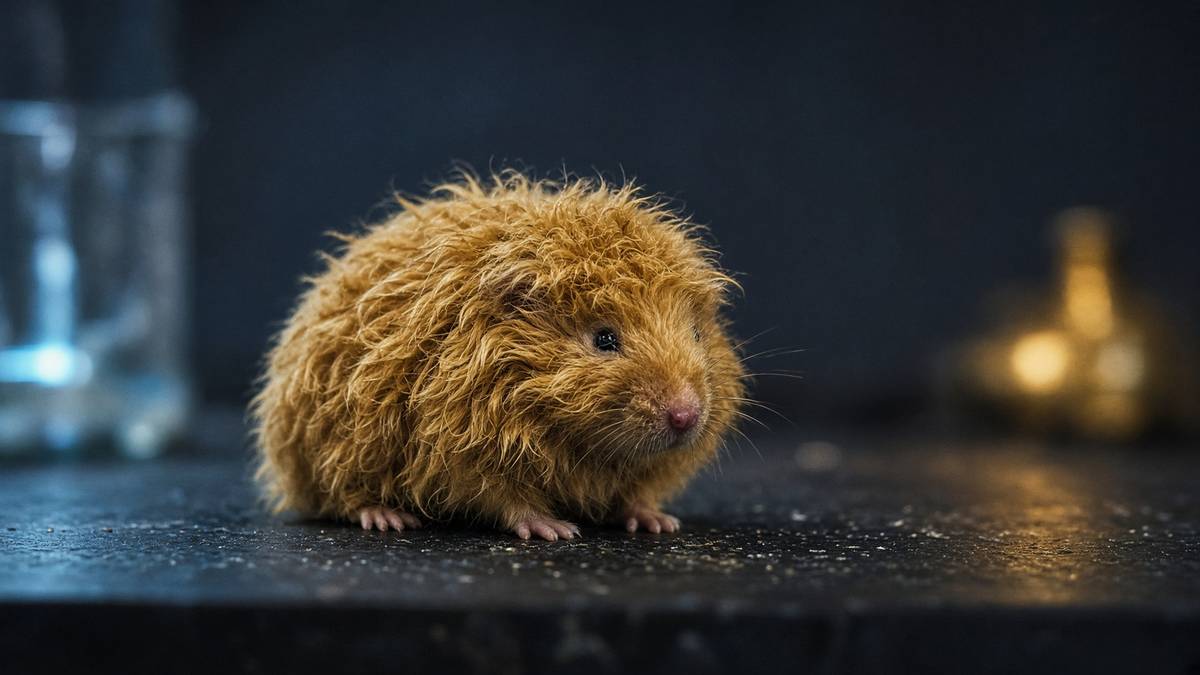
49 min · long read · Frontier biology
The woolly mouse is the mammoth’s twenty-day dress rehearsal
Colossal edited seven coat-and-metabolism genes into laboratory mice and got golden, shaggy, cold-curious animals. Elephant gestation is 22 months. A mouse tells you in three weeks whether the edit was worth the wait.
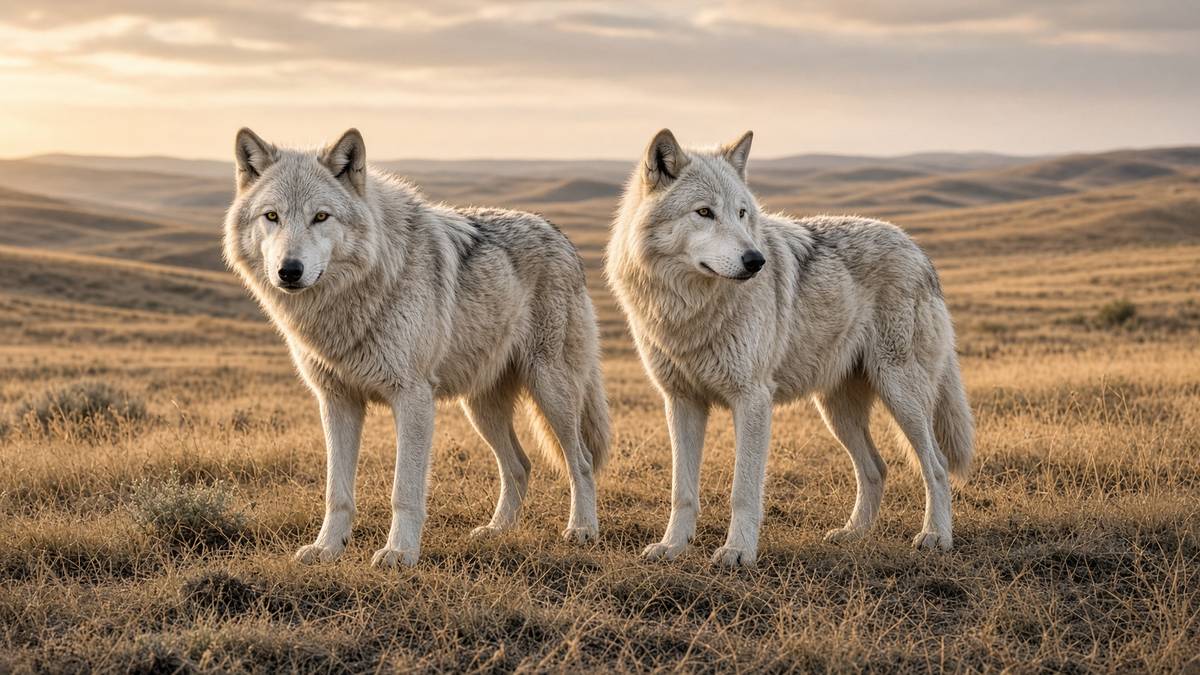
46 min · long read · Frontier biology
Romulus, Remus and the argument over a dire wolf
Three pups born from grey-wolf cells edited with Ice Age DNA became the most famous animals of 2025. They are also the most disputed.
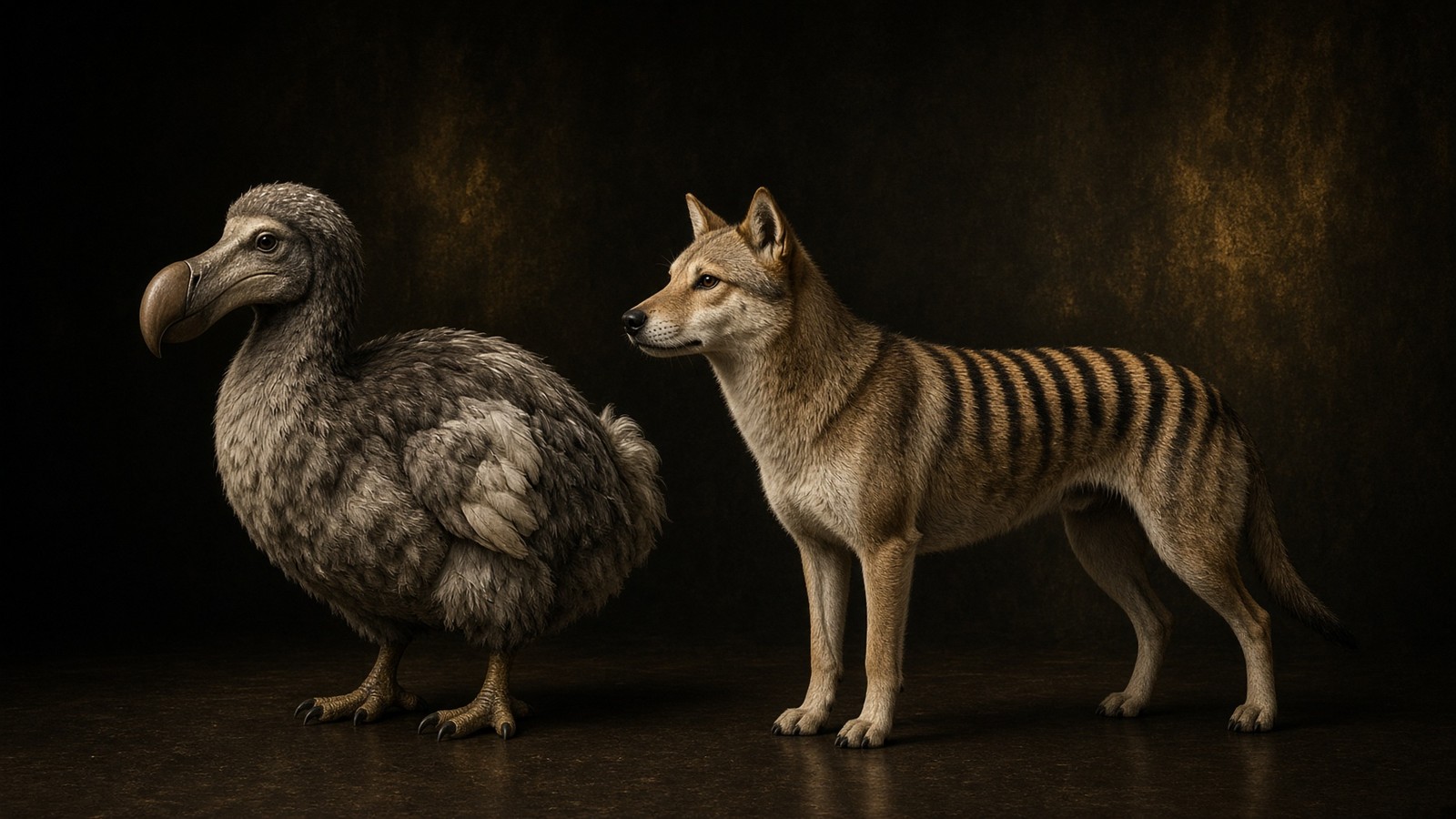
44 min · long read · Frontier biology
The dodo and the thylacine are in the same queue as the mammoth
Colossal’s pipeline is not one animal. After dire wolves and a mammoth timeline: a Mauritius bird rebuilt from a Nicobar pigeon, and a Tasmanian tiger rebuilt from a fat-tailed dunnart.
More in this desk
51 min · long read · Frontier biology
Tardigrades taught a human protein how to ignore radiation
Dsup, a disordered DNA-binding protein from a water bear, protects cultured human cells from X-rays. The animal that dries to a tun and lives through vacuum brought a transferable shield.
50 min · long read · Frontier biology
Xenobots: frog cells that became a new kind of machine
No genome was rewritten. Skin and heart cells from Xenopus were sculpted — first by hand, then by an evolutionary algorithm — into millimetre-scale organisms that walk, heal, and assemble copies of themselves.
50 min · long read · Frontier biology
We can rewrite a genome the way a word processor rewrites a sentence
CRISPR cut DNA. Base editors change one letter without a double-strand break. Prime editors write arbitrary edits from an RNA template. The machinery is no longer hypothetical.
49 min · long read · Frontier biology
We have the Neanderthal genome. Some of it is still in you.
Svante Pääbo pulled a genome out of bone powder, won the 2022 Nobel, and found that most people outside Africa carry a percent or two of an extinct human. Palaeogenomics is not only mammoths.
Essays describe published research. They are not medical advice and they do not authorise human use of any catalogue item.