
Frontier biology · 49 min · 10,809 words
We have the Neanderthal genome. Some of it is still in you.
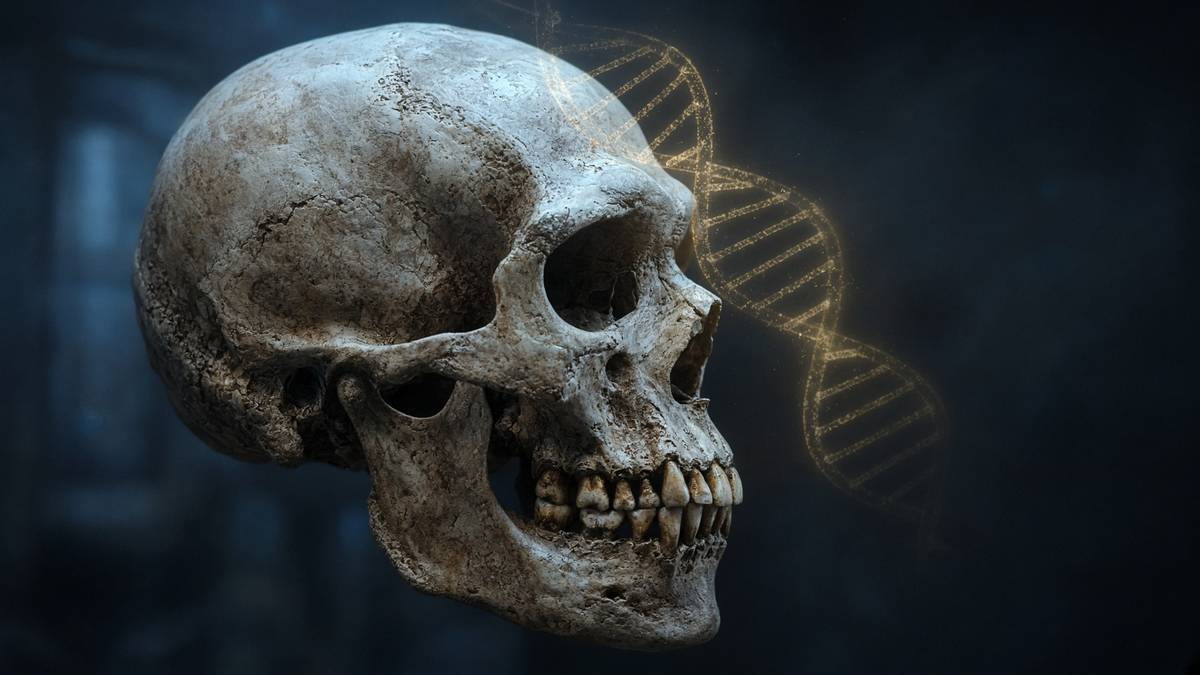
Svante Pääbo pulled a genome out of bone powder, won the 2022 Nobel, and found that most people outside Africa carry a percent or two of an extinct human. Palaeogenomics is not only mammoths.
What this essay actually tells you
- Svante Pääbo's group published a Neanderthal genome (Science 2010). Nobel Prize in Physiology or Medicine 2022. Bone, to sequence, to a prize, in twelve years of arguing about contamination.
- Non-African humans typically carry 1–2% Neanderthal ancestry. Some of those alleles still affect innate immunity and keratin. Not trivia. Measurable phenotype.
- Denisovans are a third lineage from a finger bone in Siberia. Modern Melanesians carry a measurable Denisovan fraction. One bone. A whole ghost population.
What this actually means
In 2010 Pääbo's group published a draft Neanderthal genome from bones tens of thousands of years old. Later came a high-coverage genome, a Denisovan from a finger bone in a Siberian cave, and the finding that when modern humans left Africa they met these groups and had children. If your ancestry is European, East Asian or many other non-African histories, on the order of 1–2% of your DNA is Neanderthal. Some of those bits affect immune receptors, keratin and, in well-studied cases, the risk of severe COVID. We didn't clone a Neanderthal. We read one, and then found it was already walking around inside us. That's the quieter, stranger story.
Richard Green, Johannes Krause, Svante Pääbo and a long author list published, in Science on 6 May 2010, a draft nuclear genome of Homo neanderthalensis. The material was bone powder from three females who died in Vindija Cave, Croatia, tens of millennia earlier. Coverage sat at about 1.3-fold. The libraries weren't yet single-stranded. Contamination estimates were a fight the authors had in the open, which is how a methods argument is supposed to look. It was still a genome. It was still ancient. Lined up against living people, it said the sentence the field had wanted and feared: humans whose recent ancestry left Africa share more derived alleles with Neanderthals than humans whose ancestry didn't. The children of that contact are us, or a percent or two of us, depending on the history you actually have. Palaeogenomics as a discipline that could deliver a nuclear book, rather than a mitochondrial teaser, starts at that paper. The 2022 Nobel Prize in Physiology or Medicine was the late official stamp. We said so at the time, quietly, to each other, and then we went back to the alignments.
In short. In 2010 Pääbo's group published a Neanderthal genome from old bone. People whose ancestors left Africa still carry a percent or two of it.
The prize citation was for discoveries concerning the genomes of extinct hominins and human evolution. That's a polite way of saying: he made it possible to read a nuclear genome from bone that had no right to still hold DNA, and then noticed that the genome wasn't entirely gone from the living. Mitochondrial Neanderthal sequence had been on the books since Krings, Stone, Schmitz, Krainitzki, Stoneking and Pääbo, Cell 1997, a 378-base stretch of the control region from the Feldhofer type specimen. A mitochondrial teaser isn't a population-genetics dataset. A nuclear draft is. Between those two papers sit clean rooms in Leipzig, silica extractions of ultrashort fragments, damage patterns treated as authentication rather than noise, and a refusal to call a consensus finished until independent libraries agree. The neighbouring palaeogenomics essay in this section is the chemistry of that refusal. This one is the hominin the refusal was built to recover, and the living people who turned out to be carrying it. Mammoths and wolves are the write-path of the same toolkit. Pääbo is the read-path. You can't edit a cold allele into an elephant if you can't first read a bone.
In short. The 2022 Nobel was for reading extinct human genomes from bone, then finding some of that DNA still sitting in living people.
If your recent ancestry is European, East Asian, or many other non-African histories, on the order of one to two percent of your DNA is Neanderthal. The fraction isn't a spice sprinkled evenly. Surviving haplotypes cluster in keratin genes and in innate-immune loci, including STAT2, the OAS cluster, and Toll-like receptors, and they're stripped out of the X chromosome, of testes, and of some brain regions, consistent with purifying selection against a subset of hybrid incompatibilities. Sankararaman, Vernot, Dannemann and the maps that followed are the documents. Some of those bits still do work. A Neanderthal-derived haplotype at 3p21.31, carried by a large fraction of people with European ancestry and by about half of people in South Asia, became famous in 2020 for raising the risk of severe COVID-19: a forty-thousand-year-old variant colliding with a twenty-first-century virus. Zeberg and Pääbo put that collision in Nature. Palaeogenomics as a medical sentence, not a museum one. We still find the collision slightly unbelievable, and then we look at the locus again.
In short. Non-African people typically carry one to two percent Neanderthal DNA. Some of those stretches still change immune defence and skin proteins, and one of them changed COVID risk.
What follows is that read-path, written at the length you would want before anyone is allowed to hang a clone, a species fight or a museum documentary on it. Bone powder as starting material. Deamination and contamination as the two races. The 2010 draft and the high-coverage Altai and Vindija genomes that made the draft a book. Introgression as the plot twist, not a footnote. Denisovans as a third lineage recovered first from a finger bone in a Siberian cave, with a measurable fraction still in modern Melanesians. Alleles that still speak: keratin, innate immunity, a pandemic. Transcription as the step the fossil can't perform and that living carriers still do, every hour, on archaic sequence sitting in modern chromatin. Hayflick's census as the reason we didn't, and won't, clone an extinct human from a nucleus that doesn't exist. Neighbouring essays cover mammoths, wolves, and the wet rules of ancient DNA. Stay here for the quieter, stranger story: we didn't clone a Neanderthal. We read one, and then found it was already walking around inside us.
In short. This piece is the Neanderthal genome, the DNA it left in living people, and a third group called Denisovans. Nobody cloned an extinct human. Reading was the achievement.
Bone powder, a genome, a prize
Pääbo's laboratory at the Max Planck Institute for Evolutionary Anthropology in Leipzig spent three decades writing the wet-lab and computational rules that turn bone powder into a genome you can defend in a methods section. Dedicated clean rooms, positive pressure, full-body suits, bleach and ultraviolet, reagents that never see a post-PCR laboratory, extraction blanks on every batch, independent replication in a second lab. Those are architecture, not software. Early Egyptian-mummy sequences, including some of Pääbo's own 1980s work, didn't survive later authentication, and the group never pretended otherwise. Higuchi, Wilson and colleagues, 1984, on the quagga, is still cited as the first genuine ancient DNA because the animal wasn't a human and the sequence wasn't a laboratory worker. Once the target is a hominin, the contaminant and the specimen speak the same genetic language, and a BLAST hit can't tell them apart. The wet rules are the floor. Computational authentication sits on top of them, not instead of them. A damage pattern on a contaminated library is a contaminated library with a damage pattern.
In short. Pääbo's lab built sealed clean rooms and strict wet-lab rules because living people's DNA gets into old bones so easily. Computers can't fix a dirty extract on their own.
The 1997 mitochondrial paper was the existence proof that a Neanderthal molecule could be recovered at all. The Feldhofer type specimen, a 40,000-year-old bone from the Neander valley, yielded a control-region sequence that sat outside the variation of living humans. Krings sequenced clones, not a shotgun library; the field still used PCR that asked for fragments longer than most authentic molecules, which is how the early literature filled with contamination. Short-read sequencers were the right machine for a wrong-looking library, and they arrived in time. 454 pyrosequencing first, then Illumina. Green, Krause, Ptak, Pääbo, Nature 2006, a million base pairs of Neanderthal nuclear DNA, already arguing about gene flow. Then the 2010 Science paper, three Vindija bones, a draft of the nuclear book. Then Meyer, Kircher, Gnerre, Li, Pääbo, Science 2012, a Denisovan genome from a finger phalanx at about thirty-fold coverage, using a single-stranded library method that refused to insist the DNA still look like a chromosome. Then Prüfer, Racimo, Patterson, Reich, Pääbo, Nature 2014, the Altai Neanderthal from a toe, about fifty-fold, UDG-treated for the high-accuracy calls. That's the spine. Everything in this page hangs off it.
In short. First came a short stretch of Neanderthal mitochondrial DNA in 1997, then a rough nuclear genome in 2010, then high-quality genomes from a toe and a finger bone.
Vindija Cave sits in Croatia. The three bones that made the draft — Vi33.16, Vi33.25, Vi33.26 — were small, unphotogenic fragments, which is the usual harvest. Petrous bone, the densest part of the temporal capsule, would later change the yield curve for temperate and warm sites; Pinhasi, Gamba, Krause and colleagues showed that a powder from that capsule routinely returns endogenous fractions that long-bone cortex won't. The 2010 bones weren't petrous. Endogenous fractions were modest. Most molecules in a bone extract are environmental: soil bacteria, fungi, the museum's own microbiome. Hybridisation capture and shotgun, when the endogenous fraction allows it, are how you stop wasting a sequencing run on Streptomyces. The Vindija draft used what the field then had. The Altai and Vindija high-coverage genomes used what the field then built: single-stranded libraries, Gansauge and Meyer, Nucleic Acids Research 2013, ligating adapters to each strand rather than to a double-stranded end, recovering molecules whose partners had already left. Damaged, nicked, ultrashort DNA is mostly single-stranded in the tube. A double-stranded library throws those molecules away.
In short. The first Neanderthal genome came from small Croatian bones, not famous skulls. A later method that copies even single broken strands is why a toe and a finger then gave much cleaner books.
The Nobel committee announced the Physiology or Medicine prize on 3 October 2022. One laureate, not a shared ticket, which is rarer than the coverage admitted. The work cited spanned the 1997 mitochondrion, the 2010 draft, the Denisovan genome, and the demonstration that gene flow had left a measurable archaic fraction in living people. David Reich's laboratory industrialised the archaeology that followed — thousands of ancient humans, capture arrays, a population genetics that treats a petrous powder as a datapoint — and Reich is in the author lists that matter. The prize went to Pääbo because the method, and the decision to point it at extinct hominins rather than only at charismatic megafauna, was his laboratory's bet for thirty years. We'd like more of the coverage to start the sentence there, at a clean room and a damage pattern, rather than at a reconstructed brow ridge. The reconstructed brow ridge is a museum object. The genome is a dataset you can ask a medical question of. That difference is the whole of the 2022 prize.
In short. Pääbo won the 2022 Nobel alone for the method and for pointing it at extinct humans. The prize was for a dataset, not for a reconstructed face.
A genome from bone isn't a person, and the prize didn't say it was. Coverage is uneven. Repeats and GC-rich stretches drop out. Heterozygosity in a diploid extinct genome is a vote among ultrashort, deaminated reads, with a contamination model that had better not call a modern human allele as the archaic heterozygote. Gaps remain, especially in the Y, in the rDNA, in segmental duplications. The output is a text with error bars, a variant list relative to a living reference, and a damage profile that had better look ancient. It's already extraordinary. It isn't a nucleus you can transplant, and it isn't a language or a culture. The 2010 paper compared a consensus to living people and found gene flow. That's a population-genetic sentence. The subsequent decade turned it into a medical one, as surviving haplotypes were mapped onto keratin, onto Toll-like receptors, onto a COVID risk locus. Hold the size of the object. A palaeogenome is a consensus you can defend. What you do with it next — phenotype, medicine, a foolish cloning fantasy — is a separate invoice.
In short. An ancient genome is a reconstructed text with error bars, not a person or a working nucleus. The 2010 paper used it to show gene flow into living people.
The Neanderthals are not entirely extinct. They live on in many of us.— The finding, as Pääbo has put it in public; Green et al., Science 2010, is the document.
The chemistry that almost forbade the book
The chemically interesting lesion is cytosine deamination. Water attacks C4 of cytosine; the ring loses an amine and becomes uracil. A polymerase copying that strand reads U as T. In the alignment against a reference you see a C-to-T substitution, concentrated in the single-stranded overhangs at fragment ends. Briggs, Stenzel, Johnson, Green, Pääbo, Proceedings of the National Academy of Sciences 2007, put the misincorporation pattern on paper: 5-prime C-to-T, and in double-stranded libraries a complementary 3-prime G-to-A. Hofreiter, Jaenicke, Serre, von Haeseler and Pääbo had already shown, in Nucleic Acids Research 2001, that uracil-N-glycosylase collapses those substitutions, which is how you know they're deaminated cytosines and not biology. Thirty to forty percent of cytosines in overhangs can appear as thymine in material a few thousand years old. That's a systematic lie the polymerase will tell you at every C, and it's also the barcode that says the fragment is old. Modern contaminant DNA doesn't carry that end-pattern. mapDamage, PMDtools, schmutzi: those are the programs that ask whether your reads look like a dead molecule or a laboratory technician.
In short. Cytosine in dead DNA turns into uracil, which sequencers read as T. Those C-to-T marks at fragment ends are both damage and the stamp that the DNA is ancient.
Tomas Lindahl spent a career measuring how DNA falls apart in water, and the 1993 Nature review is still the document a palaeogenomicist has to keep on the bench. Hydrolysis of the N-glycosyl bond of purines leaves an abasic site; the backbone then breaks. Cytosine deaminates to uracil, 5-methylcytosine to thymine. Oxidation produces 8-oxoguanine and a cloud of other lesions. Cross-links weld strands to protein and to each other. None of that's unique to fossils. It's the same chemistry a living cell spends a repair budget on every day — base excision, nucleotide excision, mismatch repair, the PARP1 burst that can empty a NAD+ pool in minutes. The difference is that the fossil has no repair budget. The lesions accumulate. Fragments shorten. What you extract from a Pleistocene bone isn't a chromosome. It's the wreckage of one, size-selected by tens of millennia of water and heat. Typical authentic fragments run thirty to seventy base pairs. A PCR that asks for two hundred is asking for a molecule that mostly no longer exists. Short-read sequencers weren't a fashion. They were the right length for the wreckage.
In short. Water knocks bases out of DNA and nicks the strands. A fossil has no repair enzymes, so the pieces get shorter until they're only tens of letters long.
Uracil-DNA glycosylase is a choice with a cost. Treat the extract with UDG and an endonuclease that nicks at the abasic site, and you cut away the deaminated cytosines. The remaining fragments sequence cleaner; your consensus is less likely to call a damage T as a genuine variant. Prüfer's Altai genome used a UDG-treated library for the high-accuracy calls. Leave the uracils in, and you keep the damage pattern that authenticates the molecule, which is what you want when the question is whether this is Neanderthal or a laboratory worker rather than whether this allele is real. Partial UDG treatments, UDG on double-stranded interiors but not on single-stranded overhangs, are the compromise: clean the middle, keep the barcode at the ends. None of those is a default you can skip naming. A preprint that reports archaic variants without saying whether UDG was on is reporting a blur. The same is true of mapping parameters, of whether you used a majority call or a haploid caller on low coverage, and of whether you subtracted a contamination estimate with schmutzi or with a mitochondrial majority. The computational rules are as much the discipline.
In short. An enzyme can cut out the damaged letters so the sequence is cleaner, or you can leave them in as a proof of age. You have to say which you did.
Methylated cytosine deaminates to thymine, not uracil, and that distinction is a second book hiding in the damage. Uracil-DNA glycosylase won't take a T out. CpG sites in ancient genomes therefore show a C-to-T load that tracks, in part, the methylation the living cell had written. Gokhman, Lavi, Prüfer, Carmel, Science 2014, reconstructed DNA methylation maps from archaic humans that way: the damage is a palaeo-epigenome if you're careful about coverage and about which cytosines are CpGs. Pedersen, Willerslev, Nature 2014, recovered nucleosome positioning and methylation from a 4,000-year-old palaeo-Eskimo hair shaft — a chromatin footprint, not just a sequence. Bone and tooth don't keep a nucleus intact, but they do keep, in favourable material, a memory of which stretches were wrapped on a histone octamer and which cytosines carried a methyl. That memory is incomplete, noisy, and precious. Surviving introgressed haplotypes in living people sit in living chromatin, with living methylation, which is a different object. The fossil's packing is a footprint. The carrier's packing is a physiology. Confusing those two is how a methylation paper becomes a personality claim.
In short. Some of the damage even records which DNA letters were chemically tagged in life, and which stretches sat on packing proteins. Living carriers of old DNA use today's packing, not the bone's.
Diagram
- 2 nmB-DNA0.34 nm/bp. Diploid G1 is ~2 metres of this.
- 11 nmNucleosome147 bp around a histone octamer. ~30 million per nucleus.
- loopsCTCF / cohesinEnhancers meet promoters by folding, not by sliding.
- µmA/B compartmentsHi-C: open A, closed B, territories at the lamina.
- 6–10 µmNucleusThe room. The search problem is the entire point of gene regulation.
Packing is not storage. It is the first regulatory decision: a promoter buried in H3K27me3 is not a promoter, it is furniture. Transcription starts when this origami opens the right 1,000 base pairs among 3.1 billion.
What the 2010 draft actually said
The 2010 draft is the paper a methods section has to cite even after better genomes exist, because it's the existence proof. Three Vindija bones, 454 and Illumina reads, a comparison to five living humans and to chimpanzee, a statistical test for excess matching of non-Africans to Neanderthal. Green, Krause, Briggs, Maricic, Stenzel, Kircher, Patterson, Li, Reich, Pääbo, Science 328: 710–722. The admixture estimate in that paper ran one to four percent in Eurasian genomes; later maps tightened the typical non-African figure to about 1.5 to 2.1 percent, a little higher in East Asians than in Europeans, with African ancestries carrying little or none from that particular contact, plus back-migration nuance the population geneticists will happily argue about for you. Low coverage meant many sites were a single read. Damage-T could look like a genuine derived allele. Contamination from the people who had handled the bones since 1980 could look like gene flow. The authors modelled all three. The models have been re-run, with more genomes, for fifteen years. The gene-flow claim survived. That's what an existence proof looks like when it's also a fight.
In short. The 2010 paper was a rough genome, and the authors had to argue hard that extra Neanderthal matching in non-Africans was real gene flow, not dirt or damage. Later cleaner genomes agreed.
What 'share more derived alleles' actually means, because headlines skip the test. A derived allele is a letter that changed on the Neanderthal line after it split from the ancestor of living humans, or a letter that changed on a living-human line. If non-Africans systematically match Neanderthal at sites where Africans match the ancestral letter, two stories can explain it: ancient structure in Africa that later fed the out-of-Africa population, or gene flow after the populations met in Eurasia. The 2010 paper, and then Prüfer 2014 with the high-coverage Altai genome, favoured gene flow after the split, dated to roughly fifty to sixty thousand years ago, in the Near East or further east, on the way out. A single pulse is the cartoon. Multiple pulses, some into the ancestors of East Asians, some perhaps earlier, are the current maps. The cartoon is still the right first sentence. Out-of-Africa humans met Neanderthals. The children were fertile enough that the alleles are still here. African genomes aren't a blank; they're the better outgroup for that particular contact. Back-migration of Eurasian ancestry into Africa has moved some of those alleles south. The nuance is real. The contact is too.
In short. The test is whether non-African DNA matches Neanderthal at letters that African DNA doesn't. The best explanation is that the groups met and had children about fifty thousand years ago.
Prüfer, Racimo, Patterson, Reich, Pääbo, Nature 2014, is the high-coverage document the 2010 draft was waiting for. A toe phalanx from Denisova Cave in the Altai Mountains, a woman, relatedness consistent with inbreeding in a small population, about fifty-fold coverage, UDG-treated libraries for the calls you would actually trust at a codon. Heterozygosity was low. Runs of homozygosity were long. The population that left that toe wasn't a continent-wide flood; it was a local group, genetically close to the Vindija Neanderthals who later contributed most of the ancestry that entered living people. A second high-coverage genome, Vindija 33.19, Prüfer, de Filippo, Grote, Pääbo, Science 2017, confirmed that the introgressing population was more Vindija-like than Altai-like. Chagyrskaya, Mafessoni, 2020, added a third. Three high-coverage Neanderthal genomes, a handful of lower-coverage ones, a growing sediment record from caves that no longer have a bone to give you. The catalogue is still small by the standards of a living species. It's large by the standards of a species that has been extinct for forty thousand years. We still find that last sentence slightly outrageous.
In short. A toe bone from a Siberian cave later gave a much deeper Neanderthal genome. Further bones showed that living people's Neanderthal DNA is closer to Croatian individuals than to that Altai woman.
Divergence times are the other number the 2010 paper put on the table, and they have been revised without being overturned. The ancestors of Neanderthals and living humans split, on current clocks, something like 550,000 to 765,000 years ago. Neanderthals and Denisovans split after that, on the order of 400,000 years ago, with later gene flow between those two as well. The last Neanderthals in Europe disappear from the fossil record around 40,000 years ago, overlapping with the arrival of modern humans. Those numbers aren't a family tree you can hang on a classroom wall without a fight. Mutation-rate debates, generation times, the fact that 'split' is a process with gene flow rather than a date on a passport: the population geneticists haven't stopped arguing, and they shouldn't. What the numbers are good for is a scale. This isn't a million-year gulf. It's close enough that the hybrid children were fertile, close enough that a STAT2 haplotype still runs in a living interferon programme, close enough that the ethical question of cloning ever came up. Distance in years isn't distance in compatibility. The genomes measured both.
In short. Neanderthals split from our ancestors hundreds of thousands of years ago, not millions. That's close enough that the children of later meetings could have children of their own.
A draft is a draft. Repeats were under-assembled. The Y was a rumour. The reference was a living human genome, which means Neanderthal-specific insertions and deletions are harder to see than single-letter changes, and anything that looks like the living reference can be a mapping artefact. Later work with more coverage, with multiple archaic genomes, with graph references, has filled some of those holes and left others. The 2010 result that survived every fill is the gene-flow claim, and the later result that made the claim a physiology is the non-random map of where those alleles stayed. If you only remember one figure from the draft, remember the excess of Neanderthal matching in non-Africans. If you only remember one figure from the decade after, remember the deserts on the X and in testes, and the peaks in keratin and innate immunity. A genome paper is a methods fight. An introgression map is a natural-history of what selection kept. We need both, in that order, because a percent or two is a number, and a STAT2 haplotype is a mechanism.
In short. The rough 2010 genome was enough to show gene flow. Later maps showed which stretches of that DNA were kept in living people, and which were thrown away.
Introgression is the plot twist
Introgression is the plot twist, and it's a word that earns its keep. Gene flow from an archaic population into a living one, detected as haplotypes that are too long, too divergent, and too geographically patterned to be incomplete lineage sorting. Out-of-Africa humans met Neanderthals in the Near East and further east. The children were fertile enough that the alleles are still here. Not randomly: immune and skin-related haplotypes were kept; others were purged. Harris and Nielsen, Juric, Sankararaman, the selection-against literature, put numbers on the purge. Hybrid incompatibilities, mild ones, accumulating on the X and in male reproductive genes, are the leading explanation for the deserts. The same pattern shows up in other species after secondary contact. Archaic adaptive introgression is a real evolutionary mechanism, not a metaphor, and we'll keep the mechanism language because the metaphor is how this topic gets sloppy. A percent or two sounds small until you remember that a haplotype of a hundred kilobases can carry a receptor, a transcription factor, a keratin cluster. Fraction of the genome isn't fraction of the physiology.
In short. After modern humans left Africa they had children with Neanderthals. Some of those DNA stretches were useful and stayed. Others were harmful and were slowly removed.
Sankararaman, Mallick, Dannemann, Prüfer, Kelso, Pääbo, Patterson, Reich, Nature 2014, and Vernot and Akey, Science 2014, are the two maps a methods section actually has to cite. Both used the Altai genome and a panel of living humans. Both found Neanderthal ancestry enriched in parts of the genome and stripped from others. The deserts include a large stretch of the X chromosome and a set of genes expressed in testes. The peaks include a cluster of keratin genes on chromosome 12, BNC2 on pigmentation, and a set of innate-immune loci. East Asians carry a little more Neanderthal ancestry than Europeans, consistent with additional pulse or with less subsequent dilution. Africans, in the 2014 maps, carried little, with the back-migration caveat already named. Later maps with more living genomes, more archaic genomes, and better haplotype methods have moved the peaks and the deserts without erasing them. A map isn't a function. It's a prior on where to look for a function. The keratin and immune peaks are where the functional papers then went, which is how a population-genetic figure becomes a receptor paper.
In short. Two 2014 studies mapped where Neanderthal DNA sits in living genomes. It's common in hair and immune genes, and rare on the X chromosome and in sperm-related genes.
Keratin is the least romantic peak and the most honest one. Type I and type II keratin genes sit in dense clusters; the proteins build intermediate filaments in epithelium, in hair shafts, in nails. Archaic haplotypes in those clusters have been read as skin and hair adaptation to non-African climates, which is a plausible sentence and a lightly tested one. The proteins are structural. A substitution that changes filament assembly, or expression in a keratinocyte, could change a barrier or a coat without changing a personality. We'll take the structural sentence. Dannemann and Kelso, and the phenome papers that followed (Simonti, Akey, Science 2016, among them), have associated some of these haplotypes with dermatological traits in living biobanks: corns, calluses, sebum, a list that's more keratinocyte than novel. That's what adaptive introgression looks like when it isn't a headline. A filament protein. A climate. A biobank questionnaire. Anyone writing Neanderthal DNA as a temperament is skipping the keratin cluster, which is most of the surviving archaic sequence that has a named job.
In short. A lot of the surviving Neanderthal DNA sits in genes that build hair and skin proteins. That's a practical leftover from new climates, not a personality type.
Innate immunity is the other peak, and it's why this page is allowed to sit next to a medical sentence. Toll-like receptors TLR1, TLR6 and TLR10 sit in a cluster on chromosome 4; a Neanderthal haplotype there has been associated with differences in the response to microbial ligands. Dannemann, Andrés, Kelso, American Journal of Human Genetics 2016, is the paper. STAT2, a transcription factor in the interferon cascade, carries a Neanderthal haplotype that was later partly recombined away, which is itself a story about selection flipping sign. The OAS cluster on chromosome 12 — OAS1, OAS2, OAS3, 2-5-oligoadenylate synthetases that feed RNase L and chew viral RNA — carries archaic haplotypes with measurable effects on expression and on enzyme activity. Quach, Quintana-Murci, Cell 2016, and the eQTL catalogues, put archaic alleles into the actual transcriptome of stimulated immune cells. These aren't metaphors for toughness. They're receptors, kinases and nucleases whose ligand-binding and catalytic parameters a living leukocyte still uses. Pathogens in Eurasia weren't the pathogens in Africa. A borrowed receptor is one way to notice.
In short. Some leftover Neanderthal DNA sits in immune sensors and viral-defence enzymes. Living white blood cells still use those versions when they meet microbes.
Purifying selection against the rest is the half of the map that the adaptive stories skip. The X chromosome is a desert. Testes-expressed genes are a desert. A stretch around FOXP2 is a desert, which is a fact about a speech-related locus and not a licence to write a novel. Harris and Nielsen, Genetics 2016, and Juric, Andrés, Coop, PLOS Genetics 2016, modelled the load: weakly deleterious Neanderthal alleles, entering a larger modern-human population, were slowly purged, more efficiently on the X because of hemizygosity in males. The introgressed fraction we measure now is the residue after forty thousand years of that accounting. A percent or two is what is left, not what arrived. Estimates of the incoming fraction sit higher, then fall. That arithmetic is why 'Neanderthal ancestry' in a living person isn't a random sample of a Neanderthal genome. It's a filtered sample, biased toward the mildly useful and the nearly silent, away from the incompatibilities. If you treats a living carrier as a Neanderthal-in-miniature has skipped the deserts. The deserts are the other result.
In short. Much of the Neanderthal DNA that first entered living people was later removed, especially on the X chromosome and in fertility genes. What remains is a filtered leftover, not a random sample.
Adaptive introgression, if we're going to keep using the phrase, is a haplotype that rose in frequency because it was useful in the new environment, not merely because it failed to be purged. Distinguishing those two is a population-genetic fight: length, frequency, a nearby functional candidate, a coherent ecology. The keratin cluster and the TLR cluster are the cleaner candidates. The COVID risk haplotype at 3p21.31 is the uncomfortable one, because it's common and, in 2020, was harmful; Zeberg and Pääbo were careful to say that a haplotype can be kept for one reason and collide with another millennia later. An allele isn't a morality. It's a sequence whose fitness depends on the pathogen, the climate, the age of the carrier, and the century. Forty thousand years is long enough for the environment to change sign. The maps tell you where to look. A stimulated leukocyte, a keratinocyte assay, a biobank, a pandemic: those are the experiments that turn a peak into a mechanism. We'll take the mechanism over the origin myth, every time.
In short. A leftover stretch of DNA can be common because it once helped, even if it later hurts. The COVID risk haplotype is the clearest case of an old variant meeting a new virus.
- Draft Neanderthal
- Science 2010
- Altai Neanderthal
- ~50× coverage
- Denisova 3
- ~30× coverage
- Non-African ancestry
- 1–2%
- Oceanian Denisovan
- ~3–6%
- COVID risk haplotype
- 3p21.31
- Altitude haplotype
- EPAS1
- Nobel
- 2022
Green, Krause, Pääbo. Vindija. ~1.3×. The existence proof for a nuclear palaeogenome.
Prüfer et al., Nature 2014. Single-stranded library, UDG-treated calls. A toe phalanx.
Meyer et al., Science 2012. A finger bone. A lineage without a face.
Typical Neanderthal fraction. A little higher in East Asians. Filtered, not random.
Papuans, Melanesians, Aboriginal Australians. On top of the Neanderthal they also carry.
Zeberg & Pääbo, Nature 2020. Vindija-like. Odds ratio ~1.6 for severe disease.
Huerta-Sánchez et al., Nature 2014. Denisovan. Tibetan haematocrit.
Physiology or Medicine. One laureate. Genomes of extinct hominins and human evolution.
Denisova: a third lineage from a finger bone
Denisovans are a third lineage, and they were a genome before they were a face. Meyer, Kircher, Gnerre, Li, Pääbo, Science 2012: a nuclear genome at about thirty-fold coverage from a finger phalanx, Denisova 3, a girl, recovered from Denisova Cave in the Altai Mountains of Siberia. The bone is the size of a couple of grains of rice. Morphology couldn't name it. The genome could. It sat closer to Neanderthals than to living humans, but far enough from both Neanderthal genomes then in hand that the authors named a new group. Mitochondrial DNA from the same cave had already been odd; the nuclear genome made the oddness a population. Reich, Green, Kircher, Pääbo, Nature 2010, in the same season as the Neanderthal draft, had already reported that living Melanesians carry a measurable fraction of this group, a result that looked, at the time, like a statistical dare. The finger bone made it a specimen. We've read that paper more times than is professional. A species, or a population, recovered from a phalanx because the sequence was better than the anatomy. That's palaeogenomics as a naming event, and it's still the cleanest one the field has.
In short. Denisovans were identified from DNA in a tiny finger bone found in a Siberian cave. The bone couldn't be named by shape. The genome could.
Modern Melanesians, Papuans and some other Oceanian groups carry on the order of three to six percent Denisovan ancestry, a larger archaic fraction than the Neanderthal percent in Europeans, on top of the Neanderthal they also carry. Reich, Patterson, Kircher, Pääbo, 2011, and the maps that followed: the contact was in Asia, on the way to Sahul, and it wasn't a single clean pulse into a single living group. East Asians carry a smaller Denisovan fraction. Aboriginal Australians carry a large one. The Ayta Magbukon of the Philippines have been reported at the high end of the living range. Multiple Denisovan-like groups, genetically as different from each other as some Neanderthals are from living humans, probably contributed. The taxonomy is still being argued; the genomes aren't. We'll take the genomes while the species fight continues. A third lineage is a population-genetic fact. Whether it deserves a Linnaean name, a museum label, or a 'mysterious hominin' documentary is a separate, louder, less useful conversation. The finger bone doesn't care.
In short. People in Papua New Guinea, Australia and some nearby islands carry a few percent Denisovan DNA, more than Europeans carry Neanderthal DNA. Several related Denisovan groups probably contributed.
EPAS1 is the textbook Denisovan allele, and it's the one a physiology essay has to name. Huerta-Sánchez, Jin, Nielsen, Nature 2014: a haplotype at the hypoxia-inducible-factor pathway transcription factor EPAS1, common in Tibetans, rare elsewhere, matching Denisovan sequence, associated with lower haemoglobin at altitude and with a blunted, safer response to chronic hypoxia. Living at 4,000 metres on the Tibetan plateau is a haematological problem as much as a romantic one. Excess haemoglobin thickens blood and kills; a Denisovan-derived regulatory haplotype that turns the response down is a borrowed solution. This is adaptive introgression with a named gene, a named environment, and a named haematocrit. It's also a reminder that the useful archaic allele isn't always from the archaic group you first met. Tibetans carry Neanderthal ancestry too. The altitude haplotype is Denisovan. Which ghost you met, and which haplotype you kept, are different sentences. A finger bone in Siberia and a village on the plateau are the same story only if you keep the gene in the middle.
In short. A Denisovan version of a gene that controls the response to thin air is common in Tibetans and helps them live at high altitude without thickening the blood too much.
Denisova Cave kept more than a finger. A molar. A few other fragments. Sediment DNA, Slon, Pääbo, Science 2017, from layers that no longer hold a bone, which is a sentence that would have been laughed out of a 1990s lab meeting. Then, Slon, Mafessoni, Vernot, Pääbo, Nature 2018: Denisova 11, 'Denny', a young woman whose mother was a Neanderthal and whose father was a Denisovan. A first-generation hybrid, recovered from a bone fragment, from a cave that both groups used. Secondary contact isn't a cartoon on a map. It's a person, or the genome of one, whose two parents belonged to groups we had named from other bones. Gene flow between Neanderthals and Denisovans, already visible as haplotype blocks in the Altai Neanderthal, had a face for a moment, and the face was a sequencing run. Super-archaic ancestry, older still, has been argued in both Denisovan and African genomes; that fight is live and not closed. What is closed is the three-lineage picture the 2010s delivered: living humans, Neanderthals, Denisovans, with gene flow among them, and a cave in the Altai that saw more of that flow than any museum had a right to expect.
In short. The same Siberian cave later yielded a girl whose mother was Neanderthal and whose father was Denisovan. The three groups met, more than once, and had children.
A genome without a face is an awkward museum object, and the field has been honest about the awkwardness. We don't have a Denisovan skull we trust as the type. We've a phalanx, a few teeth, a mandible from Xiahe on the Tibetan plateau that protein and DNA put in the same group, and a cloud of sediment sequences. Morphology papers will keep trying to assign fossils — Harbin, Dali, a list that changes by the year — and some of those assignments will stick. Until they do, Denisovan is a genomic label, which is a more precise object than a species name hung on a disputed cranium. Melanesian ancestry fractions don't wait on the cranium. EPAS1 doesn't wait on the cranium. The medical and population-genetic sentences are already in the living. The palaeoanthropology will catch up, or it won't, and the haplotypes will still be there. We find that disproportion — a finger bone outrunning a century of skulls — the most cheering fact in this corner of the journal. Anatomy isn't the only way to name a relative.
In short. We still lack a clear Denisovan skull. The DNA, including leftover stretches in living people, is already enough to study the group.
Alleles that still speak: immunity, keratin, a virus
The 3p21.31 COVID haplotype is the sentence that took palaeogenomics into intensive care. Zeberg and Pääbo, Nature 2020: a stretch of about fifty kilobases, inherited from Neanderthals, present in roughly sixteen percent of people in Europe and fifty percent in South Asia, almost absent in Africa, raising the risk of severe COVID-19 with an odds ratio around 1.6. The genes in the stretch include SLC6A20, LZTFL1, CCR9, FYCO1, CXCR6, XCR1, CCR1 — a chemokine-receptor neighbourhood, which is a plausible place for a respiratory-virus phenotype to sit, and not yet a finished mechanism. The haplotype matches Vindija-like Neanderthal sequence. It's common because it was kept, for reasons that may have nothing to do with coronaviruses. In 2020 it was a risk factor. That's palaeogenomics as a medical result, and it's why a skull belongs in a journal that also writes about receptors. The same pair, Zeberg and Pääbo, PNAS 2021, then reported a Neanderthal haplotype at OAS1 that's protective against severe COVID, an enzyme that feeds RNase L, a cleaner biochemical story. Two archaic gifts, opposite signs, same pandemic. The origin of the allele doesn't tell you the sign. The assay does.
In short. One Neanderthal DNA stretch raised the risk of severe COVID. Another, in a viral-defence enzyme, lowered it. Old variants don't come with a fixed moral.
Transcription is the step the fossil can't perform and that living carriers perform constantly. RNA polymerase II, in a living nucleus, still has to find a promoter in three billion base pairs of packed DNA, assemble a pre-initiation complex with TFIID and Mediator, escape the promoter-proximal pause, and elongate at something like twenty to forty nucleotides a second while the message is capped and spliced. An introgressed Neanderthal haplotype at OAS1 or at TLR6 isn't a museum label. It's a stretch of sequence that a living polymerase has to find, in a living chromatin neighbourhood, in a leukocyte that just saw a ligand. McCoy, Wakefield, Akey, Cell 2017, measured allele-specific expression of Neanderthal haplotypes in living people and found that the archaic allele is more often the quieter one, consistent with regulatory mismatches accumulated over hundreds of thousands of years of separate evolution. Some archaic alleles are louder. The COVID-associated stretch includes regulatory candidates. Expression is the phenotype that sits between a haplotype map and a receptor cartoon. A palaeogenome in a bone doesn't have a transcriptome. A carrier does.
In short. A leftover Neanderthal gene has to be switched on by living cells to do anything. Researchers can measure whether the old version is read more quietly or more loudly than the modern one.
Chromatin is the reason some fragments survive in bone at a characteristic length, and it's the reason an introgressed haplotype in a living person isn't the same object as a consensus from a tooth. In a living nucleus, 146 or 147 base pairs wrap 1.65 turns around a histone octamer; H1 and the linker make a chromatosome of about 166 base pairs; loops, TADs and A/B compartments then fold that fibre into a territory. After death the octamer can still occlude nucleases and water for a while. Fragment-length peaks near 147 and 166 bases in some ancient libraries are a nucleosome that outlived the cell. Gokhman's methylation maps and Pedersen's nucleosome maps are the fossil half of that sentence. The living half is that a Neanderthal haplotype at a keratin locus now sits in a modern-human three-dimensional genome, with modern CTCF sites, modern enhancers, modern cell-type chromatin. Regulatory mismatch is one proposed reason archaic alleles tend to be the quieter allele in McCoy's data. Packing isn't a metaphor for ancestry. It's the search problem the polymerase still has to solve, on a mixed chromosome.
In short. Packing proteins can shield DNA after death, leaving a length signature in bone. In living people, leftover Neanderthal DNA is packed by today's machinery, which can change how loudly it's read.
Simonti, Vernot, Akey, Science 2016, and then the UK Biobank-scale phenome papers, tried to ask what archaic alleles do in living medical records. Depression scores, tobacco use, hypercoagulation, actinic keratosis, a list that's a biobank list: common, billed, questionnaire-adjacent. Some associations have replicated; some haven't. The honest position is that a haplotype of fifty kilobases carries many variants, that a biobank phenotype isn't a mechanism, and that the cleaner functional stories remain the ones with a named protein — EPAS1 and haematocrit, OAS1 and an enzyme, TLR1/6/10 and a ligand response, a keratin and a filament. We'll keep pointing at those. A polygenic score of Neanderthal ancestry against a well-being questionnaire is a weaker object, and it has been asked to carry more public conversation than it can bear. Ancestry fraction isn't a personality. A receptor haplotype can be a pharmacology. Keep the jobs separate. The medical sentence this field actually earned is the named-locus sentence: this stretch, this protein, this assay, this century's virus.
In short. Health records have been searched for effects of Neanderthal DNA. The clearest stories are still named proteins — a blood-oxygen gene, an immune enzyme, a skin filament — not mood scores.
Innate immunity, keratin, and a hypoxia transcription factor: those are the three functional neighbourhoods we'd actually put on a slide. STAT2 and the OAS cluster are interferon and antiviral RNA. TLRs are microbial sensors on the cell surface and in endosomes. Keratins are the filament. EPAS1 is the altitude dial. Together they're a reminder that the useful borrowed allele is often a receptor, an enzyme or a structural protein, not a mysterious brain gene. Brain-expressed deserts, and the FOXP2 desert, are the other reminder: some of the genome wasn't a gift, and selection was rude about it. Dannemann, Prüfer, Kelso, and the Leipzig phenotype group have been the people willing to keep both reminders in one paragraph. We'll do the same. A percent or two of your genome, if you have it, is a filtered set of archaic haplotypes sitting in living chromatin, transcribed by living polymerases, translated by living ribosomes. That's already one of the stranger true sentences in biology. It doesn't get stranger by adding a temperament. It gets clearer by naming the protein.
In short. The leftover DNA that clearly still does a job sits in immune sensors, hair and skin proteins, and a thin-air switch. That's remarkable enough without turning it into a personality.
Diagram
Closed chromatin (H3K27me3, DNA methylation) hides the promoter. Pioneer factors and histone acetyltransferases open it.
PIC: TFIID, TFIIH, Mediator, Pol II. Ser5 phosphorylation of the CTD lets the polymerase leave the promoter.
Elongation ~20–40 nt/s. Capping, splicing, cleavage and polyadenylation happen on the still-growing RNA.
Human genes are islands in 3.1 billion base pairs of mostly noncoding sequence. Promoter, enhancers, chromatin state and the Mediator complex decide whether Pol II is allowed to fire. Epithalon’s literature sits on TERT and pineal clocks — two of the rare promoters anyone bothers to name in a peptide essay.
What we did not clone
We didn't clone a Neanderthal. We'll say that in the heading and again here, because the question arrives within thirty seconds of the genome every time this topic leaves a methods section. There's no transplantable nucleus in a Vindija bone. Ice and cave earth preserve fragments. They don't preserve a mitotic spindle, a nuclear lamina, a centrosome, or a cytoplasm that will reorganise around a somatic genome in an enucleated egg. Somatic-cell nuclear transfer needs a living, or at least a structurally intact, donor nucleus and an oocyte that still knows how to reprogram it. A Pleistocene osteocyte is a ghost. The practical method, if anyone were foolish enough to try, would be the de-extinction method: write archaic alleles into a living human or chimpanzee cell, then attempt a pregnancy. That's a sentence this journal won't treat as a protocol. Reading was the achievement. It was enough. Colossal's wolves and mammoths are the write-path for non-human species, with their own ethical load. Extinct hominins aren't in that queue, and they shouldn't be.
In short. Nobody cloned a Neanderthal, and a bone doesn't contain a working nucleus to clone from. Reading the genome was the point. Cloning an extinct human isn't a project we want.
Leonard Hayflick and Paul Moorhead, Experimental Cell Research 1961, counted the reason even a reconstructed cell wouldn't be a resurrected person. Human diploid fibroblasts divide a finite number of times — classically about forty to sixty doublings, depending on donor age and how you split the culture — and then flatten, stay metabolically alive, and refuse mitosis. The counter is the telomere. Each S phase spends sequence at the lagging-strand end; when the TTAGGG repeats are too short, shelterin can't hide the end, ATM treats a chromosome as a break, p53 and p16 engage, and the cell senesces. Most somatic cells keep telomerase off on purpose, which is the tumour-suppression bargain. Any living cell you transfected with a list of Neanderthal alleles would be a modern cell, spending a modern telomere clock, in a modern chromatin context, with a modern mitochondrial population. iPSCs reset telomeres and don't reset everything. They're a tool for a dish. They aren't a freeze-frame of a Vindija individual. The Hayflick limit is why 'bring back' is a phrase that belongs to a film, not to a culture hood.
In short. Living cells can only divide so many times before they stop. An engineered cell would still be modern, not a person from a cave.
The ethical wall is the real one, and it doesn't wait on Hayflick. A cloned extinct hominin would be a person, or close enough that the distinction wouldn't save anyone involved. Consent is impossible. Surrogacy would enrol a living woman in an experiment whose scientific payoff is a spectacle. Chimpanzee chassis work, which has been floated in the worst conversations, would be a primate ethics catastrophe on top of a human one. Pääbo has said in public that he has no interest in that project; the 2022 prize citation is about genomes and evolution, not about a pregnancy. We've no interest in that sentence becoming a programme either. The medical use of this field is the living carrier: people who already have the haplotypes, already transcribe them, already walk into COVID wards and dermatology clinics. Studying those alleles in the people who have them is ordinary human genetics with a palaeogenomic prior. Making a person to study them isn't a more powerful experiment. It's a different category of act. The genome paper isn't a licence for it.
In short. Cloning an extinct human would be an ethical disaster, not a clever follow-up experiment. The useful medical work is in living people who already carry some of the DNA.
Colossal's wolves and mammoths are the write-path of palaeogenomics, and they belong in the next essays. A 13,000-year-old tooth yielded sequence; sequence yielded edits; edits yielded three animals that howl in this century. A mammoth-like calf, if 2028 holds, will be an edited Asian elephant. Those programmes are trait engineering with a living relative as chassis, and they're already an argument about species names. They aren't a template for a hominin. The sister species of a Neanderthal is us. Writing a defined set of archaic alleles into a living human genome is, in a mild way, what introgression already did, and studying that natural experiment is the science. Writing a large archaic punch list into an embryo is a different act with a different name. Beth Shapiro has been the person willing to say the molecular sentence out loud for the animal programmes: you aren't bringing back something identical; you're writing a defined set of extinct alleles into a living genome. For Neanderthals the defined set is already in living genomes, put there by people who had children in the Late Pleistocene. We can study that. We shouldn't try to outdo it.
In short. Gene-edited mammoths and wolves are a separate, non-human project. For Neanderthals, living people already carry a filtered set of the old DNA. That natural experiment is the one to study.
Diagram
- Hayflick limit~40–60 doublingsHuman fibroblasts in 1961. They were not immortal. He counted.
- End-replication5–15 kb TTAGGGDNA polymerase needs a primer. The lagging strand shortens. Olovnikov named the problem.
- Shelterin6 proteinsTRF1, TRF2, POT1, TIN2, TPP1, Rap1. The end is hidden from the damage response.
- TERT offmost somatic cellsTumour suppression. Stem cells and germline keep it on. So do most cancers.
- SenescenceSASPp16, p21, the secretome Campisi named. A cell that refuses to die and talks too much.
Blackburn, Greider and Szostak, Nobel 2009. Epithalon’s literature sits on TERT and pineal melatonin — a tetrapeptide claiming two of the rare promoters anyone names in a peptide essay. The machines are real. A large Western RCT of telomere length in adults is not on the shelf next to the vial.
How to read an archaic-genome paper
Start with the specimen, not the brow ridge. Which bone, which cave, which milligrams of powder, which radiocarbon or stratigraphic date. Vindija, Denisova, Chagyrskaya, Feldhofer, Goyet, a sediment layer with no bone at all: those are different libraries. Then the endogenous fraction, the fragment-length distribution, and the C-to-T profile at the first position. If those three are missing, the paper hasn't yet started. Then UDG: on, off, or partial. Then coverage at the locus they intend to interpret, not a genome-wide average that can hide a gap in the exon they named. Then the living comparison panel: which populations, how many, whether Africa is being used as outgroup or as a source of back-migration. Then the statistic: D, f4, an S* haplotype caller, a hidden Markov model, a graph. Then, if the claim is a phenotype, the assay — an eQTL in a stimulated monocyte, a haematocrit in Tibet, an odds ratio in a COVID cohort, a keratinocyte filament, a biobank questionnaire. If the assay is a reconstructed face, you're reading a press office. If the assay is Zeberg and Pääbo 2020, you're reading a locus. Aim for the locus.
In short. Read the bone, the damage pattern, the coverage at the actual gene, the living people used for comparison, and the real lab or clinic test. A reconstructed face isn't a test.
Contamination estimates belong in the same paragraph as the variant. schmutzi, a mitochondrial majority, a haploid X in a male, a modern-human SNP panel on a Neanderthal library: those are the tools. A hominin library can be contaminated with the people who dug it, stored it, or sequenced it, and BLAST won't save you. Independent replication in a second laboratory, the Pääbo rule from the 1990s, is still the adult standard and is too often skipped once shotgun palaeogenomics became a production line. For a medical claim — this haplotype raises severe-COVID risk — the living genotypes are the replication, which is a different and in some ways easier object. For a claim that a particular bone carried a particular allele, we'd like the 1990s standard back. Two labs, two libraries, a UDG-treated call at every codon you intend to hang a phenotype on. That's slower than a capture array on a thousand petrous powders. It's the right speed for a sentence that will leave the methods section.
In short. Say how much living DNA leaked in, and repeat the key result in a second lab. A medical finding in living people is easier to check than one fossil letter.
Phenotype isn't an ancestry percentage. One to two percent Neanderthal ancestry is a genome-wide average, useful for a map, useless as a diagnosis. A person with 1.8 percent isn't 'more Neanderthal' in a way a clinician can act on; they may or may not carry the 3p21.31 risk haplotype, the OAS1 protective haplotype, a TLR cluster, a keratin haplotype. Presence or absence of named loci is the medical object. Polygenic scores of archaic ancestry against questionnaire traits are a research object, and a messy one. Ask for the table of loci when the claim is physiological. If the table is OAS1, STAT2, TLR1/6/10, EPAS1, a keratin cluster, 3p21.31, you have a programme. If the table is 'percent Neanderthal versus mood', you have a brand. The same rule we use for de-extinction punch lists applies here, inverted: the animal programmes must say which extinct alleles they wrote; the introgression programmes must say which archaic alleles they measured. A percentage isn't a punch list.
In short. A percent of Neanderthal ancestry isn't a medical result. Ask which exact DNA stretches were measured, and whether a real protein or a real illness moved.
Named machines, because 'we sequenced a Neanderthal' isn't a methods line. A clean room with positive pressure. A freezer for bone, colder for extracts. Silica columns or beads. A TapeStation or a Bioanalyzer for fragment length. A qPCR for library concentration. A MiSeq for a cheap damage-pattern check; a NovaSeq or a PromethION for production, short reads still winning on ultrashort ancient DNA, long reads winning on the living reference. mapDamage2 or damageprofiler. BWA-aln, still, for short damaged reads, or the later adapters. ANGSD, schmutzi, AdmixTools if the question is population history. On the living side: a genotype array or an exome for the haplotype, an RNA-seq or a qPCR for the eQTL, a flow cytometer for the ligand response, a spectrophotometer if anyone has claimed an enzyme, a haematology analyser if anyone has claimed EPAS1. None of that's glamorous. All of it's how you stop a skull essay becoming a mood. The neighbouring ancient-DNA essay is the library. This one is the hominin the library was pointed at, and the living people who turned out to be part of the result.
In short. Name the clean room, the sequencer, the damage software, and the living-person assay. 'We sequenced a Neanderthal' isn't a method.
Diagram
| Node | Catalogue | Conversation |
|---|---|---|
| GPCR | Ipamorelin, MT2, PT-141, retatrutide, CJC | Second messengers, secretion, appetite, pigment |
| RTK / IGF1R | IGF-1 LR3 | IRS–PI3K–Akt–mTOR and Shc–ERK |
| Cytokine receptor | Somatropin (HGH) | GHR–JAK2–STAT5b, hepatic IGF-1 |
| Cofactor | NAD+ | Sirtuins, PARPs, CD38, redox |
| Actin buffer | TB-500 / Tβ4 motif | G-actin sequestration, motility |
| Growth-factor-like | BPC-157 | VEGFR2 / FAK / eNOS neighbourhood |
| Copper ligand | GHK-Cu | Transcriptome shift in fibroblasts |
| MC fragment | KPV | NF-κB, PepT1, no pigment |
| Nuclear / pineal | Epithalon (AEDG) | TERT and melatonin literatures |
| mtORF peptide | MOTS-c | AMPK, folate–methionine cycle |
Each row is a different kind of molecular conversation. The catalogue peptides bind at these nodes; they are not interchangeable, and stacking them because a forum did mixes unrelated literatures.
- Name the specimen: bone, cave, date, milligrams. Vindija, Denisova, sediment without a bone.
- Name the damage: fragment length, endogenous fraction, 5′ C-to-T. If these are missing the paper has not started.
- Name UDG, coverage at the interpreted exon, and the living panel used as comparison.
- Name the statistic: D, f4, S*, a haplotype HMM. Gene flow is a test, not a feeling.
- Name the locus if the claim is physiological: OAS1, TLR1/6/10, EPAS1, a keratin, 3p21.31. A percentage is not a punch list.
- Keep cloning downstream, and then off the list. Reading was the achievement. It was enough.
Close: a quieter prize, public papers, a genome still in us
The chemistry is older than the field. Lindahl measured the lesions in living cells before anyone drilled a Vindija bone. Cytosine deamination, depurination, oxidative nicks: the same list a DNA-repair essay would write, minus the enzymes that would have fixed them. What Pääbo's generation added was the refusal to treat those lesions as a reason to stop, and the refusal to treat a BLAST hit as a reason to believe. Clean rooms, silica, single-stranded libraries, damage as barcode, a nuclear draft in 2010, a Denisovan from a finger in 2012, a high-coverage Altai genome in 2014, a Nobel in 2022. Reich added the production line that made ancient humans a population-genetic object. Zeberg added the sentence that a surviving haplotype can be a COVID risk factor. Campbell added the sentence that a reconstructed coding sequence can be a protein with a phenotype. None of those sentences cancels the earlier one. The lesions are still there. The contamination is still there. The living cell is still required, in the carrier if not in the clone. Conservation of the problem is why a 1997 mitochondrion, a 2010 draft and a 2020 ICU result.
In short. The damage chemistry was known before the field was. What changed was learning to read through it, then noticing that some of the old DNA is still at work in living people.
The public papers are a fortnight of evenings, not a guru. Krings, Pääbo, Cell 1997, so the mitochondrion stays in the picture. Briggs, PNAS 2007, the end-pattern. Green, Krause, Pääbo, Science 2010, the draft. Reich, Nature 2010 and 2011, Denisovan ancestry in Oceania. Meyer, Science 2012, the finger-bone genome. Prüfer, Nature 2014, the Altai high-coverage Neanderthal. Sankararaman, Nature 2014, and Vernot and Akey, Science 2014, the maps. Huerta-Sánchez, Nature 2014, EPAS1. Dannemann, AJHG 2016, the TLR cluster. McCoy, Cell 2017, allele-specific expression. Slon, Nature 2018, Denny. Zeberg and Pääbo, Nature 2020 and PNAS 2021, the COVID haplotypes of opposite sign. Gokhman, Science 2014, methylation from damage. Gansauge and Meyer, 2013, the single-stranded library. That's a reading list. The reconstructed faces, the cloning questions, the temperament headlines, will still be there when you come back, and they will look like what they're: downstream of this list, or sideways to it, and not a replacement for it.
In short. A short stack of named papers covers the first old sequences, the 2010 genome, the finger-bone lineage, the leftover-DNA maps, the altitude gene, and the COVID results.
Here's the map we'd like you to take home, rather than a reconstructed skull. Ancient DNA is a race against deamination and contamination. Pääbo's lab wrote the wet and computational rules that made a Neanderthal nuclear genome possible, and then a Denisovan one from a finger bone. Non-African humans typically carry one to two percent Neanderthal ancestry, filtered by forty thousand years of selection, enriched in keratin and innate-immune loci, depleted on the X and in testes. Some of those alleles still affect receptors, enzymes and filaments; one of them changed severe-COVID risk; another, Denisovan, changed haematocrit on the Tibetan plateau. Modern Melanesians carry a measurable Denisovan fraction on top of the Neanderthal. Transcription of those haplotypes is a living-cell problem. Cloning isn't a follow-up experiment. The pipeline — bone, fragments, library, consensus, introgression map, named locus, living assay — didn't exist when most of us learned biology. It exists now, in Leipzig and in a dozen other clean rooms, with a press office attached to some of them. Our job is to describe it without inflating the taxonomy or shrinking the achievement. Both sins are avoidable if you just say what the methods section says.
In short. Leave with the map: a readable Neanderthal genome, leftover DNA in living people, a third lineage from a finger bone, named proteins that still work, and no clone.
Palaeogenomics is the quiet infrastructure under every de-extinction press release and under a surprising amount of modern medicine. You can't edit a mammoth allele into an elephant if you can't first read a mammoth. You can't know which Neanderthal haplotype to study in a COVID ward if you can't first read a bone from Vindija. The same century that sequences a 50,000-year-old human also synthesises a 39-residue triple agonist in a laboratory, and stocks a characterised NAD+ cake for a sirtuin assay. The toolkit doesn't care which ghost you point it at. We rather like that about the toolkit. Treating a reconstructed face as the result is how this subject gets cheap. Treating the 2010 genome as a museum curiosity is how you miss the decade you're living in, in which a chemokine-receptor haplotype from an extinct human changed who went to intensive care. We'll keep the scoreboard boring on purpose: genomes, yes; introgression, yes; named physiological loci, yes, a handful; a cloned Neanderthal, no, and not on the list. That scoreboard is already one of the stranger true objects in biology, and we aren't going to tidy it up.
In short. Old human genomes are real, some leftover genes still change living biology, and nobody has cloned an extinct human. A reconstructed face isn't the result.
Research-use-only, once, because this journal's other shelves hold characterised peptides and a NAD+ cake, and because a palaeogenomic essay shouldn't pretend it's a protocol for either. Nothing in the paragraphs above is a kit for cloning a hominin, a licence to edit an embryo, or a product. The physiology and the methods are public, cited, and older than any press office currently attached to them. Use them to read the next archaic-genome paper with the drain named — deamination, contamination, coverage, the living assay — and the locus named. Read Pääbo, read Zeberg, read Sankararaman, then look at the bone. We'll keep the molecular sentence the size of the methods section. We've high-coverage Neanderthal and Denisovan genomes. Most people outside Africa carry archaic DNA. Nobody has cloned an extinct human, and we've no interest in that sentence becoming a project. Reading was the achievement. It was enough. Time, in a genome, is a set of lesions. This set you can sequence, in a clean room, with a damage profile on the bench beside it, and then go and ask a living leukocyte what the leftover haplotype actually does.
In short. This is a methods essay, not a cloning kit or a product. The papers are public. Read the damage, the leftover DNA, and the real assay before the headline.
Questions the essay actually answers
- How much Neanderthal DNA do I have?
- If your recent ancestry is non-African, typically on the order of 1–2%, unevenly distributed across the genome and filtered by selection. African ancestries carry little or none from that particular admixture event, with some back-migration nuance the population geneticists will happily argue about for you. A percentage isn't a named locus.
- Are Denisovans a different species?
- They're an archaic human group known first from DNA in a finger bone from Denisova Cave. Their contribution is highest in Oceania, on the order of 3–6% in Papuans and Melanesians. The taxonomy is still being argued; the genome isn't. We'll take the genome while the species fight continues.
- What did the 2010 Science paper actually show?
- A draft nuclear Neanderthal genome from three Vindija bones, about 1.3-fold coverage, and a statistical excess of Neanderthal matching in non-African living humans. Green, Krause, Pääbo, Science 2010. Later high-coverage genomes (Altai 2014, Vindija 2017) confirmed gene flow and tightened the typical fraction to about 1–2%.
- Why did Svante Pääbo win the Nobel Prize?
- The 2022 Nobel Prize in Physiology or Medicine was for discoveries concerning the genomes of extinct hominins and human evolution: methods that recover nuclear sequence from bone, the Neanderthal and Denisovan genomes, and the demonstration that living people outside Africa carry archaic ancestry.
- Do Neanderthal genes affect COVID?
- A Neanderthal-derived haplotype at 3p21.31 raises the risk of severe COVID-19 (Zeberg & Pääbo, Nature 2020). A Neanderthal haplotype at OAS1 is protective (Zeberg & Pääbo, PNAS 2021). Two archaic gifts, opposite signs, same pandemic. The origin of the allele doesn't tell you the sign.
- Which leftover alleles still do a named job?
- Innate-immune loci (TLR1/6/10, STAT2, the OAS cluster), keratin genes, and, from Denisovans, EPAS1 in Tibetans (Huerta-Sánchez, Nature 2014). McCoy, Cell 2017, showed that archaic alleles are often the quieter allele in living transcriptomes. A biobank mood score is a weaker object than a named protein.
- How do you know the DNA is ancient rather than contamination?
- Clean-room extraction, blanks, independent replication, short fragment lengths, and a C-to-T damage pattern at fragment ends that modern DNA lacks (Briggs et al., PNAS 2007). Once the target is a hominin, BLAST can't tell specimen from technician. The wet architecture is the floor; mapDamage sits on top of it.
- Has anyone cloned a Neanderthal?
- No, and there's no transplantable nucleus in a Vindija bone. Ice preserves fragments, not a mitotic spindle. Studying introgressed haplotypes in living people is ordinary human genetics with a palaeogenomic prior. Making a person to study them is a different category of act. Reading was the achievement.
- What is introgression?
- Gene flow from an archaic population into a living one, seen as haplotypes that are too long, too divergent, and too geographically patterned to be incomplete lineage sorting. Out-of-Africa humans met Neanderthals; the children were fertile enough that filtered alleles remain. Adaptive introgression is the subset that rose because it was useful, not merely because it failed to be purged.
- How does this sit next to de-extinction?
- Pääbo is the read-path. Colossal's wolves and mammoths are the write-path. You can't edit a mammoth allele into an elephant if you can't first read a bone. Extinct hominins aren't in that queue. The sister species of a Neanderthal is us, and the filtered allele list is already in living genomes.
Read next
47 min · long read · Frontier biology
How a frozen tooth becomes a working gene
Palaeogenomics turned dirt, bone and dental calculus into genomes. De-extinction is downstream of that quieter revolution.
48 min · long read · Frontier biology
The mammoth is being rewritten in Texas
Inside Colossal Biosciences’ Dallas headquarters, Asian elephant cells are taking on the genes of a 4,000-year-old ghost. The target is a calf around 2028. This is not a film treatment.
46 min · long read · Frontier biology
Romulus, Remus and the argument over a dire wolf
Three pups born from grey-wolf cells edited with Ice Age DNA became the most famous animals of 2025. They are also the most disputed.
More in this desk
51 min · long read · Frontier biology
Tardigrades taught a human protein how to ignore radiation
Dsup, a disordered DNA-binding protein from a water bear, protects cultured human cells from X-rays. The animal that dries to a tun and lives through vacuum brought a transferable shield.
50 min · long read · Frontier biology
Xenobots: frog cells that became a new kind of machine
No genome was rewritten. Skin and heart cells from Xenopus were sculpted — first by hand, then by an evolutionary algorithm — into millimetre-scale organisms that walk, heal, and assemble copies of themselves.
50 min · long read · Frontier biology
We can rewrite a genome the way a word processor rewrites a sentence
CRISPR cut DNA. Base editors change one letter without a double-strand break. Prime editors write arbitrary edits from an RNA template. The machinery is no longer hypothetical.
49 min · long read · Frontier biology
The woolly mouse is the mammoth’s twenty-day dress rehearsal
Colossal edited seven coat-and-metabolism genes into laboratory mice and got golden, shaggy, cold-curious animals. Elephant gestation is 22 months. A mouse tells you in three weeks whether the edit was worth the wait.
Essays describe published research. They are not medical advice and they do not authorise human use of any catalogue item.