

Metabolism · 51 min · 11,233 words
Reversing type 2 diabetes is a published result, not a slogan
The DiRECT trial put type 2 diabetes into remission by emptying the liver and pancreas of surplus fat. Very-low-calorie and very-low-carbohydrate programmes can both get you there. The mechanism isn't mystical.
What this essay actually tells you
- DiRECT (Lean et al., Lancet 2018): an 825–853 kcal formula diet produced remission in 46% at 12 months when weight loss was large enough. Named trial. Named calories. Named percentage.
- Counterpoint (Lim/Taylor) showed liver fat and pancreatic fat falling as the twin-cycle prediction required. The hypothesis, then the imaging, then the glucose.
- Remission here means glucose in the non-diabetic range off antidiabetic drugs. A published result. Not a slogan, and not a cure of the tendency to regain, which is the sentence the headlines drop.
What this actually means
Type 2 diabetes, for a lot of people, isn't a one-way death of the pancreas. It's a liver and pancreas clogged with fat, a first-phase insulin response that's gone quiet, and muscle that ignores the insulin that does arrive. Pull enough weight, especially hepatic and pancreatic fat, off the system and a large fraction of people in the first decade of the disease go back to non-diabetic glucose. Randomised trials have shown this. It isn't a guarantee, it isn't a cure-all, and it isn't an excuse to ignore insulin in type 1. The version that said you can't reverse it lost the argument in 2018. We should probably update the waiting-room posters.
Reversing type 2 diabetes is a published result, not a poster claim, and the paper that forced the waiting-room posters to be rewritten is Lean, Leslie, Barnes and colleagues in the Lancet, 2018. DiRECT was a cluster-randomised trial in UK primary care, not a metabolic-ward anecdote and not a comment-thread. People with type 2 of less than six years were put on a formula diet of 825–853 kilocalories a day, then stepped food reintroduction, then structured support for keeping the weight off. At twelve months, 46 percent of the intervention arm were in remission — HbA1c below 6.5 percent, off glucose-lowering drugs — against 4 percent in control. Remission tracked weight loss. Around 15 kilograms the odds became very good. Two-year follow-up showed the expected fade in people who regained, which is the least surprising sentence in the literature. The mechanism, if you want it in one line, is ectopic fat leaving the liver and the pancreas. That's a tissue fact. It isn't a personality.
In short. One 2018 UK trial put type 2 diabetes into remission in nearly half of people with a very-low-calorie formula diet. The chance rose with the weight lost.
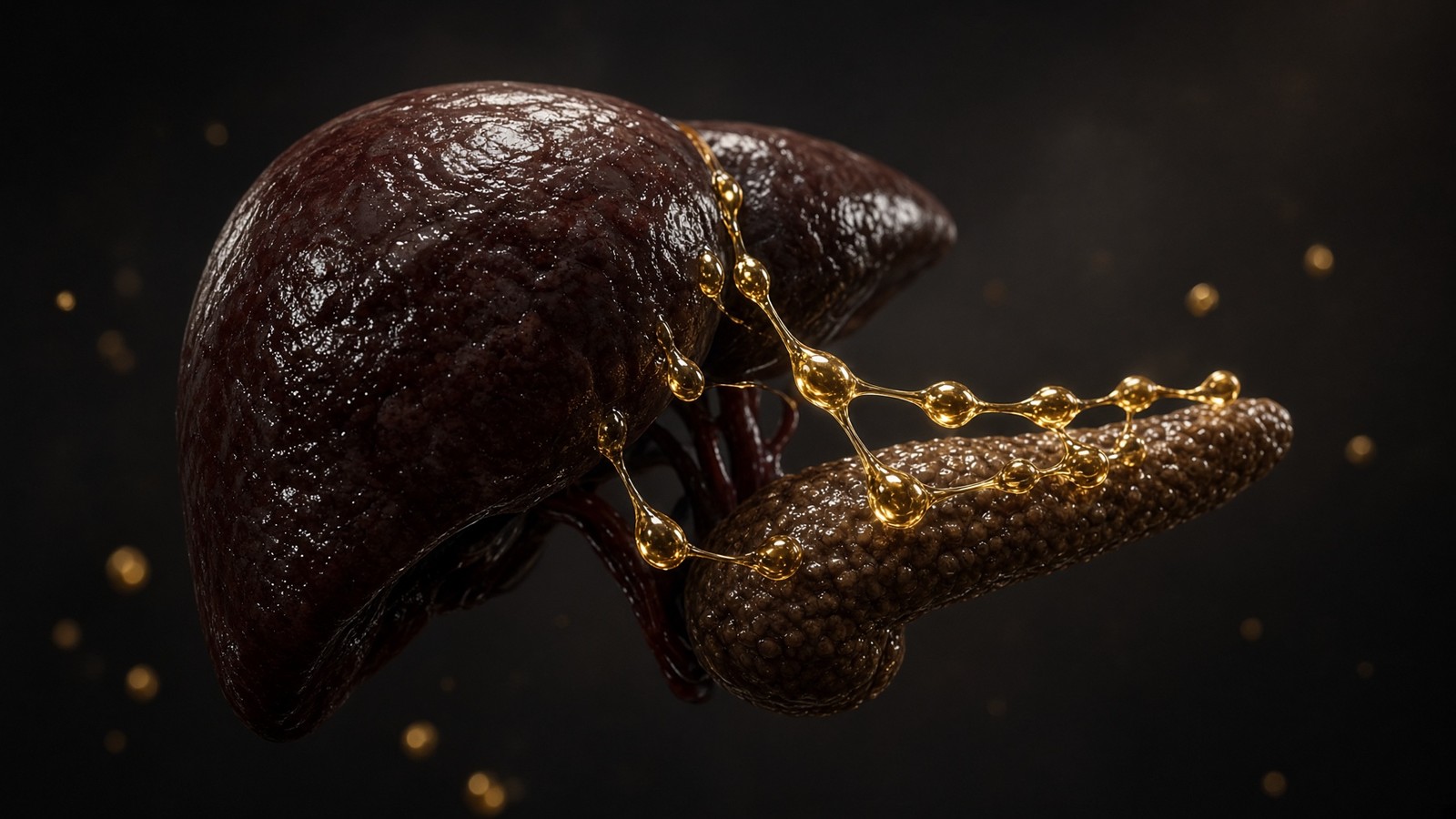
Roy Taylor's twin-cycle hypothesis is the map those numbers sit on, and it's a map you can draw in two loops. Chronic positive energy balance writes triglyceride into hepatocytes; a fatty liver overproduces glucose and VLDL; that exported fat then lands in the pancreas, and the first-phase dump of already-docked insulin granules goes quiet. Reverse the energy balance hard enough and liver fat falls within days, pancreatic fat follows over weeks, and the first-phase pulse can return. Lim, Hollingsworth, Taylor and colleagues put that sequence on ¹H magnetic resonance spectroscopy in Diabetologia in 2011, the Counterpoint study, before DiRECT asked whether primary care could run a practical version. The variable that actually moves is intrahepatic triglyceride, then pancreatic triglyceride, then hepatic glucose production, then the β-cell’s ability to meet a meal at the door. Call it reversal if you like. The papers call it remission, and they mean a number: glucose in the non-diabetic range, off antidiabetic drugs. They don't mean a cure of the tendency to regain, and they don't mean the pancreas of a twenty-year-old. Hold the distinction or the rest of the page will sound like a brochure.
In short. Empty the fat and the pulse can return. Surplus energy writes fat into the liver; the fatty liver over-makes glucose and ships fat to the pancreas; insulin’s first pulse then fails.
Remission, in the consensus that followed DiRECT, is HbA1c below 48 millimoles per mole — 6.5 percent — measured after the tablets have been stopped long enough that the number is yours. Riddle, Cefalu and the international group that wrote the 2021 statement were trying to stop three different objects using the same noun: a clinic result, a poster claim, and a claim that the disease had been deleted from the genome. Remission is the first. It's a state, on a date, with a method. It isn't a 20-year-old’s β-cell mass, and it isn't a guarantee that next year’s weight will stay where this year’s did. People who regained in DiRECT lost the remission they had earned, which is what a reversible tissue state does when the tissue fills again. Type 1 diabetes, latent autoimmune diabetes of adults, monogenic diabetes, and long-standing insulin-dependent type 2 are different biology. Lumping them under a hashtag is how you harm someone on insulin. This page will keep the cohort named: recent-onset type 2, adult, with enough β-cell left to answer when the fat leaves.
In short. It's a dated clinic result, not a deleted disease and not a promise that the weight will stay off. Remission means non-diabetic glucose off diabetes drugs.
Incretin-receptor agonists can move the same variable from a different floor, which is occupancy rather than a formula carton. Semaglutide occupies GLP-1R; tirzepatide occupies GLP-1R and GIPR; retatrutide, the published chain LY3437943, occupies those two plus the glucagon receptor. Weight falls, gastric emptying slows, insulin after a meal is amplified in a glucose-dependent way, and liver fat usually follows the weight. Coskun and colleagues described the triple-agonist engineering in Cell Metabolism in 2018. Jastreboff and colleagues put a Phase 2 weight curve on the same chain in the New England Journal of Medicine in 2023: 24.2 percent mean reduction at 12 milligrams and 48 weeks. That's a receptor occupancy, a medicinal-chemistry object, a clinical literature. DiRECT was soups, shakes, and a practice nurse. Same glucose. Same intrahepatic triglyceride, when it falls. Different intervention. MOTS-c, a 16-mer a mitochondrion translated from 12S rRNA, sits on AMPK in a mouse literature and is a third floor again. Let's walk the twin cycle, the named trials, the definition, and why a characterised research sequence isn't a formula diet. It is physiology with papers on it. Those are different rooms: a paper, a clinic, a vial.
In short. Gut-hormone medicines can empty liver fat by cutting intake; DiRECT emptied it by cutting calories at the table. Same variable, different tool. A research peptide is neither.
Remission of type 2 diabetes is possible in primary care. The strongest predictor was weight loss.— Lean MEJ, Leslie WS, Barnes AC, et al. Primary care-led weight management for remission of type 2 diabetes (DiRECT): an open-label, cluster-randomised trial. Lancet. 2018; 391: 541–551.
The twin-cycle hypothesis, in working English
Taylor put the argument in Diabetologia in 2008 and again in Diabetes Care in 2013, tracing the reverse route from cure to cause: if emptying the liver and pancreas of fat restores glucose, then filling them remains how the disease was built. The first cycle is hepatic. Years of energy surplus, often with a carbohydrate appearance rate the liver was never asked to handle at that volume, drive de novo lipogenesis. ChREBP and SREBP-1c write the enzymes. Acetyl-CoA that the TCA cycle can't take is printed as palmitate, packaged as triglyceride, and either stored in the hepatocyte or exported as VLDL. Intrahepatic triglyceride is insulin-resistant liver in slow motion. Insulin’s usual mute button on glycogenolysis and gluconeogenesis sticks. Fasting glucose rises, often before anyone has noticed a post-prandial spike, because morning glucose is a hepatic number more than a breakfast number. That is cycle one. It is already enough to produce a diabetic fasting glucose without a single β-cell having died. People blame bread. The liver was making glucose overnight from glycerol, lactate and amino acids, and insulin could not tell it to stop.
In short. Surplus energy is written as fat inside liver cells, which then ignore insulin and keep making glucose overnight. The first cycle is the liver.
VLDL is how cycle one talks to cycle two — a liver exporting triglyceride is a liver delivering fatty acids to tissues that didn't ask. A liver that is exporting triglyceride is a liver that is delivering fatty acids to tissues that didn't ask for them. The pancreas takes some, as triglyceride in and around islets, and that's the second cycle. β-cells don't fail first as a mass. They fail first as a timing. First-phase insulin is a dump of granules already docked at the membrane, fired within minutes of a glucose rise, aimed at the portal vein so the liver hears the meal before the meal has finished arriving. In early type 2 that phase dies. Second-phase insulin, the slower biosynthetic response, can still look noisy on a random C-peptide. The curve on a continuous glucose monitor is the missing first phase: the liver never got the dump, so it kept making glucose while the gut was still emptying. Taylor’s claim is that pancreatic fat, lipotoxicity, and a set of β-cell stress programmes — endoplasmic reticulum, oxidative, a mitochondrial neighbourhood — are how the dump is lost, and that the loss is, for a while, reversible.
In short. Insulin’s first, fast dump then fails, so the liver never gets the meal-time message to stop making glucose. The fatty liver ships fat to the pancreas.
Name the first-phase hardware, because the short version skips it. Glucose enters the β-cell through GLUT1 and GLUT2. Glucokinase phosphorylates it, which is the glucose sensor; ATP rises; KATP channels close; the membrane depolarises; voltage-gated calcium channels open; docked granules fuse. Incretins — GLP-1 from L-cells, GIP from K-cells — occupy class-B GPCRs on the same cell, raise cAMP, and amplify the fusion in a glucose-dependent way, which is why oral glucose outruns intravenous glucose (McIntyre, Holdsworth, Turner, Lancet 1964) and why an incretin analogue can move a curve without being insulin. In early type 2 the docked pool is still there, or partly there, and the incretin conversation is quieter than it was. Lipotoxicity and glucotoxicity both write on that machine. The twin-cycle claim is that the lipid writing is the one you can erase with an energy deficit large enough to empty the depot. The genome is in the room as a polygenic willingness to store fat in the wrong postcode, and as the rare MODY exception (HNF1A, HNF4A, GCK) that is genuine spelling, genuine young adults, genuine single-gene clinics. Ordinary type 2 isn't that. Ordinary type 2 is regulation. The daily glucose is a tissue state.
In short. The genes mostly decide where you store fat, not the daily sugar. The first insulin pulse is a timed dump of granules the cell already had ready. Fat in the islet disrupts that dump.
Lipotoxicity at the β-cell is chemistry, not a character judgement. Palmitate, in a dish, opens endoplasmic-reticulum stress, ceramide synthesis, and a mitochondrial superoxide leak; prolonged glucose plus fatty acid is glucolipotoxicity, the combination that kills more cells than either alone. In a person the readout is blunted first-phase insulin, then a falling C-peptide. The imaging that made Taylor’s version specific was pancreas triglyceride by magnetic resonance, not a biopsy. Newcastle imaging showed pancreas fat higher in type 2, falling with weight loss, tracking first-phase return in those who remit. People who don't remit often lose liver fat and still don't recover the dump, which is how you know the hypothesis has a duration limit: β-cell mass, after enough years, isn't entirely a lipid problem. Steven and colleagues, Diabetes Care 2016, Counterbalance, put that limit on paper. Short-duration disease remitted on an eight-week very-low-calorie diet. Long-duration disease often didn't, even when weight and liver fat moved. DiRECT recruited inside it on purpose: less than six years from diagnosis.
In short. Leave it for years and the cells may no longer be there to answer. Fat is toxic to insulin-making cells in a timed way. Empty it early and the first pulse can return.
Who the hypothesis remains about is as important as the cartoon. DiRECT took adults with type 2 diagnosed in the last six years, BMI 27–45, not on insulin, not with an eating-disorder history that would make a formula diet a cruelty, not with recent weight loss already in train. That's a large fraction of the incident clinic, and it isn't the whole clinic. A person diagnosed fifteen years ago, already on a basal-bolus regimen, with an HbA1c of 10 percent and a random C-peptide that has given up, is a different object. A thin person with type 2, more common in some East Asian cohorts, may have less liver fat to empty and a different β-cell vulnerability; Taylor has been honest that the twin cycle was drawn from a Northern European, high-BMI physiology. The polygenic risk is real and small per locus. The physiology that actually breaks, in the people DiRECT enrolled, is ectopic fat and a failed first-phase pulse. Pretending every diabetic glucose is that physiology is how you miss type 1, pancreatitis, and a steroid. Pretending none of it is reversible is how you missed 2018.
In short. Long-standing insulin-treated disease, and thin-onset disease, aren't the same object. The twin-cycle story was tested in people with recent type 2 and spare weight to lose.
Counterpoint: the imaging that had to happen
Lim, Hollingsworth, Aribisala, Chen, Mathers and Taylor, Diabetologia 2011, is the paper we have to cite before we're allowed to talk about DiRECT. Eleven people with type 2 diabetes, a 600-kilocalorie-a-day liquid formula plus non-starchy vegetables, eight weeks. Liver and pancreas triacylglycerol by ¹H magnetic resonance spectroscopy. Hepatic insulin sensitivity by a low-dose insulin infusion, the sort of clamp that actually asks the liver whether it will stop making glucose. First-phase insulin by a stepped intravenous glucose challenge, not a fasting insulin tweet. Weight fell. Fasting glucose normalised in the first week in the people who were going to normalise. That first week is the sentence the rest of the field still under-teaches. Hepatic insulin sensitivity had returned before anyone had lost a heroic amount of scale weight, because liver fat had already collapsed. The twin-cycle prediction required a fast hepatic limb and a slower pancreatic limb. Counterpoint was built to see both. It saw both. A paper that reports a diet and an HbA1c, and never an intrahepatic triglyceride, is reporting a poster claim with a glucose attached.
In short. Counterpoint, in 2011, was tiny and tightly measured: liver fat crashed in the first week of a 600-calorie diet, before the scale had much to say, and fasting sugar fell with it.
Liver fat, in that study, fell from the mid-teens as a percentage of the hepatocyte volume to the low single digits by eight weeks, most of it in the first seven days. Hepatic glucose production, which insulin is supposed to mute, muted. That's why a person can watch their morning glucose fall in the first fortnight of a serious energy deficit and think something mystical happened. Nothing mystical happened. Glycogen was emptying, de novo lipogenesis had been starved of substrate, VLDL export was falling, and the mute button on gluconeogenesis was working again. The clamp, not the bathroom scale, is how you know. Intrahepatic triglyceride is a labile pool. It isn't the same object as a decade of subcutaneous adipose. Fat loss is slow for a decade of subcutaneous adipose, and fast for the liver. The liver can drop a large fraction of its fat in days if the energy balance is negative enough. That's the first cycle running in reverse. Look AHEAD’s modest long-haul losses don't reproduce DiRECT: the depot you needed was a specific, small, fast pool.
In short. A hard calorie gap can empty a lot of it in days, which is why morning glucose can fall before the bathroom scale has much to say. Liver fat is a quick pool.
Pancreatic fat was the slower limb, exactly as the hypothesis had asked it to be. Over eight weeks, pancreas triacylglycerol fell, and first-phase insulin returned in the people whose glucose had normalised. The return wasn't a new pancreas. It was a dump that had been silenced and was, for the moment, speaking again. Acute insulin secretion, the first-phase increment, is the assay; a fasting C-peptide is a poor substitute, and an HbA1c is a poorer one still, because HbA1c will fall if you simply stop eating carbohydrate even if the β-cell has not recovered a millimetre. Counterpoint measured the dump. That's why it is the mechanistic paper and DiRECT is the practical one. The two papers are a pair. Taylor’s group kept doing the spectroscopy in the people who went through DiRECT, and the same shape held: liver fat down, pancreas fat down, first-phase back in those who remitted. The twin-cycle prediction survived contact with a GP surgery. That's why 2018 is the date on the poster.
In short. That slower limb is what the hypothesis had predicted. Pancreas fat fell more slowly, and the first insulin pulse came back in the people whose sugar normalised.
Counterbalance, Steven and colleagues, Diabetes Care 2016, remains the paper that stops a twin-cycle paragraph becoming a universal. Same very-low-calorie diet, eight weeks, two groups: short-duration type 2 and long-duration type 2. Liver fat fell in both. Weight fell in both. Remission, defined as a return to non-diabetic fasting glucose off drugs, clustered in the short-duration group. The long-duration group often lost the fat and didn't recover first-phase insulin. β-cell mass, after enough years of glucolipotoxicity, apoptosis, amyloid, and a declining proliferative repair, isn't a lipid droplet you can evaporate. The hypothesis was always a window. DiRECT wasn't written for someone diagnosed in 2004, now on 60 units of insulin — that is Counterbalance. And an uncle who didn't reverse isn't a reason to ignore the trial that did. Both papers are required. Duration from diagnosis is a blunt instrument — diagnosis isn't onset — but it is the instrument a trial can use. C-peptide and an intravenous glucose tolerance test are better assays, and they're why a specialist clinic remains one.
In short. When type 2 has been present for many years, emptying the fat often fails to bring insulin back. The early window is real. It isn't a promise to every pancreas.
Diagram
Matrix
- TCA cycle · β-oxidation · mtDNA nucleoids
- NADH produced here. Complex I spends it.
- MOTS-c (MRWQEMGYIFYPRKLR) from 12S rRNA.
Inner membrane
- I → II → III → IV → V (ATP synthase)
- ~150 mV proton-motive force
- ~40–60 kg of ATP turned over per human day
mtDNA is 16,569 bp, 37 genes, 13 proteins of the respiratory chain. Nuclear DNA encodes the other ~1,200 mitochondrial proteins. NAD+ is the hydride carrier between dehydrogenases and Complex I. MOTS-c is a 16-mer translated from 12S rRNA — a peptide the mitochondrion wrote itself.
DiRECT: named calories, named percentage
DiRECT, Lancet 2018; 391: 541–551, cluster-randomised 49 UK primary-care practices — ordinary surgeries, not a metabolic ward. Three hundred and six adults, type 2 of six years or less, BMI 27–45. The intervention was Counterweight-Plus: a total-diet-replacement phase of 825–853 kilocalories a day as formula soups and shakes, for three to five months, then stepped food reintroduction over two to eight weeks, then structured support for weight-loss maintenance out to twelve months. Antidiabetic drugs, and usually antihypertensives, were withdrawn on day one of the formula, which is both a safety move and part of the definition: you can't claim remission on a tablet you're still swallowing. Control was best-practice care under guidelines. Open-label, because you can't blind a soup. Cluster-randomised, because a practice that has just put thirty people on a formula diet isn't a practice whose next patient can be a clean control. The control arm’s 4 percent remission is the number to keep in view. Usual care, in 2018 UK primary care, didn't reverse type 2. A formula diet in the same surgeries did, in a large fraction, when the weight came off.
In short. A formula diet of about 850 calories a day, then food back in stages, versus usual care. DiRECT randomised GP practices, not hospital wards.
The formula itself is worth slowing down for, because eight hundred calories got turned into a personality online. 825–853 kilocalories, liquid, nutritionally complete, a Counterweight-Plus product, three to five months. It's a very-low-calorie diet in the classical sense, not a ketogenic macronutrient ratio and not a carnivore plate. Macronutrients and micronutrients are present because a three-month liquid diet without them is a deficiency experiment. The point of a formula is compliance and a known energy gap, not a theory of insulin. People stopped cooking, stopped grazing, stopped negotiating with a fridge. Antihypertensives came off because natriuresis and a falling insulin will drop blood pressure, and a practice that leaves ramipril on during a formula phase will meet a faint. The stepped reintroduction is the half the screenshots skip: food comes back, energy rises, the question becomes whether the new weight can be defended. Structured support — appointments, a dietitian logic, a practice that has done this before — is the other half. DiRECT was twelve months of a programme. The 46 percent is a twelve-month number, not a week-four glucose.
In short. It was a programme, not a single heroic week of soup. The diet was a complete liquid formula for months, then ordinary food returned in stages with support.
At twelve months, 68 of 149 participants in the intervention arm were in remission: 46 percent, against 4 percent in control. Remission meant HbA1c below 6.5 percent (48 millimoles per mole) after at least two months off all antidiabetic medications. Mean weight loss was 10.0 kilograms in intervention and 1.0 kilogram in control. Those are the headline numbers, and they're already enough to retire the sentence ‘you can't reverse type 2’. The more important table is remission by weight-loss band. Almost nobody who gained weight remitted. A small fraction remitted with 0–5 kilograms lost. About a third remitted at 5–10 kilograms. Over half remitted at 10–15 kilograms. Of those who lost 15 kilograms or more, 86 percent were in remission at twelve months. The strongest predictor was weight loss. Taylor’s imaging sits under that table: the people who lost enough emptied the liver and the pancreas. People who quote 46 percent without the 15-kilogram row are quoting an average of two different physiologies, the emptied and the not-yet. The 46 percent is an average of two physiologies: the emptied and the not-yet.
In short. Among people who lost 15 kilograms or more, 86 percent remitted. At one year, 46 percent on the diet programme were in remission versus 4 percent in usual care.
Two-year follow-up is Lean and colleagues in Lancet Diabetes & Endocrinology, 2019, and it is the paper you want if you care what happens after the applause. Remission in the intervention arm was 36 percent at 24 months, against 3 percent in control. Of those who had remitted at twelve months, a large fraction who kept the weight off stayed remitted; a large fraction who regained didn't. Among people who maintained at least 10 kilograms of loss, about 70 percent were still in remission at two years. That's the expected fade when the tissue state isn't defended. A reversible lipid depot that is allowed to refill will refill. The disease, on this reading, isn't a spell that was lifted. It's a tendency to store fat in the liver and pancreas, plus a β-cell that remembers being silenced. Let the surplus back in and the tendency expresses itself again. DiRECT’s maintenance phase was ordinary food, support, and an honest conversation about regain. It wasn't a cure of the defence of former mass that Leibel measured as a drop in resting expenditure larger than lost tissue predicts. If we sell DiRECT as a one-time exorcism, we have not read the 24-month paper.
In short. The fat stores refill if the surplus comes back. At two years the remission rate had faded in people who regained the weight, and held in many who kept it off.
Primary care is the point, and it is the bit a specialist journal still under-credits — ordinary surgeries, not a metabolic ward. Counterpoint was a physiology study. DiRECT was a cluster of ordinary practices, practice nurses, a formula you can prescribe as a programme, and a population that looks like the waiting room. If remission had required a ¹H-MRS magnet, a clamp, and a metabolic ward, it would have been true and useless. Lean and Taylor’s bet was that the energy deficit was the active ingredient and that a surgery could deliver it. The bet paid. Blood pressure moved, which is why the antihypertensives had come off. Drop-out happened, as a formula diet in real life will make happen. The 46 percent is of the intention-to-treat intervention arm, not of the people who enjoyed the soup. That's the honest way to quote a programme. The question DiRECT answered is whether a GP surgery can put recent-onset type 2 into remission by weight loss at a rate that isn't a rounding error. Yes. 2018.
In short. The active ingredient was a large, supported energy gap. The result that matters is that ordinary GP surgeries, not metabolic wards, delivered the remission.
- DiRECT formula
- 825–853 kcal/day
- Remission at 12 months
- 46% vs 4%
- If weight loss ≥15 kg
- 86% remitted
- Mean weight change
- −10.0 vs −1.0 kg
- Remission at 24 months
- 36% vs 3%
- Counterpoint diet
- ~600 kcal, 8 weeks
- DiRECT duration window
- ≤6 years from diagnosis
- Jastreboff 2023, 12 mg
- 24.2% at 48 weeks
Total diet replacement, 3–5 months, then stepped food reintroduction. Counterweight-Plus.
HbA1c < 6.5% (48 mmol/mol) off antidiabetic drugs. Lean, Lancet 2018.
The strongest predictor was weight loss. The average hides this row.
Intervention versus control at twelve months.
Held when weight was kept off. Faded with regain. Lean, 2019.
Liver fat down in 7 days. Pancreas fat and first-phase followed. Lim, 2011.
Counterbalance: long-duration disease often loses fat and not the dump.
Phase 2 mean on LY3437943. A different tool, same weight-and-liver-fat neighbourhood.
What remission is, and isn't
Here, the 2021 international consensus (Riddle, Cefalu, Evans and colleagues, jointly for the American Diabetes Association, the Endocrine Society, Diabetes UK and others) tried to lock the noun down. Remission: HbA1c below 6.5 percent, off glucose-lowering medication, with the measurement taken at least three months after the last dose, and then confirmed. Partial, complete, and prolonged were older adjectives the group mostly retired because they had been used to mean three different things. The number is the non-diabetic range. The method is off the drugs. The time stamp is long enough that you aren't photographing a tablet’s half-life. That's a clinic definition, and it is stricter than ‘my sugars look better’ and looser than ‘the tendency is gone’. DiRECT’s operational definition was in the same neighbourhood: HbA1c below 6.5 percent after at least two months off antidiabetic drugs. People who keep metformin ‘just in case’ are, on this definition, not in remission, which is why some low-carbohydrate programmes that report spectacular HbA1c numbers on continued metformin are reporting a different object. The distinction isn't pedantry. It is how you stop a trial, a forum, and a press release using one word for three states.
In short. Better sugars on a tablet is a different claim. Remission is a specific number: HbA1c under 6.5 percent, off diabetes drugs, checked after the drugs have actually left.
It remains not the pancreas of a twenty-year-old. β-cell mass in type 2 is already reduced, on autopsy series, by the time of diagnosis; Butler, Janson and colleagues put that on paper in the early 2000s, and the number is a fraction, not a rounding error. First-phase recovery in Counterpoint and DiRECT is a functional recovery of the cells that remain, in an environment that has stopped poisoning them with fatty acids and glucose. It isn't hyperplasia back to a teenage islet. Polygenic risk has not been edited. The appetite circuitry that defended the old weight is still defending; Leibel’s resting-energy-expenditure drop is still a measured fact. A person in remission is a person whose current tissue state produces a non-diabetic glucose off drugs. They aren't a person from whom type 2 has been deleted. The honest sentence is colder, and kinder: you have emptied the stores that were breaking the control system. The tendency to refill them is still yours.
In short. Remission isn't a young pancreas and not a deleted risk. The remaining insulin cells work again once the fat leaves. The tendency to store that fat remains.
Regain is therefore not a moral failure of the trial — it's a reversible tissue state filling again. It is the other half of the disease. Palatability, protein leverage, a food supply engineered to be eaten at speed, a hypothalamus that treats weight loss as a famine, a falling leptin, a rising ghrelin, a drop in non-exercise activity: those are the refill mechanisms, and they're why DiRECT’s maintenance phase existed. People who regain to their old weight, or near it, refill liver fat. Hepatic glucose production comes back. The first-phase dump quiets again if the pancreatic fat follows. Glucose crosses the diagnostic line, and a commentator says reversal was a myth. The commentator has described a refill. Two-year DiRECT, the Diabetes Remission Clinical Trial’s own follow-up, is the document. So is every bariatric series in which diabetes returns as the bypassed stomach and the lost weight slowly come back: Sjöström’s SOS follow-up, the later STAMPEDE years, a literature that is large and unsurprised. Durability is weight-loss durability, plus whatever β-cell mass was left at the trough. A programme that can't talk about regain is a programme that has not yet taken the twin cycle seriously.
In short. That refill is the disease’s other half, not a verdict on the original result. When the weight returns, liver fat returns, and the diabetes often returns with it.
Type 1 is a different disease, and this paragraph exists so nobody uses DiRECT as a reason to stop insulin in a person whose β-cells were autoimmunity's target. GAD antibodies, a low C-peptide, an onset in childhood or a rapid adult onset with ketosis: those aren't a fatty liver. Latent autoimmune diabetes of adults can sit in a type-2 clinic for years before the C-peptide gives the game away; a formula diet won't restore an islet that antibodies are still destroying. Monogenic diabetes — the HNF1A and HNF4A forms that are sulphonylurea-responsive, the GCK form that's a lifelong left-shifted glucose set-point — is a spelling error, and the treatment is the spelling, not a soup. Long-standing type 2 on insulin may still lose liver fat; Counterbalance says many won't leave the diagnosis. Nobody competent claims a steak, a fast, or a peptide vial is a substitute for medical care in a person on hypoglycaemic drugs, because those drugs will overshoot if the food changes and nobody is watching. That is how hypoglycaemia happens.
In short. People on insulin or sulphonylureas can go too low if food drops and nobody is watching. Type 1, autoimmune adult diabetes, and single-gene diabetes aren't fatty-liver diseases.
Carbohydrate restriction is a parallel road
Very-low-carbohydrate programmes can normalise glucose even before heroic scale-weight change, because you have simply stopped putting the variable into the system at the rate the liver was failing to handle. Appearance rate is half of a post-prandial curve. Cut digestible carbohydrate hard enough and the appearance rate collapses; glucagon may rise; ketogenesis starts as hepatic acetyl-CoA overflow; the brain takes β-hydroxybutyrate; fasting glucose often falls. That physiology rhymes with DiRECT without being DiRECT. DiRECT cut energy, and carbohydrate with it, as a formula. A ketogenic clinic cuts carbohydrate, and often energy with it, as a food pattern. Some of the glucose fall on a ketogenic pattern is glycogen emptying and water, some is energy deficit, some is a true drop in hepatic glucose production, some is the fact that you're no longer eating the thing the curve is made of. All of those can be true at once. A person who prefers steak and eggs to an 800-kilocalorie shake isn't required, by physics, to prefer the shake. They're required, by honesty, not to pretend the mechanisms are mystical or mutually exclusive.
In short. That road rhymes with DiRECT; it isn't the same trial. Cutting carbohydrate can flatten glucose even before huge weight loss, because less sugar arrives and the liver makes less.
Virta Health and the Hallberg, McKenzie, Athinarayanan series are the largest recent dataset in which a very-low-carbohydrate clinic programme moved glucose hard. At one year, a large fraction of completers had HbA1c in a range that a diabetes clinic would call well-controlled, many off insulin, many off most drugs, with a nutritional-ketosis target as the operational cue. Read the papers for the exact denominators, the completer versus intention-to-treat distinction, and whether metformin was still on board: those details decide whether you're looking at DiRECT-style remission or at a different, still useful, glycaemic result. Unwin’s UK primary-care audit of a low-carbohydrate approach is the other document a British reader actually has, smaller, observational, and closer to a surgery than a start-up. Neither is cluster-randomised DiRECT. Both are existence proofs that carbohydrate restriction can move the same glucose, in people, with support. Lower insulin, less hepatic glucose, less substrate for de novo lipogenesis, less pancreatic lipotoxicity over time if the energy surplus also falls. If the energy surplus doesn't fall, you can be in ketosis and still carry a fatty liver.
In short. They aren't DiRECT, and ketosis without an energy gap can still leave a fatty liver. Low-carbohydrate clinic series show large glucose improvements with support.
Energy still counts, even when the carbohydrate has been taken off the board. Hall and colleagues, in ward studies that actually measure, have shown that isocaloric low-carbohydrate versus low-fat fat-loss is similar when protein is matched, with small advantages that don't match the size of the internet argument. Conservation of energy isn't a personality. A ketogenic pattern often drops energy ad libitum because protein-and-fat meals fill, the forbidden list is long, and insulin’s effect on the distal nephron reverses so you diurese. That accidental deficit is a large part of why the pattern ‘works’. A formula diet makes the deficit explicit. A high-carbohydrate, energy-restricted pattern can also drop liver fat if the carbohydrate isn't liquid sugar and the calories actually fall — unfashionable, not impossible, and sitting in older very-low-fat literature that the internet retired for cultural reasons rather than spectroscopic ones. Simpson and Raubenheimer’s protein-leverage hypothesis, Hall’s ultra-processed ward work, Lean’s formula: three ways of making energy intake fall. The liver notices the gap. It doesn't notice which tribe named the gap. Choose the pattern a given person can run without becoming a different person, and without a sulphonylurea still ticking when the carbohydrate has gone.
In short. Patterns work when they create a gap the liver can spend. When protein is matched and calories are matched, low-carb and low-fat lose similar fat.
Both roads fail if the energy surplus and the liver fat come back, which they will if the only plan was a heroic month. A person who uses carbohydrate restriction to empty the liver, then returns to the appearance rate that filled it, will refill it. A person who uses a formula diet to empty the liver, then returns to the surplus that filled it, will refill it. An incretin analogue that is stopped will, in the published follow-up of this class, give a large fraction of the weight back, and the liver will take its share. The twin cycle doesn't care which tool ran in reverse. It cares whether the fat is currently in the hepatocyte and the islet. Maintenance is therefore not an afterthought. It is the intervention, once the first eight to twenty weeks have done the emptying. DiRECT built support into the year. Virta built remote care into the year. Bariatric services that take themselves seriously build a dietitian into the decade. The variable is still intrahepatic triglyceride, on a date, in a person who has to eat tomorrow.
In short. Keeping it empty is the actual long intervention. Whichever road emptied the liver, the fat comes back if the surplus comes back.
Liver fat is the variable
Intrahepatic triglyceride is a measurable object, not a yellow-tissue cartoon. ¹H magnetic resonance spectroscopy is the classical research assay: a voxel in the liver, a water peak, a methylene peak, a percentage. MRI proton-density fat fraction, MRI-PDFF, is the imaging-trial version, a map rather than a voxel, and the readout retatrutide and the other incretin papers use when they actually measure the liver rather than infer it from alanine aminotransferase. A rise in ALT is a hint, not a fraction. Taylor’s group used spectroscopy because they were asking a quantitative question: how fast does the pool move, and does the pancreas pool move with it. The answer, again: liver in days, pancreas in weeks, first-phase after the pancreas. Once you have seen a PDFF or an MRS number move from 15 percent to 2 percent, the poster claim ‘eat less, move more’ looks like what it always was, an underspecified instruction about a specific depot. The depot is small relative to adipose. It is outsized relative to fasting glucose. That ratio is why a 10-kilogram weight loss can retire a diagnosis that a 3-kilogram loss, spread across the whole body, doesn't touch.
In short. It's a small store compared with body fat, and it has an outsized say over fasting glucose. Liver fat can be measured with magnetic resonance as a percentage.
Morning glucose is often a hepatic number, which is the surprise the first time you see a dawn rise without breakfast. Overnight, the liver runs glycogenolysis and then gluconeogenesis from lactate, glycerol and alanine; insulin is supposed to keep that factory quiet; in a fatty, insulin-resistant liver the factory doesn't quiet. The dawn phenomenon is this physiology plus a circadian cortisol and growth-hormone nudge, not a biscuit at 3 a.m. that the person forgot. Post-prandial glucose is a different conversation — appearance rate, first-phase insulin, incretin tone, gastric emptying, muscle GLUT4 — and a continuous glucose monitor will show you both if you let it. People who blame breakfast for a 7 a.m. reading they took before breakfast have misidentified the organ. A liquid sugar, a steak and a bowl of oats write different appearance rates on a liver that is or isn't already full. The twin-cycle contribution is to put a number on the fullness. Empty it, and the overnight factory stands down. That is Counterpoint week one. It is also why metformin, which sits on hepatic gluconeogenesis, can look like a miracle in a fatty liver and like a modest tablet once the fat has gone.
In short. Empty liver fat and that overnight factory can stand down. A high sugar before breakfast is often the liver still making glucose overnight, not the last meal.
Metabolic dysfunction-associated steatotic liver disease — MASLD, the renaming of what most of us still say NAFLD — is this same pool with a hepatology door on it. Hepatologists score steatosis, ballooning, inflammation, fibrosis; diabetologists score HbA1c; the hepatocyte isn't a member of either college. A liver at 20 percent fat by PDFF is a liver that will overproduce glucose and VLDL whether the appointment is in endocrinology or in hepatology. Fibrosis is the later bill, the one a remission trial of eight weeks won't settle and a decade of steatohepatitis might. DiRECT wasn't a fibrosis trial. Incretin agonists, particularly the ones with a glucagon-receptor arm, are being asked in later papers whether PDFF and then histology move; those papers should be read as written, with the biopsy as the harder endpoint. The twin-cycle claim doesn't need the NASH biopsy to be true. It needs the labile triglyceride pool to be causal for hepatic insulin resistance and, downstream, for the pancreatic second cycle. That claim is already on spectroscopy and on a cluster-randomised glucose. The fibrosis conversation is a neighbour, and a reason a person with advanced liver disease is a hepatology patient, not a formula-diet anecdote.
In short. That same liver fat has two clinic names: diabetes and fatty-liver disease. Early fat drives glucose. Scarring is a slower, separate bill.
The tools that empty the pool remain several, and pretending only one of them is pure is how a forum argues while the liver stays full. Energy deficit, hard enough and long enough: DiRECT, Counterpoint, bariatric calorie gap. Carbohydrate restriction that also drops energy, or that drops appearance rate enough for de novo lipogenesis to stand down. Isocaloric exchange of saturated fat for unsaturated fat, in some feeding studies, with smaller effects. Alcohol cessation, because ethanol is a hepatic redox and fat-writing problem of its own. Glitazones move fat from liver to subcutaneous adipose, which is redistribution rather than loss, and a reminder that the postcode of the triglyceride matters. Incretin agonists empty body weight from the intake side and take liver fat with them; a glucagon-receptor arm is, in theory, a more direct hepatic lipid-oxidation cue. Exercise, especially if it empties glycogen and raises AMPK, is an independent small writer on the same pool and a large writer on the muscle disposal sink. The variable is intrahepatic triglyceride. Name the tool, name the measurement, name the date. Then see whether fasting glucose and first-phase insulin followed.
In short. The measurement is the pool, on a date. Several tools empty liver fat: a hard calorie gap, cutting carbohydrate, surgery, gut-hormone medicines, and, to a point, exercise.
Diagram
GLP-1R
β-cell, brainstem, stomach
Incretin, delayed emptying, satiety. Semaglutide’s occupancy.
GIPR
β-cell, adipocyte
Second incretin. Lipid handling. Tirzepatide added this.
GCGR
hepatocyte
Glycogenolysis and, biased, energy expenditure. The third occupancy.
LY3437943 is a fatty-acylated unimolecular agonist at GIPR, GLP-1R and GCGR (Coskun, Cell Metab 2018). Jastreboff, NEJM 2023: 24.2% mean weight loss at 48 weeks, 12 mg, Phase 2 — clinical literature, not a use instruction for a research vial.
Incretin agonists: a different tool on the same variable
Here, the incretin effect is a paired curve before it's a drug. Give glucose by mouth and the insulin rise is larger than the rise you get from the same glucose load in a vein. McIntyre, Holdsworth and Turner put that contrast into the Lancet in 1964; Elrick’s group published the same shape the same year. K-cells write GIP, L-cells write GLP-1, both occupy class-B GPCRs on the β-cell, both raise cAMP, both amplify fusion of insulin granules when glucose is already high enough to close KATP. GLP-1R also lives on the brainstem and on the stomach: satiety, delayed emptying, a smaller appearance rate for the same plate. Native GLP-1 dies in minutes at DPP-4; analogues occupy the receptor with a chain albumin will carry through a week. STEP 1 (Wilding, NEJM 2021) is what GLP-1R occupancy did to weight. SURPASS and SURMOUNT are what adding GIPR did. The glucose follows, in type 2, because appearance rate, insulin, glucagon suppression and weight are all moving. Hepatic fat, when it is measured, usually moves with the weight. Same variable DiRECT moved. Intake valve, not a soup.
In short. Medicines that occupy those receptors cut intake and often take liver fat down with the weight. Gut hormones raise insulin after a swallowed meal and slow the stomach.
Semaglutide and tirzepatide are licensed medicines, with devices, titration schedules, and a gastrointestinal afternoon you have to plan for. They belong in a formulary conversation, not in a research-vial caption. They belong on this page because they're the existence proof that you can empty a large amount of body weight, and with it a large amount of liver fat, from the receptor side of the same control system DiRECT emptied from the kitchen. Read the PDFF papers that actually performed MRI, not the ones that inferred a liver from a transaminase. A smaller person with a quieter liver is a twin-cycle result however you bought the smaller person. Duration window, first-phase recovery, regain as refill still apply. An incretin analogue doesn't restore a 15-year-old insulin-deficient islet, make regain impossible when it stops, or turn type 1 into a lifestyle. What it does, at the occupancies the licences describe, is turn the intake valve down hard enough that the labile hepatic pool often empties as a consequence. That's a different stair in the same building. Jastreboff’s triple-agonist paper is the next stair.
In short. The same limits still apply: duration, regain, and type 1 is different. Licensed one- and two-receptor medicines can empty weight, and often liver fat, from the appetite side.
Retatrutide remains a single chain. Eli Lilly’s investigational code is LY3437943, and the structure is public: a fatty-acylated peptide engineered so one molecule occupies GIPR, GLP-1R and GCGR at once. Coskun, Sloop, Loghin and colleagues, Cell Metabolism 2018, is the engineering paper: unimolecular, lipid-handled, balanced enough at glucagon not to wreck a glucose curve while still buying energy expenditure and a hepatic lipid-oxidation cue. Jastreboff, Kaplan, Frías and colleagues, New England Journal of Medicine 2023, is Phase 2, 338 adults with obesity, once-weekly retatrutide or placebo for 48 weeks. At 12 milligrams the least-squares mean weight change was −24.2 percent against −2.1 percent on placebo. Gastrointestinal events were common and dose-related. The paper describes an investigational medicine, not a use instruction for a research solid, and not DiRECT. A large energy gap, however opened, will empty ectopic fat if the β-cells still have something to say. 24.2 percent of body weight is, for most DiRECT enrollees, more than 15 kilograms. Predicting a high remission rate at that band isn't the same as having run the trial in that population.
In short. A 2023 trial saw mean weight fall about a quarter at the top dose. Retatrutide is one published chain at three gut-hormone receptors.
The glucagon-receptor arm is the reason a triple isn't just a louder dual, and the art is the size of that occupancy. GCGR on the hepatocyte is Gs-coupled, like GLP-1R, and the acute cAMP message is glycogenolysis and gluconeogenesis — the opposite of what you wanted for a glucose curve, which is why the art is bias. Chronic, in the presence of two incretin occupancies that are cutting appearance rate and raising insulin, the same receptor is an energy-expenditure and β-oxidation cue: less de novo lipogenesis, more hepatic fat oxidation, a possible direct writer on intrahepatic triglyceride beyond what the weight loss would have done. The 2010s co-agonist papers are the rodent prehistory; Coskun’s engineering is the unimolecular version. MRI-PDFF decides whether the hepatic arm is doing work a dual would not have done; read the papers that actually performed it. Enough GCGR to move lipid; not so much that hepatic glucose output wrecks the glycaemic gain the two incretin arms just bought. That sentence is medicinal chemistry. It is also, if the imaging holds, a receptor-side tool aimed at Taylor’s first cycle. Diet can empty hepatic fat. This chain was built to empty it from the occupancy side.
In short. That third receptor, glucagon’s, is there to spend liver fat and energy, but it can also raise glucose, so the dose at that receptor has to be judged carefully.
Same variable, different floor — and that's the sentence that stops the tools getting stacked. DiRECT wrote on floor 8 of a pathophysiology stack — weight, intake, a formula — and the writing ran down onto liver fat, pancreatic fat, and a first-phase pulse. An incretin agonist writes on floor 3, a GPCR, and the writing runs up onto intake, emptying, insulin, and then onto the same ectopic stores. MOTS-c, in the Lee, Kim, Cohen Cell Metabolism 2015 paper, sits on AMPK in mice, a floor-4 kinase, with insulin-sensitivity and diet-induced-obesity readouts that have not been a DiRECT. Putting those objects in one sentence is allowed only if the sentence names the floors. ‘All of these help glucose’ isn't a sentence. It's a blending error. The twin cycle is a tissue argument. The incretin chain is a receptor argument. The 16-mer is a mitochondrial open-reading-frame argument. A formula diet is a kitchen argument. Four arguments, one labile triglyceride pool at the centre of the first two, and a glucose number a person actually notices. The catalogue sequences are two characterised ligands for two literatures. They aren't DiRECT. The soups were food.
In short. Only the first two have strong human evidence for emptying liver fat. A diet, a gut-hormone receptor, and a mitochondrial peptide sit on different floors of the same building.
What we can actually hold here is the published backbone, synthesised in the United States, HPLC-MS on the certificate, labelled for the bench. We aren't Eli Lilly. A shared primary structure isn't a shared formulation, device, dossier or legal class. Two objects can travel together in a sentence because the chemistry is public. They should not be fused with a Counterweight-Plus carton, a licensed pen, or a GP-surgery programme. Jastreboff 2023, Lean 2018, Coskun 2018 and Lee 2015 are literature notes. An experiment that wants the triple-agonist chain occupies GIPR, GLP-1R and GCGR in a dish or a mouse, at a concentration it writes down. An experiment that wants the 16-mer sits on AMPK, or doesn't, and reports the blot. A person with type 2 who wants remission is in a clinic conversation about food, weight, licensed medicines and, where it is available, a DiRECT-style programme. I won't pretend those three rooms share a protocol. Neighbourhood, on a reading list, is a courtesy. It isn't a combination claim.
In short. They aren't the 2018 food trial, and they aren't a licensed pen. The research sequences on a catalogue shelf are chemistry for experiments.
Diagram
× 1
Ligand
One peptide in one pocket. nM–µM. Shape, not a mood.
× 10–10²
G proteins
The occupied GPCR is a GEF. Each Gα is a catalyst.
× 10³–10⁴
cAMP / IP₃ / Ca²⁺
Adenylyl cyclase and PLC do not make one molecule. They make a cloud.
× 10⁴–10⁶
PKA / PKC / CaMK
Kinases phosphorylate many substrates per messenger.
× tissue
Secretion, transcription, motility
The organism-level readout. Still not a protocol.
This is the only magic, and it is not magic. A nanomolar ligand can move a micromolar messenger because enzymes sit between them. Desensitisation (GRK, β-arrestin, endocytosis) is how the cell refuses to let ‘more ligand’ mean ‘more signal’ forever.
Second messengers, so the receptor story stays a receptor story
Gs, adenylyl cyclase, cyclic AMP, protein kinase A, EPAC: that's the default grammar of GLP-1R, GIPR and GCGR. Occupancy at the seven-helix bundle, on the outside of the cell, changes conformation; Gs spends GTP; cyclase makes cAMP from ATP; PKA phosphorylates targets that include the β-cell’s granule-fusion machinery and the hepatocyte’s glycogen-phosphorylase cascade; EPAC2, in the β-cell, is the cAMP-to-Rap-to-granule route that incretin textbooks are supposed to name. The insulinotropic effect is glucose-dependent because the KATP-calcium machine has to be already running; cAMP amplifies fusion, it doesn't replace glucokinase. That's why hypoglycaemia isn't the dominant failure mode of this class in the way it is for a sulphonylurea, which closes KATP whether glucose asked or not. Delayed gastric emptying is the same occupancy at receptors on the stomach and on vagal afferents, a slowing of appearance rate, half of the post-prandial win people attribute to a mysterious ‘insulin reset’. Central GLP-1R in the area postrema and nucleus tractus solitarius is the satiety, the nausea at high dose, and a large part of the weight. None of that grammar is a formula diet. Both tools move glucose. They don't share a nucleotide.
In short. Gut-hormone receptors raise a messenger called cAMP inside the cell, which boosts insulin only when sugar is already high and also slows the stomach.
Glucagon-receptor cAMP in the hepatocyte is the awkward twin. Acute, it is the famine signal: glycogen out, gluconeogenesis up, a glucose rise that would be unwelcome on top of a diabetic fasting number. That's why a naive glucagon infusion isn't a type-2 medicine. Chronic, on a chain that is already occupying GLP-1R and GIPR, the same cAMP neighbourhood is being asked to do lipid work — hormone-sensitive lipase in some depots, hepatic β-oxidation, a suppression of lipogenic transcription that the co-agonist literature reports in rodents. The awkwardness is the point of Coskun’s bias. You can't write ‘glucagon receptor’ on a type-2 page as if it were only a lipid receptor. You also can't write it as if it were only a glycogenolytic receptor, because the whole design of LY3437943 is that the two incretin arms hold the glucose while the third arm spends the fat. cAMP is a nucleotide. The cell type, the duration, and the co-occupancy decide what the nucleotide does. Taylor’s spectroscopy is still the assay for the twin cycle. The receptor literature has to earn the same assay if it wants the same sentence.
In short. Which job you get depends on dose, time, and what the other receptors are doing. On liver cells the same messenger can dump sugar stores or, in the right setting, help burn fat.
AMPK remains a different messenger, which is why MOTS-c sits off the incretin diagram. AMP-activated protein kinase is a heterotrimeric fuel-gauge, phosphorylated at Thr172 by LKB1 or CaMKK2 when AMP rises relative to ATP. It phosphorylates acetyl-CoA carboxylase, which lowers malonyl-CoA and de-represses CPT1, so fatty acids can enter mitochondria; it phosphorylates ULK1 and TSC2, so autophagy leans on and mTORC1 leans off; it is one door away from PGC-1α and a biogenesis programme. Metformin is the licensed AMPK-adjacent medicine, a hepatic glucose-output drug with a mitochondrial-complex-I neighbourhood of its own. MOTS-c, sixteen residues from 12S rRNA, sits on this kinase in the papers that named it (Lee, Kim, Cohen, 2015; nuclear translocation, Kim and Lee, 2018; exercise-inducible physiology, Reynolds, 2021). Sitting on AMPK isn't GLP-1R occupancy, and it isn't a formula diet. A mouse that resists diet-induced obesity on a 16-mer is a mouse result. The organelle that wrote MOTS-c is the organelle that will notice, downstream, if a hepatocyte becomes less fatty, because β-oxidation and a quieter ROS leak are what a less fatty hepatocyte does. Shared campus, different ligand, different evidence grade: Gs–cAMP, AMPK, and a calorie gap stay three grammars.
In short. That isn't a gut-hormone receptor, and not a diet. A separate fuel-gauge kinase, AMPK, is how cells notice a short energy supply. A mitochondrial peptide sits near that kinase in mouse papers.
Mitochondria notice the fat
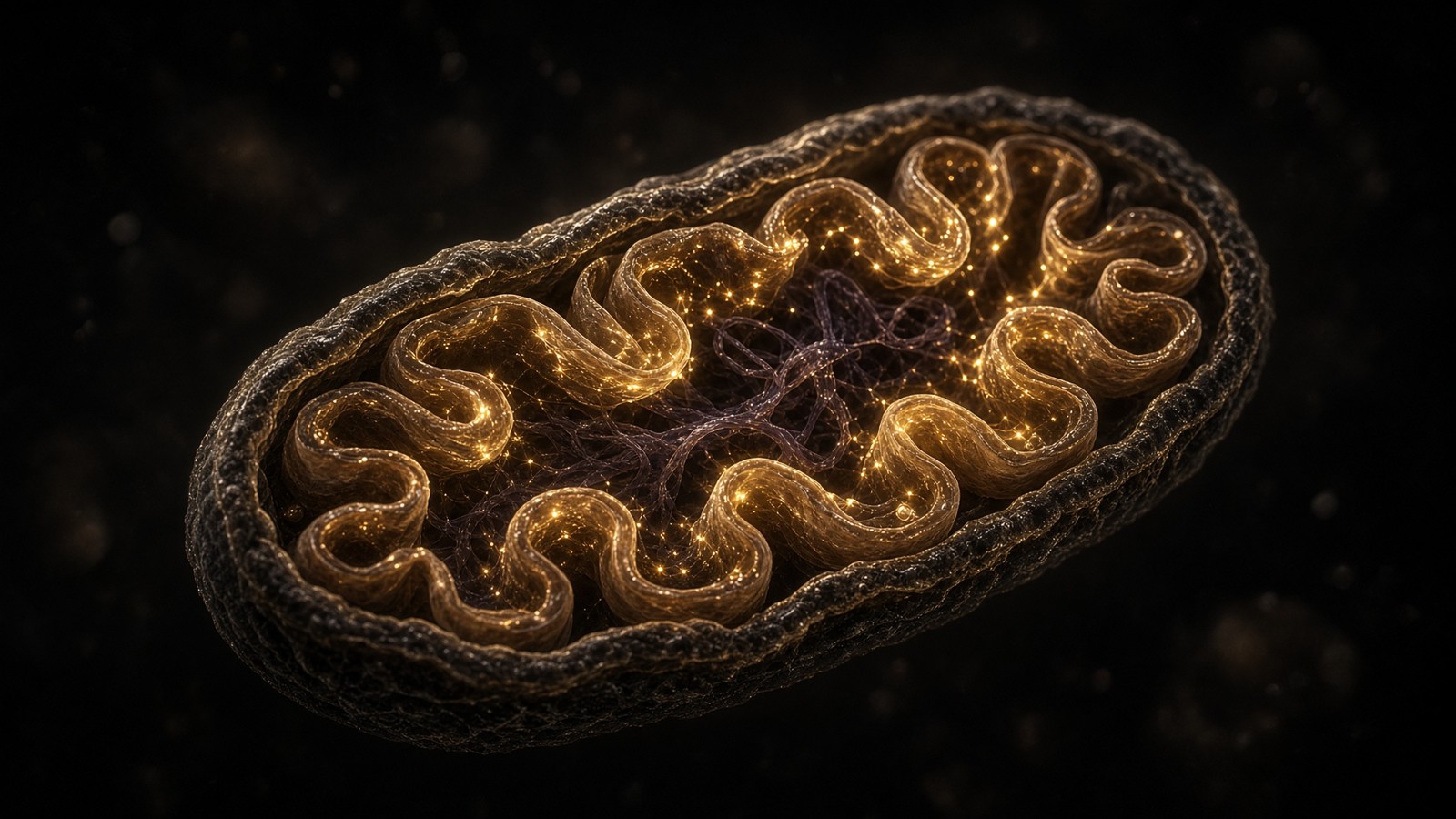
A hepatocyte stuffed with triglyceride remains still a mitochondrial machine, and the machine is how the first cycle both starts and, in reverse, ends. β-oxidation spirals fatty acyl-CoA to acetyl-CoA, minting NADH and QH2 on every turn; the TCA cycle takes what it can; the overflow is ketone bodies or, in the fed surplus that built the disease, a backed-up spiral and a re-esterification into the droplet the spectroscopy sees. When the energy balance flips, the spiral has somewhere to send the acetyl-CoA, VLDL export falls, and the droplet shrinks. That is Counterpoint week one as an organelle sentence. Reactive oxygen species at Complexes I and III rise when the matrix is reduced and the droplet is large; JNK and IKK neighbourhoods then write on IRS-1, which is insulin resistance as a phosphorylation, not as a character flaw. Empty the droplet, reoxidise the pool, and some of that writing erases. It means a matrix, a droplet, a VLDL particle, and a glucose factory that share a cell. Emptying the droplet is how you quiet the factory. Under the ¹H-MRS methylene peak is this.
In short. When the calorie gap opens, the droplet can be burned and the sugar factory quiets. Inside a fatty liver cell, fuel-burning mitochondria and a fat droplet share the same room.
The β-cell remains a mitochondrial story too, which is why first-phase recovery has a duration limit. Insulin granule fusion is ATP- and calcium-dependent; the ATP is minted in a dense mitochondrial network that, in a lipotoxic islet, leaks superoxide, opens permeability-transition pores, and feeds the endoplasmic-reticulum stress that eventually kills the cell. Autopsy β-cell mass, the Butler papers, is the end of that process. Counterbalance is the clinical middle: fat gone, dump not back, because too many of the cells that would have dumped have left. Exercise still writes on the muscle side of the same disease — AMPK, PGC-1α, GLUT4 translocation, a disposal sink that takes glucose off the liver’s hands — and a DiRECT-style programme that adds walking isn't confused, it is covering two organs. PGC-1α is the transcriptional coactivator for mitochondrial biogenesis; endurance work is still the stimulus that most reliably raises it in muscle. Training is how the muscle node was built. The twin cycle is a liver-and-pancreas argument. Muscle insulin resistance is the third tissue, and it is why a person who empties the liver and then sits for a year has only done two-thirds of the job the glucose curve actually set.
In short. Muscle still needs work if glucose is to leave the blood. Insulin-making cells also depend on mitochondria, and after enough years of fat and sugar stress some of those cells are gone.
MOTS-c remains a neighbour, and the neighbourhood has to stay a neighbourhood. MRWQEMGYIFYPRKLR, sixteen residues, translated from an open reading frame in mitochondrial 12S rRNA — an RNA that was supposed to be a ribosome, not a message. Lee, Kim, Cohen, Cell Metabolism 2015: metabolic homoeostasis in mice, AMPK, the folate–methionine cycle. Kim, Lee, Cell Metabolism 2018: nuclear translocation under metabolic stress. Reynolds, 2021: exercise-induced, age-dependent physiology. Sitting on AMPK is one door away from the β-oxidation and autophagy programmes a fatty hepatocyte would benefit from, in a mouse, at a dose you write down. Confusing a 16-mer, a triple agonist and a formula diet is how a journal becomes a stack. We stock the 16-mer because the papers are real, HPLC-characterised, a sequence a bench can put into a well. We stock the published LY3437943 structure because that chain’s receptor paper trail is real. The organelle in the diagram is the hepatocyte’s and the β-cell’s mitochondrion noticing a lipid load. The 16-mer is one of the things that organelle can write. The diet is how, in 2018, a GP surgery emptied the load. Keep the three sentences three.
In short. That is next door to liver fat, not a substitute for emptying it. A short peptide written inside mitochondria talks to the cell’s fuel gauge in mouse studies.
Diagram
| Node | Catalogue | Conversation |
|---|---|---|
| GPCR | Ipamorelin, MT2, PT-141, retatrutide, CJC | Second messengers, secretion, appetite, pigment |
| RTK / IGF1R | IGF-1 LR3 | IRS–PI3K–Akt–mTOR and Shc–ERK |
| Cytokine receptor | Somatropin (HGH) | GHR–JAK2–STAT5b, hepatic IGF-1 |
| Cofactor | NAD+ | Sirtuins, PARPs, CD38, redox |
| Actin buffer | TB-500 / Tβ4 motif | G-actin sequestration, motility |
| Growth-factor-like | BPC-157 | VEGFR2 / FAK / eNOS neighbourhood |
| Copper ligand | GHK-Cu | Transcriptome shift in fibroblasts |
| MC fragment | KPV | NF-κB, PepT1, no pigment |
| Nuclear / pineal | Epithalon (AEDG) | TERT and melatonin literatures |
| mtORF peptide | MOTS-c | AMPK, folate–methionine cycle |
Each row is a different kind of molecular conversation. The catalogue peptides bind at these nodes; they are not interchangeable, and stacking them because a forum did mixes unrelated literatures.
A clinic conversation, not a comments thread
People on insulin or a sulphonylurea will overshoot if the food or the emptying changes and nobody remains watching. That isn't a legal footnote. It is the hypoglycaemia paragraph, and it sits in a twin-cycle essay because the intervention that empties the liver also empties the need for the drug that was compensating for the liver. DiRECT withdrew the drugs on day one of the formula, in a programme, with a practice that had a protocol for the faint and the pressure drop. An unsupervised crash diet in a person on gliclazide is how a physiology result becomes an ambulance. SGLT2 inhibitors add a ketoacidosis conversation, especially if carbohydrate is also being cut. GLP-1 receptor agonists add a gastric-emptying and a gallbladder conversation. Those sentences aren't arguments against remission as a goal; they're arguments against a comments-section version of the trial. Pregnancy, an eating-disorder history, chronic kidney disease, a recent myocardial infarction, a person who can't afford food: those are clinic exclusions and clinic cautions, not internet vetoes. The person needs a clinician, a dietitian if the programme is a formula, and a plan for the week the soup ends.
In short. If diabetes drugs that can drop sugar too far stay on while food drops, people can go dangerously low. A trial withdrew those drugs under supervision. A comments thread can't.
Bariatric surgery remains the largest durable clinic intervention on this variable, and it belongs in the room because the variable is still ectopic fat. Roux-en-Y gastric bypass and sleeve gastrectomy produce weight-loss bands that sit in or above DiRECT’s 15-kilogram row, plus an incretin surge from food arriving deeper in the gut, plus, in the bypass, a bile-acid and a restriction-and-malabsorption conversation. STAMPEDE (Schauer, NEJM) put surgery against medical therapy for type 2 and won on HbA1c and on drug count at the years it measured. SOS, Sjöström, is the long follow-up: diabetes remission is common early and fades as weight creeps, which is the same fade DiRECT described without a staple. Surgery is neither a peptide nor a soup. It is an operation with a mortality, a reoperation rate, a dumping syndrome, a micronutrient list, and, when the service is honest, a decade of dietetic follow-up. It belongs in the room because the variable is still ectopic fat and a β-cell window, and because some people in that window will be better served by an operation than by a formula, a ketogenic plate, or a weekly analogue. Choosing among those is a clinic.
In short. It is an operation, not a diet and not a peptide. Weight-loss surgery can empty the same fat stores, often more durably at first, and diabetes can return if the weight returns.
- Name the cohort: recent-onset type 2, or not. Counterbalance is the duration paper.
- Name the variable: intrahepatic triglyceride, then pancreatic fat, then first-phase insulin. HbA1c is a downstream number.
- Name the tool: formula energy gap, carbohydrate restriction, licensed incretin, surgery. They aren't one tool.
- Name the definition: HbA1c < 6.5% off glucose-lowering drugs. Metformin still on is a different object.
- Name the fade: regain refills the depot. Two-year DiRECT already measured it.
- Do not name a research sequence as a substitute for any of the above.
Close: a reversible tissue state, public papers, laboratory reagents
The topology is small enough to hold on one board. Chronic surplus writes fat into the liver; a fatty liver overproduces glucose and VLDL; the fat lands in the pancreas; first-phase insulin goes quiet. That is Taylor, 2008 and 2013. Empty the surplus hard enough and liver fat falls in days, pancreatic fat follows, and the dump can return if enough β-cells remain. That is Lim, Counterpoint, 2011, and Steven, Counterbalance, 2016, for the duration limit. A GP surgery can deliver the emptying as an 825–853 kilocalorie formula, then stepped food, then support: 46 percent remission at twelve months against 4 percent in usual care, 86 percent if 15 kilograms came off. That is Lean, DiRECT, 2018, and the 2019 two-year paper for the fade. Remission is glucose in the non-diabetic range off antidiabetic drugs. It isn't a poster claim, and it isn't a cure of the tendency to regain. Incretin agonists, including a published triple agonist at GIPR, GLP-1R and GCGR, are a different tool that can move the same variable from the intake, emptying, insulin and hepatic-lipid side. MOTS-c is a mitochondrial 16-mer on a third floor.
In short. That map is small: fat in liver, then pancreas, then a quiet insulin pulse. Empty the fat early and the pulse can return. Several tools empty it. They aren't the same tool.
The public papers are a fortnight of evenings, not a guru, and they will still be there when you come back. Taylor, Diabetologia 2008 and Diabetes Care 2013, for the twin cycle. Lim, Diabetologia 2011, Counterpoint, for the spectroscopy. Steven, Diabetes Care 2016, Counterbalance, for the window. Lean, Lancet 2018, DiRECT, and Lean, Lancet Diabetes & Endocrinology 2019, for the primary-care result and the two-year fade. Riddle, 2021, for the consensus definition of remission. McIntyre, Lancet 1964, for the incretin effect, so the receptor tool has a measurement under it. Coskun, Cell Metabolism 2018, for LY3437943 as chemistry. Jastreboff, NEJM 2023, for the Phase 2 weight curve on that chain. Wilding, NEJM 2021, STEP 1, for what one occupancy already did. Lee, Cell Metabolism 2015, for MOTS-c, so the neighbourhood stays named. Hall, for isocaloric fat-loss when protein is matched. Leibel, for the defence of former mass. Butler, for β-cell mass at diagnosis. Schauer, STAMPEDE, and Sjöström, SOS, so surgery stays in the room. That's the reading list.
In short. One short stack of named papers covers the hypothesis, the imaging, the GP trial, the definition, the gut-hormone chemistry and the limits. Read those before any reversal headline.
Leave with a tissue state, if you take nothing else, not a shopping list. Type 2 diabetes, in the cohort DiRECT enrolled, is a liver and a pancreas clogged with fat, a first-phase dump that has gone quiet, and a muscle that is doing less disposal than it might. Pull enough weight, especially hepatic and pancreatic fat, off that system and a large fraction go back to non-diabetic glucose off drugs. Randomised evidence has shown this. It isn't a guarantee, a cure of regain, or an argument for unsupervised drug withdrawal, and it isn't type 1. Liver fat is the labile variable; ¹H-MRS and MRI-PDFF are how you measure it; morning glucose is often its clinical shadow. A formula energy gap, a carbohydrate-restricted pattern, a licensed incretin, a bariatric operation, and, in the papers, a triple agonist with a glucagon-receptor arm, can all move that variable. They occupy different floors. LY3437943 and MOTS-c are characterised sequences for the floors those papers name. They didn't run DiRECT. A well that needs the triple-agonist chain occupies three receptors at a written concentration; a person who needs remission needs a clinic and a definition.
In short. Leave with a tissue state: liver fat, pancreas fat, a quiet first insulin pulse, and a trial that emptied them in ordinary surgeries. Tools differ.
Research-use-only. Not for human consumption / not a medicine. The lyophilised sequences in this neighbourhood — the published LY3437943 backbone, US-made, HPLC-MS verified, and the MOTS-c 16-mer MRWQEMGYIFYPRKLR — are laboratory reagents, labelled for in-vitro work: a receptor assay, a phospho-AMPK blot, a concentration written in a notebook. The physiology in the paragraphs above is public, cited, and older than those vials. DiRECT was food, weight, and a practice nurse. Counterpoint was a magnet and a clamp. Remission is a glucose in the non-diabetic range off antidiabetic drugs, on a date, in a person whose liver and pancreas were empty enough, for now. Read Taylor, read Lean, read Lim, then weigh the solid if the solid is what the well needs. We'll sell you the named chains. We won't write a protocol that treats a formula diet, a weekly incretin and a mitochondrial open reading frame as one juice. The tissue state is reversible in a window measured in years from diagnosis and kilograms of fat in the wrong postcode. Measure it with an HbA1c and a magnet, or in a dish with a chromatogram beside it.
In short. Measure the fat, name the window, keep the claim that size. The vials are research chemicals for experiments, not a medicine and not a diet. The 2018 result was food and weight in GP surgeries.
Questions the essay actually answers
- Can type 2 diabetes go into remission?
- Yes, in a defined cohort. DiRECT (Lean et al., Lancet 2018) put recent-onset type 2 into remission with a very-low-calorie formula that emptied liver and pancreas fat. Remission isn't a 20-year-old pancreas, and it fades if the weight returns.
- What did DiRECT actually show?
- Cluster-randomised UK primary care, 825–853 kcal formula then stepped food reintroduction, type 2 of ≤6 years. At twelve months, 46% of the intervention arm were in remission (HbA1c < 6.5% off glucose-lowering drugs) against 4% in control. Of those who lost ≥15 kg, 86% remitted. Two-year follow-up: 36% vs 3%, with fade after regain.
- What is the twin-cycle hypothesis?
- Roy Taylor’s account: surplus energy writes fat into the liver; a fatty liver overproduces glucose and VLDL; that fat lands in the pancreas and first-phase insulin goes quiet. Empty the stores and, inside a duration window, the dump can return. Counterpoint (Lim et al., Diabetologia 2011) imaged both limbs.
- What did Counterpoint show?
- Eight weeks at about 600 kcal, ¹H-MRS of liver and pancreas, a hepatic insulin clamp, a first-phase assay. Liver fat fell within days and hepatic insulin sensitivity normalised; pancreatic fat and first-phase insulin followed over weeks. The twin-cycle prediction, measured.
- What does remission mean?
- Glucose in the non-diabetic range off antidiabetic drugs — in DiRECT, HbA1c < 6.5% (48 mmol/mol) after at least two months off those drugs. It's a dated clinic result, not a poster claim, and not a cure of the tendency to regain.
- Is a very-low-carbohydrate diet the same as DiRECT?
- No. It's a parallel road onto the same pool: lower appearance rate, lower insulin, often a spontaneous energy gap, less hepatic glucose. Virta-style series are real and aren't cluster-randomised DiRECT. Both roads fail if liver fat is allowed to refill.
- What is liver fat doing in type 2?
- Intrahepatic triglyceride makes the liver insulin-resistant, so overnight glucose production doesn't stand down and VLDL ships fat to the pancreas. It's a labile pool: Counterpoint saw it fall in seven days. MRI-PDFF and ¹H-MRS measure it. ALT is a hint, not a fraction.
- Can an incretin agonist move the same variable?
- Yes, from a different floor. GLP-1R, GIPR and — in retatrutide, LY3437943 — GCGR occupancies cut intake, slow emptying, amplify glucose-dependent insulin, and can empty liver fat as weight falls. Jastreboff et al., NEJM 2023, is Phase 2 on an investigational medicine, not a use instruction for a research vial.
- Is a research peptide a substitute for DiRECT?
- No. We stock the published LY3437943 structure and the MOTS-c 16-mer as characterised laboratory sequences. We don't pretend a vial ran a primary-care food-and-weight trial.
- Does this apply to type 1, or to long-standing insulin-treated type 2?
- No for type 1, LADA and monogenic diabetes — different biology. Long-standing type 2 is Counterbalance: liver fat may still fall and first-phase often doesn't return. People on insulin or sulphonylureas need a clinician before food or emptying changes, because those drugs will overshoot.
Hypothetical research reconstitution
How these vials are typically mixed
Hypothetical research reconstitution for the named catalogue vial. Not a protocol, not medical advice, not a use instruction. These amounts sit in published and commonly cited laboratory ranges. The vial is labelled for research use only — not for human or veterinary administration.
Retatrutide
30mg
Mix with 3 ml bacteriostatic water → 10 mg/ml
- Hypothetical aliquot
- 1–2 mg to start; published trial arms ran higher by week
- 0.10–0.20 ml · 10–20 units on a U-100 syringe (at 1–2 mg)
- How often
- Once weekly
- The Jastreboff NEJM 2023 arms ran 48 weeks. That is a trial, not a shop protocol.
Bench steps
- Let the vial sit until it is no longer cold to the touch.
- Wipe the stopper with 70% isopropyl alcohol. Let it dry.
- Draw 3 ml bacteriostatic water (0.9% benzyl alcohol).
- Run the water slowly down the inside glass — do not blast the cake.
- Roll between finger and thumb until the cake is gone. Do not shake.
- Label the date. Store the solution at 2–8 °C. Do not freeze. Use within 30 days unless the note below says otherwise.
LY3437943 architecture. Weekly, not daily. Those milligram figures are what the papers used on the investigational medicine — they are not a use instruction for this reagent.
MOTS-c
40mg
Mix with 2 ml bacteriostatic water → 20 mg/ml
- Hypothetical aliquot
- 5–10 mg
- 0.25–0.50 ml · 25–50 units on a U-100 syringe
- How often
- Two or three times per week
- 4–8 weeks
Bench steps
- Let the vial sit until it is no longer cold to the touch.
- Wipe the stopper with 70% isopropyl alcohol. Let it dry.
- Draw 2 ml bacteriostatic water (0.9% benzyl alcohol).
- Run the water slowly down the inside glass — do not blast the cake.
- Roll between finger and thumb until the cake is gone. Do not shake.
- Label the date. Store the solution at 2–8 °C. Do not freeze. Use within 30 days unless the note below says otherwise.
Mitochondrial 16-mer. Fridge. Do not freeze. The 5 mg mark is where most bench notes start.
Bacteriostatic water and sterile syringes ship with peptide orders over £75. Kit details · 10 ml bacteriostatic water
The vials this essay sits on
Named sequences the essay maps — Retatrutide, MOTS-C. Hypothetical research neighbourhood, not a protocol, not a medicine. One press puts every in-stock vial in the bag.
 Made in USAOut of stock
Incretin
Retatrutide
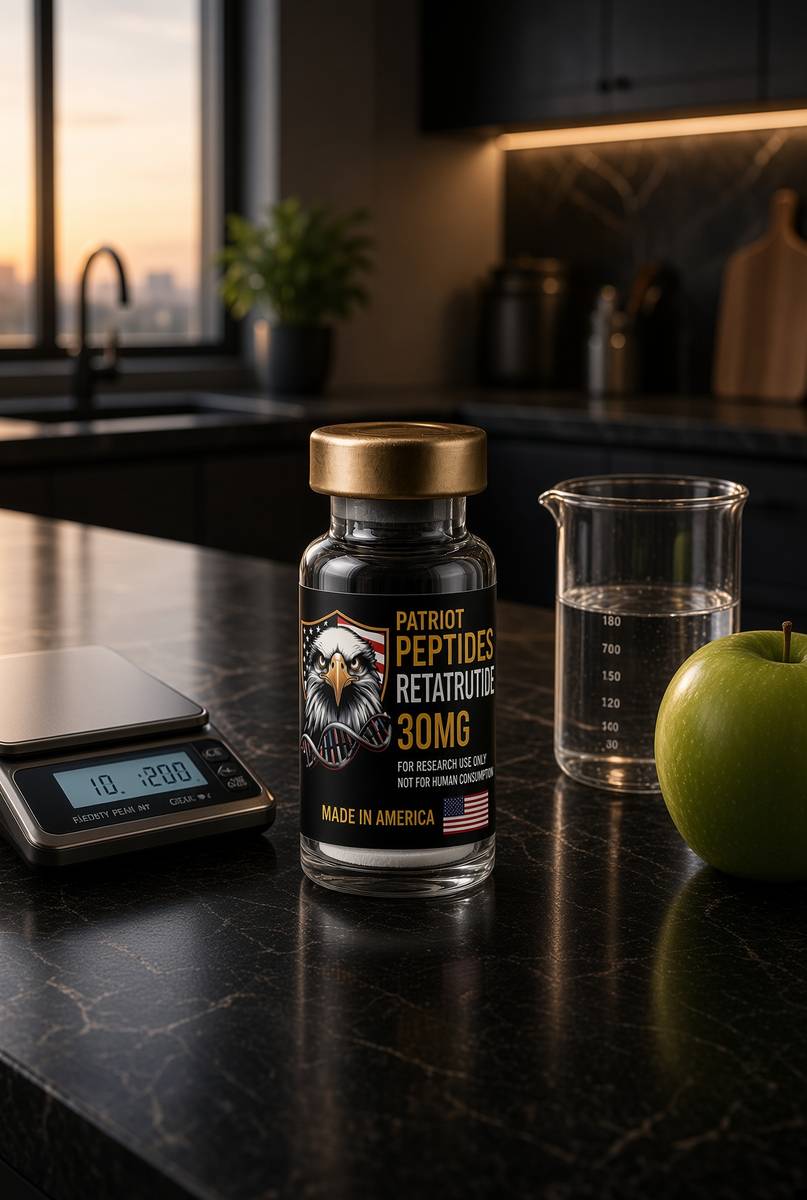
US-made retatrutide 30mg — the published structure LY3437943, HPLC-MS verified.
4.6(609)
74 browsing this now · 5 purchased in the last 24 hours
30mg
£120.00
 Made in USA
Research use only. Not a combined-use instruction.
Read next
49 min · long read · Metabolism
Regulating blood sugar: the control system
Glucose is a tightly bound variable. Here is the hardware — pancreas, liver, muscle, incretins — and the places it fails.
51 min · long read · Metabolism
Human metabolism, without the slogan
Calories are bookkeeping. The actual system is a set of hormonally gated fluxes through glycogen, fat and amino acids — with the liver as air-traffic control.
45 min · long read · Metabolism
How diets actually work
Calories are conservation of energy. Hormones are the routing table. Palatability is why the routing table keeps getting overwritten. Every named diet is a way of leaning on one of those three.
46 min · long read · Peptide research
Retatrutide (LY3437943): the published triple-agonist structure
A fatty-acylated unimolecular agonist at GIPR, GLP-1R and GCGR. US-made, HPLC-MS verified, labelled for laboratory research — not a medicine.
64 min · long read · The living cell
Mitochondria: the bacterium you kept, the genome it kept, the peptides it writes
You turn over 40–60 kg of ATP a day using a 16,569-base genome that still uses a bacterial genetic code. NAD+ is the hydride carrier Complex I spends. MOTS-c is a 16-mer translated from mitochondrial 12S rRNA — Lee, Kim, Cohen, 2015. That last sentence is real, and it is surprising.
48 min · long read · Peptide research
Appetite, body weight and the peptides that sit on metabolic literature
Retatrutide is the published triple-agonist chain LY3437943 — GLP-1, GIP and glucagon on one molecule. MOTS-c is a mitochondrial 16-mer that talks to AMPK. One is an incretin story. One is a fuel-gauge story. Neither is a diet.
More in this desk

50 min · long read · Metabolism
Fasting, autophagy and the mTOR switch
Eat, and mTOR builds. Fast, and AMPK and ULK1 start recycling the cell. The molecular story is a switch, not a personality.
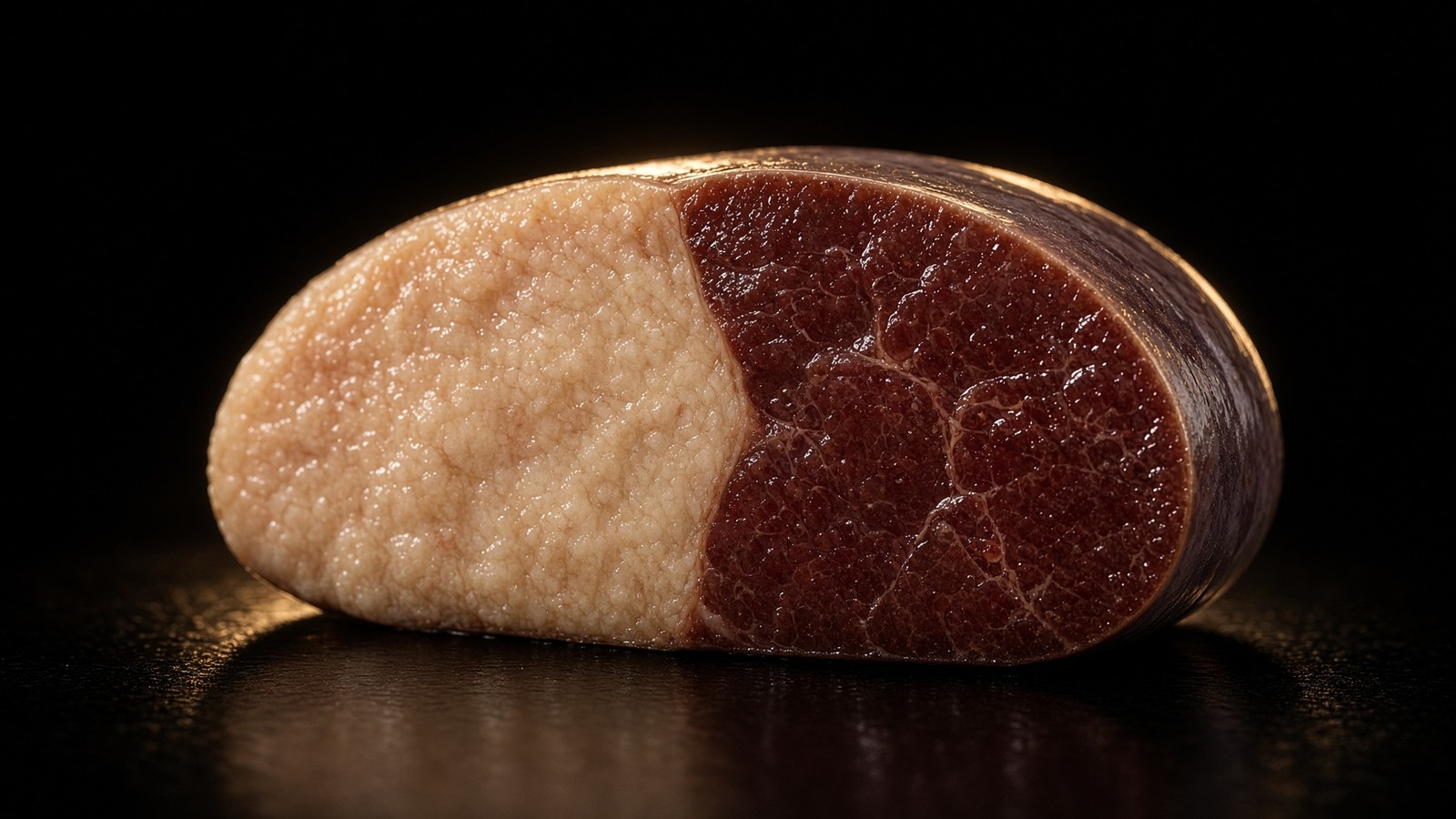
49 min · long read · Metabolism
Liver fat is the variable type 2 diabetes actually cares about
Ectopic fat in the liver overproduces glucose and VLDL. Empty it — by energy deficit, by carbohydrate restriction, or by both — and first-phase insulin can return. That is the twin-cycle in working clothes.

49 min · long read · Metabolism
Protein, training and muscle protein synthesis
Muscle isn't a mood. It is mechanical tension plus a leucine-gated translational programme. Here is the dose, the threshold, and why the gym still has to happen.

48 min · long read · Metabolism
When insulin falls, the kidney dumps sodium. That is the ‘keto flu’.
Insulin tells the kidney to hold salt. Carbohydrate restriction drops insulin, you diurese, and magnesium and potassium follow. The headache was not a test of character.
Essays describe published research. They are not medical advice and they do not authorise human use of any catalogue item.