

Wellbeing · 9 min · 2,044 words
What is actually in HIM and HER REVIVE
Zinc, vitamin D, ashwagandha, saffron, iodine, and the botanicals. How each one lands in the Leydig cell, the ovary, the thyroid, or a serotonin synapse, and what that does to testosterone, cycle and mood.
What this essay actually tells you
- Neither tub is testosterone or oestradiol. Leydig cells make testosterone when LH drives StAR and CYP11A1. Ovaries aromatise theca androgens under FSH. Zinc and vitamin D matter if they were low. KSM-66 has modest cortisol and testosterone data in stressed men.
- Tribulus and maca move desire more reliably than they move a testosterone number. Fenugreek is mixed. Saffron and P5P sit on mood chemistry. Shatavari is not HRT. Iodine and selenium are thyroid cofactors.
- Four capsules a day for eight to twelve weeks is the label clock. A result inside the reference range is the shape of a food supplement. An injection-sized jump is not this tub.
What this actually means
HIM REVIVE feeds the Leydig cell. Zinc and vitamin D restore testosterone production when they were missing. Boron frees more of it by lowering SHBG. Ashwagandha drops cortisol so the axis can work, and the trials show testosterone rising with that. Shilajit supports the mitochondria. HER REVIVE feeds her clock: shatavari at oestrogen-sensitive tissue, iodine and selenium so thyroid hormone is made and activated, saffron and B6 so serotonin is finished, folate for methylation. Maca, fenugreek, tribulus and pine bark change desire and blood flow alongside the hormone.
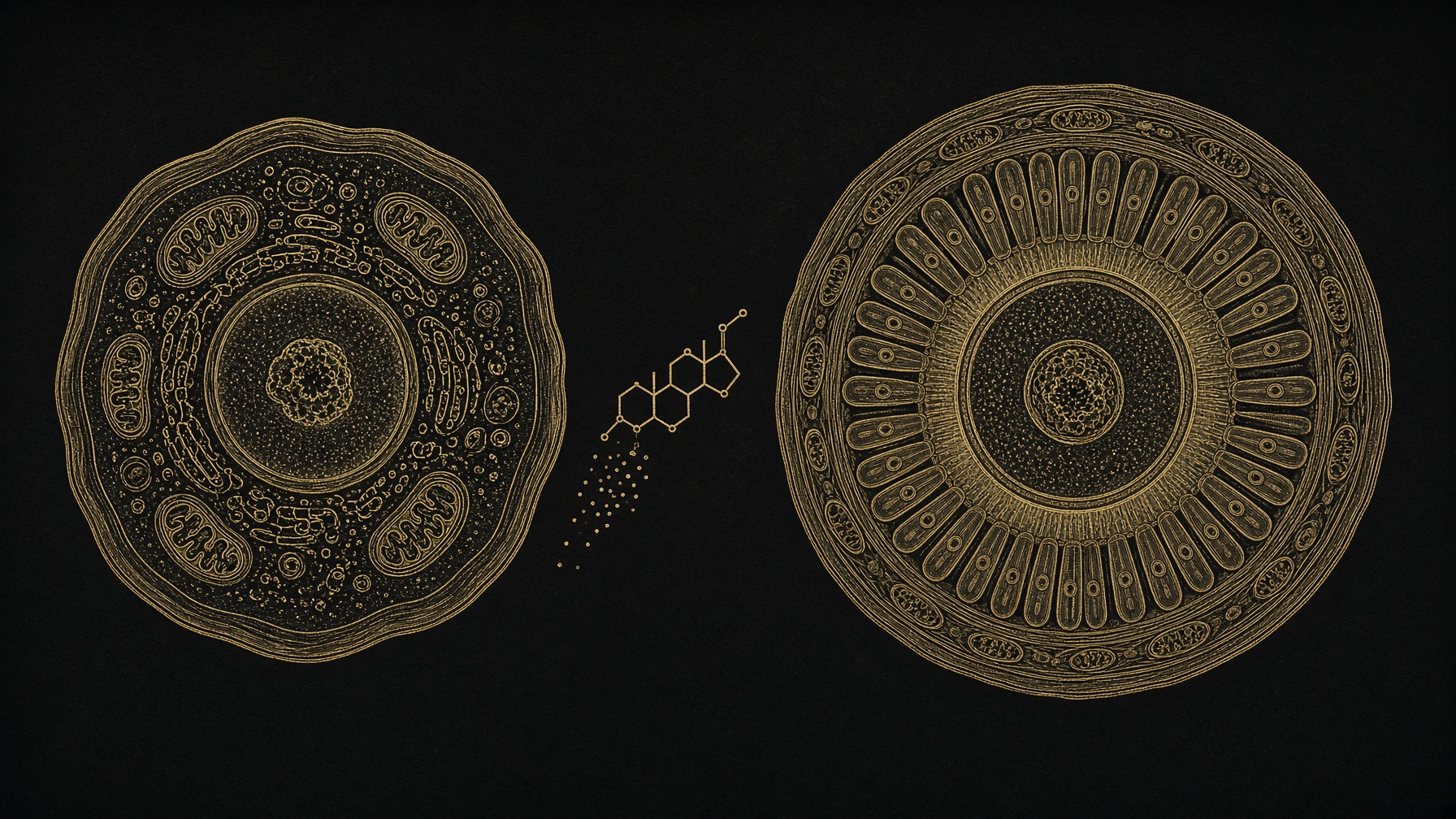
HIM REVIVE and HER REVIVE are built around the cells that already make the hormones. A man makes testosterone when luteinising hormone lands on a Leydig cell, cyclic AMP rises, and the steroidogenic acute regulatory protein, StAR, hauls cholesterol into the mitochondrion. CYP11A1 cuts the side chain and the rest of the pathway finishes testosterone. Give that cell zinc, vitamin D and a quieter cortisol signal and more cholesterol gets through, which is how total testosterone and free testosterone move in the trials. A woman runs the matching loop on a different clock. Follicle-stimulating hormone grows the follicle, the theca makes androgens, granulosa aromatase turns a share into oestradiol, and after ovulation the corpus luteum writes progesterone. Iodine, selenium, B6 and saffron sit on the thyroid and the mood chemistry wrapped around that cycle, which is how energy and the luteal week change before anyone reaches for a prescription oestrogen.
In short. His ingredients help the Leydig cell finish testosterone. Hers help the thyroid, the mood chemistry, and the monthly cycle those hormones run on.
The minerals that are actually part of the chemistry
Zinc is in both tubs, as citrate. Several enzymes of steroidogenesis use it, and the androgen receptor binds DNA through zinc fingers, little protein loops that only fold if the metal is there. Prasad's deficiency work is the clean experiment: take zinc away and testosterone falls; put it back and testosterone returns. That is the outcome, a man making the amount he was built for, because the enzyme and the receptor can fold again. In her, the same metal is part of follicle development and of the antioxidant enzymes around the egg. The rise is the correction of a shortage. Past that point extra zinc mostly meets the gut.
In short. Zinc lets the testosterone enzymes and the androgen receptor fold. Put back what was missing and testosterone comes back with it.
Vitamin D is the one a British winter strips out. The testis and the ovary express the vitamin D receptor. Low 25-hydroxy vitamin D tracks with lower testosterone; repletion moves the number back up because those cells can hear the signal again. HER REVIVE puts 2,500 IU of vegetarian D3 in the daily capsules. Vitamin K2 as MK-7 is in the men's tub. It carboxylates the proteins that park calcium in bone. D3 opens calcium absorption. K2 tells that calcium where to sit, so the vitamin D you took for the Leydig cell does not leave calcium drifting in the artery.
In short. Vitamin D turns the receptor in the testis and ovary back on, and testosterone follows when the level was low. K2 sends the extra calcium into bone.
Boron, in small human studies, raises free testosterone and lowers SHBG, the protein that soaks hormone up in the blood. Less SHBG means more of the testosterone you already made is free to enter cells. That is a delivery change, and the dataset is still small, but the direction is the one the mineral is in the tub for. Selenium sits in glutathione peroxidases and in the deiodinase enzymes that turn thyroid hormone T4 into active T3. HER REVIVE adds iodine, 150 micrograms, which the thyroid hangs onto thyroglobulin to make T4 in the first place. The outcome of that pair is a thyroid that can make hormone and switch it on, which is where a flat afternoon often actually lives.
In short. Boron frees more of the testosterone already in the blood by lowering the protein that binds it. Iodine and selenium let the thyroid make T4 and turn it into T3.
Folate as 5-MTHF is the form that already circulates. In his tub it feeds one-carbon metabolism in dividing cells. In hers it is 400 micrograms, the amount that methylates the neural tube shut in week four. Methylcobalamin, B12, joins that same cycle. B6 is in hers as pyridoxal-5-phosphate, 20 milligrams. P5P is what the enzyme aromatic amino acid decarboxylase uses to finish serotonin and dopamine, which is why B6 shows up in PMS trials as a change in mood rather than as a change in progesterone. Vitamin E sits in her cell membranes and limits the peroxidation that ages an egg and a sperm membrane.
In short. Her B6 finishes serotonin and dopamine, which is the mood shift. Folate and B12 run the methylation that a developing nervous system needs. Vitamin E protects the membranes.
Ashwagandha, and the stress signal that drowns the axis
KSM-66 is a branded root extract of Withania somnifera, ashwagandha, standardised on withanolides. It is the ingredient with the least embarrassing men's trials. In overweight, stressed men, Lopresti's group and others have watched morning cortisol come down and total testosterone come up a little over about eight weeks, often around 600 milligrams in those papers. Wankhede's 2015 resistance-training trial found a bit more strength and a bit more testosterone than placebo. The size of that move is a better month, not an ester. The plausible route is the stress axis. Cortisol and corticotropin-releasing hormone can lean on the reproductive axis. Quiet the noise and luteinising hormone has an easier job. That is not the same as being luteinising hormone. Sleep improves in some of the same trials, and sleep is when a man's testosterone pulse is supposed to happen. If the tub helps, it may be helping the night as much as the enzyme.
In short. Ashwagandha has small trials in which stressed men make more testosterone and less morning cortisol. Quieter stress is what lets the Leydig cell get on with the hormone.
Rhodiola, in both tubs, works through salidroside and rosavin on the fatigue side of a stressful week. The outcome people measure is stamina and the felt cost of the day, which matters because a flattened afternoon is often catecholamines, not a missing steroid. Ginseng's ginsenosides support nitric oxide and the same fatigue axis, so blood flow and drive move together. Shilajit is a 10:1 extract standardised to 50 percent fulvic acid. The studies from Pandit and from Biswas show testosterone rising and, in one paper, semen parameters improving. The working idea is mitochondrial: fulvic-associated dibenzo-α-pyrones keep electron transport happier in the Leydig cell and in the sperm midpiece, so steroidogenesis and motility both get more ATP.
In short. Rhodiola and ginseng lift fatigue and blood flow. Shilajit supports the mitochondria, and the trials show testosterone and sperm parameters moving with it.
The botanicals that are about desire, not about the number
Tribulus is standardised here to 95 percent saponins. Protodioscin is the molecule. In men whose testosterone is already being made, the blood number often stays put and desire still moves, which tells you the outcome is at the nerve and the local tissue, not a second wave of luteinising hormone. Fenugreek, 50 percent saponins, has the cleaner human data: libido, sexual function, and in some trials a shift in body composition. The furostanol saponins can engage androgen signalling and, in cell work, lean on aromatase. In a person that shows up as drive and as free androgen staying available, which is why it sits next to boron and zinc rather than instead of them.
In short. Tribulus moves desire through its saponins. Fenugreek goes further: sexual function, and androgen signalling that keeps the hormone you make available to the tissue.
Maca, a high-ratio black extract in both tubs, raises desire in human trials while testosterone stays where it was. The outcome is sexual appetite, produced downstream of the hormone rather than by making more of it. Muira puama and damiana are the traditional libido plants in the same slot, included as real extracts so the dose is an extract and not a dust of leaf. Pine bark, 95 percent oligomeric procyanidins, in the men's tub, supports nitric oxide in the endothelium. That is the blood-flow half of an erection, running alongside the testosterone half. Saffron, standardised to lepticrosalides, has randomised trials in mood, in PMS, and in sexual function when a serotonergic medicine has flattened it. Crocin and safranal shift serotonin signalling. Hers carries 40 milligrams. The outcome is a luteal week and a libido that are less at the mercy of that transmitter.
In short. Maca raises desire. Pine bark raises nitric oxide, so blood flow joins the hormone. Saffron shifts serotonin, which is why mood and PMS move.
Her clock is not a smaller version of his
Shatavari, Asparagus racemosus, is only in hers, 300 milligrams of a 5:1 extract. The root's steroidal saponins are why it has a place in the cycle, in milk supply, and in the menopausal stretch: they lean on oestrogen-sensitive tissue in the direction of support, which is the outcome women take it for, rather than a replacement of the ovary's own oestradiol. Ginkgo is there for blood flow and the cognitive edge of a heavy week. Around those two, the combination that matches her physiology is iodine and selenium so the thyroid can make T3, vitamin D and zinc at the ovary, and P5P plus saffron so serotonin is actually finished during the luteal shift. When oestradiol itself is what has fallen away, in a late perimenopause, that list is the nutritional ground the cycle stands on. The prescribed oestrogen, if it is needed, lands on a cell that already has these cofactors.
In short. Shatavari supports oestrogen-sensitive tissue through its saponins. Iodine, selenium, vitamin D, B6 and saffron keep thyroid, ovary and serotonin able to do their jobs.
Put the two tubs next to each other and the overlap is deliberate. Both get zinc, boron, D3, saffron, maca, fenugreek, tribulus, shilajit, ginseng, rhodiola, damiana and muira puama. His adds K2 and pine bark, so calcium is parked and nitric oxide can rise with the testosterone. Hers adds shatavari, ginkgo, the thyroid pair, and the active B vitamins. Four capsules a day, two with breakfast and two with dinner, for eight to twelve weeks, is how long steroidogenic enzymes, a cortisol rhythm and a monthly cycle need before the blood and the mood show the change. The shape of that change, in the men who have written it down, is a total testosterone that has climbed inside ordinary life, vitamin D that has filled in, and an afternoon that no longer falls over.
In short. His formula is built so testosterone can be made, freed, and delivered. Hers is built so the cycle, the thyroid and serotonin can keep up. Give it eight to twelve weeks.
- Cofactors
- zinc, D3, selenium, iodine, folate, B6
- Stress
- KSM-66, rhodiola
- Desire
- maca, fenugreek, tribulus, saffron
- The result
- hormone the cell can finish
Parts the enzymes use. Repletion is how testosterone, thyroid hormone and methylation come back.
Cortisol down, testosterone up in the stressed-men trials. The Leydig cell gets the afternoon back.
Libido, nitric oxide, serotonin. The outcome can be desire even when the blood number was already fine.
Testosterone made and freed on his side. Cycle, thyroid and mood on hers.
Questions the essay actually answers
- Will HIM REVIVE raise testosterone like TRT?
- Zinc and vitamin D restore testosterone when they were the missing parts. KSM-66 lowers cortisol and raises testosterone in stressed men. Shilajit supports the Leydig cell's mitochondria. The rise is the cell doing its own job with the cofactors back in place.
- Does tribulus increase testosterone?
- Protodioscin, its main saponin, acts on desire. In men who are already making testosterone, that is the outcome the trials show: libido, with the blood number often unchanged. Fenugreek is the one that also moves sexual function and androgen availability.
- Is HER REVIVE HRT?
- It supports the cycle she already has. Shatavari's saponins lean on oestrogen-sensitive tissue. Saffron and P5P finish the serotonin side of mood. Iodine, selenium and vitamin D keep thyroid and ovary supplied. Prescribed oestradiol is a different molecule, used when the ovary has stopped writing its own.
- How long before it means anything?
- The label is eight to twelve weeks, four capsules a day. Cortisol, vitamin D stores and a monthly cycle do not turn around in a weekend.
The formulas in the essay
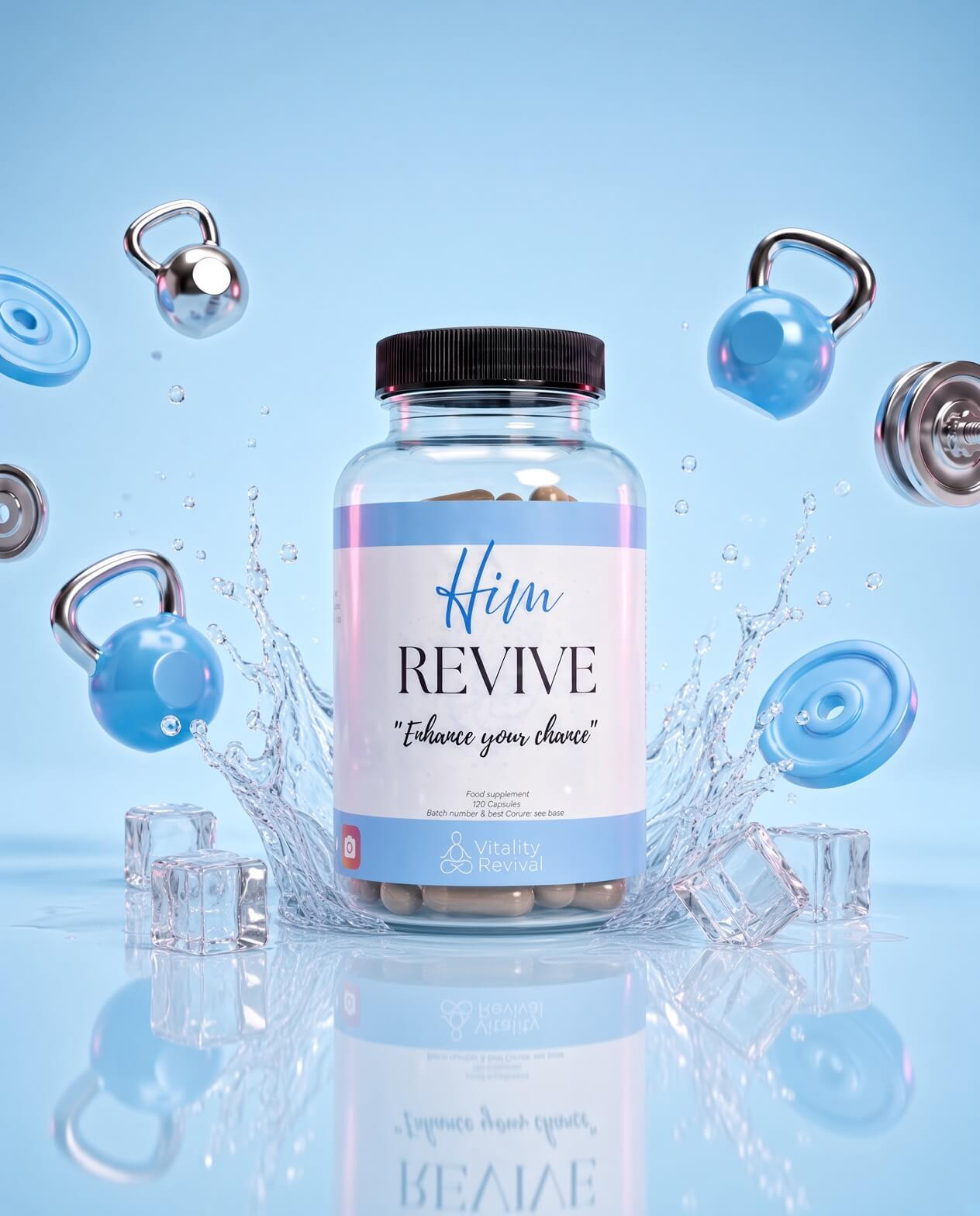
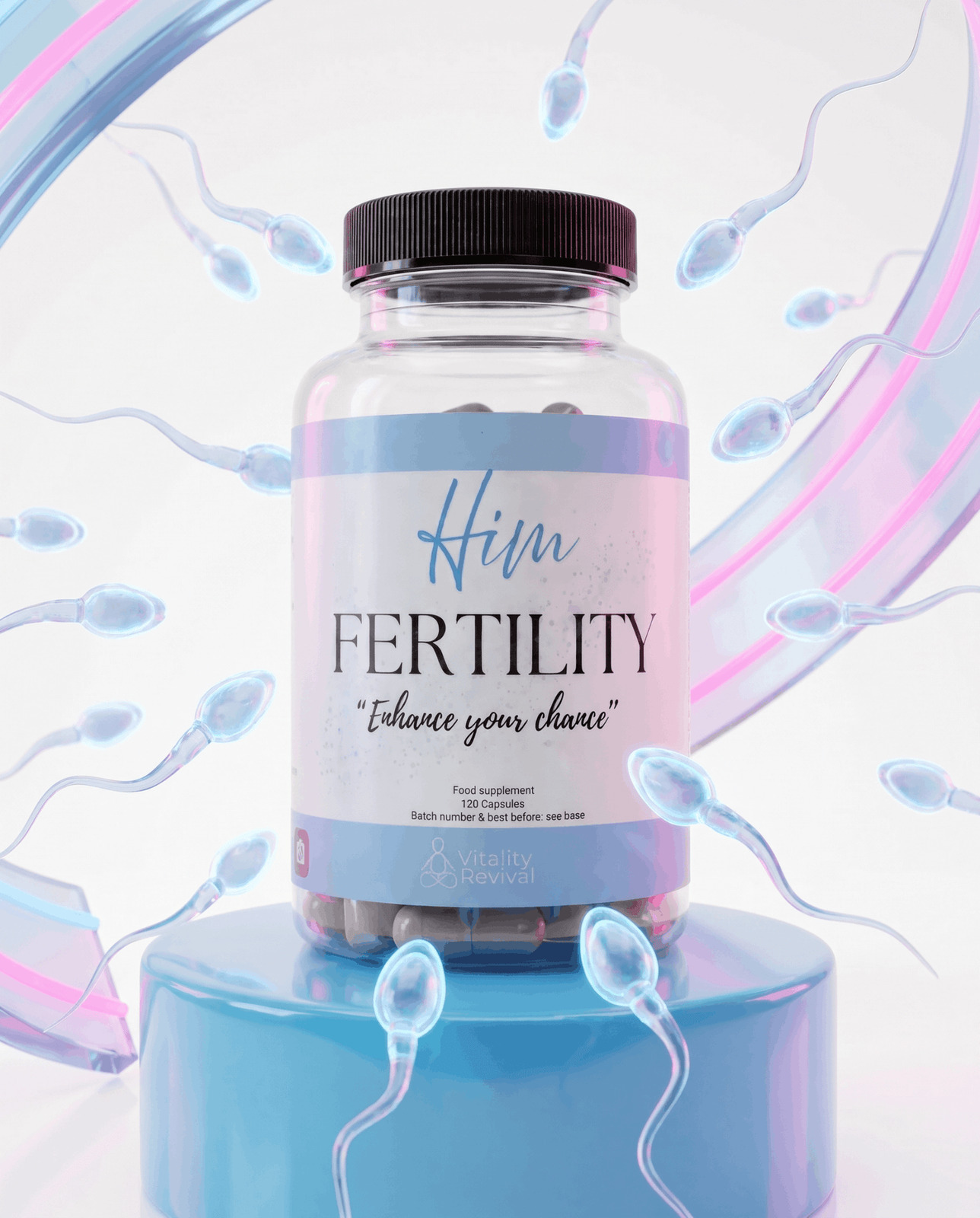
UK-made food supplements from Vitality Revival — sold here as a separate company’s formulas, not medicines.
 Food supplementSave £5.00
Vitality Revival
HIM REVIVE
Energy & hormone support
4.6(758)
87 browsing this now · 5 purchased in the last 24 hours
120 capsules · 30 days
£49.99
£54.99
Read next
49 min · long read · Wellbeing
Food supplements and hormones: what the evidence actually supports
Ashwagandha, zinc, fenugreek and saffron have published, modest effects on hormones, stress and mood. HIM REVIVE and HER REVIVE are food supplements built around those ingredients — not TRT, not HRT.
7 min · Wellbeing
HIM and HER FERTILITY, at the cell
How CoQ10, carnitine, folate, NAC, zinc and selenium change a sperm's midpiece, its DNA, an egg's mitochondria, and the neural tube.
8 min · Bodybuilding
Androgens: the hormone that talks to the muscle nucleus
Testosterone binds a receptor in the myonucleus, adds nuclei, and asks for food. It is not growth hormone, not a cycle written as an essay, and not a fibre you can buy.
10 min · Bodybuilding
Coming off: SERMs, hCG, and what a supplement cannot do
How a SERM restarts GnRH, how each hCG and FSH option talks to the testis or the ovary, and how zinc, ashwagandha and CoQ10 turn that signal back into testosterone and sperm.
More in this desk
Essays describe published research. They are not medical advice and they do not authorise human use of any catalogue item.