

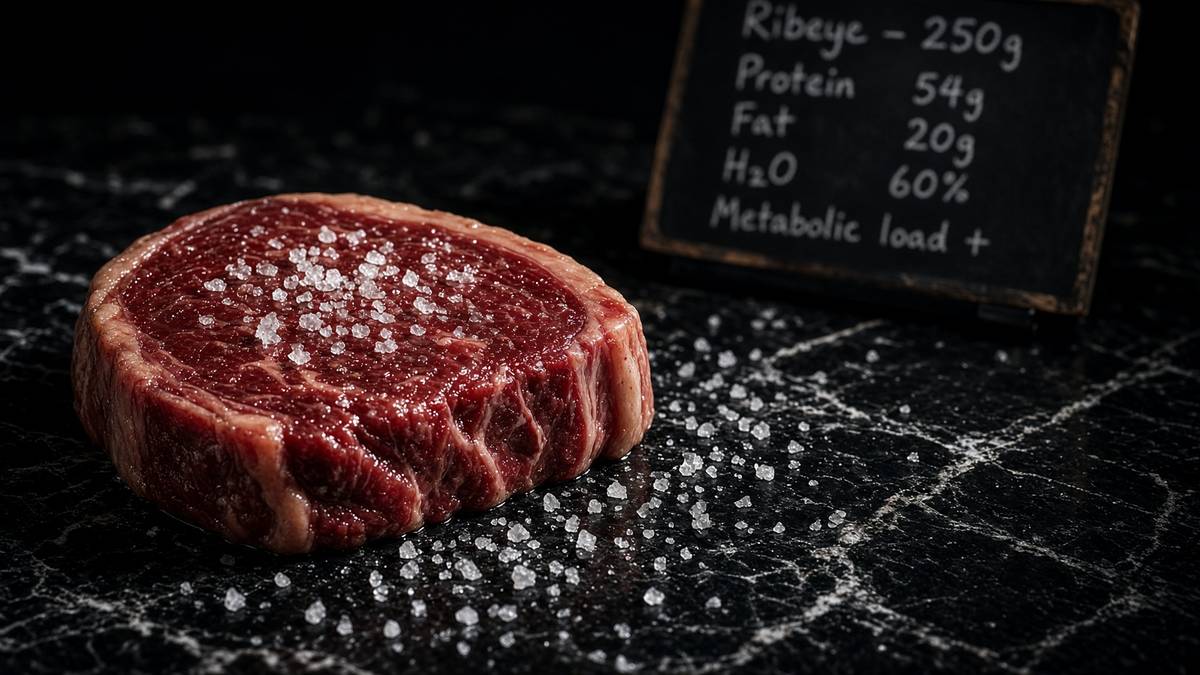
Metabolism · 48 min · 10,621 words
How a carnivore diet actually works
Eliminate plants, eat animals. The interesting part is not the internet. It is ketosis, gluconeogenesis, electrolytes and what happens to a microbiome when fibre hits zero.
What this essay actually tells you
- A carnivore pattern is an elimination diet plus a protein and fat load: no fibre, no plant secondary metabolites, no carbohydrate to speak of. Defined by absence as much as by steak.
- Ketosis can follow, but carnivore is not defined by a ketone target. It is defined by what is absent as much as what is eaten. Measure ketones if you care. Don't pretend they're the definition.
- Electrolyte handling, bile acid flux and the microbiome all change when plants disappear. Those are mechanisms. Testimonials are a different literary genre.
What this actually means
A carnivore diet is an elimination trial that happens to be high-protein, high-fat and almost carbohydrate-free. Plenty of people report less bloating, quieter autoimmune flares and fat loss that didn't take a personality transplant. Mechanistically you'd expect ketosis, falling insulin, a heavy gluconeogenic demand on the liver, and a salt-and-water shift that can make the first fortnight feel grim. Bile-acid flux and the microbiome change when plants disappear. Long-term superiority data are thin. The reports of people feeling better on it aren't imaginary, and pretending they're doesn't make the RCTs appear any faster.
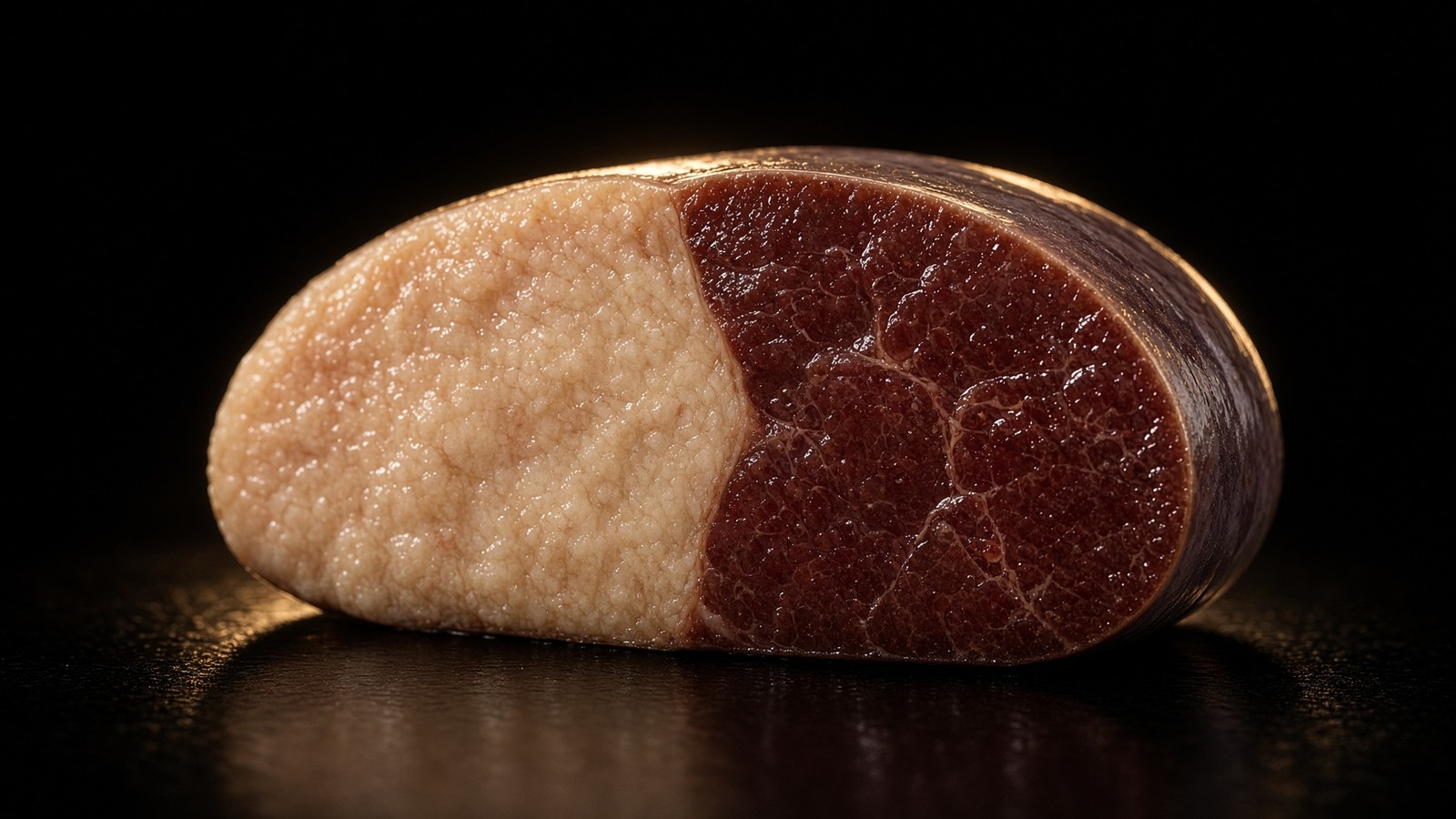
A carnivore diet is an elimination trial that happens to be high-protein, high-fat and almost carbohydrate-free. The definition is the absence, which is the interesting half: no fibre, no plant secondary metabolites, no digestible starch or sugar to speak of. Steak is the photograph. Absence is the experiment. People arrive from irritable bowel, from a suspicious autoimmune flare, from a ketogenic plate that still included spinach, from a quarrel with seed oils, from a comments thread. The physiology doesn't care about the arrival story. Drop plants and you've removed fermentable carbohydrate, polyphenols, phytate, lectins, FODMAPs, gluten, nightshade alkaloids, goitrogens and oxalate in one move. You have also loaded the portal vein with amino acids and long-chain fatty acids, collapsed hepatic glycogen over a couple of days, and told the distal nephron that insulin will no longer help it hold sodium. Ketosis can follow. A ketone target doesn't define the pattern. Measure β-hydroxybutyrate if you care about the fuel switch. Don't pretend a millimolar reading is what made carnivore a named diet. This page is the mechanisms. Testimonials are a different literary genre, and they won't be asked to do the work of a randomised trial they haven't become.
In short. Carnivore means eating only animal foods. The science is what you've removed, and what a protein-and-fat load then does.
Vilhjalmur Stefansson wintered with Inuit hosts who lived, in the seasons he watched, on hunted animals, then spent a year in New York eating meat under the eyes of Bellevue Hospital. McClellan and Du Bois published that 1928–1929 experiment in the Journal of Biological Chemistry: two men, a year of meat, organs included, no scurvy, glucose that didn't collapse into a clinic emergency. That's a named n of two, a named hospital, a named year. It isn't a licence to file hunter-gatherer anthropology as a diet brand. Traditional Arctic eating included fat, marrow, blood, viscera and fish; it wasn't a supermarket rib-eye and a comment thread. The useful residue of Bellevue is narrower and still worth keeping. A human can live for a year on animal foods, with organs on the plate, without an immediate deficiency catastrophe the ward could measure with 1920s tools. A steak-only pattern isn't that plate. A comments-thread screenshot isn't that ward. Cite the Arctic as a randomised superiority trial of carnivore versus Mediterranean eating and you haven't read the methods, because there were no methods of that kind.
In short. A famous hospital year of meat, with organs, showed two men could live that way. It wasn't a supermarket steak diet, and it wasn't a modern trial.
Plants are chemistry before they're a virtue. Secondary metabolites — alkaloids, glucosinolates, oxalate, phytate, lectins, FODMAP oligosaccharides, gluten peptides — are how a sessile organism deters being eaten, sequesters minerals, and talks to its own pests. Some of those molecules are useful in a mixed diet: folate in leaves, vitamin C in fruit, fermentable fibre that a butyrate-producer can spend. Some are antigens or irritants in a particular host. Carnivore doesn't adjudicate that list one item at a time. It zeroes the list. That's the methodological interest, and it's also the methodological problem. When bloating falls, or a skin complaint quiets, or stool frequency settles, the honest sentence is that a large bundle of exposures disappeared at once. Gluten, FODMAPs, polyphenols, fibre, carbohydrate load and a dozen less famous molecules left together. If you claim you can name which departure did the work from a testimonial, you're selling a resolution the experiment doesn't have. An elimination trial is a blunt instrument. Blunt instruments still cut. They don't tell you which fibre they cut.
In short. Plants carry fibre and a crowd of extra chemicals. Carnivore removes the whole crowd at once, so you can't tell from a story which removal did the work.
The neighbouring essays already own pieces of the same physiology, and they should stay neighbouring rather than being asked to baptise a diet for us. Human metabolism is hormonally gated flux through glycogen, fat and amino acids, with the liver as air-traffic control. Ketones are a fuel and, at millimolar β-hydroxybutyrate, a ligand at HDACs and at NLRP3. Electrolytes and the kidney are why week one can feel grim when insulin falls. How diets actually work is conservation of energy plus a routing table plus palatability. Carnivore sits on all four of those pages at once. It isn't a fifth physics. What it uniquely is, among named internet diets, is the combination of a near-zero carbohydrate load with a near-zero plant load. Ketogenic diets can still include spinach, berries, psyllium, olive oil from a fruit. Carnivore, strictly run, doesn't. That's why bile-acid flux and the microbiome belong in this piece rather than being borrowed as captions from a keto pamphlet. Absence of plants is a gastrointestinal and hepatic experiment as much as it's a fuel-switch experiment.
In short. This pattern is a fuel switch plus a plant-free gut. Other essays here already cover ketones, salt and calories. This one is what happens when plants disappear.
Defined by absence as much as by steak
Strictness is a variable, and the internet pretends it's a personality. Nose-to-tail includes liver, kidney, heart, bone, sometimes dairy, sometimes eggs. Steak-and-salt is muscle meat and sodium chloride. The so-called lion diet is ruminant muscle, salt, water, a narrowing that some people with stubborn inflammatory complaints use as a further elimination. Each of those plates is a different micronutrient invoice and a different bile-acid stimulus. Liver brings retinol, folate, copper, heme iron, a vitamin C contribution that muscle meat barely matches. Egg yolk brings choline and a different sterol load. Dairy, where it's allowed, brings lactose — a carbohydrate — and a casein antigen some people were trying to leave. Calling all of that carnivore is how a word stops meaning a defined plate. If the claim is fibre-free, say fibre-free. If the claim is ruminant-only, say ruminant-only. If organs never landed on the plate, don't cite the anecdote that included them. The physiology below assumes a strict animal-only pattern with fat and protein as the two fuels, carbohydrate near zero, fibre at zero. Where organs change a sentence, we'll say so.
In short. Carnivore is a range, from organs and eggs down to steak and salt. Name the actual plate. A liver-inclusive story isn't a steak-only diet.
A carnivore pattern is an elimination diet plus a protein and fat load. Defined by absence as much as by steak. Ketosis can follow. It is not the definition.— Reading of the mechanism, not a protocol. Testimonials are a different literary genre.
Ketosis can follow. It is not the definition
Liver glycogen in a fed adult sits roughly between eighty and a hundred and twenty grams. Muscle holds more, perhaps three to five hundred grams in a trained person, but muscle glycogen is for the fibre that stored it; it doesn't ship glucose back to the brain. Carbohydrate restriction empties the hepatic store in a day or two, depending on how empty you already were and how much protein you're still converting. Water leaves with the glycogen, about three grams of water per gram of chain, which is why the first scale drop isn't a fat-loss miracle and not a reason to write a testimonial on day four. Once the hepatic store is down, two doors open. Fatty-acyl-CoA enters the matrix through CPT-1, β-oxidation ramps, and acetyl-CoA arrives faster than citrate synthase and the TCA cycle will take it. HMG-CoA synthase 2, the mitochondrial enzyme that commits overflow acetyl-CoA toward acetoacetate, is the named gate of ketogenesis. The brain, given days, induces monocarboxylate transporters and the enzymes that cash β-hydroxybutyrate. That's ketogenic-diet physics. Carnivore inherits it when carbohydrate is low enough and protein isn't so high that gluconeogenesis keeps a glucose-and-insulin conversation running.
In short. Liver starch empties in a day or two without carbohydrate. The liver can then make ketones: possible here, not the definition of the diet.
HMGCS2 is the sentence a fuel-switch paragraph actually needs, and we should name it. In the mitochondrial matrix, two acetyl-CoA become acetoacetyl-CoA via thiolase; HMGCS2 adds a third acetyl-CoA to make 3-hydroxy-3-methylglutaryl-CoA; HMG-CoA lyase splits that to acetoacetate and acetyl-CoA. β-Hydroxybutyrate dehydrogenase 1, BDH1, then reduces acetoacetate to D-β-hydroxybutyrate, which is the ketone a meter reads. Extrahepatic tissues reverse the last steps through BDH1 and SCOT, succinyl-CoA:3-ketoacid CoA-transferase, gene OXCT1, which a hepatocyte almost doesn't express — the liver makes ketones because it can't spend them well. Cahill's starvation work, New England Journal of Medicine 1970 and the earlier field studies, still sets the adult numbers: after days to weeks, the brain takes a large ketone share and muscle proteolysis falls, because the brain has stopped asking the liver for quite so much gluconeogenic carbon. Physiological ketosis sits roughly at 0.5 to 3 millimolar β-hydroxybutyrate. Diabetic ketoacidosis is a different object: insulin deficiency, usually much higher ketones, a sick patient, an anion gap. SGLT2 inhibitors, type 1 diabetes and pregnancy are clinician territory. A millimolar reading on a diet isn't that emergency, and treating it as a trophy is how a metabolite becomes a brand.
In short. A named liver enzyme turns spare fat fragments into ketones. The brain can learn to use them. A diet reading isn't the emergency of diabetic ketoacidosis.
Ketosis can follow a carnivore plate. Carnivore isn't defined by a ketone target. That distinction is the whole methodological point, and it's the one a comments thread most likes to flatten. A well-formulated ketogenic diet is a macronutrient ratio: carbohydrate low enough, protein moderate, fat filling the energy budget, vegetables often still present. Carnivore is an ingredient rule. You can be in ketosis on either. You can fail to be in ketosis on carnivore if the protein load is high enough that alanine and glutamine keep feeding hepatic glucose output, or if hidden carbohydrate is still in the dairy, or if energy surplus never let hepatic acetyl-CoA overflow. People who stall, in the comments-thread sense, often turn out to be eating enough protein that insulin never fully stands down and HMGCS2 is competing with a busy TCA cycle. That's biochemistry. It isn't a failure of willpower, and it isn't proof that carnivore secretly requires a ketone number to be real. Measure ketones if the question is the fuel switch. Don't use the strip as a definition of a diet whose interesting half is the plants that are missing.
In short. You may make ketones on this diet. You don't have to hit a ketone number for the diet to be what it's. Missing plants is the other half.
β-Hydroxybutyrate is also a signal, which is why the neighbouring ketone essay exists and why this paragraph won't steal it. Newman and Verdin put BHB on class I histone deacetylases: a millimolar metabolite that changes transcription, oxidative-stress genes among the named clients. Youm, Kanneganti, Dixit and colleagues, Nature Medicine 2015, showed BHB inhibiting the NLRP3 inflammasome, with IL-1β as the downstream cytokine. GPR109A, also called HCAR2, is a G-protein-coupled receptor that BHB occupies at the higher millimolar end. Brain uptake scales with MCT1 and MCT2 and with enzyme induction over days, which is a large part of why the first week can feel like a head full of cotton. Those are real ligand jobs. They are also not unique to carnivore. Fasting, a well-formulated ketogenic diet, and endogenous overflow after glycogen collapse all raise BHB. Filing improved mood or quieter joints as proof of carnivore, when the same ligand would have arrived on a keto plate that still had olive oil and spinach, is how a metabolite gets asked to baptise an ingredient rule. The ligand is real. The uniqueness claim isn't.
In short. The main ketone is also a signal to genes and to an inflammation switch. Fasting and keto raise it too. That doesn't make carnivore a unique ketone religion.
Protein is gluconeogenic substrate, not free glucose
Protein isn't free glucose. The sentence has to be written because a generation of diet books treated gluconeogenesis as a tap you couldn't turn off, and another generation treated it as a myth. Alanine and glutamine are gluconeogenic substrate. They feed the liver. A high-protein carnivore plate is therefore less ketogenic than a fat-heavy one, and more of a glucose-production experiment than a pamphlet likes to admit. The alanine–glucose cycle, Cahill again, shuttles muscle nitrogen as alanine; hepatic alanine aminotransferase dumps the carbon into pyruvate, and pyruvate becomes glucose if the liver is in a gluconeogenic stance. Glutamine feeds the same pool through glutamate and α-ketoglutarate, then out via PEPCK. Glycerol from triglyceride lipolysis is a third carbon source, and in a high-fat pattern it isn't trivial. The enzymes have names: cytosolic PEPCK (PCK1), glucose-6-phosphatase (G6PC) at the endoplasmic reticulum, fructose-1,6-bisphosphatase. Insulin suppresses the programme. Glucagon, cortisol and a falling insulin permit it. A plate of lean meat, eaten large, is a glucagon-and-substrate stimulus as well as an insulin stimulus. Both hormones move. The net hepatic glucose output is an empirical question, not a line about protein magically becoming cake.
In short. Protein can be turned into glucose by the liver, especially alanine and glutamine. A very meaty plate is less ketogenic than a fatty one. That's ordinary biochemistry.
Look at the competition at HMGCS2, because that's where the stall lives as a mechanism rather than as a moral. Ketogenesis wants acetyl-CoA that the TCA cycle hasn't taken. A busy TCA cycle — fed by glucogenic carbon from amino acids, by odd-chain residues, by a pyruvate dehydrogenase that hasn't been phosphorylated into quiet — leaves less overflow for HMGCS2. Succinyl-CoA, an intermediate of several amino-acid paths, is also a regulator in this neighbourhood. Insulin, even a modest post-prandial bump from a large protein meal, leans against hormone-sensitive lipase and against the transcriptional programme that keeps HMGCS2 abundant. People who eat two kilograms of lean rump and then wonder why the ketone meter is shy are running this paragraph. Rabbit starvation, the old field name for lean-meat protein poisoning, sits at the ugly end of the same axis: too much protein, too little fat, an energy and urea problem, nausea, a liver asked to gluconeogenic overtime. Strict carnivore that's fat-forward looks like a ketogenic diet with the plants deleted. Strict carnivore that's lean-forward looks like a high-protein experiment with a ketone hobby. Name the plate before you name the failure.
In short. If you eat a mountain of lean meat, the liver may keep making glucose and skip making many ketones. Fat-forward plates ketose more easily. Lean-only plates can go badly.
Urea is the other invoice of a protein load, and it belongs on the page before anyone files carnivore under kidney-neutral. Amino-acid carbon can become glucose or become acetyl-CoA or be rebuilt into protein. Amino-acid nitrogen becomes urea in the liver, via carbamoyl phosphate synthetase 1, ornithine transcarbamylase, argininosuccinate synthetase, argininosuccinate lyase and arginase — the five enzymes of the cycle Krebs also named. A high-protein plate raises urea production. Healthy kidneys excrete it. Chronic kidney disease is a different conversation, and it's a clinic conversation, because the organ that was already struggling with nitrogen and with phosphate doesn't owe you an internet diet. Serum creatinine rises on meat days in part because creatine in the food becomes creatinine, which is why a single blood draw after a large steak is a lousy glomerular-filtration story. Cystatin C is the workaround a nephrologist already knows. None of that's an argument against protein in a person with two working kidneys and a training stimulus. It's an argument against pretending nitrogen is free. The liver and the kidney noticed the plate. The comments thread didn't.
In short. Extra protein becomes urea, which working kidneys clear. Meat also raises creatinine on a blood test without meaning the kidney has failed. Kidney disease belongs with a doctor.
Insulin on this plate isn't the villain of a pamphlet and not a non-event. A mixed steak meal raises insulin. Amino acids, particularly leucine and arginine, are insulinotropic; GIP from duodenal K-cells and GLP-1 from ileal and colonic L-cells amplify that, which is the incretin effect applied to protein rather than to glucose. Glucagon rises too, because amino acids are a glucagon stimulus, and the α-cell is paying attention. The insulin-to-glucagon ratio, not insulin in isolation, is the hepatic sentence: glycogenolysis and gluconeogenesis versus storage. On a carbohydrate-free plate the ratio still moves, just from a different nutrient appearance. Over days, average insulin is usually lower than on a mixed Western diet, because you've stopped putting seventy-gram glucose loads into the portal vein. That average drop is why the kidney lets sodium go, why hormone-sensitive lipase is less suppressed between meals, why hepatic de novo lipogenesis has nothing to work with. It's also why type 2 glucose often falls. Falling insulin is a real mechanism. It isn't proof that insulin was a toxin, and it isn't required for fat loss if energy intake is down. Hall's isocaloric work still sits on that last sentence.
In short. A steak still raises insulin and glucagon. Average insulin often falls because the bread load is gone, which changes salt handling and fat release.
The first three weeks are a fluid-shift
The first three weeks are, in large part, a fluid shift, and treating them as a test of character is how people spend money without fixing a nephron. Insulin acts on the distal nephron to retain sodium: epithelial sodium channel activity, Na+/K+-ATPase on the basolateral side, a Tiwari-and-colleagues literature that never made it into diet books. Drop insulin and that retention fails. You diurese. Water follows sodium. Magnesium and potassium hitch a ride, because a urine that's dumping cations doesn't dump them one element at a time, and because aldosterone, answering the volume loss, holds sodium and can waste potassium doing it. Ketone anions are themselves unmeasured anions that obligate urinary cation loss. Glycogen-bound water, already named, leaves in the first days. Most of what people call keto flu is that triad — sodium, potassium, magnesium — plus a brain that hasn't finished inducing MCT1/2 and BDH1. Salt the food. Several grams of sodium a day is a macronutrient conversation for a fortnight, not a pinch of virtue. Then decide whether you like the diet. A random comments-thread stack is how you buy capsules without asking the kidney what it actually lost.
In short. When insulin falls, the kidney dumps salt and water, and magnesium and potassium go with them. That's most of the so-called flu. Salt the food.
Aldosterone will try to save you and won't, on its own, save you from a salt-free steak week. The renin–angiotensin–aldosterone axis answers hypovolaemia: renin from the juxtaglomerular apparatus, angiotensin II, aldosterone from the zona glomerulosa, ENaC and ROMK as the collecting-duct effectors. Sodium is held. Potassium is secreted. If you also drink a gallon of water because a thread said to flush toxins — there are no such toxins in this sentence — you dilute further. If you're on an ACE inhibitor, an angiotensin-receptor blocker, a potassium-sparing diuretic, or you've adrenal disease, this paragraph isn't yours; a clinician already owns the axis. For everyone else, the practical reading is dull and sufficient. Sodium in the grams. Potassium from meat is non-trivial and not always enough. Magnesium, often already marginal on a Western diet, is the cramp and the extra heartbeat some people meet in week one. Repletion is nephron physics. Call it a biohack if you like. The kidney doesn't. The neighbouring electrolyte essay is the longer version. Order of operations is most of the game: fix the fluid shift, then talk about ketones, autophagy and whatever autoimmune story brought you in.
In short. Hormones will try to hold salt and may dump potassium while doing it. Replace sodium, potassium and magnesium. Then judge the diet, not on day three.
- Liver glycogen
- 80–120 g
- Muscle glycogen
- 300–500 g
- Physiological ketosis
- 0.5–3 mM BHB
- Dietary fibre
- 0 g
- Enterohepatic recycling
- ~95%
- Microbiome shift
- 5 days
- LDL-C / ApoB
- often up
- Bellevue n
- 2 men, 1 year
Empties in a day or two without carbohydrate. Water leaves with it.
For the fibre that stored it. Does not ship glucose back to the brain.
Cahill. Not diabetic ketoacidosis. Not a definition of carnivore.
The selection pressure on butyrate-producers. Absence as experiment.
Bile acids recaptured at ASBT. Fibre no longer steals the leak.
David, Nature 2014. Animal plate versus plant plate, reversible.
Saturated fat, SREBP2, LDL-receptor down-regulation. Outcome trial missing.
McClellan and Du Bois, 1928–29. Organs on the plate. Not steak-only.
Bile-acid flux when the plants go
Bile-acid flux changes when plants disappear, and this is a mechanism rather than a gallbladder personality, and we can name the acids. Primary bile acids, cholic and chenodeoxycholic, are made from cholesterol in hepatocytes by a cascade whose committed step is cholesterol 7α-hydroxylase, CYP7A1. They are conjugated to glycine or taurine, stored in the gallbladder, dumped into the duodenum when cholecystokinin says a fat load has arrived. A steak-and-fat plate is a CCK stimulus. The acids emulsify triglyceride, pancreatic lipase works, mixed micelles form, fat-soluble vitamins ride along. Ninety-five percent of the acids are reabsorbed in the terminal ileum via ASBT, the apical sodium-dependent bile-acid transporter, and return in the portal vein to the liver — enterohepatic circulation, several cycles per meal. Fibre, in a mixed diet, binds a fraction of the pool and carries it into faeces, which is one reason oat bran and a bile-acid sequestrant both lower LDL-C a little: the liver spends cholesterol to replace what was lost. Remove fibre and that leak closes. The pool is conserved. CYP7A1 hears that conservation through FXR. The stool is no longer a cholesterol sink of the fibre kind.
In short. Bile acids help digest fat and are mostly recycled. Fibre usually carries some of them out. With no fibre, more of the pool is kept, and cholesterol handling shifts.
FXR, farnesoid X receptor, gene NR1H4, is how the ileum and the liver notice the returning acids. Occupancy in the enterocyte writes FGF19 in humans, FGF15 in the mouse, a hormone that travels to the liver and, with β-Klotho and FGFR4, represses CYP7A1. Occupancy in the hepatocyte does the same job more locally, via SHP. TGR5, also called GPBAR1, is the G-protein-coupled receptor on the other side of the family: secondary bile acids, particularly lithocholic and deoxycholic, raise cAMP in brown fat, in muscle, in enteroendocrine cells, and can contribute a GLP-1 nudge from L-cells. A plant-free, fat-forward plate therefore does two bile jobs at once. It cycles a conserved pool harder, because fibre isn't stealing acids into the bucket. It also, through a microbiome that will restructure within days, changes which secondary acids are made. 7α-dehydroxylation by a small set of Clostridial species is how cholic becomes deoxycholic and chenodeoxycholic becomes lithocholic. Those species live on bile and on a Western-leaning gut. Fibre-free eating is a selection pressure on them. FGF19, TGR5, a different secondary-acid mix: those are measurements a lab can actually order. They aren't a temperament, and we can run the assays.
In short. A liver receptor senses returning bile acids and slows new production. Gut bacteria reshape those acids. Take fibre away and both the sensing and the bacterial mix change.
The gallbladder itself isn't a metaphor. A high-fat meal empties it. Rapid weight loss, of the kind a strict pattern can produce in the first months, is a recognised risk for cholesterol gallstones: hepatic cholesterol secretion up, bile-acid pool sometimes down, motility a variable. Very-low-calorie formula diets already carry that warning in the bariatric and DiRECT-adjacent literature. Carnivore isn't a formula diet, but a large fat load plus a falling body weight is still lithogenic chemistry in some hosts. Existing gallstone disease, a missing gallbladder, bile-acid diarrhoea after ileal disease or resection — those are clinic objects, not comments-thread objects. Ursodeoxycholic acid is a licensed acid for selected stone and cholestasis jobs; it isn't a carnivore supplement. The honest sentence is small. Fat in the lumen is a CCK stimulus and a gallbladder emptying cue. Weight loss is a stone risk in susceptible people. Fibre no longer binds the pool. If a right-upper-quadrant pain shows up two months into a new plate, that's hepatobiliary medicine, not a detox. I can't diagnose it from a paragraph.
In short. Fatty meals empty the gallbladder. Fast weight loss can raise gallstone risk in some people. Upper-right-sided pain is a clinic problem, not a diet badge.
Cholesterol on this plate is dietary and hepatic, and the two aren't the same invoice. Dietary cholesterol from egg yolk and from meat raises serum cholesterol modestly in most people; hepatic synthesis adjusts via HMG-CoA reductase, the enzyme statins occupy, and the adjustment is incomplete in some hosts. Saturated fatty acids, palmitate in particular, raise LDL-C more reliably than dietary cholesterol does, in part by down-regulating hepatic LDL receptors through a SREBP2 conversation. A fat-forward carnivore pattern is often a saturated-fat pattern, unless the plate is fish and the fat is marine. LDL-C often rises. Sometimes it rises a lot. ApoB, the particle-count, usually moves with it. Whether that particle increase is as atherosclerotic as the same ApoB in a high-carbohydrate, high-insulin, high-liver-fat context is argued with more passion than data. The passion isn't a mechanism. Mendelian randomisation still says ApoB-containing particles are causal in atherosclerotic disease across the contexts we actually measured. A carnivore exception hasn't been demonstrated in a hard-outcome trial, because the hard-outcome trial hasn't been run. Hold the LDL number. Hold the absence of the trial. Both are information.
In short. Saturated fat often raises LDL cholesterol and particle number. Whether that's as risky here as in other diets is argued. A heart-outcome trial of carnivore hasn't been run.
The lean-mass hyper-responder pattern is the named exception the comments thread will throw, and it deserves a paragraph rather than a sneer. Dave Feldman, Nicholas Norwitz and colleagues have described people, often lean and athletic, whose LDL-C and ApoB rise markedly on carbohydrate-restricted, high-saturated-fat eating, sometimes past 5 mmol/L, with high HDL-C and low triglycerides. The lipid energy model they offer is a trafficking story: triglyceride-rich VLDL output to feed tissues that are living on fat, then LDL remnants left behind. It's a hypothesis. It has case series, metabolic ward fragments, and a lot of social media. It doesn't yet have a coronary-outcome trial in that phenotype. Coronary-artery calcium and CT angiography are the measurements a sceptic would want, over years, in enough people, with a control. Some hyper-responders have those scans and some look reassuring at a single time point; a single scan isn't a natural history. If you're that phenotype, ApoB is still the particle that enters intima. Context might matter. Context hasn't been shown to grant immunity. A clinician who knows lipids, and a measurement plan, are the adult response. A tweet that says lean people can't get plaques isn't.
In short. Some lean, athletic people see very high LDL on this way of eating. That pattern has a name and a hypothesis. It doesn't yet have a heart-outcome trial.
A microbiome at fibre zero
David, Maurice, Turnbaugh and colleagues, Nature 2014, is the microbiome paper a fibre-free essay actually has to cite. Five days of an animal-based diet, five days of a plant-based diet, in ten volunteers, with daily stool sequencing: the microbiota shifted rapidly and reproducibly with the plate. On the animal plate, bile-tolerant organisms including Bilophila wadsworthia, Alistipes and Bacteroides rose; polysaccharide-fermenters fell. Gene expression in the community moved toward amino-acid fermentation and toward bile-acid handling. The shift reversed when the plate reversed. That's a week-scale ecology, not a lifetime identity. Sonnenburg's work on fibre and microbiota extinction is the longer shadow: taxa that live on dietary polysaccharides can be lost, over generations in mice, when the polysaccharide disappears, and they don't always come back from a modern inoculum. A carnivore month isn't a three-generation mouse. It's also not a proof that butyrate-producers will wait politely in a spore until you eat an apple. Fibre-free eating is a selection pressure. Selection pressures change censuses. The 2014 paper is the human demonstration at the short end of the timescale.
In short. A named study showed that five days of animal-only food rapidly changes gut bacteria, and five days of plants changes them back. Fibre-free eating is a selection pressure.
Butyrate is the short-chain fatty acid the colonocyte actually wants, and fibre is how most of it's made. Faecalibacterium prausnitzii, Roseburia, Eubacterium rectale, a set of Lachnospiraceae: those are the named butyrate-producers of a mixed diet, fermenting resistant starch and non-starch polysaccharides to butyrate, acetate and propionate. Butyrate feeds the colonocyte, inhibits HDACs in that epithelium, and occupies GPR41 and GPR43, with a GLP-1 and PYY conversation that L-cells already know. Take the substrate away and those taxa collapse or go quiet. Some hosts seem not to mind, at least over months: stool calms, bloating falls, the missing butyrate is either replaced by protein-fermentation acids or is less important in that person than the antigens that left. Some hosts will mind, with constipation, with a mucosa that liked its preferred fuel, with a longer risk that a five-day study can't see. We don't have a good prospective test for which is which. Filing 'I feel fine' as proof that Faecalibacterium was optional is a testimonial. Filing 'fibre is essential because butyrate' as proof that every carnivore colon is failing is a textbook talking past a person. Both halves are allowed to sit in the same paragraph.
In short. Without fibre, the bacteria that make butyrate from plants fade. Some people seem fine; some won't be, and we can't yet tell who in advance.
Protein fermentation is the other ecology, and it isn't a polite synonym for butyrate. When amino acids reach the colon — and on a high-protein plate more of them do — the community makes branched-chain fatty acids, isobutyrate and isovalerate, plus ammonia, phenols, p-cresol, and hydrogen sulphide from cysteine. Fusobacteria and a set of Bacteroides are among the workers. Bilophila wadsworthia, the bile-tolerant sulphite-reducer Devkota, Chang and colleagues put on a milk-fat diet in mice in Nature 2012, blooms when taurocholic acid is plentiful; it makes hydrogen sulphide and has been argued, in that model, as a colitis neighbour. Human translation of that mouse is incomplete, which is the sentence a careful paper has to keep. Ammonia and sulphide at high local concentration aren't colonocyte candy. They are also not a diagnosis. A carnivore stool often smells different because these paths are running. That smell is chemistry. It isn't automatically pathology, and it isn't automatically harmless. The measurements that would settle the longer question — faecal calprotectin over years, colonoscopy in a trial, cancer incidence — haven't been run on this pattern, which is a gap we should say out loud.
In short. Spare protein that reaches the colon is fermented to ammonia, odd acids and sulphide. That's a different chemistry from plant fibre. Whether it harms a person long-term isn't settled.
TMAO is the named metabolite the cardiology slide will reach for, and it belongs here as a mechanism rather than as a verdict. Koeth, Wang, Hazen and colleagues, Nature Medicine 2013: dietary L-carnitine, abundant in red meat, is converted by gut microbes to trimethylamine; hepatic FMO3 oxidises TMA to trimethylamine N-oxide; TMAO associated with atherosclerotic risk in their cohorts and accelerated atherosclerosis in their mice. Choline, from egg yolk and from meat, feeds a parallel path. The human causal chain is still argued: TMAO tracks a microbiome and a diet and a kidney that clears it, and unpicking those in observational data is a known misery. Antibiotics blunt the TMA step, which is how the 2013 paper showed the microbe was required. A plant-free, red-meat-forward plate is a carnitine load plus a microbiome selected toward bile-tolerant, amino-acid-fermenting taxa — the neighbourhood that makes TMA. Fish also raises TMAO, which is the awkward control the slide sometimes skips, because marine animals already contain the oxide. Mechanism, then. Carnitine in, TMA if the community can make it, TMAO out of the liver. Filing that as proof that a rib-eye equals a cigarette is a category error You'll feel it before you name.
In short. Gut microbes can turn carnitine from meat into a chemical the liver oxidises to TMAO, which has been linked to artery disease. The chain is real. The courtroom verdict isn't.
The honest microbiome paragraph is the one that refuses a census as a morality. Some people on a year of carnivore have quiet stools, quiet skin, a calprotectin that stayed low, and a life they prefer. Some have constipation that didn't yield to salt, or reflux, or a lipid number that took them back to clinic, or a mood that lifted for three months and then didn't. The taxa that fell are predictable from David 2014 and from every fibre-withdrawal feeding study. The taxa that rose are predictable from bile and from protein. What we can't yet do is point at a baseline stool sequence and say you'll be the host who doesn't mind. Diversity metrics are a poor clinical tool. Butyrate-producer abundance is a little better and still not a test. Post-infectious IBS, bile-acid diarrhoea, microscopic colitis, a FAP family history, a mismatch-repair syndrome — those are reasons a fibre-free experiment is a clinic conversation, not a comments-thread one. For everyone else, the mechanism is the selection pressure. The testimonial is the host's current week. They are different literary genres. We'll keep them in different drawers.
In short. We can predict which bacterial groups fall and rise when plants disappear. We can't yet predict which person will mind. A good week isn't a safety trial.
The lining those changes land on
The intestinal epithelium is one cell thick. That sentence should sit over every paragraph that uses the phrase gut barrier, including this one. On the luminal side, a mucus gel: MUC2 mucin, polymerised, a sieve a commensal has to negotiate before it reaches a microvillus. Goblet cells write the gel. Paneth cells, in the small-bowel crypt, write antimicrobial peptides so the stem-cell neighbourhood isn't a bacterial culture. Enterocytes do the absorptive job: PepT1 for di- and tripeptides, a forest of SLC proteins, a brush border of peptidases that destroy most dietary protein before it's a signal. Enteroendocrine cells sample the lumen and talk to the pancreas and the brainstem with GLP-1, PYY, CCK, serotonin. The sheet sits on a basement membrane. Under that, lamina propria, a vascular plexus, lacteals, then muscle the enteric nervous system drives. Barrier is the whole stack. Carnivore doesn't replace the stack with steak. It changes the luminal contents the stack has to live with: no fermentable polysaccharide, no gluten peptide, no FODMAP osmotic load, more amino acids, more fat, a different bile-acid mix, a different census of neighbours. The lining is the organ those changes land on, which is why we name it.
In short. The gut lining is one cell thick, with mucus, specialised cells and blood underneath. Carnivore changes what that lining is asked to live with. It doesn't replace the lining.
Colon mucus is two layers, and treating it as fog is how a model gets misread. Johansson, Hansson and the Gothenburg group spent a decade showing an inner MUC2 gel that's normally sterile, densely polymerised, anchored to goblet cells, and an outer layer that's looser, colonised, and the place a commensal actually lives. Small-bowel mucus is thinner and more discontinuous, which is why the small bowel can absorb and the colon can ferment. Butyrate, in a mixed diet, is part of how colonocytes keep that gel and their own barrier proteins written. Fibre-free eating removes the preferred substrate for that butyrate. Protein fermentation adds sulphide, which at high local concentration can interfere with colonocyte oxidation of butyrate — a Rodent-and-human literature that's real and also easy to over-read into a diagnosis. Some carnivore stools are drier and less frequent, which is transit and water, not a mucus stain. Some are looser, which may be bile-acid load in the colon when the ileum doesn't recapture the conserved pool as neatly as the textbook. Neither observation is a fluorescent MUC2 section. Keep the anatomy on the diagram; it's the bit you can actually see.
In short. Colon mucus has a sterile inner gel and a looser outer one. Fibre and butyrate usually feed that system. Take them away and the lining is running on different fuel.
Diagram
Mucus
MUC2 gel
The first argument a microbe has to win.
Epithelium
enterocyte · goblet · Paneth
One cell thick. The wall is the cell, not a fascia.
Tight junctions
claudin · occludin · ZO-1
The seal. ‘Leaky gut’ as a brand is not this protein list.
PepT1
SLC15A1
Oligopeptide transporter. Inflamed gut induces it. KPV can ride it.
Lamina propria
immune cells
Where NF-κB decisions become cytokines.
BPC-157 neighbourhood
NO · VEGFR2 · FAK
Cytoprotection, blood flow, how a damaged lining organises.
IBS is a Rome-criteria cluster. It does not name a receptor. The preclinical literature that named molecules for barrier tissue keeps coming back to BPC-157 and KPV — two ligands, one organ on a reading list, neither a gastroenterology appointment.
Tight junctions are the seal between enterocytes: claudins, occludin, ZO-1, a belt that decides whether a lumen solute takes the paracellular path. Zonulin, the name Fasano gave a haptoglobin-2 precursor fragment, is the endogenous modulator the gluten literature can't stop talking about; gliadin peptides can, in susceptible mucosa, loosen that belt. FODMAP oligosaccharides are, for a different host, an osmotic and fermentative load that stretches the wall and feeds a gas-producing census. Lectins and a list of less famous plant proteins are antigens in a smaller set of people. Carnivore zeroes all of them at once. That's why an IBS-D week can look like a miracle on day ten, and why a coeliac-adjacent complaint can quiet without anyone having run the serology they should have run before they named the miracle. Elimination is a diagnostic experiment. It's also how you hide a disease you haven't tested for. If gluten was the problem, a steak-only plate will look like genius and a later oat will re-open the file. If FODMAPs were the problem, a ketogenic plate with spinach might have done the same job. Unbundle the plate before you write a mechanism as a conversion story.
In short. Plant foods can loosen the gut seal or feed gas in some people. Removing all of them at once can calm symptoms. That doesn't tell you which plant molecule was the problem.
Autoimmune anecdotes are the other half of the arrival story, and they must be handled as anecdotes. People with inflammatory bowel disease, with rheumatoid complaints, with skin that looked like psoriasis, with Hashimoto's, report quieter weeks on a strict animal plate. Some of those reports will be ketosis, some weight loss, some the departure of a specific antigen, some regression to the mean, some a disease that was going to quiet anyway, some a person who also stopped ultra-processed food, alcohol and a ninety-hour week. Randomised evidence that carnivore induces remission of a named autoimmune disease, against a control diet, with blinded disease-activity scores, isn't a literature this paragraph can cite, because it isn't a literature that exists at that standard. Elimination diets in eosinophilic oesophagitis, in IgE food allergy, in a subset of IBS, are a real clinic tool. Stretching that tool into a claim that plants caused autoimmunity as a class is a different claim. Mechanism permits a hypothesis: fewer food antigens, a quieter NLRP3 if ketones rose, a different microbiome, less omega-6 linoleate from seed oils. Hypothesis isn't a trial. Pretending the testimonials are imaginary doesn't make the trial appear either You'll see why it belongs on.
In short. Some people with autoimmune or gut disease feel better on this plate. That can be true in a person and still not tell us which mechanism, or whether a trial would agree.
Mitochondria on a fat-and-protein load
Mitochondria notice a fat-and-protein load because that's the organelle that β-oxidises the fat and that sits at the end of the amino-acid carbon that entered the matrix. CPT-1, carnitine palmitoyltransferase 1, on the outer membrane, is the named gate: long-chain acyl-CoA becomes acyl-carnitine, crosses, CPT-2 hands it back as acyl-CoA in the matrix. Malonyl-CoA, the product of acetyl-CoA carboxylase, inhibits CPT-1; that's how a carbohydrate-fed liver keeps fat out of the mitochondrion. AMPK phosphorylates ACC, malonyl-CoA falls, CPT-1 opens. A low-insulin, low-carbohydrate plate is an AMPK-and-low-malonyl-CoA plate in the tissues that see the restriction. PGC-1α, the transcriptional coactivator, then has a chance to write more of the organelle if the energy stress is repeated — exercise still being the stimulus that actually moves PGC-1α in muscle. Diet is a fuel choice. Training is a biogenesis choice. Filing a carnivore month as a mitochondrial therapy is how a fuel switch gets asked to do a transcriptional job it hasn't been shown to own in a human biopsy series. The organelle will oxidise what you send it. Sending it fat isn't the same as making more of it.
In short. Fat enters mitochondria through a named gate that carbohydrate chemistry usually keeps shut. This diet opens that gate. Opening it isn't the same as growing more mitochondria.
β-Oxidation is a spiral, and the spiral has a redox cost. Each turn produces NADH and QH2, plus an acetyl-CoA. The NADH wants Complex I. The QH2 wants the Q-cycle at Complex III. A liver that can't reoxidise them will stall fatty-acid oxidation and, if HMGCS2 is written, will make ketones from the acetyl-CoA overflow — which is the healthy overflow of a fast or a ketogenic plate, not a pathology. Muscle and heart spend the acetyl-CoA in the TCA cycle because they have the work. Brown fat, if it's on, uncouples. The same NADH/NAD+ ratio that a NAD+ essay treats as a sirtuin budget is, here, a fuel-oxidation gauge. Superoxide leak at Complex I and III can rise if the chain is reduced and the work isn't there; that's a biochemistry textbook, not a reason to file carnivore under oxidative stress as a caption. What you can measure, if you're actually asking, is a respiratory quotient that falls toward 0.7, a ketone that rises, an acylcarnitine profile, a liver-fat signal on MRI-PDFF that often falls when energy is down and carbohydrate is down. Those are named machines and named readouts.
In short. Burning fat in mitochondria produces electrons the respiratory chain must spend. Ketones appear when the liver has more fat fragments than it can burn. That's measurable, not mystical.
MOTS-c sits in this neighbourhood as a mitochondrial memo, not as a diet ingredient, and the neighbourhood has to stay a neighbourhood. MRWQEMGYIFYPRKLR, sixteen residues translated from an open reading frame in mitochondrial 12S rRNA — Lee, Kim, Cohen, Cell Metabolism 2015: AMPK, the folate–methionine cycle, metabolic homoeostasis in mice. Kim and Lee, 2018: nuclear translocation under metabolic stress. Reynolds, Nature Communications 2021: exercise-induced, age-dependent physiology, a plasma rise after work. AMPK is the fuel-gauge kinase that phosphorylates ACC and lets CPT-1 open; it's one door away from the same fat-oxidation programme a carbohydrate-free plate already leans on. Sitting on AMPK isn't sitting on HMGCS2, and it isn't sitting on a bile-acid receptor, and it isn't a reason to write a 16-mer as a carnivore stack. The organelle that wrote MOTS-c is the organelle that will β-oxidise the steak. Shared campus. Different invoice. Independent replication of the original metabolic claims is still the live scientific question; the sequence isn't. This page names the 16-mer because the related-reading list already does, and because a fat-load paragraph that pretends mitochondria are only CPT-1 hasn't read 2015. It doesn't name a protocol, and we shouldn't write one from it.
In short. MOTS-c is a short peptide a mitochondrion writes from its own RNA, and papers put it on a fuel-gauge kinase. That's next door to fat burning, not a diet supplement.
Diagram
Matrix
- TCA cycle · β-oxidation · mtDNA nucleoids
- NADH produced here. Complex I spends it.
- MOTS-c (MRWQEMGYIFYPRKLR) from 12S rRNA.
Inner membrane
- I → II → III → IV → V (ATP synthase)
- ~150 mV proton-motive force
- ~40–60 kg of ATP turned over per human day
mtDNA is 16,569 bp, 37 genes, 13 proteins of the respiratory chain. Nuclear DNA encodes the other ~1,200 mitochondrial proteins. NAD+ is the hydride carrier between dehydrogenases and Complex I. MOTS-c is a 16-mer translated from 12S rRNA — a peptide the mitochondrion wrote itself.
Incretins still fire on steak
Incretins still fire on a plant-free plate, which is the sentence a glucose-only story of GLP-1 keeps missing. The incretin effect is a measurement: oral nutrient raises more insulin than the same nutrient in a vein, because the gut has already warned the pancreas. McIntyre, Elrick, Unger, the 1960s. K-cells in the duodenum and proximal jejunum write GIP. L-cells, more distal, write GLP-1 and PYY. Protein is an incretin stimulus. Fat is an incretin stimulus, slower, CCK-adjacent. Glucose is the stimulus the drugs were built around. A steak therefore still occupies the enteroendocrine sheet: amino acids at PepT1 and at umami-adjacent sensors, fatty acids at GPR40 and GPR120, bile acids at TGR5 on some L-cells, mechanical stretch, a slower gastric empty than a sugar drink. GLP-1 will rise. GIP will rise. They won't rise on the same curve as a milkshake. Appearance rate is half the post-prandial story people blame on carbs as a monolith. The neighbouring blood-sugar essay is the control-system version. This paragraph is the reminder that deleting plants doesn't delete the gut-hormone conversation. It changes the contents the L-cell and the K-cell see, which is the curve we actually get.
In short. Gut hormones that raise insulin after a meal still respond to protein and fat. A steak is a slower, different stimulus from a sugary drink, not a silent gut.
Gastric emptying is the mechanical half of that curve, and steak is a slow object. Liquids leave faster than solids. Fat and protein slow the empty via CCK, via GLP-1, via a pylorus that isn't a caption. A 400-gram rib-eye occupies volume, requires acid and pepsin and time, and presents amino acids to the small bowel over hours rather than minutes. A glucose drink presents appearance rate as a spike. That difference, not a moral difference between animal and plant, is why a CGM on carnivore often looks boring. You stopped putting the variable into the system at a high rate. You also, if insulin was the mute button on hepatic glucose, turned the mute down less often. Morning glucose on a carnivore week is often a hepatic number, as it's on keto, and it can sit higher than a person expects even while the post-prandial curve is flat — the dawn phenomenon, cortisol, GH, a liver that's gluconeogenic because glucagon has a vote. A boring CGM is a real observation. It isn't a proof that the liver has become a different organ. It's appearance rate plus a different insulin-to-glucagon ratio. Name both.
In short. Steak leaves the stomach slowly, so blood sugar often looks flat. Morning glucose can still sit high because the liver is making sugar. A flat meal curve isn't the whole liver story.
Retatrutide is the catalogue object the search bar will try to glue onto this diet, and the glue is a category error we should refuse. LY3437943 is a fatty-acylated, unimolecular agonist at GIPR, GLP-1R and GCGR, published by Coskun and colleagues in Cell Metabolism in 2018. Jastreboff, NEJM 2023, is the Phase 2 weight curve: 24.2 percent mean loss at 12 mg and 48 weeks, a clinical literature, a different legal object from a research solid. Semaglutide showed GLP-1R occupancy was enough for large endpoints. Tirzepatide added GIPR. Retatrutide added glucagon on the same chain, an energy-expenditure and hepatic-lipid argument. Those receptors already exist in a person eating steak. Protein and fat occupy the enteroendocrine cells that write the native ligands. A triple agonist occupies the same class-B GPCRs from the plasma side, for a week, with a lipid handle on albumin. Diet is a nutrient-appearance experiment. The peptide is a receptor-occupancy experiment. Mitochondrial flux will follow a retatrutide-driven drop in intake because flux follows fuel, not because a triple agonist is a CPT-1 ligand. We stock the published American-made structure for the assays that occupancy demands. We don't write it as a carnivore stack.
In short. A published triple gut-hormone chain occupies the same receptor family a meal already talks to. That's a laboratory ligand, not a way of eating steak.
Diagram
GLP-1R
β-cell, brainstem, stomach
Incretin, delayed emptying, satiety. Semaglutide’s occupancy.
GIPR
β-cell, adipocyte
Second incretin. Lipid handling. Tirzepatide added this.
GCGR
hepatocyte
Glycogenolysis and, biased, energy expenditure. The third occupancy.
LY3437943 is a fatty-acylated unimolecular agonist at GIPR, GLP-1R and GCGR (Coskun, Cell Metab 2018). Jastreboff, NEJM 2023: 24.2% mean weight loss at 48 weeks, 12 mg, Phase 2 — clinical literature, not a use instruction for a research vial.
Second messengers are how those occupancies become a cell decision, and they're worth naming so a diet essay doesn't borrow cloud language it hasn't earned. GLP-1R, GIPR and GCGR are class-B GPCRs. They couple primarily to Gs. Occupancy rearranges the helices; Gαs spends GDP for GTP; adenylyl cyclase makes cyclic AMP; protein kinase A phosphorylates the targets that cell already had. In a β-cell the target list includes the insulin-granule machinery, glucose-dependently. In an hepatocyte, glucagon occupancy writes the gluconeogenic and glycogenolytic programme. In an L-cell, bile-acid TGR5 is another Gs–cAMP door onto GLP-1 release. Insulin itself isn't a GPCR ligand; the insulin receptor is a tyrosine kinase, IRS proteins, PI3K, Akt, GLUT4 translocation in muscle and adipose, FOXO1 phosphorylation in liver. Two grammars, one meal. Amino acids also occupy mTORC1 via sestrin2 and the Rag–Ragulator complex at the lysosome, which is why a protein load is an anabolic signal as well as a gluconeogenic one. The diagram is the amplification. A steak isn't a cyclic-AMP drug. It's a set of ligands that land on cells that already run these grammars. Keep the floors; you need them apart.
In short. Meal hormones raise cyclic AMP inside cells; insulin uses different wiring; protein turns on a growth switch. A steak is food using those wires, not a drug.
Diagram
× 1
Ligand
One peptide in one pocket. nM–µM. Shape, not a mood.
× 10–10²
G proteins
The occupied GPCR is a GEF. Each Gα is a catalyst.
× 10³–10⁴
cAMP / IP₃ / Ca²⁺
Adenylyl cyclase and PLC do not make one molecule. They make a cloud.
× 10⁴–10⁶
PKA / PKC / CaMK
Kinases phosphorylate many substrates per messenger.
× tissue
Secretion, transcription, motility
The organism-level readout. Still not a protocol.
This is the only magic, and it is not magic. A nanomolar ligand can move a micromolar messenger because enzymes sit between them. Desensitisation (GRK, β-arrestin, endocytosis) is how the cell refuses to let ‘more ligand’ mean ‘more signal’ forever.
Organs, steak-only, and the micronutrient map
Vitamin C is the micronutrient the sceptic reaches for, and the honest answer is organs, freshness, and a smaller requirement when glucose is low. Ascorbate and glucose share GLUT transporters; a high-glucose milieu competes. Fresh muscle meat contains some ascorbate; liver contains more; adrenal and brain, if you were an Arctic hunter, contained a lot. Cooking destroys a fraction. McClellan and Du Bois didn't watch their two men get scurvy in a year, on a plate that included organs. A steak-only pattern, frozen, well-done, without viscera, is a different ascorbate invoice, and it's the pattern some people actually run. Folate is similar: liver is rich, muscle isn't. Vitamin E, vitamin K1, manganese, vitamin C again, potassium from fruit — plants are convenient for those. Animal fat brings vitamin K2 as MK-4 in some tissues. Iodine is a seafood and dairy story; a ruminant-only inland plate can be low. Calcium without bone or dairy is a problem you can measure. Nose-to-tail is the version that has a chance of covering the list. Steak-and-salt is the version that borrows the anecdotes of the first and runs the invoice of the second. Name the plate before you cite Bellevue.
In short. Organs cover vitamin C, folate and several minerals that steak doesn't. A meat-and-salt plate isn't the diet in the old hospital story that included liver.
Purines, histamine and iodine are the other named catches, and they're catches rather than a reason to moralise a rib-eye. Muscle meat is a purine load; uric acid rises in some people; gout is a clinic object, not a comments-thread detox. Aged, cured and leftover meat accumulate histamine; a subset of people will itch, flush or headache on that chemistry, which is decarboxylation, not a toxin myth. Iodine, already named, is the thyroid's substrate; a seafood-free, dairy-free carnivore plate in a low-iodine inland geography is an experiment on TSH that you should actually measure. Selenium is easier if you eat kidney or fish. Manganese is harder without plants. Vitamin D is a light-and-fat story the diet doesn't own. Iron and B12, by contrast, are the jobs this plate over-pays: heme iron, cobalamin, easily. A ferritin that climbs is a reason to stop adding liver, not a reason to add more. The micronutrient map is therefore not 'animal food is complete' and not 'animal food is empty'. It's organ-inclusive versus muscle-only, seafood versus inland, fresh versus cured, and a short list of numbers a clinician can draw if the experiment lasts past a month.
In short. Meat is rich in iron and B12, and can be low in iodine, calcium and a few other nutrients unless organs, bone or seafood are on the plate. Gout is a doctor conversation.
Epidemiology, energy, and the missing trial
Red meat and colorectal cancer is the epidemiology the other tribe will reach for, and it has to be read as epidemiology, not as a courtroom. IARC classified processed meat as carcinogenic to humans, Group 1, and red meat as probably carcinogenic, Group 2A, on the colorectal signal. Heme iron, N-nitroso compounds formed in the lumen, high-temperature heterocyclic amines, a microbiome that makes secondary bile acids: those are the named mechanisms the reviews recite. Relative risks in the observational cohorts are modest, confounded by everything a person who eats a daily sausage also does, and not a randomised trial of steak-and-liver versus a Mediterranean pattern. Fibre, in those same cohorts, tracks protection; a fibre-zero plate isn't the exposure those protective quintiles measured. A carnivore year is also not a processed-meat year, unless it's — bacon and sausage are the processed objects IARC was surest about. Honest reading: processed meat has the cleaner signal; unprocessed red meat has a weaker one; mechanisms exist; the size of the effect in a person who also lifted, slept, and stopped drinking isn't a number this literature can give you.
In short. Processed meat has a clearer cancer signal than unprocessed red meat. Possible mechanisms exist. The studies aren't a trial of a careful carnivore plate, and they aren't nothing.
Energy still counts. The sentence is required because a high-protein, high-fat plate is filling, and filling plates quietly drop intake, and quietly dropped intake is then filed as metabolic magic. Simpson and Raubenheimer's protein-leverage hypothesis: many animals eat until protein needs are met; raise protein and total energy often falls. The thermic effect of protein, twenty to thirty percent of its energy spent on processing, plus GLP-1, PYY and CCK, plus a stomach volume occupied by steak rather than oil and refined starch, is a satiety stack that doesn't require a new physics. Hall's NIH ward studies on ultra-processed food showed spontaneous overeating when palatability and energy density were engineered up, even when macros were matched. Carnivore, strictly run, deletes most of that engineering: no refined sugar, no seed-oil crisp, no ultra-processed snack. Intake often falls. Weight often falls. Liver fat often falls, which is the DiRECT-adjacent half and the half that can move type 2 glucose. Conservation of energy isn't a personality. A diet that deletes the foods you couldn't stop eating is still arithmetic. Naming it carnivore doesn't switch thermodynamics off. It often makes the arithmetic easier to live inside.
In short. This way of eating is filling and deletes most ultra-processed food, so people often eat less. Weight loss is still energy in versus energy out, not a new law of physics.
What we don't have is the trial the comments section keeps citing as if it existed. There's no large, long, randomised comparison of a strict carnivore pattern against a Mediterranean pattern, or against a well-formulated ketogenic diet with plants, on hard outcomes: myocardial infarction, cancer incidence, fracture, all-cause mortality. Lennerz and colleagues' 2021 Current Developments in Nutrition survey of self-reported carnivore adherents found high satisfaction, self-reported BMI drop, and self-reported lipid numbers that included the LDL rise this page already named — a convenience sample, no control, no adjudication. Case series, n-of-one CGMs, inflammatory-marker anecdotes: those are scouts. DiRECT was food and weight in type 2, not carnivore. Virta's ketogenic work is carbohydrate restriction with plants allowed. Bellevue was two men and a year. David 2014 was ten people and five days. You can stack those papers into a plausible mechanism list. You can't stack them into a superiority claim. Long-term fibre-zero safety, bone, colon, and the LDL-hyper-responder natural history are open. Open isn't the same as disproved, and it isn't the same as shown. The gap is the result.
In short. There is no big, long trial proving carnivore is better or worse than other diets on heart attacks or cancer. We have mechanisms, short studies and surveys. That's the gap.
What we do not know
Testimonials are a different literary genre from mechanisms, and mixing them is how a comments thread pretends to be a paper. A person who felt better is a person who felt better. That's data about that person, in that month, with every confounder still in the room: weight change, salt, sleep, the departure of beer, a nocebo they left behind, a disease that cycles. Mechanisms are the named paths this page has been walking — glycogen, HMGCS2, ENaC, CYP7A1, Faecalibacterium, CPT-1, GLP-1, ApoB, ascorbate in liver. A mechanism can explain a testimonial. A testimonial can't, on its own, confirm a mechanism, and it can't generalise to the next host. The reports of less bloating, quieter joints, fat loss that didn't take a personality transplant, aren't imaginary. Pretending they're doesn't make the randomised trials appear any faster. Pretending they're a literature is how you skip the unbundling this plate still requires: ketosis versus elimination versus energy deficit versus stopping ultra-processed food. Four experiments, one fork. If you claim you can tell them apart from a before-and-after photograph, you're selling a resolution the photograph doesn't contain.
In short. People feeling better is real for those people. It can't tell you which mechanism did the work, and it isn't a substitute for a proper trial.
A few hosts shouldn't be running this experiment from a journal. Chronic kidney disease, because nitrogen and phosphate and the nephron already have a job. A lipid disorder with established atherosclerotic disease, because ApoB will often rise and the outcome trial is missing. Pregnancy and lactation, because the micronutrient map and the glucose map aren't the maps this page was written on. A history of eating disorder, because an elimination rule that moralises whole food groups is a relapse risk dressed as physiology. Type 1 diabetes and SGLT2-inhibitor use, because ketones plus insulin deficiency or plus a gliflozin is how euglycaemic ketoacidosis happens. Gout in flare. A gallbladder that already announced itself. Paediatric carnivore as a parent project. Those are clinic conversations. The comments section doesn't get a vote. For everyone else, the adult move is a baseline lipid panel including ApoB, a cystatin C if creatinine will be noisy, ferritin if liver is on the plate, TSH if iodine is off it, and a plan to stop if the numbers or the life go the wrong way. Mechanisms aren't a prescription. This page isn't one, and we won't pretend it is.
In short. Kidney disease, pregnancy, eating-disorder history, some lipid disorders and type 1 diabetes make this a clinic conversation. A journal essay isn't a prescription.
You are running a very strict elimination trial on a ketogenic metabolic backdrop. Both halves do work. Do not pretend you know which half did yours.— Mechanism as unbundling. A before-and-after photograph is not a factorial design.
What you should leave with is a map, not a shopping list. Carnivore is elimination plus a protein and fat load: no fibre, no plant secondary metabolites, no carbohydrate to speak of, defined by absence as much as by steak. Ketosis can follow when hepatic acetyl-CoA overflows through HMGCS2; a ketone target isn't the definition, and a high-protein plate can keep gluconeogenesis and insulin from standing down. Electrolyte handling changes because insulin no longer tells the distal nephron to hold sodium; magnesium and potassium follow. Bile-acid flux changes because fibre no longer steals the pool and because the microbiome, within days, rewrites secondary acids. Butyrate-producers fall; bile-tolerant, amino-acid-fermenting taxa rise; TMAO is a named metabolite on that path; we can't yet tell which host will mind. LDL-C and ApoB often rise. Organs cover micronutrients that steak doesn't. Energy intake often falls because the plate is filling and unengineered. Long-term superiority data are thin. The reports of people feeling better aren't imaginary. Testimonials remain a different genre. Four experiments on one fork. Unbundle them, or admit you haven't.
In short. Leave with the map: plants gone, protein and fat in, ketones optional, salt loss, bile and microbes shifted, LDL often up. Mechanisms, not a conversion story.
Research-use-only. Not for human consumption / not a medicine. Retatrutide in this catalogue is the published LY3437943 structure, a fatty-acylated triple agonist at GIPR, GLP-1R and GCGR, HPLC-characterised, labelled for in-vitro occupancy work — not a licensed pen, not a diet adjunct, not a substitute for a plate. MOTS-c is MRWQEMGYIFYPRKLR, a 16-mer from mitochondrial 12S rRNA, a reagent for AMPK-neighbourhood assays, not a mitochondrial vitamin you take with steak. The physiology in the paragraphs above is public, cited, and older than either vial: Cahill, McClellan, David, Youm, Koeth, Coskun, Lee. Use it to design the measurement you actually have the controls for, with the plate named, the fibre named as zero, the ketone named as a readout rather than a definition, and the host's kidney and lipid file in the room if the host is a person in clinic. We'll sell you the named ligands. We won't write your diet, and we won't tell you a receptor occupancy is a rib-eye. Absence of plants is an experiment. The vial is a different experiment. Keep them in different drawers.
In short. The two research peptides nearby are laboratory ligands, not food and not medicine. The diet biology is public. Measure it. Don't mix a vial with a plate.
Questions the essay actually answers
- How does a carnivore diet actually work?
- It's an elimination trial plus a protein and fat load: almost no carbohydrate, gluconeogenesis from amino acids, and a salt-and-water shift once insulin stops telling the kidney to hold sodium. Ketosis can follow. A ketone target isn't the definition.
- Is carnivore just a ketogenic diet with a brand?
- No. A ketogenic diet is a macronutrient ratio and often still includes plants. Carnivore is an ingredient rule: fibre, plant secondary metabolites and digestible carbohydrate all go to zero. Both can raise ketones. Only one is a plant-free gut and bile-acid experiment.
- What happens to fibre and the microbiome?
- Fibre-free eating collapses butyrate-producing taxa (Faecalibacterium, Roseburia and kin). Bile-tolerant, amino-acid-fermenting organisms rise. David et al., Nature 2014, saw that shift in five days, and saw it reverse. Some hosts replace short-chain fatty acids another way; some will mind. We don't have a prospective test for which.
- Why does week one feel grim?
- Insulin acts on the distal nephron to retain sodium. Drop insulin and you diurese; magnesium and potassium follow; ketone anions obligate more cation loss. Most of what people call keto flu is that triad plus a brain still inducing ketone transporters. Salt the food. Then judge the diet.
- Does this diet always raise LDL cholesterol?
- Often, especially on saturated-fat-forward plates. ApoB usually moves with LDL-C. Lean-mass hyper-responders can see very large rises. Mendelian randomisation still says ApoB-containing particles are causal in atherosclerosis. A carnivore exception hasn't been shown in a hard-outcome trial, because that trial hasn't been run.
- Do I need organs, or is steak enough?
- Nose-to-tail covers vitamin C, folate, copper, retinol and a calcium-and-iodine conversation that muscle meat doesn't. McClellan and Du Bois at Bellevue included organs. A steak-and-salt plate isn't that experiment. Name the plate before you cite the anecdote.
- Where do retatrutide and MOTS-c sit in this picture?
- Neighbourhood, not identity. Retatrutide (published LY3437943) occupies GIPR, GLP-1R and GCGR — receptors a protein-and-fat meal already talks to via native incretins. MOTS-c is a mitochondrial 16-mer on AMPK, next door to the fat-oxidation programme. Both listings are research-use-only reagents. Neither is a diet.
- Is this a medical diet?
- No. Kidney disease, a lipid disorder with atherosclerotic disease, pregnancy, an eating-disorder history, type 1 diabetes and SGLT2-inhibitor use are clinic conversations. Mechanisms aren't a prescription. The comments section doesn't get a vote.
- Can gluconeogenesis from protein stop ketosis?
- It can blunt it. Alanine and glutamine feed hepatic glucose output. A lean, high-protein plate keeps HMGCS2 competing with a busy TCA cycle. Fat-forward carnivore looks like a ketogenic diet with the plants deleted. Lean-forward carnivore looks like a high-protein experiment with a ketone hobby.
- Is there a long-term trial?
- Not of the kind that would settle superiority on heart attacks, cancer or fractures. There is Bellevue (n=2, one year), David 2014 (ten people, five days), a 2021 self-report survey, and a stack of mechanisms. Open isn't disproved. Open isn't shown.
Hypothetical research reconstitution
How these vials are typically mixed
Hypothetical research reconstitution for the named catalogue vial. Not a protocol, not medical advice, not a use instruction. These amounts sit in published and commonly cited laboratory ranges. The vial is labelled for research use only — not for human or veterinary administration.
Retatrutide
30mg
Mix with 3 ml bacteriostatic water → 10 mg/ml
- Hypothetical aliquot
- 1–2 mg to start; published trial arms ran higher by week
- 0.10–0.20 ml · 10–20 units on a U-100 syringe (at 1–2 mg)
- How often
- Once weekly
- The Jastreboff NEJM 2023 arms ran 48 weeks. That is a trial, not a shop protocol.
Bench steps
- Let the vial sit until it is no longer cold to the touch.
- Wipe the stopper with 70% isopropyl alcohol. Let it dry.
- Draw 3 ml bacteriostatic water (0.9% benzyl alcohol).
- Run the water slowly down the inside glass — do not blast the cake.
- Roll between finger and thumb until the cake is gone. Do not shake.
- Label the date. Store the solution at 2–8 °C. Do not freeze. Use within 30 days unless the note below says otherwise.
LY3437943 architecture. Weekly, not daily. Those milligram figures are what the papers used on the investigational medicine — they are not a use instruction for this reagent.
MOTS-c
40mg
Mix with 2 ml bacteriostatic water → 20 mg/ml
- Hypothetical aliquot
- 5–10 mg
- 0.25–0.50 ml · 25–50 units on a U-100 syringe
- How often
- Two or three times per week
- 4–8 weeks
Bench steps
- Let the vial sit until it is no longer cold to the touch.
- Wipe the stopper with 70% isopropyl alcohol. Let it dry.
- Draw 2 ml bacteriostatic water (0.9% benzyl alcohol).
- Run the water slowly down the inside glass — do not blast the cake.
- Roll between finger and thumb until the cake is gone. Do not shake.
- Label the date. Store the solution at 2–8 °C. Do not freeze. Use within 30 days unless the note below says otherwise.
Mitochondrial 16-mer. Fridge. Do not freeze. The 5 mg mark is where most bench notes start.
Bacteriostatic water and sterile syringes ship with peptide orders over £75. Kit details · 10 ml bacteriostatic water
The vials this essay sits on
Named sequences the essay maps — Retatrutide, MOTS-C. Hypothetical research neighbourhood, not a protocol, not a medicine. One press puts every in-stock vial in the bag.
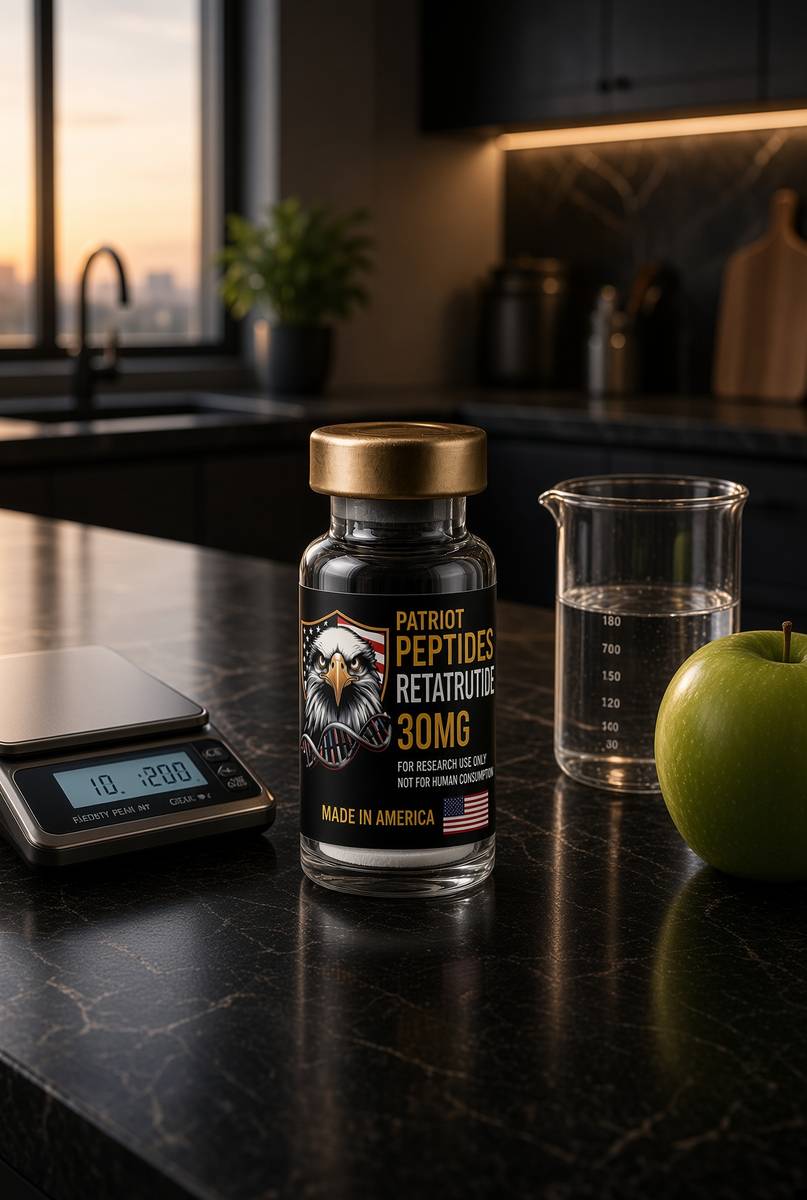 Made in USAOut of stock
Incretin
Retatrutide
US-made retatrutide 30mg — the published structure LY3437943, HPLC-MS verified.
4.6(609)
50 browsing this now · 5 purchased in the last 24 hours
30mg
£120.00
 Made in USA
Research use only. Not a combined-use instruction.
More in this desk
51 min · long read · Metabolism
Reversing type 2 diabetes is a published result, not a slogan
The DiRECT trial put type 2 diabetes into remission by emptying the liver and pancreas of surplus fat. Very-low-calorie and very-low-carbohydrate programmes can both get you there. The mechanism isn't mystical.
51 min · long read · Metabolism
Human metabolism, without the slogan
Calories are bookkeeping. The actual system is a set of hormonally gated fluxes through glycogen, fat and amino acids — with the liver as air-traffic control.

50 min · long read · Metabolism
Fasting, autophagy and the mTOR switch
Eat, and mTOR builds. Fast, and AMPK and ULK1 start recycling the cell. The molecular story is a switch, not a personality.
49 min · long read · Metabolism
Liver fat is the variable type 2 diabetes actually cares about
Ectopic fat in the liver overproduces glucose and VLDL. Empty it — by energy deficit, by carbohydrate restriction, or by both — and first-phase insulin can return. That is the twin-cycle in working clothes.
Essays describe published research. They are not medical advice and they do not authorise human use of any catalogue item.