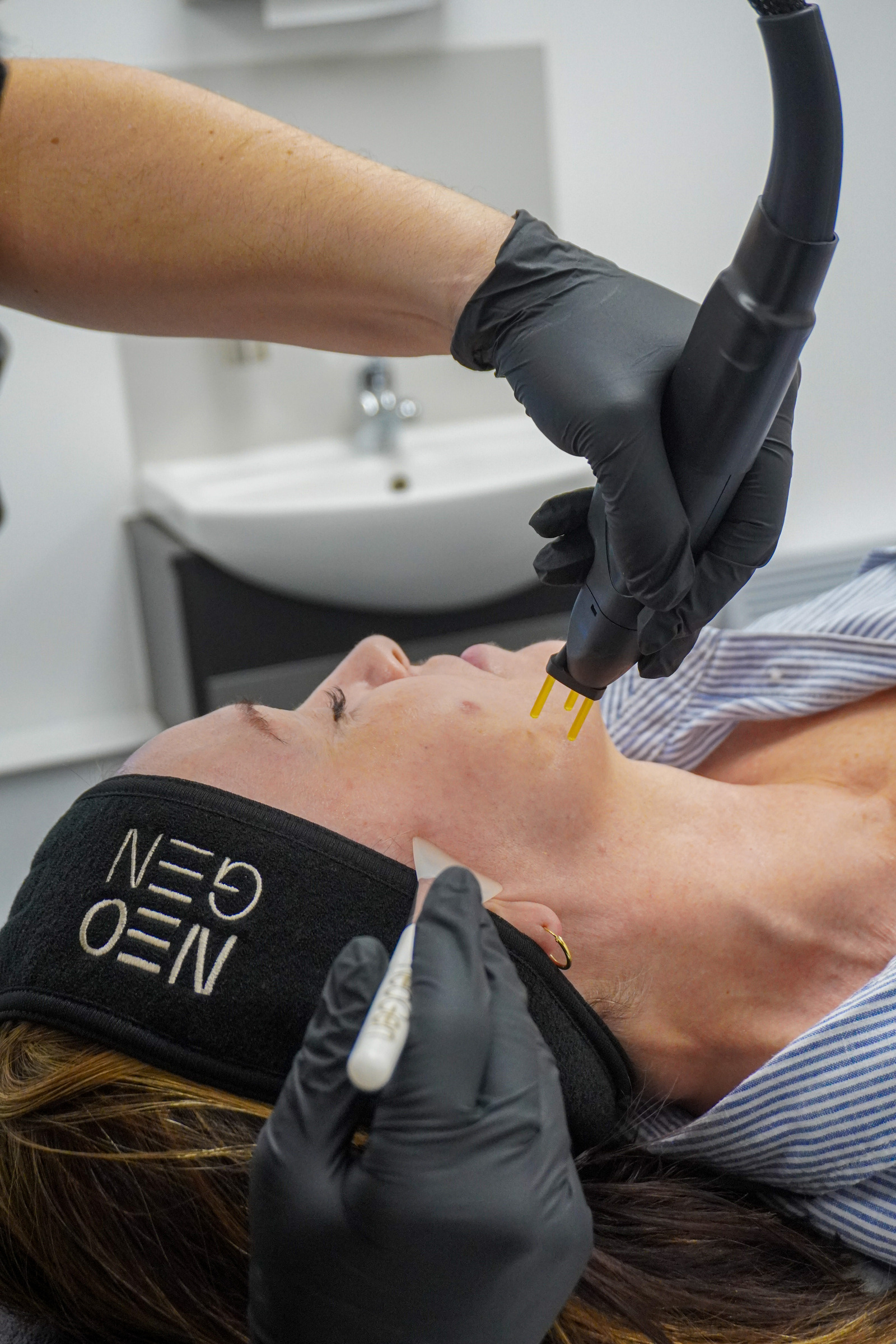

eLIVEate Me / Phototherapy
Dermalux LED
4.761 reviewsAward-winning light. No heat, no downtime.
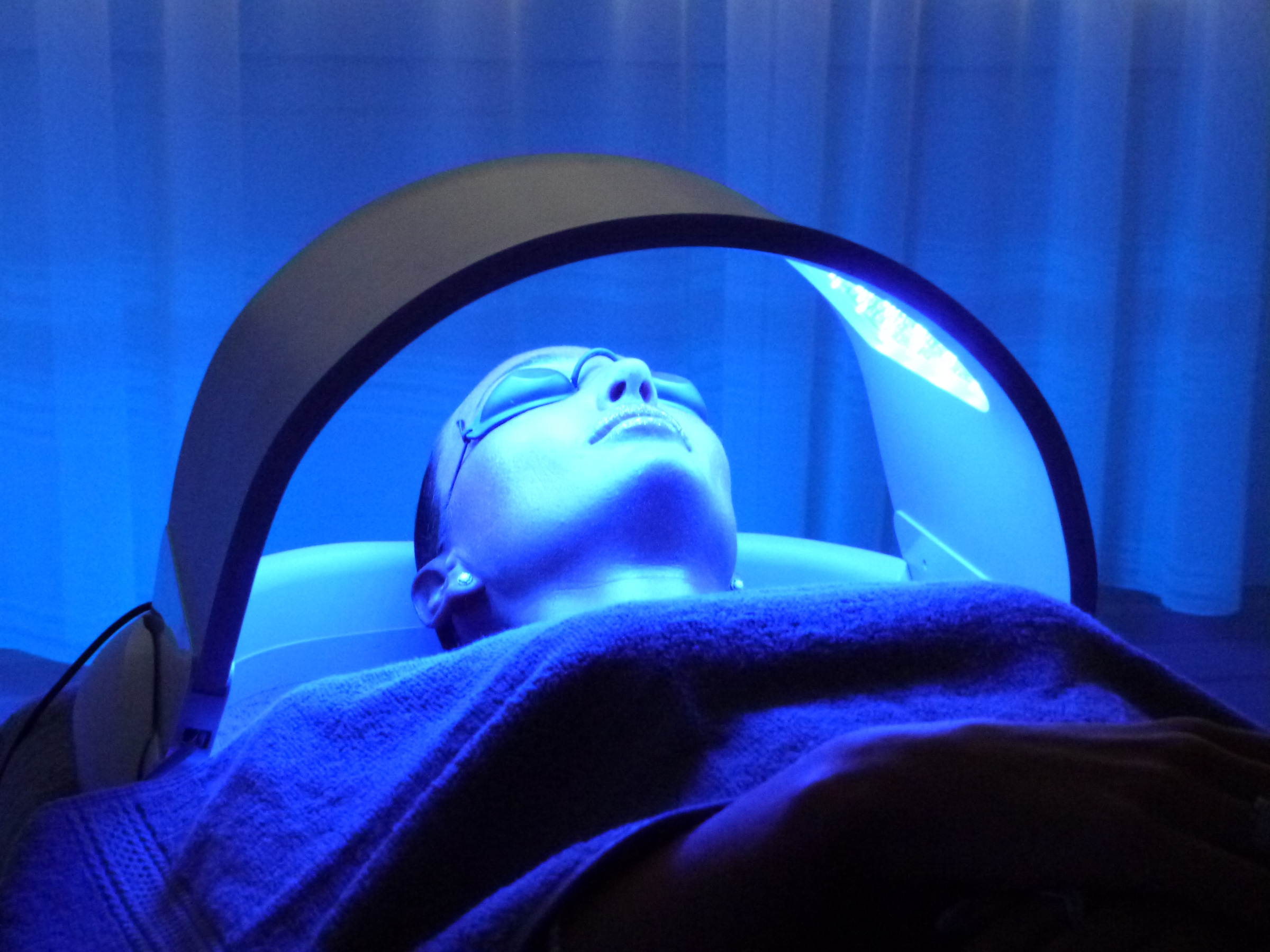
Clinically proven blue, red and near-infrared wavelengths. One session brightens a tired complexion. A course of six is how the repair actually sticks.
Dermalux is LED phototherapy — photobiomodulation, the same idea as photosynthesis for skin cells. Energised cells regenerate faster. Blue targets blemish-causing bacteria. Red and near-infrared lift collagen, circulation and calm.
It is pain-free, heat-free, chemical-free and suitable for every skin type. Session time on the diary is 30 minutes. Combine it with NEOGEN or CELL STORY when JP wants the recovery sped up.
Downtime: None. You can go straight back out.
Full protocol on eliveate.meBook this treatment
Each button opens the matching slot on their Wix Bookings diary.
1 treatment
Dermalux LED phototherapy
Blue, red and near-infrared. No downtime.
30 min
£50.00
Book on eliveate.meCourse of 6
Dermalux LED phototherapy
Six sessions for lasting repair and radiance.
30 min each
£250.00
Book on eliveate.me
What it is for
- Dull, tired complexion
- Acne and blemish bacteria
- Redness and inflammation
- Fine lines
- Pigment
- Psoriasis and wound healing
- Mood and recovery
Clinic journal
Dermalux LED phototherapy: light as a mitochondrial instruction
Dermalux LED in Buckinghamshire. Blue 415 nm hits acne bacteria; red 633 nm and near-infrared 830 nm talk to cytochrome c oxidase. A course of six is how repair accumulates.
Read the essayQuestions about Dermalux LED
Is this just a red heat lamp?
No. Therapeutic LEDs are narrow-band. 633 and 830 nm overlap cytochrome c oxidase absorption; 415 nm overlaps C. acnes porphyrins. A broad infrared heater is warmth. This is photochemistry at named photoacceptors, which is a different object from a bathroom bulb.
Why doesn’t one session finish the job?
ATP and blood flow can move in a sitting. Collagen I transcription and a drop in MMP-1 are repeated-exposure effects. Wunsch and Matuschka measured matrix changes after a course, not after a single glow, and that is the number to keep because it has histology behind it.
Does LED replace a repair peptide, or the reverse?
Neither. LED is a device occupying cytochrome c oxidase and porphyrins. BPC-157 and TB-500 are research ligands in other models — VEGFR2/NO and G-actin. Different inputs, overlapping tissue questions. We stock the ligands. The clinic owns the lamp.
What is cytochrome c oxidase, in this context?
Complex IV of the mitochondrial respiratory chain: copper-A, copper-B, haem a and haem a3. It reduces oxygen to water and is the working photoacceptor for red (~633 nm) and near-infrared (~830 nm) photobiomodulation. Nitric oxide binds it reversibly; photons can photodissociate that NO, after which ATP rises.
Why 415, 633 and 830 nanometres?
415 nm is the Soret-band overlap with coproporphyrin III in C. acnes. 633 and 830 nm sit on Karu’s cytochrome c oxidase action spectrum, at two tissue depths. Dermalux Tri-Wave puts three photoacceptor stories on one head so a clinician can choose.
What did Wunsch and Matuschka actually measure?
In human skin, a course of red or red-plus-near-infrared LED phototherapy increased ultrasonographic collagen density and, on biopsy, collagen and elastin, and reduced MMP-1 (Photomed Laser Surg 2014; 32: 93–100). It is not a Dermalux-brand trial. It is the human matrix direction the 633/830 pair lives in.
How does blue light kill acne bacteria?
C. acnes makes coproporphyrin III. Photons at ~415 nm excite that porphyrin; reactive oxygen then damages the organism. Host mitochondria are a poor target at that wavelength and depth. Different job from the red/near-infrared pair.
What is the biphasic dose response?
Too little fluence, nothing happens. Too much, and you inhibit the same enzyme or turn a signalling ROS pulse into damage (Arndt–Schulz, as the photobiomodulation field inherited it). Clinic devices exist to sit on the useful shoulder. Write milliwatts per square centimetre and joules, not just minutes.
Is BPC-157 part of the Dermalux appointment?
No. It is a gastric 15-mer with a nitric-oxide and VEGFR2 literature, stocked as a characterised research sequence. The appointment is LED phototherapy, booked with eLIVEate. Patriot takes no commission on that diary, and nobody is reconstituting a peptide into the head.
Can every skin type use it?
Phototype is a filter here, not a chromophore the device requires. Darker epidermis absorbs more of the 633 nm on the way in; 830 nm still travels. Blue on a melanised follicle is a separate pigment-risk conversation the clinician owns. There is no plasma-style bronze eschar and no social week off.
From the treatment room
Dermalux LED reviews
Dermalux LED at eLIVEate Me. Partner clinic — we take no commission. Reviews are from people who booked the treatment, not the research catalogue.
4.7
61 reviews
- 5 star85%
- 4 star5%
- 3 star7%
- 2 star3%